
Journalist

AJP
-
 LG Energy Solution, Hanwha Qcells to build 5GWh solar-plus-storage infrastructure in U.S. LG Energy Solution said Tuesday it has signed a contract to supply a total of 5 gigawatt-hours of energy storage system, or ESS, batteries to the U.S. unit of Hanwha Solutions’ Qcells division, known as Hanwha Qcells. The products are LFP batteries for ESS use that will be made at LG Energy Solution’s plant in Holland, Michigan. Deliveries are scheduled to roll out from 2028 through 2030 for Hanwha Qcells’ grid-scale ESS projects in the United States. The deal is the companies’ second ESS agreement, following a 4.8GWh ESS project contract announced in May 2024. The companies said they plan to pursue energy infrastructure projects in the United States that link batteries and solar modules, using their U.S. manufacturing bases. LG Energy Solution’s batteries will be produced in Michigan, while Hanwha Qcells’ solar modules will be made in Georgia. The companies said the project will rely on U.S.-based production from batteries through solar modules. Park Jae Hong, head of LG Energy Solution’s Vertech unit, said the company will strengthen cooperation with Hanwha Qcells by supporting the project end to end and continue a long-term partnership based on what he called differentiated value. He said the joint projects are expected to support customers’ long-term business success and help stabilize the U.S. power grid. Chris Hodrick, head of Hanwha Qcells’ EPC business division, said the partnership gives Hanwha Qcells a foundation to respond effectively to large-scale ESS demand in the U.S. power market. He said the company plans to provide integrated energy solutions spanning solar and ESS and build a differentiated position in the global energy market.* This article has been translated by AI. 2026-02-04 08:42:00
 -
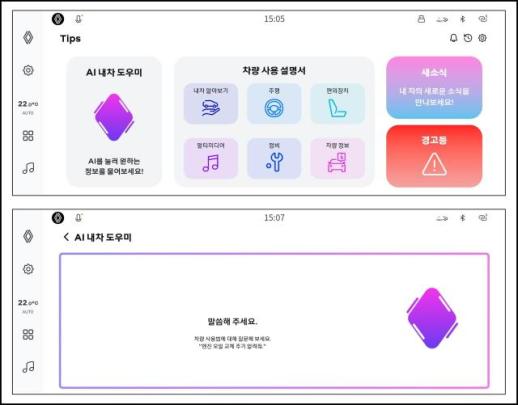 Renault Korea Adds ChatGPT-Based Generative AI to Renault Filante Tips App Renault Korea said Tuesday it has added ChatGPT-based generative artificial intelligence to “Tips,” its vehicle guide application for Renault Filante. Tips is an integrated guide service designed to help drivers quickly resolve questions that come up while using the vehicle, the company said. Its main feature, “AI My Car Assistant,” uses generative AI to provide information in a conversational format. Unlike keyword-based searches, it allows users to continue exploring information through dialogue for more natural guidance, Renault Korea said. The app also offers a digital owner’s manual so drivers can view vehicle information at a glance. Users can browse categories such as getting to know the car, driving, convenience features, multimedia, maintenance and vehicle information, or ask the AI assistant directly. For information that may be needed immediately while driving, the app provides separate menus. A news section offers the latest vehicle-related updates and key notices, while a warning-lights section explains dashboard warning indicators to help drivers quickly understand the situation. “While vehicle functions have become more advanced and the amount of information provided has continued to grow, many drivers still struggle to find what they need during actual driving,” said Choi Seong Gyu, head of Renault Korea’s research center. “Renault Korea has actively introduced AI-based features so customers can use their vehicles more easily and conveniently,” he said.* This article has been translated by AI. 2026-02-04 08:30:00
 -
 Strong dollar pressures Korea's FX reserves, down for 2nd month SEOUL, February 04 (AJP) - South Korea’s foreign exchange reserves fell by more than $2 billion in January, extending a decline for a second consecutive month as the won remained weak against the U.S. dollar. The Bank of Korea said Wednesday that reserves stood at $425.91 billion at the end of January, down $2.15 billion from $428.05 billion a month earlier. Holdings of securities, including government and corporate bonds, rose $6.39 billion to $377.52 billion. However, deposits dropped $8.55 billion to $23.32 billion. Special drawing rights allocated by the International Monetary Fund remained unchanged at $15.89 billion, while gold holdings were also steady at $4.79 billion, as they are recorded at purchase price rather than market value. A Bank of Korea official said deposits typically increase at quarter-end or year-end as financial institutions adjust balance sheets to meet regulatory ratios. This time, however, overall deposits declined despite an increase in foreign-currency deposits at financial institutions. The official added that market-stabilization operations, including foreign exchange swaps and reserve requirement management, appeared to have influenced the overall reserve level. South Korea ranked ninth globally in foreign exchange reserves as of the end of December, with holdings of $428.1 billion. China held the largest reserves at $3.36 trillion, followed by Japan with $1.37 trillion and Switzerland with $1.08 trillion. Other countries ahead of South Korea included Russia, India, Taiwan, Germany and Saudi Arabia, according to central bank data. * This article, published by Aju Business Daily, was translated by AI and edited by AJP. 2026-02-04 08:18:31
 -
 South Korea Culture Minister Choi Hwi Young Visits Milan for 2026 Winter Olympics Choi Hwi Young, South Korea’s minister of culture, sports and tourism, will attend the 2026 Milan-Cortina d’Ampezzo Winter Olympics as the government’s representative. The ministry said Choi will stay in Milan from Feb. 4-8 to cheer on the national team and review on-site support. On Feb. 5, Choi will visit the athletes’ village to encourage South Korean athletes in final training ahead of the opening and hear their concerns. He will also tour a meal-support center to check preparations for Korean boxed meals provided twice daily to help manage athletes’ nutrition, and thank support staff. On Feb. 6 and 7, he will attend major events, including the figure skating team competition, to support South Korean athletes. On Feb. 7, Choi will visit the Main Media Center to encourage the South Korean press corps covering the Games. The trip will also include sports diplomacy. On Feb. 5, Choi will attend the opening of Korea House and meet officials from the International Olympic Committee and national Olympic committees. The opening will feature K-culture programs including a winter hanbok fashion show, a cover dance to the theme song of “K-pop Demon Hunters,” and a vocal performance. On Feb. 6, he will attend a reception hosted by Italy’s minister for sport and youth to discuss expanding sports exchanges between the two countries. He will also attend the opening ceremony at San Siro Stadium as part of the government delegation and greet the South Korean team as it enters. “I will personally check every factor that affects performance — including the training environment and support — so that our athletes’ hard work is not in vain on the Olympic stage,” Choi said. “We will support them through the end so they can compete without regrets and finish the competition safely without injury.”* This article has been translated by AI. 2026-02-04 08:12:00
 -
 BTS May Open March 21 Comeback Show With Walk on Restored Gwanghwamun Royal Route BTS are expected to step onto the restored Gwanghwamun Woldae — a ceremonial platform returned to its original form after 100 years — as part of their first full-group return in three years and nine months. The group are set to stage “BTS Comeback Live: Arirang,” a performance marking the release of their fifth full-length album, at 8:00 p.m. on March 21 at Gwanghwamun Square in Seoul. Organizers are reviewing a plan for the members to march from Geunjeongmun Gate at Gyeongbokgung Palace, passing Heungnyemun and Gwanghwamun, and ending at the Woldae. The Woldae is a wide raised platform in front of a palace’s main hall and is seen as a symbolic space where the king and the public once interacted. It was damaged by Japan in 1923 and was restored last year, 100 years later. An industry official said the idea appears intended to portray BTS’ return to fans after lengthy military service as a grand march along the restored “royal route.” The official said that if it goes ahead, it would be remembered as a symbolic moment linking Korean history with today’s K-pop. The concert is to be livestreamed worldwide to 190 countries on Netflix. The company said it is the first time in its history it will broadcast a solo concert live by a specific artist. Producers who worked on the Super Bowl halftime show have joined the project, and HYBE plans to use elements such as a media facade on the Gwanghwamun wall to heighten the impact of the march. Safety remains the key issue. The Korea Heritage Service and the Seoul Metropolitan Government have issued conditional approval. BTS’ side must finalize safety measures for the full event, including the march on the Woldae, and pass final review by three weeks before the show. With the performance requiring movement through narrow passages, more advanced crowd-management measures are expected to be needed than usual.* This article has been translated by AI. 2026-02-04 08:03:17
 -
 Lee Seong Ho Says He Married Yoon Yoo Sun After 98 Days of Dating Lee Seong Ho made blunt remarks about his wife, actor Yoon Yoo Sun, on SBS’ “Same Bed, Different Dreams 2.” On Tuesday’s broadcast, Yoon, a 52-year veteran actor, appeared with Lee, a former judge who now works in the legal field. Asked about his first impression, Lee said Yoon “wasn’t the look I was looking for.” He added that she is short and that he had wanted a more Western-style appearance, saying she did not match his ideal type. Yoon responded that she does not focus on looks. She said she liked people who are funny and honest, adding that Lee used to speak in short, offhand lines that made her laugh. She also joked that he was not the kind of appearance that stood out when she was younger. Lee said they met every day for 98 straight days and held their wedding after 98 days. “I must have really liked her,” he said, adding that she could have refused but did not and ended up marrying him.* This article has been translated by AI. 2026-02-04 08:03:00
 -
 Milan-Cortina 2026 to stage Winter Olympics across four clusters in first split-host Games Italy is set to host the Winter Olympics again for the first time in 20 years, with the 2026 Milan-Cortina d’Ampezzo Games notable for using two host-city names in the official title and spreading events across multiple sites. It will be Italy’s third Winter Olympics, after Cortina d’Ampezzo in 1956 and Turin in 2006. With the 1960 Rome Summer Olympics, Italy will have hosted the Olympics four times overall. The Games will feature eight sports and 16 disciplines, with 116 gold medals at stake — seven more than Beijing 2022 (109). Competition will be staged across four clusters in northern Italy: the major city of Milan; the Alpine resort of Cortina d’Ampezzo; and the Valtellina-Bormio and Val di Fiemme areas. Organizers say it is the widest geographic footprint of any Olympics. Olympic cauldrons will be installed in both Milan and Cortina d’Ampezzo, about 400 kilometers (250 miles) apart, roughly a five-hour drive. Organizers say the plan aligns with the International Olympic Committee’s push for sustainability by limiting new construction. Of the 25 venues, 19 are existing facilities and four are temporary. Only two venues were newly built for the Olympics. Sustainability efforts also extend to the medals and torches: Medals were cast using metals recovered from waste and made with renewable energy, and the torch uses recycled aluminum and other materials as its main components. The opening and closing ceremonies will be held in different cities. The opening ceremony is set for Milan’s Giuseppe Meazza stadium, home to AC Milan and Inter Milan, which will be used as an outdoor performance venue with capacity for 80,000 during the Olympics. The closing ceremony will be held at the Verona Arena, an ancient amphitheater in Verona, the city associated with Shakespeare’s “Romeo and Juliet.” The official slogan is “IT’s Your Vibe,” a message aimed at sharing solidarity, energy and passion among everyone involved in the Olympics. The emblem, titled “Futura” — Italian for “future” — was chosen through a public vote and features a simple design resembling the number “26” traced by a finger on snow. The official mascots, Tina and Milo, are characters based on martens that live in Italy’s mountain regions. Their names come from Cortina and Milan. Tina, in brighter colors, represents the Milan-Cortina d’Ampezzo Winter Olympics, while her younger brother Milo, with darker fur, represents the Winter Paralympics.* This article has been translated by AI. 2026-02-04 00:03:58
 -
 South Korea Targets Top-10 Finish at Milan-Cortina Olympics, Eyes Key Medal Day The 2026 Milan-Cortina Winter Olympics are about to begin, and South Korea are aiming to return to the overall top 10. The delegation expects a pivotal “golden day” late in the Games on Feb. 21 (Korea time). The Olympics open with a Feb. 6 ceremony and run for 17 days. South Korea are sending 71 athletes across six sports, with a goal of three gold medals and a top-10 finish. Lee Soo Kyung, president of the Korea Skating Union and head of the delegation, said at Incheon International Airport on Jan. 30, “I hope we can win three gold medals, and I think a surprise star will emerge.” South Korea last finished in the top 10 in the Winter Olympics medal table at the 2018 Pyeongchang Games, placing seventh with five gold, eight silver and four bronze medals. Their most recent top-10 finish at an Olympics held abroad was fifth at the 2010 Vancouver Games (six gold, six silver, two bronze). South Korea also placed in the top 10 at Lillehammer in 1994 (sixth), Nagano in 1998 (ninth) and Turin in 2006 (seventh). At the 2022 Beijing Games, they finished 14th (two gold, five silver, two bronze). South Korea’s medal chase begins Feb. 8, the day after the opening ceremony. Lee Sang Ho, a silver medalist at Pyeongchang, will try to deliver the first medal in men’s parallel giant slalom snowboarding, where he is viewed as a dark horse. The first gold could come Feb. 10, when the short track team race in the mixed 2,000-meter relay. On Feb. 13, Choi Ga On will go for gold in the women’s halfpipe snowboarding final after winning three International Ski and Snowboard Federation World Cup events ahead of the Olympics. The short track men’s 1,000 final is also scheduled that day, with Lim Jong Eon, Hwang Dae Heon and Shin Dong Min entered. The men’s figure skating free skate, featuring Cha Jun Hwan, is set for Feb. 14. Cha, who finished fifth in Beijing, is seeking South Korea’s first Olympic medal by a male figure skater. On Feb. 15, Lim, Hwang and Shin will skate the short track men’s 1,500 final, a key event for South Korea as they aim for a third straight Olympic gold in the distance after Pyeongchang and Beijing. Speed skaters Kim Min Sun and Lee Na Hyun will compete in the women’s 500 on Feb. 16. That day, short track skaters Choi Min Jeong, Kim Gil Li and Noh Do Hee will race the women’s 1,000. The women’s short track team are also scheduled for the 3,000 relay on Feb. 19. The women’s figure skating free skate is on Feb. 20, with Shin Ji A hoping to contend for a medal. Feb. 21 is expected to be South Korea’s “golden day.” The short track women’s 1,500 final, their top gold-medal target, is scheduled then with Choi Min Jeong, Kim Gil Li and Noh entered. Choi is trying to win a third straight Olympic title in the event after Pyeongchang and Beijing. The men’s team will also race the 5,000 relay that day. In speed skating, Jung Jae Won is set to compete in the men’s mass start, with expectations he can improve on his silver medal from Beijing.* This article has been translated by AI. 2026-02-04 00:03:27
 -
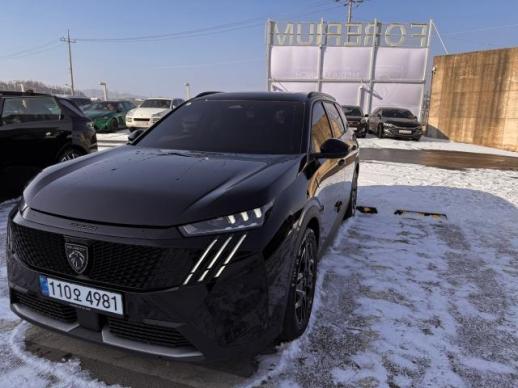 Peugeot’s All-New 5008 Smart Hybrid Targets South Korea’s Family SUV Market As SUVs continue to dominate South Korea’s auto market, Peugeot is seeking to expand sales with the “All-New 5008 Smart Hybrid,” a full redesign returning after 10 years. Planned and built in France, the third-generation 5008 combines Stellantis’ next-generation STLA electrified platform with a smart-hybrid powertrain. It is a family SUV that can seat up to seven. On Feb. 2 in Gimpo, the new 5008’s front end showcased Peugeot’s latest family design, including a floating-style emblem, a gradient front grille and pixel LED matrix headlamps, shifting the model’s look toward a more futuristic feel. From the side, a longer wheelbase and higher beltline added a planted stance. Black roof rails and matte gray DLO (day light opening) trim emphasized SUV toughness without looking overdone. At the rear, 3D LED taillamps and horizontal lettering added visual stability. Stellantis said the rear spoiler was designed with airflow in mind and helps improve high-speed stability and fuel efficiency. Inside, a 21-inch curved display stood out. Rather than two screens joined together, it is presented as a single large display. Compared with the previous generation, where the screen sat deeper in the dashboard, the new unit appears to float, reducing eye movement and helping the driver stay focused. The system supports wireless Apple CarPlay and Android Auto, but on a roughly 60-kilometer round trip from Gimpo’s Forellium to Ganghwa in Incheon, the built-in navigation was used. Peugeot has been adopting TomTom navigation since 2022. It does not reflect traffic and road conditions the way commonly used services such as Tmap do, but map updates have improved visibility compared with the previous generation. A key strength is quietness. Even above 100 kph on the highway, the vehicle accelerated smoothly with little noise. In the city, regenerative braking helped save fuel. The combined fuel economy is 13.3 kilometers per liter. The second row uses three individual seats, each supporting sliding, reclining and 40:20:40 folding, allowing three adults to adjust seating to fit their needs. It also includes heated seats, side-window sunshades and an air-quality monitoring function. The third row has two independent seats with 50:50 folding. With the third row up, cargo space is 348 liters. Folding the third row expands it to 916 liters, and folding the second row as well increases capacity to a maximum of 2,232 liters. Bang Sil, CEO of Stellantis Korea, said the company is preparing to compete in what he called South Korea’s most fiercely contested family SUV segment. “While preparing for competition in Korea’s most intense family SUV market, I want to ask whether people feel they must give up their own taste and sensibility for their family,” Bang said. “The All-New 5008 Smart Hybrid is a French family SUV that offers space and practicality for the family while letting the driver keep their sensibility and preferences.” He added that this year, 5008 sales will account for more than 30% of Peugeot’s total sales.* This article has been translated by AI. 2026-02-04 00:03:00
 -
 Hanmi Pharmaceutical ramps up R&D push with homegrown drugs and global expansion plans Hanmi Pharmaceutical said it has held the top spot in South Korea’s outpatient prescription sales for seven straight years, driven by drugs developed with its own technology. The company said more than 90% of its revenue comes from in-house products, and it is accelerating efforts to find new global growth engines through research and development. Industry officials said Hanmi’s R&D spending as a share of revenue rose from 13.4% in 2022 to 15.2% as of the third quarter of last year. Analysts said the company’s steady double-digit R&D investment underpins its growth strategy. Hanmi has set a 2030 target of 1.9 trillion won in domestic sales and 1 trillion won overseas, for total revenue of 2.9 trillion won. The company expects its obesity drug program to align with industry trends and help expand its global business. Hanmi recently signed an exclusive distribution deal with Mexican drugmaker Sanfer covering its GLP-1 obesity drug candidate efpeglenatide and its diabetes combination products sold under the Daparon family name (Daparon tablets and Daparon Duo extended-release tablets). A regulatory filing said the supply contract for the Daparon products totals about 65.8 billion won and runs through Jan. 26, 2036. Efpeglenatide, a key in-house candidate, is slated for launch in the second half of this year and is under review for approval by South Korea’s Ministry of Food and Drug Safety. If approved, it would become the first domestically developed GLP-1 obesity treatment. Kwon Hae Soon, an analyst at Eugene Investment & Securities, said the obesity treatment market is expected to expand in earnest around the time of efpeglenatide’s launch, adding that a locally made product could win meaningful share given price competitiveness and supply stability. A Hanmi official said the launch price has not been set, but the company expects to secure price competitiveness because it will produce efpeglenatide at its Pyeongtaek bioplant. The official said direct control over production and supply could be a differentiator in a market where existing products rely on imports. Hanmi is also moving ahead with clinical development of next-generation obesity candidates, including HM15275, a triple-acting drug aimed at obesity and muscle loss, and HM17321, designed to increase muscle. For HM15275, the company said the U.S. Food and Drug Administration approved its Phase 2 investigational new drug application in September, and the first patient was dosed about three months later. The Phase 2 study will evaluate weight-loss effects and improvements in lean body mass in obese and severely obese patients after 36 weeks of long-term dosing. The company expects Phase 2 to end in the first half of 2027. Hanmi said oncology remains central to its new-drug pipeline. BH3120, a bispecific antibody immuno-oncology drug being co-developed with Beijing Hanmi Pharmaceutical, recently presented Phase 1 progress at the ESMO Immuno-Oncology Congress 2025. The company said BH3120 uses its Pentambody bispecific antibody platform, which allows a single antibody to bind two different targets at the same time. A Hanmi official said the company is building capabilities across multiple modalities, including targeted protein degradation, messenger RNA, cell and gene therapies, antibody-drug conjugates and single-domain antibodies, and will continue to pursue development and commercialization of innovative medicines.* This article has been translated by AI. 2026-02-03 18:27:00