
Journalist

AJP
-
 Presidential SNS politics: excess or essential? SEOUL, February 03 (AJP) - U.S. President Donald Trump is notorious for overnight social-media barrages — posting more than 160 times in a single day as recently as Dec. 1 — and for spending hours on Truth Social. South Korean President Lee Jae Myung is a relative newcomer to such digital excess, but he appears to be embracing the medium with equal enthusiasm. On Sunday, Lee posted a reflective yet firm message on X, formerly Twitter, calling for a national debate on a proposed “sugar levy” aimed at curbing excessive consumption of sweetened beverages. “The more difficult the issue, the more we must discuss it,” he wrote, citing a World Health Organization recommendation for steep global price hikes on sugary drinks and alcohol by 2035. Social-media politicking itself is hardly new in Seoul. Korean politicians have long used online platforms as unfiltered arenas for attack and mobilization. What is new is the scale and centrality of presidential participation. Over just two months, Lee’s use of X surged from a handful of posts in December to nearly four dozen by early February, spanning issues from real estate and fiscal reform to local government efficiency. Cheong Wa Dae stresses that these posts are not off-the-cuff remarks. “They emphasize policy consistency, leadership resolve and a call for responsible journalism,” a presidential aide said. To critics, however, the shift signals something broader: a deliberate attempt to set the national agenda through direct public address, bypassing cabinet deliberation, legislative review and media scrutiny. Lee’s recent posts on the sugar levy, housing policy and administrative restructuring have drawn both praise and backlash. His messages — often lengthy, impassioned and sharply worded — share a consistent theme: impatience with intermediaries, whether political or journalistic. Responding to criticism that the sugar levy amounted to a disguised tax hike, Lee argued that “a tax and a burden charge are fundamentally different,” warning against debate shaped by “distortion and framing.” Elsewhere, he rebuked outlets questioning the end of a real-estate tax exemption, accusing them of “defending ruinous speculation.” When the opposition People Power Party labeled his remarks “provocative populism,” Lee replied on X: “Enough with ruinous real-estate speculation and outdated red-baiting. It’s time to move on.” The tone is unmistakably combative, the pace relentless. On some mornings, Lee posts three separate messages — all drafted, aides say, by the president himself. To detractors, this amounts to governing by post: impulsive, emotional and dismissive of institutional checks. To supporters, it is communicative leadership — a president visibly accountable in real time. Lee’s assertiveness fits a broader global shift. Leaders worldwide have increasingly turned to social media as tools of direct, performative governance. Few exemplify this more starkly than Trump, who, according to The Washington Post, posted more than 2,200 times on Truth Social during the first four months of his second term — roughly 17 posts a day, triple his rate during his first presidency. While Trump’s outbursts often rattle allies and alarm opponents, the logic is similar: direct-to-public communication with minimal mediation and maximal emotional charge. Alex Tahk, a political scientist at the University of Wisconsin, describes this as a modern extension of presidents “going public” — appealing directly to voters to shape agendas and pressure institutions. “Social media makes that process faster and more personalized,” he said, “with far fewer journalistic gatekeepers.” But the power cuts both ways. “By making positions public and emotionally charged, leaders reduce room for compromise,” Tahk warned. “It can undermine negotiation more than it facilitates it.” That risk is acute in South Korea’s polarized political climate. Lee’s forthright tone mirrors a global move from closed-door policymaking toward performative governance, where visibility and conviction often rival coalition-building in importance. “Highly confrontational communication,” Tahk noted, “raises the political cost of bipartisan bargaining.” Media psychologists point to deeper cultural dynamics. Hang Lu of the University of Michigan says social media offers leaders speed, visibility and message control — while blurring the line between governance and performance. “Immediacy and emotional framing can oversimplify complex policy debates,” she said. Lee’s posts often compress intricate fiscal or housing policies into moralized soundbites, tapping what Lu calls the “participatory psychology” of social media — a space where citizens become active, emotionally engaged participants rather than passive audiences. In such an environment, even serious policy proposals can take on the pulse of campaign rhetoric. Tahk calls this “agenda politics through emotional framing.” “Leaders signal direction and energy,” he said, “but the cost is that complex issues become simplified into moral binaries—fair versus unjust, patriotic versus corrupt.” Agenda-setting through social media can privilege attention-grabbing topics over long-term governance,” Lu notes. “It blurs the line between informing the public and performing for them.” That blurring extends beyond content to tempo. Lee’s posting frequency — sometimes several times a day — reflects a presidency operating at the rhythm of the digital news cycle rather than the slower cadence of policy deliberation. Communication becomes continuous, but comprehension more fleeting. Each post triggers immediate responses: ministries scrambling to clarify, pundits to interpret, supporters and critics to mobilize. The presidency becomes a hub of perpetual mediation. Unlike Franklin Roosevelt’s carefully timed fireside chats or Ronald Reagan’s choreographed television addresses, today’s digital presidency operates in an algorithmic, fragmented and perpetual environment. There is no single national audience, only segmented feeds optimized for engagement. In Seoul, the effect is immediate. Presidential posts are instantly reframed by supporters and opponents alike, creating an always-on feedback loop that amplifies both authority and division. Lee’s embrace of this landscape is deliberate. Since his days as mayor of Seongnam and governor of Gyeonggi Province, he cultivated a reputation for online accessibility. As president, that instinct has evolved into a daily rhythm of agenda-setting posts, often paired with news articles he critiques or reframes. Cheong Wa Dae insists this is transparency, not theatrics. Critics see spectacle. The tension between the two may define Korea’s emerging media presidency — one where policy debate unfolds in public view, but where deliberation grows harder the louder the conversation becomes. 2026-02-03 17:07:47
 -
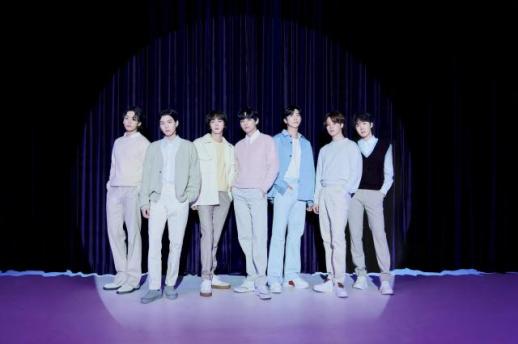 BTS Comeback D-46: world tour map affirming global reach SEOUL, February 03 (AJP) - Nearly four years after stepping away as a full group for mandatory military service, BTS is returning with a touring footprint that underlines just how much ground it covered — and how much leverage it still holds — in the global live music economy. A yearlong world tour spanning 80-plus stadium shows in roughly 30 cities across five continents is taking shape, positioning BTS’s comeback as one of the largest live music undertakings in recent years. The opening statement will be characteristically symbolic: a kickoff performance in central Seoul’s Gwanghwamun area on March 31, set to stream live on Netflix — the platform’s first livestreamed concert originating from South Korea. The scale reinforces a long-standing narrative around BTS: that the group functions less as a touring act than as a global cultural asset. When CNN recently revisited “BTS in Numbers,” it highlighted how rare it is for artists to sustain tours of this magnitude. Historically, only a handful of legacy names — Elton John, Bruce Springsteen and the Rolling Stones — have pushed tours into triple-digit show counts over multiple years. BTS’s own benchmarks already place it in that company. Since debuting in 2013, the group has logged six No. 1 singles on the Billboard Hot 100, while its four-night stadium run in Los Angeles in 2021 generated $33.3 million from more than 200,000 tickets, then the highest-grossing Boxscore ever recorded by a non-English-language artist. At home, government estimates have pegged BTS’s economic contribution at $4.9 billion in 2019, cementing its status as a national soft-power asset. That demand was forged on the road. The “Love Yourself” World Tour (2018–2019) set an early global benchmark for non-English-language acts, grossing about $196.4 million across 42 shows and drawing an estimated 1.6 million fans worldwide, according to Billboard Boxscore. Sold-out stadium dates at venues such as London’s Wembley Stadium and Seoul’s Olympic Stadium signaled that BTS had crossed decisively into the top tier of global touring. The follow-up, “Permission to Dance On Stage” in 2022, was intentionally limited after pandemic disruptions but no less telling. A four-night run at Los Angeles’ SoFi Stadium attracted roughly 214,000 attendees, underscoring sustained demand even as the group prepared for enlistment. The upcoming 2026–2027 “Arirang” World Tour raises the bar again. Official schedules point to 82 shows across 34 cities in 23 countries, making it BTS’s most expansive itinerary to date. Early ticketing signals have been striking. In Mexico, local reports said as many as one million fans attempted to secure roughly 150,000 available seats, while rapid sellouts have been reported across parts of North America and Europe. Some industry reports have cited 41 major stadium dates selling out globally, with total ticket sales estimated at around 2.4 million, though final figures remain under review. HYBE said it is still in the process of aggregating ticket sales data and reviewing venue-level details, noting that assessments are ongoing to determine whether additional seats can be released at certain locations. The company added that it is still reviewing potential dates for stops in Japan and the Middle East, which have yet to be officially announced. Financial markets are watching closely. Analysts increasingly frame the tour not simply as entertainment, but as a large-scale global content business. Im Do-young of Daol Investment & Securities estimates that ticket revenue alone could reach 1.1 trillion to 1.2 trillion won, rising toward 1.5 trillion won when official merchandise sales are included, assuming the full schedule is completed. At that level, the tour would rank among the largest ever mounted by a single artist. At home, pricing will offer an early test of elasticity. BTS’s South Korea leg begins in April at Goyang Stadium, with tickets priced at 264,000 won for sound check, 220,000 won for General R, and 198,000 won for General S, according to Interpark. Positioned at the upper end of the stadium touring range, the shows will serve as a bellwether for how far premium pricing can stretch in a post-pandemic, post-inflation concert market. For the global live music industry, BTS’s return is more than a reunion tour. It is a stress test — of demand, pricing power and scale — unfolding in real time, with few modern precedents. 2026-02-03 17:06:59
 -
 Winter Olympics to kick off in Milan this week SEOUL, February 3 (AJP) - This year's Winter Olympics will kick off in Cortina d'Ampezzo and Milan later this week, bringing together around 3,500 athletes from over 90 countries to compete for 116 medals across 16 disciplines. The opening ceremony of the quadrennial sporting event is slated for Friday in Milan, marking a return to the European country for the first time in about two decades since the 2006 Turin Games. Italy has opted to use existing venues rather than build new ones, aiming to reduce both environmental impact and construction costs. However athletes may face some inconvenience as they will need to travel between multiple sites during the two-week-long Olympics, which run until Feb. 22. South Korea will field 71 athletes in snowboarding, bobsleigh, speed skating, short-track skating, and figure skating. 2026-02-03 17:01:34
 -
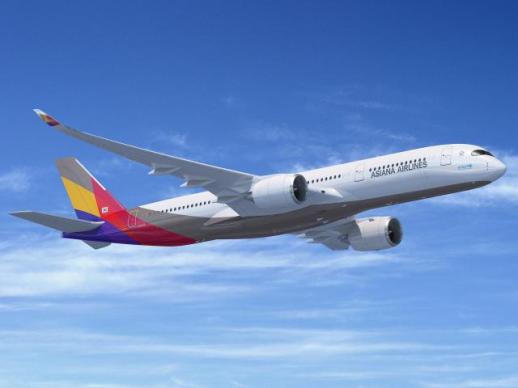 Asiana Airlines posts 342.5 billion won operating loss in 2025, first annual loss in five years Asiana Airlines said in a regulatory filing on Monday that it posted standalone revenue of 6.1969 trillion won last year and an operating loss of 342.5 billion won. Revenue fell 12.2% from a year earlier, and the company swung to an operating loss. It was Asiana’s first annual loss in five years, since 2020, when it reported a 63.1 billion won loss amid the COVID-19 pandemic. Passenger revenue fell by 76.8 billion won to 4.5696 trillion won. Asiana said tighter U.S. entry restrictions weighed on its Americas routes, but it sought to improve profitability by strengthening China routes, where demand has risen under a visa-free policy, and Japan routes, which showed steady demand. Cargo revenue dropped by 761.1 billion won to 958.4 billion won, reflecting the sale of its cargo aircraft business unit effective Aug. 1 to meet conditions tied to a corporate combination. The airline said it focused on generating revenue by using belly cargo space on passenger aircraft. Asiana said it swung to an operating loss due to one-time costs tied to integration preparations — including higher mileage liabilities and investments in IT and aircraft — as well as costs related to the cargo aircraft business sale. It also cited higher labor costs linked to ordinary wage issues and increased operating and maintenance expenses amid a persistently weak won. For this year, Asiana said it expects a solid passenger market to continue, citing the prospect of international passenger traffic surpassing 100 million for the first time. It plans to bolster profitability by entering new European markets such as Milan and Budapest in the first half, improving schedule efficiency and adjusting unprofitable routes, expanding belly cargo demand for time-sensitive shipments such as semiconductor parts and bio-health products, increasing fixed-demand contracts with major global forwarders, and pursuing cost cuts through efficiency gains. 2026-02-03 17:00:00
 -
 Korean investors keep record holdings of US stocks despite domestic market rally SEOUL, February 03 (AJP) - Demand for U.S. equities among South Korean investors remains strong despite a sharp rally in domestic markets, with holdings of American shares staying at record levels, according to data released Tuesday by the Korea Securities Depository. The benchmark KOSPI has climbed above 5,000 this year and the tech-heavy KOSDAQ has risen past 1,000. Yet South Korean investors’ holdings of U.S. stocks continued to grow. The data showed domestic investors held $168 billion worth of U.S. stocks at the end of last month, up about $4.4 billion from the end of last year. Tesla remained the most widely held stock among Korean retail investors, with holdings totaling $27.1 billion. The electric-vehicle maker, which has also drawn attention for its autonomous-driving and artificial intelligence ambitions, retained the top spot by a wide margin. Nvidia followed with $18 billion in holdings, supported by expectations of continued demand for AI chips. Alphabet ranked next at $7.7 billion, followed by data analytics firm Palantir at $5.4 billion and Apple at $4.3 billion. Analysts say the trend reflects investors’ belief in the structural strengths of U.S. markets, where many global leaders — particularly in artificial intelligence, semiconductors and cloud computing — are listed. A brokerage official said some profit-taking has flowed into local shares as the domestic market rebounded, but the U.S. market still enjoys an advantage in growth sectors and global competitiveness. "Direct overseas stock investment continues to expand, particularly among investors in their 20s and 30s," the official said. * This article, published by Aju Business Daily, was translated by AI and edited by AJP. 2026-02-03 16:59:00
 -
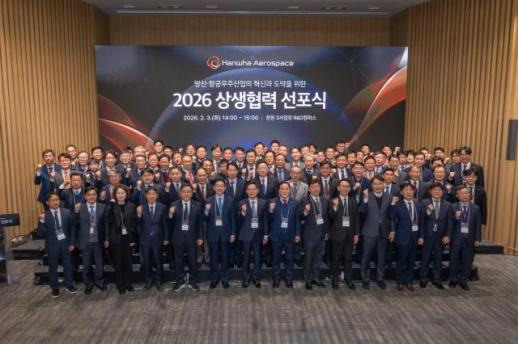 Hanwha Aerospace Launches $22 Million Supplier Innovation Profit-Sharing Program Hanwha Aerospace said it will launch a supplier innovation profit-sharing program aimed at advancing cutting-edge defense technology and supporting shared growth by directing its defense R&D funding to suppliers’ research and expanded intellectual property. The company held a ceremony on Monday at its R&D center at its Plant 3 site in Changwon, South Korea, with about 80 attendees, including representatives from 56 suppliers as well as central and local government officials. Hanwha Aerospace said it will begin the program this year with a total budget of 30 billion won. Under the plan, if suppliers pursue advanced R&D and localization of key components, Hanwha Aerospace will cover 100% of required R&D costs, including direct development expenses, research activity funding, facility investment and infrastructure. When suppliers participate in government small-business R&D programs — including those run by the Korea Institute for Advancement of Technology for defense component localization and the Ministry of SMEs and Startups for public-private technology commercialization — Hanwha Aerospace will also pay the suppliers’ required contributions. The company said not only existing suppliers but also promising small firms and startups can join R&D in strategic defense areas such as AI and robotics. Hanwha Aerospace said it will also significantly expand financial support for suppliers, tripling its shared-growth fund to 150 billion won from 50 billion won to back rising defense demand and export opportunities. It also said it will work with the Defense Industry Mutual Aid Association to create an advance-payment performance bond fee reduction program — the first such move in the defense industry — to ease suppliers’ financial burden during export contract processes. Jo Jeong Hyun, CEO of SG Solution and head of the shared-growth cooperation council, said, “With the new shared-growth cooperation program, we will trust Hanwha Aerospace as a strong partner and take bolder challenges to achieve technological independence and global growth.” He added, “We appreciate the creation of this program and look forward to a stronger future.” Hanwha Aerospace CEO Son Jae Il said, “The competitiveness of K-defense begins with suppliers’ competitiveness in components,” adding that the company will treat suppliers “not as simple counterparties, but as strategic partners that share technology and drive growth together,” putting into practice the group’s shared-growth management philosophy of “going far together.” 2026-02-03 16:36:00
 -
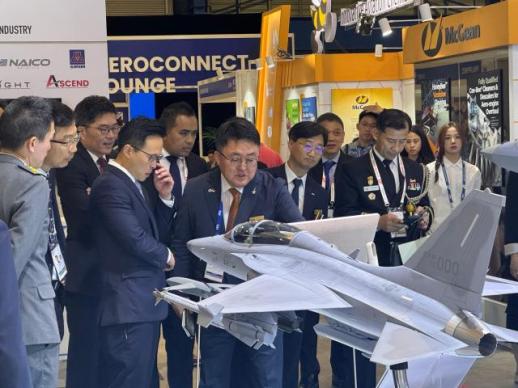 KAI to Showcase KF-21 and FA-50 at Singapore Airshow, Targets Southeast Asia 한국항공우주산업(KAI)이 동남아시아 시장 지배력 강화에 나선다. KAI는 3일부터 오는 8일까지 싱가포르 창이 전시센터에서 열리는 아시아 최대 규모의 항공우주·방산 전시회 '2026 싱가포르 에어쇼'에 참가한다고 밝혔다. KAI said it will take part in the 2026 Singapore Airshow, Asia’s largest aerospace and defense exhibition, running from Feb. 3 to Feb. 8 at the Changi Exhibition Centre in Singapore. The Singapore Airshow is a major venue for tracking defense and aerospace trends in Asia and is considered one of the world’s three biggest air shows, along with Paris and Farnborough. KAI said it will focus marketing on platforms that have entered full-scale production, including the KF-21, FA-50, Surion (KUH) and the Light Armed Helicopter (LAH). The company will also display its in-house projects, including the AAP multipurpose unmanned aircraft and the ALE air-launched unmanned aircraft. It will present future concepts through video on its AI pilot, “KAILOT,” and manned-unmanned teaming systems. During the airshow, KAI plans meetings with senior government and military officials from current operators in Southeast Asia as well as potential export customers. It said it will discuss follow-on business with existing FA-50 users while pursuing initial customers for the KF-21. KAI also said it will seek requirements and business opportunities to build export momentum in Asia for government and mobility helicopters. “The Singapore Airshow is an important bridgehead that is driving the explosive growth of Korea’s defense industry,” Cho Woo Rae, head of KAI’s export marketing division, said. “Based on the globally proven reliability of the FA-50 and the advanced technology of the KF-21, we will raise the standing of Korea’s defense industry and continue delivering tangible export results,” he said.* This article has been translated by AI. 2026-02-03 16:12:00
 -
 Fire breaks out at confectionery factory in Siheung SEOUL, February 3 (AJP) - A fire broke out at confectionery company SPC Samlip's factory in Siheung, Gyeonggi Province on Tuesday. According to fire authorities, the blaze broke out at around 3 p.m., prompting over 500 workers to evacuate immediately. About 70 firefighters, along with approximately 50 vehicles including pump trucks and other equipment were deployed to extinguish the fire. Three workers including a woman in her 40s were treated for minor symptoms after inhaling smoke. Another worker became trapped on the roof but was rescued by firefighters. The fire reportedly started on the factory's production line, where about a dozen employees were on shift. Police are conducting a search for any potential victims and plan to investigate the exact cause of the fire once the flames are under control. 2026-02-03 16:05:14
 -
 Korea Midland Power teams up with US firm for gas combined-cycle projects SEOUL, February 03 (AJP) - Korea Midland Power Co. (KOMIPO) has signed a memorandum of understanding with a U.S.-based power plant operations and maintenance (O&M) specialist to cooperate on gas combined-cycle power projects in the United States. The agreement, signed on Jan. 29 local time, aims to combine KOMIPO’s plant operating experience with the U.S. partner’s workforce management and engineering capabilities, KOMIPO said Tuesday. The companies plan broad cooperation to enhance competitiveness in bidding for U.S. gas combined-cycle projects while reducing operational risks and improving efficiency. KOMIPO currently operates three large-scale solar projects in Texas as well as an energy storage system project in California. The company also began construction on the 350-megawatt Lucy solar project on Jan. 27 as part of a consortium of South Korean firms. The utility said it intends to build on its renewable energy operating experience to expand into gas combined-cycle generation, diversifying its business portfolio in the North American power market. “This agreement provides a foundation for KOMIPO to enter the U.S. gas combined-cycle market in a stable manner,” the company said in a press release. “Based on mutual trust and operational know-how, we will continue expanding our energy business across North America.” * This article, published by Aju Business Daily, was translated by AI and edited by AJP. 2026-02-03 16:00:17
 -
 Ilyang Pharmaceutical Cleared in Prosecutors’ Probe Over Alleged Accounting Violations Ilyang Pharmaceutical said Monday that a prosecutors’ investigation into allegations raised by financial authorities — including accounting violations and obstruction of an external audit — ended with a decision of no charges and no right to prosecute. The Suwon District Prosecutors’ Office had previously said Ilyang Pharmaceutical inflated net profit and shareholders’ equity by bringing its Chinese joint ventures, Tonghua Ilyang and Yangzhou Ilyang, into its consolidated subsidiaries, and that it submitted forged documents during the audit process. The case was referred to prosecutors along with a recommendation for severe sanctions. The company said the decision came about three months after financial authorities’ determination. Ilyang Pharmaceutical said it will continue to strictly comply with laws and accounting standards and pursue transparent, responsible management.* This article has been translated by AI. 2026-02-03 15:57:00