
Journalist

AJP
-
 Korea Midland Power teams up with US firm for gas combined-cycle projects SEOUL, February 03 (AJP) - Korea Midland Power Co. (KOMIPO) has signed a memorandum of understanding with a U.S.-based power plant operations and maintenance (O&M) specialist to cooperate on gas combined-cycle power projects in the United States. The agreement, signed on Jan. 29 local time, aims to combine KOMIPO’s plant operating experience with the U.S. partner’s workforce management and engineering capabilities, KOMIPO said Tuesday. The companies plan broad cooperation to enhance competitiveness in bidding for U.S. gas combined-cycle projects while reducing operational risks and improving efficiency. KOMIPO currently operates three large-scale solar projects in Texas as well as an energy storage system project in California. The company also began construction on the 350-megawatt Lucy solar project on Jan. 27 as part of a consortium of South Korean firms. The utility said it intends to build on its renewable energy operating experience to expand into gas combined-cycle generation, diversifying its business portfolio in the North American power market. “This agreement provides a foundation for KOMIPO to enter the U.S. gas combined-cycle market in a stable manner,” the company said in a press release. “Based on mutual trust and operational know-how, we will continue expanding our energy business across North America.” * This article, published by Aju Business Daily, was translated by AI and edited by AJP. 2026-02-03 16:00:17
 -
 Ilyang Pharmaceutical Cleared in Prosecutors’ Probe Over Alleged Accounting Violations Ilyang Pharmaceutical said Monday that a prosecutors’ investigation into allegations raised by financial authorities — including accounting violations and obstruction of an external audit — ended with a decision of no charges and no right to prosecute. The Suwon District Prosecutors’ Office had previously said Ilyang Pharmaceutical inflated net profit and shareholders’ equity by bringing its Chinese joint ventures, Tonghua Ilyang and Yangzhou Ilyang, into its consolidated subsidiaries, and that it submitted forged documents during the audit process. The case was referred to prosecutors along with a recommendation for severe sanctions. The company said the decision came about three months after financial authorities’ determination. Ilyang Pharmaceutical said it will continue to strictly comply with laws and accounting standards and pursue transparent, responsible management.* This article has been translated by AI. 2026-02-03 15:57:00
 -
 South Korea’s January Corporate Lending Growth Halves as Rates, FX and Delinquencies Rise Corporate lending at the start of the year grew at about half the pace of a year earlier, slowing efforts to expand so-called productive finance. Banks and companies are facing what the industry calls a “three-high” environment — higher interest rates, a weaker won and rising delinquencies — while policy incentives have yet to take hold in the market. As of the end of January, corporate loan balances at South Korea’s five biggest banks — KB Kookmin, Shinhan, Hana, Woori and NH NongHyup — totaled 847.3530 trillion won, according to the financial industry on Monday. That was up 2.6276 trillion won from the previous month’s 844.7254 trillion won, about half the 5.1003 trillion won increase recorded in January last year. January is typically the busiest month for corporate borrowing as companies set annual business plans and banks reset sales targets, making this year’s slowdown unusual, analysts said. The trend stands out because the Lee Jae Myung government has urged banks to expand lending and investment for businesses, and corporate loans are not subject to the same volume caps applied to household lending. Banks attribute the slowdown to a mix of worsening macro conditions. With high rates expected to persist, companies have delayed borrowing for new investment or relied on existing credit lines. As of December, the corporate loan interest rate was 4.16% annually, up 0.06 percentage points from a month earlier. Greater exchange-rate volatility has also made banks more cautious. The industry estimates that for every 10-won rise in the exchange rate, banks’ common equity tier 1 ratio falls by 0.01 to 0.03 percentage points, reducing available capital. The longer the won stays weak and volatile, the more conservatively banks tend to handle corporate lending. Rising delinquencies have further tightened risk management. As of the end of November, the corporate loan delinquency rate was 0.73%, the highest since November 2018, when it was 0.86%. Delinquencies rose for both large-company loans, from 0.14% to 0.16%, and small- and midsize-business loans, from 0.84% to 0.89%. Policy support meant to offset these pressures has yet to be fully felt. In September, financial authorities said they would lower the risk weight applied when banks invest in unlisted shares to 250% from 400% to encourage more venture-style capital and expand funding for innovative and growth companies. But regulators have not finished revising detailed rules needed to implement the plan, delaying banks’ ability to finalize business strategies and adding uncertainty. The Financial Supervisory Service said it plans to complete the revisions in the first quarter. “A pullback in corporate lending is less about demand collapsing than about uncertainty rising, with both financial firms and companies taking a wait-and-see approach,” a financial industry official said. “If institutional measures that ease risk burdens do not work on time, defensive behavior will not change easily.” 2026-02-03 15:51:00
 -
 Memory price surge spreads from DRAM to NAND, analysts say SEOUL, February 03 (AJP) - Memory chip prices are expected to continue rising in the first quarter, with momentum that began in DRAM now spreading to the NAND flash market as supply struggles to keep pace with demand, according to industry analyses. Counterpoint Research forecasts NAND flash prices will rise more than 40 percent quarter-on-quarter in the January–March period, following sharp gains already seen in DRAM during the fourth quarter amid tight supply conditions. NAND flash, widely used in data storage devices, is benefiting from rapid growth in demand for high-capacity, high-performance enterprise solid-state drives (SSDs) as investment in artificial intelligence data centers accelerates. Production, however, has not kept up, putting upward pressure on prices, the research firm said. Counterpoint cited concentrated demand from server customers as a key driver. As suppliers prioritize SSD shipments for AI servers, availability of NAND products for consumer devices has tightened, leading to price premiums. Average NAND prices per gigabyte are expected to climb about 40 percent, while lower-capacity 128GB products used in PCs have recently traded at premiums of roughly 50 percent, the report said. Supply constraints have also been exacerbated by chipmakers focusing on high-bandwidth memory (HBM) and other higher-margin DRAM products to meet AI-related demand. Samsung Electronics, SK hynix and Micron Technology are allocating more resources to DRAM production, leaving limited capacity expansion for NAND. TrendForce said NAND orders in the first quarter significantly exceed suppliers’ production capacity, while manufacturers continue to redirect some production lines toward DRAM to capitalize on stronger profitability. “The tight NAND supply situation will not be easy to resolve,” the research firm said, adding that supply shortages could persist for the next two to three years. Demand from North American cloud service providers is also pushing prices higher, with enterprise SSD contract prices projected to rise 53 percent to 58 percent in the first quarter from the previous quarter. Strength in DRAM pricing is likewise expected to continue. TrendForce recently raised its forecast for quarter-on-quarter increases in commodity DRAM contract prices to 90 percent to 95 percent, up from its earlier estimate of 55 percent to 60 percent, reflecting ongoing supply tightness and strong AI-related demand. * This article, published by Aju Business Daily, was translated by AI and edited by AJP. 2026-02-03 15:39:11
 -
 China removes one of dubious structures in West Sea SEOUL, February 3 (AJP) - China has completed the removal of a structure installed along the West Sea, the Ministry of Foreign Affairs here said on Tuesday. The completion comes about a week after Beijing began removing it last Tuesday, as a follow-up measure after President Lee Jae Myung discussed the matter during his summit with Chinese President Xi Jinping in Beijing early last month. But it was just one of a couple of steel structures on the submerged shelf of Ieodo in the West Sea, which overlaps with maritime zones of both South Korea and China. China previously installed one structure in 2018 and another in 2024 in a dubious claim of deep-sea salmon farming, with an additional structure in 2022 that resembles an oil-drilling rig, raising concerns here that the facilities could be used for military purposes. "We will continue to make progress through constructive consultations with the Chinese side," the ministry said. 2026-02-03 15:24:28
 -
 Chef Lim Seong-geun Denies Restaurant Opening Was Canceled After Sale Banner Photo Chef Lim Seong-geun, who appeared on Netflix original series including 'Culinary Class Wars 2,' has denied reports that he canceled plans to open a restaurant after it emerged he has six prior convictions, including for drunk driving. OSEN reported Tuesday, citing a person close to Lim, that the restaurant is still scheduled to open in March. The person said a banner reading "For Sale" seen in a widely shared photo was for a neighboring lot, not Lim's restaurant property. Photos circulating on online communities showed the banner hanging on a building near Simhaksan in Paju, Gyeonggi Province, where Lim had previously said he planned to open a restaurant. Some commenters questioned whether the opening had been delayed or canceled. Lim rose to prominence after winning tvN's 'Korean Food Battle 3' in 2015. Last month, he said on a YouTube channel that he had three drunk-driving convictions, but it was later confirmed he had four. He was punished for drunk driving in 1999, 2009, 2017 and 2020. The report said Lim was sentenced in 1998 for violating the Road Traffic Act to eight months in prison, suspended for two years, and fined 300,000 won, and was punished again for drunk driving the following year. An assault conviction also surfaced, and he halted his broadcast activities.* This article has been translated by AI. 2026-02-03 15:24:00
 -
 Korean Golf Club Signs Amazingcrea as LIV Golf 2026 Apparel Partner Korean Golf Club (GC), a team on LIV Golf, said Monday it has signed a new partnership with Amazingcrea, a premium South Korean golfwear brand that designs performance apparel based on real golfers’ movement. Under the deal, Korean GC players will wear Amazingcrea apparel throughout LIV Golf’s 2026 season, which includes 14 tournaments in 10 countries across five continents. Amazingcrea said it will supply apparel built on its design philosophy, “Alexis_9,” which applies human-movement engineering. The company said it analyzes a golfer’s body using nine axes of rotation and a nine-section body map to reduce resistance during the swing and increase freedom of rotation. “Korean GC was created to represent South Korea’s competitiveness on the global stage, and Amazingcrea shares the same philosophy of delivering precision through design,” said Martin Kim, the team’s representative. “Their apparel starts with how the body moves, and that approach aligns with how our players prepare, compete and perform.” Amazingcrea highlighted its Coffin Ventilation technology, which uses a seamless mesh panel on the back — where body heat builds most during a swing — to create a feel closer to airflow passing through the garment. The company also cited its Accordio Band, designed to expand naturally with the swing to maximize range of motion and reduce resistance. “Amazingcrea was created to deliver perfect performance through outstanding, innovative design,” CEO In Gi Wan said. He said seeing players representing South Korea on the global stage wearing apparel built on the brand’s human-movement engineering “most clearly shows the essence of the brand: clothing that moves with the golfer.”* This article has been translated by AI. 2026-02-03 15:06:00
 -
 Vietnam to accept Korean language test for university admissions SEOUL, February 03 (AJP) - Vietnam will begin accepting scores from the Test of Proficiency in Korean (TOPIK) for university admissions starting this year, becoming the latest nation to formally recognize the language amid surging worldwide interest driven by employment opportunities and cultural exports. The Southeast Asian nation becomes the second country to adopt TOPIK results for higher education enrollment after Hong Kong in 2025, South Korea's Ministry of Education said Tuesday. Students who score at least Level 3 on TOPIK will be exempted from the foreign language section of Vietnam's national high school graduation examination, with their converted scores applied directly to university applications. Vietnam has progressively integrated Korean into its formal education system, designating it as a second foreign language in 2020 before elevating it to a first foreign language and graduation exam subject in 2021. The country ranked as the largest source of overseas TOPIK applicants last year, with 85,896 Vietnamese candidates accounting for 15.2 percent of the 566,665 total registrants worldwide. Vietnam also sent the second-highest number of international students to South Korea in 2025 at about 75,144, trailing only China by some 1,000 students. The surge in Korean language study is closely tied to employment prospects. South Korean corporate investment — firms including Hyundai Motor Company and POSCO — in Vietnam has created sustained demand for Korean-speaking workers in interpretation, sales, quality control, procurement and labor management roles. The broader appeal of Korean content has propelled the language to the world's sixth most-studied, behind English, Spanish, French, Japanese and German, according to language learning platform Duolingo. Korean is now taught in formal primary and secondary school curricula across 47 countries, with 24 nations designating it as a second foreign language and 11 incorporating it into university entrance requirements. "The adoption of TOPIK for university admissions abroad signifies the elevated status of the Korean language and the growing credibility of the test," Education Minister Choi Gyo-jin said. 2026-02-03 14:58:47
 -
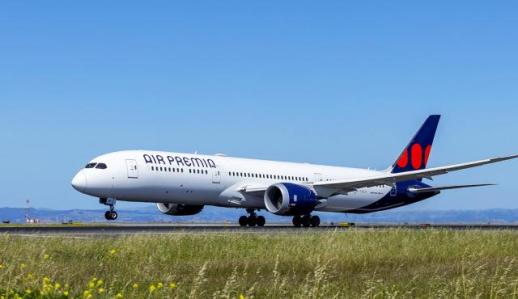 Air Premia pilots move closer to strike, file mediation request in Seoul Air Premia pilots have begun steps that could lead to a strike. According to the aviation industry on Monday, the Air Premia pilots union filed a mediation request with the Seoul Regional Labor Relations Commission. The move followed a strike-authorization vote held Jan. 29, which passed with 83.8% support (62 votes), and came after final talks with management broke down Monday morning. The union has sought better pay, saying wages have been frozen for years. The union was initially reported to have demanded an 8.3% increase in total wages. It later revised its proposal, seeking raises only for first officers at pay grade step 4 or below and retroactive application of increases since October 2024, but management rejected it. The union will make a final decision on whether to strike after a 14-day mediation process. Shin Dong Hun, head of the Air Premia pilots union, said consumer prices rose 24% over the past five years, cutting real wages. “The 8.3% we proposed is about one-third of the inflation rate,” he said, adding that management is focused on cutting costs despite what he described as significant union concessions. The risk of strikes has been rising across the airline industry this year. Earlier, the Air Busan pilots union sought mediation with the Busan Regional Labor Relations Commission after wage talks for 2025 broke down. The union demanded a 13% increase, citing pay levels at Jin Air, which is set to be merged, while management offered 3.7%, leaving the sides far apart. Pay gaps between airlines have emerged as a key issue in mediation requests. According to the Financial Supervisory Service’s electronic disclosure system, Air Busan employees’ average pay through June last year was 36 million won, or 81.8% of Jin Air’s 44 million won. Airlines’ reluctance to raise wages comes amid a weak business environment, with a strong exchange rate, fuel-cost burdens and intensifying competition weighing on profitability. The industry believes most carriers, except full-service carrier Korean Air, posted operating losses last year. An Air Premia official disputed the union’s claim of a wage freeze, saying annual pay has risen steadily since 2023 as pay steps were adjusted. The official also said pilots’ pay increases have outpaced those of other employees even as the union prepares for a strike. 2026-02-03 14:42:21
 -
 Veteran Actor Park Geun Hyung Reflects on Colleagues’ Deaths in KBS Interview Veteran actor Park Geun Hyung spoke about fellow actors who have recently died. On Tuesday’s KBS 1TV talk show “Morning Yard,” Park appeared as a guest. Park said it was his first time on the program in 10 years. He recalled previously greeting viewers on the show while appearing in the play “Father” with the late Yoon So Jung. After Park added that he had also appeared on the show when Lee Geum Hee and Lee Sang Byeok were hosts, presenter Um Ji In said, “This winter, we said goodbye to many teachers we loved. That’s why your presence feels so significant.” Park replied, “Now that they’ve all gone, it feels like my turn may be coming,” adding that the empty seats left behind make it seem as though he has stepped into their place. “I should work even harder for those who have passed,” he said. Meanwhile, “The Dresser,” starring Park and Oh Man Seok, is set in a provincial town in Britain during World War II and follows a theater troupe preparing a production of Shakespeare’s “King Lear.” The play runs through March 1 at the National Theater of Korea’s Daloreum Theater.* This article has been translated by AI. 2026-02-03 14:42:00