
Journalist

AJP
-
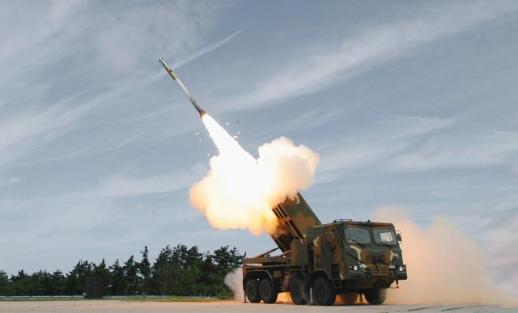 Why Korean rockets are finding buyers on Russia's European doorstep SEOUL, February 02 (AJP) - Norway’s decision to select South Korea’s Chunmoo multiple launch rocket system (MLRS) for its Long Range Precision Fire System (LRPFS) program reflects a broader recalibration under way among European and NATO militaries bordering Russia — one shaped less by brand loyalty than by timelines, industrial resilience and operational flexibility. The contract, signed by the Norwegian Defence Materiel Agency with Hanwha Aerospace, covers 16 Chunmoo launchers, precision-guided munitions, training and logistics support, and is valued at roughly 19 billion Norwegian kroner ($2 billion). Deliveries are set to begin in 2028. For Oslo, the decisive factor was speed. Since Russia’s full-scale invasion of Ukraine, demand for the U.S.-made HIMARS has surged across NATO and allied states, stretching production capacity and pushing delivery schedules years into the future. By contrast, Chunmoo was offered with a clearer delivery timeline and a phased induction plan, allowing Norway to address what it sees as a growing vulnerability in long-range land fires along its northern flank. “Hanwha’s Chunmoo system was the only offer that met all of the requirements in the competition,” the Norwegian government said in its procurement statement. A Hanwha Aerospace official, speaking on background, was more direct. “There is a substantial backlog for HIMARS, with deliveries delayed even for priority customers such as Poland,” the official said. “Norway’s assessment came down to delivery certainty and overall affordability relative to capability.” That calculation extended beyond sticker price. While Norway evaluated proposals from HIMARS and the German-French EURO PULS, Chunmoo was pitched as a turnkey solution — combining multiple rocket types, training, sustainment and future industrial participation under a single framework. Norwegian planners are understood to have placed particular weight on system integration with national command-and-control networks and the possibility of European-based ammunition production. Chunmoo versus HIMARS: flexibility against standardisation The fundamental distinction between Chunmoo and HIMARS lies in design philosophy. HIMARS is optimised around the U.S.-standard 227mm MLRS rocket family, along with ATACMS and the newer PrSM-class tactical missiles. Chunmoo, by contrast, was conceived from the outset as a multi-calibre modular launcher. A single K239 platform can fire 239mm unguided rockets, 239mm precision-guided munitions, or 600mm-class tactical ballistic missiles. In performance terms, the systems are comparable at shorter ranges. HIMARS firing GMLRS munitions reaches about 80 kilometres with a circular error probability (CEP) of under 10 metres. Chunmoo’s CGR-080 guided rockets achieve a similar 80-kilometre reach with a CEP of roughly 15 metres. Where Chunmoo differentiates itself is payload versatility. The same launcher can be configured for area suppression, precision strikes, or deep fires out to nearly 290 kilometres using CTM-series missiles. In effect, it allows a user to consolidate what would otherwise require multiple weapons systems into a single platform — an approach that appeals to militaries facing both budget constraints and manpower limits. Relearning the value of long-range fires Norway’s choice must also be read against its post–Cold War force posture. For decades, Oslo prioritised expeditionary operations and allied airpower, scaling back heavy land forces and allowing medium- and long-range ground fires to atrophy. That strategy left a conspicuous gap once Russia’s war in Ukraine underscored the enduring value of land-based precision strike — particularly in contested environments where air superiority cannot be assumed. In the High North, geography compounds the problem. Vast distances, limited infrastructure and extreme weather complicate air operations, making organic long-range fires a central element of deterrence rather than a niche capability. The LRPFS program is designed to restore that capability as a standing feature of Norway’s Army and to reinforce NATO’s ability to secure sea lanes and reinforcement routes in the Arctic. From Poland to Norway: toward a European ‘K-rocket belt’ Norway’s decision follows a much larger breakthrough for Chunmoo in Poland, which has effectively served as the system’s European test case. In October 2022, Warsaw signed a contract for 288 Chunmoo launchers under its Homar-K program, with deployments beginning in 2023. In late 2025, Poland deepened the partnership with a $4 billion deal to locally produce CGR-080 guided rockets. Those production lines, Polish and Norwegian officials say, will supply not only Poland but other European users, including Norway. The arrangement links Korean system design with Polish manufacturing and Nordic end users — a supply chain that reduces dependence on U.S. production capacity while anchoring key components inside Europe. The trajectory recalls the earlier spread of South Korea’s K9 Thunder howitzer, now in service across Poland, Norway, Finland and the Baltic states. In much of Northern and Eastern Europe, K9 has become the backbone of tube artillery. Chunmoo is positioning itself as its long-range counterpart — extending that firepower deeper into an adversary’s rear. While HIMARS remains the benchmark for NATO-standard long-range fires, Chunmoo’s appeal lies in its pragmatism. It offers faster delivery, greater configurability and a clearer path to local industrial participation — attributes increasingly prized by European states confronting a long-term Russian threat, strained defence supply chains and tighter fiscal limits. The choice also speaks to a broader unease in the High North. Alongside Russia’s militarisation of the Arctic, renewed U.S. attention to Greenland — including Donald Trump’s past and revived suggestions that Washington should assert greater control over the island — has reminded Nordic governments that even allies can become strategic variables. 2026-02-02 16:52:12
 -
 Grammys 2026: tantalizingly within reach — and quietly setting the stage for BTS' return SEOUL, February 02 (AJP) - The door finally opened wider for K-pop at the Grammy Awards, but not quite wide enough to let it walk through with a haul of trophies. At the 68th ceremony, K-pop-linked artists and works appeared across multiple nominations, signaling growing institutional comfort with the genre. Yet when the night ended, the Grammys remained — as they have long been — tantalizingly within reach. The most symbolic breakthrough came not from a performance category, but from behind the scenes. “Golden,” an original song from Netflix’s animated film K-Pop Demon Hunters, won Best Song Written for Visual Media, marking the first Grammy victory tied to a Korean-origin music production. Crucially, the award recognized songwriting and production, not chart power or stage presence — a rare acknowledgment of Korean creators’ craft rather than their commercial momentum. Major U.S. outlets took note. The New York Times framed the win as a corrective to K-pop’s long absence from Grammy history, while AP News underscored its status as the first Grammy win by a K-pop-linked project. If the trophies were scarce, the visibility was not. ROSÉ delivered a polished live debut with Bruno Mars, performing “APT.” — the first main-stage Grammy performance by a K-pop female soloist. Despite nominations across three major fields, the song ultimately went home without a win, a reminder of how unforgiving the top Grammy categories remain. Rookie girl group KATSEYE also made its Grammy stage debut as part of the Best New Artist showcase, performing “Gnarly.” Formed through a hybrid K-pop training system backed by HYBE and Geffen Records, the group was nominated for Best New Artist, an award that went to Olivia Dean. The media reaction reflected a shift in tone rather than triumphalism. Cosmopolitan highlighted ROSÉ’s appearance as a milestone for K-pop soloists, while Pitchfork pointed to the density of competition in Best Pop Duo/Group Performance, where “APT.” and KATSEYE’s “Gabriela” faced off against mainstream heavyweights. The category ultimately went to Ariana Grande and Cynthia Erivo for “Defying Gravity” from Wicked — a result that underscored the category’s ceiling rather than K-pop’s shortcomings. Critics and fans largely agreed: the absence of trophies did little to dull the night’s significance. Two K-pop acts appearing in core Grammy contexts in the same year marked a clean break from the past. This was no longer about a singular breakthrough or novelty moment, but about sustained presence — a recalibration of how K-pop fits into the Grammy ecosystem. Much of that recalibration traces back to BTS. Through repeated nominations and high-profile standalone performances in the early 2020s, the group redefined how non-English-language artists could occupy the Grammy main stage. While a major Grammy win has so far eluded them, their groundwork made space for artists like ROSÉ, KATSEYE and Korean-produced content to be taken seriously within the institution. That context matters as BTS prepares a full-scale return in March. The group’s comeback tour — spanning 34 regions and more than 80 shows — has already sold out stadiums worldwide, with roughly 2.4 million tickets snapped up across 41 venues. Additional dates are being added amid explosive demand, drawing attention well beyond the music industry. Seen this way, the 2026 Grammys were less a verdict than a positioning exercise. The trophies remain just out of reach, but closer than ever. By the time BTS winds down its Arirang album tour and the next Grammy night arrives, the distance may no longer feel teasing — but measured in inches rather than miles. 2026-02-02 16:37:55
 -
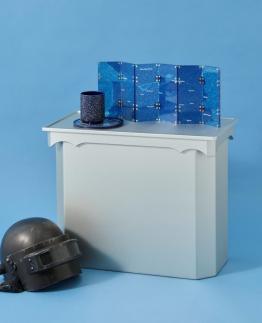 Krafton bridges PUBG universe with Korean traditional crafts SEOUL, February 02 (AJP) - Krafton unveiled Monday a collection merging its flagship battle royale IP "PUBG: Battlegrounds" with traditional Korean craftsmanship through a state-led cultural initiative. The project, hosted by the Ministry of Culture, Sports and Tourism and managed by the Korea Craft & Design Foundation, aims to reimagine traditional assets within modern industries. Design studio Superposition reinterpreted the game's iconic "Blue Zone" using "digital mother-of-pearl," transforming the strategic digital boundary into physical art pieces. Craft team Octique focused on lifestyle goods, blending the game's recognizable symbols with traditional artisan techniques. The lineup features chicken shaped amulets and mother-of-pearl frying pan designed hand mirrors, which marry the playful identity of PUBG with classical formative beauty. Regarding the project's goal, Krafton said the collaboration explores the practical utilization and industrial value of traditional culture through partnerships between creators and private enterprises. 2026-02-02 16:06:48
 -
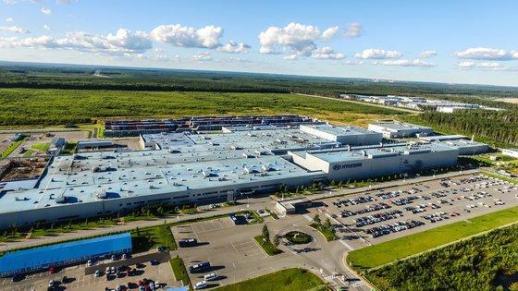 Hyundai Motor Group drops buyback option for Russian plant SEOUL, February 02 (AJP) - Hyundai Motor Group has decided not to exercise an option to repurchase its former manufacturing plant in Russia, effectively confirming its exit from the Russian market. It will only maintain support services for existing customers, according to industry sources on Monday. The group allowed the buyback option for the St. Petersburg facility to expire at the end of last month, choosing not to reacquire the plant. Hyundai Motor Group sold its entire Russian business, including the factory, to local firm Art-Finance in December 2023 for 10,000 rubles (about 140,000 won) after operations were disrupted by parts shortages and logistical challenges following Russia’s invasion of Ukraine. Given its strong market position in Russia at the time, Hyundai included a clause allowing it to repurchase the plant within two years. The expiration of that option now marks a formal decision not to return under current conditions. Instead of pursuing re-entry into a market still facing geopolitical uncertainty, the group plans to focus on after-sales service for vehicles already sold in Russia to protect brand reputation, the sources said. The company still could review a possible return if geopolitical risks, including the conflict in Ukraine, ease. Warranty repairs and customer service for existing Hyundai and Kia vehicles in Russia will continue. Hyundai Motor Group began expanding in Russia in 2007, completed its sixth overseas production base in St. Petersburg in 2010 and started local vehicle production in 2011. Operations were suspended in March 2022 following Western sanctions imposed after Russia’s invasion of Ukraine. Roughly one year and nine months later, the group divested its Russian operations, including the plant, to Art-Finance. * This article, published by Aju Business Daily, was translated by AI and edited by AJP. 2026-02-02 15:47:03
 -
 Actor Kim Seon-ho denies alleged tax evasion SEOUL, February 2 (AJP) - Actor Kim Seon-ho has denied allegations of tax evasion after claims that he set up a corporation with family members as executives, paid fabricated wages, and used a corporate credit card for personal expenses. In a press statement through his management agency Fantagio on Sunday, the actor said he is fully complying with all required legal and tax procedures. The allegations come amid his regaining popularity recently with his Netflix hit series "Can This Love Be Translated?" after a break he took several years ago due to a controversy involving his ex-girlfriend. But Kim explained that the family-run company was established for his theater-related activities with no intention of "tax reduction or tax evasion." Since the business has been inactive for about a year, he is now closing it in accordance with relevant regulations. He then vowed to continue complying with all relevant laws and procedures so he can continue his work without "unnecessary misunderstandings. Separately, it was previously revealed that singer-turned-actor Cha Eun-woo, who also belongs to the same agency, allegedly evaded taxes worth 20 billion won (US$13.6 million) by diverting taxable earnings through a company established by his mother, which reportedly had little to no actual business activity. Fantagio said it is cooperating with an investigation by tax authorities and will take necessary action. 2026-02-02 15:44:37
 -
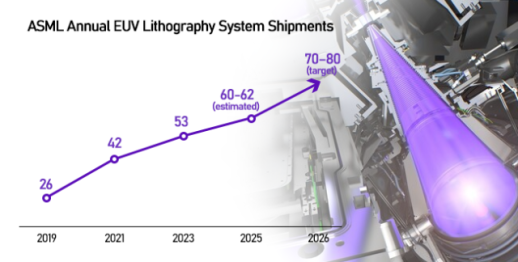 ASML's ambitious revenue target raise capacity upgrade room for memory chipmakers in AI heyday SEOUL, February 02 (AJP) - ASML’s ambitious revenue target signals greater room for scaling and production ramp-ups among chipmakers including Samsung Electronics and SK hynix, which together supply roughly 80 percent of the memory used in AI accelerators and hyperscale data centers. The outlook follows stronger-than-expected 2025 earnings from ASML, which reported total net sales of €32.7 billion ($38.8 billion), while fourth-quarter net bookings surged to €13.16 billion ($15.6 billion), more than double market expectations. The increase was driven largely by demand for extreme ultraviolet (EUV) lithography systems, which are essential for manufacturing advanced chips used in artificial intelligence workloads. EUV tools accounted for about 56 percent of new bookings in the fourth quarter. ASML holds a de facto monopoly on EUV lithography, making its production capacity a structural constraint for the global semiconductor industry. Unlike conventional chipmaking equipment, EUV systems remain a tightly rationed resource due to their complexity and precision requirements. Annual EUV shipments have risen only gradually, from 26 units in 2019 to 42 units in 2021, 53 units in 2023 and an estimated 60–62 units in 2025. For 2026, ASML is targeting output of 70–80 units, its highest level to date, according to industry estimates. Even at that level, supply remains well below demand. Global chipmakers — including Taiwan Semiconductor Manufacturing Co., Micron Technology and Intel — are competing aggressively for limited allocations, as capacity upgrades and technology transitions increasingly hinge on securing additional EUV machines. “Lithography tools are the most critical equipment in semiconductor manufacturing, regardless of whether the chips are for memory or logic,” said Lee Jong-hwan, a professor of system semiconductor engineering at Sangmyung University. “Because EUV systems are ultra-precision machines, only a limited number can be produced each year, which is why ASML’s annual output is measured in just several dozen units.” “In AI semiconductors, both memory and non-memory chips are essential,” he added. “The surge in EUV demand reflects how AI workloads are expanding across both segments. Given that advanced DRAM, including high-bandwidth memory, is now produced at around the 10-nanometer class in Korea, it is highly likely that Samsung Electronics and SK hynix have already secured reservations for sub-10nm EUV tools.” ASML’s decision to raise its 2026 revenue guidance to €34 billion–€39 billion is therefore widely interpreted as a sign that a substantial portion of next year’s EUV output has already been committed to leading customers, including Korean memory makers ramping up production of high-bandwidth memory and advanced DRAM for AI accelerators. The company has also doubled its long-term revenue target for 2030 to €60 billion ($71 billion), supported by the successful delivery of its first commercial-grade high–numerical aperture (High-NA) EUV system, the TWINSCAN EXE:5200B. Compared with standard EUV tools using a 0.33 numerical aperture, the High-NA system operates at 0.55NA, enabling nearly three times the transistor density — a critical advantage for next-generation AI processors. The first systems were delivered to SK hynix and Intel. With EUV tools costing well over $150 million each and available in limited numbers, competitiveness is increasingly determined not only by access, but by how efficiently chipmakers convert those investments into higher yields and faster production ramps. SK hynix, the world’s leading supplier of high-bandwidth memory for AI data centers, has already moved early. The company said it installed a production-ready High-NA EUV system at its M16 fab in Icheon in 2025. ASML also expects its exposure to China to decline as export controls tighten, with China’s revenue share projected to fall from about 33 percent in 2025 to around 20 percent in 2026. Rising demand from South Korea, Taiwan and the United States is expected to more than offset the decline. As global investment in AI infrastructure accelerates, ASML’s constrained EUV output is set to remain a key gatekeeper — turning access, execution and yield management into decisive variables for Korea’s memory chipmakers in the next phase of the semiconductor cycle. 2026-02-02 14:39:16
 -
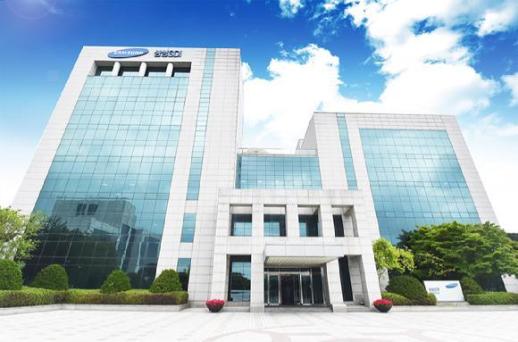 Samsung SDI swings to operating loss in 2025 on weak EV demand SEOUL, February 02 (AJP) - Samsung SDI swung to an operating loss in 2025 as a prolonged slowdown in electric-vehicle demand and shifting policy conditions in the United States and Europe weighed on performance, the battery maker said on Monday. In a regulatory filing, the company reported an operating loss of 1.72 trillion won for the year, reversing an operating profit of 363.3 billion won in 2024. Revenue fell 20 percent to 13.27 trillion won from 16.6 trillion won a year earlier. Fourth-quarter revenue reached 3.86 trillion won, up 26.4 percent from the previous quarter and 2.8 percent from a year earlier, while the operating loss narrowed to 299.2 billion won, roughly half the level recorded in the third quarter. Battery sales totaled 3.6 trillion won in the quarter, rising 28.4 percent quarter on quarter and 1.6 percent year on year. The battery division posted an operating loss of 338.5 billion won. Samsung SDI forecast that the global EV battery market excluding China will grow about 6 percent this year, citing looser green policies in North America and Europe and automakers’ adjustments to electrification strategies. Demand for ESS batteries is expected to continue rising for power-grid applications and backup systems, supported by expanding investment in artificial intelligence data centers. * This article, published by Aju Business Daily, was translated by AI and edited by AJP. 2026-02-02 14:37:35
 -
 Tighter loans fuel demand for smaller apartments SEOUL, February 2 (AJP) - Strong demand for homes along the Han River in Seoul has driven up prices of small or midsize apartments, as they are relatively affordable and eligible for larger loans. According to transaction data of real estate compiled by KB Kookmin Bank and released on Monday, the average price of apartments measuring 60 to 85 square meters in about a dozen districts south of the Han River stood at 1.83 billion won (about US$1.3 million) in January, up 0.96 percent from the previous month, surpassing 1.8 billion won for the first time. These districts include Dongjak, Gangnam, Gangdong, Gangseo, Geumcheon, Gwanak, Guro, Seocho, Songpa, Yangcheon, and Yeongdeungpo. In about 14 districts north of the river, prices averaged 1.14 billion won in January, up 0.83 percent from December. The increase comes after the government introduced a series of stringent measures in June and October last year to curb real estate speculation, limiting loans to 600 million won for apartments priced at 1.5 billion won or below. Separately, President Lee Jae Myung recently posted a series of messages on social media, signaling a strong resolve to rein in the overheating housing market, though it remains to be seen whether his efforts will succeed. 2026-02-02 14:36:53
 -
 Uzbekistan and Türkiye partner to modernize workforce and combat poverty SEOUL, February 02 (AJP) - Uzbekistan and Türkiye have established a new model of institutional cooperation to enhance human capital and improve public administration in the labor market. The partnership focuses on professional development for government officials to accelerate poverty reduction and ensure sustainable employment in both nations. The Embassy of Uzbekistan in the Republic of Korea said Monday that a Memorandum of Understanding (MoU) was signed by A.X. Rakhmonov, Director of the Center for the Professional Development of Employees under the Uzbek Ministry of Poverty Reduction and Employment, and Dr. Elif Gökçearslan, President of the Center for Labour and Social Security Training and Research (ÇASGEM) under the Turkish Ministry of Labour and Social Security. The agreement serves as a strategic framework for sharing expertise in occupational safety, human resource management, and labor market regulation. Under the document, the two countries will jointly design training programs, methodological materials, and master classes to build professional competencies. The cooperation also includes the involvement of specialists in scientific research and the preparation of expert evaluations for sectoral policies. This initiative follows the Fourth Meeting of the Türkiye-Uzbekistan High-Level Strategic Cooperation Council held in Ankara on January 29, where President Shavkat Mirziyoyev and President Recep Tayyip Erdoğan pledged to deepen bilateral ties. During that summit, the two leaders set a target to increase trade volume to 5 billion dollars and signed multiple agreements covering healthcare, education, and social protection. The labor partnership is specifically designed to align Uzbekistan’s professional qualification system with international benchmarks. Practical efforts are already underway to translate Turkish professional standards for 22 high-demand occupations into the Uzbek language. This alignment is expected to eventually lead to the mutual recognition of qualification certificates, expanding opportunities for citizens to work legally and safely in both countries. Officials stated that the cooperation will be conducted with full transparency, with project updates regularly published on official platforms. While the MoU establishes general principles and does not impose immediate financial obligations, it allows for the future involvement of international funds and third-party institutions to scale up joint workforce projects. 2026-02-02 14:23:21
 -
 K-pop acts walk away without trophies but leave mark on Grammy stage SEOUL, February 02 (AJP) — K-pop artists left the 68th Grammy Awards without major wins on Sunday, but delivered high-profile performances and historic nominations that underscored the genre’s expanding presence on the global music stage. The awards ceremony was held at the Crypto.com Arena in Los Angeles, bringing together leading figures from the international music industry. BLACKPINK member ROSÉ became the first K-pop female solo artist to receive a Grammy nomination, earning a nod for Song of the Year for her collaborative track “APT.” with Bruno Mars. The award went to Billie Eilish for “Wildflower.” Despite missing out on the trophy, ROSÉ performed “APT.” with Mars during the ceremony, marking her Grammy stage debut and the first main-stage performance by a K-pop female soloist at the event. Released in October 2024, “APT.” is a pre-release single from ROSÉ’s first full-length album rosie. The song drew global attention upon release, debuting at No. 1 on Spotify’s Global chart and entering the UK Official Singles Chart Top 100 at No. 4 — the highest ranking achieved by a K-pop female solo artist. According to Spotify, the track surpassed 1 billion streams within 100 days of release and has since reached 2.2 billion cumulative streams. Rookie girl group KATSEYE also appeared on the Grammy stage as part of the Best New Artist showcase, performing “Gnarly.” The group, formed through K-pop-style training by HYBE and Geffen Records, received nominations for Best New Artist and Best Pop Duo/Group Performance for “Gabriela.” The Best New Artist award went to Olivia Dean, while Best Pop Duo/Group Performance was awarded to Cynthia Erivo and Ariana Grande for “Defying Gravity.” 2026-02-02 14:16:52