
Journalist

AJP
-
 KAIST researchers develop high-efficiency red micro-LED for realistic virtual reality displays SEOUL, January 29 (AJP) - Researchers have overcome a major technical hurdle in micro-LED technology by developing a high-efficiency red micro-LED that enables ultra-high-resolution imagery for virtual and augmented reality devices. The new technology significantly improves power efficiency and achieves a pixel density of 1,700 pixels per inch, bringing wearable displays closer to mimicking real-world visual clarity. The Korea Advanced Institute of Science and Technology (KAIST) announced on January 28 that a research team led by Professor Kim Sang-hyun from the School of Electrical Engineering developed the display. The project was a collaborative effort with Professor Keum Dae-myeong of Inha University and industry partners QSI and Raontech. The resulting display offers a resolution three to four times higher than current smartphone screens, reaching a level described as near-realistic for virtual reality (VR) and augmented reality (AR) applications. Micro-LEDs are next-generation displays where individual sub-millimeter LEDs emit their own light, offering superior brightness and lifespan compared to Organic Light Emitting Diodes (OLEDs). However, the technology has faced two primary challenges: the rapid loss of efficiency in red pixels as they shrink in size, and the difficulty of transferring millions of tiny LEDs onto a circuit board without defects. To address the efficiency issue, the team utilized a quantum well structure using aluminum indium phosphide and gallium indium phosphide (AlInP/GaInP). This structure acts as an energy barrier that prevents electrons from leaking out, trapping them in the light-emitting space. This allows the red pixels to remain bright and efficient even at extremely small scales. For the manufacturing process, the researchers moved away from the traditional pick-and-place method, which involves moving LEDs individually and often results in alignment errors. Instead, they employed monolithic 3-D integration, a technique where the LED layers are stacked directly onto the driving circuit. This method reduces alignment errors to the nanometer level and allows for a more stable production of ultra-high-resolution screens. The team also established low-temperature processing techniques to ensure the underlying silicon circuits were not damaged by heat during the LED integration. The successful demonstration of a functional display using these high-resolution red micro-LEDs is considered a significant milestone. The technology is expected to be used in AR and VR smart glasses, automotive head-up displays, and various wearable devices where high pixel density is required to eliminate the visible graininess of digital images. "This research has solved the long-standing problems of red pixel efficiency and driving circuit integration in the micro-LED field," Professor Kim Sang-hyun said. "We will continue to develop this into a next-generation display technology that is ready for commercialization." The study, led by Dr. Park Ju-hyeok from the KAIST Institute for Information Technology Convergence, was supported by the National Research Foundation of Korea. 2026-01-29 08:44:40
 -
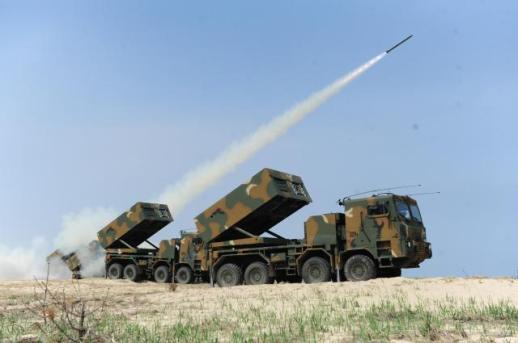 Hanwha Aerospace seeks Chunmoo rocket launcher deal in Norway SEOUL, January 29 (AJP) - Hanwha Aerospace is emerging as a key contender to supply multiple rocket launchers to Norway, as the Nordic country moves ahead with a roughly $2 billion long-range artillery procurement. Norway’s parliament has given final approval to a plan to acquire a long-range artillery system, local media reported on Wednesday. The proposed deal is estimated to include 16 Chunmoo multiple rocket launchers along with related equipment. Industry officials said Norway is likely to favor Hanwha Aerospace as the development of new multiple rocket systems in Europe could take years, while Hanwha is seen as capable of delivering the systems more quickly. Hanwha recently established a local production facility in Poland for Chunmoo guided missiles and plans to begin deliveries as early as 2030. The Chunmoo system can be equipped with missiles with a range of up to 500 kilometers and is regarded as faster to deploy than competing systems. A win in Norway would mark Hanwha’s further expansion in Europe, following its entry into the Polish market late last year. * This article, published by Aju Business Daily, was translated by AI and edited by AJP. 2026-01-29 08:40:28
 -
 Riboncar Says Certified Used-Car Sales Rose 41% in 2025, Led by Hyundai Grandeur Riboncar said Thursday that its sales last year rose 41% from the previous year. As sales expanded for key segments such as sport utility vehicles and mini cars, the company said buyers increasingly weighed overall value and practicality for the vehicle class, not just price, when purchasing used cars. The most-selected company-run certified used car among Riboncar customers was Hyundai Motor Co.’s Grandeur. The Grandeur, a leading large sedan in South Korea, is seen as offering proven quality, a nationwide parts and service network, and stable resale value, the company said. Next were the Kia Carnival, Genesis G80, Kia K5 and Kia Sorento. The shift toward value-focused buying also showed up in sales by vehicle type and fuel, Riboncar said. It cited strong growth for SUVs and multipurpose vehicles for space, mini cars for tax benefits and lower upkeep costs, and electric and hydrogen vehicles for lower fuel expenses. SUV and MPV sales rose 36% from a year earlier and accounted for 29% of total sales. By model, the top sellers were the Kia Carnival, Kia Sorento, Hyundai Santa Fe, Genesis GV70 and Hyundai Palisade. The top five models made up about half of SUV and MPV sales. Mini-car sales rose 34% from the previous year. Riboncar said the segment drew value-focused buyers because of relatively low vehicle prices and lower ongoing costs such as insurance and taxes. Sales of electric and hydrogen vehicles rose 2.7 times from a year earlier. Riboncar said used electric vehicles can see larger price drops than new cars, while offering lower operating costs, making them an option for buyers weighing both cost and practicality. A Riboncar official said more customers are closely comparing value by vehicle class rather than focusing only on price, and that quality control through its direct-run system and transparent information helped build trust and drive sales growth. The official said the company will keep working to reduce customers’ burden and uncertainty in the used-car buying process and improve services that support daily life and lifestyles.* This article has been translated by AI. 2026-01-29 08:39:00
 -
 Nexon to Refund All Purchases for MapleStory Idle After Ability Odds Error Nexon has decided to refund in full all money users spent in the idle game “MapleStory Idle” following a dispute over ability-related probability settings. The company said it is the first time in Nexon’s game-service history that it has moved from a CEO apology to compensation and a full refund over an operations controversy. In a notice posted Tuesday, Nexon said it committed a “serious mistake” by fixing an error that had a “critical impact” on gameplay without notifying users. “Taking full responsibility, we will provide a full refund to any user who wants one,” the company said. The refund covers all paid items purchased from the service launch on Nov. 6, 2025, through the time of the refund notice. It includes not only products tied to the disputed features — ability resets, attack speed and “Quick Hunt” tickets — but all purchase history during the period. Nexon said it will announce the refund process and application period later. After a refund is completed, gameplay will be restricted under existing service policies, it said, and purchases made after the notice will not be eligible. Previously promised individual compensation will be provided separately. The decision followed a late discovery of an error in the game’s core ability-option system that prevented the maximum value from appearing as intended. Nexon said the problem occurred during coding, and that its initial response was delayed because its internal probability-monitoring system was not applied due to collaboration with an outside developer. The Korea Game Users Association had filed a complaint with the Fair Trade Commission, alleging Nexon Korea violated South Korea’s e-commerce law, after receiving authorization from 1,507 users. The group withdrew the complaint after Nexon decided on full refunds. Nexon said that if an issue arises that damages user trust, it will offer the highest level of compensation, beyond the costs users incurred.* This article has been translated by AI. 2026-01-29 08:36:25
 -
 NC AI Unveils Beta of Varco Sound, an AI Audio Generation Service NC AI, an artificial intelligence company, said Wednesday it has released a beta version of Varco Sound, a sound-generation AI service designed to create multiple sounds needed for a single scene at once and allow users to split the output by element for editing. Varco Sound accepts images and video as well as text. Users can describe a situation in a sentence — such as “water droplets in a dark cave” — or upload a forest photo or battle footage, and the service analyzes the scene’s context to automatically generate sound files, or sound assets. The generated audio is provided in “multitrack,” separating sound elements into individual tracks. That allows detailed postproduction edits, such as adjusting the volume of a specific sound or swapping out an element. NC AI said the goal is to reduce the “difficulty of re-editing” often cited with single-track audio generation. The service also emphasizes variation. It can quickly produce multiple versions while keeping the texture and nuance of a user-uploaded sample, expanding options and reducing prototyping time. Varco Sound runs on the web without a separate installation. Users can sign up with email verification, and it is offered through the Varco Game Package plan, which combines it with the 3D generation AI service Varco 3D. Pricing includes a 22,000-won-a-month Plus plan (10,000 credits) and a 110,000-won-a-month Premium plan (50,000 credits). New users receive 2,000 credits. NC AI said it aims to refine quality by incorporating feedback during the beta period and target an official launch in the first half of this year. The company is also developing plugins for game engines Unity and Unreal, as well as plugins that run directly in professional audio production software. “Varco Sound is a technology that turns imagined sounds into assets that can be produced immediately,” NC AI CEO Lee Yeon Su said. “Based on our multimodal AI capabilities, we will expand it into a platform that leads the global content production market.” 2026-01-29 08:33:00
 -
 Air Busan to Add Four Seasonal Charter Routes Ahead of Summer Peak Air Busan is expanding its flight offerings with four seasonal charter routes ahead of the summer peak travel season. The airline said Wednesday it will operate charter flights for the 2026 summer season on two routes from Busan — Shizuoka and Takamatsu — and two from Incheon — Hong Kong and Chiang Mai. Air Busan said the added flights are aimed at giving passengers more choices, expanding service from Busan to smaller Japanese cities and launching new routes from Incheon. Flights from Busan to Shizuoka will begin March 30, and Busan to Takamatsu will begin March 31, each operating three times a week. Incheon-Hong Kong service will start March 29 with daily flights, and Incheon-Chiang Mai will start April 29 with four flights a week. With the charter operations, Air Busan plans to strengthen its network from Gimhae International Airport by operating routes that had previously been available only from the Seoul metropolitan area. From Incheon, the airline will newly operate the Hong Kong and Chiang Mai routes. It said the charter flights will help it respond to demand in the greater Seoul area and diversify its route portfolio. "This summer-season charter operation is a strategic decision based on a comprehensive review of customer demand and route competitiveness," an Air Busan official said. "We will continue to respond flexibly to changes in demand, offer customers a wider range of travel options, and steadily strengthen route competitiveness across both regional markets and the Seoul metropolitan area."* This article has been translated by AI. 2026-01-29 08:30:33
 -
 Korea Rural Economic Institute Announces New Appointments ◇Korea Rural Economic Institute △Appointments ▷Seo Dae Seok, head of the Agribusiness Innovation Research Division ▷Kook Seung Yong, head of the Agricultural Finance and Fiscal Policy Research Office under the Macroeconomic Agricultural Policy Research Division ▷Seong Jae Hoon, head of the AI Agricultural Policy Research Team * This article has been translated by AI. 2026-01-29 08:27:00
 -
 Hana Securities raises Kia target price 40% to 210,000 won on earnings outlook, SDV and robotics Hana Securities on Wednesday raised its target price for Kia by 40% to 210,000 won from 150,000 won, citing higher earnings estimates, improved readiness in software-defined vehicles (SDVs) and robotics, and a higher valuation multiple for its auto business. It kept its rating at buy. Analyst Song Sun-jae said the firm lifted its 2026 operating profit estimate by 3% to reflect new-model launches and foreign-exchange effects, adding that the expected dividend yield is 4.5%. He said Hana also raised the target multiple for Kia’s auto business to eight times from seven times as it sees improving long-term competitiveness in SDVs and robotics. The higher target price also reflects the value of Kia’s stakes in Hyundai Mobis and Boston Dynamics, he said. Kia’s fourth-quarter results met market expectations. On a consolidated basis, revenue rose 3% from a year earlier to 28.09 trillion won, while operating profit fell 32% to 1.84 trillion won. Operating margin slipped 3.4 percentage points to 6.6%. Global wholesale sales fell 1% to 763,000 vehicles, but gains in North America and India offset weakness in some regions. Hana said higher average selling prices, cost cuts and foreign-exchange effects helped support results, and that the profitability decline was limited when excluding tariff-related costs. Hana’s medium- to long-term view remained positive. It said that despite slower growth in global industry demand in 2026, Kia could improve volume and model mix in key markets through new launches focused on higher-priced vehicles. It cited EV4, EV5, PV5 and Seltos in South Korea; Carnival HEV, Telluride and Seltos in the United States; EV4, EV5, EV2 and K4 in Europe; and Seltos and a strategic electric vehicle in India. Kia has guided for 2026 consolidated revenue of 122.3 trillion won and operating profit of 10.2 trillion won, targeting an operating margin of 8.3%. Song said Kia told a conference call it aims for 3.35 million wholesale sales in 2026, up 6.8% from the prior year. In the United States, he said Kia expects growth and a better mix led by the Telluride — to be launched as a new model for the first time in seven years — with its target rising to 180,000 units from 120,000, along with the Carnival HEV and Seltos. In Europe, he said sales of EV models launched in 2025 are expected to ramp up, and Kia plans to add the lower-priced EV2 model. * This article has been translated by AI. 2026-01-29 08:24:00
 -
Hanwha Aerospace Seen as Front-Runner for Norway’s Chunmoo Rocket Deal Hanwha Aerospace is widely being cited as a leading contender to supply Norway’s multiple rocket launcher program, with analysts pointing to fast delivery and strong performance as key advantages. According to local media reports on Thursday, Norway’s parliament gave final approval to a US$2 billion plan to procure a long-range artillery system. The export contract is believed to include 16 Chunmoo launchers and related equipment. Industry watchers say Norway is likely to choose Hanwha Aerospace, as developing new multiple rocket systems in Europe can take considerable time, while Hanwha is seen as able to deliver more quickly. Hanwha Aerospace recently set up a local production facility in Poland for Chunmoo guided missiles and is expected to begin deliveries as early as 2030. The Chunmoo’s range can be extended to up to 500 kilometers (311 miles), and the company is viewed as faster than rivals in delivering systems, giving it an edge in the competition. If Hanwha wins the project, it would follow its entry into Poland late last year with a move into the Norwegian market.* This article has been translated by AI. 2026-01-29 08:21:32
-
 Autonomous A2Z posts record revenue on growth in self-driving projects Autonomous A2Z said Wednesday it set a record for annual revenue last year. The company reported about 16 billion won in revenue on a preliminary basis, up about 50% from 10.7 billion won a year earlier. It attributed the increase, ahead of full commercialization of autonomous driving services, to winning central and local government research and development projects, field tests and contract work. Autonomous A2Z said it has posted more than 10 billion won in revenue for a second straight year, demonstrating its ability to execute in the autonomous driving market. It noted that Level 4 fully driverless technology has yet to be commercialized globally, and said its accumulated testing and operations experience could translate into faster monetization once sales become possible. Its operating footprint also expanded. As of the end of last year, the company had received permits to operate a cumulative 81 autonomous vehicles and has run services in 14 provinces and major cities nationwide. That covers about 82% of South Korea’s 17 autonomous driving pilot operation zones, the company said, calling it the largest operating record in the country. Its cumulative autonomous driving distance at home and abroad totaled 934,643 kilometers, which it said is equivalent to more than 23 trips around the Earth. Total riders on its autonomous vehicles last year reached 114,681. The company said it drew about 20,000 users each in key test areas including Anyang, Sejong, Seoul and Incheon International Airport. In Hadong, South Gyeongsang province, a rural autonomous bus carried about 10,000 passengers, the company said, positioning it as a practical option for addressing transportation gaps. It also said it has built real-world operating experience through repeated runs and long continuous driving in varied settings, including urban traffic and tourist areas. Overseas, the company said it became the first South Korean firm to obtain a Singapore autonomous driving license and, working with Grab, launched Singapore’s first autonomous shuttle service on public roads. In the United Arab Emirates, it said it formed the first autonomous driving joint venture by a South Korean company with local AI firm Space42. It also signed a memorandum of understanding with Japanese trading company Kanematsu, and said it is the only South Korean autonomous driving company expanding its business base overseas. Chief Executive Han Ji Hyung said, “2025 was a year when, before commercialization, we were able to validate both our technology and our ability to execute through government R&D and domestic and overseas demonstration projects.” He added, “Based on driving data proven through officially recognized evaluations and figures, and on global business experience, we will lead the advancement and commercialization of autonomous driving, which will be central in the era of physical AI.”* This article has been translated by AI. 2026-01-29 08:21:00