
Journalist

AJP
-
 Autonomous A2Z posts record revenue on growth in self-driving projects Autonomous A2Z said Wednesday it set a record for annual revenue last year. The company reported about 16 billion won in revenue on a preliminary basis, up about 50% from 10.7 billion won a year earlier. It attributed the increase, ahead of full commercialization of autonomous driving services, to winning central and local government research and development projects, field tests and contract work. Autonomous A2Z said it has posted more than 10 billion won in revenue for a second straight year, demonstrating its ability to execute in the autonomous driving market. It noted that Level 4 fully driverless technology has yet to be commercialized globally, and said its accumulated testing and operations experience could translate into faster monetization once sales become possible. Its operating footprint also expanded. As of the end of last year, the company had received permits to operate a cumulative 81 autonomous vehicles and has run services in 14 provinces and major cities nationwide. That covers about 82% of South Korea’s 17 autonomous driving pilot operation zones, the company said, calling it the largest operating record in the country. Its cumulative autonomous driving distance at home and abroad totaled 934,643 kilometers, which it said is equivalent to more than 23 trips around the Earth. Total riders on its autonomous vehicles last year reached 114,681. The company said it drew about 20,000 users each in key test areas including Anyang, Sejong, Seoul and Incheon International Airport. In Hadong, South Gyeongsang province, a rural autonomous bus carried about 10,000 passengers, the company said, positioning it as a practical option for addressing transportation gaps. It also said it has built real-world operating experience through repeated runs and long continuous driving in varied settings, including urban traffic and tourist areas. Overseas, the company said it became the first South Korean firm to obtain a Singapore autonomous driving license and, working with Grab, launched Singapore’s first autonomous shuttle service on public roads. In the United Arab Emirates, it said it formed the first autonomous driving joint venture by a South Korean company with local AI firm Space42. It also signed a memorandum of understanding with Japanese trading company Kanematsu, and said it is the only South Korean autonomous driving company expanding its business base overseas. Chief Executive Han Ji Hyung said, “2025 was a year when, before commercialization, we were able to validate both our technology and our ability to execute through government R&D and domestic and overseas demonstration projects.” He added, “Based on driving data proven through officially recognized evaluations and figures, and on global business experience, we will lead the advancement and commercialization of autonomous driving, which will be central in the era of physical AI.”* This article has been translated by AI. 2026-01-29 08:21:00
 -
 Samsung Electronics posts record Q4 revenue of 93.8 trillion won, operating profit 20.1 trillion Samsung Electronics said a boom in its memory business drove record quarterly results in the fourth quarter of 2025, with consolidated revenue of 93.8 trillion won and operating profit of 20.1 trillion won. It said the quarter marked the first time a South Korean company has posted more than 20 trillion won in operating profit in a single quarter. In an earnings filing on Wednesday, Samsung reported fourth-quarter consolidated revenue of 93.8374 trillion won and operating profit of 20.0737 trillion won. Revenue rose 23.82% from a year earlier, while operating profit jumped 209.17%. The core DS (Device Solutions) division posted quarterly revenue of 44 trillion won and operating profit of 16.4 trillion won, up 46.2% and 465%, respectively, from a year earlier. Samsung cited expanded sales of high-value memory such as high-bandwidth memory, or HBM, and rising memory prices, which it said delivered record quarterly revenue and operating profit for the division. Samsung said it responded to stronger demand for commodity DRAM and ramped up HBM supply, boosting profitability. Sales volumes also rose for higher-value products including server DDR5 and enterprise SSDs. System LSI results fell from the previous quarter due to seasonal demand shifts, but image sensor sales increased for new 200-megapixel and “big pixel” 50-megapixel products. Foundry revenue rose as Samsung moved to full-scale mass production of first-generation 2-nanometer products and saw strong demand from customers in the United States and China, though profitability gains were limited by provisions-related costs. The DX (Device eXperience) division reported revenue of 44.3 trillion won and operating profit of 1.3 trillion won. Revenue fell 8% from the previous quarter as the impact of new smartphone launches faded and competition intensified, but companywide results improved as DS revenue rose 33% from the prior quarter. Harman, the automotive electronics unit, posted revenue of 4.6 trillion won and operating profit of 300 billion won. Samsung Display reported revenue of 9.5 trillion won and operating profit of 2 trillion won, maintaining solid performance. Samsung said it continued heavy investment to strengthen future competitiveness. Research and development spending totaled 10.9 trillion won in the fourth quarter, and reached a record 37.7 trillion won for full-year 2025. Facility investment was 20.4 trillion won in the quarter, including 19 trillion won for DS and 700 billion won for displays. Full-year 2025 facility investment totaled 52.7 trillion won, including 47.5 trillion won for DS and 2.8 trillion won for displays. Samsung said DS will focus spending on shifting to advanced processes and upgrading existing lines to meet demand for high-value products, while the display business will invest in upgrades and performance improvements to existing lines. Looking ahead, Samsung said it expects heightened geopolitical uncertainty, including global tariffs, even as demand remains strong for next-generation semiconductors. Despite ongoing trade risks, it said the DS division will seek leadership in the AI semiconductor market by leveraging its “one-stop solution” capabilities spanning logic, memory, foundry and packaging. In DS, Samsung said it will expand supply of high-performance products as the HBM4 market ramps up and server DRAM moves toward higher capacities. In NAND, it plans to increase sales of high-performance TLC-based SSDs to meet rising demand for AI-focused KV SSDs. The foundry business aims for double-digit revenue growth and improved profit and loss centered on advanced processes, and plans in the second half to strengthen technology competitiveness through mass production of second-generation 2-nanometer products and optimization of its 4-nanometer process. The DX division said it will strengthen core competitiveness by diversifying its supply chain and optimizing operations, while expanding its AI-enabled flagship lineup and offering more integrated AI experiences. Harman said it will work to improve profitability by expanding automotive order wins and increasing sales of premium audio products. The display business said it will maintain leadership in small and mid-sized panels for smartphones and expand sales of large panels focused on premium TVs and monitors. 2026-01-29 08:18:00
 -
 South Korea to Allow High-Risk Single-Stock Leveraged ETFs; KOSPI Rally Continues ◆Aju Economy top stories ▷If high-risk leveraged ETFs are introduced, “Korea’s market will heat up even more” -Last year in Hong Kong and the U.S., leveraged and inverse ETFs tracking individual stocks at 2x or -2x became widely used. In South Korea, regulations have blocked such launches, and they have been cited as a factor behind outflows by retail investors buying overseas assets. -The government plans to allow high-risk, high-multiple ETFs in South Korea to boost the domestic market and encourage overseas investment funds to return. It is set to issue a legislative notice on Jan. 30 for a revised enforcement decree of the Capital Markets Act. -Under the deregulation guidelines, eligible underlying stocks will be limited to blue chips by market capitalization. Only products targeting 2x and -2x daily returns will be allowed; 3x products will be excluded. -Financial authorities expect the move to ease the concentration of ETF investing overseas and to increase trading value and liquidity in the domestic market. -Concerns remain that speculative trading could increase volatility. Even so, the KOSPI has extended a record rally, breaking above 5,100 for the first time. ◆Key report ▷Don’t let the successor be swayed (say what needs to be said) -Meritz Securities said it expects the U.S. policy rate cut in 2026 could be possible around June, after Chair Jerome Powell steps down, and it maintained its forecast for two cuts this year to 3.25%. -At the January FOMC meeting, the Federal Reserve held rates steady despite dissenting views favoring a cut from Governors Christopher Waller and Adriana D. Kugler. The Fed cited lower downside risks to employment and upgraded its assessment of the economy from “moderate improvement” to “solid improvement.” -Powell said tariff-driven inflation pressure would be temporary and drew a line by saying no one is currently considering a rate hike. Meritz said he is likely to strengthen messaging on monetary policy for the remainder of his term. -Powell avoided direct comment on controversy over pressure from President Donald Trump and Fed personnel issues, but said in principle that the next Fed chair “should not be swayed by elected power.” -With markets focused less on the decision itself than on the next Fed chair, Rick Rieder was seen as the leading candidate at about 40% on Kalshi, according to the report. ◆Key disclosures after the close (28th) ▷LG Chem to pay cash dividends of 2,000 won per common share and 2,050 won per preferred share ▷SK hynix to additionally acquire shares of its U.S. subsidiary for 14.428 trillion won ▷Taeyoung Engineering & Construction terminates a 74.3 billion won contract for a Busan small-scale housing redevelopment project ▷Daol Investment & Securities posts 42.3 billion won in net profit last year, marking a fourth straight profitable quarter ▷SK Telecom to dispose of treasury shares worth 3.6 billion won ◆Fund flows (as of the 27th, excluding ETFs) ▷Domestic equity funds: +14.4 billion won ▷Overseas equity funds: +97.7 billion won ◆Key events today (29th) ▷Germany: January GfK consumer sentiment index ▷United States: November trade balance; December PCE price index; December personal income and spending; third-quarter nonfarm labor productivity and unit labor costs* This article has been translated by AI. 2026-01-29 08:15:50
 -
 Samsung Electronics to Pay 1.3 Trillion Won Special Dividend for Q4 2025 Samsung Electronics said on Wednesday it will pay a 1.3 trillion won special dividend tied to its 2025 fourth-quarter results. Under its 2024-2026 shareholder-return policy, Samsung Electronics has been paying about 2.45 trillion won in cash dividends each quarter, or 9.8 trillion won a year. Including the 1.3 trillion won special dividend for the fourth quarter, the quarterly payout will rise to about 3.75 trillion won, bringing total annual dividends to 11.1 trillion won. The dividend per share for the fourth quarter will increase to 566 won in 2025 from 363 won in 2024. The annual per-share total will rise to 1,668 won from 1,446 won over the same period. Samsung Electronics’ last special dividend was in the fourth quarter of 2020, when it paid 10.7 trillion won in addition to regular dividends. The company’s move is seen as expanding shareholder returns beyond its prior dividend commitment, as the government pushes measures to boost shareholder value, including a separate tax system for dividend income introduced this year after revisions to tax law. Under the separate dividend-income tax, shareholders of listed companies that meet the legal definition of “high-dividend listed firms” can be taxed at a lower top rate of 30%, instead of the regular comprehensive income tax’s top rate of 45%. The separate tax rates are 14% on dividend income up to 20 million won; 20% on 20 million won to 300 million won; 25% on 300 million won to 5 billion won; and 30% on amounts above 5 billion won. The fourth-quarter special dividend will also be joined by Samsung Electro-Mechanics, Samsung SDS and Samsung E&A, the report said. Separately, Samsung Electronics has also sought to raise shareholder value through share buybacks and cancellations. From November 2024 to September 2025, it plans to buy back a total of 10 trillion won in its own shares and cancel 8.4 trillion won worth, with the remainder expected to be used for employee compensation.* This article has been translated by AI. 2026-01-29 08:15:26
 -
 Wall Street Ends Mixed After Fed Holds Rates; S&P 500 Briefly Tops 7,000 The three major U.S. stock indexes finished mixed as the Federal Reserve held interest rates steady and investors waited for earnings from major Big Tech companies. Strength in technology and semiconductor shares pushed the S&P 500 above 7,000 for the first time intraday, though it later gave back gains. On Tuesday, the Dow Jones Industrial Average rose 12.19 points, or 0.02%, to 49,015.60. The S&P 500 slipped 0.57 points, or 0.01%, to 6,978.03. The Nasdaq composite gained 40.35 points, or 0.17%, to 23,857.45, extending its winning streak to six sessions. Stocks opened higher on semiconductor strength. The Philadelphia Semiconductor Index climbed more than 2%. Nvidia rose 1.59% after reports that Chinese authorities approved imports of its H200 artificial intelligence chip. Microsoft rose 0.22%, Alphabet added 0.44%, Broadcom gained 0.14% and Tesla edged up 0.13%. Apple fell 0.71%, Amazon dropped 0.68% and Meta Platforms slipped 0.63%. Seagate Technology surged more than 19% after reporting results that beat market expectations. Micron Technology jumped 6.10% as a memory-chip supply shortage persisted. Intel soared 11% on expectations that Nvidia and Apple could shift some orders to reduce reliance on Taiwan Semiconductor Manufacturing Co. Jere Ellerbock, a manager at Argent Capital Management, told CNBC that the story in 2023, 2024 and much of 2025 centered on AI-related semiconductors, with demand “very strong,” while demand from autos, industrial and communications was broadly weak. “But now that’s changing,” he said, adding that demand across semiconductors is now far outpacing supply. The Fed held its benchmark rate at 3.50% to 3.75%, pausing an easing cycle that included three cuts totaling 0.75 percentage points in September, October and December. In a statement, the Fed said available indicators suggest economic activity has been expanding at a solid pace, while job gains remain low, the unemployment rate shows signs of stabilizing, and inflation remains somewhat elevated. After the close, Microsoft, Tesla and Meta reported fourth-quarter results. Microsoft and Meta beat expectations for both revenue and earnings per share. Market reaction was mixed: Microsoft fell more than 5% in after-hours trading, while Meta jumped more than 9%. Tesla beat EPS estimates, and its shares rose more than 3% after hours even as revenue posted its first annual decline on record. CME Group’s FedWatch tool showed fed funds futures pricing in an 88.6% chance the Fed will hold rates steady in March. The Cboe Volatility Index was little changed at 16.35.* This article has been translated by AI. 2026-01-29 08:15:00
 -
 BTS’ Jung Kook’s ‘Seven’ Extends Long Run on Spotify Weekly Global Charts BTS’ Jung Kook is extending a long run on Spotify’s weekly global charts with his solo debut single “Seven” and his first full-length album, “GOLDEN.” “Seven” ranked No. 77 on Spotify’s Weekly Top Songs Global chart for the Jan. 16-22 tracking period, with more than 12.12 million streams for the week. Released on Nov. 3, 2023, the song has remained a steady presence on the global chart for more than two years. The track has logged 132 consecutive weeks on the global chart, a first and the longest run for a song by an Asian solo artist. Its cumulative streams have surpassed 2.7647 billion, also a first for a song by an Asian artist, and it is nearing 2.8 billion. Spotify recently also ranked it No. 1 among the most-streamed songs released in 2023. “GOLDEN” also continues to chart. It ranked No. 81 on Spotify’s Weekly Top Albums Global chart for the same period, marking 116 consecutive weeks on the chart — the first and longest run for an album by an Asian solo artist. The album has surpassed 6.6 billion cumulative streams on Spotify, the highest total for a full-length album by an Asian artist. On Jung Kook’s Spotify profile, his cumulative streams across all credits have topped 10.3 billion, the fastest such milestone for an Asian artist and a first for a K-pop solo artist. “Seven” has also charted for 129 consecutive weeks on Billboard’s Global 200 and 131 weeks on Billboard’s Global Excl. U.S., setting first and longest runs for a song by an Asian solo artist.* This article has been translated by AI. 2026-01-29 08:12:29
 -
 South Korea’s Five Automakers to Offer Free Vehicle Inspections for Lunar New Year Holiday The Korea Automobile & Mobility Association (KAMA) said Wednesday it will run a “2026 Lunar New Year free vehicle inspection service” with five domestic automakers to help drivers travel safely during the holiday period. The inspections will be offered for three days, from 8:30 a.m. on Feb. 11 to 5:30 p.m. on Feb. 13, with Hyundai Motor, Kia, GM Korea, Renault Korea and KG Mobility (KGM) participating. Renault Korea will begin earlier, on Feb. 9. Hyundai will provide the service at 1,206 partner service shops (Bluehands). Kia will offer inspections at 17 company-run service centers and 743 partner shops (Auto Q). GM Korea will operate through 375 partner service centers. Renault Korea will offer inspections at seven company-run service centers and 361 partner centers. KG Mobility will provide the service at two company-run service centers and 310 partner centers. Customers who visit designated centers during the period can receive checks of engine and climate-control systems, tire pressure and wear, brake and pad wear, coolant and various oils, wipers and fuses. If needed after the inspection, services such as topping up washer fluid will be provided on the spot at no charge. Each automaker will also keep emergency roadside response teams on standby to provide quick support in case of breakdowns or traffic accidents.* This article has been translated by AI. 2026-01-29 08:09:21
 -
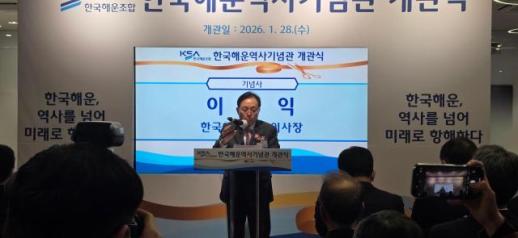 KSA Opens Korean Maritime History Museum, Unveils ‘Eight Pillars’ Exhibit South Korea’s shipping industry now has a new museum aimed at preserving its history and honoring maritime workers. KSA·Korea Shipping Association said it held an opening ceremony Wednesday afternoon for the Korean Maritime History Museum at its headquarters in Seoul’s Gangseo District, attended by political and government figures, heads of maritime groups and shipping company representatives. Attendees included Heo Man Wook, director general of the Shipping and Logistics Bureau at the Ministry of Oceans and Fisheries; lawmakers Na Kyung Won, Cho Seung Hwan, Kim Seung Soo and Park Sung Min; Gangseo District Mayor Jin Gyo Hoon; former International Maritime Organization Secretary-General Lim Ki Taek; Kim Deok Ryong, chairman of the Kim Young-sam Democracy Center; and Kim Moo Sung, a former lawmaker. The association said the event also drew the individuals and descendants of what it called the “eight pillars” who helped lay the foundation of South Korea’s shipping industry. In remarks, Chairman Lee Chae Ik said the museum is “not simply a place that displays records of the past,” but “a record of great victories by maritime workers who have supported the national economy through rough seas.” He said the association will develop it into a place that strengthens pride in the industry and serves as “a living educational venue” where young people can build dreams about the sea. The Korean Maritime History Museum was built to preserve South Korea’s shipping history, which the association described as the country’s rise from a resource-poor nation to one of the world’s five leading maritime powers. The association said it began collecting historical materials and video in February last year, then launched full-scale planning in September, arranging exhibits that include a 76-year history video, changes in corporate and brand identities, ship models by vessel type and original artifacts. It also documents shipping policies of past presidents and features a special exhibition on the “eight pillars,” the association said. A KSA official said the museum will be used as an educational site for students and the public and as a hub for forums and seminars for maritime families. The association said it will continue efforts to raise the industry’s profile and build public support for institutional backing. * This article has been translated by AI. 2026-01-29 08:03:34
 -
 Meta, Tesla Rise After Earnings While Microsoft Slides in After-Hours Trading U.S. megacap tech stocks known as the “Magnificent Seven” got their first earnings results of the season, and the market reaction split sharply. Meta Platforms and Tesla rose in after-hours trading after reporting results, while Microsoft fell. On Tuesday, Microsoft closed up 0.22% on the New York Stock Exchange, Tesla gained 0.13% and Meta slipped 0.63%. After the earnings releases, the moves reversed. As of 7:58 a.m. in South Korea, Meta was up 8.39% after hours and Tesla was up 1.66%, while Microsoft was down 4.70%. Meta’s after-hours surge followed results that beat expectations and a strong revenue outlook. Meta said fourth-quarter (October-December) revenue rose 24% from a year earlier to $59.89 billion, topping the LSEG consensus estimate of $58.59 billion. Earnings per share came to $8.88, above the $8.23 estimate. Advertising revenue, which makes up most of Meta’s sales, rose 24% to $58.137 billion. For the full year, Meta reported revenue of $200.097 billion, up 22%. Meta also reaffirmed an aggressive investment push in artificial intelligence, supported by steady ad revenue. It projected 2026 capital expenditures of $115 billion to $135 billion, above the market estimate of $110.6 billion. CEO Mark Zuckerberg said, “In 2025, we delivered strong business performance,” and added that in 2026 the company aims to advance “personalized superintelligence for people around the world.” He said Meta will unveil its latest AI model in the coming months and will keep releasing new models throughout the year. Microsoft’s results also beat expectations, but after-hours trading reflected concerns about future growth and investment costs. Microsoft said fiscal 2025 second-quarter (October-December 2025) revenue rose 17% from a year earlier to $81.27 billion, above the LSEG estimate of $80.27 billion. EPS was $5.16, well ahead of the $3.92 estimate. Chief Financial Officer Amy Hood said, “Microsoft Cloud revenue exceeded $50 billion this quarter, reflecting strong demand for our portfolio of services,” adding that revenue, operating income and EPS all beat expectations. In its intelligent cloud segment, revenue rose 29% to $32.9 billion, topping the StreetAccount analyst estimate of $32.4 billion. Operating income increased 21% to $38.3 billion, and EPS was $4.14, above the $3.97 estimate. Even so, the stock fell about 5% after hours. The Wall Street Journal reported that investors pointed to data center and other capital spending of $37.5 billion, above market expectations, as a drag on the shares. Tesla also rose after hours after reporting fourth-quarter 2025 revenue of $24.9 billion and EPS of $0.50. Both topped the LSEG Wall Street consensus of $24.79 billion in revenue and $0.45 in EPS. Tesla also said it signed an agreement on Jan. 16 to invest $2 billion in Elon Musk’s AI startup, xAI. “Tesla is building products and services that bring AI to the physical world,” the company said, adding that the xAI investment and term sheet are intended to strengthen Tesla’s ability to develop and deploy AI products and services at scale. Still, Tesla said revenue fell 3% from a year earlier and EPS declined 17%. Full-year revenue totaled $94.8 billion, down 3%, and automotive revenue was $69.5 billion, down 10%. 2026-01-29 08:03:00
 -
 Samsung Electronics Posts 333.6 Trillion Won in Annual Revenue as Memory Lifts Results Samsung Electronics said in a regulatory filing Thursday that its fourth-quarter consolidated revenue rose to 93.8374 trillion won and operating profit totaled 20.0737 trillion won. Operating profit surged 209.17% from a year earlier. For the year, revenue came to 333.6059 trillion won and operating profit reached 43.6011 trillion won. Samsung said results were driven by its Device Solutions (DS) division, citing expanded sales of high-margin products such as high-bandwidth memory (HBM) and rising memory prices. The company said it posted record quarterly revenue and operating profit. It also pointed to stronger sales of higher-value products, including server DDR5 and enterprise SSDs, alongside higher memory prices. In foundry, Samsung said it began ramping mass production of a first-generation 2-nanometer product and saw revenue rise on strong demand from customers in the United States and China, but profitability gains were limited due to provisions-related costs. The Device Experience (DX) division, which leads the mobile business, posted an 8% revenue decline from the third quarter as the boost from new smartphone launches faded. DS revenue, however, rose 33% from the prior quarter, helping lift overall results, the company said. Samsung said it spent 10.9 trillion won on research and development in the fourth quarter and a record 37.7 trillion won for all of 2025, continuing investment to secure future technologies.* This article has been translated by AI. 2026-01-29 08:00:00