
Journalist

AJP
-
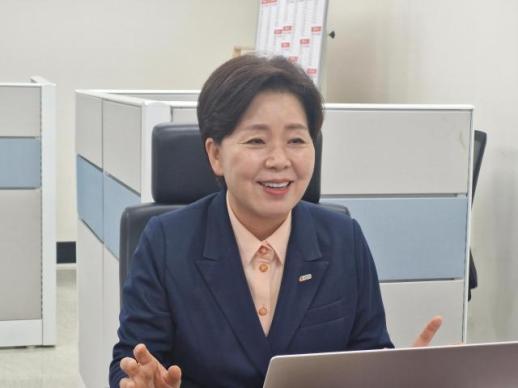 PPP’s Yang Hyang-ja Pledges Semiconductor-Led Growth in Gyeonggi Governor’s Race “Samsung Electronics’ market capitalization is expected to grow fivefold from last year, so why do you think a 100 million won era in per-capita GRDP for Gyeonggi is impossible?” People Power Party candidate Yang Hyang-ja, laying out her vision for Gyeonggi Province, put semiconductors ahead of politics. “In the end, it’s about who can do it,” she said, arguing that industrial competitiveness drives regional and national strength. In the Gyeonggi governor’s race, Yang has described herself less as a “politician” than as an “industry expert.” She also framed her matchup with Democratic Party candidate Choo Mi-ae not as a contest between female politicians, but as “a showdown between an advanced-industry expert and a legal professional.” Yang, a former semiconductor engineer who joined Samsung Electronics as a research assistant and rose to executive director, served as a 21st National Assembly lawmaker. She is currently a People Power Party supreme council member and chair of the party’s special committee on advanced industries, including semiconductors and artificial intelligence. In an interview with Ajou Economy, Yang pledged to raise Gyeonggi’s per-capita gross regional domestic product, now about 46 million won, to 100 million won. She said about 80% of the province’s GRDP is generated in the south and vowed to promote industries tailored to the characteristics of each of its 31 cities and counties to achieve more balanced north-south development. Yang called Gyeonggi the heart of South Korea’s advanced industries. “Even amid U.S.-China rivalry, Taiwan prospers because a global semiconductor company called TSMC shapes the world’s industrial order,” she said. “Gyeonggi’s memory semiconductors serve as the heart that can make South Korea a leading power.” Yang said her mission is to build “a science-and-technology powerhouse” and “a prosperous, strong nation that leads the world,” adding that such a goal “can ultimately be achieved through semiconductors.” She said the province needs a governor with expertise and a vision for advanced industries and that the election would prove that point. She repeatedly stressed that Gyeonggi is the core base of the country’s semiconductor industry. “Eighty-four-point-six percent of the value added and 76% of sales in our semiconductor industry come from Gyeonggi,” she said, arguing that an advanced-industry expert should lead the province. Targeting her rival, Yang said Choo, “a legal technician,” knows “nothing at all” about advanced industries. “Gyeonggi needs an industry expert, not a legal technician,” she said. On the issue of relocating the Suwon military airfield, Yang said it should be approached at the national level. Yang said she has experience handling and resolving the Gwangju military airfield issue first. Because military airfields are national infrastructure managed by the Defense Ministry, she said, the central government should take responsibility for relocation decisions. She said a governor’s role is to mediate and resolve conflicts among cities and counties, adding that she is best suited to do that. She said it would be difficult for Choo, whom she called a “conflict maker.” Yang said that because South Korea remains in an armistice situation, officials should first consider where a military airfield should be located to protect security most efficiently. “The situation is complex, but the essence is simple,” she said. “All issues must be approached from the essence.” Yang also emphasized the role of local government as a check on what she called the ruling party and government’s “runaway” power. “Candidate Choo will move relying only on the president’s power, and that is extremely dangerous,” Yang said. She added that her work as head of the National Human Resources Development Institute gave her a deep understanding of the civil service and government systems. “Trust and choose Yang Hyang-ja, who understands industry and administration,” she said, adding, “Collective intelligence is alive in Gyeonggi. I will move forward trusting only the collective intelligence of the residents.” 2026-05-05 09:24:05
 -
 South Korea Likely to Keep Age Threshold for Juvenile Criminal Responsibility The government’s public consultation on the age cutoff for criminal responsibility — the standard that defines so-called “juvenile offenders below the age of criminal responsibility” — is reportedly moving toward keeping the current rule. Under the existing system, children under age 14 are subject to protective measures rather than criminal punishment, and the government is expected to focus on strengthening safeguards instead of changing the age threshold immediately. If that conclusion follows a two-month deliberation process, it deserves respect. But it should not end the debate. The central issue is not whether to lower the age by one year, but how to reduce youth crime and help young offenders return to society without reoffending. The system was designed to prioritize correction and protection over imposing adult-style penalties on immature adolescents. It reflects the view that teenagers’ judgment and impulse control are still developing and that many can improve with changes in their environment. Internationally, juvenile justice has also tended to emphasize recovery and reintegration over punishment. Lowering the age of criminal punishment simply in response to public anger should be approached with caution. At the same time, public anxiety cannot be dismissed. Many people say youth crime feels more brutal and more organized. In cases involving school violence, group assaults, sex crimes and online offenses, a perception has spread that some minors use their age as a shield. For victims and their families, it can feel like offenders “escape responsibility simply because they are young.” If the system drifts too far from public common sense, trust in the law can erode. If the government keeps the current age standard, it should present effective complementary measures at the same time. First, it should strengthen the effectiveness of protective measures for youths who commit repeated or serious crimes. Critics say current options — such as sending offenders to juvenile facilities or placing them under probation — are often insufficient to prevent repeat offenses. Authorities should reinforce management systems that combine tailored psychological treatment, support for returning to school, job training and family counseling. Second, victim protection should be placed at the center of the system. Until now, juvenile justice has often focused on guiding and rehabilitating young offenders. Measures such as victim recovery support, restraining orders, counseling assistance and links to compensation should be pursued in parallel to increase public acceptance. Third, prevention systems in schools and local communities should be rebuilt. Many youth crimes are tied to family breakdown, dropping out of school, neglect and addiction. Relying mainly on sending cases to court after an incident has clear limits. Education and welfare networks need to be tighter to identify at-risk youths early and intervene sooner. Fourth, the government should create a mechanism to revisit the policy based on statistics and evidence. It should regularly disclose changes in crime patterns, recidivism rates and the effectiveness of protective measures, and establish procedures to review the system again after a set period. This is not an issue to seal off once a decision is made. Debates over juvenile offenders below the age of criminal responsibility often become emotional. Calls for harsher punishment may ease anger but fail to solve the problem, while a protection-first approach can lose credibility if it ignores public fears. The government should use the consultation results to move beyond a simple choice between tougher punishment and human rights protection and build a practical system to prevent repeat offenses. The goal in responding to juvenile crime is not to send children to prison. It is to stop them from committing crimes again. What matters more than the number is whether the system works — and what the public ultimately seeks is safety and recovery. 2026-05-05 09:12:18
 -
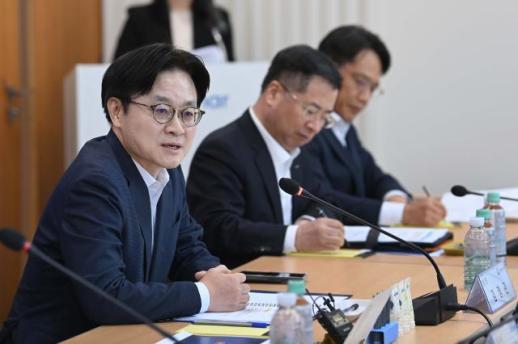 Industry Minister Kim Jung-kwan to Visit U.S., Canada for Investment Talks and Submarine Bid Kim Jung-kwan, South Korea’s minister of trade, industry and energy, will visit the United States and Canada to step up economic and industrial cooperation, with talks expected to cover a first U.S. investment project and Canada’s submarine procurement competition. The ministry said Kim will travel to Ottawa and Washington from Tuesday through May 8 (local time) for meetings aimed at strengthening partnership on economic and industrial cooperation. The trip comes about two months after he visited the United States in early March to discuss trade issues. In Washington, Kim is set to hold preliminary consultations on strategic investment with senior U.S. officials, including Commerce Secretary Howard Lutnick, on Wednesday. He also plans outreach to Congress and others on U.S.-bound investment and trade issues. The visit has fueled expectations that a decision on the first U.S. investment project could be nearing. Kim told reporters on April 27, however, that the project was still under discussion and that it was difficult to predict a specific timeline. Before heading to the United States, Kim will be in Ottawa on Tuesday and Wednesday to meet with Canadian officials, including Melanie Joly, described by the ministry as industry minister, and Tim, described as the minister of energy and natural resources. The ministry said Kim is expected to seek support for South Korea’s bid in Canada’s submarine program and to discuss ways to expand cooperation in industry and resources. Kim said follow-up steps after the passage in March of a special law on U.S. investment — including drafting enforcement rules and preparing to launch a related corporation — were being carried out without disruption. He said he plans to move forward with more detailed preliminary consultations on strategic investment projects based on ongoing communication. He added that the government would proceed in a way that serves the national interest, including expanding market access for South Korean companies and ensuring benefits flow back to domestic industry. On the Canada trip, Kim said the submarine project could be an important opportunity to build a broad, long-term partnership spanning security, the economy and industry, and pledged full government support through the end to help win the contract.* This article has been translated by AI. 2026-05-05 09:03:15
 -
 On Children’s Day, South Korea’s kids are still headed to cram schools "A magic trick that turns a golden holiday into a skills holiday." That was a promotional line from a private academy for Children’s Day 2026. The day is meant for children, but the copy’s real beneficiary is the parent — more precisely, parental anxiety. This year’s Children’s Day scene in the academy districts is familiar. Academies advertising special classes added that they would “maintain learning continuity and secure parents’ rest time.” It is Children’s Day, but children are not the subject of the sentence. In a survey by the National Center for the Rights of the Child, four in 10 children said the thing they most wanted to do after school was “play with friends.” But only two out of 10 were actually able to do so. The rest went to academies. More than half of elementary school students cited academies and private tutoring as the biggest barrier to free play. Children know they want to play. They are simply not allowed to. That time is filled with studying instead. Upper-grade elementary students study an additional average of 2 hours and 47 minutes a day after school ends. Middle school students study 3 hours and 12 minutes, and high school students 3 hours and 33 minutes. When out-of-school learning time is included, total daily study time far exceeds the OECD average. But studying longer does not necessarily mean doing better. In the 2022 PISA assessment, South Korean students studied much longer than Japanese students but scored lower in reading, math and science. A UNICEF survey found South Korean children ranked 34th out of 36 OECD and EU countries in mental health, and 28th out of 40 countries in physical health. Academic competence ranked fourth. That gap is a portrait of children in South Korea today: among the world’s hardest-working students, and among the most exhausted. The child happiness index stands at 45.3 out of 100 — not even half. Children who have lost playgrounds have moved into their smartphones. Half of upper-grade elementary students use smart devices for two hours or more after school. Four in 10 said it is hard to stop on their own. The figures rise for children who are alone more often. This is not a matter of willpower. Where alleys to run and play have disappeared, and where care has fallen away, algorithms have moved in. It is difficult to blame parents. One mother who sends her child to an academy even on Children’s Day said, “Rather than having make-up classes scheduled later, it’s better to just go to the academy.” In that sentence is not greed but structural fear: the worry of falling behind if you rest alone, and the pressure that if everyone else goes, you cannot be the only one to skip. The academy industry operates precisely on that anxiety. But when that anxiety becomes collective, Children’s Day quietly disappears. A day created for rest becomes a day when no one can rest. In 1923, Bang Jeong-hwan wrote in the Children’s Day declaration: “Please let them sleep and exercise enough. Do not look down on children; look up to them.” Now, 103 years later, those lines read less like advice than an indictment. For a long time, South Korean society has taught children first how to “endure well” — faster, more, earlier. To look up to children means seeing them not as units of competition, but as people fully present in this moment. The country that created Children’s Day is failing to give it back to children. What has been taken is not just a day off, but childhood itself. * This article has been translated by AI. 2026-05-05 08:49:30
 -
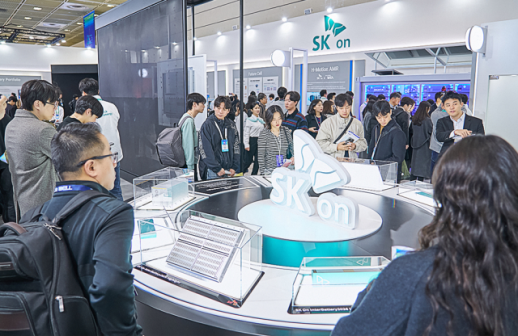 SK On-Nissan Battery Deal Under Review as EV Demand Slows Cracks are emerging in the electric-vehicle battery industry, with reports that SK On and Japan’s Nissan have entered a full review of a battery supply agreement said to be worth about 15 trillion won. The move highlights structural uncertainty in a market long described as a growth sector, as demand shifts collide with heavy investment burdens. The review is rooted in a slowdown in the EV market. As global automakers adjust production plans, battery demand is weakening faster than expected. Nissan, amid signs it is moderating the pace of its EV strategy, is reported to be reexamining the contract’s terms and scale. The development suggests broader demand forecasts across the industry are becoming less reliable, not merely a routine negotiating issue. Battery makers are also under growing strain. SK On is making large-scale facility investments while continuing to run at a loss. Long-term supply contracts premised on expanding capacity are meaningful only if demand holds. If the market moves differently than expected, investment commitments can quickly become financial risk. The contract review reflects that reality. The issue extends beyond a single company. Across the global battery sector, companies have been slowing investment, delaying plant construction and renegotiating contract terms. A softer demand growth rate, cost pressures and changes in subsidy policies are converging, testing the limits of an industry built on speed and expansion. For years, the battery business has been driven by a race for scale — how quickly and how much capacity could be secured. That approach is now being reassessed. With demand uncertainty rising, aggressive expansion can become a liability, making changes to growth strategies increasingly unavoidable. Relations between automakers and battery suppliers are also shifting. Where carmakers once moved early to lock in long-term deals out of concern about shortages, they are now more likely to scrutinize conditions and revisit terms, signaling a subtle change in leverage. For South Korea’s battery industry, the SK On-Nissan review is a warning that strategies focused mainly on expanding size may no longer be sustainable. The sector remains a growth industry, but the yardsticks are changing — balance over speed, and profitability over sheer scale. 2026-05-05 08:33:14
 -
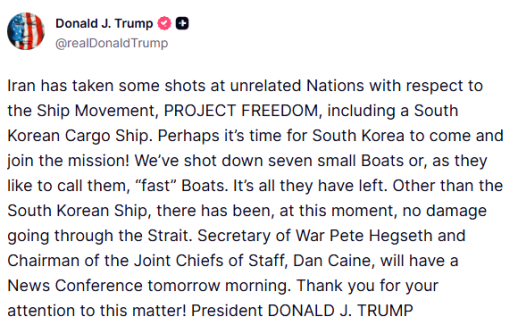 Trump pressures South Korea to join Project Freedom after ship explosion in Hormuz Strait SEOUL, May 05 (AJP) - Following a mysterious explosion on a South Korean cargo vessel in the Strait of Hormuz on Monday, the United States' President Donald Trump has publicly pressured South Korea to deploy military forces to a U.S.-led maritime mission "Project Freedom" in the Hormuz Strait. Trump directly linked the safety of commercial shipping to participation in the naval mission, while explicitly attributing the explosion to an Iranian attack. The incident marks the first time a South Korean vessel has sustained physical damage since the U.S. and Israel attacked Iran on February 28, forcing Seoul into a difficult diplomatic position between its primary ally and its energy security interests. While the South Korean government remains cautious in its assessment, Trump's immediate assignment of blame narrows the window for the investigative deliberation typically preferred by South Korean officials. The HMM NAMU, a cargo ship operated by HMM, suffered an explosion and subsequent fire at approximately 8:40 p.m. (1140 GMT) on May 4, while navigating waters near the United Arab Emirates (UAE). HMM, formerly known as Hyundai Merchant Marine, is the flagship carrier of South Korea and serves as a critical link in the country's export-driven economy. No casualties were reported among the crew members, and South Korean diplomats in the UAE and Dubai have contacted the shipping company to ensure the safety of the sailors. The vessel was operating in the strategic Strait of Hormuz when the blast occurred, an area that serves as a transit point for a significant portion of South Korea's oil imports. In a post on the Truth Social platform, Trump stated that Iran has taken shots at unrelated nations, including the South Korean cargo ship. He suggested it is time for South Korea to join the mission, noting that United States forces had already engaged and destroyed seven Iranian fast boats that were obstructing movement in the strait. The South Korean government held an emergency meeting at midnight on Tuesday to discuss the protection of its citizens. Kim Jin-ah, the second vice foreign minister, expressed deep concern over the incident but emphasized that the government is still investigating the exact cause and the possibility of a targeted strike. The call for military involvement comes amid a pattern of Trump targeting allies who decline to support U.S.-led security initiatives. He recently imposed tariff increases and proposed troop reductions for Germany after its government refused to join similar naval operations, a precedent that weighs heavily on the current deliberations in Seoul. The U.S. Secretary of War Pete Hegseth and Chairman of the Joint Chiefs of Staff Dan Caine are scheduled to hold a news conference on Monday morning to discuss the engagement. 2026-05-05 08:25:52
 -
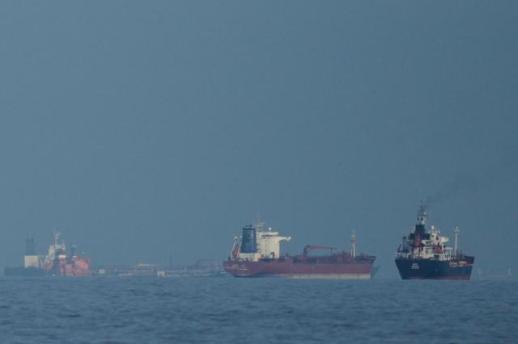 South Korea Holds Emergency Meeting After Blast, Fire on Ship in Strait of Hormuz South Korea convened an emergency meeting after an explosion and fire broke out on a Korean-operated vessel in the Strait of Hormuz. The government said it will strengthen coordination with host-country authorities so Korean sailors can be rescued and protected immediately if needed. The Foreign Ministry said the Overseas Nationals Protection Countermeasures Headquarters met at midnight on May 5 under Vice Foreign Minister Kim Jin-a, with seven diplomatic missions in the Middle East and the Ministry of Oceans and Fisheries attending. The incident occurred at about 8:40 p.m. on May 4 (Korea time) in waters near the United Arab Emirates, when an explosion and fire broke out on the HMM NAMU, a cargo ship operated by Korean shipping company HMM, the ministry said. Kim expressed deep concern that it was the first reported damage to a Korean vessel inside the Strait of Hormuz since the outbreak of war in the Middle East. “Fortunately, there were no casualties this time, but it is important to identify the cause and prevent a recurrence,” Kim said. She added that it is essential to be fully prepared to take swift steps to protect the lives and safety of Korean sailors at any time. Participants included the South Korean Embassy in the UAE, the Consulate General in Dubai, and the embassies in Iran, Saudi Arabia, Iraq, Qatar and Oman. The embassy in the UAE and the consulate general in Dubai said they contacted the shipping company and related agencies immediately after the incident to confirm the sailors’ safety and request necessary assistance. The missions said they have maintained regular communication with local authorities to protect and support Korean ships and crews, and pledged to further strengthen coordination so safety measures, including immediate rescue, can be carried out in an emergency. The Foreign Ministry said it will continue to closely monitor local conditions and maintain tight communication between headquarters and overseas missions while pursuing all necessary steps to ensure the safety of South Korean nationals. The United States on May 4 launched an operation dubbed “Project Freedom,” escorting civilian vessels with military aircraft and warships to help them pass through the Strait of Hormuz and leave the Gulf (Persian Gulf), the report said. U.S. President Donald Trump wrote on Truth Social that Iran had fired several times in connection with ship movements related to “Project Freedom,” targeting “irrelevant countries” including a Korean cargo ship, and said it seemed time for South Korea to join the operation.* This article has been translated by AI. 2026-05-05 08:21:15
 -
 Domino’s Korea Raises Prices on Six Drinks, Including Coca-Cola and Sprite Domino’s Pizza has raised prices by up to 8.7% for major beverages sold in its stores, including Coca-Cola and Sprite. Industry officials said on May 5 that Domino’s increased prices on six drink items by 100 to 200 won. The company said it raised the prices starting May 4 due to higher costs. Coca-Cola and Coca-Cola Zero in 1.25-liter bottles rose 8.7% to 2,500 won. Sprite in a 1.5-liter bottle increased 8.3% to 2,600 won. Three 500-milliliter drinks also went up 100 won each. Coca-Cola and Coca-Cola Zero in 500-milliliter bottles rose 5.9% to 1,800 won, and Sprite in 500 milliliters was also set at 1,800 won. Domino’s said it asks for customers’ understanding and will “do our best to repay your support and interest with the best service and menu.” Domino’s is No. 1 in South Korea’s pizza franchise market by sales. According to the Financial Supervisory Service’s electronic disclosure system, Cheong O DPK, Domino’s local operator, posted 210.9 billion won in revenue last year, up 4.8% from 201.2 billion won a year earlier. The increase comes as raw material and logistics costs continue to rise, and is seen as a move to protect profitability. An industry official said companies sometimes adjust prices for drinks or side items first because raising pizza prices can trigger stronger consumer pushback, adding that further increases cannot be ruled out if cost pressures persist. * This article has been translated by AI. 2026-05-05 08:19:27
 -
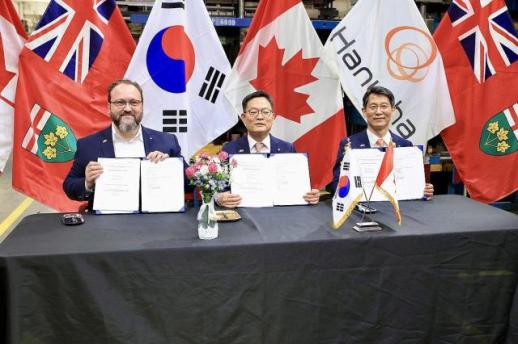 Hanwha’s KAI Stake Signals Shift Toward Management Role, Raising Integration Questions Hanwha Aerospace has secured more than a 5% stake in Korea Aerospace Industries and changed the stated purpose of its holding from a “simple investment” to “management participation.” The numerical shift may look modest, but it signals a potentially important moment as South Korea’s defense sector moves from competition among individual firms toward competition among integrated systems. A key point is separating what has happened from what may come next. A 5% stake does not, by itself, confer control. At this stage, it amounts to an early entry aimed at testing management influence. Still, the move points in a clear direction. Given talk of additional investment and broader cooperation, the possibility of stronger influence or structural reorganization over the long term remains open. The central question, then, is not what has already changed, but what kind of structure should be designed. The defense industry’s reality is straightforward: integration is increasingly necessary to compete globally. System-level competition — linking fighter jets, engines, missiles and maintenance into a single package — has become the standard. U.S. defense contractor Lockheed Martin and Europe’s Airbus both operate on large integrated structures. With companies fragmented, South Korea risks falling behind in major contract competitions. From that perspective, efforts to link Hanwha and KAI follow a broader trend. But integration brings its own risks. It can improve efficiency while also concentrating power, which can weaken competition and create structural rigidity. If that dilemma is not addressed, a “national champion” could drift toward becoming a “national monopoly.” The answer is not to avoid the contradiction but to design a system that manages it. One approach is a dual structure: integrate at the top while preserving competition at the lower levels. A prime contractor can strengthen system-integration capabilities, while a layered competitive ecosystem is maintained in parts, materials and technology. This is also a model used in global defense industries. Integration and competition can operate together if the structure is designed to allow it. Debate over privatization should be viewed in the same framework. KAI is a strategic asset that grew under government leadership. Privatization can be a tool to increase autonomy and efficiency. But defense is not like ordinary manufacturing: it is tied to national security, heavily dependent on government demand, and requires technology controls. A fully free-market model is difficult to apply. That points to what could be called “regulated privatization.” Management would be left to the private sector, while the state sets and enforces minimum standards for technology, security and fair competition. The goal is rule-setting, not day-to-day intervention. Crossing that line can hollow out privatization; missing it can create security risks. Technology concentration should be assessed by the same logic. It is an overstatement to frame the accumulation of technology in domestic firms as a loss of sovereignty; reduced reliance on overseas sources can be a benefit. The risk is different: if too much technology is concentrated in one company, the industry’s flexibility and resilience can decline, and a single failure can become a systemwide risk. What matters, then, is not only who owns technology but how access is structured. Core technologies should be managed at the national level, with an open framework that allows multiple companies to use them. Competitiveness comes from enabling broad use, not from concentrating capabilities in one place. At its core, the issue is whether South Korea can capture the power of integration while preserving the safety that comes from dispersion. Defense is a field that cannot lean entirely to one side: without integration, it can lose out in competition; without dispersion, the system becomes vulnerable. Hanwha’s move to participate in KAI management is both an opportunity and a test. With careful design, South Korea’s defense industry could take a step forward. Without it, the country could lose both efficiency and competition. What is needed now is not speed but a system. The key is not who holds what, but how it is run. The future of South Korea’s defense industry will depend less on the direction of this choice than on the precision of its design. 2026-05-05 08:15:06
 -
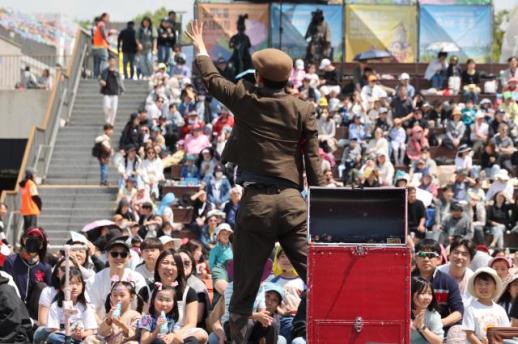 Circus casts a little magic over Children's Day on Nodeul Island SEOUL, May 04 (AJP) - A little magic settled over Nodeul Island this Children’s Day as the Seoul Circus Festival turned the riverside island into a world of acrobats, laughter and wide-eyed wonder. From Monday through Tuesday, circus performers tumbled across grassy fields, balanced high above cheering crowds and invited children to step into the spotlight themselves. What began as a performance quickly became a playground where children were no longer spectators, but part of the show. Now in its ninth year since launching in 2018, the festival adopted the theme “Circus Land,” welcoming every visitor as a member of the circus troupe the moment they arrived. Before settling in to watch performances, families tried their hand at circus acts and activities scattered across the venue. Children climbed jungle gyms, rode small carousels, and navigated obstacle courses under clear skies. This wasn't a festival about sitting and watching. Audiences clapped, cheered, and became part of the show as acrobatics and music filled the air. The festival turned spectators into participants, making everyone part of the circus. or one holiday, the circus offered something beyond entertainment — a small world where imagination felt real and Children’s Day carried just a little more magic. 2026-05-05 08:12:58