
Journalist

AJP
-
 Team Korea in Canada under watch as Korea's defense manufacturing moves to global center SEOUL, January 26 (AJP) -As countries accelerate rearmament amid a more inward-looking U.S. security posture, South Korea’s defense manufacturing capacity has moved to the center of global procurement — a shift underscored by Seoul’s decision to dispatch a high-level delegation to Canada to back a $44 billion submarine bid. Presidential Chief of Staff Kang Hoon-sik departed for Canada on Monday, leading a delegation that includes Industry Minister Kim Jung-kwan and Defense Acquisition Program Administration head Lee Yong-cheol. The visit is aimed at supporting Seoul’s bid for the Canadian Patrol Submarine Project (CPSP), estimated at around 60 trillion won ($44 billion). Joining the delegation are Hyundai Motor Group Chairman Chung Eui-sun and Hanwha Group Vice Chairman Kim Dong-kwan — a lineup that underscores how seriously Seoul views the opportunity and highlights the growing role of state-industry coordination in major defense contracts. Before boarding his flight at Incheon International Airport, Kang told reporters the competition has narrowed to two contenders — South Korea and Germany. “Germany is a global manufacturing powerhouse in automation and advanced chemical engineering,” Kang said, adding that “given how South Korea inherited core submarine technologies from Germany in our early development stages, the situation will not be easy.” Germany, which recently lost Poland’s submarine tender, is said to be approaching the Canadian competition with exceptional intensity. Nevertheless, Kang emphasized the scale of the project and its implications for South Korea’s industrial base. “This is the largest defense procurement project currently underway internationally,” he said. “If we win, the domestic production ripple effect alone would exceed 40 trillion won, creating more than 20,000 jobs and securing work for over 300 partner companies.” Manufacturing capacity meets strategic demand The CPSP has emerged as a test case for how defense procurement is evolving globally. Canada is seeking up to 12 diesel-electric submarines of roughly 3,000 tons, along with decades of maintenance, repair and overhaul (MRO). Ottawa is also reportedly requiring part of the project to be carried out at a new local shipyard, while allowing initial units to be built in the contractor’s home country. Such conditions favor suppliers with large-scale manufacturing capacity and the ability to integrate local production and long-term sustainment — areas where Korea has increasingly differentiated itself. Global demand for weapons has surged as allies face pressure to rebuild inventories as the United States urges partners to shoulder more of their own defense burden under an America-First security policy. In Europe, rearmament has accelerated, but fragmented industrial structures and capacity bottlenecks have limited supply. Korea’s ability to produce and deliver complex systems at scale has elevated its standing from a fast-growing exporter to a core manufacturing hub in the global defense market. Historical ties and diplomatic signaling On Sunday, the eve of his departure, Kang paid tribute to Canadian soldiers who fought in the Korean War at the War Memorial of Korea in Seoul. He laid a wreath at the monument honoring Canada’s fallen and observed a moment of silence. Though Korea and Canada are not formal military allies, the two countries have expanded security cooperation under their “Comprehensive Strategic Partnership.” Last October, Seoul hosted Canadian Prime Minister Mark Carney, and the two governments signed a Military Information Security Agreement, laying the groundwork for deeper defense industrial collaboration. A bid shaped by geopolitics Experts say the CPSP has become more than a procurement contest, reflecting broader shifts in the global security architecture. “Canada–South Korea relations have long been strong,” said Daniel Béland, professor of political science at McGill University. “More than 500 Canadians died during the Korean War defending the South against the North’s aggression, and since then, Canada has played a direct role in the UN Command.” Béland said ties have deepened since formal diplomatic relations were established in 1960. “Economic and strategic ties have increased since the advent of the CKFTA trade agreement a decade ago,” he said. “Given the current geopolitical and trade uncertainties created by the second Trump administration, we’re likely to see even stronger security and economic ties between our two countries — in line with the multilateral collaborative strategy outlined by Prime Minister Carney in his recent Davos speech.” He added that “the very fact that a South Korean company was shortlisted for the CPSP has already brought the two countries closer together,” and that a win by the KSS-III design would deepen cooperation across both economic and security fields. Canada’s recalibration and Europe’s signal Patrick Lennox, a Canadian politician from the ruling Liberal Party, described the submarine project as central to Ottawa’s push to strengthen maritime capabilities and diversify partnerships. “Canada’s participation in the Korean conflict hearkens back to a time when our foreign policy could leverage multilateral institutions like the UN to attempt to constrain and moderate American decisions,” Lennox said. “With those days squarely behind us, we are seeking to diversify and strengthen our global partnerships and rebuild our military capability.” He called the CPSP “a key feature of this generational investment,” linking it to Canada’s Indo-Pacific strategy. “Canada is looking to open new opportunities for security cooperation and to strengthen stability on the Korean Peninsula,” Lennox said. “At a strategic level, geopolitical imperatives are pushing our two democratic nations closer together as we work towards enhancing middle power alliances and strategic partnerships in the face of unconstrained great power politics.” Beyond submarines Trade officials say Canada has asked both South Korea and Germany for broader industrial commitments as part of offset negotiations, with Ottawa favoring local investments and supply-chain integration. Kang’s entourage is therefore expected to pursue parallel discussions on industrial cooperation. Hyundai’s Chung and Hanwha’s Kim are reportedly exploring local partnerships aligned with Canada’s manufacturing and climate priorities. Public diplomacy is also part of the visit. Seoul plans cultural and commemorative events highlighting historic ties, including a memorial marking 70 years since the death of Oliver R. Avison, a Canadian medical missionary and founder of Severance Hospital. A musical dramatizing the work of early Canadian missionaries in Korea is scheduled to coincide with the delegation’s stay. 2026-01-26 16:13:20
 -
 Hongcheon ice fishing festival ends with a splash SEOUL, January 26 (AJP) -The arctic cold snap did not spoil the fun at the 2026 Hongcheon Kkongkkong Ice Fishing Festival, which drew about 270,000 visitors to the Hongcheon River area and injected fresh vitality into the local economy. Despite the severe weather, food stalls and sales of local agricultural products reached record highs. The festival earned positive reviews for enhancing its quality as Hongcheon’s signature winter tourism attraction by combining a wide range of experiential programs centered on the locally renowned “Hongcheon Ginseng Trout.” Highlights included ice fishing, pontoon fishing, indoor fishing and bare-hand ginseng trout catching. 2026-01-26 16:11:52
 -
 In icy Seoul, the Han River slows to a hush SEOUL, January 26 (AJP) -Under the grip of Arctic air, sections of Seoul’s great waterway have begun to harden — ice floes drifting in silence, icicles clinging to embankments where the river meets the city. What is usually a moving ribbon of steel-gray water now carries the weight of winter, visible and unmistakable. A severe cold wave continues to blanket South Korea as northerly winds sweep down the peninsula, driving temperatures sharply lower and pushing wind chills well below what thermometers suggest. Cold wave advisories remain in effect for the Seoul metropolitan area, as well as parts of central and inland southeastern regions. The cold is expected to linger through Monday. Morning lows are forecast to fall as far as minus 15 degrees Celsius, with daytime highs struggling between minus 3 and 8 degrees. Even under clear skies, the air bites. Along the Han, the transformation is stark. Ice forms where currents slow. Frost traces railings and reeds. The river does not freeze all at once — it stiffens in fragments, mirroring the way winter settles over the city: gradually, insistently. Authorities have urged the elderly and young children to limit outdoor activities as subzero mornings near minus 10 degrees Celsius persist in central regions. Elsewhere, dry air and strong winds have raised wildfire concerns, particularly in the mountains of Gangwon Province and in coastal and southern areas. Light snow or rain is expected in parts of the west coast and Jeju Island, but across the country, winds will remain strong — sharpening the cold, carrying it deeper into streets, bridges and riverbanks. For now, the Han flows on, slowed but not stilled — a frozen reminder that winter, at its peak, reshapes even the most familiar landscapes. 2026-01-26 16:02:43
 -
 AI servers shift toward memory as Samsung moves first with HBM4 rollout SEOUL, January 26 (AJP) - Samsung Electronics has bolted out in the high-bandwidth memory (HBM) race as it readies to roll out sixth-generation high-bandwidth memory, HBM4, next month bound for U.S.-based fabless chip leaders Nvidia and AMD. The Korean tech giant has completed final qualification processes with major AI accelerator customers, clearing the transition from sampling to mass production ahead of next-generation chip launches expected later this year. Industry sources said all major memory makers, including SK hynix and Micron, recently resubmitted HBM4 samples in response to Nvidia’s tightened specifications for its upcoming Rubin platform. Samsung is understood to be the first supplier approved for an HBM4 prototype fabricated using its 1c-nanometer DRAM process. An official familiar with the matter said the current stage has moved beyond initial sampling, noting that sample shipments had already been provided to customers toward the end of last year. “Because this involves customer-specific products, it is difficult to confirm detailed internal processes,” the official said. “However, it is accurate to view the current phase as the step following sample shipments.” The official added that mass supply timing is closely linked to customers’ product readiness and launch schedules, and said shipments would proceed in line with those timelines. According to TrendForce, HBM4 is expected to cost at least 30 percent more than current HBM3E products due to the complexity of its new architecture and packaging requirements. Despite the higher price, demand is accelerating. The global HBM market is estimated at around $35 billion in 2025 and is projected to expand to between $52 billion and $61 billion in 2026. Some industry forecasts point to annual sales exceeding $85 billion by 2027 as AI workloads scale rapidly across data centers. The expansion is being driven by surging memory demand from advanced AI accelerators. Nvidia’s Rubin platform is expected to integrate eight stacks of HBM4, delivering total memory capacity of about 288 gigabytes — more than triple that of earlier-generation products. AMD’s next-generation Instinct MI450 accelerator is also expected to adopt HBM4, with memory capacity projected to reach up to 432 gigabytes. Analysts expect the trend to accelerate further, with higher-end Rubin variants likely to adopt 16-high stacking, pushing total memory capacity per processor toward the one-terabyte range. The technological leap from HBM3E to HBM4 represents more than incremental performance gains. HBM4 doubles the input-output interface from 1,024 bits to 2,048 bits, significantly widening the data pathway between processors and memory and addressing what the industry describes as the “memory wall.” While GPU compute performance has continued to scale rapidly, memory bandwidth constraints have increasingly reduced effective utilization rates, particularly during large-scale AI training and inference tasks. Kim Deok-gi, a professor of electronic engineering at Sejong University, said this bottleneck has become more pronounced as AI models require the handling of increasingly large and diverse data sets. “Even though GPU and CPU performance has improved significantly, the time required to move data back and forth has emerged as a limiting factor,” Kim said. “High-bandwidth memory effectively widens the data highway, allowing large volumes of information to be transferred simultaneously.” As AI applications expand toward agent-based systems and physical AI such as autonomous driving, the role of memory has become more central, he added. “In AI systems, computation remains important, but data must first be stored, retrieved and delivered at high speed,” Kim said. “That is why HBM has become a critical component in modern AI servers.” HBM4 also introduces architectural changes at the base-die level. Unlike earlier generations produced largely with memory processes, the logic die at the bottom of HBM stacks is increasingly manufactured using advanced foundry nodes, enabling improved power management, error correction and internal data handling. Industry observers say the shift reinforces a broader transition toward memory-centric AI systems, in which data movement between GPUs and high-bandwidth memory plays a more decisive role than traditional server CPUs. Samsung’s early HBM4 rollout is underpinned by its vertically integrated manufacturing structure as an integrated device manufacturer (IDM). The company controls DRAM production, logic-die manufacturing through its foundry operations, and advanced packaging technologies within a single supply chain. Such integration allows tighter performance optimization and shorter development cycles, particularly as AI chipmakers increasingly request customized memory specifications aligned with their accelerator roadmaps. Competition in the HBM market is expected to intensify as rivals prepare their own next-generation products. SK hynix said it is already operating HBM4 production in line with customer schedules. “With regard to HBM4, you may consider that we are already in mass production,” the company said, adding that specific shipment timing ultimately depends on customer roadmaps. Industry officials note that early commercial availability is becoming a critical differentiator as AI accelerator launch schedules grow more tightly synchronized with memory supply. The HBM4 timeline is expected to be closely watched during earnings conference calls by Samsung Electronics and SK hynix, scheduled an hour apart Thursday following their fourth-quarter and full-year 2025 results. 2026-01-26 15:59:44
 -
 Jeju beckons spring with Ipchun festival SEOUL, January 26 (AJP) -Ipchun — the first of the 24 solar terms and the quiet and unseeming threshold of spring — is nearing. Before buds appear or fields turn green, the change arrives as ritual, rhythm and light. From Feb. 2 through Ipchun Day on Feb. 4, Jeju will host the Tamna Kingdom Ipchun Gut, a ceremonial opening of spring rooted in the island’s ancient agricultural memory. The event will unfold at Gwandukjeong Pavilion and the Jeju Mok Government Office site, spaces long entwined with Jeju’s civic and spiritual life. Organized by the Jeju Federation of Arts and Culture, the festival revives communal rites that trace back to the era of the Tamna Kingdom, when the arrival of spring was not a date on a calendar but a matter of survival and shared hope. Through chants, movement and offerings, the gut marks the land’s awakening — and the people’s. This year’s theme, “Nal Berong Ttang Umjjak, Spring Stirs,” is expressed in the Jeju dialect, evoking the moment when warmth begins to seep into the soil and the earth itself seems to stretch after winter. Across four categories, 21 programs reinterpret those ancestral gestures, blending shamanistic ritual, agricultural tradition and communal celebration. The island has already begun to signal what is coming. On Jan. 25, ipchun chundeung lanterns were lit around the Jeju Mok Government Office site — quiet beacons announcing that spring is on its way. Hanging against the winter sky, they do not rush the season. They wait, as Jeju always has, for the land to answer. 2026-01-26 15:58:34
 -
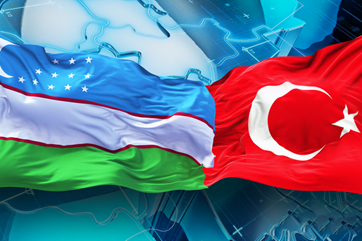 Uzbekistan president to visit Türkiye for strategic council meeting and earthquake housing ceremony SEOUL, January 26 (AJP) - Uzbek President Shavkat Mirziyoyev will travel to Türkiye on January 29 for an official visit centered on deepening bilateral strategic ties and inaugurating housing projects for earthquake survivors, the Embassy of Uzbekistan in the Republic of Korea said Monday. The visit includes the fourth meeting of the Supreme Council for Strategic Cooperation, an institutional platform designed to coordinate high-level policy between the two nations. During his stay, President Shavkat Mirziyoyev is scheduled to participate in an online ceremony to open residential complexes in the Arsuz district of Hatay Province. These facilities were constructed by Uzbekistan to support communities displaced by the powerful earthquakes that struck southeastern Türkiye in February 2023. The Arsuz and Gaziantep regions were among the most severely impacted areas, suffering widespread destruction of social and industrial infrastructure. The residential project in Arsuz was funded by the Uzbek government and provided to Turkish citizens free of charge. This follows immediate relief efforts in 2023, during which specialized units from the Ministry of Emergency Situations of Uzbekistan and medical brigades were deployed to assist in search-and-rescue operations. Political and economic relations between the two countries have expanded since the establishment of a strategic partnership in 2017. The Supreme Council for Strategic Cooperation, established in 2018 and co-chaired by the presidents of both nations, serves as the primary mechanism for bilateral dialogue. Previous sessions were held in Ankara in 2020 and 2024, and in Tashkent in 2022. Economic data indicates steady growth in trade, which reached approximately 3 billion USD by the end of 2025. This growth has been supported by a Preferential Trade Agreement signed in 2023. Beyond trade, the two nations maintain significant connectivity, with nearly 100 flights operating between them each week. The partnership also extends to cultural and multilateral cooperation through the Organization of Turkic States. Recent cultural initiatives include the installation of a monument to Alisher Navoi in Ankara and academic conferences honoring historical figures such as Abu Rayhan Beruni. The upcoming summit in Ankara is expected to focus on further integrating trade, energy, and transport corridors, including the development of regional connectivity between Central Asia and international markets through Türkiye. 2026-01-26 15:54:53
 -
 For K-pop fans, star pets — and even plants — draw equal attention SEOUL, January 26 (AJP) - As the countdown begins for the long-awaited comeback of South Korean superstar BTS, every small detail surrounding the seven-member group captures fans’ attention — even the fate of a struggling houseplant. V, known in Korean as Kim Tae-hyung, has long been open about the quieter attachments in his life. His black-and-tan Pomeranian, Yeontan, first appeared in 2017 via BTS’s official X account and later alongside V during a VLIVE broadcast in December 2018. Over time, Yeontan surfaced regularly in social media posts, livestreams and even photo content for V’s solo album Layover. No explanation was ever needed. His presence simply became part of V’s offstage world. Lately, that world has included something more fragile: a pot of leaves that refuses to thrive. In short captions and fleeting posts, V shared the small frustrations of plant care — wilting leaves, uncertain watering, modest hopes. He referred to himself as a “shik-rinni,” a Korean portmanteau combining sikmul (plant) and eorini (child), commonly used to describe a plant-care beginner. Instead of performance updates or studio hints, fans were given imperfect moments of daily effort. They did not overanalyze. They recognized a shift in rhythm. On Instagram Stories and Weverse, fans offered gentle encouragement. V replied with equally simple honesty: “I brought it home three days ago,” and later, “I’ll do my best as a beginner.” There was no dramatic conclusion — only a quiet exchange that revealed care without certainty, effort without polish. This attention to the small and personal is hardly new in K-pop fandoms, where companion animals often achieve celebrity status of their own. Rosé’s dog Hank, for instance, maintains a social media presence followed by roughly 4.5 million users. Though the account is run independently, a single image is enough for fans to identify whose dog it is. In August 2025, Hank appeared in Vogue’s pet-focused digital special edition DOGUE, introduced as a rescue dog turned global favorite. The recognition did not arrive suddenly; it accumulated over years of casual photos, short videos and consistent visibility. Other examples are familiar through television. SHINee member Key’s dogs, Comme des and Garçons, became recognizable through repeated appearances on the variety show I Live Alone and YouTube’s Kang Hyung-wook’s Bodeum TV. Scenes of daily life — meals, walks, birthdays — unfolded without fanfare. Over time, the dogs were no longer guests but fixtures. Jennie’s dog Kuma followed a similar path. Introduced through a Vogue Korea YouTube feature and the 2020 photo spread “Jennie and Kuma,” Kuma now needs no introduction within the fandom. The name alone evokes an image — quietly settled beside Jennie’s own. What links these cases is not spectacle, but continuity. Being there. Being seen often enough that explanation becomes unnecessary. Pets — and now even plants — do not serve as narrative devices, but as background details that show how a star’s life keeps moving forward. V’s plant now occupies that same space. It has no name. It does not flourish easily. Its care remains tentative and openly imperfect. Still, the process is shared. Life continues — and for K-pop stars, it continues in public, one small, ordinary detail at a time. 2026-01-26 15:48:30
 -
 Korean travel firm ties up with Son Heung-min's LAFC on fan tours SEOUL, January 26 (AJP) - South Korean tourism platform MyRealTrip has signed an official partnership with Los Angeles FC (LAFC) of Major League Soccer to offer South Korean fans safer and more differentiated sports travel products. The deal came as interest in MLS has surged following the transfer of South Korea national team captain Son Heung-min to LAFC. Under the agreement, MyRealTrip was named LAFC’s official Korea partner and will offer exclusive ticket sales and match-attendance travel packages developed in collaboration with the club. The first product will be an “LAFC Fan Tour,” a match package built around LAFC’s season opener on Feb. 21. The match is expected to feature LAFC against Inter Miami, which counts Lionel Messi, Luis Suarez and Rodrigo De Paul among its players. MyRealTrip described the fixture as one of the marquee matchups of the 2026 MLS season. The package combines tickets to the LAFC–Inter Miami match with a Los Angeles itinerary, offered as a three-night, four-day trip and limited to the first 200 buyers. “LAFC is honored to collaborate with MyRealTrip as we expand the club’s global reach and connect with fans around the world,” LAFC co-chair Larry Freedman said in a press release. He added that the partnership is expected to make it easier for South Korean fans to visit BMO Stadium, experience Los Angeles and engage more deeply with the club both inside and outside the venue. * This article, published by Aju Business Daily, was translated by AI and edited by AJP. 2026-01-26 15:47:04
 -
 S. Korea's KAIST researchers develop AI that fixes messy lab data to build better batteries SEOUL, January 26 (AJP) - South Korean researchers have built an AI system that predicts how to make better batteries, even when the data from previous lab tests is messy or incomplete. This new tool helps scientists skip the long, expensive process of trial and error by figuring out the best recipe for battery materials before they ever step into the lab. The Korea Advanced Institute of Science and Technology (KAIST) announced on January 26 that a team led by Professor Hong Seung-bum and Professor Jo Eun-ae developed this machine learning framework. It focuses on the cathode, the part of the battery that acts like a tank for storing energy. In most electric vehicles today, this tank is made of a mix of nickel, cobalt, and manganese, commonly called NCM. The secret to a long-lasting battery often lies in the size of the tiny particles that make up the cathode. If these particles are too big, the battery struggles to charge and discharge efficiently. If they are too small, the battery can become unstable. Finding the right size is essential for making electric cars go further and smartphones last longer. Until now, scientists had to spend months baking materials at different temperatures and for different amounts of time to see what size particles they would get. To make matters worse, lab records are rarely perfect. Sometimes a researcher forgets to record a temperature, or a measurement is missed, leaving gaps in the data that make it hard for traditional computers to learn the pattern. The South Korean team solved this by creating a two-part AI system. The first part, called MatImpute, acts like a smart autofill. It uses the laws of chemistry to guess what the missing lab data should have been. The second part, a model called NGBoost, then predicts the final particle size. What makes this AI different is that it does not just give a single answer; it also tells researchers how sure it is. For example, it might say, "I am 95 percent certain the particles will be this size." This helps scientists decide which experiments are actually worth their time. When the researchers tested the AI, it was right about 86.6 percent of the time. They even tried it on four brand-new recipes that the AI had never seen before. The AI predicted the particle sizes with an error of less than 0.13 micrometers, a distance much thinner than a human hair. The study showed that the way a material is cooked, including the temperature and time, actually matters more than the specific chemical ingredients when it comes to particle size. This insight will allow researchers to develop next-generation batteries, like all-solid-state versions, much faster than before. The research was led by Benediktus Madika, a doctoral student at the Korea Advanced Institute of Science and Technology, and was published in the journal Advanced Science on October 8, 2025. The project was supported by the Ministry of Science and ICT. (Paper information) Journal: Advanced Science Title: Uncertainty-Quantified Primary Particle Size Prediction in Li-Rich NCM Materials via Machine Learning and Chemistry-Aware Imputation DOI: https://doi.org/10.1002/advs.202515694 2026-01-26 15:46:57
 -
 South Korea sees sharp rise in FX deposits on equity, trade flows SEOUL, January 26 (AJP) - Foreign-currency deposits by residents in South Korea surged by nearly $16 billion in December, marking the largest monthly increase on record, driven by inflows linked to foreigners’ equity purchases, trade-related payments and rising client deposits at securities firms amid robust overseas investment. Data released by the Bank of Korea on Monday showed resident foreign-currency deposits at domestic banks totaled $119.43 billion at the end of December, up $15.88 billion from the end of November. The increase followed a $1.72 billion rise in November and was the biggest monthly gain since the data series began in June 2012. Resident foreign-currency deposits include accounts held in South Korea by citizens, local companies, foreigners who have lived in the country for at least six months, and foreign companies operating domestically. By holder, corporate deposits climbed $14.07 billion to $102.5 billion, while individual deposits rose $1.82 billion to $16.93 billion, the central bank said. By currency, U.S. dollar-denominated deposits increased $8.34 billion to $95.93 billion. Euro deposits rose $6.35 billion to $11.75 billion, while yen deposits gained $870 million to reach $9 billion. By bank type, deposits at domestic banks rose $12.76 billion to $101.6 billion, and deposits at branches of foreign banks increased $3.13 billion to $17.83 billion. The BOK said the rise in dollar deposits reflected funds placed for foreigners’ purchases of stakes in South Korean companies, estimated at about $2 billion, as well as trade-related payments by exporters and importers and higher client deposits at securities firms. * This article, published by Aju Business Daily, was translated by AI and edited by AJP. 2026-01-26 15:37:07