
Journalist

AJP
-
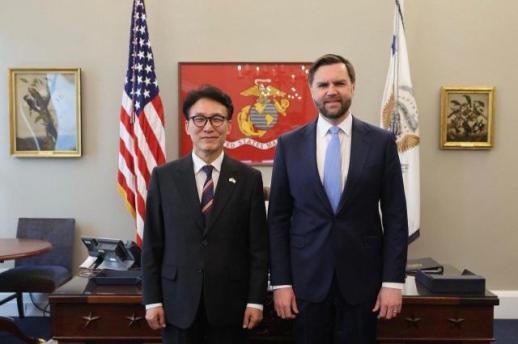 South Korea PM tells US there was no discrimination against Coupang SEOUL, January 24 (AJP) - South Korean Prime Minister Kim Min-seok assured U.S. Vice President J.D. Vance on Friday (local time) that Seoul has not discriminated against e-commerce giant Coupang, pushing back against allegations from American investors that the company faced unfair treatment. The two officials met at the White House for about 50 minutes, exceeding the originally scheduled 40 minutes, as the Coupang dispute emerged as a thorny issue in bilateral relations. Kim's solo visit to Washington marked the first such trip by a South Korean prime minister in 41 years. Kim said Vance expressed understanding of the legal issues involved but requested that both governments manage the situation carefully to prevent misunderstandings. The prime minister agreed to share developments with Washington promptly. The meeting came a day after two U.S. investment firms holding Coupang shares urged the U.S. Trade Representative to take action against South Korea's handling of the company. The investors accused Seoul of discriminatory enforcement following a data breach that affected a significant number of Korean customers. Kim dismissed allegations that he had singled out Coupang for harsh treatment, providing Vance with an English translation of his original remarks to demonstrate they had been quoted out of context. The investors had claimed Kim urged regulators to pursue the company with the same resolve used to "take down the mafia." "No discriminatory treatment was given to any American company," Kim said during a press briefing at the South Korean Embassy in Washington after the meeting. The prime minister also rejected characterizations by Coupang investors that President Lee Jae Myung holds anti-American and pro-China sentiments, expressing confidence that the Trump administration would not accept such claims. Kim said the strength of the alliance has grown beyond being susceptible to lobbying by any single company seeking to distort facts about discrimination that does not exist. The two officials also discussed of North Korea, with Vance asking for Seoul's perspective on how Washington might improve relations with Pyongyang. Kim suggested sending a special envoy to North Korea as one possible approach. Other topics included bilateral shipbuilding cooperation, South Korea's interest in nuclear-powered submarines, and uranium enrichment. Vance acknowledged bureaucratic delays on both sides and agreed to set concrete timelines for implementing summit agreements. Kim said he extended an invitation for Vance to visit South Korea, and the two exchanged direct phone numbers to establish a hotline. President Donald Trump, who had just returned from Davos, was unable to join the meeting but sent his regards to President Lee through Vance. 2026-01-24 11:17:23
 -
 Editorial: Sovereignty isn't a slogan. It's a legal record When two U.S.-based investors in Coupang, widely reported as Greenoaks and Altimeter, initiated the first procedural step toward investor–state arbitration under the Korea–U.S. Free Trade Agreement, they did more than submit a Notice of Intent. They sought to elevate a domestic accountability dispute into the most combustible arena available — treaty law, geopolitics and the global politics of data. Although a Notice of Intent is not yet a formal arbitration filing, it is a required precursor that signals the possibility of international litigation and invites external pressure. South Korea’s Justice Ministry has said it will review the claims and coordinate a government-wide response, while Justice Minister Jeong Seong-ho has made clear that the essence of the matter lies not in government persecution but in corporate responsibility following failures in personal data management. That distinction is central. The issue is not simply whether a notice matures into a case or who might ultimately prevail before an arbitration panel. The deeper question is whether a modern democratic state can enforce basic consumer protection after a data breach of historic scale without having that enforcement repackaged as “discrimination” and rerouted through international litigation and allied political narratives. In the digital economy, a data breach is not a private mishap. Coupang’s breach reportedly affected more than 33 million people — a figure so vast it ceases to be a statistic and becomes infrastructure. Personal data is the bloodstream of contemporary commerce, and when it leaks, the damage spreads beyond a single firm’s reputation into households, payment systems and public trust itself. That is why governments investigate. Not to punish corporate success, and not to stage regulatory theater, but to restore confidence in the rules that govern markets. If a state cannot credibly enforce baseline standards after a breach of this magnitude, the winners are not consumers but the least responsible actors — those who treat compliance as a performance and security as an optional cost. The investors’ response follows a familiar ISDS pattern. Regulatory scrutiny is reframed as political hostility, enforcement is described as targeted harassment, and public criticism is recast as threatening conduct that allegedly violates treaty standards such as fair and equitable treatment. The argument then escalates further, suggesting that Korea’s actions are intended to advantage Chinese competitors, thereby transforming a consumer-protection inquiry into a supposed front line of U.S.–China competition. This is less legal reasoning than narrative weaponization, designed to raise the political cost of enforcement in Washington and deter it in Seoul. Yet geopolitical framing cannot substitute for legal substance. Korea’s data protection and cybersecurity obligations do not disappear because a company is listed in New York, nor do they become discrimination because investors invoke treaty language. On this point, the Justice Minister’s emphasis is correct: an ISDS forum is not a domestic political stage but an evidentiary one. Korea’s strongest defense lies not in outrage or nationalism but in documentation — clear statutory authority, consistency of enforcement across firms, procedural fairness, proportionality and a demonstrable public-interest rationale for each regulatory step taken after the breach. Claims that political remarks by senior officials were distorted also matter, because in treaty disputes even careless language can be repurposed as evidence of hostile intent. In a global legal environment, every official statement is potentially discoverable. Coupang itself has said it is cooperating with authorities while distancing itself from its investors’ legal maneuvering, and it has published its own account of coordination during the incident. But cooperation is not a communications posture. It is an internal discipline. Any platform operating at national scale has an obligation to treat data security as core business, not as reputational insurance. There is also a strategic contradiction in the investors’ approach. Framing consumer protection as political persecution may buy time, but it risks deepening public resentment, intensifying scrutiny and eroding the trust that a data-driven business ultimately depends on. Markets reward credibility and punish perceived impunity. This dispute, however, extends beyond one company or one country. It is a stress test of the global investment regime. ISDS was designed to protect investors from arbitrary expropriation and capricious state action. Over time, it has also been used to chill regulation, convert reputational crises into treaty disputes and invite geopolitical leverage into matters that domestic law would otherwise govern. If routine accountability after a massive data breach can be reframed as discrimination and litigated internationally, regulators everywhere receive a dangerous signal: enforce too firmly and face arbitration; enforce too weakly and fail your citizens. Either way, trust erodes. South Korea should therefore proceed with discipline rather than drama, speaking in evidence rather than emotion, maintaining consistency, disclosing process where possible and resisting the temptation to turn a legal dispute into a nationalist spectacle. Sovereignty is not weakened by scrutiny; it is weakened by improvisation. Washington, for its part, should distinguish investor rhetoric from national interest. The United States has a legitimate interest in the fair treatment of its investors abroad, but it also has a stake in the credibility of allied governance, including the right to enforce consumer protection after a breach affecting tens of millions. Treaty protections are not a shield against accountability, and sovereignty is not a mood. It is a legal record, built case by case, fact by fact and procedure by procedure. In the end, the most important audience for this dispute is not an arbitration panel but the public — the millions whose personal data became collateral in a test of governance. 2026-01-24 10:27:13
 -
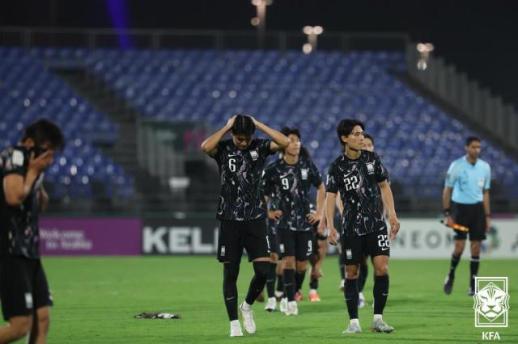 South Korea finish fourth at AFC U-23 Asian Cup after shock penalty loss to Vietnam SEOUL, January 24 (AJP) - South Korea's under-23 football team finished fourth at the Asian Football Confederation U-23 Asian Cup on Saturday after suffering a stunning penalty shootout defeat to Vietnam in the third-place playoff, capping a deeply disappointing campaign for the former champions. The match at King Abdullah Sports City Hall Stadium ended 2-2 after 120 minutes before Vietnam prevailed 7-6 in the shootout, handing South Korea their first-ever loss to Vietnam in the tournament's history after six wins and three draws. South Korea dominated possession throughout the match 65 to 35 percent, recording 32 shots to Vietnam's five and attempting 61 crosses compared to their opponents' four, but struggled to break down a resolute Vietnamese defense. Vietnam struck first through Nguyen Quoc Viet's powerful left-footed finish in the 30th minute after Nguyen Dinh Bac carved open the Korean defense down the left flank. Kim Tae-won equalized with a spectacular turning shot from outside the penalty area in the 69th minute, only for Dinh Bac to restore Vietnam's lead two minutes later. South Korea's fortunes shifted when Dinh Bac received a straight red card in the 86th minute. Shin Min-ha capitalized on the numerical advantage, drilling home a left-footed equalizer deep into stoppage time to force extra time. Despite their sustained pressure in extra time, South Korea failed to find a winner and succumbed in the shootout when Bae Hyun-seo's seventh kick was saved, allowing Nguyen Thanh Nhan to seal victory for Vietnam. The result marks South Korea's worst finish since returning to the semi-finals for the first time in six years since their 2020 triumph in Thailand. Vietnam, coached by Kim Sang-sik, secured third place, their best result since finishing runners-up in 2018 under Park Hang-seo. "We are not a complete team yet. We are a team that should continue to improve," said coach Lee Min-sung of the South Korean squad during the postmatch press conference. "If we can get sharper in attacking the half-space and the final third, we will be a much better team." The team is scheduled to return home through Incheon International Airport on Sunday. 2026-01-24 10:26:10
 -
 Korea's veteran progressive figure Lee Hae-chan hospitalized in Vietnam after heart attack SEOUL, January 24 (AJP) -Former South Korean Prime Minister Lee Hae-chan, a veteran progressive politician and one of the most influential figures in the country’s liberal camp, was rushed to a hospital in Vietnam on Friday after suffering a heart attack and remains in critical condition, officials said. Lee, 73, who currently serves as senior vice chairperson of the Peaceful Unification Advisory Council (PUAC), collapsed at around 1 p.m. local time shortly after arriving at Tan Son Nhat International Airport in Ho Chi Minh City while attempting to return to South Korea, according to PUAC officials. He had arrived in Vietnam a day earlier to attend a meeting of the council’s Vietnamese chapter but reportedly complained of flu-like symptoms before his departure from Seoul. As his condition worsened, Lee decided to cut short his trip and return home. During the airport incident, Lee experienced breathing difficulties and was transported by ambulance to a local hospital while receiving cardiopulmonary resuscitation. Officials said he suffered cardiac arrest twice during transport and treatment. Doctors performed a stent insertion procedure, and Lee is currently breathing with the assistance of mechanical support. His condition remains critical, and he is expected to remain hospitalized until stabilized, officials said. President Lee Jae Myung was briefed on the situation and ordered the dispatch of his senior political secretary, Cho Jung-sik, to Vietnam to assist during Lee’s hospitalization. Cho was scheduled to depart early Saturday, according to the presidential office. Born in 1952, Lee Hae-chan is a seven-term lawmaker and a towering figure in South Korea’s progressive movement. He served as prime minister from 2004 to 2006 under the Roh Moo-hyun administration and previously held the post of education minister, where he spearheaded sweeping education and administrative reforms. Known as a hardline strategist and ideological anchor of the Democratic Party, Lee later served as a senior adviser to Lee Jae Myung’s presidential campaign in 2021 and as co-chair of the party’s election committee during last year’s general election. He currently holds the title of standing senior adviser to the Democratic Party. The PUAC is a constitutionally mandated presidential advisory body tasked with proposing unification policies, gathering domestic and international public opinion on inter-Korean relations, and building national consensus on unification. The president serves as its chair, while the senior vice chairperson serves a two-year term. The council comprises roughly 22,000 advisers at home and abroad, including regional, professional and overseas Korean representatives. Officials said they are closely monitoring Lee’s condition as arrangements are made for ongoing medical support in coordination with South Korean authorities. 2026-01-24 10:19:07
 -
 Hyundai union clashes with management over humanoid robot deployment SEOUL, January 24 (AJP) - Hyundai Motor Company's labor union has warned it will block the deployment of humanoid robots on production lines without prior agreement, escalating tensions over the automaker's plan to introduce Boston Dynamics' Atlas robots to its manufacturing operations. "Not a single robot can enter the production floor without labor-management agreement," the National Metal Workers' Union Hyundai Motor Company branch said in a newsletter on Thursday. "If robots are deployed on production lines, significant employment shocks are expected." The union raised alarms over potential job losses, citing cost comparisons between human workers and machines. "With an average annual salary of 100 million won ($69,141), operating three shifts around the clock costs about 300 million won per year, while robots only incur maintenance costs after the initial purchase," the union said. Hyundai Motor Group unveiled a production-ready version of the Atlas humanoid robot at CES 2026 earlier this month, outlining a roadmap to deploy the machines at its Metaplant facility in Georgia before expanding to factories worldwide. The group plans to assign Atlas robots to basic tasks such as parts picking and sequencing starting in 2028, then expand their use to more complex operations including assembly, heavy-load handling and quality inspection by 2030. A dedicated robot factory is being built with annual production capacity of about 30,000 units. The union fears that concentrating electric vehicle and robotics investments at U.S. production hubs could accelerate the transfer of high-value manufacturing processes overseas, leaving domestic plants with diminished roles and reduced workforce requirements. Delays in robot deployment could also carry costs for Hyundai, potentially pushing back expected gains in productivity, quality control and workplace safety, while slowing the company's return on investment amid intensifying competition in the electric vehicle market. Global rivals are already moving toward commercialization. Tesla has begun testing its Optimus humanoid at its own facilities and has signaled plans to sell the robots by late next year, while BMW is running pilot programs at its Spartanburg plant. 2026-01-24 09:34:41
 -
 Asian markets end week upbeat as KOSPI, KOSDAQ hover near milestones SEOUL, January 23 (AJP) - Asian equities finished the week on a firm footing Friday, with South Korea’s main stock indexes hovering near key psychological thresholds amid brisk sector rotation and steady foreign inflows. The benchmark KOSPI rose 0.7 percent to close at 4,990.10, after briefly breaking above the 5,000 mark earlier in the session. Gains were capped by profit-taking near the milestone, though demand for large-cap shares remained intact. The KOSPI 200 also advanced 0.7 percent to 727.30. The tech-heavy KOSDAQ moved even closer to a landmark of its own, jumping 2.43 percent to finish at 999.93, just shy of the 1,000 level. Institutional and foreign investors absorbed retail selling around record highs. Foreigners posted net purchases of 133.3 billion won ($91 million) on the KOSPI, while institutions added 491.1 billion won. Retail investors sold a net 725.6 billion won, extending a pattern of profit-taking near peak levels. Sector performance highlighted a sharp rotation. Healthcare services led gains, surging 9.4 percent, followed by IT services, up 7.2 percent. Among major movers, Kakao Pay soared 29.9 percent to 67,800 won, while NAVER climbed 8.4 percent to 266,000 won. LG CNS rose 8.4 percent to 73,700 won. Semiconductor shares remained resilient, with SK hynix gaining 1.6 percent to 767,000 won. Automakers and select battery stocks lagged. Hyundai Motor fell 3.6 percent to 510,000 won, while Samsung SDI slipped 3.0 percent to 373,000 won. Samsung Electronics was little changed, edging down 0.13 percent to 152,100 won. Market attention increasingly shifted toward the KOSDAQ, which investors see as offering greater upside potential than the KOSPI at current levels. Foreign investors bought a net 86.7 billion won of KOSDAQ shares, while institutions added 987.4 billion won. Retail investors sold a net 1.0359 trillion won, underscoring rotation out of smaller names following the recent rally. In currency and bond markets, signals were mixed. The won stabilized around 1,465.7 per dollar. Government bond yields rose, with the three-year yield at 3.14 percent and the 10-year at 3.59 percent. Elsewhere in Asia, Japan’s Nikkei 225 edged up 0.29 percent to 53,846.87 after the Bank of Japan left its policy rate unchanged at 0.75 percent, easing concerns over faster tightening. Regional sentiment was further supported after U.S. President Donald Trump said Washington would not proceed with additional tariffs linked to Greenland-related trade disputes, helping temper global risk aversion. In China, the Shanghai Composite Index rose 0.3 percent to 4,136.20, reinforcing the broadly positive tone across Asian markets. 2026-01-23 17:49:30
 -
 HYBE and Seoul weigh safety as BTS plans unprecedented public-stage comeback SEOUL, January 23 (AJP) – Seoul authorities and HYBE are moving cautiously as they prepare for what could become one of the most closely watched public performances in K-pop history: BTS’s planned 2026 comeback show in the Gwanghwamun area, the heart of the capital’s government, business and tourism district. It took several days for the Seoul Metropolitan Government to grant a conditional go-ahead to HYBE’s request to stage the concert in the downtown area in late March. While the idea of a free, open-air BTS performance on city streets has generated excitement worldwide, it has also raised difficult questions about crowd control and public safety. City officials remain acutely aware of the risks associated with large-scale gatherings, particularly after the 2022 Itaewon crowd crush tragedy. Unlike ticketed stadium concerts, a public street performance presents far greater uncertainty. HYBE has estimated attendance could exceed 100,000, but officials acknowledge that the actual number is difficult to predict, especially given BTS’s global fan base. That uncertainty is one reason the city reportedly steered organizers toward a Saturday date, rather than a weekday, out of the three dates originally proposed. Even so, HYBE emphasized that no final decision has been made. “The specific concert date has not been confirmed, and options for March 20, 21 or 22 are currently being reviewed,” said Park Hye-sol, a BTS public relations manager at HYBE. “Safety matters are being discussed with the Korean National Police Agency.” According to Seoul city officials, final authorization will be granted only after a comprehensive safety review. Authorities have called for detailed measures to manage crowd flows, prevent overlaps between performer and audience movements, and minimize traffic disruption in the Gwanghwamun area. “HYBE is in discussion with the Korean National Police Agency, while the Seoul Metropolitan Government and HYBE continue to share updates and review safety measures as concerns arise,” an official from the city’s tourism and events team said. “The formal safety review will take place after the Lunar New Year holiday, and no details have been finalized yet,” the official added. Preparations include plans to redirect pedestrian traffic to reduce congestion around Gwanghwamun and nearby sidewalks, as well as coordination with Seoul Metro to manage subway crowding. Station-specific measures are under discussion, including guidance for passengers to use alternative exits if certain access points become overcrowded. “Because real-time monitoring of crowd levels is essential, guidance will be adjusted on site as conditions change,” the official said. Fans urge caution, not chaos. Online, fans have also voiced concerns—largely framing safety as a shared responsibility between organizers, authorities and the fan community itself. On social media platform X, international fans have warned about the risks of excessive crowd density, calling for clear crowd-flow management, sufficient staffing and strict on-site safety controls. Some posts stressed that enthusiasm should not override caution, urging planners to prioritize safety over spectacle. Several fans tagged law enforcement agencies and event organizers, asking for tighter entry management, clearer separation of pedestrian flows and better organization of waiting areas. One widely shared post summed up the sentiment succinctly: “Prevention is better than reaction.” Attention has also turned to transportation hubs. Some fans cautioned against gathering at airports, noting that such behavior has previously caused congestion and safety concerns. Incheon International Airport has echoed those warnings in recent years, urging entertainment agencies to submit advance travel plans for major artists and strengthen crowd management around terminals. One message circulating widely online urged restraint: “Do not go to airports unless you have a valid flight ticket.” The posts reflect a growing awareness within the fan community of the risks posed by unmanaged gatherings—not only to fans themselves, but also to the artists and the public. As anticipation builds for BTS’s return, organizers and authorities face a delicate balancing act. For an event of this scale and visibility, how safely the crowd is managed may matter just as much as what happens on stage. 2026-01-23 17:47:46
 -
 Foreign shoppers make cash registers ring at department stores amid weak won SEOUL, January 23 (AJP) - Amid concerns over soaring consumer prices due to the weaking won against the greenback, South Korea has become a destination for luxury goods among many overseas shoppers. Foreign tourists have been lining up outside department stores in central Seoul even before they open for days' business. According to industry data released on Friday, foreign sales at Shinsegae's main branch in downtown Seoul jumped 82 percent last year, while its Gangnam branch saw a 52 percent increase. Sales at Lotte and Hyundai department stores also showed a similar trend, as purchases of luxury goods by foreign shoppers are rising fastest. In particular, foreign sales at Hyundai accounted for about 20 percent of its total sales. The main draw is price. With the weakening won, luxury goods in South Korea are nearly 10 percent cheaper for foreigners, and tax refunds for tourists can reduce prices even further. To capitalize on the trend, department stores are stepping up efforts to attract more overseas shoppers. Hyundai is preparing a tailored shopping program for foreign travelers, picking them up at Incheon International Airport upon arrival, while Shinsegae plans to expand promotions targeting short-term visitors and cruise passengers in the southern port city of Busan. Lotte introduced a foreigner-only membership credit card in December, offering a 5-percent discount and other benefits. Around 13,000 people have already signed up in just a month. Department stores anticipate strong sales as foreign arrivals are on the rise. According to the Korea Tourism Organization, some 17.42 million foreign tourists visited South Korea during the first 11 months of last year, up 15.4 percent from 15.10 million a year earlier. With December's figure included, the total is expected to surpass the previous record of 17.50 million set in 2019. "Foreign spending has become a key factor in ringing department store registers," an industry insider said. 2026-01-23 17:32:28
 -
 In BTS' spring comeback season, even birthdays become world tours SEOUL, January 23 (AJP) - The return of BTS as a full seven-member group this spring is dominating headlines, charts and countdown clocks. But for fans, the calendar holds more than just album drops and stage schedules. In the BTS universe, every detail matters — including birthdays. SUGA turns 33 on March 9, and long before the candles are lit, the celebration has already spilled into cafes, timelines and city streets. For fans, this is not a side event. It is the event. To become a fan in Korea is not simply to admire from a distance. It is to enter a parallel world — one built on devotion, design, logistics and an almost ceremonial sense of care. Fandom here demands labor and money, yes, but also creativity, community and a distinctly Korean flair for making affection visible. That spirit is on full display this month through the now-familiar ritual of the “birthday cafe.” A birthday that doesn’t stay in one city Fan-organized birthday cafes honoring SUGA will run from March 6 to March 9 at L’ombre 378, according to organizers. The event announcement ricocheted across social media, inviting fans to document their visits using hashtags such as #탕이아빠생축, #HBD_to_our_black_kitty, and #Happy_black_kitty_day — affectionate nicknames that need no translation within the fandom. Inside, visitors will receive a carefully curated set of fan-made gifts: photo cards, postcards, stickers and a key ring. Those who complete a full set can expect additional items, including a shopping bag and pin badge. Organizers have teased further perks — from first-come giveaways to lucky draws — to be announced closer to the date. The planning, notably, is not confined to Seoul. BTS birthdays rarely are. What looks like a cafe event is, in practice, a coordinated global gesture — replicated, localized and shared across borders in real time. From letters to LED lights — and then to tables you can sit at Birthday cafes did not appear overnight. They are the latest chapter in the long evolution of Korean fandom culture. In the early generations, celebration was largely indirect. Fans mailed handwritten letters and postcards to broadcast stations or entertainment agencies. Support arrived in bulk rice wreaths, snack deliveries to music show waiting rooms, or congratulatory ads placed in newspapers and magazines. As online platforms expanded in the 2000s, fan cafes and message boards became the main stage. Digital banners, collective letters and charity donations made in an artist’s name flourished. The affection was visible — but mostly on screens. Then came the era of scale. LED billboards in subway stations, bus stop ads and even city buses wrapped in idols’ faces turned birthdays into urban landmarks. They were impressive, but untouchable. You could see them — not enter them. Birthday cafes changed that. Emerging in the early 2010s, often near entertainment company offices, they began as modest gatherings. A few printed photos taped to walls, handwritten notes, fans lingering over drinks. The shift was subtle but profound: celebration moved from being displayed to being shared. How a fan ritual became a format Over time, birthday cafes became standardized. Dates, locations and themes now circulate primarily on X (formerly Twitter), where fans exchange maps, schedules and visual guides with near-professional precision. What began as informal meetups evolved into a recognizable format — complete with themed interiors, curated visuals and coordinated merchandise. A fan of rookie group ZEROBASEONE (ZB1), Kim So-jun, remembers when proximity mattered most. “They were often held near the company building,” Kim said. “Sometimes there were rumors that idols stopped by. I never saw it myself, but I heard that an idol I liked had visited a birthday cafe once.” As the scale grew, some cafes began incorporating small exhibitions or concepts tied to albums and performances. Still, fans are careful not to treat birthday cafes as a hierarchy. “I think a birthday cafe is just one of many ways to celebrate an artist,” Kim said. “There are also LED billboards, bus ads and other methods. This is simply one option.” Offline affection in a hyper-online world Promotion happens online, but the ritual is completed offline. Fans gather to meet others who share the same affection, trading conversations, stories — and fan-made goods. Foreign fans are increasingly visible. “It’s both,” said Lee Jun-su, a fan of fromis_9, when asked whether people come for interaction or the cafe experience itself. “Some come to connect with other fans, and some come because birthday cafes feel uniquely Korean. But everyone comes with the same intention — for the artist.” Official merchandise is not sold, but fan-made items circulate freely. “There’s a lot of fun in seeing each item,” Lee said. “You can tell they were made with care.” Artists themselves rarely appear at these events, though rumors occasionally swirl. Yet the absence hardly diminishes the meaning. “Wanting to celebrate the artist’s birthday is the biggest reason,” Lee said. “Even if the artist doesn’t come, that doesn’t change.” From idols to icons What began with global superstars like BTS has now expanded far beyond K-pop. Birthday cafes are now organized for rookie idols, television producers — and even historical figures. Fans have commemorated scientists such as Isaac Newton and figures like King Sejong, the creator of the Korean alphabet, using the same format. The cafe has become less about celebrity and more about remembrance — a way to mark significance through space, repetition and presence. Asked to define birthday cafes in one sentence, one fan offered a modest reply. “They’re just one of many ways to celebrate an artist.” Yet taken together — from handwritten letters to billboards, from bus ads to cafes — birthday cafes reveal something larger. In Korean fandom, celebration has evolved from being seen, to being shared, and finally, to being lived. And in the world of BTS, even a birthday is never just a date on the calendar. 2026-01-23 17:16:16
 -
 South Korea is aging fast, but policy is falling behind SEOUL, January 23 (AJP) - South Korea has officially entered the ranks of super-aged societies, but its policies remain anchored in a younger past. The result is a deepening crisis marked by the OECD’s highest old-age poverty rate and one of the world’s most alarming suicide rates among seniors—outcomes that experts say reflect years of delayed and fragmented responses to demographic change. According to the OECD’s Pensions at a Glance 2023, four out of ten Koreans aged 65 and older live below the poverty line, defined as having an income at or below half of the national median disposable household income. The figure is nearly three times the OECD average of 14.2 percent. While the comparison is imperfect—Korea’s measure is income-based and excludes assets such as real estate—other global indicators consistently point to the same conclusion: old age in Korea is unusually harsh. Nowhere is that clearer than in suicide statistics. South Korea’s suicide rate among older adults stood at 42.2 per 100,000 as of 2020, roughly 2.5 times the OECD average of 16.6, according to a 2024 report. Domestic figures tell a similar story. Data from Statistics Korea show that in 2025, the income poverty rate for those aged 66 and older reached 39.7 percent, nearly triple the OECD average of 14.8 percent. The burden grows heavier with age. Among people aged 75 and above, public transfers such as basic pensions do far less to reduce poverty than they do for younger seniors, suggesting widening disparities within the elderly population itself. Structural features of Korea’s labor market compound the problem. Many older Koreans continue to work not by choice but by necessity, often in low-paid and unstable jobs. This year, the number of workers clocking fewer than 15 hours a week surpassed one million, with nearly 70 percent of them aged 60 or older. These “ultra-short-hour” jobs—typically in cleaning, waste collection or other manual tasks—offer little security and meager pay, trapping seniors in precarious livelihoods. Health costs further magnify financial stress. Nearly half of Koreans aged 75 and above suffer from three or more chronic illnesses, and about 15.7 percent live with dementia—more than three times the rate among younger seniors. Medical and long-term care expenses hit the poorest hardest, often pushing them deeper into poverty late in life. Gender disparities deepen the gap Lifetime inequality in Korea’s labor market carries directly into old age, leaving elderly women especially vulnerable. In 2023, male workers earned an average of 26,042 won per hour, while women earned just 18,502 won—about 71 percent of men’s wages—according to the Ministry of Gender Equality and Family. Nearly half of female workers were non-regular employees, compared with less than a third of men, and women were more than twice as likely to be classified as low-wage earners. The retirement gap is stark. Men aged 60 to 64 receive an average national pension of about 980,000 won a month, while women receive just 460,000 won—less than half. OECD data show that 45.3 percent of elderly Korean women live in poverty, far above the OECD average of 10.2 percent. “I come here every day for free meals” The statistics take on human form at soup kitchens across Seoul. On a cold winter morning near Tapgol Park, dozens of elderly men and women gathered quietly before lunchtime, hands tucked into thin coats. For many, these soup kitchens are not only their main source of food, but also their only place of social contact. An 88-year-old man originally from Hwanghae Province said he travels nearly an hour by subway each day to eat. “I come here for free meals every day,” he said. “Breakfast, lunch and dinner—I get them all from soup kitchens. There are others near Cheongnyangni and Seoul Station too.” Nearby, an 82-year-old woman from Jeongneung described scraping by on her basic pension and income from public work programs. Her monthly income, she said, is just under one million won. “About ten days a month, I pick up cigarette butts on the street,” she said. With a husband suffering from dementia, she is the family’s sole earner. “Dentures are covered by insurance, but crowns are not. One tooth costs 500,000 to 600,000 won. I just can’t afford it.” Another woman, 86, said she has no bathroom in her home. “I walk about five minutes to a public restroom,” she said. “It’s manageable most days, but in winter the roads freeze and I fall.” With no other work available, she collects cardboard, earning about 6,000 won a day if she is lucky. “I start at six in the morning and go until it’s dark.” Volunteer Yoo Yoo-jae, 68, said around 300 elderly people visit the soup kitchen each day. “Some even come from Cheonan because subway rides are free,” he said. “Most are in their 70s or older. We have five people over 90 who come regularly, and about ten who use wheelchairs.” A structural challenge, not a temporary one “Suicide among older adults in South Korea has long been a chronic social problem,” said Kim Jae-woo, a sociology professor at Jeonbuk National University. As of 2023, the suicide rate for those aged 65 and above reached 40.6 per 100,000—about 1.5 times higher than the overall rate across all age groups. “Economic hardship, physical illness, depression and social isolation all interact,” Kim said. “But poverty remains one of the most decisive factors.” While expanding mental health services is important, Kim stressed that the solution must be broader. Korea, he said, needs stronger community-based care systems for frailty and chronic illness, more robust social networks, and—most critically—direct financial support for economically vulnerable seniors. As policymakers debate reforms, the elderly lining up at Seoul’s free meal centers are already living with the consequences. Their hunger, illness and isolation are not abstract risks on a demographic chart, but daily realities unfolding quietly at the margins of one of the world’s richest economies. 2026-01-23 17:15:37