
Journalist

AJP
-
 New catalyst design boosts hydrogen efficiency while cutting costs SEOUL, January 21 (AJP) - Researchers in South Korea have developed a new structure for catalysts that significantly reduces the amount of expensive precious metals required for hydrogen production and fuel cells. A team led by Professor Cho Eun-ae from the Department of Materials Science and Engineering at the Korea Advanced Institute of Science and Technology (KAIST) announced on January 21 that they have successfully created ultra-thin nanosheets that outperform traditional particle-based catalysts. Catalysts are essential for splitting water to create hydrogen and for generating electricity in fuel cells. However, the industry relies heavily on iridium and platinum, rare metals that are prohibitively expensive and prone to degradation over time. Current commercial catalysts use these metals in the form of small particles, which often clump together, reducing their effectiveness and limiting their lifespan. To address this, the research team abandoned the traditional granular form in favor of a sheet-like structure. By flattening the catalyst material into ultra-thin layers—thousands of times thinner than a human hair—the researchers created a structure that exposes much more surface area to the chemical reaction. This allows the system to generate more hydrogen or electricity using a smaller amount of precious metal. The new structure also solved a longstanding engineering challenge regarding support materials. Titanium oxide is a durable and inexpensive material, but it is rarely used to support catalysts because it does not conduct electricity well. The researchers found that when the new nanosheets are layered over titanium oxide, the sheets themselves connect to form a conductive path. This allows the stable titanium oxide to support the catalyst without impeding the flow of electricity. When applied to water electrolysis for hydrogen production, the new iridium nanosheet catalyst improved production speed by 38 percent compared to commercial catalysts. It achieved this performance while reducing the amount of iridium used by 65 percent. The system remained stable for over 1,000 hours under high-load conditions similar to industrial settings. The team applied the same design strategy to fuel cells using a platinum-copper alloy. The resulting catalyst demonstrated high durability and efficiency. In fuel cell tests, the platinum-copper nanosheets showed a 13-fold increase in performance per mass of platinum compared to commercial options. The fuel cell performance increased by roughly 2.3 times. Furthermore, the catalyst maintained 65 percent of its initial performance even after a rigorous durability test of 50,000 cycles, proving it to be far more durable than existing alternatives. This was achieved while reducing platinum usage by 60 percent. "We have presented a new catalyst structure that can simultaneously improve hydrogen production and fuel cell performance while using significantly less expensive precious metals," said Professor Cho Eun-ae. "This research will be a turning point in lowering the cost of hydrogen energy and accelerating commercialization." The research was supported by the Energy Human Resources Development Program of the Korea Institute of Energy Technology Evaluation and Planning, and the Nano and Material Technology Development Program of the National Research Foundation of Korea. (Paper information) Journal: ACS Nano (Impact Factor: 16.0) Title: Ultrathin Iridium Nanosheets on Titanium Oxide for High-Efficiency and Durable Proton Exchange Membrane Water Electrolysis DOI: https://doi.org/10.1021/acsnano.5c15659 (Paper information) Journal: Nano Letters (Impact Factor: 9.6) Title: Ultrathin PtCu Nanosheets: A New Frontier in Highly Efficient and Durable Catalysts for the Oxygen Reduction Reaction DOI: https://doi.org/10.1021/acs.nanolett.5c04848 2026-01-21 14:43:32
 -
 Jeju Air bans in-flight use of portable battery packs SEOUL, January 21 (AJP) - South Korean low-cost carrier Jeju Air said on Wednesday it will ban the use of portable battery packs on board its aircraft starting Jan. 22, citing the risk of lithium-ion battery fires. The measure applies to all passengers on domestic and international flights and prohibits using portable battery packs to charge devices such as mobile phones and tablet computers during flights. Under existing transport ministry guidelines, charging portable battery packs and electronic cigarettes on board is already prohibited. Jeju Air said it is going a step further by banning in-flight use of battery packs entirely to further reduce fire risks. The airline said it will post notices on its website and provide advance alerts via KakaoTalk notifications and during self-service kiosk check-in. Airport check-in counters will also inform passengers of the new restriction. Jeju Air said it has strengthened safety measures related to lithium batteries over the past year. The airline has carried fire-suppression pouches on board since February last year and, under enhanced government safety standards, has required passengers since March to take short-circuit prevention measures and keep battery packs on their person or in a visible location during flights. In August, the airline added temperature-sensitive stickers to overhead storage bins. The carrier also said it has immediately disposed of found items involving lithium batteries, including portable battery packs and e-cigarettes, since February last year. Since April, it has banned wireless hair straighteners from being carried on board due to concerns over excessive heat generation. * This article, published by Aju Business Daily, was translated by AI and edited by AJP. 2026-01-21 14:01:54
 -
 Com2uS baseball games top 1 trillion won in cumulative revenue SEOUL, January 21 (AJP) - South Korean game developer Com2uS said on Wednesday that cumulative revenue from its baseball game titles has exceeded 1 trillion won ($750 million). The company attributed the milestone to the expansion of its lineup of officially licensed baseball titles tied to major leagues including the Korea Baseball Organization (KBO) and Major League Baseball (MLB), beginning with the 2015 launch of Com2uS Pro Baseball 3D. Com2uS cited steady growth in user engagement, saying monthly active users last year peaked at more than 2.6 million, over six times the level recorded in 2015. Average annual revenue growth over the past three years stood at around 30 percent, the company said. The franchise’s longevity has been supported by increasingly detailed content and strengthened live operations, the company said. It has closely reflected real-world player data, records and play styles, while refining controls and presentation for hitting, pitching and defense to improve gameplay realism. Com2uS also said it has reinforced season-linked events and offseason content while continuously adjusting progression balance between new and existing users. The company tied the expansion of its baseball games to overseas growth. It began a global push in 2016 with MLB 9 Innings 16, followed by Com2uS Pro Baseball V in 2022 and MLB Rivals in 2023. In 2025, it expanded into Japan with the Nippon Professional Baseball-licensed Pro Baseball Rising. Com2uS said it plans to enhance update quality in line with league seasons this year and expand content marking the 10th anniversary of MLB 9 Innings, using differentiated strategies for each title to sustain growth. “We have built a structure in which baseball games continue to grow, based on nearly a decade of development and live operations know-how,” said Hong Ji-woong, head of production at Com2uS. 2026-01-21 13:53:45
 -
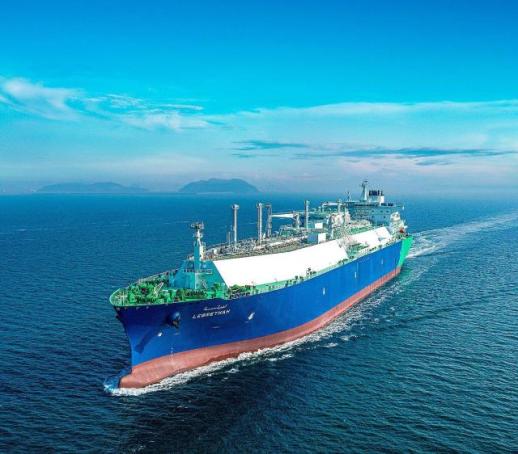 Hanwha Ocean wins $550 million orders for 2 LNG carriers SEOUL, January 21 (AJP) - Hanwha Ocean has secured new liquefied natural gas (LNG) carrier orders, adding to a solid start to the year as the South Korean shipbuilder focuses on high-value vessels. In a regulatory filing on Wednesday, the company said it signed shipbuilding contracts for two LNG carriers with a total value of 738.3 billion won ($550 million). The vessels will be delivered sequentially, though no timetable was disclosed. Including the latest contracts, Hanwha Ocean’s year-to-date order intake stands at five vessels — three very large crude carriers and two LNG carriers — worth about $890 million. That compares with a single VLCC order in January last year. The company said it expects replacement demand for aging vessels to continue over the medium to long term as environmental regulations tighten globally and fuel-efficiency requirements become more stringent. Hanwha Ocean also forecast sustained demand for LNG carriers as the development of LNG export terminals, led by the United States, enters a full-scale phase. * This article, published by Aju Business Daily, was translated by AI and edited by AJP. 2026-01-21 13:45:30
 -
 KOSPI recovers early losses, buoyed by surge in foreign buying SEOUL, January 21 (AJP) - South Korean stocks reversed early losses Wednesday morning, buoyed by strong foreign buying and a sharp rebound in the won, even as global markets remained cautious amid lingering trade uncertainty from U.S. President Donald Trump's tariff pressures. As of 10:40 a.m., just a few hours into the day's trading, the benchmark KOSPI was up 0.43 percent at 4,907.1, rebounding from an earlier 0.6 percent decline. The KOSPI 200 rose 0.9 percent to 715.3, signaling renewed demand for large-cap stocks, while the tech-heavy KOSDAQ fell 2.5 percent to 952.6, showing a widening divergence between blue chips and growth-oriented shares. Foreign investors drove the turnaround with net purchases of 435.6 billion won ($320 million) on the KOSPI, joined by institutions at 71.5 billion won. But retail investors sold 570.6 billion won. On the junior KOSDAQ, foreigners and institutions sold while individuals bought. The won's sharp recovery shaped market sentiment. Strengthening to 1,472.8 per dollar, a gain of 7 won, or 0.5 percent, the currency eased pressure and helped stabilize the day's volatile start. Investor confidence was further bolstered by remarks from President Lee Jae Myung, who said he would seek to ease concerns over foreign-exchange volatility. "If there were extraordinary measures needed to stabilize the currency, they would already be in place," Lee said during a press conference earlier in the day. He also said he believes the won's exchange rate against the greenback could return to the 1,400-won range within one to two months. Auto-related stocks led the early rebound, benefiting from both currency moves and heavy foreign inflows. Hyundai Motor surged 10.2 percent to 528,000 won and Kia jumped 4.7 percent to 171,600 won. Chip stocks remained strong, with Samsung Electronics climbing 3 percent to 149,600 won and SK hynix rising 0.9 percent to 751,000 won, supported by optimism over artificial intelligence-driven demand. But not all sectors joined the rally. Energy and infrastructure shares lagged, with Doosan Enerbility falling 3.2 percent to 92,200 won on profit-taking. Portals also underperformed, as NAVER slipped 1.6 percent to 240,000 won. Elsewhere in Asia, sentiment remained cautious. Japan's Nikkei 225 fell 0.4 percent to 52,785.8, as optimism over an impending snap election and tax relief proposals was overshadowed by U.S. trade concerns. 2026-01-21 11:46:05
 -
 Lee reaffirms conciliatory stance toward North Korea SEOUL, January 21 (AJP) - President Lee Jae-myung on Wednesday reaffirmed his conciliatory approach toward North Korea to help reduce tensions on the Korean Peninsula. In a televised press conference marking the new year at Cheong Wa Dae in central Seoul, Lee pledged to "move forward without wavering toward a future of peaceful coexistence and shared growth," adding that peace-backed stable growth could enable the economy to "take another leap." He added that he will step up diplomatic efforts to resume inter-Korean talks, with South Korea playing a role as a "pacemaker" to bring North Korea to the dialogue table with the U.S. To prevent "accidental clashes" along the border, Lee added that he plans to restore the inter-Korean military pact signed in 2018 as part of efforts to ease military tensions between the two Koreas. The pact was effectively suspended in 2024 as inter-Korean relations sharply worsened under the previous administration's firm stance toward the North. He also pledged to seek "creative solutions" for mutually beneficial peace and "feasible measures" to ease tensions on the Korean Peninsula, adding that any thaw in inter-Korean relations would take time. Citing North Korea's growing nuclear arsenal, Lee stressed a "pragmatic and gradual approach" to halt the North's nuclear weapons program, with the ultimate goal of denuclearization in the long term. 2026-01-21 11:03:48
 -
 Hyundai Mobis to develop 5G telematics system for autonomous, software-defined vehicles SEOUL, January 21 (AJP) - Hyundai Mobis said Wednesday it is developing an integrated 5G wireless telematics system aimed at next-generation connected vehicles, as automakers worldwide race to upgrade in-car communication technologies. The South Korean auto parts supplier plans to complete development of its multi-function telematics control unit by the first half of this year. The technology enables high-definition map services, remote autonomous driving control and ultra-HD streaming — capabilities that current 4G-based systems cannot support. "We will complete product development by the first half of this year to ensure a swift market entry in the next-generation connected car service sector and secure market leadership globally," said Jeong Su-kyung, executive vice president of Hyundai Mobis' electrification business unit. The new system features an antenna integrated directly into the control unit, eliminating the need for externally protruding antennas and allowing for sleeker vehicle designs. Hyundai Mobis is collaborating with domestic communication modem specialists including AM Telecom to accelerate development. The global telematics control unit market is projected to grow from about 64 million units this year to 77 million units by 2030, driven by rising consumer demand for smartphone-like vehicle connectivity and differentiated mobility experiences. While 5G telematics technology is considered essential for software-defined vehicles, a company spokesperson told AJP that its application to robotics — such as parent group Hyundai Motor Group's Atlas humanoid — remains a future possibility rather than an immediate priority. Hyundai Mobis currently supplies 4G-based telematics products and aims to leverage its existing mass production capabilities and system development expertise to strengthen its competitive position in global markets. 2026-01-21 11:03:29
 -
 Vietnam's U-23 title bid halted by China in semi-finals SEOUL, January 21 (AJP) - Vietnam's bid to replicate its historic 2018 run under South Korean leadership ended in the semi-finals of the AFC U-23 Asian Cup on Wednesday, following a 3-0 defeat to China. The loss at Prince Abdullah Al-Faisal Sports City denies head coach Kim Sang-sik a shot at the title in his first major tournament. Kim had been tasked with reviving a program defined by his compatriot and predecessor, Park Hang-seo, widely revered as a national hero in Vietnam for launching a golden era of football success. Eight years after Park guided Vietnam to a shock runner-up finish, the 2026 squad held firm through a goalless first half but collapsed after the break. Vietnam conceded three times in the second half and finished with 10 men following a red card. Despite the exit, the semi-final appearance marks a stabilization for the team following the tenure of Philippe Troussier. Kim's appointment was seen as a move to restore the discipline and organization that became the team's identity under Park. Vietnam will now conclude its campaign with a commercially and emotionally significant third-place playoff against South Korea on Saturday. China advances to face Japan in the final on January 25. Japan is chasing a second consecutive and third overall title, while China is bidding for its first trophy at this level. 2026-01-21 10:59:18
 -
 Editorial: When East meets West, song and silicon speak first SEOUL, January 21 (AJP) - When President Lee Jae Myung welcomed Italian Prime Minister Giorgia Meloni to Seoul, the meeting followed the familiar choreography of modern summitry. There were discussions of supply chains, advanced industries, and strategic cooperation. Yet beneath the formal language of diplomacy, the encounter revealed something more enduring: a convergence of technology, culture, and temperament between two nations that stand at opposite ends of Eurasia. At the center of the talks was semiconductors—no longer a niche industry but the backbone of contemporary geopolitics. Korea’s dominance in memory chips and manufacturing capacity complements Italy’s long-standing strengths in precision machinery, materials, and industrial design. Cooperation in this field is not merely transactional. It reflects a shared understanding that technological sovereignty in the twenty-first century depends on trusted partnerships rather than isolated national efforts. In an era of fractured supply chains, the decision to coordinate across continents signals strategic maturity on both sides. Equally telling was the attention paid to culture, particularly the global trajectory of Korean popular music and creative industries. K-pop has already conquered charts and streaming platforms, but its next challenge lies in evolution rather than expansion. Italy, a country that transformed opera, cinema, and fashion into universal cultural languages, offers valuable lessons. The discussion was not about exporting Korean culture wholesale, but about how it might be reinterpreted within Western frameworks without losing its core identity. Cultural exchange, when done well, is not dilution but transformation. Recent visits to Korea by executives from major Italian film studios underscore this point. They point toward a future of co-production and shared storytelling, where Korean narrative dynamism meets Italian aesthetic tradition. Such collaborations, if sustained, could redefine how non-English cultural content circulates globally. Culture, often dismissed as soft power, here emerges as a serious industry—disciplined, competitive, and strategic. Yet the most intriguing aspect of the Korea–Italy dialogue lies beyond policy documents. Despite their geographic distance, the two societies share strikingly similar temperaments. Both cherish music, conversation, food, and the social rituals of drink. Both value emotional expression as much as technical excellence. This cultural DNA—passionate, human-centered, and communal—forms an invisible but powerful foundation for cooperation. Diplomacy ultimately rests not on contracts alone, but on mutual recognition of character. The Seoul summit demonstrated a modern truth: sustainable international partnerships must engage both the mind and the spirit. Semiconductors address the logic of survival; culture speaks to the meaning of coexistence. Korea and Italy, by embracing both, have offered a glimpse of diplomacy suited to an age where technology accelerates but humanity still seeks resonance. When East and West sat across the table, it was song that opened the conversation—and silicon that anchored it. That balance may well define the future of their relationship. 2026-01-21 10:40:01
 -
 New South Korean rom-com makes strong debut on Netflix's global chart SEOUL, January 21 (AJP) - Netflix's new South Korean series has cracked the top 10 on the global streaming giant's chart this week. According to Netflix's ranking website Tudum, "Can This Love Be Translated?" garnered 4 million in cumulative views, in less than a week after its release last Friday, securing the No. 2 spot among non-English shows, just behind crime thriller "Taskaree: The Smuggler's Web." The romantic comedy starring Kim Seon-ho and Go Youn-jung also ranked in the top 10 in some 36 countries including Brazil, Indonesia, Mexico, Portugal, Saudi Arabia and Singapore. The 12-episode series follows the story of a celebrity and her interpreter whose emotions "get lost in translation as they travel the world filming a TV show." 2026-01-21 10:27:43