
Journalist

AJP
-
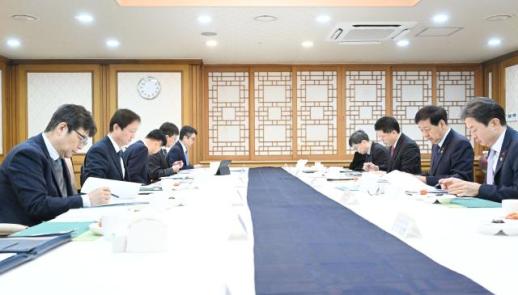 Seoul eases a set of FX liquidity rules to prop up the won SEOUL, December 18 (AJP) -The South Korean government has decided to broadly ease foreign-exchange stability rules for banks, exporters and foreign investors to improve FX supply and demand conditions in latest efforts to prop up the won hovering stubbornly at crisis-era levels without direct market intervention. The move was decided during another emergency meeting among the heads of the finance ministry, financial regulator, and the central bank Thursday morning after the U.S. dollar tested 1,480 won on the previous day. As of 1:30 p.m., the dollar has retreated to 1,477.70 won. Under the plan, supervisory actions tied to enhanced FX liquidity stress tests for financial institutions will be suspended through the end of June next year. The enhanced test evaluates banks’ ability to withstand foreign-exchange funding stress by measuring daily inflows against outflows. Institutions that fail to meet a required “survival period” — when inflows exceed outflows — had to submit liquidity-boosting plans to regulators. Authorities said the supervisory burden has led some institutions to hold more FX liquidity than needed for normal operations through the effect of relaxing forward FX position limits for local subsidiaries of foreign banks. Forward FX transactions involve agreements to buy or sell foreign currency at a predetermined exchange rate on a future date. Korea’s forward FX position system, introduced in 2010, caps banks’ net forward positions relative to equity to prevent excessive capital inflows and a buildup of external debt. Until now, local units of foreign banks — including SC First Bank Korea and Citibank Korea — have been subject to the same 75% limit as domestic lenders, despite operating with business models similar to foreign bank branches that rely heavily on funding from overseas headquarters. Authorities said this discrepancy has acted as a constraint on FX inflows. Under the new plan, the forward FX position limit for these local subsidiaries will be eased to 200%. Domestic banks will continue to face a 75% cap, while foreign bank branches will remain subject to a higher limit of 375%. The government will also further relax restrictions on FX loans for won-denominated uses by exporters. Won-use FX loans refer to cases in which companies borrow in foreign currency — such as U.S. dollars — but convert the funds into won for domestic use rather than for imports. An increase in such loans can boost dollar selling in the FX market, helping to ease upward pressure on the exchange rate. Previously, FX banks were allowed to extend such loans only for exporters’ domestic facility investment. Under the revised framework, exporters will also be able to use FX loans for domestic working capital. In addition, authorities said they will promote “integrated foreign investor stock accounts,” which would allow overseas retail investors to trade South Korean equities directly through foreign brokerages without opening separate accounts at local securities firms. Officials said broader overseas participation could attract new investment funds and support FX inflows. Regulators also plan to clarify guidance that foreign companies listed on overseas exchanges qualify as professional investors, easing procedural hurdles in FX derivatives trading. Despite their status, unclear interpretations have required advance documentation and verification, discouraging FX transactions and capital inflows. The government said follow-up measures under the plan will be completed by year’s end. * This article, published by Economic Daily, was translated by AI and edited by AJP. 2025-12-18 13:27:47
 -
 Louis Vuitton trademark case goes public at Korea's Supreme Court SEOUL, December 18 (AJP) -South Korea’s Supreme Court will hold a public hearing later this month to decide whether remodeling luxury handbags into entirely new products constitutes trademark infringement, a case expected to set the court’s first clear benchmark on the legal limits of the so-called “reform” or upcycling business. According to the Supreme Court on Thursday, its Second Division, presided over by Justice Kwon Young-joon, will hear public arguments at 2 p.m. on Dec. 26 in Courtroom No. 1 in a lawsuit seeking an injunction for trademark infringement. The case pits French luxury brand Louis Vuitton against a bag remodeling operator, with the central question being whether extensive alteration of branded goods amounts to unauthorized trademark use. The dispute arose after the operator, at the request of customers, dismantled and remade Louis Vuitton handbags into different items — including other bags and wallets — while keeping the original Louis Vuitton logos intact. The operator charged fees for the service. Louis Vuitton argues that the practice is indistinguishable from unauthorized manufacturing and distribution of trademarked goods. It claims that retaining the logo on substantially altered products risks misleading consumers about the product’s origin and quality, thereby infringing trademark rights. The operator counters that consumers who lawfully purchased the bags have the right to alter their own property, including by outsourcing the work to a professional technician, and that such conduct does not constitute trademark infringement. At issue is whether the remodeling qualifies as “trademark use” that serves a source-identifying function, whether the remodeled items should be treated as new “products” under trademark law, and whether their circulation is likely to cause consumer confusion. Both the trial court and the appellate court ruled in favor of Louis Vuitton, finding that the remodeling exceeded permissible repair and amounted to trademark infringement. The operator appealed, sending the case to the Supreme Court. In a key appellate ruling, the Patent Court held that refurbished luxury bags qualify as independent “goods” in the marketplace due to their substantial resale value, particularly in the active secondary luxury market. The court ordered the operator to pay 15 million won ($11,500) in damages to Louis Vuitton and issued an injunction barring further use of the brand’s trademark. “Refurbished products hold significant value on the secondary market, just as the original items do, giving them independent value as products,” the court said. It added that because the Louis Vuitton mark remained visible without any indication that the items had been reworked or recycled, average consumers could be misled into believing the products were original Louis Vuitton items — constituting unauthorized trademark use. The court distinguished minimal repairs, which do not create new products, from substantial changes in size, design or structure. In this case, it found that dismantling handbags and reassembling them into wallets or differently shaped bags resulted in entirely new products, beyond the scope of trademark exhaustion. Between 2017 and 2021, the operator used Louis Vuitton materials provided by clients to create custom bags and wallets in various sizes and designs, charging between 100,000 and 700,000 won per item. Louis Vuitton filed suit in February 2022, seeking a ban and 30 million won in damages, arguing that the practice diluted brand identity and quality guarantees. The case will mark the sixth time the Supreme Court has convened a public hearing in a matter handled by a small panel rather than the full bench, highlighting the court’s growing use of public hearings in cases with broad social and economic implications. * This article, published by Aju Business Daily, was translated by AI and edited by AJP. 2025-12-18 13:01:45
 -
 CJ CheilJedang brings Bibigo brand to Netflix's Culinary Class Wars Season 2 SEOUL, December 18 (AJP) - CJ CheilJedang said Thursday it has supplied a branded pantry stocked with Korean food products for Netflix's cooking competition series Culinary Class Wars Season 2 expanding its global marketing push following a similar tie-up with Squid Game Season 2. The food giant provided a dedicated Bibigo-branded pantry that appeared in episodes released on Dec. 16, featuring ingredients ranging from basic condiments to signature ready-to-eat products for competing chefs to use during the show. The pantry includes Korean staples such as fermented pastes including gochujang and doenjang, alongside Bibigo's flagship products including instant rice, dumplings, kimchi, and processed meats. An internationally beloved series which pit 80 unknown chefs against celebrity chefs in a culinary competition last season, Culinary Class Wars was the first Korean unscripted series to lead Netflix’s Global Top 10 (Non-English) TV list for three consecutive weeks. CJ CheilJedang plans to launch collaborative products tied to the show, following its product partnership with Squid Game Season 2 last year. "The support for Culinary Class Wars Season 2 carries significant meaning, as we not only have a diverse product portfolio led by Bibigo, but have also invested in discovering and nurturing Korean chefs through our Cuisine.K initiative," a company official said. Despite viewer anticipations, Season 2 has faced controversies, with one of its main judges Paik Jong-won embroiled in allegations over origin labeling violations and agricultural land law breaches, while some dishes in the competition have drawn plagiarism accusations. 2025-12-18 11:58:23
 -
 Asian markets subdued by Wall Street slide, BOJ rate anticipation SEOUL, December 18 (AJP) - Asian markets opened subdued on Thursday, taking cues from two key drivers — an overnight sell-off on Wall Street and anticipation ahead of the Bank of Japan’s rate decision. In New York, renewed concerns over an “AI bubble” resurfaced after a major financier reportedly withdrew from an Oracle-led AI data-center project. The gloom was partially offset by Micron Technology’s strong earnings and upbeat guidance, which sent its shares surging more than 7 percent in after-hours trading and provided modest relief to chip-heavy markets in South Korea and Taiwan. In Seoul, the benchmark KOSPI fell 1.3 percent to 4,004 as of 10:30 a.m., with institutional and foreign investors leading the sell-off. Foreigners offloaded a net 71.5 billion won ($48.5 million), while institutions sold 17 billion won. Retail investors stepped in to buy the dip, net purchasing 71.5 billion won. The Korean won weakened to 1,475.1 per U.S. dollar, down 3.4 won from the previous session. Market sentiment remained fragile after the currency briefly breached the 1,480 level a day earlier, prompting an emergency morning meeting among finance ministry, financial regulator and central bank officials. Samsung Electronics slipped 0.9 percent to 107,000 won, reflecting spillover concerns from the Oracle-related AI pullback. SK hynix, however, rose 1.8 percent to 560,000 won, buoyed by Micron’s strong results. The secondary battery sector came under heavy pressure. LG Energy Solution plunged 6 percent to 390,500 won following news of the termination of a battery supply contract with Ford Motor. SK Innovation, the largest shareholder of SK On, fell 3.3 percent to 107,000 won amid reports that its U.S. joint venture with Ford is being dissolved. Samsung SDI dropped 4.6 percent to 282,000 won, while materials producer EcoPro Materials slid 4 percent to 57,500 won. The tech-heavy KOSDAQ declined 0.5 percent to 905, with the psychologically important 900 level again under threat. Foreign selling of 45 billion won weighed on the index, particularly EcoPro-related stocks. EcoPro fell 3.2 percent to 100,000 won, while EcoPro BM sank 4.7 percent to 158,000 won. In contrast, recent market debutants remained resilient. Nara Space Technology jumped 14 percent to 30,800 won, extending its post-listing rally. Aimed Bio and Alteogen each edged up about 2 percent, with Alteogen supported by expectations surrounding its planned transfer to the KOSPI in 2026. Japan’s Nikkei 225 fell 0.75 percent to 49,145, tracking the tech-led decline in U.S. equities. Among major stocks, Toyota Motor edged up 0.24 percent to 3,357 yen ($21.6), while Honda Motor slid 1.7 percent to 1,556 yen. The divergence followed reports that U.S. safety regulators ordered a recall of about 70,000 units of Honda’s Acura ILX due to potential software defects, prompting some rotation into Toyota. Semiconductor shares in Tokyo faced what traders described as a “cold winter” sentiment. Advantest fell 3.15 percent, Tokyo Electron dropped 2.7 percent, and Ibiden declined 2 percent. Taiwan’s TAIEX posted a milder decline, slipping 0.3 percent to 27,448. TSMC edged down 0.35 percent to 1,425 Taiwan dollars ($45.1), while MediaTek rose 0.35 percent to 1,435 Taiwan dollars. Mainland China and Hong Kong markets also opened weaker. The Shanghai Composite fell a modest 0.25 percent, but tech-heavy indices underperformed, with the Shenzhen Component down 0.95 percent and the Hang Seng Index sliding 0.75 percent to 25,277. 2025-12-18 11:13:39
 -
 Seoul ranked 6th among world's most competitive cities SEOUL, December 18 (AJP) - Seoul was ranked as the sixth most competitive city in the world, according to a recent survey by Japanese think tank Mori Memorial Foundation released on Thursday. Seoul maintained its ranking in the foundation's annual Global Power City Index (GPCI) from the previous year, but its overall score rose sharply, narrowing the gap with fifth-ranked Singapore. The index, based on six functions such as "economy, research and development, cultural interaction, livability, environment, and accessibility," evaluates major cities around the world "according to their 'magnetism,' or their comprehensive power to attract people, capital, and enterprises from around the world." With the highest possible total score of 2,700 points, London scored 1,642.2 points to rank at the top, followed by Tokyo (1,535.1 points), New York (1,476.6 points), Paris (1,446.6 points), and Singapore (1,293.1 points). However, Seoul earned 1,288.1 points, making the biggest leap from the previous year among the top 10 cities. Amsterdam, Shanghai, Dubai, and Berlin rounded out the seventh through tenth spots. 2025-12-18 10:58:07
 -
 Hyundai Motor Group to expand plug-and-charge EV network in South Korea SEOUL, December 18 (AJP) - Hyundai Motor Group said on Thursday it will begin a large-scale expansion of its plug-and-charge (PnC) electric vehicle charging network next year, aiming to make EV charging more convenient and secure for drivers. Plug-and-charge is an international standard that automatically manages user authentication, charging and payment when a vehicle is connected to a charger, the automaker said. Unlike conventional EV charging systems that require drivers to use membership cards or credit cards, PnC relies on encrypted communication between the vehicle and the charging station, enabling a simpler and more secure user experience, Hyundai Motor Group said. The group said it is working with 12 major charging operators in South Korea to extend PnC services beyond the 64 E-pit fast-charging stations. Hyundai Motor Group plans to apply PnC technology to charging stations operated by Chaevi and Hyundai Engineering, expanding the number of PnC-enabled charging sites to more than 1,500. The company said it will then accelerate the rollout with the remaining 10 charging partners. The group intends to align the expansion with the South Korean government’s policy to increase the number of smart, controlled chargers, validating communication standards and payment systems so PnC can also be used at slower charging stations. “Expanding plug-and-charge services is a first step toward providing a more convenient charging experience in a wider range of locations,” Hyundai Motor Group said in a press release. 2025-12-18 10:31:21
 -
 OPINION: Cooperation between Türkiye and Republic of Korea in building fair international order SEOUL, December 18 (AJP) - At a time when power balances are being reshaped, the conventional international order is entering a phase of disintegration, and normative values are being eroded, the global system has been drawn into a multi-layered environment of uncertainty. In this age of uncertainty, multidimensional issues, such as intensifying geopolitical competition, asymmetric risks stemming from technological transformation, and problems in energy and food security, have rendered both the structure and the legitimacy of the international system increasingly contested. Alongside political, economic, and military challenges, the weakening of international law and the erosion of humanity’s shared values have led to a complete impasse in the international system, driven by a profound crisis of global governance. The global ecosystem now necessitates a fairer order, a new understanding grounded in moral values centred on human dignity, and an international governance system based on strong representation. It is precisely for this reason that Türkiye, under the leadership of President Recep Tayyip Erdoğan, stands as a key actor in advocating a values-based restructuring of the international order, guided by the principle that “A fairer world is possible.” With the aim of contributing to global peace, prosperity, and stability, Türkiye pursues initiatives aimed at resolving both regional and global challenges. We engage in mediation efforts within multilateral organisations to which we are a party, most notably the UN, NATO, OSCE, and OIC. In circumstances where international mechanisms prove ineffective, we strive to resolve conflicts through independent and multifaceted initiatives. Guided by the vision of our President, and through leader-to-leader diplomacy coupled with our 360-degree foreign policy approach, we make concrete contributions to the establishment of peace and stability from Asia to Africa and from the Balkans to the Middle East. Türkiye’s support for the peace process in the Southern Philippines, its mediation efforts in the Russia–Ukraine war, and initiatives to secure a lasting ceasefire in Gaza stand among the key examples highlighting its contributions. While assuming responsibility for bringing conflicts to an end through our vision of peace diplomacy, we also lead with our humanitarian diplomacy, ranking among the countries that provide the highest levels of humanitarian assistance relative to national income and calling for the mobilisation of humanity’s shared conscience. Türkiye’s peace-and-stability-oriented foreign policy, which prioritises normative values, closely aligns with the Republic of Korea's dialogue-based foreign policy approach, as its global role in the Asia–Pacific region continues to expand. In our shared vision of a “fairer world”, we are united by the same moral stance and concerns, grounded in peace and stability. Within Türkiye’s foreign policy, our relations with the Republic of Korea constitute a truly unique example. The strong bond established during the Korean War—defined as a “blood brotherhood”—is rooted in a shared struggle fought shoulder to shoulder on the same front, the helping hand extended to one another in times of hardship, and a deep sense of mutual trust. Undoubtedly, this bond of brotherhood forms both the foundation of our collective resolve to act together in the face of the challenges and opportunities of the 21st century and the driving force behind our strategic partnership. We firmly believe that, along the Ankara–Seoul axis, we can forge a partnership capable of contributing to peace across a broad geography, from Africa to Asia. Our diplomatic relations, established in 1957, were elevated to the level of a Strategic Partnership in 2012. Our political and economic relations, which have been strengthened through high-level engagements, are also advancing through close cooperation and partnerships within international organisations. We sincerely believe that the visit paid last month by President Lee Jae Myung of the Republic of Korea will uplift our bilateral relations to a higher level. In addition to the agreement concluded in the fields of wind and nuclear energy, there is a common will to further enhance cooperation potential in electric vehicles, artificial intelligence, and innovation, as well as to execute joint projects in the defence industry, similar to the Altay Tank. In this context, as the Presidency's Directorate of Communications, we have both engaged in in-depth exchanges of views and assessed potential avenues for cooperation through a range of activities organised with our Korean counterparts. At the “Stratcom Public Forum” we organised in Seoul, we explored ways to build a fairer world order. Likewise, we sought to contribute to the vision of cooperation during the event “The 75th Anniversary of Türkiye’s Participation in the Korean War”, which we organised in Seoul. As part of our media programmes, we have also had the opportunity to host Korean journalists in our country on several occasions. Our brotherly ties, forged through the shoulder-to-shoulder struggle on the battlefield, are further strengthened—despite the geographical distance—by our cultural affinity, reflected in our family structures, culture of solidarity, spirit of struggle, resilience, and diligence. This story, evolving from blood brotherhood to a strategic partnership, will persist through joint initiatives aimed at building a fairer, more prosperous, and more stable international system. 2025-12-18 10:17:13
 -
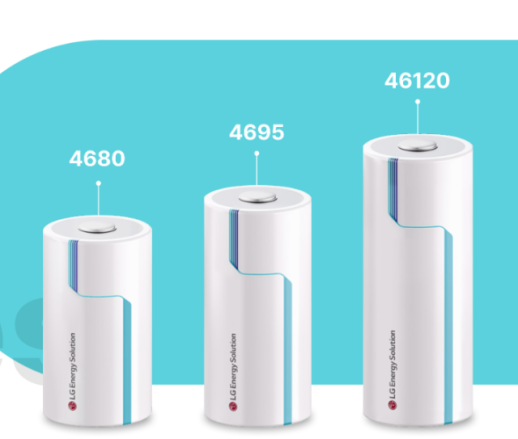 HOT STOCK: Ford's EV retreat delivers 10% blow to LG Energy Solution SEOUL, December 18 (AJP) -Shares of South Korea’s top battery maker LG Energy Solution have fallen more than 10 percent over the past week after Ford Motor announced it was withdrawing several electric-vehicle models amid changing market conditions. The move triggered the cancellation of a long-term battery supply agreement with LG Energy Solution valued at 9.6 trillion won ($6.5 billion). Shares of LG Energy Solution — the third-largest stock on the KOSPI by market capitalization — slid 6 percent to 388,500 won on Thursday, following the disclosure released after the market closed Wednesday. The stock had already fallen another 6 percent on Tuesday after the U.S. automaker said it would offer steep discounts on several EV models, including the F-150 Lightning. The fallout spread across the battery sector. Samsung SDI shares were down 4.2 percent, EcoPro BM fell 4.8 percent, and L&F, a key cathode material supplier to LG Energy Solution, dropped 6 percent. Ford’s EV pullback has also hit SK On, the unlisted battery arm of SK Group. The U.S. automaker recently walked away from a planned $11.4 billion battery joint-venture plant in Stanton, Tennessee, dealing another blow to Korea’s battery industry. The dissolution of the JV is expected to be finalized in the first quarter of 2026. 2025-12-18 10:11:58
 -
 K-Sure provides $1.7 billion financing for Verizon's purchase of Samsung devices SEOUL, December 18 (AJP) - Korea Trade Insurance Corp. (K-Sure) said on Thursday it will provide $1.7 billion in financing for a project under which Verizon Communications Inc., the largest telecommunications operator in the United States, will purchase mobile devices from Samsung Electronics. Verizon, which K-Sure said has about 150 million subscribers and the largest share of the U.S. telecom market, will use the entire amount to buy Samsung-made communications devices, including smartphones and tablets. K-Sure has offered so-called “device financing” to major telecom operators worldwide, linking financial support to purchases of South Korean products. Earlier this year, the agency provided $700 million in financing to BCE Inc.’s Bell Canada, Canada’s largest telecom operator, to support purchases of South Korean communications devices. It also extended financing of 100 million euros to a major telecom operator in Poland in 2021 and 350 million euros to a major telecom operator in France in 2023, it said. K-Sure President Jang Young-jin said the agency is expanding support for exports of consumer goods, including mobile and communications devices, as it moves beyond a strategy focused mainly on capital goods exports amid rising global protectionism. “We will continue to broaden financing support for top-tier global buyers that choose South Korean products,” Jang said, adding that the goal is to strengthen the competitiveness of South Korean companies in overseas markets. 2025-12-18 09:58:54
 -
 US Senate approves defense bill prohibiting unilateral USFK troop cuts SEOUL, December 18 (AJP) - The U.S. Senate on Wednesday passed a defense bill that includes a provision prohibiting a unilateral reduction of U.S. troops stationed in South Korea. The annual National Defense Authorization Act (NDAA), which sets defense policy, allocates funding priorities, and provides guidance on key security matters, was approved by the Senate in a decisive 77-20 vote, following its passage in the House of Representatives last week. The bill, which allocates a record US$901 billion in defense and security for the upcoming fiscal year, will take effect from October this year through September next year, once President Donald Trump signs it. It includes a clause preventing the use of defense funds to reduce U.S. troop levels in South Korea below the current 28,500 U.S. Forces Korea (USFK) personnel without congressional approval. The bill also restricts the use of funds for any amendments to the agreed transfer of wartime operational control between the two allies, though changes or objections can be raised within 60 days, provided they align with the interests of both countries. 2025-12-18 09:56:39