
Journalist

AJP
-
 KAI partners with Dutch aerospace institute on developing AI combat systems Participants pose for a photo at the KAI-NLR MOU signing ceremony. Courtesy of KAI SEOUL, October 22 (AJP) - Korea Aerospace Industries (KAI) said Wednesday that it has signed a memorandum of understanding with the Netherlands Aerospace Centre to collaborate on developing next-generation air combat technologies. The agreement seeks to combine the technical expertise and research infrastructure of both organizations to accelerate innovation in aerospace technology and strengthen preparedness for future battlefields, KAI said. The Netherlands Aerospace Centre, or NLR, is one of Europe’s leading aviation research institutions, known for its deep experience in aeronautics testing, systems evaluation, and next-generation flight technologies. Under the partnership, KAI and NLR plan to deepen cooperation in several key areas of future air combat systems — including mission autonomy, secure data links, and integrated technology demonstrations. KAI has been investing heavily in autonomous and AI-enabled defense systems, such as its manned-unmanned teaming programs MUCCA and SUCCA, as well as in the development of artificial intelligence pilots. The collaboration with NLR is expected to accelerate those projects and bolster KAI’s competitiveness in the aerospace sector. “This MOU marks a significant step forward in our long-term partnership built on trust,” said Kim Ji-hong, executive vice president of KAI’s Future Convergence Technology Institute. “Through this collaboration, KAI aims to evolve from a ‘fast follower’ to a ‘technology leader’ in next-generation aviation.” * This article, published by Aju Business Daily, was translated by AI and edited by AJP. 2025-10-22 15:22:20
 -
 INTERVIEW: Tourism chief aims to boost Seoul's global appeal SEOUL, October 22 (AJP) - Ghil Gi-yeon, who recently secured a third term as CEO of the Seoul Tourism Organization, has been instrumental in revitalizing the tourism industry since assuming his post in July 2021, helping restore the city's vibrancy in the wake of the coronavirus pandemic. "With support from Seoul Mayor Oh Se-hoon, we carried out several major projects swiftly and efficiently, including opening a marketplace at Gwanghwamun Plaza, organizing a series of seasonal events like a lantern festival along the Cheonggye Stream, and offering mountain-climbing programs," said Ghil, who now envisions making Seoul one of the top five global tourist destinations with a focus on "art tourism." "What was most rewarding about those projects was the tangible outcomes and favorable responses from both citizens and tourists," he added. Among them, the most notable project was the launch of tourism booths to assist hikers in climbing mountains across Seoul. "I thought outdoor activities would be key in the post-COVID era," he said. "Starting with programs to climb Mt. Bugaksan in 2022, which were later expanded to other nearby mountains including Gwanaksan, the number of participants soared to over 100,000 as of June this year. The project has since been adopted by other local governments with similar programs," he added. Various summer-themed leisure activities and other seasonal festivals in central Seoul have gained popularity, encouraging more Seoulites to take part. In particular, the annual lantern festival along the Cheonggye Stream, featuring dazzling lights and media art installations, has become one of the city's major nighttime attractions for tourists. To cater to the growing number of individual travelers, the organization also opened a cultural lounge last year, attracting more than 22,000 visitors in its first year alone. Interactive programs such as traditional craft-making, calligraphy, makeup classes, and other K-pop-themed events there have drawn strong interest from foreign tourists and youngsters. Ghil, who was awarded a government merit last year in recognition of his achievements and efforts to promote Korean culture, said, "Through these immersive programs and hands-on activities, we can give visitors a true sense of what makes Seoul special." The organization also formed the so-called "Seoul Art Tourism Alliance" (SATA) this year, a partnership of some 83 public and private agencies from the performance, exhibition, and tourism sectors, in a bid to attract more global conferences and conventions, as well as develop new tourism courses to enhance the city's competitiveness. "Seoul has already emerged as one of the world's leading tourist destinations, but its true competitiveness lies in the happiness of its citizens," he emphasized. "Through innovative approaches and strategies that integrate art into daily life, we want to make Seoul a must-visit destination that international tourists are eager to explore." * This article, published by Aju Business Daily, was translated by AI and edited by AJP. 2025-10-22 14:24:57
 -
 Korea showcases its chipmaking future at SEDEX 2025 SEOUL, October 22 (AJP) - South Korea opened its largest semiconductor exhibition on Wednesday, bringing together industry leaders, engineers, and policymakers. The Semiconductor Expo, or SEDEX 2025, runs through Friday at COEX in Seoul and features more than 280 companies — including Samsung Electronics, SK hynix, Jusung Engineering, Dongjin Semichem, PSK, and Wonik — across more than 700 booths. Organizers expect roughly 60,000 visitors over the three-day event. This year’s exhibition focuses on how the industry can push technological boundaries and strengthen collaboration across the semiconductor ecosystem in the age of artificial intelligence. Samsung Electronics is highlighting its newest high-bandwidth memory, the HBM4, along with the Exynos 2600 mobile application processor built with cutting-edge 2-nanometer technology. SK hynix is presenting its own lineup of AI memory solutions, including HBM4, high-capacity DDR5, Compute Express Link (CXL) modules, and high-performance enterprise solid-state drives. Keynote speakers include Song Jae-hyuk, Samsung’s chief technology officer and head of the Korea Semiconductor Industry Association, and Sung Yun-mo, a former industry and energy minister and now a professor at Chung-Ang University. “SEDEX 2025 showcases the relentless innovation of Korea’s semiconductor companies,” said Kim Jeong-hoi, vice chairman of the Korea Semiconductor Industry Association. “The collaboration and creativity on display here reflect the future direction of our industry.” * This article, published by Aju Business Daily, was translated by AI and edited by AJP. 2025-10-22 14:18:38
 -
 KOTRA to operate 'K-Business Square' for APEC delegates SEOUL, October 22 (AJP) - South Korea will set up an exhibition booth highlighting its industrial achievements and future growth sectors for the upcoming Asia-Pacific Economic Cooperation (APEC) summit. The Korea Trade-Investment Promotion Agency, or KOTRA, said Wednesday that it will operate the “K-Business Square” in collaboration with the provincial government of North Gyeongsang and the city of Gyeongju for five weeks. The exhibition is designed to welcome visiting delegations and investors ahead of the summit. The venue features four themed sections — a Korean industrial history hall, a future industries hall, a regional business hall, and five cultural experience spaces. The future industries section focuses on semiconductors, next-generation mobility, and shipbuilding, with participation from both major corporations and startups showcasing cutting-edge technologies. KOTRA said it intends to use the exhibition as a platform for economic diplomacy, inviting about 100 overseas buyers and global investors to explore opportunities in South Korea’s advanced manufacturing sectors. To bolster economic cooperation ahead of the summit, KOTRA has been expanding its outreach to international partners through the “Korea-APEC Business Partnership,” launched in September. More than 300 domestic and foreign business leaders have joined related events, including an investment forum held on Oct. 16. The upcoming Invest KOREA Summit, scheduled for Oct. 29 to 31, will aim to attract large-scale investments in strategic industries such as energy transition, advanced materials, and digital technology. “This exhibition is an ideal opportunity to present South Korea as a leader in advanced manufacturing to visiting diplomats and business leaders,” said Kang Kyung-sung, president of KOTRA. “We are committed to enhancing the national brand and strengthening international business cooperation through the APEC platform.” * This article, published by Aju Business Daily, was translated by AI and edited by AJP. 2025-10-22 14:01:14
 -
 SK Ecoplant, Gyeryong Construction punished over fatal bridge collapse SEOUL, October 22 (AJP) - The South Korean government has ordered two major construction firms, SK Ecoplant and Gyeryong Construction, to suspend operations for six months following a bridge collapse last year that killed a worker and injured several others in Siheung, Gyeonggi Province. The Ministry of Land, Infrastructure and Transport announced the decision on Wednesday, saying the suspension will take effect from Dec. 1 through May 31 next year. The ministry said it was intended to hold the companies accountable for safety failures during the project. The accident occurred on April 30 last year at a highway construction site when a girder collapsed during installation, killing one worker, injuring five others, and wounding a nearby civilian. Police later charged six people, including the site manager from SK Ecoplant, as well as two subcontractors, with professional negligence resulting in death and injury. The project had been a joint venture between SK Ecoplant and Gyeryong Construction, a mid-sized contractor based in Daejeon. Both companies have contested the government’s decision. SK Ecoplant said its construction quality met required standards and denied direct responsibility for the collapse. The firm said it plans to present evidence in court to demonstrate compliance with safety regulations. Gyeryong Construction also said it would seek an injunction and file a lawsuit to overturn the government's decision. * This article, published by Economic Daily, was translated by AI and edited by AJP. 2025-10-22 13:39:49
 -
 Asian shares in positive, Seoul and Tokyo lead gains on tech and battery upside SEOUL, October 22 (AJP) - Major Asian stock markets remained broadly positive Wednesday, with Seoul and Tokyo taking the lead, although at moderated pace from recent rallies. In Seoul, the KOSPI advanced 0.7 percent to 3,815, while the KOSDAQ gained 0.9 percent to 1,146 as of midday. Bellwether Samsung Electronics extended gains, whereas SK hynix slipped on profit-taking after briefly touching the 500,000-won threshold. Petrochemical and battery material stocks led the winners on expectations of stronger quarterly earnings — Isu Chemical hit the daily ceiling of 30 percent, and EcoPro surged 12 percent. Tokyo’s market extended gains on expectations of pro-growth economic policies under incoming Prime Minister Sanae Takaichi. The Nikkei 225 jumped 2.46 percent to 42,849.67, driven by technology and export-oriented firms poised to benefit from continued monetary easing and fiscal expansion. In China, the Shanghai Composite Index inched up to 3,870.75 amid easing U.S.–China trade tensions and renewed government stimulus. The Shenzhen Component Index also opened higher, extending its 2-percent gain from the previous day. Hong Kong’s Hang Seng Index advanced on optimism over high-level trade talks between U.S. President Donald Trump and Chinese President Xi Jinping slated for later this month. Elsewhere, Taiwan’s TAIEX added 0.5 percent on tech strength, Vietnam’s VN Index rose 0.58 percent to 1,606 led by financials, while Indonesia’s Jakarta Composite edged down 0.2 percent on profit-taking after recent rallies. 2025-10-22 13:11:55
 -
 Korea Zinc wins approval for renewable energy project in Australia SEOUL, October 22 (AJP) - Korea Zinc’s push into renewable energy gained new momentum this week after the government of New South Wales, Australia, approved the company’s plan to build a large-scale battery storage system and solar power plant — a centerpiece of its global clean-energy ambitions. The project, known as the Richmond Valley Battery Energy Storage System (BESS), is being developed by Korea Zinc’s Australian subsidiary, Arc Energy. Once completed, it will feature a lithium iron phosphate battery system with a capacity of 275 megawatts, capable of storing and discharging up to 2.2 gigawatt-hours of electricity over an eight-hour cycle. Combined with a 200-megawatt solar farm to be built on the same site, the system will store excess renewable energy generated during the day and release it at night or during periods of peak demand — providing stable power to an estimated 175,000 households each year across New South Wales. Commercial operations are scheduled to begin by late 2027. The project is expected to cut carbon emissions by roughly 370,000 tons annually. Arc Energy will manage the site under a build-own-operate model, with Hanwha Energy supplying the battery systems. Hanwha’s contribution accounts for about 52 percent of the project’s total $1.1 billion investment. The initiative aligns with New South Wales’s plan to phase out coal-fired power generation by 2028 and accelerate the state’s transition to renewable energy. In December 2023, Arc Energy was selected as a long-term energy service provider to help stabilize the power grid and participate in the ancillary services market for 14 years — ensuring steady revenue and operational continuity. The Richmond Valley project marks Arc Energy’s second major renewable development to secure government approval in New South Wales, following the Bowmans Creek wind farm project in 2024. The company is also expanding its renewable portfolio in Queensland and Tasmania, positioning itself as a key player in Australia’s clean-energy transformation. “This project represents the shared commitment of South Korea and Australia to a sustainable energy future,” said Choi Yoon-bum, chairman of Korea Zinc. “We are dedicated to ensuring the successful completion of the Richmond Valley BESS and solar facilities as part of our broader mission to drive an eco-friendly energy transition.” * This article, published by Aju Business Daily, was translated by AI and edited by AJP. 2025-10-22 10:57:36
 -
 OPINION: Potholes, aging tunnels, and tight budgets SEOUL, October 22 (AJP) - South Korea’s once-celebrated expressways and bridges are showing their age. A new analysis by Rep. Bok Ki-wang of the Democratic Party found that more than 26,000 potholes have appeared on highways across the country over the past five years, with most concentrated on older routes long overdue for repair. The Yeongdong Expressway, one of the nation’s busiest arteries linking Seoul and Gangwon Province, accounted for 27 percent of the total, followed by the Jungbu Line, the Seoul Ring Expressway, and the Gyeongbu Line. Roughly 85 percent of all reported potholes formed on roads more than two decades old. In one recent incident, a pothole that opened on the Seoul Ring Expressway near Namyangju in October damaged 23 vehicles and injured two people — a reminder that road wear is not merely an inconvenience but a growing safety risk. In Seoul, the Olympic Highway and Gangbyeonbuk-ro — both built in the mid-1980s — have recorded nearly 18,000 potholes in the past three years alone. While heavy rainfall and extreme temperature swings contribute to the problem, experts say the main culprit is simply age. As the country’s infrastructure matures, accidents linked to deteriorating roads are expected to increase. The problem extends well beyond highways. By 2033, roughly a quarter of South Korea’s tunnels on key expressways, including the Gyeongbu Line, will be more than 30 years old — up from just 6 percent today. Nearly 30 percent of port facilities have already surpassed that threshold, as have more than a quarter of the nation’s railway bridges and tunnels. According to the Ministry of Land, Infrastructure and Transport, 46 percent of public facilities in use as of 2024 were built more than 20 years ago. Yet the government’s maintenance budget remains modest — just over 20 percent of total infrastructure spending — raising concerns that upkeep is lagging far behind the pace of deterioration. A national safety plan introduced in 2019 sought to address the issue, but analysts say public awareness and investment remain insufficient. Although maintenance budgets were expanded in 2025 and 2026, officials and experts argue that longer-term commitments and clearer funding mechanisms are essential. Rep. Bok and other lawmakers have called for greater private-sector participation to supplement limited government resources. Models such as “build-operate-transfer” partnerships, in which companies finance and manage projects before handing them over to the government, could help ease fiscal pressure and accelerate repairs. Legal and institutional reforms are also seen as vital. Stronger coordination between central and local governments, along with clearer legal frameworks for preventive maintenance, would allow more efficient management of aging assets. Technology, too, could play a critical role. Expanding the use of artificial intelligence and big data in inspections and remote monitoring — areas where Japan has already made significant progress — could help detect risks earlier and allocate repair funds more effectively. Improved data-sharing among agencies, experts say, is key to building public trust and awareness. The urgency is clear. A 2024 Social Survey found that only 35 percent of South Koreans feel safe regarding the condition of public buildings and facilities. Without sustained investment and proactive oversight, the costs — both financial and human — could grow far higher in the years ahead. * This article, published by Aju Business Daily, was translated by AI and edited by AJP. 2025-10-22 10:31:36
 -
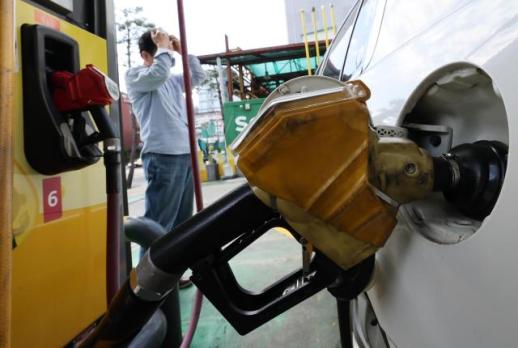 Seoul to gradually phase out fuel tax relief by year-end SEOUL, October 22 (AJP) -South Korea will begin winding down the fuel tax relief that has been in place since the post-pandemic inflation surge, the Ministry of Economy and Finance said Wednesday. The measure, which had been scheduled to expire at the end of October, will be extended through the end of the year — though at reduced rates — to “avoid overburdening consumers,” the ministry said in a statement. Starting November, the gasoline tax cut will be lowered from 10 percent to 7 percent, while the diesel and LPG butane cuts will drop from 15 percent to 10 percent. The revised rates translate into tax savings of 57 won per liter for gasoline, 58 won for diesel, and 20 won for LPG butane — meaning consumers will see price increases of roughly 25 won, 29 won, and 10 won per liter, respectively. The government has maintained the fuel tax cuts since late 2021 to mitigate inflationary pressures and support household spending amid sluggish economic recovery. * This article, published by Aju Business Daily, was translated by AI and edited by AJP. 2025-10-22 10:18:56
 -
 OPINION: As aging deepens, South Korea confronts growing consumption slowdown SEOUL, October 22 (AJP) - South Korea’s economy expanded modestly in the second quarter, with gross domestic product rising 0.6 percent from a year earlier, reflecting persistent weaknesses in consumer spending that threaten to slow long-term growth. According to government data, private consumption increased 0.9 percent from a year earlier, while government spending rose 2.6 percent. Construction investment plunged 11.4 percent, offset by a 3.4 percent gain in facility investment and a 4.5 percent increase in exports. But beneath those headline figures lies a troubling trend: households are spending less of their income than they once did. Household consumption, which accounted for 49.3 percent of GDP in 2014, fell to 46.4 percent by 2024 — a sign that consumers are tightening their belts even as the economy grows. Economists attribute the shift to rising non-consumption expenses such as taxes, housing costs, and social insurance contributions. A report by the Korea Chamber of Commerce and Industry found that the nation’s overall consumption propensity — the share of income spent rather than saved — dropped from 73.6 percent in 2014 to 70.3 percent in 2024. The decline has been sharpest among older adults. For people in their 60s, the figure fell from 69.3 percent to 62.4 percent, reflecting the steep fall in income many experience after retirement. Public pensions, experts note, rarely compensate for that loss. The gap between rich and poor households also reveals divergent spending behavior. In 2025, the lowest 20 percent of income earners spent 128.1 percent of their income, often by taking on debt, while the wealthiest 20 percent spent just 59.8 percent. Economists say this suggests that the rich are increasingly saving or spending on luxury goods abroad — a pattern that offers little boost to domestic demand. Over the past decade, South Koreans have shifted their spending toward health care, housing, and leisure, while cutting back on food, clothing, and education. The aging of the population, economists warn, will continue to dampen consumption. The Bank of Korea has noted that demographic shifts are weighing on household income and spending alike. Even in categories that have grown — such as entertainment and dining — much of the spending occurs overseas. South Korea recorded a $10 billion tourism deficit in 2024. Japan faces similar challenges, while in Europe and the United States, older adults tend to spend more freely. Cultural factors play a role: many South Korean seniors prioritize saving for their children or leaving an inheritance over enjoying their own retirement years. Government initiatives to encourage spending among the elderly have yielded limited results. Economists argue that what’s needed is not only policy change but also a shift in social attitudes — one that emphasizes the value of spending in the present rather than saving exclusively for the next generation. Yet such a shift runs up against another national concern: maintaining enough savings to sustain growth in an aging society. About the author -Ph.D. in Economics from Sungkyunkwan University -Former President of the Korea Institute for Health and Social Affairs -Former President of the Korean Economic Association -Former President of the Korean Fiscal Policy Association * This article, published by Aju Business Daily, was translated by AI and edited by AJP. 2025-10-22 10:17:40