
Journalist

AJP
-
 SB Electric Deploys SolarDoctorPatch Monitoring on Vietnam Rooftop Solar Sites SB Electric, a solar power plant specialist, has deployed its panel-level monitoring solution, SolarDoctorPatch, at rooftop solar facilities on buildings in Vietnam’s Long An province and Ho Chi Minh City. The company said the project was carried out to apply panel-level monitoring and fire-safety technology at rooftop systems at an industrial facility and a newspaper company in Vietnam. At Songwol Towel’s factory in Long An, the rooftop solar plant, with a capacity of about 148.59 kilowatts, was upgraded from inverter-level monitoring to a panel-level control system. The site also added a rapid shutdown (RSD) function designed to cut voltage in an emergency. In central Ho Chi Minh City, the technology was piloted on one of four inverter sections at the rooftop solar plant at Tuổi Trẻ newspaper, a 17.70-kilowatt system. The building is in an environment where nearby structures create shading that reduces output. SB Electric said panel-level monitoring and booster equipment confirmed improved generation efficiency in shaded areas. “For rooftop solar plants and solar installations on urban buildings, panel-level monitoring and output-optimization technology are key factors that determine operating efficiency,” an SB Electric official said. The official added that the company plans to manage an expansion of the technology’s application to commercial and office buildings in urban areas based on the latest deployment.* This article has been translated by AI. 2026-03-06 10:03:19
 -
 Chef Lee Hye-jeong Says Her Father Was First Chairman of Yuhan-Kimberly Cooking researcher and YouTuber Lee Hye-jeong, known as "Big Mama," said her father was the first chairman of Yuhan-Kimberly. A video titled "Director Jang Hang-jun! And the woman who lives with a king" was posted Tuesday on her YouTube channel, "Big Mama Lee Hye-jeong." In the video, Jang said he is from Daegu and lived there until first grade. He said he attended a private elementary school and had gone to a kindergarten that was difficult for many children to attend at the time. He added that his father ran a nylon factory in Daegu then. Lee responded that her father was from Gimcheon, North Gyeongsang Province, and built his factory in Daegwang-myeon on the site of his birthplace home. When Jang asked what kind of factory her father ran, Lee replied, "He did Yuhan-Kimberly." Jang then joked, "I shouldn’t have brought up the nylon factory," drawing laughter.* This article has been translated by AI. 2026-03-06 09:58:42
 -
 Kia EV5 GT Named Korea Auto Journalists Association’s Car of the Month for March 2026 The Korea Automobile Journalists Association said Thursday it selected the Kia EV5 GT as its car of the month for March 2026. The association’s Car of the Year selection committee evaluated the EV5 GT and JLR Korea’s updated New Defender model last month, listed in Korean alphabetical order by brand. Judging covered five areas: interior and exterior design and perceived quality; safety and convenience features; power performance; energy efficiency and greenhouse gas emissions; and overall product value and purchase intent. The EV5 GT scored 35.3 out of 50 to take the top spot. It earned 8 out of 10 in energy efficiency and greenhouse gas emissions, 7.3 in safety and convenience features, and 7 in power performance. Jeong Chi-yeon, chair of the committee, said the EV5 GT “delivers a dynamic driving feel even in an electric SUV” through strong dual-motor performance and a range of driving-focused technologies. The association has named and announced a car of the month since 2019. Last month’s winner was the Renault Korea Filante. Monthly winners advance directly to the first round of final judging for the annual Car of the Year awards, without going through the first-half and second-half preliminary reviews.* This article has been translated by AI. 2026-03-06 09:57:54
 -
 Parata Air’s Signature In-Flight Ramen and Chicken Rank Among Top Sellers Parata Air said its signature international in-flight menu items, ramen and chicken, have remained among its best-selling paid offerings. The airline said it analyzed international-route onboard sales from Nov. 17, 2025, to Feb. 25, 2026. Signature ramen accounted for 10.3% of total sales, ranking second, while chicken took fourth place with 7.4%. Beer led all items at 23%, and the top five products during the period included easy-to-eat options such as ramen and chicken, the airline said. Parata Air’s signature ramen has been a flagship onboard item since the airline began operations. On social media and online communities, it is often described as a must-try menu item for Parata Air passengers, the company said. Spicy chicken also ranked near the top, and the airline said Korean-style snack items such as ramen and chicken are drawing steady choices from passengers. A Parata Air official said customers showed a strong preference for menu items that are easy to enjoy onboard while adding to the travel experience. The official said the airline plans to expand differentiated services available only on Parata Air. 2026-03-06 09:49:52
 -
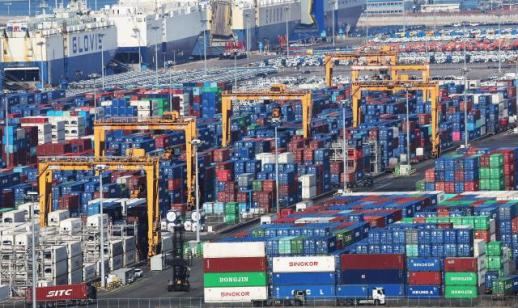 Exports feed black in Korea's C/A surplus for 33rd month in Jan, U.S. stock invest narrows SEOUL, March 06 (AJP) - South Korea extended its current-account surplus streak to a 33rd consecutive month in January, though the black figure narrowed from the record level seen the previous month as investment in overseas securities cooled from the frenetic pace of late last year. The current account surplus reached $13.26 billion in January, narrowing from $18.7 billion in the previous month, according to the Bank of Korea (BOK) on Friday. The robust surplus was fed by exports that surged 30 percent on year to $65.51 billion, more than doubling the pace of the 13-percent annual gain in the previous month. Imports also rose 7 percent from a year earlier to $50.34 billion, faster than the 1.7-percent increase recorded a month earlier. The services account remained in the red with a $3.8 billion deficit, largely weighed down by outbound travel. The travel account logged a deficit of $1.74 billion. The primary income account posted a $2.72 billion surplus. Investment income totaled $2.86 billion, down from $4.9 billion in the previous month as dividend income narrowed to $2.3 billion from $3.7 billion. The secondary income account recorded a $830 million deficit as outbound remittances from South Korea outpaced inflows from abroad. Overseas investment by South Korean residents rose $13.46 billion, easing slightly from $14.37 billion in December. Their investment still dwarfed foreign investment in Korean securities, which increased $4.69 billion — mostly in bonds — slowing from $5.68 billion the previous month. Reserve assets — assets held by state authorities to support the currency and meet foreign obligations — decreased by $4.83 billion, widening from a $4.44 billion decline a month earlier. The trade balance also revealed a heavy reliance on a few key sectors. Semiconductor exports skyrocketed 102.5 percent year on year to $20.69 billion, more than doubling in value. Shipments of information and communication devices, including smartphones, surged 66 percent to $4.48 billion. Automobile exports rose 19 percent from a year earlier to $5.74 billion, underpinned by record January sales in the United States by Hyundai Motor and Kia, driven by high-margin models such as hybrids. Ship exports fell 1.5 percent to $2.36 billion, the third consecutive monthly drop since the sector posted a 135-percent jump in October. Exports to the United States jumped 29.4 percent to $12.0 billion, sharply accelerating from 3.7 percent growth in December and a contraction in November. Shipments to China also surged 46.8 percent to $13.51 billion, up from 10-percent growth in December. Imports also reflected skewed activity in Korea's industrial sector. Purchases of precision machinery jumped 31.6 percent on year to $6.81 billion, with semiconductor manufacturing equipment accounting for nearly half of that total at $2.94 billion, a 61.7-percent surge. Imports of raw materials broadly declined. Crude oil imports fell 12.8 percent from a year earlier to $6.19 billion, while gas imports dropped 12.5 percent to $2.7 billion. 2026-03-06 09:45:47
 -
 Lexus Korea Extends Team Lexus Ambassador Deals With KPGA Golfers Park Sang-hyun and Ham Jung-woo Lexus Korea said Thursday it has extended its 2026 “Team Lexus” ambassador agreements with Korea Professional Golfers’ Association players Park Sang-hyun of Dong-A Pharmaceutical and Ham Jung-woo of Hana Financial Group. Under the renewed deals, the golfers will represent the Lexus brand in marketing activities through December. Park will mark his sixth consecutive year with Team Lexus, and Ham his seventh, the company said. To support their tournament schedules and training, Lexus Korea will provide its flagship “L Series” vehicles, it said. The company said the two will also take part in customer-facing programs, including “Amazing Swing” private golf lessons and one-on-one golf mentoring content. Park is a veteran on the domestic circuit with 16 career wins since joining the KPGA, including two on overseas tours, and ranks first on the KPGA career money list, Lexus Korea said. Ham has four KPGA wins and won the 2023 KPGA Genesis Award, the company said, citing his steady play and focus. At the signing ceremony, Lexus Korea President Manabu Koyama thanked Park and Ham for their long-running role with the brand, saying the partnership goes beyond a simple collaboration and is a relationship that inspires both the brand and the players. Separately, Lexus Korea said it signed a business agreement with the KPGA in February to stage the 2026 Lexus Masters, underscoring its commitment to promoting golf culture in South Korea. The tournament, held for a third straight year since its launch in 2024, will offer total prize money of 1 billion won and run from Oct. 29 to Nov. 1. * This article has been translated by AI. 2026-03-06 09:39:19
 -
 FedEx Links Delivery Alerts With KakaoTalk to Boost E-Commerce Customer Experience in South Korea Federal Express Corp., known as FedEx, said Thursday it will integrate its service with KakaoTalk to build a real-time delivery notification system in South Korea. The move is part of upgrades to FedEx Delivery Manager International, or FDMi, aimed at improving convenience, transparency and flexibility in domestic delivery processes, the company said. FedEx said the update will help e-commerce companies offer more customer-focused service and strengthen competitiveness in the online retail market. FDMi is an interactive e-commerce shipping solution that provides near real-time, customized delivery options and alerts. It allows customers to choose delivery times and locations to fit their schedules. Recipients can also change the delivery address while a shipment is in transit, providing flexibility without additional costs, FedEx said. With the KakaoTalk integration, recipients of shipments bound for South Korea will receive notifications via KakaoTalk starting at the pickup stage. FedEx said it will send messages through its officially verified KakaoTalk business account and expects the channel to help reduce risks from online scams, including delivery impersonation schemes that have been increasing. Recipients will also be able to check shipment status and take actions such as changing delivery details or adjusting pickup locations through KakaoTalk, the company said. Park Won-bin, head of FedEx Korea, said the integration is "an important step" in strengthening customer touchpoints. "As customers can manage deliveries directly through a trusted platform they use every day, we expect convenience to improve and unnecessary redeliveries to be minimized," Park said. He added that FedEx will continue to upgrade digital delivery services to match changing consumer conditions in South Korea. FedEx said it has introduced a range of digital solutions in South Korea to provide a smoother, more customer-centered delivery experience. Its self-service platform for import customs clearance, the "FedEx Import Tool," supports more efficient management of the import process, including shipment tracking and delivery scheduling, the company said. FedEx also launched its "FedEx Surround Monitoring and Intervention" solution to proactively track sensitive shipments, improving visibility and strengthening risk management capabilities.* This article has been translated by AI. 2026-03-06 09:30:19
 -
 South Korea asks UAE to help bring home travelers stranded in Middle East SEOUL, March 6 (AJP) - South Korea asked the United Arab Emirates (UAE) to help support the return of South Korean nationals stranded in Middle Eastern countries, the Foreign Ministry said on Friday. In a phone conversation with UAE's Foreign Minister Abdullah bin Zayed Al Nahyan the previous day, Foreign Minister Cho Hyun requested special attention and support from the UAE government including assistance for those unable to return due to the closure of airports in Dubai shortly after last week's U.S.-led airstrikes on Iran under "Operation Epic Fury." Cho also asked him to ensure smooth takeoffs and landings for charter flights so that South Koreans can return home quickly and safely. According to the ministry, more than 3,000 South Koreans, mostly short-term travelers, are currently looking ways to return home amid flight disruptions in the UAE. Abdullah said the Iranian attacks have caused major damage to airports and other civilian facilities in the member states of the Gulf Cooperation Council, which include Bahrain, Kuwait, Oman, Qatar, Saudi Arabia and the UAE. Cho offered his deep condolences and expressed grave concern over the escalating conflict in the Middle East, hoping that the situation will be resolved as soon as possible. 2026-03-06 09:28:47
 -
 Maserati Korea Names Gaurab Thapa as New General Manager Maserati said Thursday it has appointed Gaurab Thapa, its sales director in South Korea, as general manager of Maserati Korea. The appointment follows the end of the term of Takayuki Kimura, who led Maserati Korea and Japan. Thapa, who has overseen sales in the Korean market, will take the post April 1. Maserati said Thapa has built his career around sales strategy and network development in the auto industry. Since joining Maserati in 2018, he has worked on business planning and operations in the Asia-Pacific region and led dealer network development. After Maserati Korea launched in July 2024, Thapa served as sales director, leading nationwide sales and network operations. Maserati also said it has reorganized its Asia-Pacific operating structure. The newly established Maserati APAC organization covers South Korea, Greater China, Japan, and Southeast Asia and the Pacific region. The company said Taieb-Dutrio, who has more than 25 years of international experience in the luxury auto industry, will oversee the organization and pursue marketing and sales strategies tailored to each national market.* This article has been translated by AI. 2026-03-06 09:24:16
 -
 T’way Air Says Summer Europe Bookings Up 14% as Long-Haul Demand Grows T’way Air said Thursday that average bookings for its Europe routes for the summer season, running from March to October, rose 14% from a year earlier. A company official attributed the increase to stronger demand ahead of the spring and summer travel season, along with growth in long-haul independent travel and honeymoon trips. The official said competitive fares and a stable flight schedule also appeared to influence customers’ choices. T’way Air currently operates long-haul routes including Europe service to Paris, Rome, Barcelona and Frankfurt, as well as Sydney in Oceania and Vancouver in North America. Starting this year, the airline will introduce Airbus’ next-generation A330-900neo aircraft in phases to strengthen route competitiveness. The A330-900neo can cut fuel consumption and carbon dioxide emissions by about 25% compared with existing aircraft, the company said, supporting fleet modernization and lower emissions. The new aircraft are set to be deployed on long-haul routes, including Europe, to improve operating efficiency and aircraft utilization, the company said. T’way Air also opened a dedicated “premium check-in” counter at Incheon International Airport’s Terminal 1 and recently overhauled its website and mobile app to improve digital services, including reservations, add-on purchases, online check-in and boarding pass access. Through the app, passengers can preselect seats, buy additional baggage allowance and preorder in-flight meals, helping streamline airport procedures on the day of travel, the company said. The company official said the rise in bookings is continuing as demand for long-haul travel, centered on Europe routes, steadily increases. The official said the airline will continue to prioritize safe operations while strengthening competitive fares and customer service. * This article has been translated by AI. 2026-03-06 09:15:17