
Journalist

AJP
-
 Trump says Korean cargo ship attacked in Strait of Hormuz after sailing alone U.S. President Donald Trump said a Korean cargo ship was attacked by Iran in the Strait of Hormuz after operating on its own, apart from a protected group of vessels. According to Yonhap News Agency, Trump said at a White House event on May 5 local time that South Korea gets 43% of its oil through the Strait of Hormuz, adding that a Korean ship was attacked because it was not in a convoy. “They weren’t in the line of ships and they decided to go alone,” he said. “And their ship got smashed yesterday.” Trump also claimed that ships protected by the United States were not attacked. South Korea’s government has said the cause of the explosion and fire on the vessel Namuho has not yet been determined. Trump, however, has described the incident since the previous day as an Iranian attack and has urged South Korea to contribute to easing tensions in the Strait of Hormuz. In a phone interview the same day with an ABC reporter, Trump repeated that it was a Korean ship “sailing alone,” and said multiple shots were fired at it, adding that South Korea should take action in response. The United States on May 4 launched what it called a “Liberation Project” to help commercial ships trapped in the Strait of Hormuz escape. That day, the U.S. military said Iran used missiles and fast boats to attack commercial vessels and that U.S. forces repelled the attacks, heightening fears the ceasefire could collapse. Iran resumed attacks against targets including the United Arab Emirates, the report said. Asked what would constitute an Iranian violation of the ceasefire, Trump said, “We’ll know soon,” adding, “They know what they have to do, and more importantly, what they must not do.” Trump urged Iran to “make a smart choice,” saying, “Because we don’t want to go in and kill people,” and insisted Iran should “wave the white flag of surrender.” He also said Iran had no chance of winning the war, referring to the conflict as a “little skirmish.” * This article has been translated by AI. 2026-05-06 06:27:16
 -
 What I Learned Reporting in the Field on Investigations Investigative teams across the media industry are steadily shrinking. Newsrooms squeezed by breaking-news competition and daily workloads are finding it harder to justify reporting that requires time, staffing and money. Major newspapers once known for investigations have shut related departments, and large broadcasters in recent years have cut investigative units to about half their previous size. With daily assignments piling up, long-form investigations are increasingly pushed aside, and it is difficult to sustain deep reporting amid a constant stream of briefs and spot news. Even so, some outlets are trying new approaches. The Dong-A Ilbo’s “Hero Squad” and the Hankook Ilbo’s “Excellence Lab” share pitching authority with beat reporters and, once an idea is approved, assign the reporter to a dedicated team for months to work with digital staff. The model is designed to give dormant ideas a path to publication. In an environment where straight news can look similar across outlets, these efforts reflect a belief that differentiation comes from deeper planning — and that reader response and newsroom support follow. Aju Business Daily formed its investigative team, “Balpum,” in the same spirit. Its first project, in March, examined false rental listings for monthly leases and jeonse-style deposits. A reporter went into the field posing as a young job seeker looking for a room with a 1 million won deposit. After visiting 30 real estate offices in Seoul, the reality did not match what appeared on property apps. The listings shown online were not the rooms presented in person, and terms shifted on site. The gap between the app screen and the field was larger than expected — and young renters were caught in that gap. Some details simply could not be captured through documents or statistics. Inside a car with the windows closed, amid the sharp smell of e-cigarette smoke, the words of an assistant broker — and the order and attitude in which rooms were shown — carried context that paperwork does not reveal. When the assistant said, “It’s the same anywhere you go,” it conveyed a pressure familiar to anyone who has searched for housing. The push to rush a contract, the tone that shut down questions, and the weight of resignation felt in the moment were not the kind of things that can be expressed in a data table. Under the pressure of daily pitching, it would have been difficult to stay long enough to see what only the field makes visible. The time when a reporter can realistically stand in the place of a young person searching for a monthly rental with a 1 million won deposit is shorter than it seems, and it does not come back once it passes. This reporting underscored that when investigative work meets a particular moment, what can be gathered on the ground changes. Some things are visible only from where you stand now, and some words can be heard only in this period. That realization reinforced the case for continuing investigative reporting. The space for investigations continues to narrow under cost and efficiency pressures. A carefully planned project can still come up empty, and high readership is not guaranteed for the time invested. But some truths do not surface in a single story; they emerge after sustained reporting, when scattered facts connect into a structure. Even if it appears to be fading with the times, there are still stories that can bring buried realities to light. Investigative reporting keeps making one point clearer: some things can be seen only by going in person, and some vantage points exist only in a particular time. Even as the world changes quickly, the language of the field is heard only by those who show up. Recording what is hidden from view, from where it can be seen now, is work worth continuing.* This article has been translated by AI. 2026-05-06 06:09:00
 -
 CMMC Certification Emerges as Key Gate for South Korean Defense Exports to U.S. The U.S. Defense Department’s final rule on the Cybersecurity Maturity Model Certification, or CMMC, was issued in October last year and took effect on Nov. 10, 2025. Without CMMC certification, not only prime contractors that supply the Pentagon directly but also subcontractors providing parts and raw materials can be shut out of the U.S. defense market. As South Korea’s defense industry pushes to expand exports to the United States, CMMC has become a practical gatekeeper rather than a routine security requirement. CMMC has three levels, from 1 to 3, based on the sensitivity of Federal Contract Information, or FCI, and Controlled Unclassified Information, or CUI. Level 2, which most defense companies effectively must prepare for, requires meeting all 110 security requirements set out in NIST SP 800-171. Companies handling critical CUI must undergo an assessment by a third-party assessor organization, or C3PAO, every three years. Preparation typically takes 12 to 18 months, and combined costs for infrastructure, consulting and certification can run about 260 million won to 400 million won per company. The burden falls heavily on smaller suppliers. In a recent survey by the Korea Defense Industry Association, nearly 90% of the 29 respondents were mid-sized or small companies, and many lacked dedicated security staff. The most frequently cited difficulties were cost and a lack of information and training, at 52%. The 31% who said they had no intention to invest for CMMC certification underscored a gap between interest in entering the U.S. market and the ability to comply on their own. Technical hurdles are also significant. Level 2 requires cryptographic modules validated under FIPS 140-2/140-3, but products verified under South Korea’s K-CMVP are not automatically accepted because there is no mutual recognition agreement with the U.S. CMVP. Requirements such as multi-factor authentication, zero-trust-based network segmentation and preparing CUI data flow diagrams can force a full redesign for firms accustomed to perimeter-based security. In addition, 61 of the 110 requirements do not allow even a Plan of Action and Milestones, or POA&M, meaning they must be fully implemented before a contract is signed. South Korea also has no accredited C3PAO, requiring companies to bring in overseas assessors, adding cost and raising concerns about technology leakage and language barriers. In this environment, government action is essential. First, the legal basis for support should be clarified. Beyond assistance for system-building and consulting costs under Article 14 of the Defense Industry Technology Protection Act, revisions are needed to the Defense Industry Development Act and its enforcement decree to explicitly list “certifications and qualifications required for exports of defense materials” as grounds for subsidies. Second, the government should revamp existing integrated compliance inspections by mapping them to CMMC requirements so companies can respond to both systems without duplicative work. It should also consider exempting firms that complete CMMC self-assessments or certification from overlapping portions of the integrated inspection. Third, building a domestic CMMC ecosystem is critical. The government should strongly back the Defense Agency for Technology and Quality’s Defense Industry Technology Protection Center as it seeks C3PAO accreditation. The Defense Acquisition Program Administration should directly consult with the U.S. Defense Department and Cyber AB on obstacles cited in the process, including Foreign Ownership, Control or Influence, or FOCI, requirements and Tier 3 background checks. Pursuing a mutual recognition agreement on identity assurance between South Korea and the United States is also an urgent task. Fourth, funding must increase. Current programs — 800 million won for supporting defense technology protection systems and 750 million won for consulting support for small defense firms — fall short of demand. Policymakers should consider both expanding individual programs and creating a dedicated “CMMC support fund” to manage resources consistently. With a recently passed amendment to the Defense Industry Technology Protection Act establishing a legal basis to support hiring security professionals at small and mid-sized firms, budgets should follow. Fifth, rules should be adjusted so security investment can be reflected more predictably in defense costs. Today, security spending is treated as indirect cost and must be justified case by case to be recognized, discouraging proactive investment. Clearer cost categories in DAPA directives could improve predictability. At the local-government level, separate support efforts can be inefficient; a division of labor in which the Korea Defense Industry Association standardizes training and consulting through memorandums of understanding, while local governments focus on administrative support such as budgets and space, would be more effective. CMMC is not a requirement companies can adopt quickly, but it is difficult to avoid if they intend to stay in the U.S. market. Competing defense exporters are already treating CMMC readiness as a national task and supporting their companies systematically. If South Korea leaves smaller defense suppliers to struggle alone, positions in the U.S. defense supply chain may be taken by competitors. The government, the association, local governments and industry should build integrated governance and move quickly to launch a cross-ministerial consultative body centered on DAPA. The next decade for South Korea’s defense industry will depend on how it clears this gate.* This article has been translated by AI. 2026-05-06 06:05:07
 -
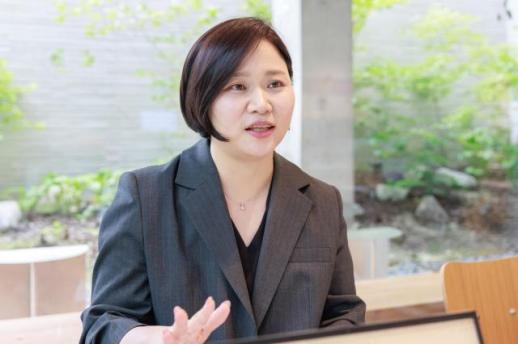 Teeference Says Sales Quadrupled After Joining Olive Young’s Wellness Store "We hope a cup of Teeference tea becomes an experience that elevates everyday life." Choi Tae-sook, head of Naturian, said in an interview May 4 at Teeference Gangnam in Seoul that she wants the brand to take root as a wellness item that improves modern consumers’ quality of life. Naturian operates the natural cosmetics brand ISOI. After entering the natural cosmetics market in 2009, the company launched tea brand Teeference in 2021. The name combines “tea” and “difference,” reflecting its aim to offer something distinctive even in a single cup. Choi pointed to “purple tea” as Teeference’s key ingredient. She said purple tea is rich in anthocyanins, an antioxidant, and that the company judged it could be used not only as a cosmetics ingredient but also as a drink. She said Teeference was launched after seeing growth potential in the wellness market, which she described as focused on balance for body, mind and daily life. Teeference’s signature menu, “Signature Purple Tea,” has a purple hue. Choi said the tea leaves come from plants grown at an altitude of 1,800 meters in Kenya. She said the leaves change from green to purple as they endure strong sunlight, which is how the tea got its name. At launch, Teeference positioned itself as a premium tea brand targeting “style-conscious women in their 30s.” It sought department store placements, but the process was difficult because Korean department stores tend to favor imported tea brands. Teeference expanded opportunities by testing consumer response through pop-up stores, and it is now available at Hyundai Department Store’s Trade Center branch and at JW Marriott Seoul, among other locations. Choi said growth accelerated after the brand entered CJ Olive Young. She said Teeference developed a powdered kombucha aimed at customers in their 20s who prefer powdered tea, adding British-made vitamins and 19 strains of probiotics. The product helped Teeference enter Olive Young in August last year, and it became popular enough to win an Olive Young Awards honor that year, she said. Choi said Teeference sales gained further momentum in January, when Olive Young opened “Olive Better” in Seoul’s Gwanghwamun area. Olive Better is a concept store that brings together health supplements, inner beauty and wellness products. Choi said she had high expectations because Olive Better could pull together what she described as a fragmented wellness market into a single hub. She said that after Teeference joined Olive Better in January, its monthly average sales rose more than fourfold compared with the previous five months. She also said rising numbers of foreign shoppers at Olive Young are helping expand Teeference’s global visibility. Teeference began selling hyaluronic kombucha in February on the Japanese e-commerce platform Qoo10 Japan, and started selling purple tea there last month, she said. Teeference plans to widen consumer engagement through Olive Better. Choi said the company will operate a tea bar at the Olive Better Gwanghwamun store from June to August, and will dispatch staff so visitors can sample products and hear explanations on site. Teeference is also continuing support for ingredient-producing regions as it expands its business. The company said it supports a water purification project in Kenya, where purple tea is produced, so that for each purple tea product sold, one Kenyan child can have purified water to drink and wash with for one day. * This article has been translated by AI. 2026-05-06 06:03:27
 -
 Saudi Arabia Scales Back Sports Spending as Oil Revenue and Cash Tighten In recent years, one of the biggest storylines in global sports has been Saudi Arabia’s aggressive push, backed by vast oil wealth. Under Crown Prince Mohammed bin Salman, the kingdom has promoted its “Vision 2030” plan to transform the economy beyond oil, using sports as a pillar for diversification and image-building. The spending has drawn sustained criticism abroad as “sportswashing,” a term used for efforts to burnish a country’s reputation through high-profile events while obscuring allegations of human rights abuses, corruption or political repression. The concept gained wider attention after Azerbaijan hosted the first European Games in 2015 and has since been applied to Russia, Qatar and Saudi Arabia. Now, Saudi Arabia’s investment posture appears to be shifting. After moves such as buying England’s Newcastle United and launching LIV Golf, the oil-fueled expansion across sports is giving way to broad cost-cutting. With large projects increasingly weighing on public finances, the focus is turning from scale to efficiency and returns. ◆PIF moves to cut LIV funding; major events also shelved The clearest example is LIV Golf. Launched in 2022 to challenge the PGA Tour’s dominance, LIV became a symbol of Saudi sports investment, offering huge signing bonuses and prize money to recruit top players. Over four years, it spent more than $5 billion on player deals and operating costs, but struggled to generate revenue, including from media rights, amid weak U.S. TV ratings. Its cumulative losses are reported to have exceeded $1 billion. Against that backdrop, the Public Investment Fund has decided to pull back. Major foreign outlets including The Wall Street Journal reported April 30 that PIF plans to stop funding LIV Golf after this season. Governance has also been shaken. Sports Business Journal, citing an internal source, reported that PIF Gov. Yasir Al-Rumayyan, a central figure in LIV’s launch and its key backer, stepped down as chairman of LIV’s board. The retrenchment extends beyond golf. The Saudi Pro League, which drew attention by signing stars such as Cristiano Ronaldo, Neymar and Karim Benzema, has moved to control spending. PIF sold a 70% stake in Al Hilal — one of four leading SPL clubs it held — to the private firm Kingdom Holding Co. The league also introduced stricter financial rules this season, capping spending at 80% of a club’s total revenue to improve financial health. Cuts are also spreading to state-led mega-events. Plans for the 2029 Winter Asian Games — to be staged with an artificial-snow resort as Saudi Arabia sought to overcome its lack of winter-sports infrastructure — were postponed indefinitely after running into limits including the cost of desalination facilities. The Saudi Snooker Masters, initially signed under a 10-year deal, was canceled after two years. Plans to extend hosting of the WTA Finals and a bid for the 2035 Rugby World Cup also fell through. The International Olympic Committee and Saudi Arabia also mutually terminated a 12-year agreement to launch the Olympic Esports Games next year. ◆Cash tightens and deficits grow; sports targeted first The pullback reflects mounting financial pressure. According to major foreign outlets including WSJ and Bloomberg, PIF manages about $940 billion in assets, but its readily available cash has shrunk to $15 billion, the lowest in four years. The reports cited a roughly one-third drop in dividends from Aramco and an $8 billion decline in asset values tied to large development projects such as the futuristic city of Neom. At the same time, deficits have widened. After the economy grew 8.7% in 2022 on the back of higher oil prices, Saudi Arabia pushed ahead with big sports projects. But Saudi fiscal authorities said that last year, falling oil prices combined with heavy spending produced a budget deficit of about $73 billion. With cash tighter, loss-making ventures such as LIV Golf and events requiring major infrastructure, including the Winter Asian Games, became prime targets for cuts. External uncertainty is also weighing on the outlook. Rising Middle East tensions, including conflict involving the United States and Israel and Iran, have hit the broader economy. A prolonged closure of the Strait of Hormuz, a key route for oil exports, has also prevented Saudi Arabia from fully benefiting from higher oil prices. Analysts also say Saudi-led efforts to manage oil prices could be weakened after the United Arab Emirates declared it would leave OPEC. ◆Debate over the limits of sportswashing Some critics say Saudi Arabia’s sportswashing strategy is reaching its limits. Justin Nolan, director of the Australian Human Rights Institute, told Nine on May 2 that the kingdom invested billions to improve its image but instead drew more global scrutiny, including controversy around LIV Golf. “As a reputation management strategy, it hasn’t been successful,” he said. Economists, however, describe the shift as a profit-driven recalibration. Johan Rewilak, a sports management professor at Loughborough University, told the BBC on May 1 that with the 2034 FIFA World Cup approaching, Saudi Arabia faces enormous infrastructure and operating costs. He said it is reasonable for the government to redistribute capital and reassess its sports portfolio, adding that geopolitical tensions and rising construction costs are pushing spending priorities toward security and essential infrastructure rather than showcase sports assets. Neil Quilliam, an associate fellow at Chatham House, wrote in a May 1 report that a review of mega-projects was already underway internally and that the current geopolitical crisis is being used to justify a shift in spending priorities. PIF has also signaled a strategic change. In a new five-year operating plan, it said it would move from rapid growth to “sustainable value creation,” strengthening investment efficiency, transparency and governance. That direction is reflected in PIF’s “2026-2030 new strategy report,” which reorganizes its portfolio into three pillars — a domestic “Vision Portfolio,” a “Strategic Portfolio” of national core assets, and a global “Financial Portfolio” — and removes sports as a standalone priority area. As a result, Saudi Arabia is expected to reduce investment in newer, higher-uncertainty sports events and focus more on areas with clearer returns, such as artificial intelligence data centers, and on national projects with broad impact, including the 2030 World Expo and hosting the 2034 World Cup.* This article has been translated by AI. 2026-05-06 02:03:24
 -
 Cravity’s Seongmin Makes Strawberry Mousse Bungeoppang as Fan Gift, Inspired by Anime Cravity member Seongmin put his affection for fans into dessert, preparing a handmade “fan gift in return” that included strawberry mousse bungeoppang and sweets cards modeled on an anime. A roundtable interview marking the release of Cravity’s eighth mini album, “ReDeFINE,” was held on the 23rd at Starship Entertainment’s headquarters in Cheongdam-dong, Seoul. Seongmin drew attention by handing reporters strawberry mousse bungeoppang he made himself. He said it was also an item he prepared for fans during the group’s current promotions. “Since the last promotions, I’ve been giving fans things I made myself, like cookies,” Seongmin said. “I’ve been choosing items I can make by hand. For this time, I was thinking about what would be good, and I wanted to try making a special dessert inspired by an anime I like. A friend connected me with the owner of a bakery.” He said he often bakes bread and cookies, and that the concept came from the anime “Yumeiro Patissiere.” “I wanted to recreate the strawberry mousse cake that appears in the show,” he said. “The owner and I worked together from planning to production, and after several steps we ended up making it in the shape of bungeoppang.” The gift also included a detail meant for fans to enjoy together: Seongmin produced sweets cards that appear in “Yumeiro Patissiere.” In the series, the cards serve as a kind of report compiling recipes made by humans and fairies and presented to a queen. Seongmin said he wanted to bring those settings into his fan gift to add a different kind of fun. “Fans often come to the site at dawn, especially for pre-recordings, and sometimes they arrive without having eaten,” he said. “So I wanted to give them something they could snack on. It’s fine to prepare things through a company, but I wanted to give something that went through my hands, so I’ve kept doing it. I enjoy it a lot, too.” Seongmin said this was not his first time preparing handmade gifts. “During ‘Lemonade Fever’ promotions, I prepared lemon cookies,” he said. “At first I planned to bake about 200, but more fans came, so I hurriedly made 400. Since the pop-up keyword was the five senses, I tried to prepare it so fans could feel all five. I remember it because they liked it so much,” he said, laughing. Cravity has held various events, including free pop-ups, to build memories with fans. Seongmin has also expanded his own way of connecting with fans through handmade gifts. Cravity released its eighth mini album, “ReDeFINE,” on the 29th and is promoting it. The album portrays the group’s process of redefining itself after moving through fear, longing and growth. The title track, “AWAKE,” says what feels like an ending can become another beginning.* This article has been translated by AI. 2026-05-06 00:03:22
 -
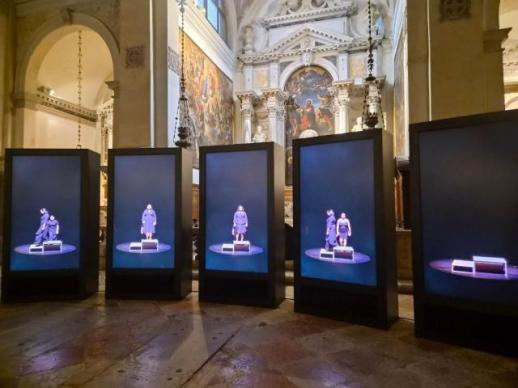 ‘Elegy’ Opens in Venice Church After South Africa Pavilion Cancellation On May 5 (local time), a steady chorus of women’s sobs filled the 7th-century Chiesa di Sant’Antonin. South African artist Gabrielle Goliath’s “Elegy” unfolds across eight large video installations, with performers sustaining long, aching tones for about an hour. The sound is at once sobbing, wailing and song, passed from one voice to the next like a relay. As the space remains saturated with mourning, the final screen shows only a lit platform, underscoring absence. The church sits less than a five-minute walk from the Arsenale, where the Venice Biennale’s main international exhibition is held. “Elegy” was originally set to be shown at South Africa’s national pavilion in the nearby Giardini. But after it became known that the work included a tribute to Palestinian poet Hiba Abu Nada, 32, who died with her young child in an Israeli airstrike in Gaza in October 2023, the South African government canceled the pavilion’s participation in January, citing concerns it could “cause division.” With outside support, Goliath mounted “Elegy” as an independent exhibition at the church, which occasionally hosts contemporary art shows. A ritual of mourning for women killed by violence, “Elegy” began in 2014 as a tribute to Ipeleng Christine Moholane, a teenage schoolgirl who was sexually assaulted and murdered in South Africa. In performances honoring her, Goliath read a letter written by Moholane’s father: “That child was my first child and my pride, and the greatest strength in my life. With her, a part of me also died.” Over the past decade, Goliath has used “Elegy” to name and mourn women who died in sexual and racial violence. Those invoked include two Nama women who were forcibly displaced and killed during the Herero and Nama genocide carried out by German colonial forces in the early 20th century, as well as Palestinian women, children and civilians subjected to forced displacement and mass killing. Met near the exhibition site, Goliath was cautious, saying she could not comment on the South African government’s decision or on freedom of expression beyond a May 4 preview and official interview. The dispute reflects broader tensions at this year’s Venice Biennale, where art and politics have repeatedly collided. Controversy has grown as Russia, absent from the past two editions after its invasion of Ukraine, and Israel, facing allegations of genocide over the Gaza war, are participating. The fallout has included the unprecedented collective resignation of the jury, and the Golden Lion winner is expected to be decided only in November. The European Union has also decided to withdraw about 2 million euros in funding it had provided to the Biennale, citing Russia’s participation. As a result, the Russian pavilion will be open to the public only during the preview period and will close after the official opening on the 9th. Political disputes have also surfaced at major national pavilions including Australia and the United States.Still, as “Elegy” continues, so does art beyond state frameworks. Belarus Free Theatre (BFT), a group of exiled Belarusian artists who say they faced repression of free expression under an authoritarian system, is presenting “Official. Unofficial. Belarus” during the Biennale. The exhibition argues that even when pushed outside national structures, art does not disappear. 2026-05-05 23:30:14
 -
 U.S. Defense Secretary urges South Korea to step up in Hormuz 'Liberation Project' U.S. Defense Secretary Pete Hegseth on Monday urged South Korea to do more to help ease tensions in the Strait of Hormuz, including by joining the U.S. military’s “Liberation Project.” According to Yonhap News Agency, Hegseth made the remarks at a Pentagon news conference when asked whether South Korea showed signs of accepting President Donald Trump’s social media request to take part in the project. “I hope so,” he said, adding that he wants South Korea to “step up.” Hegseth said he also wants Japan, Australia and Europe to do more. “We’re not just waiting for them to do it,” he said, stressing that the United States aims to create conditions that allow responsibilities to be handed over. He added that Trump has made clear: “This is your ship. You have to play a role in defense.” “We very much want them to do that,” Hegseth said. Asked whether South Korea and the U.S. military were in contact regarding a South Korean vessel reported to have been struck by Iran, Hegseth said U.S. Central Command was communicating with the ship. He said such targeted attacks reflect what he described as Iran’s indiscriminate behavior. Hegseth said a ceasefire with Iran remains in place, warning that if Iran attacks U.S. forces or commercial ships, it would face “overwhelming and devastating” U.S. firepower. The United States launched the Liberation Project on the 4th, Middle East time, to help guide commercial ships trapped in the Strait of Hormuz out of the area. * This article has been translated by AI. 2026-05-05 22:03:18
 -
 MBC’s “PD Notebook” Probes Student Victims of Samcheong-Style ‘Reeducation’ in the 1980s MBC’s investigative program “PD Notebook” is tracing allegations of “Samcheong-style reeducation” carried out on middle and high school students during the Chun Doo-hwan military era. The episode airing May 5, titled “Forgotten Boys, 1981: Student Samcheong Reeducation,” examines how 4,701 students nationwide were mobilized for so-called “reeducation” from 1981 to 1988, according to the program. The reporting began with a handwritten tip letter that said, “I am a victim of the student Samcheong reeducation camp.” The topic was unfamiliar even among investigative reporters who have tracked state violence in the 1980s, but “PD Notebook” said its reporting confirmed the claims were true. Victims said they boarded buses at the suggestion of teachers. Some said they were told they would be able to try activities such as archery and horseback riding. Instead, they said they were taken to training centers in nine locations nationwide, including Gyeongju and Asan, where soldiers subjected them to verbal abuse and beatings. Students said they were put through 10 days of training that resembled military instruction, including field exercises, drill and airborne training. Some victims said they attempted self-harm after being unable to endure the training. The program also reported testimony alleging sexual violence against younger students or those with smaller builds. Victims interviewed by the production team said they still suffer symptoms including auditory hallucinations and post-traumatic stress disorder, or PTSD, 45 years later. The program said the selection of students was driven by forced quotas. In 1981, the government assigned each middle and high school a number of students to send for “reeducation,” and the Ministry of Education pressured schools by warning that homeroom teachers and principals could be held accountable if a student not included on the list later caused problems, according to the report. Victims said schools sometimes chose students by drawing lots or by encouraging students to report one another. Testimony also said students from poorer households or single-parent families — those less able to protest — were often targeted. “PD Notebook” said the student “reeducation” went beyond school discipline and was tied to the Chun Doo-hwan military government’s governing strategy. It said the military, which operated the Samcheong Reeducation Camp as part of a 1980 “special measures to eradicate social evils,” expanded the target to include middle and high school students. The program also said it analyzed the policy as aimed at blocking the momentum of the democratization movement spreading from Gwangju. One victim interviewed by the program said he was singled out and beaten with a pickax handle because of his history of participating in the May 18 Democratization Movement. The program said the case shows that, under the pretext of identifying “delinquent students,” state violence was inflicted even on teenagers. After their release, victims said they were left with the stigma of being labeled “delinquent students.” They said they were shut out of normal opportunities for schooling and employment and stayed silent for years, treating the state violence as a personal shame. Victims also said threats from soldiers — including orders to “never speak about it” — contributed to their silence. More recently, victims filed state compensation lawsuits after an investigation by the Truth and Reconciliation Commission. However, the court set compensation at 100,000 won per day, totaling 1 million won, citing factors including that schools also bore responsibility and that the victims were students at the time, according to the program. Victims said they were devastated that decades of suffering and life damage were reduced to the 10 days of forced confinement. The victims, once boys, are now elderly, and perpetrators are also dying, the program said. “PD Notebook” said it asks how victims’ lives collapsed under violence designed by the state and enabled by schools, and how the state should be held accountable. The “PD Notebook” episode “Forgotten Boys, 1981: Student Samcheong Reeducation” airs at 10:20 p.m. May 5.* This article has been translated by AI. 2026-05-05 21:51:21
 -
 South Korea Weighs U.S. Call for Hormuz Mission as Trump Signals More Tariffs Blue House: Reviewing U.S. Hormuz proposal, weighing legal steps and readiness The government said May 5 it is reviewing President Donald Trump’s call for South Korea to join a military operation following an explosion and fire involving a South Korean vessel in the Strait of Hormuz. It said it is considering South Korea’s readiness posture for the Korean Peninsula and domestic legal procedures. The government also stressed it will quickly and accurately determine the cause of the incident and share the findings transparently with the public. The Blue House said it views the safety of international sea lanes and freedom of navigation as a shared interest of all countries and a principle protected under international law. It added that South Korea is actively participating in international efforts to stabilize, restore and normalize global maritime logistics. “In this context, we are also paying attention to President Trump’s remarks,” it said. Trump says tariffs are “not high enough,” signals push for additional duties President Donald Trump said current tariff levels are not high enough, openly signaling his intent to introduce additional duties. With large-scale tariff refunds set to begin next week following a U.S. Supreme Court ruling invalidating reciprocal tariffs, the Trump administration is expected to focus on crafting “alternative tariffs” starting with a Section 301 trade-law hearing this week. According to CBS and other foreign media, Trump made the remarks during a White House Small Business Summit held as part of U.S. Small Business Week on May 4 local time. “You actually said thank you for the tariffs, but I think those tariffs are actually not high enough,” Trump said. He added that the administration is reviewing alternative tariffs and said, “Refunding tariffs is really terrible.” Iran foreign minister heads to China amid Hormuz tensions, plans talks with Wang Yi As the United States and Iran entered a military standoff over the Strait of Hormuz, Iranian Foreign Minister Abbas Araghchi traveled to China on May 5 local time. Yonhap News Agency reported that Iran’s Foreign Ministry said on its Telegram channel that Araghchi would visit Beijing. The ministry said Araghchi plans to meet China’s foreign minister to discuss ways to develop bilateral relations and to exchange views on rapidly changing regional and international developments. South Koreans’ virtual-asset holdings halve in a year; stablecoin holdings more than double South Korean investors’ virtual-asset holdings and trading value fell by more than 60 trillion won over about a year, while stablecoin holdings more than doubled, data showed. Virtual assets appeared to lose demand as interest spread to a strong stock market, while stablecoins rose amid a preference for dollar-based assets tied to a weak won, the report said. According to 자료 submitted May 5 by the Bank of Korea to Rep. Cha Gyu-geun of the Rebuilding Korea Party, a member of the National Assembly’s Finance and Economy Planning Committee, domestic virtual-asset holdings totaled 60.6 trillion won as of the end of February. The figure is the combined end-of-month market value of assets held by investors at South Korea’s five major virtual-asset exchanges: Upbit, Bithumb, Korbit, Coinone and Gopax. Cease-fire between U.S. and Iran shows strain after a month; Trump urges South Korea to join maritime operation Signs of strain emerged in a cease-fire that has held for nearly a month as the United States and Iran failed to narrow differences despite behind-the-scenes talks on ending the conflict, the report said. Amid reports that a South Korean vessel in the Strait of Hormuz was hit in an Iranian attack, Trump publicly urged South Korea to join an operation in the waterway. According to Britain’s The Guardian and other outlets, Trump said in a May 4 local time interview with Fox News, referring to an operation dubbed “Project Freedom” to help merchant ships escape being trapped in the Strait of Hormuz: “If they try to target American ships, Iran’s military will disappear from the face of the Earth,” he warned.* This article has been translated by AI. 2026-05-05 21:48:17