
Journalist

AJP
-
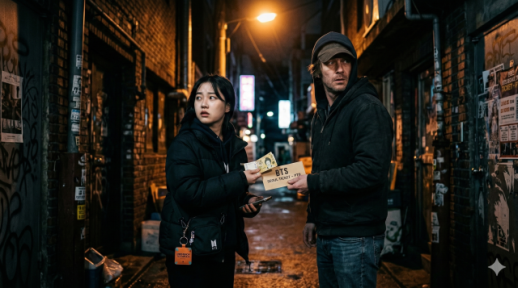 BTS Comeback D-16: South Korea to launch anti-scalping system ahead of BTS comeback concert SEOUL, March 05 (AJP) - South Korean authorities are rolling out a dedicated counter-scalping system to protect fans ahead of the upcoming BTS comeback concert at Gwanghwamun Square on March 21. The Ministry of Culture, Sports and Tourism confirmed the plan following a surge in illegal ticket trading for the high-profile event. Choi Hwi-young, the Minister of Culture, Sports and Tourism, called ticket scalping a "chronic disease" during a press briefing on February 12. The minister said that the government is monitoring the situation with extra care because free events, like the "BTS The Comeback Live: ARIRANG" show, often see even more aggressive resale activity than paid concerts. The ministry is coordinating its response through a specialized subcommittee of the Popular Culture Exchange Committee. This group includes officials from the ministry and HYBE, the management agency for BTS. The culture minister noted that while the government has developed specific countermeasures, it will not reveal the technical details to prevent scalpers from finding ways to bypass the new safeguards. The concert is expected to draw a crowd of about 15,000 to the landmark civic square in Seoul. Although the tickets are free, concerns are high that prices on the black market could skyrocket. During the group’s 2022 concert held in the southern port city of Busan, tickets for the free show reportedly reached prices as high as 4 million won ($2,731). According to data from the Korea Creative Content Agency, suspected online scalping cases have skyrocketed from 6,237 in 2020 to more than 259,000 as of August 2025. Approximately 75 percent of the cases reported in 2024 involved music performances, with many scalpers using automated "macro" software to snatch up tickets the moment they are released. To combat this, the South Korean government passed amendments to the Public Performance Act on January 29. The new rules ban the use of macro programs for ticket purchases and allow the state to confiscate profits from illegal sales. Violators could face fines up to 50 times the amount of the original resale price, though the law will not be fully enforced until later this year. The crackdown also involves tax authorities, who recently identified 17 high-volume professional scalpers. These individuals, who included public-sector employees and business owners, allegedly moved more than 20 billion won worth of tickets through illegal channels. Minister Choi said the government will lead a public campaign to discourage ticket hoarding and illegal sales before the new legal penalties take full effect. He stated that the goal is to see a significant reduction in scalping during the busy autumn performance season. 2026-03-05 16:59:00
 -
 Samsung's Galaxy S26 Ultra wins 'Best in Show' at MWC 2026 SEOUL, March 05 (AJP) - Samsung Electronics' Galaxy S26 Ultra was awarded the 'Best in Show' title at the Mobile World Congress (MWC) 2026 in Barcelona, Spain, on Thursday. The award is part of the annual Global Mobile Awards hosted by the GSMA. It is widely regarded as a top honor at the exhibition, as the winner is selected by a specialized judging panel consisting of global analysts, journalists, and influencers. The accolade is given to the most innovative product leading the industry among numerous exhibits. Launched on the 26th of last month, the Galaxy S26 Ultra was recognized for integrating advanced hardware with its One UI 8.5 software to deliver enhanced artificial intelligence (AI) and privacy features. The device is powered by a dedicated Galaxy chipset designed to accelerate mobile AI experiences. Additionally, the smartphone features the world's first 'Privacy Display,' an engineering technology that protects user data without compromising screen clarity. "It is an honor for the Galaxy S26 Ultra to win 'Best in Show,' the highest exhibition product award, at this year's Global Mobile Awards," said Choi Seung-eun, Executive Vice President and Head of Marketing for Samsung's Mobile eXperience (MX) Business. "The Galaxy S26 Ultra is an agentic AI phone that concentrates Samsung Electronics' capabilities, and we will continue to drive mobile innovation that pushes technological boundaries". 2026-03-05 16:38:22
 -
 Korea Tightens Delisting Rules, Raising Risks for Low-Priced Pharma Stocks Tighter delisting requirements are heightening anxiety across South Korea’s pharmaceutical and biotech sector, particularly among smaller drugmakers that have posted losses for years and now trade below 1,000 won a share. Industry officials said March 5 that starting in July, any stock that stays below 1,000 won for 30 consecutive trading days will be designated an “issue for administration.” If it then fails to recover for at least 45 trading days within 90 days, it must enter delisting procedures. The single-price threshold effectively strengthens oversight of so-called “penny stocks.” Joa Pharmaceutical and Kyungnam Pharmaceutical are among companies currently trading below 1,000 won per share. Drugmakers typically must invest in research and development before generating revenue from successful commercialization. New-drug development generally requires spending more than 10% to 15% of sales on R&D, and shares often plunge when planned technology-transfer deals fall through. That makes it difficult to judge companies solely on short-term earnings or price-to-earnings ratios, industry officials said. “The pharmaceutical business has characteristics that make it hard to evaluate only by short-term performance or PER,” one industry official said. “We need to consider whether a single standard like share price sufficiently reflects a company’s intrinsic value.” Others argue the risks are not only structural. Some companies have accumulated firm-specific problems such as aging brands, a lack of new growth engines and unstable management, another industry official said. “Companies that failed to move beyond brand dependence or delayed restructuring will be hit hardest by the tighter rules,” the official said. Joa Pharmaceutical has posted losses for seven straight years. Its business is weighted toward over-the-counter drugs and relies on a pharmacy sales network. It operates a network through its subsidiary Medipharm, which runs about 1,000 franchised pharmacies nationwide, but it has not shown clear results in securing new growth drivers, according to the assessment in the industry.Kyungnam Pharmaceutical has strong brand recognition centered on its vitamin C product Lemona. But its revenue is concentrated in a single brand, a structural limitation often cited. The company has recently expanded its inner-beauty product lineup, but a new growth engine that could replace Lemona has yet to take hold. Repeated management changes and recurring talk of a sale have also weighed on investor sentiment. Its largest shareholder, Humasis, also trades below 1,000 won, and market concerns about financial stability have not fully eased. Some in the industry said the new rules could become a turning point that separates stronger and weaker smaller drugmakers. Even accounting for the R&D-heavy nature of the sector, the market is demanding both financial soundness and credible growth strategies, they said. “The intent is reasonable as a warning to companies that have settled for the domestic market,” one official said. “The market will more strictly distinguish between companies with innovation capabilities and those without.” Still, some observers said a wave of delistings is unlikely. They expect selective restructuring or consolidation through mergers and acquisitions rather than broad removals. “Considering the market impact, a phased cleanup is more realistic than blanket delistings,” an industry official said. With profitability pressured by factors such as drug price cuts, companies may look to M&A for synergies or shift into higher-margin areas such as health functional foods, the official said. “If management stabilizes and R&D results become visible, it could be a turning point for corporate value,” the official added.* This article has been translated by AI. 2026-03-05 16:36:10
 -
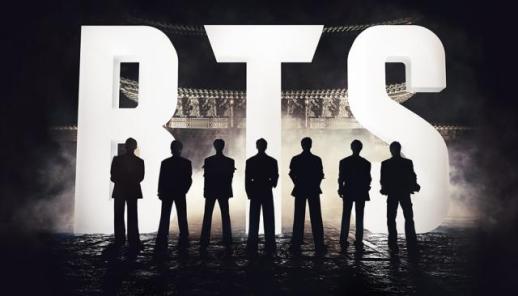 BTS Comeback D-16: BTS teaser sparks global buzz ahead of 'ARIRANG' comeback SEOUL, March 05 (AJP) - BTS ignited massive online buzz Thursday after releasing a teaser for its upcoming comeback performance "BTS THE COMEBACK LIVE : ARIRANG," sending anticipation among global fans soaring ahead of the group’s long-awaited return. The K-pop sensation unveiled the trailer across its major social media platforms, quickly drawing millions of views and reactions from fans worldwide. The video opens with the roar of ARMY, BTS’ global fanbase, echoing from past concerts. The familiar sound sets the tone for what many fans view as a symbolic reunion between the band and its supporters. Scenes of Gyeongbokgung Palace — one of Seoul’s most iconic historic landmarks — appear throughout the teaser, blending traditional Korean imagery with BTS’ modern global identity. At the center of the trailer is a message from leader RM: "We promised our fans that we’d be back." The screen then flashes bold phrases such as "THE WORLD’S BIGGEST BAND IS BACK" and "WITNESS THE HOMECOMING," underscoring the scale and symbolism of the group’s return. The teaser rapidly gained traction online shortly after its release. On YouTube, the video garnered more than 32,000 views, 6,100 likes and 496 comments as of 4:30 p.m. (0730 GMT), seven hours after the initial upload. Engagement was even stronger across social media platforms. The teaser post on X generated about 4.1 million views, 211,000 likes, 141,000 reposts and roughly 8,600 comments. On Instagram, it collected more than 2.03 million likes and over 77,000 comments, highlighting the group’s massive global reach. Fans flooded comment sections with messages celebrating the group’s return, "Not everyone will understand why this feels so emotional. But if you’ve been here for years, you know this isn’t just a trailer. BTS don’t just release music, they release memories, healing, and pieces of our lives. Years later they still give the same feeling, excitement, pride, and little bit of tears," the YouTube comment posted by "Anusha15-1" gained over 4.1 thousand likes in five hours, with many noting that a performance in Seoul’s historic center adds symbolic weight to the comeback. "THE SHOT OF THEM WALKING WITH LIGHTED LAMPS IN THEIR HANDS LOOKED SO COOL!!" said "berryberryblueberryy" on YouTube. A teaser poster released alongside the video shows the silhouettes of all seven members standing before Gwanghwamun, reinforcing the theme of reunion. BTS is expected to release its fifth studio album "ARIRANG" on March 20. The following evening, the group will hold a major comeback performance at Gwanghwamun Square in central Seoul. The concert will be streamed worldwide through Netflix, making it one of the platform’s most high-profile live music broadcasts. The show will be directed by Hamish Hamilton, known for staging global events such as the 2012 London Olympic opening ceremony and the Super Bowl halftime show since 2010. The album’s title track, "SWIM," reflects on moving forward through life’s waves rather than being swept away by them. RM participated in writing the song, adding a personal narrative to the project. For BTS, the teaser signals more than the release of new music. It marks the beginning of a long-awaited reunion with fans around the world. 2026-03-05 16:33:55
 -
 ABL Bio to Join East-West Biopharma Summit; Dongkook Launches Centellian24 Ampoule; Medytox Promotions ABL Bio to attend East-West Biopharma Summit ABL Bio said March 5 it will attend the 5th East-West Biopharma Summit: Seoul, set for March 9-11. The event is co-hosted by global biotech publication BioCentury and biopharma executive network BayHelix, with McKinsey & Company participating as an insights partner. The summit brings together pharmaceutical and biotech industry officials to share insights on global markets and explore new business opportunities. Companies expected to attend include Eli Lilly, Roche, Boehringer Ingelheim, Merck (MSD) and GlaxoSmithKline (GSK). ABL Bio CEO Lee Sang-hoon is scheduled to join the “Deal Maker Showcase” session on March 10 as a panelist. He plans to discuss key strategies for successful technology-transfer deals with global companies, along with lessons learned from negotiations, including missteps. The company said it also plans business development talks with global firms and will seek partnership opportunities. Dongkook Pharmaceutical launches Centellian24 ‘Expert Madeca Mela Capture Toning Shot Ampoule’ Dongkook Pharmaceutical said March 5 it will release a new “mela-proof” ampoule under its dermacosmetic brand Centellian24, called the “Expert Madeca Mela Capture Toning Shot Ampoule.” The company said the product is the latest version of its “Expert Madeca Mela Capture Ampoule,” which has sold more than 21 million units cumulatively since its 2019 launch. The new product applies a “mela-proof” solution designed to manage multiple factors that accelerate melanin production. The company said it showed results indicating skin temperature dropped by about 6.68 degrees Celsius immediately after use, and it was designed to address melanin concerns linked to ultraviolet exposure and skin heat. Dongkook said it combined its key ingredient, a standardized extract of Centella asiatica (TECA), with its patented melanin-related ingredient “MELA-WHITE,” and applied a three-step ultra-low-temperature cooling method, “Mela Freeze,” that goes down to minus 120 degrees Celsius. The company said the resulting proprietary ingredient, “SNOW-TECA,” is included at 20,000 ppm. Medytox group carries out 2026 promotions Medytox said March 5 it carried out employee promotions for 2026. In the reshuffle, Kim Hak-woo was promoted from director to managing director. The company said Kim earned a master’s degree from Yonsei University and has worked at Medytox for 25 years, overseeing operations at the Osong Plant 3 and the Ochang Plant 1. Kim Min-ju, a department head at affiliate Newmeco, was also promoted to director. Medytox Group said a total of 114 employees were promoted across research, production, sales, clinical, regulatory affairs and management functions for strong performance.* This article has been translated by AI. 2026-03-05 16:33:00
 -
 Hanmi Pharmaceutical Group Chair Song Young-sook Apologizes Over Sexual Misconduct Controversy Song Young-sook, chair of Hanmi Pharmaceutical Group, issued a formal apology over a recently raised sexual misconduct controversy and reiterated the company’s commitment to an independent, board-led governance structure under a professional management system. In a statement released on the 5th, Song said that as a family member of the company’s founder and one of its major shareholders, she feels a heavy responsibility for failing to prevent the situation. She apologized “sincerely” to the person harmed by the sexual misconduct case and to employees who she said would have felt deep disappointment. “Anyone, regardless of position, who engaged in inappropriate conduct must offer an apology and show a responsible attitude,” she said, adding that only “genuine remorse and reflection” can open a path back to unity. Song also referred to the ongoing in-house placard protests by some employees. She said watching staff continue the daily demonstrations made her feel devastated, as it suggested her pledge to be a reliable support for their lives had not been fully kept. She used the episode to restate Hanmi’s governance principles. “Hanmi is not a company that any one individual can run with full authority,” she said. She described the “advanced professional management system” promised to customers and shareholders as a principle designed to respect professional managers’ roles and authority and to ensure independent management centered on the board. Song added that major shareholders should support sound direction rather than intervene directly in management, calling it a management philosophy emphasized by the late Chairman Lim Seong-gi and the path Hanmi should pursue. On preventing a recurrence, she urged professional managers across group affiliates to overhaul systems and internal controls to make them fairer and more transparent. Song said the group’s driving force is the unity of its employees, rooted in Lim’s spirit of “respect for humanity.” As group chair, she said, she will hold the line so the company can regain trust.* This article has been translated by AI. 2026-03-05 16:30:00
 -
 Posco Future M to Invest 357 Billion Won in Vietnam Synthetic Graphite Anode Plant Posco Future M will build a synthetic graphite anode material plant in Vietnam as it seeks to stabilize supply of key battery materials. The company said its board on Wednesday approved an investment of about 357 billion won ($3570억원) to build the plant in Thai Nguyen, an industrial city in northern Vietnam. Construction is scheduled to begin in the second half of this year, with mass production planned from 2028. The plant will be built on a site that can be expanded to a maximum capacity of 55,000 tons. Posco Future M said it plans to increase output in stages depending on orders. Synthetic graphite anode material is used to improve fast-charging performance and battery life, and demand has been rising. The company said the material has drawn attention as a strategic item because supply is heavily dependent on certain countries, making diversification a priority. The company cited moves by major markets to reshape supply chains. The United States last year created requirements for “prohibited foreign entities” under implementing rules for the Inflation Reduction Act, and Europe set goals under the Critical Raw Materials Act to reduce reliance on specific countries for strategic raw materials. Posco Future M said it has been working to internalize the full supply chain for natural and synthetic graphite anode materials, covering raw materials, intermediate materials and finished products. It said it localized natural graphite anode materials in 2011 and completed a synthetic graphite anode plant in Pohang in 2021, establishing a mass-production system and supporting supply-chain self-reliance for South Korea’s battery industry. Posco Future M said Vietnam offers cost advantages in investment, electricity, labor and logistics, and can secure competitive costs compared with other Southeast Asian countries such as Indonesia. It also cited Vietnam’s industrial infrastructure, including its power grid, and said the country is pursuing export-led growth while working to create favorable trade conditions with major countries, including the United States. A Posco Future M official said the company is holding talks with multiple customers in South Korea, North America and the European Union on supplying cathode and anode materials, based on supply-chain solutions and technology that can respond to trade restrictions. The official said the company will continue to strengthen competitiveness and expand sales, aiming to become a top-tier global battery materials player. 2026-03-05 16:09:26
 -
 Culture Minister Choi: BTS Concert Will Test Anti-Scalping Efforts, Platforms Must Act 최휘영 문화체육관광부 장관은 5일 "최근 국민적 관심이 집중된 BTS의 공연은 암표 대응의 중요한 시험대가 될 것"이라며 민관이 함께 암표 근절에 적극적으로 나서야 한다고 밝혔다. Choi said at the launch ceremony in Seoul for a joint public-private anti-scalping task force that the group must become a practical platform that carries out enforcement, built on constant cooperation between government and the private sector. The task force, which officially began work that day, brings together the Ministry of Culture, Sports and Tourism and ticketing-platform companies to routinely check for illegal ticket resales and strengthen response systems. Choi has described scalping as a long-standing chronic problem in the cultural industry and has pledged a tough response. Under revisions to the Performance Act and the National Sports Promotion Act, authorities can impose penalties of up to 50 times the amount of illegal ticket sales and allow confiscation and recovery of profits from unlawful resales, sharply raising sanctions. Some have said that because the bills were drafted quickly, detailed enforcement rules still need to be prepared. Choi said, however, that "legal revisions alone are not enough," calling scalping a complex issue involving technology, distribution channels and consumer awareness. He said results will come only when each institution’s role is linked, including blocking fraud at the booking stage, constant monitoring by platform operators, rapid information-sharing with investigative agencies and public-awareness campaigns. Choi also urged ticketing platforms for performances, exhibitions and sports to take a more active role. "The role of platforms that can become a channel for scalping is important," he said, adding that monitoring of the BTS Gwanghwamun concert found multiple suspected scalping cases on some platforms. He said tighter platform-level controls are needed and that thorough public-private action is required to reduce demand for scalped tickets and help the revised laws take hold quickly. He also stressed the need to clearly warn the public about the risks of buying scalped tickets. Choi said that even if people purchase scalped tickets for BTS concerts and other events, bookings can be canceled if the transaction is detected, and on-site identity checks can make transfers effectively impossible, potentially leading to fraud losses. * This article has been translated by AI. 2026-03-05 16:03:20
 -
 Actress Ku Hye-sun Defends Price of Patented ‘KOOROLL’ Hair Roller Actress Ku Hye-sun has addressed criticism over the price of her patented hair roller, ‘KOOROLL.’ Ku wrote on her social media on the 5th that KOOROLL “removes more than 80% of the plastic” used in conventional round hair rollers. She said that unlike round rollers, which can tangle with hair and become dirty, KOOROLL can be unfolded to remove hair easily and then returns to its original shape. She added that the product is durable and “can be used permanently.” Ku said the initial production run was small, raising costs, and that “for that reason the price is currently on the high side,” but she plans to offer discounts and other promotions so consumers are not burdened. She also promoted the product, saying, “If you consider the environment, choose ‘KOOROLL.’” Debate flared online after Ku shared a link to the official sales website along with pricing information. Typical hair rollers generally cost about 400 to 500 won, and even some higher-priced products are often in the 4,000 to 5,000 won range. Ku recently received a master’s degree in engineering from the Graduate School of Science Journalism at the Korea Advanced Institute of Science and Technology, known as KAIST. KOOROLL was selected as a recipient of South Korea’s Excellent Patent Award in 2025. * This article has been translated by AI. 2026-03-05 15:54:15
 -
 Shinhan Bank Hires Big Tech AI Talent to Speed Digital Transformation Shinhan Bank is expanding recruitment of outside talent in artificial intelligence and digital transformation, known internally as AX, as it seeks to strengthen its AI capabilities. The bank has been bringing in engineers and executives with backgrounds at major technology companies including Samsung Electronics and SK. On March 5, the financial industry said Shinhan Bank this month appointed Choi Cheol as head of its AX Digital division. Choi previously led the SK AIX Convergence Group and the SK C&C Convergence Group. Shinhan Bank is said to have valued his expertise in areas including blockchain-based Web3, AI and the Internet of Things. The AX Innovation Unit where Choi works was created in the second half of last year and sits under the AX Innovation Group. Choi is expected to help lead companywide digital transformation strategy with AX Innovation Group head Choi Hyeok-jae. Choi is not the only outside hire as the bank moves away from a tradition of promoting from within. Last year, Shin Young-pil, who previously worked at Samsung Electronics and NCSoft, was named head of the Tech Innovation Unit. In 2024, Lee Guk-hee, with experience at Amazon, Microsoft and KT Cloud, was hired as head of the Tech Innovation Team. Other Samsung Electronics alumni who have joined include Jin Young-gyu, head of the Customer Experience Innovation Center; Jeon Seong-ik, head of the Customer Platform division; and Kim Jun-hwan, a team leader at Shinhan Financial. The hiring push is focused on strengthening competitiveness in the AX area as AI competition intensifies and banks race to secure capabilities in a fast-changing digital environment. Shinhan Financial has said it aims to deliver hyper-personalized financial services through AI. In his New Year’s address, Chairman Jin said the industry is at a major turning point as technologies such as digital assets, Web3 wallets and agent AI expand, and he called for faster adoption of AI. The group is actively introducing AI agents in customer management, wealth management, internal controls and credit screening. Departments are also developing their own AI agents for task-specific use, and the bank is testing what it calls the country’s first AI unmanned branch, the “Shinhan AI Branch.” Monthly active users of its financial platform rose from 21.3 million in 2023 to 24.67 million in the third quarter of last year, reflecting growth in non-face-to-face usage. Industry officials say the bank has limits in building enough in-house specialists who can also meet regulatory requirements such as internal controls, prompting it to look outside. As digital transformation accelerates, banks are increasingly competing to recruit technology talent from big tech, analysts say. A financial industry official said, “Beyond existing technology, there are still many areas we must pay closer attention to, including anti-money laundering (AML),” adding, “Digital assets are seen as a test case for judging the success or failure of financial companies’ recruitment of outside digital talent.” 2026-03-05 15:51:00