
Journalist

AJP
-
 Kim Seon-tae’s New YouTube Channel Ties Chungju City’s Official ChungTV in Subscribers Kim Seon-tae, known as the original “Chungju Man,” has seen his new YouTube channel reach parity with Chungju City’s official YouTube channel, “ChungTV,” in subscriber count. As of 4:50 p.m. on March 4, the channel “Kim Seon-tae,” created by Kim, had 775,000 subscribers. Kim opened the channel on March 2. After news of it spread more widely on March 3, subscriptions rose sharply. Attention has focused on whether Kim’s channel will overtake ChungTV. ChungTV also stood at 775,000 subscribers. Kim, who had built up ChungTV since 2019, matched its subscriber total just two days after launching his own channel. ChungTV’s subscriber count fell sharply after news spread that Kim had retired. Kim posted a video on March 3 titled “I’m Kim Seon-tae.” A ChungTV administrator drew notice by commenting, “Seon-tae, my Seon-tae.” * This article has been translated by AI. 2026-03-04 16:57:23
 -
 Korean appliance makers price in potential Middle East setback SEOUL, March 04 (AJP) - South Korean home appliance makers are bracing for potential disruption from the widening conflict in the Middle East and the choking-off of the critical shipping corridor, the Strait of Hormuz — just as the region had begun to emerge as a fresh growth market for Korean brands. The escalation has raised concerns among producers that renewed interest in Korean consumer brands across the region — fueled partly by the broader K-wave — could falter, adding another layer of uncertainty as sales momentum in other Asian markets slows. Samsung Electronics, LG Electronics and Coway say they are navigating the short-term shock through existing contingency plans, though they acknowledge that prolonged hostilities could trigger broader regional fallout. Samsung Electronics, which relies heavily on maritime shipping for bulky consumer appliances, said the immediate supply-chain impact appears less severe than initially feared. “We maintain local inventory in each region, which provides a buffer for several weeks to about a month, so we do not see immediate risks,” a Samsung Electronics official said. “Furthermore, the Strait of Hormuz is primarily an oil route. Commercial appliances often travel via the Suez Canal or the Cape of Good Hope, so the direct impact on appliance shipping does not appear massive.” The official added that while a prolonged crisis would pose global economic risks, no specific internal directives have yet been issued in response to the situation. LG Electronics, which recently established a regional headquarters in Riyadh, Saudi Arabia, to secure major B2B infrastructure contracts, said short-term project disruptions are likely to remain limited. “Currently, there appears to be no direct impact on our operations, and we do not conduct direct business in Iran,” an LG Electronics official said. “Our top priority is the safety of our employees. Personnel in the affected regions have already been evacuated to nearby areas or returned home, and no damage has been reported.” The company acknowledged that a prolonged maritime blockade could fuel broader macroeconomic pressures, particularly through surging oil prices. “However, this is a general risk affecting all companies rather than an isolated issue for our specific business,” the official added. Rental appliance maker Coway — which had recently identified the Middle East as a new growth engine — said its exposure remains limited due to its indirect market presence. “We only recently started exporting to the UAE and Saudi Arabia through local partner firms,” a Coway official said. “We do not have a direct operational footprint or our own service personnel stationed there, and our market share is currently minimal. We do not expect any significant damage from the current situation.” Still, the cautious optimism could fade if the conflict drags on beyond several weeks. Sung Il-kwang, a Middle East expert at the Euro-MENA Institute, said the escalation could mark a turning point in the region’s business climate. “In the Middle East, even conflicts occurring outside a country’s immediate vicinity can prompt businesses to delay projects because of perceived security risks,” Sung said. “But now that the conflict has reached their doorstep, many business activities have effectively come to a halt.” He warned that a prolonged war could significantly alter the operating environment for companies active in the region. “While it is unlikely that the war will persist throughout the year, the situation must be monitored closely,” Sung said. “Depending on whether the crisis becomes prolonged, the ultimate impact on business operations could be severe.” 2026-03-04 16:41:11
 -
 Bridgerton Season 4 Star Ha Yerin Says She’s Proud Sophie Baek Reflects Her Korean Identity Korean American actor Ha Yerin has stepped into the global spotlight as a lead in Netflix’s hit series ‘Bridgerton’ Season 4, saying she was proud the character’s name reflects her Korean identity. A press event for the series was held Tuesday afternoon in Seoul, with Ha in attendance. ‘Bridgerton’ Season 4 follows Benedict Bridgerton (Luke Thompson), a free spirit uninterested in marriage, as he navigates love, identity and class after meeting a “lady in a silver dress” at a masked ball — and Sophie Baek (Ha), a maid in his everyday life. The ‘Bridgerton’ franchise is one of Netflix’s best-known global hits. Ha said she struggled to grasp the show’s immediate success. “When ‘Bridgerton’ Season 4 hit No. 1 on the global chart, honestly it didn’t feel real,” she said. “It felt like something happening outside of me.” She said her grandmother, veteran actor Son Sook, watched the entire season and sent a message of support. “My grandmother finished ‘Bridgerton’ Season 4,” Ha said. “Her eyesight has gotten worse lately, so she watched close to the TV. She messaged me, ‘I’m proud of you, I love you,’ and it made me feel warm — and also a little heartbroken.” Son is currently performing in the stage play ‘An Elder’s Dream,’ Ha said, adding that she planned to attend a performance. “She told me, ‘People used to call you Ha Yerin, Son Sook’s granddaughter, but these days they call me Son Sook, Ha Yerin’s grandmother,’” Ha said. “Hearing that made me feel emotional, and proud.” Ha, who has worked in Hollywood including on ‘Halo,’ recalled learning she had landed the role. “Overseas, you send a lot of self-tapes,” she said. While visiting her mother in Taean, she received a call from her agent telling her to submit an audition video within 24 hours. She filmed and sent scenes involving tea and a lake, then received a callback days later. She said she interviewed with the director over Zoom and later met Thompson the same way, auditioning at 11 p.m. due to the time difference. “Later, I was having brunch with my mom in Gangnam when I heard I’d become the female lead,” Ha said. “We cried and screamed together. I remember people around us looking like, ‘Is she OK?’” Ha said she also felt pressure joining a series with an established global fan base. “I worried that coming in as a new character might throw off the rhythm,” she said. “But they wanted new energy. In my seven years as an actor, it was the set that respected diversity the most. I was happy during the shoot.” Though set in the 19th century, the series has drawn attention for its diverse casting, including across race and sexual identity. “Even though it’s set in the 19th century, it has the power to make it feel modern,” Ha said. “At its core, it’s a love story. The center is how Sophie’s emotions and sincerity are expressed, so I tried to act with that as the focus. I think ‘Bridgerton’ reflects today and lets people project the love story and fantasy they imagine.” The franchise is also known for explicit romance. Ha said she felt “pressure and fear” filming intimate scenes with Thompson, and credited the production’s intimacy coordinator. “In Hollywood, in society, and in the media, it feels like people think they have the right to blame, judge and criticize women’s bodies,” she said. “That made me feel pressure and fear. In Korea, especially, beauty standards can be stricter than in the West. I worked with an intimacy coordinator on ‘Bridgerton,’ and I think it’s an essential role in the industry. They did an excellent job, choreographing it like a dance and doing everything possible to make it feel safe on set.” Ha also explained how her character’s surname changed from “Sophie Beckett” in the original work to “Sophie Baek” in the series. “After I passed the audition, we had a Zoom meeting,” she said. “While talking about the character, they asked, ‘What surnames start with a B sound?’ Since it was ‘Beckett,’ we were thinking of a name that fits ‘B,’ and I think ‘Baek’ came to mind. It wasn’t a big conversation, so I didn’t think much of it — but then Sophie’s last name had changed. It felt satisfying. Since I’m a Korean actor, I thought it was natural to change it to a surname that fits my identity, and I felt grateful.” ‘Bridgerton’ Season 4 Part 1 was released worldwide on Netflix on Jan. 29, and Part 2 on Feb. 26, and has been drawing strong attention, the organizers said. * This article has been translated by AI. 2026-03-04 16:40:18
 -
 Actress Nam Bo-ra Asks Fans About Her Pregnancy Bump in SNS Post Actress Nam Bo-ra asked followers for advice about her pregnancy bump. Nam posted a photo on her social media on the 4th with the caption, "How far out does your belly go?" In the photo, she wears leggings and shows her baby bump. Nam held a wedding ceremony last May with a businessman her age. She is due to give birth to a son in June. * This article has been translated by AI. 2026-03-04 16:39:14
 -
 World Cup 100 Days Out: Iran Boycott Threat and Mexico Security Worries Cloud 2026 Tournament The 2026 FIFA World Cup, co-hosted by the United States, Canada and Mexico, is 100 days away. The tournament opens June 12 (Korea time) and runs through July 19 across 16 cities. It will be the first World Cup played with 48 teams. Organizers are facing growing concerns, however, as instability in the Middle East and worsening security in Mexico tied to the government’s fight with drug cartels raise fears of disruption. ◆Iran hints it may skip World Cup after U.S. strike The biggest uncertainty is heightened tension in the Middle East after U.S. and Israeli airstrikes on Iran, including a direct U.S. strike. Iran has suggested it may not take part in the North American World Cup. Mehdi Taj, head of the Iran Football Federation, said on Iranian state television on March 1, “In a situation where the United States has carried out airstrikes, it seems difficult to expect participation in this World Cup,” signaling a possible boycott. Since the 1950 World Cup in Brazil, no team that had already secured qualification has declared it would withdraw shortly before the tournament. Iran is scheduled to play all of its group-stage matches in the United States: against New Zealand and Belgium on June 16 and 22 in Los Angeles, then against Egypt on June 27 in Seattle. If Iran withdraws, the financial cost could be significant. The Associated Press reported March 3 that Iran would forgo at least $10.5 million. FIFA pays each of the 48 finalists $1.5 million for preparation costs and also pays $9 million to each of the 16 teams eliminated in the group stage. Iran could also face a fine of at least 250,000 Swiss francs and could lose eligibility to take part in the next World Cup qualifiers, the report said. The BBC reported that if Iran boycotts, Iraq or the United Arab Emirates could benefit. Iraq reached the intercontinental playoff after beating the UAE 3-2 in a fifth-round qualifier. Iraq is set to play a one-off match on April 1 against the winner of Bolivia vs. Suriname; if Iraq wins that intercontinental playoff, a scenario could emerge in which the UAE takes Iran’s place in the finals. FIFA said it is watching closely. Secretary General Mattias Grafstrom said, “Our goal is for all teams to participate and to stage the World Cup safely.” Trump, president of the co-host United States, took a hard line. In an interview with Politico on March 4, he said of Iran, “I don’t care whether Iran comes to the World Cup or not,” adding, “I think Iran is a country that has been very seriously defeated. Completely depleted.” ◆Mexico security crisis deepens after cartel retaliation Mexico, another co-host, is also grappling with worsening security. After the Mexican government killed the leader of a drug cartel in Jalisco state in February, cartel members have repeatedly blocked roads and set vehicles and shops on fire, among other acts of violence. Some qualified teams have moved to issue travel advisories or raise alert levels for high-risk areas in Mexico. South Korea’s Foreign Ministry has also advised canceling or postponing travel there. With concerns growing that the unrest could drag on, some have raised the possibility of changing host sites within Mexico or canceling certain matches. As speculation spread that Guadalajara could lose its hosting rights, Jalisco Gov. Pablo Lemus told a news briefing on Feb. 24 that there was “no risk at all” of Guadalajara being stripped of matches. FIFA President Gianni Infantino also said he trusted Mexican authorities and that there would be no schedule changes. Mexican President Claudia Sheinbaum sought to reassure the public. In a Feb. 25 briefing, she said, “There is absolutely no problem. If anything, trust is firm,” adding that fans would not be put at risk and that the government and security forces would use all available resources to guarantee safety during the World Cup. She repeated that message at a news conference on Feb. 26, saying she wanted domestic and international visitors to know the World Cup would be a major celebration in Mexico and that the country was ready to welcome national teams and fans. South Korea’s national team is watching developments closely because all three of its group-stage matches are scheduled to be played in Mexico. Drawn into Group A, South Korea is set to open June 12 against the winner of a European playoff at Akron Stadium in Guadalajara. It then plays host Mexico there on June 19 and finishes the group stage June 25 against South Africa at BBVA Stadium in Monterrey. South Korea coach Hong Myung-bo said the team would focus on preparation despite the unsettled environment. “It seems the World Cup is drawing major attention even before it begins because of various external situations,” Hong said. “Our team will not be shaken by the outside environment, and we plan to do our best with what we can do now,” he added. “Until the tournament begins in 100 days, the coaching staff and players will prepare well in their respective roles.”* This article has been translated by AI. 2026-03-04 16:24:00
 -
 Singer Navi Shares Maternity Photos as She Nears Due Date Singer Navi, whose real name is Ahn Ji-ho, has shared maternity photos as she nears the end of her pregnancy. On Tuesday, she posted photos on social media with the caption, "3+1=4." In the images, she highlights her baby bump. Online commenters responded with messages including, "So beautiful," and, "Wishing you a safe delivery." Navi married Cho Sung-hwan, a retired soccer player, in 2019. She gave birth to a son in 2021 and is currently pregnant with a daughter, due in April. * This article has been translated by AI. 2026-03-04 16:18:15
 -
 Hyundai, Kia post all-time sales record in US SEOUL, March 4 (AJP) - Hyundai Motor and its affiliate Kia set an all-time sales record in the U.S. last month thanks to strong demand for midsize-to-large SUVs and hybrid models. Their combined sales stood at 137,412 vehicles in February - 71,407 units for Hyundai and 66,005 for Kia - up about 5.7 percent and 4.3 percent, respectively, from a year earlier. Hyundai posted its best-ever sales for the month, extending a streak of monthly records for the third straight month since last December. Strong demand for SUVs drove the sales, with the Palisade seeing an increase of 28.4 percent to 10,025 units and the Santa Fe rising 18.6 percent to 11,344 units. Sales of Kia's midsize Telluride jumped 68.7 percent to 13,198 units, followed by the K5 with 6,053 units and the Carnival with 5,805 units. Sales of Hyundai's luxury brand Genesis also increased 3.3 percent to 5,730 units, with the GV70 leading the lineup with 2,628 units. Some 34,855 electric and other eco-friendly vehicles were sold, with sales surging 34.7 percent from a year earlier to account for about 25.6 percent of total sales. Meanwhile, Japanese automaker Toyota remained at the top after selling some 180,950 vehicles in the U.S. in February. 2026-03-04 16:11:11
 -
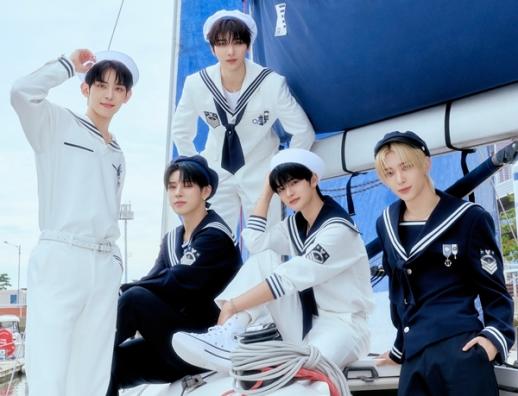 K-pop boy band NOWZ drops first Japanese album SEOUL, March 04 (AJP) - Cube Entertainment's K-pop boy group NOWZ has rolled out its first Japanese album “NOWZ” on Wednesday, targeting the neighboring country's dance music scene. Releasing albums in Japan was considered one of the most important promotion activities for Korean artists in the early 2000s, when K-pop was not as popular. Japan has served for decades as a crucial gateway for K-pop acts seeking to build international audience. Chart performance, arena tours and album sales in the country have often been viewed as key milestones in an artist’s global expansion. The importance of the Japanese market dates back to the expansion of second-generation K-pop artists such as TVXQ, Girls’ Generation and KARA, whose chart success and large-scale tours helped establish Japan as a major overseas base for Korean artists. More recently, the industry has expanded its strategy by launching “localized K-pop” groups designed specifically for the Japanese market. JYP Entertainment’s nine-member girl group NiziU, formed through the audition program Nizi Project in partnership with Sony Music Entertainment Japan, debuted in Japan in December 2020 before expanding activities to Korea with a Korean-language release in October 2023. HYBE Labels Japan, now known as YX Labels. also launched multinational boy group &TEAM in December 2022 following the audition program &AUDITION – The Howling, positioning the group as a Japan-based K-pop act targeting both domestic and global audiences. NOWZ, composed of Hyunbin, Yun, Yeonwoo, Jinhyuk and Siyun, released the EP on global streaming platforms Wednesday alongside a performance video for the track "AMMO (feat. YRD Leo)." NOWZ is a five-member boy group under Cube Entertainment that debuted in April 2024. The group was originally introduced under the name NOWADAYS before rebranding as NOWZ in June 2025. It marks Cube Entertainment’s first new boy group since Pentagon, which debuted in 2016. The performance video for "AMMO (feat. YRD Leo)" features fast-paced visuals including laser effects and glass-shattering sequences synchronized with the group’s choreography. Japanese rapper YRD Leo, who features on the track, also appears in the video. The choreography for "AMMO" was created by Monika of the dance crew PROWDMON. The group previously showcased performance-driven tracks such as "EVERGLOW," "Problem Child" and "HomeRUN." The EP contains five various tracks, including the pre-released original Japanese song AMMO (feat. YRD Leo) as well as Japanese versions of previously released tracks HomeRUN, "GET BUCK," "Untitled World" and "Fly Freely." Following the EP, NOWZ will begin promotional activities in Japan starting March 5, including television appearances, media interviews and fan events. The group will also hold its first fan concert, "Run with me, NOW," in Korea on March 28. 2026-03-04 16:02:46
 -
 Korea Eximbank, KHNP sign nuclear power cooperation MOU with Philippines’ Meralco The Export-Import Bank of Korea said it has moved to strengthen financing support for South Korean companies seeking nuclear power plant contracts overseas. Korea Eximbank and Korea Hydro & Nuclear Power said they signed a three-party memorandum of understanding with Meralco, the Philippines’ largest private power company, in Manila to cooperate on developing nuclear power projects in the Philippines. The signing ceremony was attended by Industry Minister Kim Jung-kwan and Philippine Trade and Industry Secretary Maria Roque. Korea Eximbank President Hwang Ki-yeon, KHNP acting CEO Jeon Dae-uk and Meralco Chairman Manuel Pangilinan signed the agreement. The MOU was arranged following President Lee Jae-myung’s state visit to the Philippines, with the aim of supporting the local market entry of “K-nuclear” from the financing side. Under the agreement, Korea Eximbank will review possible financing for nuclear projects pursued by Meralco, offer tailored financing packages when South Korean companies participate, and support efforts to build a nuclear industry ecosystem combining KHNP’s technology with Meralco’s local network. Pangilinan said South Korean companies’ proven technology and Korea Eximbank’s financial support would be “meaningful progress” for strengthening the Philippines’ energy security and economic growth. Hwang said the MOU marks a starting point for expanding Korea Eximbank’s financing expertise into nuclear projects in the Philippines, adding that the bank will step up support so the market can become a new growth opportunity for South Korean companies. 2026-03-04 15:54:00
 -
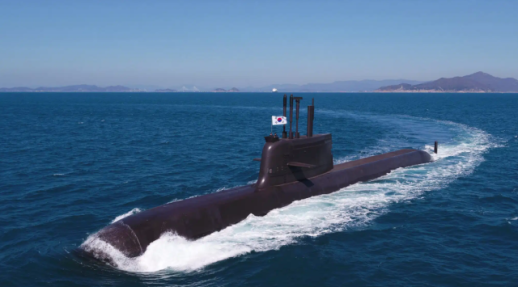 Korean industry minister flies to Canada after Team Korea submits bid for submarine deal SEOUL, March 04 (AJP) -South Korea’s industry minister will head to Canada this week to lend a final push to Team Korea’s bid for Ottawa’s multibillion-dollar submarine program, as Seoul throws its weight behind a national effort to secure one of the world’s largest naval procurement deals. Industry Minister Kim Jung-kwan is scheduled to depart Thursday for Canada to support a South Korean consortium competing for the Canadian Patrol Submarine Project (CPSP) — a program valued at up to 60 trillion won ($40 billion) to replace the Royal Canadian Navy’s aging fleet. The Korean team led by Hanwha Ocean and HD Hyundai Heavy Industries is competing against a European bid spearheaded by Germany’s Thyssenkrupp Marine Systems (TKMS), which is working with partners including Norway. Both sides submitted their final proposals to the Canadian government on Monday, moving the competition into its final phase. Kim’s trip will officially center on attending the completion ceremony for LG Energy Solution’s electric-vehicle battery plant in Ontario, but the visit is expected to double as a diplomatic push for the submarine bid. During the trip, he is expected to meet senior Canadian officials including Industry Minister Mélanie Joly to highlight Korea’s submarine construction capabilities and discuss broader industrial cooperation between the two countries. The CPSP program calls for the procurement of up to 12 conventionally powered submarines, with Canada aiming to deploy the vessels beginning in the early 2030s as its Victoria-class submarines approach retirement. Canadian officials have made clear that the winning bidder will be judged not only on capability, cost and delivery schedule but also on which proposal delivers the greatest economic and manufacturing benefits within Canada. That requirement has effectively turned the competition into a wider industrial partnership race. Hanwha Ocean has framed its proposal as the foundation for a long-term industrial partnership between South Korea and Canada, pledging investment in sectors including steel, artificial intelligence and space technologies. The company estimates the initiative could generate around 25,000 jobs annually between 2026 and 2044, while strengthening Canada’s marine manufacturing supply chain. Hanwha has also signed cooperation agreements with Canadian partners including Ontario Shipyards and Mohawk College to support workforce training and shipbuilding capability in Ontario. The plan includes establishing a shipbuilding training hub at the Hamilton shipyard aimed at addressing labor shortages in skilled trades and developing next-generation shipbuilding expertise. Hanwha Ocean is pitching its KSS-III class submarine, a platform currently operated by the Republic of Korea Navy. The design features lithium-ion batteries and an air-independent propulsion (AIP) system, allowing extended submerged endurance and a cruising range exceeding 7,000 nautical miles, along with Korean-developed sonar and combat systems. The company says it could deliver the first submarine by 2032 and four vessels by 2035, supported by what it describes as a firm delivery schedule and established supply chain. “In short, this is not just a platform pitch,” Charlie SC Eoh, president of Hanwha Ocean, said in a written response to the Canadian Press on March 2. “It is a risk-eliminated delivery plan paired with a generational industrial partnership that aligns with Canada’s defense industrial strategy.” The rival bid led by TKMS proposes a European partnership model. The German shipbuilder says it could deliver two submarines by 2034, though it has not publicly disclosed detailed cost or employment estimates. TKMS Chief Executive Oliver Burkhard described Canada’s procurement timeline — with a decision expected as early as mid-2026 — as “very ambitious,” noting that earlier plans had envisioned a decision closer to 2028 or 2029. The scale of the contract and Canada’s emphasis on domestic economic benefits have prompted a government-level lobbying push from Seoul, involving multiple ministries and defense agencies supporting the bid. South Korea’s Defense Acquisition Program Administration and other ministries have established a coordinated support framework aimed at facilitating technology transfer, training opportunities for Canadian submarine crews and broader defense-industrial cooperation. Kim’s visit follows an earlier trip to Canada in January alongside senior presidential officials to promote industrial collaboration and the submarine bid. Canada is expected to select the winning bidder as early as mid-2026, making the CPSP one of the largest defense procurement decisions in the country’s history. 2026-03-04 15:41:43