
Journalist

AJU PRESS
-
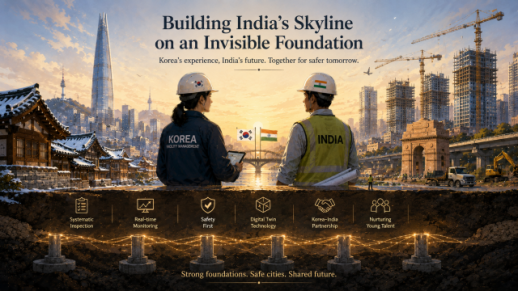 AJP Korea-India Essay Contest Winner: Bronze Prize SEOUL, May 15 (AJP) - As someone working at a facilities management corporation in Korea, the things I face most often are not the shining exteriors of buildings, but the invisible foundations and chains of safety measurements that support them. People often measure a city’s growth by the height of its skyscrapers. But from an engineer’s point of view, the true quality of a city is not about how high its buildings rise. It is about how safely those buildings can stand over time. Korea experienced rapid growth over the past several decades, and through many painful lessons, we built a detailed system for facility maintenance and safety management. When I think about this experience meeting today’s India — a country now going through one of the largest construction booms in the world — I believe the future value both countries can create together is limitless. India is currently one of the most dynamic countries in the world when it comes to building cities and infrastructure. Through projects such as the Smart Cities Mission and large-scale infrastructure development, roads, bridges, and high-rise buildings are being built every day. But from the perspective of a facility manager, construction is never the end point. It is only the beginning of a very long journey that may continue for decades. If the skill of raising a building is called “construction,” then the skill of keeping that building safe and alive for many years is called “facility management.” India’s construction market is expanding at an incredible speed, but the need for systematic maintenance and safety standards is growing just as quickly. As more structures are built, the importance of preventing large accidents and managing facilities properly becomes even greater. This is where a new form of trade between Korea and India can begin. In the past, trade mainly meant exchanging visible goods. But the trade of the future should involve sharing invisible values such as systems, knowledge, and safety. Korean facility management organizations have built strong experience in areas such as maintenance history systems, standardized inspections, and real-time monitoring technology. These systems could become powerful support for India’s massive infrastructure network. In particular, Korea’s advanced digital twin technology could work very well with India’s smart city projects. By creating virtual versions of real buildings, engineers can predict aging and risks before problems appear in real life. This is perhaps the most ideal form of cooperation: Korea’s advanced software technology meeting India’s enormous hardware market. I dream of a future where India’s talented young engineers learn Korea’s advanced facility management methods and apply them across infrastructure sites throughout India. Korea now needs new opportunities to share the knowledge and experience of its skilled safety experts, while India has a large and energetic workforce ready to absorb this expertise and protect the safety of its citizens. Indian engineers could manage their country’s growing skylines with the safety philosophy they learned from Korea, while Korea could continue improving its own maintenance technologies using the huge amount of data created through India’s expanding infrastructure projects. This would create a cycle where both countries grow together. More importantly, this is not only about technology. It is about sharing a culture that values human life and public safety above all else. In that sense, it is both a cultural partnership and a new form of trade. Facility management is never glamorous. It is a field that receives attention only when accidents do not happen. It works quietly in the shadows. But the stronger and deeper those shadows are, the brighter and taller the city above them can shine. Just as the Embassy of India and the Indian Cultural Centre have helped reduce the emotional distance between Korea and India, I believe the future relationship between the two countries should now grow further through practical cooperation in safety and infrastructure management. The small crack we inspect today may become the foundation for a much safer future tomorrow. In many ways, this idea closely reflects the theme of this contest: “Our Moments and Future.” When Korea’s experience and India’s energy come together to build a stronger foundation of safety, everyday life for Indian citizens will become more secure, and Korea’s safety industry will also gain new opportunities in the global market. I hope the sky we build together over India will be filled not with clouds of anxiety, but with the clear wind of trust. I truly believe that the path Korea and India walk together will ultimately become a road leading humanity toward a safer and more prosperous future. And I hope that the sincerity I have carried while quietly protecting people’s safety from unseen places will someday grow into something even greater above India’s rising skyscrapers. *The author, Choi Ji-su, is based in Korea. The author's writing was submitted in Korean, and was translated into English by AI. 2026-05-16 12:04:15
 -
 K-Art: Contemporary art in display at SETEC SEOUL, May 15 (AJP) -The '5th Seoul Art Fair (SAF),' diagnosing the present and envisioning the future of Korean contemporary art, opened at SETEC in Daechi-dong, Gangnam-gu, Seoul. The event features 160 gallery and individual exhibition booths with approximately 1,200 artists participating. Beyond a simple exhibition, it presents a new type of art market based on a clear direction of being 'artist-centered.' This year, artists from China, France, Germany, Japan, and other countries have joined to showcase diverse artworks, and a 'K-Art' exhibition promoting the globalization of Korean art is also being held. Visitors can directly communicate with artists, exchange information, and purchase desired works. The fair runs for four days from Thursday, May 14 through Sunday, May 17 at SETEC near Hakdong Station in Daechi-dong, Seoul. 2026-05-16 12:03:08
 -
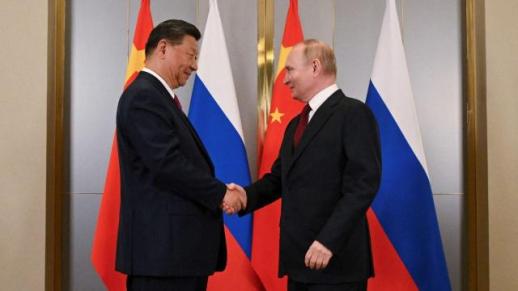 AJP Deep Insight: US-China Summit: Missing are the voices of Russia and EU No sooner had President Donald Trump concluded his summit with President Xi Jinping and departed China on May 15, 2026 than news emerged that Russian President Vladimir Putin would arrive in Beijing almost immediately afterward. On the surface, such a visit may not appear extraordinary. Putin has traveled to China many times before, and Sino-Russian summits have become familiar features of the geopolitical landscape. Yet this visit feels fundamentally different. The timing itself tells the story. That Putin is rushing to Beijing almost the moment the U.S.-China summit concludes suggests not confidence, but urgency. In international politics, true great powers project composure. Anxiety, especially visible anxiety, is often the first sign of diminishing strength. The war in Ukraine has exposed Russia’s structural vulnerabilities to the world. The successor state to the Soviet Union — once the only power capable of rivaling the United States globally — still possesses vast territory and immense nuclear capabilities. Yet the prolonged conflict has revealed the limitations of Russia’s economic foundation, industrial structure, and technological competitiveness. Most notably, the gap separating Russia from the world’s leading powers in semiconductors, artificial intelligence, aerospace systems, drones, and precision-guided weapons has proven far wider than many expected. The deeper problem lies in Russia’s economic architecture itself. Despite its geopolitical ambitions, Russia remains heavily dependent on oil, natural gas, and mineral exports. Such a model may generate temporary strength when commodity prices are high, but it is poorly suited for the defining industries of the 21st century. The emerging global order is increasingly driven by artificial intelligence, quantum computing, biotechnology, advanced semiconductors, and data infrastructure. In that race, Russia appears less like a future-oriented technological civilization and more like a resource empire struggling to preserve the remnants of past power. The European Union faces a different, but equally revealing, predicament. For decades, Europe was regarded as the world’s great civilian superpower — wealthy, stable, sophisticated, and morally influential. Yet the Ukraine war exposed profound structural weaknesses beneath that image. Europe’s industrial model had become deeply dependent on inexpensive Russian energy. Germany’s manufacturing engine has begun to lose momentum. France and Germany alike are facing weakening political leadership and rising internal fragmentation. Militarily, Europe still depends heavily on the American-led NATO framework for its ultimate security guarantees. As a result, the true geopolitical tigers of today’s world are no longer Russia and Europe, but the United States and China. The United States continues to dominate the global financial system, the dollar-based monetary order, advanced AI platforms, semiconductor design, and military power projection. China, meanwhile, commands the world’s largest manufacturing ecosystem, critical supply chains, rare earth resources, battery production, electric vehicles, and an enormous domestic market. The next tier of strategic powers may well belong not to Russia or Europe, but to Japan and South Korea. Japan remains a global leader in semiconductor materials, precision machinery, robotics, and industrial systems. South Korea has established unmatched competitiveness in memory semiconductors, AI infrastructure, batteries, shipbuilding, and digital cultural industries. Together with Taiwan’s semiconductor ecosystem, Northeast Asia has effectively become the oil field of the AI age. Russia and the European Union still possess military weight, historical prestige, and institutional influence. Yet in the decisive competition shaping the future — AI, platforms, semiconductors, and advanced technologies — they increasingly appear to be losing strategic momentum. In that sense, one might argue that they are gradually becoming “paper tigers”: outwardly formidable, yet drifting away from the true engines of future power. The recent U.S.-China summit symbolized precisely this transformation. Trump and Xi reportedly discussed Taiwan, North Korea, Iran’s nuclear issue, global supply chains, and the battle for AI supremacy. These are not isolated diplomatic topics. Together, they reveal the emergence of a new G2 era — not the bipolarity of the Cold War, but a new order shaped simultaneously by technology, finance, supply chains, AI, and geopolitical influence. In such an era, South Korea and Japan cannot afford to remain trapped indefinitely within the emotional architecture of 20th-century historical conflict. The wounds of colonial history are real and must never be trivialized. Memory and historical responsibility remain essential. Yet civilizations cannot survive on resentment alone. History must be remembered, but the future cannot be built solely upon inherited anger. The age of artificial intelligence is not merely a technological transition. It is ultimately a civilizational test. Humanity now faces a fundamental question: Will technology govern the human spirit, or will human wisdom govern technology? This is why the coming era must become what might be called a “Spirituality-Centered AI” age — an era in which ethics, philosophy, culture, and spiritual intelligence guide technological power. In this respect, South Korea and Japan represent a remarkably complementary partnership. South Korea possesses extraordinary dynamism, digital adaptability, semiconductor strength, and cultural influence. Japan contributes precision engineering, foundational scientific depth, industrial discipline, and systemic stability. Together, the two nations could form a civilizational and technological axis rivaled only by the United States and China. More importantly, Korea and Japan share a deeper cultural inheritance rooted in Confucian, Buddhist, and East Asian traditions. Unlike purely hegemonic models of power, these traditions emphasize harmony, balance, restraint, coexistence, and moral order. What Northeast Asia now requires is not politics imprisoned by yesterday’s emotions, but leadership capable of designing tomorrow’s civilization. The forthcoming meeting between Prime Minister Sanae Takaichi and President Lee Jae-myung in Andong should therefore not remain a mere diplomatic ceremony. It should become the starting point for a genuine Korea-Japan economic and technological community. The world is rapidly reorganizing itself into strategic blocs. The United States is consolidating North American supply chains. China is strengthening a Sinocentric economic sphere. Europe still operates through the EU single market. If Korea and Japan continue exhausting themselves in historical confrontation alone, both nations may ultimately become the greatest victims of their own division. A Korea-Japan economic community should not be understood merely as a free-trade arrangement. It should encompass joint semiconductor supply chains, AI collaboration, energy security partnerships, shared research and development, educational exchanges, digital finance systems, and future-oriented industrial integration. The I Ching (周易) offers a timeless insight:“When hearts are united, they can cut through metal.” That may be precisely what Korea and Japan now require — the courage to remember the past honestly while still choosing cooperation for the future. The most difficult obstacle, of course, remains the unresolved burden of history itself. Pain, suffering, and injustice cannot simply be erased. Yet civilizations do not endure through vengeance alone. The Tao Te Ching (道德經) teaches: “Respond to resentment with virtue.” Laozi’s wisdom was not naïve idealism. It was a philosophy of civilizational endurance — the belief that lasting order is built not upon endless retaliation, but upon moral restraint and higher equilibrium. The Dhammapada (法句經) expresses the principle even more directly: “Hatred is never ended by hatred. It is ended only by compassion. This is an eternal truth.” More than two thousand years later, those words remain painfully relevant to Northeast Asia. The Bible offers a parallel truth in Romans: “Do not be overcome by evil, but overcome evil with good.” This does not mean forgetting history. Rather, it means transcending the cycle of hatred in order to build a higher and more enduring order. The world’s great scriptures speak in different languages, yet they point toward the same horizon: reconciliation over vengeance, coexistence over perpetual hostility, and the courage to create a future greater than the wounds of the past. This is an age in which Trump, Xi, and Putin move the geopolitical chessboard. Yet the true challenge for Korea and Japan is not merely how to react to great powers, but how to avoid becoming permanently trapped beneath them. The time may finally have come for Korea and Japan to become a strategic axis of their own — not only for economic prosperity, but for the preservation of peace, balance, and civilizational wisdom in the AI age now unfolding before humanity. 2026-05-16 11:59:17
 -
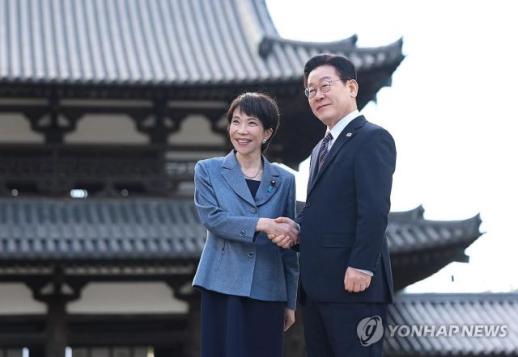 Are Russia and the EU Becoming Paper Tigers in Global Power Dynamics? Beijing is experiencing a peculiar tension this May. As President Donald Trump concludes his visit to China, news emerges that President Vladimir Putin of Russia is heading to Beijing immediately afterward. At first glance, this may seem like a familiar scene; Putin has visited China multiple times, and China-Russia summits are not unusual. However, this situation is different. The fact that President Putin is rushing to Beijing right after the US-China summit between Trump and Chinese President Xi Jinping indicates Russia's urgency. In international politics, powerful nations typically project confidence. Conversely, haste often reveals a weakening of power. The war in Ukraine has exposed Russia's vulnerabilities to the world. Despite being a successor to the Soviet Union, which once competed with the United States for global dominance during the Cold War, Russia has revealed limitations in its economic strength, industrial base, and technological capabilities amid a prolonged conflict. The gap between Russia and the West in advanced semiconductors, AI, space, drones, and precision-guided weapon systems is significantly larger than anticipated. A more serious issue is Russia's economic resilience. The country remains heavily dependent on oil, natural gas, and mineral resources. While it appears strong when energy prices are high, its industrial structure is far from a future-oriented advanced economy. In the 21st century, as industries shift towards AI, biotechnology, quantum computing, and next-generation semiconductors, Russia's economy is increasingly being sidelined. The European Union (EU) faces similar challenges. Once regarded as the world's largest economic bloc capable of countering the United States, the EU's structural weaknesses have been laid bare by the Ukraine war. Industries reliant on cheap Russian energy are faltering, and Germany's manufacturing sector shows signs of stagnation. Political leadership in France and Germany has also weakened. Militarily, Europe continues to rely heavily on the United States and NATO. Ultimately, the real power players shaping today's global order are the United States and China. The U.S. maintains dominance through its control of the dollar, military strength, AI platforms, semiconductor design technology, and the global financial system. China counters with its vast manufacturing capabilities, supply chains, rare earth elements, batteries, electric vehicles, and a massive domestic market. The next tier of power may belong to Japan and South Korea. Japan retains world-class competitiveness in semiconductor materials, equipment, precision machinery, and robotics. South Korea holds a unique position in memory semiconductors, AI infrastructure, batteries, shipbuilding, and the digital culture industry. Notably, the East Asian semiconductor belt, led by Samsung Electronics, SK Hynix, and TSMC, has become a strategic asset akin to oil in the AI era. In contrast, Russia and the EU, while still possessing military strength and remnants of past glory, are increasingly being pushed aside in the competition for future industries and AI platforms. To put it bluntly, they are becoming "paper tigers"—imposing in appearance but distanced from the technologies and platforms that drive the future. The recent US-China summit symbolically illustrates this reality. Trump and Xi reportedly discussed issues ranging from Taiwan and North Korea to Iran's nuclear program, global supply chains, and AI dominance. This underscores the reconfiguration of the global order around a G2 framework, distinct from the bipolar system of the Cold War era. This time, the G2 order integrates economics, technology, AI, data, supply chains, and finance. In such an era, South Korea and Japan must not remain trapped in outdated historical conflicts. While the past is undeniably significant, with the scars of colonialism and historical issues requiring remembrance and reflection, strategic cooperation for the future is equally essential amidst the monumental civilizational shifts of the 21st century. The AI era is not merely a time of technological competition; it is an age where human spirit, ethics, culture, and philosophy must guide technology. It is a time when humanity's spirituality and civilization should lead AI, marking the era of "Spirituality-Centered AI." In this context, South Korea and Japan could form a remarkable partnership. South Korea brings dynamism, digital transformation capabilities, and strengths in content and semiconductors. Japan contributes precision manufacturing, foundational science, craftsmanship, and system stability. If the two countries collaborate, they have the potential to emerge as a new axis in AI, semiconductors, biotechnology, energy, and cultural industries, following the United States and China. Moreover, South Korea and Japan share a civilizational foundation rooted in Confucianism, Buddhism, and the East Asian community. This is a civilization characterized not by a Western-style hegemonic model but by philosophies of coexistence, order, moderation, and balance. Therefore, what is needed now is not politics that dwells solely on past grievances but politics that designs the future. The upcoming meeting between Japanese Prime Minister Sanae Takaiichi and President Lee Jae-myung in Andong should not merely end as a diplomatic event. It should serve as a historic starting point for the two nations to advance toward a new economic and technological community. The world is moving into a significant era of bloc formation. The United States is establishing a North America-centered supply chain, while China is strengthening its economic sphere in the Chinese-speaking world. Europe operates based on the EU single market. If South Korea and Japan continue to consume each other in historical conflicts, they risk becoming the biggest victims of their own actions. The Korea-Japan economic community is not just a concept of free trade. It should evolve into a future-oriented strategic alliance encompassing AI semiconductor supply chains, energy security cooperation, joint research and development (R&D), future talent exchanges, and digital finance collaboration. The "I Ching" states, "Those who share the same intentions can even break metal (同心之言 其利斷金)." What South Korea and Japan need now is precisely that: the courage to remember past wounds while joining hands for the future and the determination to create a new order in East Asian civilization. The most challenging issue in Korea-Japan relations remains the historical grievances. History carries wounds and scars that cannot be erased. However, civilization does not endure solely through resentment. Memory is necessary, but a future cannot be built on hatred alone. The "Tao Te Ching" states, "If you repay hatred with hatred, hatred will never cease (報怨以德)." Laozi believed that softness lasts longer than strength and that virtue creates order rather than revenge. This is not a philosophy of defeat but a philosophy of civilization. The "Dhammapada" also teaches, "Hatred is not resolved by hatred, but by compassion. This is an eternal truth." The teachings of the Buddha from thousands of years ago still apply today in Northeast Asia. Inter-state relations cannot be sustained through endless hostility and hatred. Ultimately, understanding, moderation, and the wisdom of coexistence are essential. The Bible also contains a verse that states, "Do not be overcome by evil, but overcome evil with good." This does not imply forgetting. Rather, it suggests creating a higher order beyond the wounds. The great texts of human civilization may use different languages, but they ultimately point in the same direction: towards reconciliation, coexistence, and courage for the future, rather than the repetition of hatred. We live in an era where Trump, Xi, and Putin are active. However, what is truly important is the wisdom to not be dragged between great powers. Now, South Korea and Japan must become a unified axis. This may be the most realistic path to maintaining peace in Northeast Asia and opening up prosperity for future generations.* This article has been translated by AI. 2026-05-16 11:24:00
 -
 President Lee Jae-myung's Visit to Rural Areas Highlights Agricultural Issues President Lee Jae-myung's visit to rural areas in Andong, Gyeongbuk, and Gunwi, Daegu, where he engaged directly with residents, has been positively received. On Teacher's Day, he visited his former teacher, participated in rice planting, and conversed with farmers, clearly conveying a message of 'field-centered governance.' His commitment to personally inspecting the field, moving beyond a bureaucratic reporting system, is a significant approach to governance. However, if such actions remain one-time experiences or symbolic gestures, their policy impact will inevitably be limited. Field communication should be the starting point of policy, not the end goal. What the public expects is not 'politics of display' but 'politics that brings about change.' The key issues highlighted during this visit are agriculture and regional development. In the agricultural sector, the President's hands-on experience with rice planting is significant as it allows him to grasp the labor intensity faced by farmers. However, the structural problems in South Korean agriculture are already well-known, including an aging farming population, a lack of youth influx, and inefficiencies in production and distribution. According to data from the Statistics Korea and the Ministry of Agriculture, Food and Rural Affairs, the farming population continues to decline, with the aging rate exceeding 40%. While the production base weakens, improvements in the distribution structure are slow. These issues cannot be resolved merely through field experiences or empathetic messaging. Practical policy measures such as expanding smart agriculture, reducing distribution stages, and strengthening price stabilization mechanisms must be implemented concurrently. The issue of the Daegu-Gyeongbuk Integrated New Airport is similarly complex. This large infrastructure project, pursued by the city of Daegu and Gyeongbuk Province, faces significant challenges, including funding methods and project delays. Concerns have arisen regarding the sustainability of the project, particularly as the financial burden on local governments increases. This matter requires a structural response at the central government level, going beyond simple field inspections. Without a review of financial support methods, project restructuring, and the establishment of a risk-sharing system, the issues of project delays and cost increases are likely to recur. Ultimately, the key question is whether field communication translates into policy. If the opinions gathered from the field do not lead to actual institutional improvements, the significance of communication will be limited. Policies are evaluated based on concrete execution and results. In particular, issues related to agriculture and regional development are structural challenges that cannot be resolved with short-term solutions. With population decline and industrial structural changes occurring simultaneously, many argue that existing policy frameworks are insufficient to respond effectively. Therefore, an approach that redesigns the entire system, rather than merely expanding support, is necessary. The advantage of field visits lies in the ability to directly verify reality. However, this also increases the responsibility for policy. If issues are identified but do not lead to change, the gap between expectations and reality may widen. The President's recent actions are significant in that they clearly establish a 'field-centered' direction. However, future evaluations of governance will be determined not by these actions themselves but by their outcomes. Concrete results such as improving agricultural income, revitalizing local economies, and mitigating project risks must follow to enhance the completeness of policies. Politics begins with messaging but is evaluated based on results. The field has been sufficiently showcased. Now, what is needed is the speed and execution of policies. It is time to respond with results, not just images.* This article has been translated by AI. 2026-05-16 11:15:58
 -
 Trump and Xi Discuss North Korea at US-China Summit: Can Peace Prevail on the Peninsula? In May 2026, the US-China summit held at the Great Hall of the People in Beijing was more than just a diplomatic event between the two nations' leaders. It was a pivotal moment where the world's largest strategic competitors, the United States and China, recalibrated the direction of global order amid a delicate balance of conflict and cooperation. Central to these discussions was the ongoing issue of North Korea. President Donald Trump stated shortly after the meeting that he had discussed the North Korean issue with President Xi Jinping. This brief comment prompted immediate reactions from the international diplomatic community, signaling that North Korea had once again become a key topic in the US-China strategic dialogue. For decades, the North Korean issue has been one of the most dangerous flashpoints in the international order of Northeast Asia. For the United States, it represents a nuclear threat; for China, it is a matter of regime stability and a buffer zone; for South Korea, it is a question of survival amid the specter of war and peace. Japan views it through the lens of security anxiety, while Russia sees it as a geopolitical issue linked to its Far East strategy. Recent visits by Chinese Foreign Minister Wang Yi to Pyongyang underscore this trend. His first visit to the North Korean capital in over six years sent a significant political message. Following the COVID-19 pandemic and the Ukraine war, relations between North Korea and China have been marked by a new level of tension. North Korea has rapidly strengthened its ties with Russia, while China has appeared to distance itself somewhat. Since the Ukraine war, the relationship between North Korea and Russia has evolved into a military alliance. Russian President Vladimir Putin and North Korean leader Kim Jong Un have strengthened strategic cooperation through summit meetings, with Western intelligence suggesting that North Korea has provided munitions and military supplies to Russia. In return, Russia has offered military technology, energy, and food assistance to North Korea, deepening their ties. From North Korea's perspective, Russia has become a strategic ally that alleviates the pressure of international sanctions. Meanwhile, Russia, facing a protracted conflict in Ukraine, has found a military supply chain in North Korea. The interests of both nations have aligned. However, for China, North Korea's excessive alignment with Russia is an unwelcome scenario. North Korea falls within China's traditional sphere of influence, and Beijing does not desire a sudden change in the Korean Peninsula's status quo, nor does it want North Korea to tilt entirely toward Russia. Thus, Wang Yi's visit to North Korea is seen as an effort to restore and reaffirm China's influence in the region. Interestingly, the relationship between President Trump and Kim Jong Un remains significant. Trump has repeatedly emphasized that he maintains a good relationship with Kim. The unprecedented diplomacy displayed during their meetings in Singapore and at the Panmunjom border surprised the world. However, since the collapse of the Hanoi summit, US-North Korea relations have effectively stalled. Kim has grown increasingly distrustful of the United States, while Trump has had to deprioritize the North Korean issue amid domestic political pressures. Nonetheless, Trump still aspires to be remembered as the US president who resolved the North Korean nuclear issue and achieved peace on the Korean Peninsula. The motivation behind this ambition is clear. Resolving the North Korean issue transcends mere diplomatic achievement; it carries the potential for a Nobel Peace Prize-level significance. No US president has fundamentally resolved the North Korean nuclear issue in history. If Trump can achieve tangible progress in freezing North Korea's nuclear program, implementing phased denuclearization, and establishing a peace regime, it could be recorded as one of the greatest diplomatic accomplishments since the Cold War. However, the reality in North Korea is challenging. Recently, North Korea has rapidly advanced its nuclear weapons systems and defense industry. It is moving beyond simple nuclear development to establish a multi-layered nuclear capability, including tactical nuclear systems, solid-fuel intercontinental ballistic missiles (ICBMs), hypersonic missiles, and submarine-launched ballistic missiles (SLBMs). This represents a qualitative shift from the past. North Korea now views nuclear possession not as a bargaining chip but as an absolute condition for regime survival. The Kim regime has elevated nuclear power to a constitutional level of national strategy, while the defense industry has been restructured as a core pillar of the national economy. The expansion of military cooperation with Russia is introducing new variables into North Korea's defense industry modernization. Discussions of military technology exchanges and potential satellite technology cooperation are emerging. North Korea aims to strengthen its asymmetric capabilities to withstand US military pressure. In this context, South Korea's role is becoming increasingly important. President Lee Jae-myung has recently emphasized the need for easing tensions between the two Koreas and establishing a phased peace roadmap. His approach advocates for restoring dialogue through economic cooperation, military tension reduction, and humanitarian exchanges. The Lee administration is particularly inclined to approach the Korean Peninsula issue not merely as an ideological confrontation but as a matter of survival and economics. As the possibility of war increases, the South Korean economy, financial markets, and foreign investment sentiment face direct threats. However, the reality is complex. The United States is strengthening security cooperation with South Korea and Japan to counter China, while Japan is accelerating its defense spending and long-range strike capabilities. Conversely, North Korea, Russia, and to some extent China are strategically aligning, creating a new Cold War atmosphere in Northeast Asia. Some analysts suggest that a de facto 'US-South Korea-Japan versus North Korea-China-Russia' structure is already forming in Northeast Asia. This implies the potential emergence of a collective security framework similar to NATO in Europe. Yet, Northeast Asia is distinct from Europe. Its history, ethnicities, and economies are far more intricately intertwined. China and the United States are each other's largest trading partners, even as they clash, and South Korea's security is deeply connected to the US while its economy is intertwined with China. The North Korean issue is not merely a military concern but is also intertwined with regime stability, history, economics, and ethnicity. The ancient Chinese text, the Dao De Jing, states, "A great nation should remain lowly." This suggests that stronger nations should prioritize humility and order over power. This sentiment resonates deeply in today's US-China relations and the Korean Peninsula issue. Additionally, the Analects of Confucius states, "The noble person seeks harmony but does not seek sameness; the petty person seeks sameness but cannot achieve harmony." This reflects the ancient wisdom of East Asian civilization, advocating for coexistence and harmony despite differing systems and ideologies. The Buddhist Dhammapada also teaches, "Hatred does not cease by hatred, but only by love." This ancient wisdom prompts us to reconsider what the last hope for human civilization is amid nuclear weapons, missiles, military alliances, and hegemonic competition. Ultimately, the path to peace is not easy. However, paradoxically, the higher the tension, the greater the need for dialogue. Nuclear weapons, missiles, military alliances, and strategic competition alone cannot resolve the future of the Korean Peninsula. The discussions between President Trump and President Xi on the North Korean issue may have reaffirmed this reality. Great powers often rediscover the necessity of negotiation just before the brink of conflict. Likewise, the prospect for peace on the Korean Peninsula may gradually advance through a cycle of confrontation and negotiation. Spring does not arrive overnight. Yet, throughout history, humanity has always awaited spring after a long winter. The same applies to peace on the Korean Peninsula. Today, Northeast Asia stands under a vast geopolitical cloud, but within it, the refusal to abandon the possibilities of dialogue, restraint, and mutual coexistence is the true beginning of diplomacy.* This article has been translated by AI. 2026-05-16 11:03:00
 -
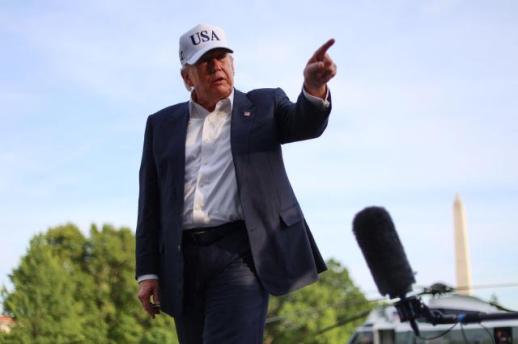 Asia Deep Insight: North Korea mention between Trump and Xi, what next? SEOUL, May 16 (AJP) -The spring of 2026 may well be remembered as a turning point in the strategic history of Northeast Asia. In Beijing’s Great Hall of the People, President Donald Trump and President Xi Jinping sat face to face once again, navigating the uneasy frontier between rivalry and coexistence. Beneath the ceremonial grandeur and diplomatic choreography lay a reality far more consequential: the North Korean question had returned to the center of global geopolitics. After the summit, President Trump publicly confirmed that he and Xi had discussed North Korea. The remark was brief, almost casual in tone, yet within diplomatic circles it carried enormous weight. It signaled that the Korean Peninsula — long overshadowed by the wars in Ukraine and the Middle East, as well as mounting tensions surrounding Taiwan — had once again become one of the defining strategic issues of the 21st century. For decades, North Korea has represented one of the world’s most dangerous geopolitical fault lines. To the United States, it has been a nuclear challenge. To China, it has been a question of regime stability and strategic buffer zones. To South Korea, it has remained an existential matter of war and peace. Japan has viewed it through the lens of regional security anxiety, while Russia has regarded it as part of its broader Far Eastern calculus. Against this backdrop, the recent visit by Chinese Foreign Minister Wang Yi to Pyongyang carried extraordinary symbolic significance. It marked the first visit by a Chinese foreign minister to North Korea in six years and seven months. In diplomacy, timing is often more important than words, and Beijing’s decision to send its top diplomat back to Pyongyang was itself a carefully crafted message. Since the COVID-19 pandemic and the outbreak of the Ukraine war, relations between China and North Korea had shown visible strains beneath the surface. Pyongyang moved increasingly closer to Moscow, while Beijing appeared, at least outwardly, to maintain a degree of strategic distance. The war in Ukraine accelerated that transformation. Relations between President Vladimir Putin and North Korean leader Kim Jong Un deepened rapidly, evolving into what many analysts now describe as a quasi-military alliance. Western intelligence agencies have repeatedly suggested that North Korea supplied artillery shells and military equipment to Russia, while Moscow, in turn, provided Pyongyang with energy assistance, food support, and potentially sensitive military technologies. For North Korea, Russia became a critical geopolitical lifeline amid intensifying international sanctions. For Russia, isolated by the West and burdened by a prolonged war, North Korea emerged as a useful military supplier and strategic partner. Their interests converged naturally. Yet from Beijing’s perspective, an excessively Russia-oriented North Korea was hardly an ideal outcome. North Korea has historically existed within China’s strategic orbit. Beijing has no desire to see instability or sudden collapse on the Korean Peninsula, nor does it wish to lose influence over a neighboring state central to China’s security architecture. Wang Yi’s visit, therefore, was widely interpreted as an effort to restore strategic equilibrium and reaffirm Beijing’s relevance in Pyongyang. Equally intriguing is the still-unfinished relationship between Donald Trump and Kim Jong-un. President Trump continues to emphasize that he maintains “a very good relationship” with Kim. The summits in Singapore and Hanoi, followed by the dramatic encounter at Panmunjom, produced scenes unprecedented in modern diplomacy. For a moment, it appeared as though decades of hostility might yield to an entirely new chapter. Yet the collapse of the Hanoi summit plunged U.S.-North Korea relations back into paralysis. Kim Jong Un’s distrust of Washington deepened, while Trump, consumed by domestic political pressures and the escalating confrontation with China, was forced to shift his strategic priorities. Even so, Trump appears unwilling to abandon the possibility of a historic breakthrough. He still seems to believe that resolving the North Korean nuclear issue — or at least fundamentally reducing the threat — could become the defining diplomatic achievement of his presidency. The reason is not difficult to understand. No American president has ever fully resolved the North Korean nuclear crisis. A meaningful agreement involving nuclear freezes, phased denuclearization, or a formal peace mechanism on the Korean Peninsula would rank among the most consequential diplomatic accomplishments since the end of the Cold War. The challenge, however, lies in the transformed reality of North Korea itself. Pyongyang is no longer merely developing nuclear weapons; it is constructing an integrated nuclear state. Its arsenal now includes tactical nuclear systems, solid-fuel intercontinental ballistic missiles, hypersonic weapons, and submarine-launched ballistic missiles. The sophistication and diversity of these capabilities reflect a strategic doctrine far beyond earlier phases of nuclear brinkmanship. North Korea increasingly treats nuclear weapons not as bargaining chips, but as the ultimate guarantee of regime survival. Kim Jong Un has elevated nuclear power to a constitutional and ideological pillar of the state, while restructuring the country’s defense industry into one of the regime’s central economic engines. Russia’s growing military cooperation with Pyongyang has further accelerated this transformation. Speculation regarding technology transfers — including satellite and missile technologies — has intensified among security analysts. North Korea seeks to build an asymmetric deterrence structure capable of withstanding overwhelming American military pressure. In this environment, South Korea’s role becomes more crucial than ever. President Lee Jae Myung has recently emphasized the necessity of rebuilding a gradual roadmap for inter-Korean peace. His approach prioritizes economic cooperation, military de-escalation, and humanitarian engagement as parallel tracks toward restoring dialogue. Unlike purely ideological frameworks of the past, Lee’s perspective appears grounded in practical national interest. Heightened tensions on the Korean Peninsula directly threaten South Korea’s economy, financial markets, and long-term investment stability. Peace, in this sense, is not simply a moral aspiration; it is an economic imperative. Yet the geopolitical environment surrounding the peninsula grows more complex by the day. The United States is strengthening trilateral security cooperation with South Korea and Japan as part of its broader strategy to counter China. Japan, meanwhile, continues expanding its defense capabilities and long-range strike systems. On the other side, North Korea, Russia, and to a certain extent China are drawing closer strategically, giving rise to what some analysts increasingly describe as a new Cold War configuration in Northeast Asia. Some observers even argue that the region is moving toward a de facto alignment resembling “U.S.-Japan-South Korea versus North Korea-China-Russia.” In such discussions, comparisons to NATO naturally emerge. But Northeast Asia is not Europe. Its history, economies, civilizations, and national identities are far more deeply intertwined. China and the United States remain fierce strategic rivals, yet they are simultaneously bound together by enormous economic interdependence. South Korea relies on the United States for security while depending heavily on China economically. The Korean Peninsula itself is not merely a military issue, but a convergence point of history, ideology, nationalism, economics, and civilization. Ancient wisdom offers an enduring perspective on these dilemmas. In the Tao Te Ching (道德經), there is a profound passage: “A great nation should place itself low, like the waters beneath all streams.” True strength, Laozi suggests, lies not in domination but in restraint and humility. It is a lesson that resonates powerfully in an era of nuclear rivalry and geopolitical competition. The Analects (論語) of Confucius offer another timeless insight: “The noble man seeks harmony without uniformity; the petty man seeks uniformity without harmony.” Civilizations need not become identical in order to coexist peacefully. Diversity and coexistence are not contradictions; they are the foundation of durable order. The Buddhist Dhammapada (法句經) speaks even more directly to the modern world: “Hatred is never ended by hatred, but by compassion alone.” Thousands of years after those words were first written, humanity still struggles to learn their meaning. The path to peace on the Korean Peninsula will not be easy. Yet paradoxically, the greater tensions become, the more necessary dialogue itself becomes. Nuclear weapons, military alliances, and strategic deterrence alone cannot provide a permanent future for Northeast Asia. Perhaps that is the deeper meaning behind Trump and Xi’s discussion of North Korea in Beijing. Great powers often rediscover the necessity of negotiation precisely when confrontation appears most dangerous. Spring never arrives in a single day. It emerges slowly, almost imperceptibly, after a long and unforgiving winter. Today, Northeast Asia stands beneath heavy geopolitical clouds. Yet even amid rivalry, sanctions, missile tests, and military alliances, the possibility of dialogue still survives. And perhaps that fragile possibility — the refusal to abandon coexistence — remains the true beginning of diplomacy itself. 2026-05-16 10:51:24
 -
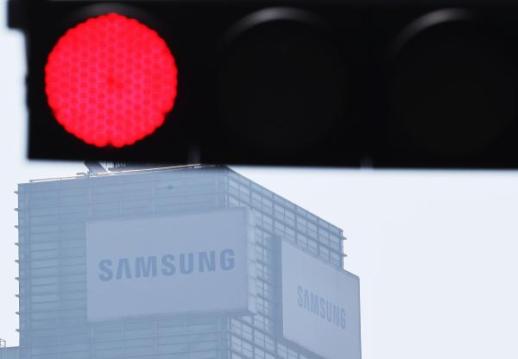 Samsung Warns Against Coercion Ahead of Planned Strike Samsung Electronics is reminding employees that participation in a planned general strike by the union should not be coerced, as tensions rise within the company just days before the strike is set to begin. The company appears to be taking steps to stabilize its organization amid increasing conflicts between business divisions and signs of internal division within the union.According to Yonhap News on May 16, the semiconductor division of Samsung Electronics recently sent an email to department heads stating, "Some employees have reported feeling psychological pressure during discussions about participation in strike activities."The email emphasized that "the decision to participate in strike activities should be made freely by each employee" and requested careful management to prevent any pressure or conflict that could harm employees.The company also cited Article 38, Section 1 of the Labor Union Act, which prohibits the use of violence or intimidation to persuade or solicit participation in strike activities.Additionally, the email urged department heads to inform employees that if they experience difficulties or feel pressured due to repeated requests for participation against their will, unauthorized inquiries about others' attendance, or any other related issues, they should report these concerns to the company or seek assistance through the organizational culture SOS program.Industry analysts suggest that Samsung is proactively managing internal conflicts and divisions ahead of the general strike.The union has announced a general strike from May 21 to June 7, demanding transparency and institutionalization of performance bonuses. If the strike occurs, it is projected to result in losses of up to 100 trillion won.* This article has been translated by AI. 2026-05-16 10:48:54
 -
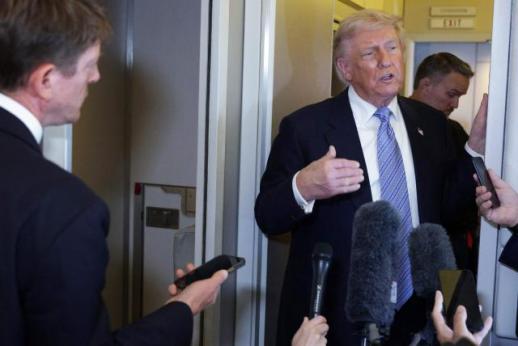 Trump Considers Lifting Sanctions on Chinese Firms Importing Iranian Oil President Donald Trump announced he is considering lifting sanctions on Chinese companies that import Iranian oil. According to Yonhap News, Trump made the remarks on May 15 while speaking to reporters aboard Air Force One after his state visit to China. He stated, "I discussed the issue of sanctions with Chinese President Xi Jinping. A decision will be made in the coming days." When asked whether Xi had committed to pressuring Iran to reopen the Strait of Hormuz, Trump replied, "I do not ask for any favors. If you ask for a favor, you must reciprocate." He added, "I believe Xi is already interested in reopening the Strait of Hormuz, as China derives a significant portion of its oil from the Gulf. In contrast, the U.S. does not need it at all." Earlier, on May 11, the U.S. Treasury Department designated three individuals and nine companies as targets for sanctions for supporting the export of Iranian oil to China. Among the sanctioned companies, four are based in Hong Kong. On May 1, the Treasury also imposed sanctions on Chinese companies and individuals identified as conduits for importing Iranian petroleum, and on May 8, it sanctioned ten entities involved in supporting Iran's weapons and drone production, including companies and individuals from China and Hong Kong.* This article has been translated by AI. 2026-05-16 10:18:48
 -
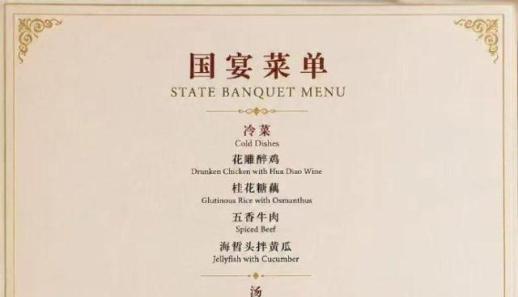 ASIA INSIGHT: Why Xi Jinping's table moves world Lleaders What is the oldest surviving language of international politics? It is not the language of armies. Nor is it the language of money. More often than we admit, it is a bowl of noodles, a slice of roast duck, a cup of tea. China has understood this for centuries. As Confucius taught in The Analects, “In the practice of ritual, harmony is the most precious.” Long before diplomacy became communiqués, sanctions and summit statements, Chinese civilization learned to read the other side across the table. During U.S. President Donald Trump’s latest visit to Beijing, China once again displayed the subtle art of what may be called culinary diplomacy. At the final working luncheon hosted by President Xi Jinping, the signature dish was not an extravagant imperial delicacy. It was gongbao jiding — Kung Pao chicken, the famous Sichuan dish of diced chicken, chili peppers and peanuts. On the surface, it is a familiar popular dish. But in Chinese diplomacy, food is never merely food. It is a code, a gesture, a message. Kung Pao chicken is among the Chinese dishes most deeply rooted in American society. It recalls the long history of Chinese migrants who crossed the Pacific in the 19th century, working on railroads, in mines and on farms, carrying with them the flavors of home. Over time, its spicy yet approachable taste became part of America’s Chinese culinary imagination. China placed that dish once again before Trump. There was also a play on language. Trump’s Chinese name is often rendered as Chuanpu. Sichuan cuisine is known as chuancai. The resonance was unmistakable. The heat of Sichuan cooking and the blunt force of Trump’s political style were joined in a single diplomatic wink. It was diplomacy with humor; symbolism with seasoning. The state banquet held the previous evening at the Great Hall of the People was even more carefully designed. It was not a simple parade of Chinese classics. It preserved the dignity of Chinese cuisine while taking account of Trump’s palate, Western preferences and the habits of American hospitality. The menu included Peking duck, one of the great emblems of Beijing. Roasted whole until the skin is crisp and the meat tender, Peking duck is not only a dish. It is a declaration of capital, court and civilization. Alongside it came Cantonese lobster soup, crispy beef, low-temperature salmon with mustard sauce, Chinese pan-fried dumplings, conch-shaped pastries and, finally, tiramisu. The composition was eloquent. Peking duck represented tradition and imperial memory. Cantonese seafood suggested openness and cosmopolitan refinement. Salmon with mustard sauce offered a Western note. Tiramisu gently extended the table toward Europe. Nothing was forced. East and West were not made to collide; they were arranged to converse. In that banquet lay a miniature portrait of the U.S.-China relationship itself: rivalry, yes; but also interdependence, recognition and the impossibility of total separation. Even the music carried meaning. American and Chinese songs were reportedly mixed in equal measure. Most strikingly, “YMCA,” a song often used at Trump’s campaign rallies, was played. Beijing had studied not only the American president’s office, but also his temperament, theater and personal symbolism. The Art of War teaches that the highest form of victory is to win without fighting. Chinese diplomacy, at its most refined, sometimes designs a banquet table more precisely than a missile system. Nor was this culinary diplomacy reserved for Trump alone. When South Korean President Lee Jae-myung visited China earlier this year, Xi presented him with Beijing-style zhajiangmian. This was not the sweet, dark, Korean-style jajangmyeon familiar to Korean diners, but the saltier, earthier northern Chinese original. Xi reportedly encouraged Lee to taste the difference between the Chinese and Korean versions. That was no casual remark. Jajangmyeon itself is a shared memory between Korea and China. It originated with Chinese migrants from Shandong and later evolved into a distinctly Korean comfort food. China knows this history. By placing the dish on the table, Xi was not merely offering noodles. He was offering a reminder that even amid rivalry and unease, the two countries share a civilizational memory. For Russian President Vladimir Putin, the table changes again. Chinese banquets for Russian leaders tend to lean toward the hearty, the northern and the continental: richer meats, stronger flavors, lamb, duck, seafood prepared with weight and warmth, sometimes paired with Chinese baijiu and the Russian affection for vodka. This, too, is not accidental. It conveys the symbolism of two great continental powers. The menu becomes a geography of Eurasia. It says: we are not maritime strangers; we are neighbors of the landmass. When French President Emmanuel Macron comes to Beijing, the tone shifts once more. France treats cuisine as a pillar of national identity, and China responds accordingly. The table becomes more delicate, more aesthetic, more alert to wine, tea, seafood, dessert and the rituals of cultivated taste. China’s message to France is clear: China is not merely a factory of the world. It is also a civilization. With German chancellors, the mood is different again. German political culture prizes order, restraint, reliability and function. Chinese hospitality in such settings often favors balance over spectacle: clean fish dishes, mushrooms, vegetables, restrained courses and structured pacing. It is a table of trust, stability and industrial seriousness. Thus, in Chinese diplomacy, a meal is never just a meal. It is history, psychology, strategy and civilization arranged in courses. China has long been a civilization of crossroads. Along the Silk Road passed merchants, monks, soldiers, envoys and ideas. At those crossings, China learned that to feed a guest is also to study him; to honor his taste is to measure his mind. The Tao Te Ching says, “A great nation is like the lowland toward which all streams flow.” A truly great power must know how to receive, absorb and accommodate. At its best, China tries to enact that philosophy at the dining table. None of this means that geopolitics has become gentle. The U.S.-China rivalry remains severe. Semiconductors, artificial intelligence, Taiwan, the South China Sea, tariffs and strategic mistrust continue to weigh heavily on the relationship. The world is not softened by duck skin, noodles or tea. And yet, it matters that even adversaries still make room for respect at the table. Trump eats Peking duck. Xi prepares a dish familiar to American Chinese culture. Lee tastes Beijing-style zhajiangmian. Putin is welcomed with the flavors of the northern continent. Macron is met through refinement and wine-like delicacy. German leaders are greeted with order, balance and restraint. In the end, international politics is conducted by human beings. And human beings remember meals. Perhaps the world order does not change only in summit halls, treaty rooms or military command centers. Perhaps it also changes quietly in the banquet rooms behind them — between a plate of Kung Pao chicken and a bowl of zhajiangmian, between Peking duck and a cup of tea, where nations still search, however cautiously, for a language more graceful than conflict. 2026-05-16 09:50:01