
Journalist

AJU PRESS
-
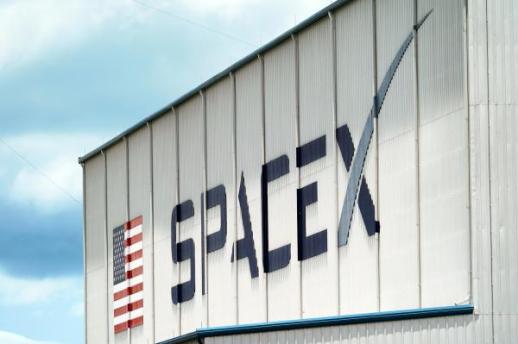 SpaceX Plans IPO, Targeting Nasdaq Listing on June 12 SpaceX, the private space company considered the largest player in this year's global IPO market, is expected to launch its initial public offering as early as next month. According to Yonhap News on May 16, Reuters and CNBC reported that SpaceX has accelerated its IPO schedule, aiming for a Nasdaq listing on June 12. The reports indicate that SpaceX plans to release its investment prospectus soon and conduct a roadshow for investors on June 4. The IPO price is expected to be finalized on June 11, with the listing taking place the following day. Initially, many anticipated that the IPO would occur around June 28, coinciding with the birthday of founder Elon Musk. However, the timeline has been moved up due to the faster-than-expected review process by the U.S. Securities and Exchange Commission (SEC). The SpaceX IPO is a major focus for the global financial market this year. Following its merger with AI company xAI in February, SpaceX's valuation is estimated at approximately $125 billion. The company reportedly aims to raise between $70 billion and $75 billion through this IPO. If SpaceX meets market expectations for fundraising, it would surpass the previous record of $29 billion set by Saudi Arabia's state-owned oil company Aramco in 2019. SpaceX operates satellite-based internet service Starlink and the large spacecraft Starship program. The funds raised from the IPO are intended for the construction of Starship, AI data centers, and lunar base projects.* This article has been translated by AI. 2026-05-16 09:39:56
 -
 Gas Prices Surge for Seventh Consecutive Week, Seoul Gasoline Hits 2050 Won Domestic gasoline and diesel prices at gas stations have risen for the seventh consecutive week. According to the Korea National Oil Corporation's oil price information system, Opinet, the average price of gasoline nationwide for the second week of May (May 10-14) increased by 0.6 won per liter to 2011.8 won. In Seoul, the price rose by 0.8 won to 2051.8 won, maintaining the 2050 won range for the second week in a row, the highest in the country. The lowest price was recorded in Daegu, remaining unchanged at 1995.8 won. Diesel prices also continued to rise, with the average price increasing by 0.8 won to 2006.2 won this week. International oil prices experienced fluctuations following discussions about the potential end of the Middle East conflict during a summit between the U.S. and China. However, as no concrete outcomes emerged, prices began to rise again. As of May 15, Brent crude for July delivery was priced at $109.26 per barrel, a 3.4% increase, while West Texas Intermediate (WTI) for June delivery rose by 4.2% to $105.42 per barrel. Typically, changes in international oil prices are reflected in domestic gas station prices with a delay of 2 to 3 weeks. Consequently, market analysts predict that if the recent surge in international oil prices continues, domestic fuel prices may face increased upward pressure. Meanwhile, the government has frozen the fifth round of maximum oil prices, which took effect on May 8. As a result, gasoline prices remain at 1934 won per liter, diesel at 1923 won, and kerosene at 1530 won.* This article has been translated by AI. 2026-05-16 09:24:52
 -
 KOSPI Plummets After Brief Surge, Signaling Market Reality Check The KOSPI's brief celebration of surpassing the 8,000 mark was short-lived. On May 15, the KOSPI soared to 8,046.78 during trading but closed at 7,493.18, marking a 6.12% drop in just one day. The KOSDAQ also fell by 5.14%. After an impressive 21% surge over eight trading days, the market hit a sudden halt. Despite the correction, the KOSPI remains up 13.55% compared to the end of last month and 77.81% year-over-year. While the decline was significant, the preceding rise was even more abnormal.This sharp drop signifies more than just profit-taking; it indicates that the market is beginning to reassess fundamentals and macroeconomic realities.As of May 14, the KOSPI's 50-day deviation had surged to 131%. Analysts noted, "During the dot-com bubble, the 50-day deviation reached 130%, followed by a short-term correction within 1 to 3 weeks," highlighting the clear signs of overheating. The recent AI and semiconductor boom had overshadowed interest rates, oil prices, and geopolitical risks, making the South Korean stock market one of the most overheated globally. However, financial markets ultimately revert to fundamentals such as earnings, interest rates, inflation, and exchange rates.The core of this correction lies in inflation and the global bond market. The yield on the U.S. 10-year Treasury bond soared to 4.59%, reaching its highest level in nearly a year, while the 30-year yield exceeded 5.12%, the highest since 2007. Japan's 30-year bond yield surpassed 4% for the first time, and the UK's 30-year yield climbed to 5.85%, the highest since 1998.The Wall Street Journal reported, "A sharp sell-off in Japanese and British bonds has spilled over into the U.S. market," marking a rare simultaneous disturbance in the global bond market. On the same day, South Korea's 10-year government bond yield jumped by 13.2 basis points to 4.217%, creating a typical risk-averse environment where stocks, bonds, and exchange rates all fluctuated simultaneously.The turmoil in the bond market is clear. With the prolonged war in Iran pushing international oil prices back above $100 per barrel, the market has begun to recognize the reality of prolonged high interest rates. According to the Financial Supervisory Service, Brent crude has surged by 73.74% and WTI by 76.19% compared to the end of last year.With approximately 20% of the world's oil maritime traffic passing through the Strait of Hormuz, the unresolved risks in the region could lead to rising logistics costs and energy prices, further fueling global inflation pressures. The CME FedWatch indicates that the likelihood of a 0.25 percentage point rate hike in December has jumped from 13.6% to 50% in just a week, reversing expectations for a rate cut by the Federal Reserve.Additionally, a change in the Federal Reserve's leadership adds another variable. May 15 marked the last day of Jerome Powell's term, with Kevin Warsh taking over as the new chair. Société Générale stated, "The instability in the bond market will be the first test for Warsh's administration." The market is closely watching how the new chair manages expectations amid a potential resurgence of inflation.These warning signals from the market have been ignored for too long. The recent U.S.-China summit failed to deliver a substantial breakthrough beyond restoring relations. Geopolitical risks surrounding Taiwan remain unchanged. Nevertheless, global markets have continued their overheated rally, relying solely on optimism surrounding AI.The shock to the South Korean market has been particularly severe. On the same day, Japan's Nikkei fell by 1.99% and Taiwan's market by 1.39%, while the KOSPI plummeted by over 6%. The won-dollar exchange rate surged to 1,500.8 won. Strengthening U.S.-China cooperation has diminished expectations for domestic semiconductor, power equipment, and solar sectors. Major semiconductor stocks that had previously boosted the index, such as Samsung Electronics (-8.61%) and SK Hynix (-7.66%), contributed to the decline.Foreign capital outflows are also concerning. On May 15, foreign investors sold a net 6.3173 trillion won in the stock market, bringing the total net sales for the year to 98.2 trillion won. Foreign selling has continued for seven consecutive trading days. While AI and semiconductors had driven the market up, the resurgence of global interest rates and the dollar prompted foreign funds to exit first.However, this correction should not be immediately interpreted as a collapse. The semiconductor industry and the AI investment cycle remain intact. Customer deposits still exceed 130 trillion won, indicating a favorable liquidity environment, and the KOSPI valuation is considered undervalued compared to major global markets.Yet, the market is now factoring in not just growth stories but also interest rates and liquidity costs. In an environment of rising long-term rates, it becomes challenging to justify high valuations based solely on future expectations.What is needed now is a return to fundamentals. The government and financial authorities should focus on stabilizing exchange rates and the bond market, managing excessive leverage and credit concentration, rather than merely defending short-term indices. Investors must also break free from the crowd mentality of "it will always go up" and critically assess corporate earnings, cash flow, debt, and interest rate sensitivity.This recent Black Friday may not just be a panic reaction but part of the market's return to normalcy. The end of an abnormal hyper-rally has brought inflation and interest rates back to the forefront of market considerations. Ultimately, the market cannot outpace fundamentals. What is needed now is neither fear nor frenzy, but a calm return to basics and common sense. * This article has been translated by AI. 2026-05-16 09:05:15
 -
 AJP Market Watch: Black Friday's reality check as the spread has spoken SEOUL, May 16 (AJP) -There is one number that explains Friday better than any index chart. On May 15, the yield gap between Korea's 10-year government bond and its U.S. equivalent compressed to roughly 27 basis points. That is historically thin. An emerging market sovereign with Korea's energy-import dependence, household debt burden, and geopolitical exposure normally commands a meaningfully larger cushion above U.S. Treasuries. A thinning of that cushion can be a warning that global capital has begun whether the terms of staying in Korea still make sense. On Black Friday, enough of it decided they did not. The Kospi plunged 6.12 percent to wipe all of its weekly gains to close at 7,493.18 after touching 8,046.78 intraday. The won broke through 1,500 per dollar. The 10-year Korea Treasury bond yield spiked 13.2 basis points in a single session to 4.217 percent. Equities, bonds, and the currency moved against Korea at the same time — the textbook anatomy of an emerging-market risk-off episode, not a routine profit-taking day. Japan fell 1.99 percent and Taiwan 1.39 percent on the same session. Korea's far deeper loss was not coincidental. It was the price of having built one of the world's most concentrated single-factor markets — AI and semiconductors — and then pretending that concentration carried no risk. How the spread got this thin The compression did not happen overnight. The Kospi had risen 77.81 percent since year-end 2025, driven almost entirely by semiconductor and AI names. Samsung Electronics and SK hynix surged 9 percent and 19 percent respectively in May alone before Black Friday's reversal. The 50-day dispersion ratio reached 131 percent on May 14 — a level historically associated with sharp near-term corrections and one that, during the dot-com bubble, preceded pullbacks within one to three weeks. Foreign investors piled in throughout, accumulating positions that made them the most exposed constituency the moment sentiment turned. The market had, in effect, willed a world into existence where AI enthusiasm permanently suppressed every other variable: interest rates, energy prices, geopolitical risk, currency. That world ended on Black Friday when global bond markets delivered a coordinated and unambiguous rebuke. The global rout that changed the equation The 10-year U.S. Treasury yield settled at 4.595 percent, its highest closing level since February 2025. The 30-year rose roughly 12 basis points to 5.127 percent, its highest since 2007. Japan's 30-year yield broke above 4 percent for the first time in history, while the 10-year JGB briefly touched 2.72 percent — a 29-year high — after Japan's April corporate goods price index came in at 4.9 precent year-on-year, nearly double the market's 3.0-percent forecast. The U.K.'s 30-year gilt surged 19 basis points to 5.85 percent, its highest since 1998. Market watchers noted the U.S. move was "a direct result of what's happening in non-U.S. yields" — when quality sovereign bonds offer more elsewhere, Treasuries must rise to compete. The thread connecting every market was energy. The Strait of Hormuz remains effectively shut. President Trump's visit to Beijing produced no diplomatic progress on the Iran conflict. U.S. crude rose 4.2 percent to $105.42 a barrel. WTI is now 76.19 eprcent above its year-end 2024 level; Brent is 73.74 percent higher. With roughly 20 percent of the world's seaborne oil transiting the Strait, the market has stopped treating the disruption as temporary. Energy costs are being priced as a structural, multi-quarter inflation input — and interest rates, by extension, as higher for longer than anyone had been willing to admit. The spread of barely 27 basis points between Korean and U.S. sovereign bonds can mean the carry advantage of holding Korean bonds over Treasuries has effectively vanished. For foreign investors running dollar-denominated portfolios, the question becomes brutal in its simplicity: why accept Korean sovereign risk, currency risk, and geopolitical risk for a spread that barely covers transaction costs? On Black Friday, the answer was: they won't. Foreigners net-sold 6.3173 trillion won of Kospi-listed shares in a single session on Friday, pushing their cumulative 2026 net equity selling to 98.2 trillion won across seven consecutive days of outflows. The won's close at 1,500.8 — up 0.66 prercent on the day and 4.29 percent above year-end — was the currency market's verdict on the same calculation. On the same day, the dollar index moved only 0.30 percent. USDJPY was nearly flat. A won above 1,500 raises the won-denominated cost of every barrel of $105 oil directly and immediately. A new member, a new arithmetic It is into this environment — rising yields, a vanishing spread, a won through 1,500, and imported inflation accelerating — that the Bank of Korea's Monetary Policy Board convenes on May 28. Shin Sung-hwan, the BOK's most consistent dovish voice — the author of seven dissenting opinions, five of which called for rate cuts — retired this week. His seat was filled by Kim Jin-ill, a former Korea University professor who held his inauguration ceremony at the BOK on Black Friday afternoon, four days after the Korea Federation of Banks recommended him to succeed Shin. His term began immediately upon Shin's retirement, in accordance with the Bank of Korea Act. Kim is not merely less dovish than his predecessor. He is pointedly hawkish, and has not tried to conceal it. He spent combined years at the Federal Reserve as an invited economist — from 1996 to 1998 and from 2003 to 2010 — and brings that institutional grounding directly to his policy instincts. After his nomination, he said that if he were to place a dot on a hypothetical BOK dot plot, it would sit "half a click" — 0.125 percentage points — above the board's average or median. He framed that not as a temporary lean but as a reflection of his foundational view that price stability is a central bank's non-negotiable core mandate. That view aligns him squarely with BOK Governor Shin Hyun-song, himself a financial-stability hawk who in 2008 advocated preemptive rate hikes. Kim's opening words at his inauguration made the direction unmistakable. He began by pointing out that "inflationary concerns have intensified due to high oil prices caused by the war in the Middle East" and named exchange rate risks from capital outflows as a second front. The board's balance has shifted. Under former Governor Rhee, the benchmark rate was held at 2.5 percent through seven consecutive sessions ending April 10, a freeze justified partly by the need to shield households carrying roughly 2,000 trillion won ($1.36 trillion) in debt. The Fed closes the exit What the BOK's new composition signals domestically, the Fed's transition confirms from the outside. Kevin Warsh — the "hawkish dove" who once argued for simultaneous balance-sheet reduction and rate cuts — now leads the institution. He inherits an inflation problem: U.S. April CPI came in at 3.8 perccent, the highest in roughly three years. CME FedWatch data shows markets pricing a 50 percent probability of a 25-basis-point Fed hike by December, up from 13.6 percent just one week earlier. Fed presidents in Chicago and Boston have already floated rate increases aloud. This external configuration closes the BOK's room to maneuver. If the Fed holds or hikes and U.S. yields continue rising, Korea's 27-basis-point spread compresses further — or inverts at shorter maturities. None of this forecloses the long-term investment case. The semiconductor cycle has not reversed. Samsung's and SK hynix's order books remain strong. Customer deposits above 130 trillion won confirm that domestic liquidity has not fled. The Kospi still trades nearly 80 percent above year-end 2025, which imply considerable optimism about the AI earnings cycle, regardless of Friday's steep retreat. Some of that optimism is warranted. But the government's priority should not be defending the stock index. It should be stabilizing the won and the bond market, managing the systemic exposure embedded in 2,000 trillion won of household debt, and preserving the policy credibility that short-term market appeasement would erode. What the Seoul market witnessed this week was a correction toward a reality that the sovereign spread had been quietly signaling for weeks. On Black Friday, the rest of the market finally caught up. 2026-05-16 08:41:23
 -
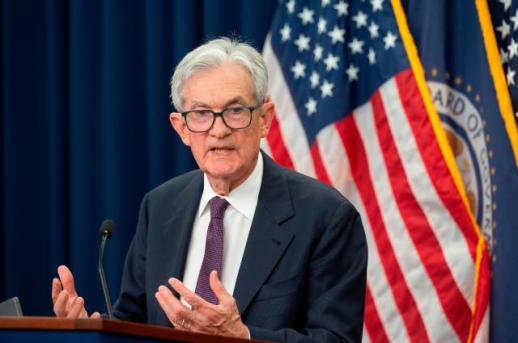 Jerome Powell to Serve as Interim Chair of the Federal Reserve Until Kevin Warsh's Confirmation Jerome Powell will serve as the interim chair of the U.S. Federal Reserve until Kevin Warsh is officially confirmed. According to Yonhap News on May 16, the Federal Reserve announced on May 15 (local time) that it had appointed Powell as interim chair during a board meeting.The Fed explained that this temporary appointment of the current chair aligns with previous practices during chair transitions. Since Warsh has not yet taken the official oath of office, Powell will temporarily retain the chair position to prevent any leadership gap.However, Michelle Bowman, the Vice Chair for Supervision appointed by former President Donald Trump, and board member Stephen Moore expressed their opposition to the decision, stating that the interim chair's term should have a limit.In a joint statement, they supported Powell's interim chair role until Warsh takes the oath but argued that the interim period should be explicitly limited to at least one week to one month, with a provision for re-voting to extend the term if necessary.Powell, who has led the Fed since 2018, will officially conclude his chair term as of today. His term as a board member will continue until January 31, 2028. Powell has indicated that he will remain on the board until the conclusion of the Department of Justice's investigation.Warsh is expected to be sworn in as the new Fed chair soon. The U.S. Senate approved his nomination on May 13. Market observers are keen to see how Warsh will navigate the White House's calls for interest rate cuts amid inflationary pressures. He is set to preside over the Federal Open Market Committee (FOMC) meeting scheduled for June 16-17.* This article has been translated by AI. 2026-05-16 08:40:41
 -
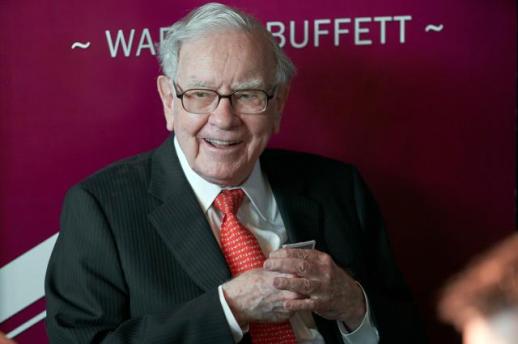 Warren Buffett's Charity Lunch Auction Fetches $9,001,000 Warren Buffett, the 95-year-old chairman of Berkshire Hathaway, has revived his annual charity event, "Lunch with Buffett," which fetched $9,001,000 in an auction. This marks the event's return after a four-year hiatus.According to Yonhap News, Reuters reported that the charity auction held on eBay concluded with the winning bid of $9,001,000 (approximately 135 billion won) the previous day. The identity of the winning bidder has not yet been disclosed.Since 2000, Buffett has hosted the "Lunch with Buffett" charity event annually, donating the proceeds to Glide Foundation, a San Francisco-based organization that supports the homeless. The event was last held in 2022 before being paused, and it resumed this year. The highest bid recorded was in 2022, when the auction closed at $19 million (approximately 285 billion won).This year's lunch is scheduled for June 24 at Berkshire's headquarters in Omaha, Nebraska, where Buffett resides. Proceeds will benefit Glide Foundation and the "Eat.Learn.Play Foundation," established by NBA player Stephen Curry and his wife Ayesha Curry. The couple will join Buffett for the lunch in June.Additionally, Buffett stepped down as CEO of Berkshire at the end of last year, passing the role to Greg Abel. However, he continues to serve as chairman and remains actively involved in investments.* This article has been translated by AI. 2026-05-16 08:35:45
 -
 Former Minister Joo Hyung-hwan Discusses South Korea's Economic Strategy Joo Hyung-hwan, a prominent figure in South Korea's economic policy, has played a crucial role in shaping the nation's approach to economic planning, industrial policy, trade, energy, and responses to low birth rates and an aging population. Known for his meticulous policy design and strong execution, he has earned nicknames such as 'Master of Reports' and 'Idea Bank.'South Korea currently faces a 'complex transition period' characterized by three major trends: AI transition, demographic changes, and the restructuring of global supply chains. At this juncture, Joo emphasizes that national strategy must focus on 'selection and concentration, and speed,' advocating for a shift from the past model of expansive growth to a technology-centered compression strategy. His insights call for a fundamental redesign of South Korea's economic structure.What principles guided your public service?= I have always kept two principles in mind during my public service. The first is, 'Let’s make the world a better place for our children.' I believe policies should be designed to ensure the next generation enjoys a better quality of life and opportunities. The second is to approach every position with the mindset that 'this is a flower seat.' It is crucial to strive for the best results in any role, especially for someone like me who started from an ordinary background. Ultimately, public service is evaluated by results, so thorough preparation and ensuring outcomes are essential.What is the biggest change in South Korea's economic policy?= The most significant change is the shift in the government's role from 'leader' to 'enabler.' In the past, the government presented visions and led the economy through policies and systems, but now the roles of the private sector and politics have grown considerably. The government now acts as a partner that collaborates and supports direction. While this is a natural evolution, it has also led to a weakening of policy consistency and long-term predictability. Since economic policy prioritizes long-term stability over short-term popularity, maintaining this balance is a critical challenge.What is the most important capability for policy designers?= In a word, it is 'capability.' The ability to quickly grasp the essence of issues and coordinate interests to create practical solutions is vital. This requires expertise, creativity, balance, and drive. Policies must not only be ideas but should lead to execution. The government is in a position to persuade various stakeholders, so it is important to create creative yet practical alternatives and push them through to completion.What was the key strategy that boosted exports during your tenure?= The most important factor was quickly addressing on-the-ground issues. I listened to the challenges faced by exporting companies and responded immediately. At the same time, I promoted structural changes. We diversified export items beyond the traditional top ten to include electric vehicles, batteries, biotechnology, defense, and consumer goods, while also expanding markets to the Middle East, Southeast Asia, and South America. Additionally, we innovated export methods through cross-border e-commerce. Above all, changing the mindset of companies was crucial. Creating an atmosphere of 'let's try again' was the essence of our policy.How should policy connect with the field?= I always believe that 'the answer lies in the field.' Reports from a desk provide limited information. However, visiting the field allows one to directly identify the essence of problems and accurately understand the gap between policy and reality. I ensured that feedback was given on opinions raised during field meetings. This builds trust in policies and enhances their execution. Policies only become effective when they operate in the field.Where should industrial competitiveness come from?= The key is 'selection and concentration.' The era of sprawling expansion is no longer viable. We must secure technologies that can make us number one in specific fields. To achieve this, we need to decisively streamline non-core businesses and concentrate resources. Just like the big deals between Samsung and Hanwha, we need to restructure our industrial framework. In the future, the industrial structure should be centered around globally specialized large enterprises.How do you foresee changes in industrial structure in the AI era?= AI will reshape all industries. Not only will the AI industry itself be transformed, but existing industries will also undergo comprehensive innovation based on AI. AI will become a core element in fields such as semiconductors, energy, mobility, and biotechnology. Given South Korea's platform industry foundation, rapid integration of AI can secure competitiveness. The government must address issues related to regulation, workforce, energy, and social resistance to support the AI transition.What is South Korea's strategy amid global technological competition?= Selection and concentration, speed, and public-private collaboration are essential. We cannot compete in all areas; we must focus on fields where we have strengths. At the same time, quick execution is crucial. South Korea excels in application and execution, so we must maximize these strengths. Ultimately, we need to create unique companies like TSMC or ASML.What is the essence and solution to the low birthrate issue?= Low birthrates are not just a demographic issue but a systemic problem for the nation. If the current trend continues, the country could face crises such as declining growth rates, social security collapse, and regional extinction. To address this, we need to strengthen work-family balance policies, expand flexible work arrangements, provide housing support, and implement immigration policies. Targeting and efficiency in policies are particularly important; simply increasing budgets will not solve the problem.What will be South Korea's biggest challenge in the next 20 years?= The simultaneous progression of AI transition, demographic changes, and climate change presents the greatest challenge. Among these, AI is the core issue. AI represents both a crisis and an opportunity. While it can dramatically enhance productivity, it may also lead to large-scale unemployment and social shocks. Therefore, we must design new social systems, educational frameworks, and welfare structures. Ultimately, the future depends not on technology itself but on the systems we choose to implement.■ Joo Hyung-hwanJoo Hyung-hwan is a leading economic strategist and policy designer in South Korea. After graduating from Deoksu High School, he attended Seoul National University, where he studied business administration and entered public service through the civil service exam. He began his policy career at the Economic Planning Board and held key positions, including Vice Minister of Strategy and Finance and Minister of Trade, Industry and Energy, shaping South Korea's economic policy.He is recognized for his dual strengths in policy design and execution, earning him the titles 'Master of Reports' and 'Idea Bank.' During his tenure as Minister, he successfully reversed a long-term decline in exports and contributed to transforming the export structure through the promotion of new industries and market diversification. He also expanded strategic cooperation with Middle Eastern countries, laying the groundwork for the global expansion of South Korean industries.Later, he served as Vice Chair of the Low Birthrate and Aging Society Committee, actively addressing demographic issues. He is regarded as a strategist emphasizing long-term structural reform and system design beyond mere policy implementation. He has consistently highlighted three principles: 'selection and concentration,' 'field-centered policy,' and 'public-private cooperation.'Currently, he continues to voice the direction South Korea's economy should take amid the complex crises of AI transition and demographic changes, stressing the need for technology-centered industrial restructuring and social system innovation.* This article has been translated by AI. 2026-05-16 08:27:23
 -
 Lee Chan-woo of NH Nonghyup Financial Group: From Macro-Economic Planner to Financial Decision-Maker Lee Chan-woo, chairman of NH Nonghyup Financial Group, is a rare "macro-economic leader" in the financial sector. With a background in policy-making and system design, he views finance not merely as individual products but as a mechanism for resource allocation within the national economy. However, as AI and digital transformation blur industry boundaries, financial leaders are now required to go beyond mere macro insights. They must make entrepreneurial decisions that allocate capital in uncertain industries, accept responsibility for failures, and transform organizational structures. Upon taking office, Lee initiated a comprehensive overhaul, launching a 93 trillion won productive finance strategy, an AI-centered approach, and a complete internal control reform, aiming to shift NH Nonghyup from "managed finance" to "judgment finance." Yet, he faces significant challenges, including the cooperative's unique governance structure, repeated financial incidents, and capital outflow issues. The essence of Lee's leadership lies in the question: Can a bureaucrat skilled in macroeconomic design transform into a financial entrepreneur on the market battlefield? Strengths Lee Chan-woo is a strategic leader who understands both macroeconomics and financial systems. He has clearly defined directions, including the 93 trillion won productive finance initiative, AI strategy, and internal control reforms. His strong insight connects policy and market dynamics. Weaknesses Bureaucratic leadership may slow execution speed. Failures in internal controls and capital outflow structures present structural limitations. The non-bank portfolio remains imbalanced. Opportunities The expansion of AI finance, industrial finance, and capital markets presents structural opportunities for NH Nonghyup. In particular, productive finance could become a differentiated competitive advantage. Threats The cooperative structure, capital outflow, internal control risks, and intensified competition are major threats. Structural constraints pose the greatest risk.* This article has been translated by AI. 2026-05-16 08:26:03
 -
 President Lee warns proxy revenge is serious crime SEOUL, May 16 (AJP) - South Korean President Lee Jae Myung warned through a social media post on Friday that both requesting and carrying out private revenge through third parties constitutes a serious criminal offense. The statement addresses a growing trend of illegal retaliation services coordinated through encrypted messaging platforms. The direct warning from the president signals an intensified government crackdown on digital-age vigilantism. Lee emphasized that modern states must maintain a monopoly on justice to prevent the breakdown of public order. "Private revenge proxy is a serious crime for both the person who requests it and the person who receives the request," the president wrote in a post on the social media platform X. The former human rights lawyer cautioned citizens against engaging in such schemes over minor personal grievances. "Should you ruin your life over something you think is trivial?" he asked. Lee noted that self-governed retribution has no place in contemporary society. He stated that in a modern civilized country, private disputes must be resolved according to the legal order. The president shared an excerpt from a security report detailing a suspected proxy revenge crime in the western port city of Incheon. Police are currently investigating the incident, which reportedly took place early Wednesday at an apartment complex. The report indicates that these crimes have proliferated since the first recorded instance in the southern city of Daegu in August 2025. Criminals typically use the messaging application Telegram to solicit and organize the acts. South Korean authorities have documented 69 such cases to date. Police have arrested 50 individuals in connection with 60 of the recorded incidents. 2026-05-16 08:00:32
 -
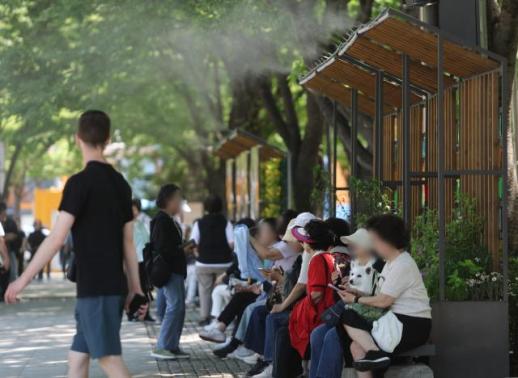 Weekend Weather: Summer Heat Continues with Highs Reaching 33 Degrees On Saturday, May 16, temperatures across most of the country are expected to rise to around 30 degrees Celsius, continuing the early summer heat.According to the Korea Meteorological Administration, the weather will be generally clear due to a high-pressure system located over the East Sea. The heat will be particularly noticeable in the southern inland and Yeongnam regions.Morning low temperatures are forecasted to range from 11 to 18 degrees Celsius, while daytime highs are expected to reach between 25 and 33 degrees, which is above the seasonal average. In some areas, the temperature difference between day and night could be as much as 15 degrees, necessitating careful health management.The expected morning lows and daytime highs for major regions are as follows: △Seoul 18-31 degrees △Incheon 16-29 degrees △Suwon 16-30 degrees △Chuncheon 15-31 degrees △Gangneung 17-30 degrees △Cheongju 16-31 degrees △Daejeon 15-31 degrees △Jeonju 14-31 degrees △Gwangju 15-31 degrees △Daegu 13-33 degrees △Busan 14-25 degrees △Jeju 16-24 degrees.Fine dust levels are predicted to be at 'good' to 'moderate' levels across all regions, although southern Gyeonggi Province may experience temporary 'bad' levels in the morning.Wave heights are expected to be 0.5 to 1.0 meters in the East and South Seas, and around 0.5 meters in the West Sea. In the offshore waters (approximately 200 kilometers from the coastline), wave heights are forecasted to be 0.5 to 1.5 meters in the East Sea and 0.5 to 1.0 meters in the West and South Seas.* This article has been translated by AI. 2026-05-16 07:54:50