
Journalist

AJU PRESS Business Team
-
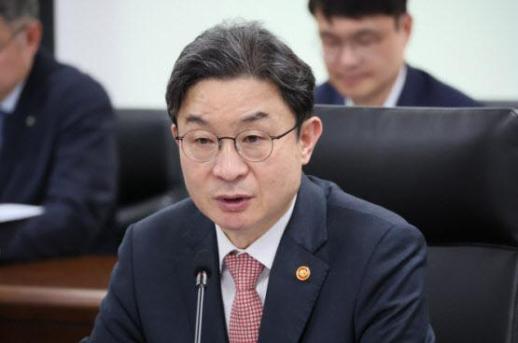 Government Pushes to Expand National Growth Fund Amid Global AI Investment Trends The government is addressing concerns over the National Growth Fund, which has faced criticism for potentially supporting large corporations and distorting the market. Officials emphasized that the fund serves as a catalyst to attract private investment, given the nature of advanced industry investments that require substantial long-term funding and risk-sharing. On May 18, the Financial Services Commission held a seminar at the Korea Development Bank's IR Center to assess the National Growth Fund's performance and explore future directions. During the seminar, Financial Services Commission Chairman Lee Eok-won stated, "Since the National Growth Fund began full operations earlier this year, it has rapidly deployed funds to invigorate advanced industries. Over the past four months, more than half of the 8.4 trillion won in support has been allocated to local areas, broadening investment opportunities for promising regional companies." However, concerns persist in the market regarding the inclusion of large corporations with their own funding capabilities as beneficiaries of policy financing. Critics question whether government funding might discourage private investment. There are also worries about potential overvaluation of companies and market overheating, particularly as funds increasingly flow into sectors like AI. In response, the Financial Services Commission and experts argue that due to the significant initial capital requirements and long investment recovery periods characteristic of advanced industries, a certain level of policy risk-sharing is unavoidable. They assert that support should not only focus on individual companies but also aim to enhance the overall competitiveness of the industrial ecosystem. Lee Byeong-yun, a senior researcher at the Financial Research Institute, remarked, "It is advisable to concentrate national energy on areas with the highest potential for global competitiveness to secure economies of scale for achieving a significant gap. This can also enable the co-growth of related small and medium-sized enterprises through anchor companies in the ecosystem." Recent global venture capital investments have been increasingly concentrated among top firms. In 2025, global venture capital investments rose by 31% year-on-year to $512.1 billion, marking the third-highest level in history. Notably, in the fourth quarter of 2025 alone, eight AI companies raised over 50 trillion won in funding, with valuations skyrocketing in subsequent investment rounds, reflecting a global trend. Additionally, the government is accelerating efforts to create mechanisms for sharing the results of advanced industry investments with the general public. This initiative aims to expand opportunities for citizens to directly participate in growth industry investments beyond policy financing. The Public Participation Growth Fund, set to launch on the 22nd, will offer tax deductions and separate taxation benefits on dividend income, with the government absorbing 20% of initial losses. More than 20% of the available shares will be allocated exclusively for low-income individuals. Kang Seong-ho, head of the National Growth Fund at the Financial Services Commission, explained, "We have included tax deductions to incentivize public participation in long-term capital (with a five-year maturity). To ensure tax equity, we have established measures such as excluding tax benefits for those subject to comprehensive taxation on financial income, gradually reducing the deduction rate, and applying a comprehensive limit on deductions."* This article has been translated by AI. 2026-05-18 16:14:17
 -
 BBQ Chairman Yoon Hong-geun Receives Korea's Mid-sized Business CEO Award Yoon Hong-geun, Chairman of Genesis BBQ Group, has been awarded the Korea Mid-sized Business CEO Award for his efforts in promoting franchise cooperation and achieving global business success. BBQ announced on May 18 that Yoon received the award at the 2026 Spring Conference of the Korean Management Association, held on May 15 at the Seoul Chamber of Commerce and Industry. The Korea Mid-sized Business CEO Award is presented to exemplary small and medium-sized business leaders who have demonstrated a successful model from startup to growth. Recipients are selected based on evaluations by the Korean Management Association's selection committee, which considers ethical entrepreneurship, management philosophy, industry competitiveness, expansion achievements, transparent management, and social responsibility. Since its founding in 1995, Yoon has been recognized for establishing a cooperative franchise model, pioneering global markets, and fulfilling social responsibilities, thereby guiding the growth of Korea's restaurant franchise industry. BBQ has implemented a structure that involves franchise owners in discussions about brand policies, marketing, and new menu development through its operating and partnership committees. The company has also been praised for standardizing training in cooking, hygiene, and service through its Chicken University, enhancing the competitiveness of the franchise industry. As of May, BBQ has expanded to 57 countries worldwide, leading the globalization of K-Chicken. The company has invested in operational efficiency through an ERP-based management system, its own logistics management system, and smart kitchen technologies, contributing to the stability of franchise operations. Yoon's ongoing community support initiatives, disaster recovery efforts, and assistance for vulnerable groups have also been highlighted as significant achievements. Yoon stated, "This award is a meaningful recognition of BBQ's efforts and growth alongside our family over the past 30 years. We will continue to contribute to creating a sustainable franchise industry ecosystem based on cooperation and innovation."* This article has been translated by AI. 2026-05-18 16:12:00
 -
 Homeplus: Meritz Requires Immediate Repayment of Express Sale Proceeds Homeplus, which is undergoing corporate rehabilitation, announced on May 18 that Meritz Financial Group has demanded immediate repayment of the proceeds from the sale of Homeplus Express as a condition for providing a short-term operating loan (bridge loan).According to Homeplus, Meritz is considering a short-term operating loan of approximately 100 billion won ($75 million) for a duration of 2 to 3 months, with interest rates similar to those of existing emergency operating loans (DIP loans). The conditions also include personal guarantees from major shareholders MBK Partners and the management team.In response, Homeplus has proposed using a second-ranking income right on real estate as collateral instead of personal guarantees. Homeplus stated, "The contract for the sale of Express has already been signed, and considering that the transaction will be completed by the end of next month, we have already provided personal guarantees for other operating funds." However, it appears that Homeplus is reviewing Meritz's loan conditions due to pressing issues such as unpaid wages and outstanding product payments.Currently, Meritz holds collateral on 68 Homeplus stores. Proceeds from major real estate sales completed or in progress after the rehabilitation process are also being prioritized for repayment of Meritz's claims.Meanwhile, as Homeplus continues to face financial difficulties, the labor union has also requested normalization of deliveries. The Homeplus General Labor Union recently decided to forgo wages and defer salary payments, sending a formal request to suppliers for the regular supply of goods. In the letter, the union stated, "Only with a smooth supply of goods to the stores can they be normalized, and only when the stores recover can the valuable delivery payments be fully repaid."* This article has been translated by AI. 2026-05-18 16:09:00
 -
 HVEM Shares Surge Over 20% Amid Positive Market Outlook HVEM shares experienced a significant increase of over 20% during trading hours, driven by optimistic forecasts from the financial sector. According to the Korea Exchange, as of 2:22 PM, HVEM shares were trading at 117,700 won, up 19,800 won (20.22%) from the previous trading day. Earlier in the day, Meritz Securities released a report projecting growth and improved performance across all business divisions for HVEM. Jung Ji-soo, a researcher at Meritz Securities, stated, "In the first quarter, the standalone performance showed a revenue increase of 79.4% year-on-year to 23.3 billion won, with operating profit rising 292.2% to 4.4 billion won, surpassing market consensus of 3.3 billion won in operating profit." He noted that sales to the world's largest private space company led the performance improvement, with a 143% year-on-year increase to 14.9 billion won. He further projected that in 2026, revenue by business division would be 5.3 billion won for existing products (-27.2%), 76.4 billion won for space (93.3%), 13 billion won for aerospace and defense (76.7%), and 18.2 billion won for semiconductors and electronics (47.9%). He emphasized that all divisions, except for existing products, are expected to see significant growth. Jung added, "The new launch vehicle from the world's largest private space company is expected to begin its first launch this week, with launch frequency rapidly increasing. The supply of nickel-based special alloys for the engine part of the new launch vehicle is anticipated to rise significantly starting in the second half of the year. We are planning to expand production facilities through the issuance of 92 billion won in convertible bonds last month, and once the third factory expansion is completed, we expect to achieve annual sales exceeding 500 billion won."* This article has been translated by AI. 2026-05-18 16:06:32
 -
 South Korean chipmakers rescue Seoul market despite broad Asia selloff SEOUL, May 18 (AJP) - South Korean stocks ended higher on Monday as heavyweight semiconductor shares helped the benchmark index recover from a sharp early plunge. The market stood out against a broader selloff across Asia triggered by rising global bond yields, renewed oil price pressures and weakness in United States technology shares. The KOSPI rose 0.6 percent to close at 7,516.04, rebounding from an intraday low of 7,142.71 to reach a high of 7,636.20. The recovery occurred despite heavy foreign selling, as overseas investors offloaded 3.65 trillion won, or 2.43 billion dollars, worth of shares. Retail and institutional investors absorbed the selloff, purchasing 2.21 trillion won and 1.39 trillion won respectively. Samsung Electronics drove much of the recovery, climbing 3.9 percent to close at 281,000 won. The gains came even as labor tensions remained in focus ahead of a planned strike by company unions on May 21. A local court partially accepted an injunction request from Samsung against illegal strike activity, recognizing the need to maintain safety operations and wafer protection work at semiconductor facilities. The unions said they would proceed with the planned action, arguing the court ruling did not block the strike itself. Business groups and shareholder organizations stepped up pressure on the union to withdraw the plan, warning of potential damage to the core semiconductor industry of South Korea. Workers are demanding the removal of a performance bonus cap set at 50 percent of their annual salary and want 15 percent of operating profit allocated to a uniform bonus pool. SK hynix gained 1.2 percent to 1,840,000 won, supported by continued optimism over demand for high-bandwidth memory. The advance came despite concerns that rising global bond yields could pressure valuations for artificial intelligence-related technology companies. Other large-cap shares faced steep declines. Hyundai Mobis plunged 9.2 percent to 571,000 won, tracking weakness across Hyundai Motor Group shares after the sharp morning drop triggered a sell-side sidecar for the second consecutive session. LG Electronics dropped 9.8 percent to 217,000 won, while LS Electric fell 2.1 percent to 253,500 won. Doosan Robotics slid 7.5 percent to 117,900 won, while cable manufacturer Daehan Electric Wire fell 3.2 percent to 58,100 won and Gaon Cable jumped 12.3 percent to 380,000 won. The technology-heavy KOSDAQ failed to match the broader market rebound, falling 1.7 percent to close at 1,111.09. The junior index moved between a high of 1,122.57 and a low of 1,071.66, with institutions selling 255.1 billion won and retail investors offloading 7.7 billion won, while foreigners bought 237.2 billion won. Jusung Engineering surged by the daily limit of 30 percent to 182,200 won on the KOSDAQ. The company announced it had shipped the world's first ALG-based transistor full integration manufacturing equipment to a global chipmaker, adding the technology could expand to display and solar applications. Mirae Asset Venture Investment jumped 22.8 percent to 67,400 won, boosted by expectations that SpaceX could accelerate its initial public offering timeline. Mirae Asset Group has reportedly invested about 400 billion won in the aerospace company through funds since 2022. Jeju Semiconductor rose 12.5 percent to 92,600 won after reporting first-quarter revenue surged 273 percent from a year earlier to 180.5 billion won. The company said operating profit jumped 1,713 percent to 67.1 billion won, driven by higher DRAM prices and stronger demand for memory chips used in mobile and automotive applications. Sphere Corporation advanced 14.6 percent to 48,150 won after reporting first-quarter consolidated revenue grew 106 percent year-on-year to 45 billion won. The company attributed nearly all of its revenue to an aerospace special alloy supply business supported by growth in the global space industry. Hanmi Semiconductor plunged 14.1 percent to 317,000 won following an earnings shock. The company posted revenue of 50.9 billion won and operating profit of 8.5 billion won, down 65.5 percent and 87.9 percent respectively, citing a decline in Asian sales and a gap in TC bonder orders. Regional markets ended broadly lower as investors reacted to rising bond yields, higher oil prices and renewed weakness in United States technology shares. Japan's Nikkei 225 fell 0.9 percent to 60,877.5, China's Shanghai Composite declined 0.5 percent to 4,116.9 and Hong Kong's Hang Seng Index lost 1.5 percent to 25,566.6. Oil prices extended gains as stalled talks between the United States and Iran and continued disruptions around the Strait of Hormuz kept supply concerns elevated. Brent crude rose 2.3 percent to 107.80 dollars a barrel, while West Texas Intermediate climbed 1.9 percent to 111.28 dollars. The VIX volatility index rose 6.8 percent to 18.4, and the Philadelphia Semiconductor Index dropped 4 percent to 11,588.5. The South Korean won weakened slightly, trading at 1,500.3 won against the dollar, down 2.3 won, or 0.1 percent, from the previous session. 2026-05-18 16:00:47
 -
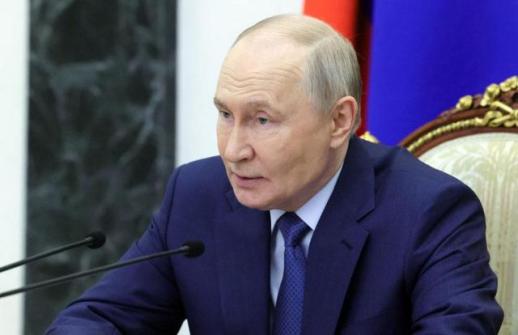 ASIA INSIGHT: What back-to-back visits by Trump and Putin mean for China SEOUL, May 18 (AJP) - Just days after U.S. President Donald Trump left Beijing, Russian President Vladimir Putin is set to arrive there this week. The timing appears to be no coincidence. According to China's Foreign Ministry, Putin will visit China on Tuesday and Wednesday at the invitation of Chinese President Xi Jinping. The two leaders are expected to discuss bilateral cooperation, regional security and other broader global issues before signing a series of agreements. On the surface, it may appear to be another routine summit between two traditional allies. But the back-to-back visits by the leaders of the world's two most powerful countries carry a deeper meaning, highlighting Beijing's growing influence over the global order. Trump traveled to Beijing seeking to mend a strained relationship while pressing U.S. interests on trade, Taiwan-related issues and Iran amid the prolonged conflict in the Middle East. Both sides struck a cooperative tone, but underlying tensions remained unresolved, with the summit ending without concrete breakthroughs. Putin arrives amid that complicated aftermath. The Kremlin has already signaled that one of Moscow's priorities is to determine what Trump and Xi discussed, with Russia's presidential spokesman Dmitry Peskov saying Putin wants to obtain "direct information" from Beijing. That suggests something beyond simple curiosity. China has come to serve a strategic role as one of the few global powers capable of leveraging its close ties with Moscow in its rivalry with Washington, allowing it to engage both sides at once. Moscow remains an important partner, providing Beijing with energy and diplomatic support against the U.S., but Beijing has little interest in fully siding with Russia against the West, as China's economy still depends heavily on global trade and access to American markets. Their relationship is more nuanced than a simple anti-American alliance, as China stays engaged with both Washington and Moscow and may even benefit from frictions between them. Despite China's growing global influence, Beijing still faces clear limits and challenges, while many countries remain quietly wary of its growing power. China is likely trying to position itself at the center of an increasingly fragmented world, where old alliances are weakening and new alignments remain uncertain. But balancing relations with both Washington and Moscow will become increasingly difficult as tensions among the major powers deepen, even though Beijing currently appears comfortable playing that role. The visits by both Trump and Putin suggest, in different ways, that China is no longer just reacting to the global order, but is trying to play a larger role in shaping it. 2026-05-18 15:53:15
 -
 CJ Logistics CEO Shin Young-soo: Building a Competitive Edge Through Small Successes CJ Logistics CEO Shin Young-soo presented the accumulation of "small successes" and organizational culture innovation as key strategies for future growth during a town hall meeting with employees.On May 18, CJ Logistics reported that CEO Shin stated at the meeting on May 14, "The massive innovations that will change the future of the logistics industry begin with small successes." He emphasized that these small successes are crucial for creating new growth opportunities and enhancing future competitiveness.Shin explained, "Reducing delivery delays even slightly, improving the quality of customer service responses, and minimizing safety incidents in the workplace are all small successes. When these small successes are repeated, they build individual confidence, foster team culture, and ultimately lead to transformative changes in the company's structure."He also highlighted the importance of empathy and communication within the organization. Shin noted, "Change begins with the collective understanding of the company's vision and business strategy among all members. I will expand the operation of town hall meetings and broaden communication channels to strengthen organizational empathy."Securing a competitive edge through advanced technology was also identified as a major goal. He stressed, "By combining the big data and AI technologies accumulated by CJ Logistics, we will secure future growth engines early and take the lead in the paradigm shift within the logistics industry." Last year, CJ Logistics completed field trials of AI-based humanoid logistics robots and plans to deploy these robots in major fulfillment centers this year to enhance operational efficiency and productivity.Shin stated, "We will continuously accumulate small but certain success experiences, creating a virtuous cycle where our performance-generating DNA leads to new growth engines and innovations. Based on organizational empathy, we will establish a growth system that organically connects business strategies and advanced technologies, propelling us to become a leading competitive enterprise in the domestic and international logistics markets."Meanwhile, CJ Logistics reported a 7.9% increase in consolidated operating profit for the first quarter of this year, reaching 92.1 billion won, driven by an increase in parcel volume and improved profitability in global operations. The company plans to continue its growth trajectory through global business expansion, optimizing its cold chain operations in the U.S. and expanding into adjacent industries such as consumer goods and beauty, while also enhancing local operations and contract logistics in India and Vietnam.* This article has been translated by AI. 2026-05-18 15:52:35
 -
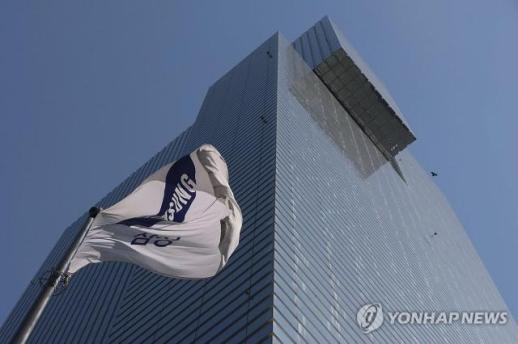 Economic Groups Urge Samsung Union to Withdraw Strike Plans Business groups have expressed concern over the Samsung Electronics union's plans to strike, urging the union to withdraw its strike announcement and return to negotiations. They warned that if a strike occurs, the government should consider invoking emergency measures to address the situation. On May 18, six major economic organizations, including the Korea Employers Federation, the Korea Chamber of Commerce and Industry, the Korea Economic Association, the Korea International Trade Association, the Korea Federation of Small and Medium Businesses, and the Korea Federation of Medium Enterprises, issued a joint statement expressing deep concern over the union's insistence on its position despite efforts by the government and the Central Labor Relations Commission. They stated, "The union's strike threatens the foundation of a key national industry, and it must withdraw its strike plans and seek solutions through dialogue." The business community called on the government to activate emergency measures immediately if a strike occurs, to prevent irreversible damage to the national economy and industrial ecosystem. With semiconductor exports accounting for 37% of the country's total exports this year, the business sector warned that a strike by the Samsung union could lead to reduced exports, a worsening trade balance, and even a loss of tax revenue, adversely affecting the overall economy. They also pointed out that a strike could significantly depress the domestic capital market, as Samsung Electronics accounts for about 25% of the KOSPI's market capitalization, potentially accelerating declines in the KOSPI index and foreign investor withdrawals. The business community criticized the union's demands for performance bonuses, which they described as inappropriate and excessive, noting that a court had already ruled that such bonuses do not constitute wages. The union's demand for approximately 45 trillion won in bonuses exceeds four times the total shareholder dividends from the previous year, which could severely undermine the company's sustainable investment capacity and future competitiveness. They argued that the issue of performance bonuses should be a matter of management judgment rather than a subject of collective bargaining, stating, "Excessive demands from some unions could deepen the dual structure of the labor market and increase social discord." Furthermore, they noted that it is rare for global companies to have pre-agreed systems for distributing a certain percentage of operating profits to employees, emphasizing that decisions on how to utilize operating profits typically fall under the purview of the board of directors. The business sector warned that a large-scale strike by the Samsung union could lead to national opportunity losses beyond mere labor disputes. Given the continuous operation required in semiconductor manufacturing, a strike could halt production lines, resulting in massive waste of wafers, equipment damage, and risks of chemical spills, leading to significant safety incidents. The six economic organizations expressed concern that the impact of the strike would not be limited to Samsung Electronics but could spread to thousands of small and medium-sized partner companies and the broader semiconductor materials, components, and equipment industries. Industry insiders have raised alarms that the economic damage from this strike could reach up to 100 trillion won, a scale that could inflict severe harm across the Korean economy.* This article has been translated by AI. 2026-05-18 15:50:12
 -
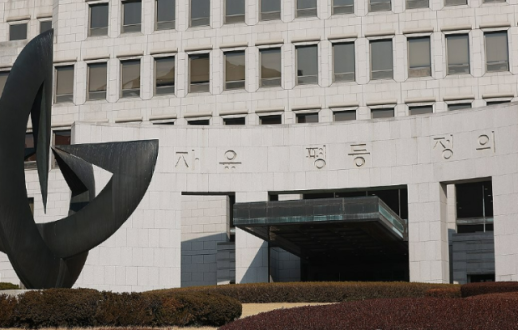 Supreme Court Rules U.S. Companies Must Pay Corporate Tax on Technology Transfer Fees to Korean Firms The Supreme Court has ruled that fees paid by U.S. companies to Korean firms for technology or know-how transfers are not exempt from corporate tax. On May 18, the Supreme Court's third division, led by Justice Oh Seok-jun, overturned a lower court ruling that favored U.S. pharmaceutical company Genosco in its lawsuit against the head of the Dongjak Tax Office regarding the denial of a tax refund for withholding tax. The case has been sent back to the Seoul High Court for further proceedings.In October 2016, Genosco entered into a contract with Yuhan Corporation to transfer technology and know-how related to a targeted treatment for liver cancer. The agreement stipulated that Genosco would receive a fixed technology fee and an annual royalty based on a percentage of net sales from the product until the expiration of the relevant patent.In November of the same year, Yuhan paid Genosco a contract fee of 500 million won and subsequently paid the withholding tax to the Dongjak Tax Office. According to corporate tax law, foreign corporations must pay corporate tax on domestic source income. While the foreign corporation is the substantive taxpayer, a Korean company can pay the tax on behalf of the foreign entity after deducting it from the payment.Genosco filed a claim for a refund of the withholding tax in July 2017, arguing that the income was not domestic source income under the Korea-U.S. tax treaty. However, the Dongjak Tax Office denied the claim in September of that year, prompting Genosco to sue for cancellation of the denial.The key issue in the appeal was whether the income was exempt from taxation under Article 16, Section 1 of the Korea-U.S. tax treaty, which states that "income derived by a resident of the United States from the sale of capital assets shall, in principle, be exempt from taxation by our country."The appellate court ruled that the know-how in question fell under the capital assets defined in the treaty, thus ruling in favor of Genosco.However, the Supreme Court found that the lower court had misinterpreted the legal definition of capital assets under Article 16, Section 1 of the tax treaty, accepting the appeal from the Dongjak Tax Office.The court noted that the term "capital assets" is not separately defined in the Korea-U.S. tax treaty, nor is it found in Korean law, and must be understood in the context of the treaty.The court stated, "The know-how in this case can be considered property used in the business of the plaintiff, which is subject to depreciation deductions. Therefore, based on the context at the time of the treaty's conclusion, it cannot be classified as capital assets under Article 16, Section 1 of the Korea-U.S. tax treaty."The Supreme Court referenced Section 1221 of the Internal Revenue Code from the time of the treaty's conclusion in 1976, which defines capital assets as all property held by the taxpayer except for certain specified properties. It further describes properties used in a business or held for income generation that are subject to depreciation under Section 167.The court explained, "Therefore, in the case of know-how used in business, it is reasonable to conclude that it is generally excluded from the definition of 'capital assets' as stipulated in Article 16, Section 1 of the Korea-U.S. tax treaty when referring to Section 1221, Subsection 2 of the Internal Revenue Code at the time of the treaty's conclusion."* This article has been translated by AI. 2026-05-18 15:48:00
 -
 Flights to Southeast Asia hit hardest as fuel costs force LCCs to cut routes SEOUL, May 18 (AJP) - South Korean low-cost carriers are cutting more international flights, particularly on Southeast Asian routes, even as fuel surcharges for June eased slightly from their peak, raising concerns over passenger inconvenience and limited compensation. Since the outbreak of the Middle East war, domestic low-cost carriers (LCCs) and mid-tier carriers have reduced more than 1,100 round-trip international flights, with Southeast Asian routes accounting for a large portion of the cuts, according to industry officials. The benchmark Singapore jet fuel price used to calculate June fuel surcharges stood at 410.02 cents per gallon, down about 20 percent from 511.21 cents per gallon for May. Accordingly, international fuel surcharges fell to level 27 from the highest level of 33. Still, industry officials say fuel costs remain high compared with prewar levels. Even in July and August 2022, when global fuel prices surged following Russia’s invasion of Ukraine, international fuel surcharges stood at level 22. Airlines usually decide which flights to reduce based on various factors, including profitability, passenger demand and alternative flight options. This time, routes with weaker demand and lower margins have been targeted first. Southeast Asian routes have been hit especially hard because they had been over-supplied amid fierce competition among LCCs. Vietnam routes, in particular, have become a major target for cuts as demand for Southeast Asian travel has weakened relatively compared to Japan and China. “Southeast Asian routes have seen softer demand compared with Japan routes,” an official from South Korean LCC Jin Air said. “Japan remains relatively resilient, supported by favorable exchange-rate conditions, while travel to Southeast Asia tends to be more affected by higher overall trip costs.” The official added that travelers to some Southeast Asian countries often face higher costs because they exchange money through the U.S. dollar first before converting it again locally. “Those extra costs appear to have affected demand,” the official said. “That is why many of the reductions have been concentrated on Southeast Asian routes.” Southeast Asian routes are often regarded as “mid-haul” routes that sit between short-haul and long-haul services. They require more fuel than flights to Japan or China, but airlines cannot charge fares as high as those on long-haul routes. Jin Air has cut 176 round-trip flights through this month due to the burden of higher fuel costs. The carrier canceled 45 round-trip flights on eight routes, including Guam, last month and 131 round-trip flights on 14 routes, including Phu Quoc, this month. The number could rise further once its June schedule is finalized. Jeju Air reduced flights from Incheon to Phu Quoc, Da Nang, Bangkok and Singapore from seven times a week to three or four times a week from May 8 to June 30. It also cut its Incheon-Hanoi service from seven times a week to four times a week from May 12 and suspended its Vientiane route for two months from April 29. Airportal data also shows that the cuts were concentrated in Southeast Asia even when all Korean carriers are included. Flights to Vietnam, the Philippines and Thailand fell far more sharply than the overall 7.9 percent decline in international flights from January to April. The Philippines posted the steepest percentage drop among the listed countries, down 43.8 percent, followed by Thailand at 38.7 percent and Vietnam at 31.3 percent. By contrast, Japan routes slipped only 5 percent, while China and U.S. routes increased. For passengers, however, the main issue is not just the number of flights being cut. Even if overall reductions remain limited, passengers whose flights are affected can face major disruptions to travel plans. “I’m planning to travel in July, but I think I’ll take my time and book only refundable accommodation because flight schedules seem uncertain,” one user wrote on an online travel community. The transport ministry said the cuts remain below the level that could lead to penalties. Airlines could lose route rights or airport slots if they cancel 20 percent or more of their approved flights, but no carrier has reached that threshold so far. 2026-05-18 15:47:32