
Journalist

AJU PRESS Business Team
-
 NH Bank Launches Non-Face-to-Face MMT Subscription Service NH Bank is accelerating the expansion of its non-face-to-face services in response to changes in the digital financial environment.On May 18, NH Bank announced the launch of its non-face-to-face subscription service for specific money trusts (MMT), becoming the first bank to do so.MMT products aim to generate returns by investing in short-term financial instruments, such as issued notes. They are characterized by high liquidity, allowing for frequent deposits and withdrawals. Demand for these products has increased recently due to heightened interest rate volatility amid conflicts in the Middle East.With this new service, individual customers can receive product information and complete the subscription process through NH Bank's smart banking and other non-face-to-face channels, all conducted via video call without the need to visit a branch.An NH Bank representative stated, "This service was designed to enhance financial accessibility for customers who find it difficult to visit branches and to create a more convenient product subscription environment. We will continue to expand our digital services in the future."* This article has been translated by AI. 2026-05-18 09:07:22
 -
 LG Uplus Surpasses 2 Million USIM Updates and Replacements LG Uplus has reported that the cumulative number of updates and free replacements for subscriber identification numbers (IMSI) has surpassed 2 million. This figure represents approximately 12% of all subscribers, indicating that a majority still need to complete the replacement process, prompting the company to enhance its outreach efforts. As of May 17, LG Uplus processed a total of 2,014,527 updates and replacements, including 750,461 updates and 1,264,066 replacements since May 13. The cumulative processing rate stands at 11.8%. The IMSI, or International Mobile Subscriber Identity, is a unique number stored on the USIM chip that distinguishes subscribers within the telecommunications network. The transition involves changing the existing number structure to enhance security and improve the subscriber identification system. To inform all customers about the IMSI transition and the USIM updates and replacements, LG Uplus is providing additional notifications through May billing statements. Customers can find this information on paper bills, email statements, and electronic bills within the U+one app. For those who have not completed the update, a banner will appear in the U+one app to encourage online updates, and the FAQ section on the official website and app has also been expanded. The company has also broadened its channels. Starting May 15, U+ budget mobile customers can update or replace their USIMs for free at LG Uplus's direct stores and authorized dealers nationwide. Plans for additional outreach to digitally vulnerable groups are also under consideration. Lee Jae-won, Vice President of LG Uplus's Customer Division, stated, "The USIM updates and replacements are measures to enhance customer protection. We will continue to strengthen our guidance to ensure customers can easily recognize and participate in the process." 2026-05-18 09:06:00
 -
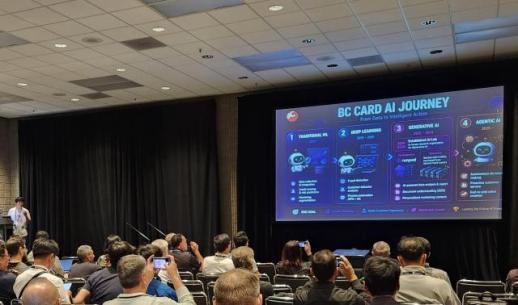 BC Card Automates Financial Operations with Multiple AI Models, Reduces GPU Costs by 70% BC Card has enhanced the efficiency of its financial AI operations by connecting multiple specialized small AI models. This approach reduces costs and increases processing speed compared to the traditional method of relying on a single large language model (LLM). On May 14, BC Card unveiled its 'Agentic AI Operating Platform,' developed in collaboration with Red Hat, at the Red Hat Summit 2026 in Atlanta. The summit is an annual conference focused on open-source, cloud, and AI technologies hosted by the global open-source company Red Hat. The platform presented by BC Card combines several small language models (SLMs) tailored to specific tasks, allowing for simultaneous processing instead of concentrating all tasks on one LLM. Agentic AI refers to technology that enables AI to make decisions and take actions independently, beyond just providing simple answers. This structure has improved both the cost and speed of AI operations. SLMs can be optimized for specific tasks, yielding stable results while increasing inference speed by more than three times and reducing GPU resource usage by up to 70%. BC Card has leveraged its experience in processing over 10 billion payment transactions annually to develop an efficient AI operation method that distributes costly GPU resources effectively. This has led to faster service and lower operational costs. The platform is already being applied in real services. BC Card operates 'Eat.pl,' which analyzes real-time consumption patterns to recommend restaurants; 'BCGPT,' a generative AI platform that supports employee tasks; and 'MOAI,' which connects multiple AIs to automate tasks. Additionally, BC Card is making its self-developed AI models and specialized financial datasets available to the public. Approximately 38 LLMs have been released on the global AI open-source platform Hugging Face, achieving an average of over 100,000 downloads per month.* This article has been translated by AI. 2026-05-18 09:02:31
 -
 Yoon Suk Yeol and Donald Trump Discuss South Korea's Diplomatic Position Amid U.S.-China Relations South Korean President Yoon Suk Yeol held a 30-minute phone call with U.S. President Donald Trump, discussing the outcomes of the recent U.S.-China summit. This timely diplomatic engagement should serve as a moment to clarify South Korea's diplomatic stance amid the evolving U.S.-China relationship. According to the Blue House, President Trump explained the discussions surrounding U.S.-China relations, economic and trade matters, and the situations in the Korean Peninsula and the Middle East. The two leaders exchanged views on South Korea-U.S. cooperation and peace on the Korean Peninsula. Notably, the fact that the Korean Peninsula issue was discussed between the U.S. and Chinese leaders is significant, indicating that it is re-emerging as a topic in the strategic competition between the two powers. However, it is crucial to emphasize that South Korea must not remain in a position of merely 'receiving explanations.' The fact that this call was reportedly initiated at the request of South Korea should be viewed critically. If South Korea continues to receive information only after major agreements are reached between the U.S. and China, its diplomatic standing will inevitably diminish. Currently, U.S.-China relations are characterized by a phase of 'managed competition,' where conflict and cooperation coexist. While there are signs of collaboration in areas like tariffs and certain economic sectors, the fundamental nature of hegemonic competition remains unchanged. In this context, the Korean Peninsula issue could be leveraged as a bargaining chip in negotiations between the two countries. If South Korea fails to secure a leading role, its security and economy could be subject to the strategic calculations of other nations. Therefore, South Korea-U.S. cooperation must become more substantive and sophisticated. Beyond merely emphasizing the alliance in principle, it is essential to clarify South Korea's role and contributions in economic security areas such as semiconductors, batteries, energy, and defense industries, thereby securing a corresponding strategic voice. Alliances are maintained and strengthened not through declarations but through aligned interests. At the same time, diplomacy towards China must also maintain balance. China remains one of South Korea's largest trading partners, closely linked in terms of supply chains and industrial structures. Rather than leaning unilaterally towards the U.S. or China, a pragmatic approach based on national interests is necessary. This requires 'interest-based diplomacy' rather than 'watchful diplomacy,' meaning that South Korea must choose and act based on clearly defined strategic goals. The discussion of global issues, including the situation in the Middle East, during this call is also significant. It indicates that the scope of South Korean diplomacy is expanding beyond the Korean Peninsula. However, as the breadth of diplomacy widens, the core focus must remain clear. The fundamental pillars of peace on the Korean Peninsula, national safety, and economic stability must not be shaken. Next month’s G7 summit in France will be a crucial turning point. South Korea's diplomatic standing could change depending on its position regarding the restructuring of U.S.-China relations, Middle Eastern risks, and the reconfiguration of global supply chains amid complex crises. Diplomacy without preparation risks missing opportunities, while directionless diplomacy increases risks. Diplomacy is a competition of timing and initiative. Following this call, South Korean diplomacy must shift from 'reactive responses' to 'proactive strategies.' Establishing unwavering standards between the U.S. and China and strengthening practical diplomacy centered on national interests is essential. This is the most realistic path for South Korea to survive and thrive in an uncertain international order. 2026-05-18 09:01:32
 -
 2.32 million Taiwanese tourists attracted as K-Tourism Roadshow promotes central region The Korea Tourism Organization, led by President Park Seong-hyeok, successfully concluded a large-scale K-Tourism Roadshow in Taipei aimed at attracting Taiwanese tourists, a key market for South Korea, and promoting regional tourism. Taiwan has a high preference for regional tourism, with nearly half of its visitors to South Korea using local airports, making it a crucial target to overcome the crisis of regional decline. According to the Korea Tourism Organization on May 18, the "2026 K-Tourism Roadshow" held from May 15 to 17 at the popular cultural space Huashan 1914 in Taipei drew significant local attendance. Last year, 1.89 million Taiwanese tourists visited South Korea, setting a record for the second consecutive year following 2024. In the first quarter of this year, the number of Taiwanese visitors to South Korea also surged by 37% compared to the same period last year, reaching 540,000. ◆ Focus on Central Tourism Year with Cheongju Airport as a Hub The central theme of this roadshow was the "Central Tourism Year." Following last year's "Southern Tourism Year" centered around Gimhae Airport, this year’s focus shifted to Cheongju Airport, highlighting six regions: Gangwon, Chungbuk, Sejong, Daejeon, Chungnam, and Jeonbuk. Each local government set up special booths to showcase their unique content. Notably, cast members from the popular Taiwanese variety show "Hi Business Season 7," which recently filmed in Gangneung and Sejong, took the stage to share their experiences, boosting local interest in central region tourism. ◆ Monsta X and Chef Jung Ho-young Promote K-Lifestyle Marketing efforts featuring well-known personalities in Taiwan proved effective. Monsta X's Minhyuk introduced cycling destinations in South Korea during the opening talk concert, while Chef Jung Ho-young, popular from the show "Black and White Chef 2," demonstrated signature dishes from the central region, including Daejeon kalguksu, Sejong fried chicken, and Jeonju bibimbap. Cheerleader Nam Min-jeong, active in the Taiwanese professional baseball scene, also contributed to promoting her hometown of Daejeon. Additionally, a lifestyle pop-up booth themed "K-everything" received positive feedback. Hyundai Department Store and BGF Retail (CU) showcased K-fashion and cuisine, while a K-musical showcase featuring "Uncomfortable Convenience Store" added to the attractions. Hoo Soo-young, head of the Korea Tourism Organization's Taipei office, stated, "Taiwan is a key market for regional tourism, recording the highest growth rate in the first quarter for visitors to South Korea. With a goal of attracting 2.32 million visitors this year, we will continue to develop tailored products like 'Taiwan Only' to drive foreign tourist inflow to the regions." 2026-05-18 08:58:14
 -
 International Oil Prices Rise Amid Iran Conflict Stalemate International oil prices opened higher this week as tensions surrounding the Iran conflict and the Strait of Hormuz continue. According to MarketWatch, as of 8:38 a.m. Korean time on May 18, West Texas Intermediate (WTI) crude oil futures for June rose nearly 1.75%, surpassing $107 per barrel. At the same time, July Brent crude futures also increased by 1.14%, exceeding $110. This rise follows the conclusion of President Donald Trump's visit to China over the weekend, which ended without significant breakthroughs, and the ongoing stalemate in negotiations to end the war with Iran. Previously, on May 15, WTI futures had crossed the $105 mark, while July Brent futures closed the week up 8%, finishing above $109 per barrel. Amid the persistent Middle East crisis, U.S. stock index futures are showing a downward trend. Currently, Dow Jones Industrial Average futures are down 112 points (0.23%) at 49,505.00, S&P 500 futures are down 10.25 points (0.14%) at 7,422.00, and Nasdaq 100 futures are down 37.75 points (0.13%) at 29,194.00. As a fragile ceasefire between the U.S. and Iran holds, tensions surrounding the Strait of Hormuz persist. The Associated Press reported that Israel is coordinating with the U.S. regarding the potential resumption of airstrikes against Iran. On the same day, President Trump used social media platform Truth Social to pressure Iran to agree to a peace deal. He stated, "Iran doesn't have much time," warning that they should act quickly or risk losing everything. Additionally, reports of a fire near the Barakah nuclear power plant in the United Arab Emirates, suspected to be caused by a drone attack linked to Iran, have heightened market anxiety. The UAE authorities confirmed that there was no impact on the reactor and that the plant is operating normally. The Barakah plant is also notable as the first commercial nuclear power plant in the Middle East, built by Korea Electric Power Corporation. MarketWatch highlighted that the ongoing conflict is driving up global oil and gas prices, raising inflation concerns. According to the American Automobile Association (AAA), the average price of gasoline in the U.S. is currently $4.51 per gallon. The consumer price index (CPI) for April also rose to 3.8%, marking the highest increase since May 2023. Meanwhile, investors are closely watching the upcoming earnings reports from major U.S. retailers such as Walmart, Target, Home Depot, and Lowe's this week. The impact of high fuel prices and inflation on consumer sentiment could be reflected in these results. Walmart executives previously warned that retail sales could be affected if gasoline prices reach between $4.50 and $5 per gallon. Additionally, investors are keeping an eye on Nvidia's quarterly earnings report scheduled for May 20. As the rally in artificial intelligence (AI) stocks continues, Nvidia's performance is seen as a key indicator for investor sentiment in the tech sector. 2026-05-18 08:56:10
 -
 Shinhan Bank's Leadership Transition: From Trust Restoration to Future Finance Jung Sang-hyuk's leadership at Shinhan Bank began in a time of crisis. The financial sector was grappling with structural issues, including failures in internal controls and a loss of consumer trust. From the outset of his tenure, he prioritized 'trust restoration' as a key objective. However, labeling his leadership as merely stabilizing would be inaccurate. Jung is also pursuing aggressive goals such as productive finance, digital transformation, and exploring new customer markets.The challenge lies in the conflict among these four objectives. Strengthening trust can slow growth, while pursuing growth can increase risks. The essence of Jung's leadership is not merely managing this contradiction but integrating it. He stands at a transitional phase, moving from 'managed finance' to 'judgment-based finance' based on stability. If successful, Shinhan Bank could redefine its role beyond being the top bank to setting new standards in finance. Ultimately, Jung's experiment raises a fundamental question: Can finance achieve both trust and growth simultaneously? Rebuilding trust in finance requires redesign, not just managementThe starting point of Jung's leadership is clear. He redefined finance not merely as a profit-driven industry but as a 'trust industry.' This definition has moved beyond mere declaration. By placing internal controls and consumer protection at the core of organizational operations, he has begun to structurally change how finance operates. Notably, his inclusive finance policy exemplifies how his philosophy translates into action. The structure that converts part of interest payments into principal repayments is not just a simple interest adjustment; it represents a new way for finance to engage in debt structure improvement. While past banks focused on expanding loans, Jung's regime is shifting towards changing the 'quality' of loans. This choice inevitably compromises short-term profitability. However, in the long run, it builds customer trust. Crucially, he does not view trust as a mere management target. Instead, he has redesigned the very structure that creates trust. This approach is not typical management but a judgment-based approach. Jung sees financial incidents not as isolated events but as systemic issues, addressing them by simultaneously refining both the organization and policies. This attempt to convert trust into structure is one of the most significant characteristics of financial entrepreneurship. Ultimately, his leadership focuses on creating a system where trust operates rather than merely preserving trust. Productive finance shifts capital flow towards the futureJung views the essence of finance as capital allocation. He believes banks are not just institutions that supply funds but active agents that determine the direction of capital. This understanding materializes in his productive finance strategy. He aims to redirect capital from real estate and collateral-centric structures to businesses, innovative industries, and future growth areas. This is not a passive response to policy but an active attempt to redefine the role of finance. He seeks to transform banks from following industries to leading them. In this process, Jung is also preparing for new customer markets. Senior finance, foreign finance, and digital assets are strategies that aim to change the customer structure itself, rather than merely expanding the market. This approach goes beyond the traditional financial model, which was designed primarily for middle-class individual customers. He is currently prioritizing the design of future customer bases over immediate profits, aiming to establish a long-term growth structure. This approach clearly distinguishes itself from short-term performance-driven financial leadership. Jung is contemplating where capital should flow rather than focusing solely on immediate profits, indicating a shift towards 'judgment-based finance.' Digital transformation redefines the intersection of financeIn Jung's leadership, digital transformation is not optional but essential. However, his approach differs somewhat from that of traditional banks. He does not merely aim to improve mobile apps or increase IT investments. Instead, he seeks to redesign the very points of interaction between customers and finance. This involves shifting finance from being account-centered to platform-centered. Finance is no longer operated around branches and products but is being restructured around data, services, and customer experiences. Jung recognizes this change and is simultaneously pursuing a super app strategy and expanding data-driven services. He aims to create a structure where finance integrates into daily life. This signifies a transition from transaction-based finance to lifestyle-oriented finance. However, this process is not easy. Internet banks and big tech companies are already ahead in platform competition, while traditional financial institutions still face structural limitations. Jung has not yet secured a complete advantage in this competitive environment. Nevertheless, the crucial point is the direction. He accurately recognizes where the future of finance is headed and adjusts his organization and strategy accordingly. Ultimately, the success of digital transformation depends on speed and execution, and Jung's leadership has now entered the execution phase. Balancing act in the competition for leading bank statusJung has also achieved results in terms of performance. The reclaiming of the leading bank status is not just a number; it reflects that the strategy is indeed working. However, the competition is not over; it is still in its early stages. The gap with KB Kookmin Bank is not significant, and the financial environment is changing rapidly. In particular, the simultaneous effects of interest rate conditions, regulations, and digital competition are continuously pressuring banks' profit structures. Additionally, internal control risks further complicate the management environment. In this context, the core of Jung's leadership is 'balance.' Strengthening trust can slow growth, while pursuing growth can increase risks. Digital transformation is essential but comes with significant costs and is difficult to link to short-term performance. Managing these three elements simultaneously is one of the most challenging tasks in financial leadership. Jung is currently making judgments on this balance. He has chosen a strategy that does not abandon any one element but seeks to advance all three simultaneously. This may be a risky choice, but it is also the most realistic one. Ultimately, his leadership can be seen as an attempt to integrate conflicting elements into a single structure rather than merely balancing 'stability' and 'growth.' SWOT Analysis:Jung's leadership is defined as 'trust-based balanced financial entrepreneurship.'Strengths include a sense of balance in restoring trust through consumer protection and inclusive finance while simultaneously pursuing productive finance and digital strategies. Notably, the proactive targeting of future customer segments such as seniors, foreigners, and digital assets strengthens the foundation for mid- to long-term growth. Additionally, the experience of reclaiming the leading bank status demonstrates the organization's execution capability and strategic realization. Weaknesses include internal control risks and constraints on growth speed. Trust-centered strategies inevitably conflict with short-term profitability, and financial incidents remain a structural risk factor. Digital competitiveness has not yet achieved complete superiority over big tech. Opportunities arise from structural changes in the financial industry. Expanding productive finance, platform finance, and data-driven services provide Shinhan Bank with opportunities to extend beyond traditional banking models. Particularly, proactive responses to changes in customer structure could secure market leadership. Threats include competition from big tech, internet banks, regulatory tightening, and risks to trust. In finance, once trust is broken, recovery takes a long time. A single incident can undermine long-term competitiveness.* This article has been translated by AI. 2026-05-18 08:54:00
 -
 Ukraine Launches Large-Scale Drone Attack on Russia, Casualties Reported Near Moscow Ukraine has launched a large-scale drone attack targeting Russian territory, a response following airstrikes by Russia on Kyiv that resulted in the deaths of 24 civilians. The conflict has escalated as both sides engage in long-range strikes, reaching areas near Moscow. According to reports from Reuters and the Associated Press, Ukraine began its drone assaults on various regions, including Moscow and Belgorod, late on the night of May 17. Russian authorities reported that at least four people were killed in the attacks, including three near Moscow and one in Belgorod. More than 12 others were reported injured according to Russian sources. The Russian Defense Ministry claimed to have intercepted 556 drones nationwide. Additionally, separate reports indicated that over 1,000 Ukrainian drones were shot down within a 24-hour period. Moscow Mayor Sergey Sobyanin stated that 81 drones were aimed specifically at Moscow. Damage was reported in the Moscow area, with some drones landing near residential areas and infrastructure. Debris was also found near Sheremetyevo Airport, causing delays and cancellations of some flights. Damage was reported near Moscow's oil facilities, with injuries occurring as a result. Ukraine emphasized that the attacks were a justified response to Russian airstrikes. Ukrainian President Volodymyr Zelensky stated, "Ukraine's response is legitimate as Russia continues its war and attacks on cities." Zelensky had previously warned of a strong response following the deadly airstrikes on Kyiv that killed 24 people the previous week. This attack demonstrates Ukraine's long-range strike capabilities, reaching areas near Moscow. Ukraine has recently increased its attacks on Russian oil and military facilities, aiming to pressure Russia's energy and military infrastructure and raise the costs of the ongoing war. On the same day, Russia continued its drone attacks on Ukraine. The AP reported that Russian strikes on central Ukraine's Dnipropetrovsk region resulted in injuries to eight civilians. 2026-05-18 08:51:00
 -
 Meritz Securities Maintains Target Price of 7,500 Won for CJ CGV Amid Film Industry Recovery Meritz Securities on May 18 maintained its target price of 7,500 won and a "buy" rating for CJ CGV, citing the potential recovery of the South Korean film industry. In a report, analyst Jeong Ji-soo noted that the government's distribution of 4.5 million movie tickets, combined with an increase in film productions, positions the Korean film industry on the brink of recovering to pre-COVID-19 levels. Jeong pointed out that while audience attendance has shifted towards general screenings, leading to a decrease in average ticket prices and an increase in rental costs, the company still recorded an operating loss of 6.6 billion won. However, he highlighted that achieving profitability on a monthly basis in March is a positive sign. For the first quarter of this year, CJ CGV reported consolidated revenue of 573.4 billion won, a 7.5% increase from the same period last year, with operating profit rising 172.4% to 8.7 billion won. Nevertheless, these figures fell short of market expectations. Jeong stated that the combined revenue of its subsidiaries decreased by 1.8% year-on-year to 398 billion won, while operating profit dropped by 28% to 24.6 billion won. He explained that although all business divisions, including Turkey, 4D PLEX, and ONS, experienced steady growth, the revenue decline to 66.2 billion won—down 37% year-on-year—was largely due to the base effect from the blockbuster film "The Roundup 2," which had ranked fourth in the Chinese box office last year. Looking ahead, Jeong projected that consolidated revenue and operating profit for 2026 would increase by 4.1% year-on-year to 2.3692 trillion won and 100.1 billion won, respectively. He noted that 4D PLEX is expected to resume growth in the second half of the year as it becomes capable of shipping major global contracts. With anticipated domestic releases such as "The Roundup" and "HOPE" set to debut sequentially, and the allocation of a 450 million won budget for government movie ticket subsidies available from July to September, an increase in audience numbers is expected. Jeong added that alongside revenue growth, ongoing structural reforms for domestic and international sites are likely to improve profitability.* This article has been translated by AI. 2026-05-18 08:46:38
 -
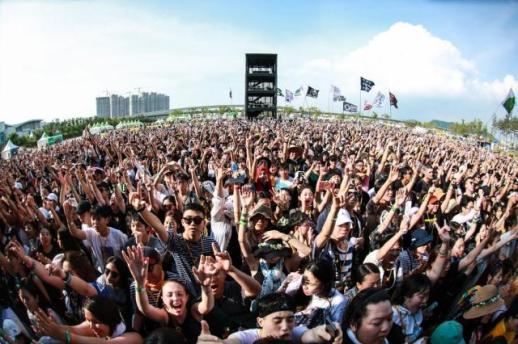 South Korea Aims to Boost Regional Tourism with Global Tourism Zones and Festivals To address the disproportionate concentration of foreign tourists in Seoul, where over 80% of visitors stay, the South Korean government is focusing on revitalizing regional tourism. The plan involves designating local hubs outside the Seoul metropolitan area and Jeju as "global tourism zones" to enhance their capacity for foreign visitors. Additionally, the government aims to promote ten major "global festivals" to attract tourists to these regions. On May 18, the Ministry of Culture, Sports and Tourism announced the launch of a two-track strategy to boost regional tourism. This initiative goes beyond one-time budget support and aligns with recent efforts to amend the Tourism Promotion Act. The goal is to innovate both the infrastructure (tourism zones) and the offerings (festivals) to provide a breakthrough for struggling local economies. Seeking True 'Local' Global Tourism Zones The ministry will accept applications from local governments for the "Global Tourism Zone Development Project" until July 6. Notably, the application process excludes the Seoul metropolitan area, including Incheon and Gyeonggi Province, as well as Jeju, which has its own tourism funding system. The clear objective is to cultivate neglected regional tourism hubs into world-class destinations. Applications will be divided into two categories based on characteristics. The "Future Convergence Type" targets regions that attracted over 200,000 foreign tourists in the past year and incorporate smart technology, while the "Local Self-Sustaining Type" is for areas with over 100,000 visitors that possess unique historical and scenic resources. Two selected regions will receive 3 billion won (approximately $2.3 million) in national funding over two years. Local governments will use these funds to enhance multilingual services, improve payment convenience at key tourist sites, and develop tailored products for foreign visitors. Targeting 30 Million Visitors with Global Festivals Festivals will be the key content to fill these regional tourism zones. The ministry, in collaboration with the Korea Tourism Organization, will launch a joint planning team to strengthen the competitiveness of ten global festivals and initiate precision marketing strategies. Specific marketing approaches have been developed for different target markets. For instance, the Incheon Pentaport Rock Festival will implement the "eplus" ticketing system to lower barriers for Japanese tourists, who have a strong preference for rock music. The Boryeong Mud Festival plans to enhance autonomy and introduce nighttime mud experiences to significantly increase visitor stay duration. Business-to-business (B2B) sales linking festivals and local attractions will also be strengthened. The Jinju Namgang Lantern Festival will collaborate with major overseas travel agencies such as Japan's HIS, Taiwan's Cola Tour, and Hong Kong's Easyel Tour to promote combined packages that include daytime visits to Jinju Castle and nighttime lantern viewing. The Jeongnamjin Jangheung Water Festival will offer unique stay packages contrasting daytime water fights with evening relaxation at zip houses to attract foreign tourists. This initiative to develop tourism zones and support global festivals is an attempt to overcome the structural limitations of regional tourism that have been highlighted in the past. The ministry's two-track strategy is expected to serve as a practical catalyst to alleviate the persistent issue of foreign tourists flocking to Seoul. The final selection of two global tourism zones is planned for July, following written and presentation evaluations.* This article has been translated by AI. 2026-05-18 08:45:28