
Journalist

Abe Kwak
-
 Japan leads Asia rally, KOSPI hits new high SEOUL, May 07 (AJP) - Japan led a broad rally across Asian markets on Thursday, with the Nikkei 225 surging to a fresh all-time high as easing oil prices, renewed optimism over a possible U.S.-Iran agreement and another global surge in AI-linked semiconductor shares fueled aggressive buying across the region. The Nikkei 225 jumped 5.6 percent to close at a record 62,833.8, while the broader TOPIX gained 3.4 percent after Japanese markets reopened following an extended holiday break. The Nikkei had last closed at 59,513.1 on May 1 before the holiday period and has since surged 3,320.7 points through Thursday’s close. Technology shares led the advance, with SoftBank Group soaring more than 16 percent as investor appetite for AI-related stocks intensified after another powerful overnight rally on Wall Street. The rally extended a global semiconductor surge after AMD reported stronger-than-expected quarterly earnings, with operating income jumping about 83 percent from a year earlier while revenue climbed nearly 38 percent. The results sent AMD shares up 18 percent overnight, lifting the Philadelphia Semiconductor Index 4.5 percent. The Nasdaq rose 2.0 percent, while the S&P 500 advanced 1.5 percent to another record close. The Dow Jones Industrial Average also gained 1.2 percent. Investor sentiment further improved after reports suggested the United States and Iran were moving closer to a broader de-escalation framework in the Middle East. Brent crude fell another 2.9 percent to $98.3 a barrel, extending the previous session’s sharp decline, while West Texas Intermediate crude dropped 2.6 percent to $92.6. Lower oil prices helped ease inflation concerns and boosted appetite for risk assets across Asia. South Korea’s benchmark KOSPI also hit another record high, though gains were more moderate compared with Japan’s explosive rally. The index closed up 1.4 percent at 7,490.1 after moving between an intraday low of 7,257.9 and a record high of 7,531.9. Foreign investors sold a net 7.15 trillion won ($4.94 billion) worth of KOSPI shares, while retail and institutional investors bought 5.99 trillion won and 1.10 trillion won, respectively, indicating that local buying continued to absorb heavy offshore profit-taking following the market’s recent surge. Samsung Electronics rose 2.1 percent to close at 271,500 won after hitting a record high of 277,000 won during the session, while SK hynix climbed 3.3 percent to 1,654,000 won as semiconductor shares continued to dominate market momentum. Hyundai Motor advanced 4.0 percent to 572,000 won. Among other notable gainers, Samsung E&A surged 21.5 percent to 64,400 won, GS Engineering & Construction rose 11.0 percent to 39,350 won and SKC gained 8.0 percent to 174,100 won. Defense and infrastructure-related stocks, however, saw sharp profit-taking after recent rallies. Hyundai Rotem plunged 10.3 percent to 235,000 won, LIG Defense & Aerospace dropped 11.5 percent to 866,000 won and Taihan Cable & Solution fell 7.4 percent to 64,100 won. Platform and telecom shares also weakened despite solid earnings releases. SK Telecom fell 2.4 percent to 93,200 won, LG Uplus slipped 0.2 percent to 15,370 won and Kakao declined 2.3 percent to 45,250 won. The tech-heavy KOSDAQ underperformed broader markets, falling 0.9 percent to close at 1,199.2 after fluctuating between 1,196.6 and 1,219.6 during the session. Foreign investors bought 175.7 billion won worth of KOSDAQ shares, while institutions and retail investors sold 135.0 billion won and 12.4 billion won, respectively. Among KOSDAQ-listed names, Daehan Optical Communication jumped 19.3 percent to 21,800 won. Kolon Tujin rose 10.6 percent to 114,600 won, Jusung Engineering gained 5.9 percent to 135,100 won, Seojin System surged 14.5 percent to 68,100 won, Simtech advanced 13.5 percent to 106,500 won and Eugene Technology climbed 5.9 percent to 146,900 won. The Korean won strengthened slightly, with the local currency rising 0.1 percent to 1,447.7 per dollar. China’s Shanghai Composite rose 0.5 percent to 4,178.9, while Hong Kong’s Hang Seng Index climbed 1.5 percent to 26,617.1 in afternoon trading, supported by gains in technology shares and renewed expectations for deeper AI cooperation discussions between the United States and China ahead of a possible Trump-Xi summit. The sharp divergence between Korea’s largest AI-linked stocks and the broader market has continued to widen. According to Bloomberg data, the total market capitalization of Korea-listed companies has surged 71 percent this year to $4.59 trillion, overtaking Canada’s roughly $4.5 trillion equity market. Samsung Electronics and SK hynix have both more than doubled this year as investor demand for AI chip leaders intensified. 2026-05-07 18:06:28
 -
 Hanwha Group moves to bring aerospace under its defense arm SEOUL, May 07 (AJP) - Defense-heavy Hanwha Group has climbed to No. 5 in South Korea’s latest conglomerate rankings by the Fair Trade Commission, and it appears to be aiming to go literally higher by bringing aircraft and rocket manufacturing business back into the family. The group has recently secured more than a 5 percent stake in Korea Aerospace Industries, the country's aircraft-making monopoly, for the stated purpose of “management participation,” signaling that its long-rumored ambition to build a “Korean Lockheed Martin” is moving into clearer view. Hanwha Aerospace and Hanwha Systems recently purchased additional KAI shares on the open market, raising their combined stake to 5.09 percent. The group is reportedly planning to invest an additional 500 billion won ($345 million) by the end of this year to lift its holdings further to 6.43 percent. The move marks Hanwha’s return to possible management involvement in KAI roughly eight years after it sold its entire stake in 2018 to improve its financial structure. Hanwha had quietly re-entered KAI’s shareholder base in March with a 4.99 percent stake, deliberately stopping just below the disclosure threshold that would have triggered stricter reporting requirements and intensified takeover speculation. By crossing the 5 percent threshold, Hanwha has effectively shown its hand and will to bring KAI back home to complete its broader aerospace and defense ambitions. KAI is de facto state-owned with the Export-Import Bank of Korea holding the largest 26.41 percent stake, followed by the National Pension Service with roughly 8 percent. Hanwha would become the largest non-public shareholder in KAI once stake purchase is completed. Hanwha itself has openly acknowledged the possibility of pursuing a larger role. “If discussions on a government-led privatization of KAI become public, we plan to review whether to pursue an acquisition or integration in line with the government’s policy direction,” the group said. Hanwha’s ties with KAI date back to 2015, when it acquired Samsung Techwin, now Hanwha Aerospace, and inherited Samsung Group’s roughly 10 percent stake in KAI. But the group sold the entire holding in 2018 as part of efforts to shore up its balance sheet. Speculation over a renewed KAI bid intensified after Hanwha acquired Hanwha Ocean, formerly Daewoo Shipbuilding & Marine Engineering, in 2023, strengthening its ambition to build an integrated defense structure spanning land, sea, air and space. Since then, Hanwha has repeatedly emerged as the leading candidate whenever discussions resurfaced over the possible sale of the Export-Import Bank’s KAI stake. Industry watchers also point to significant technological synergies. Hanwha Aerospace has strengths in fighter jet engines and space launch vehicles, while KAI specializes in aircraft manufacturing, satellite platforms and systems integration. A combination of the two could create South Korea’s first vertically integrated aerospace champion with the scale to compete more directly against global defense giants such as Lockheed Martin and Boeing. “Hanwha’s grand ambition is ultimately to create Korea’s Lockheed Martin,” said Kim Houng-yu. “KAI could become a key pillar in completing that vision.” The push is also viewed as a strategic investment in the emerging “new space” economy, where private companies are taking increasingly central roles in satellite development, launch systems and defense-related aerospace technologies. Still, major obstacles remain before any actual takeover could materialize. The most immediate issue is likely to be monopoly scrutiny. If Hanwha acquires KAI, the group would effectively control both fighter aircraft manufacturing and engine supply, a structure that could face close examination from the Fair Trade Commission. Concerns over privatizing a strategically sensitive defense company, potential clashes in corporate culture and labor union opposition are also viewed as major hurdles. “Defense is a special market, unlike ordinary industries, so the government could play some role in adjusting monopoly-related concerns,” Kim said. “Conditions could be attached during the acquisition process.” Another defense industry expert argued that the emergence of a Korean version of Lockheed Martin could ultimately strengthen South Korea’s global competitiveness. “South Korea still does not have a comprehensive defense company that covers everything from ground weapons and missiles to advanced weapons systems and aircraft platforms,” the expert said. “Rather than looking only at domestic competition, it could be positive to have a defense-specialized group like Korea’s Lockheed Martin when considering global competitiveness.” Hanwha’s latest stake expansion also reflects how Chairman Kim Seung-youn’s aggressive mergers, acquisitions and restructuring efforts are increasingly translating into stronger profitability rather than simply a larger corporate footprint. According to the Financial Supervisory Service, Hanwha Corp. posted 189.5 billion won in first-quarter operating profit on a standalone basis, up 24.8 percent from a year earlier, driven by improved operational efficiency and dividend income from key affiliates. Core defense affiliates also posted strong results. Hanwha Aerospace and Hanwha Ocean recorded first-quarter operating profit increases of 20.6 percent and 70.6 percent, respectively, as exports of K9 self-propelled howitzers and Chunmoo multiple rocket launch systems expanded amid rising global defense demand following Russia’s invasion of Ukraine and ongoing instability in the Middle East. Buoyed by growing confidence on land and at sea, Hanwha is now looking higher – toward aerospace. 2026-05-07 17:59:48
 -
 Singles' childbirth intentions rise above 40% in South Korea SEOUL, May 7 (AJP) - Four out of 10 South Korean adults viewed having children positively, a recent survey showed, adding to signs of a gradual demographic rebound in a country long plagued by the world's lowest birth rate. The fifth nationwide survey on perceptions of marriage, childbirth and parenting, conducted by the Presidential Committee on Ageing Society and Population Policy (PCASPP), found increasingly positive attitudes toward family formation among adults aged 25 to 49. The survey, conducted twice a year using the same questionnaire for 2,800 respondents, showed that 76.4 percent viewed marriage positively, continuing an upward trend since the first survey in 2024. Among unmarried respondents, positive perceptions of marriage rose to 65.7 percent, up from 55.9 percent two years earlier. Willingness to marry also increased by 6.4 percentage points to 67.4 percent. Attitudes toward having children likewise improved, with 71.6 percent of respondents saying children are necessary, up 10.5 percentage points from the first survey. Among respondents without children, willingness to have children rose to 41.8 percent from 32.6 percent. The committee highlighted the particularly sharp shift among unmarried adults, noting that both perceptions about the importance of having children and willingness to become parents increased by more than 10 percentage points over the past two years. The survey also indicated that economic pressures and workplace culture remain major barriers to marriage and child-rearing. When asked what was most important in addressing the country's low birthrate, 83.9 percent of respondents cited the need for stable, well-paying jobs. Dual-income households said the most urgent need was a workplace culture that supports employees in using childcare benefits, along with broader access to institutional childcare services and guaranteed care hours, including extended daycare and expanded after-school programs. Respondents also emphasized the need for greater flexibility in balancing work and family responsibilities. Support for flexible working arrangements was particularly strong among women, at 68.6 percent, compared with 53.1 percent among men. Participants also called for expanded financial support for married couples and families with children, with 51.3 percent favoring broader tax benefits. Support was higher among men at 56.5 percent, compared with 45.8 percent among women. On housing policy, lowering income thresholds for government-backed home purchase loans and lump-sum rental deposit loan programs was the most commonly cited measure, supported by 45.3 percent of respondents. The survey also found generally high satisfaction with childcare services, with more than 80 percent of respondents expressing positive views. Families with infants and toddlers prioritized longer childcare hours, while households with elementary school children placed greater emphasis on improving program quality. 2026-05-07 17:57:06
 -
 Proposal to amend constitution fails to be put to vote amid PPP boycott SEOUL, May 7 (AJP) - A proposed bill to partially amend the constitution, led by the ruling Democratic Party (DP), stalled at the National Assembly in Seoul on Thursday after the main opposition People Power Party (PPP) boycotted a parliamentary vote, leaving it short of the quorum required to proceed with only 178 lawmakers taking part. National Assembly speaker Woo Won-shik and DP lawmakers vowed to reconvene another plenary session on Friday to put the bill back to a vote. The proposed amendment seeks to include key democratic movements and struggles in South Korea's history including the May 1980 Gwangju uprising, in the constitution's preamble to reaffirm democratic values following disgraced former President Yoon Suk Yeol's botched martial law debacle in December 2024. It would also require a president to obtain National Assembly approval within 48 hours of declaring martial law. If approval is not secured within 48 hours, or if the National Assembly votes to lift martial law, the declaration would immediately lose effect, to prevent a repeat of incidents like Yoon's short-lived, overnight bid. The proposal also includes provisions to promote balanced regional development. The PPP, however, has opposed the amendment, calling for more deliberation rather than rushing it through ahead of local elections slated for early next month. To pass, it requires approval from at least two-thirds of all lawmakers. If all 106 PPP lawmakers are absent, the vote cannot be valid. To put it to a national referendum alongside the June 3 local elections, the proposal must clear the National Assembly by no later than May 10. 2026-05-07 17:48:55
 -
 KF-21 cleared for combat, opening era of Korean-made fighter jets SEOUL, May 07 (AJP) - South Korea’s homegrown KF-21 fighter jet has received final combat suitability approval, clearing the last major hurdle in its development 10 years and five months after the project began. The Defense Acquisition Program Administration (DAPA) said Thursday that the KF-21 was declared suitable for combat use, meaning the aircraft has met the Air Force’s required operational capability and secured the technical reliability needed to carry out missions in actual battlefield conditions. The KF-21 development project began in December 2015. Since testing and evaluation began in May 2021, the aircraft has undergone about five years of ground tests through February this year to verify its durability and structural integrity. The aircraft also completed more than 1,600 flight tests, covering over 13,000 test conditions, including aerial refueling and weapons launch trials. Through the tests, authorities verified the KF-21’s flight performance and stability. With the latest approval, the project is expected to be formally completed next month. The first mass-produced unit is scheduled to be delivered to the Air Force in the second half of this year. The KF-21 will replace the Air Force’s aging F-4 and F-5 fighter jets, marking a major step in South Korea’s efforts to build an independent fighter aircraft development capability. “This combat suitability approval is the result of close cooperation among the Defense Ministry, the Joint Chiefs of Staff, the Air Force, Korea Aerospace Industries and other related organizations,” said Noh Ji-man, head of DAPA’s Korean Fighter Program Office. “It is a symbolic achievement showing that South Korea has fully secured its own fighter jet development capability,” he added. However, some officials say the deployment timeline could still be subject to change as pressure grows on the defense budget. 2026-05-07 17:43:12
 -
 Gyeonggi fire services demonstrates unmanned firefighting robot 'FIRO' YONGIN, May 07 (AJP) - The Gyeonggi Fire Service's headquarters has conducted a demonstration of an unmanned firefighting robot called 'FIRO' at the Gyeonggi Fire Service Academy's live fire training facility in Yongin, south of Seoul, on Wednesday. The demonstration event included remote driving, water spraying, and search & rescue operations. According to the emergency headquarters, the unmanned firefighting robot will be deployed in dangerous environments involving buildings vulnerable to collapse, hard-to-reach areas, and areas exposed to high temperatures, explosions, toxic gases, and other hazards. 2026-05-07 17:34:00
 -
 KOSPI hits new heights and ordinary Koreans can only watch in envy SEOUL, May 07 (AJP) - South Korea’s benchmark stock index keeps scaling one record after another, but for many ordinary investors the rally feels increasingly like a private party they cannot afford to enter. After surging 70 percent last year, the KOSPI has already climbed another 77 percent this year, propelled overwhelmingly by a handful of AI-fueled chip giants. The gains have become so concentrated that while paper wealth has exploded, many retail investors holding smaller stocks say they have been left poorer — or locked out entirely by soaring share prices. A research report released Thursday by the Bank of Korea warned that the stock boom is increasingly enriching wealthy households and deepening Korea’s already severe asset polarization, long driven by widening real estate disparities. Individual investors purchased a net 63.6 trillion won ($43.8 billion) worth of stocks between 2020 and 2024, sharply up from just 1.3 trillion won during 2011 - 2019. Yet the gains accrued overwhelmingly to high-income households. The wealthiest 20 percent of households by net assets accounted for 64.5 percent of all stock holdings, the central bank said. When measured by total assets — including real estate, equities and cash — the concentration became even starker, with the top quintile controlling 73.2 percent of household wealth. The return gap was wider still. Between 2020 and 2024, the richest 20 percent earned average annual stock profits of 2 million won, far above the national average of 1.12 million won. For the remaining income quintiles, annual stock-related income remained below 400,000 won. The imbalance has likely intensified further in recent months as shares of Samsung Electronics and SK hynix exploded higher on the back of the artificial intelligence boom. As of Thursday, Samsung Electronics carried a market capitalization of 1,567 trillion won, while SK hynix stood at 1,175 trillion won. Together, the two companies accounted for more than 45 percent of the KOSPI’s total market value of 6,062 trillion won, up sharply from 34 percent at the end of last year. Their share prices have more than doubled this year, with Samsung Electronics climbing above 260,000 won and SK hynix topping 1.6 million won. Of the KOSPI’s roughly 1,000 trillion won increase in market capitalization this year, about 800 trillion won came from the two chipmakers alone. Outside the AI frenzy, however, much of the market continued to follow a sharply “K-shaped” trajectory, with many non-chip stocks declining even as headline indices surged. “I wanted to invest in the two major stocks, but the share prices were already too high, so I bought other stocks that ended up falling instead,” said Park Min-woo, who described himself as belonging to the second or third income quintile. “The barrier to entry for the core stocks has become too high.” Among the top 20 KOSPI-listed companies by market capitalization, only Shinhan Financial Group traded below 100,000 won per share. The rally has also fueled a fresh wave of leveraged speculation. Margin loan balances, which stood at around 16 trillion won at the end of 2024, surpassed 27 trillion won by the end of 2025 and reached 36 trillion won as of Monday. Analysts said the trend reflects both speculative fervor and the growing difficulty retail investors face in accessing the market’s biggest winners. “We must keep in mind that leveraged investments, such as credit loans, are increasing,” a BOK official said. “A simultaneous decline in asset prices and increase in debt burdens could amplify downward pressure on the economy.” As wealth polarization deepens, consumer spending has weakened while dependence on asset accumulation — particularly real estate — has intensified. According to the BOK survey, Korean households spent just 130 won for every 10,000 won earned through stock investments, far below comparable figures of 3.2 percent in the United States and 3.8 percent in Germany. The central bank pointed to property markets as a key driver of the disparity. The share of proceeds from stock and bond sales used for home purchases rose from 4.9 percent in May last year to 8.9 percent in January this year. During the same period, apartment prices in Seoul climbed about 8.7 percent. The trend runs counter to the government’s longstanding hope that rising stock prices would ease speculative pressure on housing. According to the KB Financial Group Research Institute, stock-market profits are increasingly flowing back into real estate, particularly among wealthy investors. The institute pointed to a steady migration of equity wealth into premium residential districts across Seoul and the surrounding metropolitan area. “It is not a new phenomenon for stock market liquidity to move into real estate with a certain time lag,” said Song Seung-hyeon, head of City and Economy. Song warned that as wealthy investors armed with large amounts of “seed money” continue pouring into the housing market, property prices in Seoul and the greater metropolitan area are likely to climb further, widening the asset divide. For decades, the stock market was viewed as a pathway for lower-income households to build wealth and improve living standards. In today’s market, that ladder appears increasingly difficult to climb. 2026-05-07 17:32:32
 -
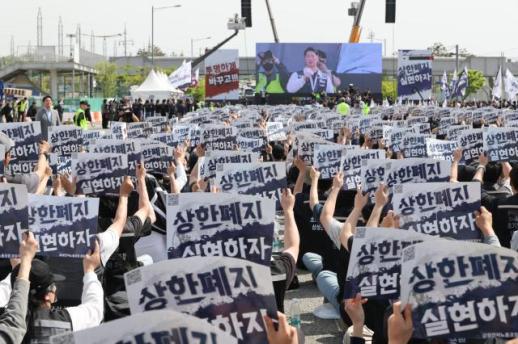 The higher Samsung Elec goes, the deeper internal collision over rewards SEOUL, May 07 (AJP) - Samsung Electronics has much to celebrate — joining the rare ranks of companies generating more than $40 billion in quarterly profit and surpassing a $1 trillion market capitalization. Yet beneath the triumph, the company faces growing internal strains that mirror the strengths and vulnerabilities of the broader Korean economy, heavily hanging on the semiconductor boom. The founding principle of “One Samsung” is showing visible cracks as divisions drift further apart — financially, culturally and strategically. The gap is most stark between the Device Solutions (DS) division, which oversees semiconductors, and the Device eXperience (DX) division, responsible for mobile devices and home appliances. In the first quarter, DS generated 53.7 trillion won ($39.2 billion) in operating profit, accounting for nearly 94 percent of the company’s earnings. DX contributed a comparatively modest 3 trillion won ($2.2 billion). The widening imbalance has begun spilling into labor relations. According to union sources, more than 2,500 DX employees recently withdrew from the representative labor union, SELU, arguing that they were being sacrificed to bankroll ever-fatter paychecks for semiconductor workers. Unionized employees within the DS division counter that their demands are aimed at ensuring compensation remains competitive with industry rivals. “The friction is less about the absolute amount than about maintaining rewards that remain competitive against our peers,” a union official from the DS division said. The official worried that prolonged disputes over compensation could eventually accelerate an outflow of talent to rival chipmakers, posing a longer-term threat to the company’s competitiveness. Discontent within DX also reflects growing anxiety over the rapid rise of Chinese competitors in consumer electronics and home appliances. Amid deteriorating performance, Samsung has decided to withdraw its money-losing home appliance and television sales operations in China. On Wednesday, the company informed local partners and employees of the decision, citing intensifying competition and a rapidly shifting business environment. While Samsung will retain its NAND flash production facility in Xi’an and its appliance factory in Suzhou, the withdrawal has already triggered demands from local employees for “restructuring incentives.” According to industry trackers, Samsung — which once commanded nearly 20 percent of China’s television market in 2005 — has seen its offline retail market share collapse to just 3.62 percent as of April 2026, far behind local competitors. The picture is even bleaker in white goods, where Samsung’s market share in refrigerators and washing machines has fallen below 0.5 percent this year. China’s consumer electronics market has become brutally competitive, with rapid technological catch-up by domestic firms and growing concerns over technology leakage making profitability increasingly elusive for foreign players. China's ascent is no longer confined to the home turf. According to 2025 data from Counterpoint Research, Chinese manufacturers TCL and Hisense captured a combined 25 percent share of the global TV market by shipment volume, overtaking the combined 24 percent held by Samsung and LG. Samsung accounted for 15 percent and LG 9 percent. Still, "it would be unreasonable to interpret this as Samsung giving up on home appliances altogether, as its premium image remains strong in many global markets,” said Hwang Yong-sik, a business administration professor at Sejong University. “A period of selection and concentration has arrived, and Samsung appears to be reinforcing its portfolio around high-tech AI and semiconductors.” Hwang added that the simultaneous labor strife is also a structural byproduct of managing a sprawling conglomerate. Unlike SK hynix, which effectively operates as a pure semiconductor company, Samsung houses multiple strategic business units under a single corporate structure, making differentiated, performance-based compensation an almost inevitable source of tension. “This labor-versus-labor conflict is an expected outcome stemming from the need to distribute incentives differently across business units, combined with South Korea’s institutional framework allowing multiple unions,” Hwang said. “It is not simply a management failure, but a structural issue inherent to Samsung’s diversified portfolio and Korea’s labor system.” Unionized workers have warned of a potential full-scale strike later this month if negotiations remain deadlocked — a scenario that could inflict serious damage on Samsung’s core semiconductor operations, which run continuously around the clock. “A court will rule on May 20 on the company’s injunction request seeking to block a strike on grounds that semiconductors constitute a strategic national industry.” Although semiconductor fabrication plants are highly automated, industry analysts estimate that even partial disruptions to logistics or manual processes could result in substantial daily losses. Should disruptions escalate into a full production halt, estimated daily losses could climb as high as 1 trillion won ($730 million). Any deterioration in chip yields or wafer damage caused by operational interruptions would be especially costly as Samsung races to meet surging global demand for high-bandwidth memory (HBM) chips. Shares of Samsung Electronics hit new historic high, closing Thursday 2.8 percent up at 273,500 won. 2026-05-07 17:20:28
 -
 S. Korean AI firm Upstage acquires web portal Daum to bolster sovereign AI race SEOUL, May 07 (AJP) - In a bid to build South Korea's sovereign AI foundation model, Upstage, one of the country's artificial intelligence powerhouses, has finalized the acquisition of web service portal Daum for an undisclosed amount, the AI company said Thursday. Daum is South Korea's iconic web service that was launched in 1995 as an arts and entertainment service portal. The service gradually upgraded to add other services such as web search, email, online magazine, and news to garner more than one million registered users in 1998. The web service's operator Daum Communication, later merged with messenger app giant Kakao to become Daum Kakao in 2015, and Daum's operating division was separated by Kakao in December 2025 into a subsidiary named AXG. According to Upstage, the acquisition deal was signed as a share swap, with the AI company acquiring the entire 100 percent stake in AXZ held by Kakao, while Kakao received newly issued shares in Upstage in return. The acquisition was made about three months after Upstage and Kakao signed a memorandum of understanding (MoU) in January this year. Through the acquisition of the web service portal, Upstage plans to combine its Solar large language model (LLM) with Daum's web search engine and context data to build "Context AI," a service designed to understand user intent and context rather than just matching keywords. Upstage said that the acquisition will eventually lead the company to develop a next-generation AI portal built on South Korean technology and data. "The combination of Upstage's technology and a 30-year-old national portal will mark a symbolic turning point for the AI industry, opening a new era of AI portals," Upstage CEO Kim Sung-hoon said in a statement. One of the central questions surrounding the deal concerned Daum's workforce. Upstage said Daum will continue to operate as an independent legal entity with no personnel changes. The company also pushed back against speculation that Daum's user data would be funneled into Solar's training pipeline. Bae Sung-beom, technical communications lead at Upstage, told AJP in a written response that the term 'training' in the LLM context refers specifically to the pre-learning and post-learning of foundation models and does not mean user data will be used for the machine learning of AI systems. "This kind of data is absolutely not used," Bae said. "It is impossible without the consent and cooperation of users, who are the data subjects. And even with consent, it must comply with relevant laws, including the Personal Information Protection Act." For Upstage, the acquisition lands at a pivotal moment. The 2020-founded company became South Korea's first generative AI unicorn last year after an 180-billion-won ($130 million) Series C round and has signaled plans for a KOSPI listing this year. Its Solar Pro 2, released last summer, became the first Korean-developed LLM ranked as a global frontier model. The current model, Solar Pro 3, was released in March. Upstage is also leading one of four consortia in South Korea's national "sovereign AI" project. For Kakao, this deal allows it to monetize a long-stagnant asset while preserving indirect exposure through its new equity stake in Upstage, a common pattern as the conglomerate retreats from non-core businesses amid regulatory pressure. 2026-05-07 17:13:58
 -
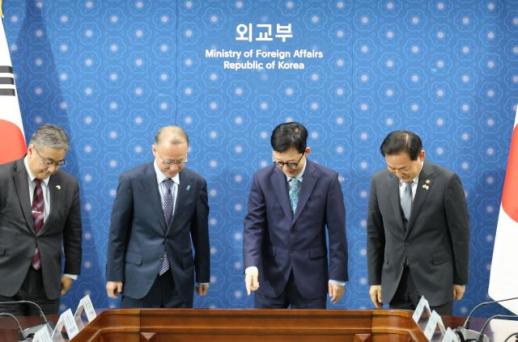 South Korea, Japan hold first vice ministerial '2+2' talks in Seoul SEOUL, May 7 (AJP) - South Korean and Japanese foreign and defense officials met in Seoul on Thursday to discuss ways to strengthen security cooperation. In the format of their first "2+2" vice ministerial meeting, South Korea's First Vice Foreign Minister Park Yoon-joo and Vice Defense Minister Lee Doo-hee met with their respective counterparts Takehiro Funakoshi and Koji Kano. Thursday's meeting, which came after the previous one in Tokyo in November 2024, was upgraded to vice ministerial level this time. Such talks, held at the working level under a 1997 agreement between the two neighboring countries, have been suspended and resumed at times as bilateral ties have fluctuated. With detailed discussions yet to be disclosed, the two sides were believed to have exchanged views on key security issues including North Korea's nuclear threat and the prolonged conflict in the Middle East. With both countries importing large amounts of energy from the region, they were also likely to explore cooperation to reopen the Strait of Hormuz and bolster energy security. 2026-05-07 17:01:46