
Journalist

Abraham Kwak
-
 Korean Investors Shift Focus from U.S. Stocks Amid Record Domestic Market As the domestic stock market continues to reach all-time highs, South Korean investors, known as "seohakgaemi," who have heavily invested in U.S. stocks, are now shifting to a selling trend. Amid ongoing U.S.-China tensions and geopolitical risks from the Middle East, the U.S. stock market has shown relative weakness this year, while the KOSPI index has gained momentum, raising expectations for the KOSPI to reach 8,000. This has led to a simultaneous movement of funds from U.S. stocks to the domestic market. According to the Korea Securities Depository's Saveuro portal, South Korean investors recorded a net sell of $469 million in U.S. stocks last month. This marks the first time since June of last year that seohakgaemi have turned to net selling on a monthly basis. The selling trend has continued into this month, with net sales of $192 million in U.S. stocks from May 1 to May 13. Previously, individual investors had been purchasing heavily into U.S. tech giants like Tesla and Nvidia, following their upward trends. However, in the past month, profit-taking on these two stocks has shifted the sentiment. During this period, South Korean investors sold a net $432 million in Tesla and $738 million in Nvidia, making these two stocks the top holdings among South Korean investors in the U.S. market. Market analysts suggest that the recent rebound in U.S. tech stocks has prompted domestic investors to realize profits. Despite significant volatility in the U.S. market due to tariff disputes, geopolitical uncertainties, and concerns over prolonged high interest rates, the recovery of certain tech stocks has led investors to cash in on their gains. In the last month, Tesla and Nvidia shares rose by 22.26% and 14.92%, respectively. Additionally, the return of investment accounts (RIA) policy is influencing the flow of funds. To benefit from a 100% exemption on capital gains tax for overseas stocks, investors must complete their sales by May 31, leading to an increase in the movement of overseas investment funds to domestic asset management accounts. There is a growing trend of reinvesting in the domestic stock market after realizing profits from U.S. stocks. Conversely, the domestic market continues its strong upward trend. With increased foreign investment in sectors like artificial intelligence (AI) and semiconductors, the KOSPI has been consistently hitting new highs. Analysts are even discussing the possibility of the KOSPI reaching the 8,000 mark, as individual investor funds rapidly shift towards large-cap domestic stocks and exchange-traded funds (ETFs). A securities industry official noted, "It appears that individual investors who have invested in U.S. tech stocks for an extended period are now realizing profits during this rebound phase. The strong momentum in the domestic market is attracting funds that were relatively undervalued compared to the U.S. market."* This article has been translated by AI. 2026-05-14 19:08:00
 -
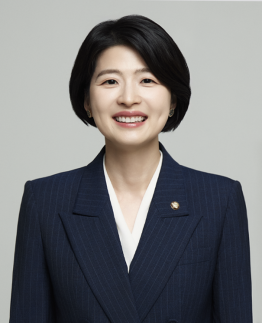 Rep. Han Ji-a Calls for Institutional Support to Boost K-Bio's Global Competitiveness Rep. Han Ji-a, a member of the National Assembly's Health and Welfare Committee, emphasized the need for institutional support to enhance the global competitiveness of the K-Bio sector as the pharmaceutical and biotech industries undergo rapid restructuring due to the spread of artificial intelligence (AI) technology. Speaking at the 16th Global Healthcare Forum hosted by Aju Economy at the Korea Press Center in Jung-gu, Seoul, on May 14, Han stated, "AI is bringing revolutionary changes across various industrial structures beyond daily life. The pharmaceutical and biotech industries are also experiencing unprecedented changes in their structures, from research and development (R&D) to clinical trials, production, and distribution, through the integration of AI technology." He noted, "The global pharmaceutical and biotech market is growing at a pace that significantly exceeds that of the global semiconductor market. Following the COVID-19 pandemic, the importance of stabilizing the pharmaceutical supply chain has increased, making technological competitiveness and supply chain leadership critical issues that determine national competitiveness." Han added, "The market is rapidly shifting from simple technological competition to a race to establish stable production capabilities and supply chains. In this context, I find it very meaningful that the forum is being held under the theme 'AI Revolution: Global Value Chain Strategy for K-Bio.'" He particularly highlighted the growth potential of the Contract Development and Manufacturing Organization (CDMO) industry, forecasting that the global CDMO market size will expand from approximately 25 trillion won in 2024 to about 60 trillion won by 2029. He assessed that South Korea possesses sufficient potential based on its world-class manufacturing capabilities and excellent R&D competitiveness. As a member of the Health and Welfare Committee, Han expressed a deep awareness of the importance of the pharmaceutical and biotech industries, stating, "I have introduced a special law to support CDMO to strengthen the competitiveness of domestic biopharmaceutical production, which has successfully passed through the plenary session." In conclusion, he stated, "I will continue to do my best to provide institutional support, such as R&D assistance and regulatory easing, so that our companies can secure competitiveness in a more stable and market-friendly environment amid intensifying global competition."* This article has been translated by AI. 2026-05-14 19:05:54
 -
 Trump Warned by Xi on Taiwan Issue During Beijing Meeting Chinese President Xi Jinping issued a strong warning regarding Taiwan during a meeting with U.S. President Donald Trump, stating that mishandling the issue could lead to conflict between the two nations. This meeting marked their first encounter in seven months since the summit in Busan last October. According to China Central Television (CCTV) on May 14, Xi emphasized that the Taiwan issue is the most critical matter in U.S.-China relations during their talks at the Great Hall of the People in Beijing. He noted, "If the Taiwan issue is handled well, U.S.-China relations can maintain overall stability. However, if mishandled, the two countries could collide and even enter a state of conflict, pushing U.S.-China relations into a very dangerous situation." He added, "'Taiwan independence' and peace in the Taiwan Strait cannot coexist like water and fire," underscoring that safeguarding peace and stability in the Taiwan Strait is the greatest common interest of both nations. Xi's remarks on Taiwan were highlighted in a breaking news format by CCTV even before the conclusion of the summit, indicating the importance China places on the Taiwan issue. Analysts suggest that Xi's comments represented a heightened level of concern compared to previous statements. Prior to Trump's visit, China had already defined the Taiwan issue as "the core of China's core interests" and "the first red line in U.S.-China relations," reiterating its sensitivity. An article by Chinese Ambassador to the U.S. Xie Feng, published in the People's Daily, also listed the Taiwan issue first among four red lines, which included democracy, human rights, development paths, and China's right to develop. On the first day of Trump's visit on May 13, the Taiwan Affairs Office of the State Council reiterated its opposition to arms sales between the U.S. and Taiwan, further pressuring the U.S. Shiu Yuren, a senior researcher at the Hudson Institute, interpreted through the Singapore United Daily News that Trump might be testing whether he intends to use the Taiwan issue as a bargaining chip. Trump had previously indicated that he would discuss the Taiwan issue and U.S. arms sales to Taiwan during his meeting with Xi. Given that U.S. arms sales to Taiwan have long been a source of tension in U.S.-China relations, it is expected to be a key agenda item in this summit. Observers are particularly interested in whether Trump will maintain the previous U.S. government's stance of "not supporting" Taiwan independence or adopt the Chinese-preferred phrasing of "opposing it" during his visit. However, after the summit, Trump did not respond to reporters' questions about whether the Taiwan issue was discussed. Experts believe that the likelihood of changes in U.S. policy toward Taiwan, solely based on China's purchases of U.S. soybeans or Boeing aircraft, remains low.* This article has been translated by AI. 2026-05-14 19:03:35
 -
 Ace Bed Launches Hotel-Style Low-Profile Bed 'Opimo III' Ace Bed has launched the 'Opimo III,' a hotel-style bed designed with a low-profile structure to enhance openness in the bedroom. According to Ace Bed, the Opimo III maximizes the sense of space and openness in the bedroom. Its low-profile design ensures that even when paired with a high pillow-top mattress, the overall height of the bed remains manageable, creating a visually spacious effect. The headboard features a dual head cushion that provides optimal comfort by supporting the body's curves while resting. The ends of the headboard are designed with a wing shape. The headboard's top and side panels include approximately 90mm of storage space, making it convenient for storing personal items like smartphones and glasses. Additionally, an integrated LED mood light offers three brightness levels, memory and timer functions, and a Type-C port, creating a customized sleeping environment, according to Ace Bed. The bed incorporates a low-profile T-type two-mattress system, with the lower mattress embedded within the frame for a clean appearance. This dual support structure effectively distributes weight, providing an optimal sleeping environment. Last year, Ace Bed reported sales of 317.2 billion won and an operating profit of 54 billion won, achieving a 17% operating profit margin. An Ace Bed representative stated, "The Opimo III, with its low-profile hotel design and practical features like storage space and LED lighting, meets the needs of modern consumers."* This article has been translated by AI. 2026-05-14 19:02:26
 -
 Oasis Market Reports 32% Increase in Q1 Operating Profit Driven by Direct Sourcing and Logistics Efficiency Oasis Market has improved its profitability in the first quarter of this year. The company plans to secure growth momentum through direct sourcing of fresh produce, logistics efficiency, and the advancement of AI-based commerce.On May 14, Oasis Market reported that its operating profit for the first quarter reached 8.3 billion won, a 32.4% increase compared to the same period last year. During the same timeframe, sales rose by 3.2% to 139.3 billion won, with online sales increasing by 8% year-over-year.The company attributed its improved profitability to its direct sourcing network and enhanced logistics operations. It also announced plans to focus on advancing AI commerce starting in the second quarter. The goal is to enhance both online and offline shopping experiences through the AI assistant MAY and the futuristic Route series of stores.Last month, MAY was fully upgraded to provide an interactive shopping service that supports everything from product search to payment. For instance, if a customer says, "Show me antibiotic-free pork belly" in the app, it presents related products and facilitates payment. If asked for a recipe, it recommends all necessary ingredients.In its physical stores, Oasis Market has introduced the Route Mini self-checkout system. Recently installed at the Sangwangsimni Station location, Route Mini automatically recognizes products placed on it and transitions to the payment screen. The compact design has reduced checkout space by nearly 10%, allowing the company to utilize the freed-up area for product displays.An Oasis Market representative stated, "We will build a trusted growth foundation for customers using the AI assistant MAY and the smart Route series as a stepping stone."Meanwhile, Oasis Market has been working to resume operations at TMON, which it acquired last June, but delays in negotiations with credit card companies have left the timeline for service resumption uncertain.* This article has been translated by AI. 2026-05-14 19:00:05
 -
 Yoo Seung-jun Urges Against Negative Comments, Denies Rumors of Profanity Singer Yoo Seung-jun addressed those who post negative comments about him in a recent video. On May 13, he uploaded a video titled "Do you still believe I cursed? Yoo Seung-jun finally speaks out. A quiet message for those who still criticize me" on his YouTube channel. In the video, Yoo said, "Please stop posting negative comments. I may not be that mentally weak, but who wouldn’t feel hurt when seeing such comments?" He added, "Even if someone is in a situation where they deserve criticism, it doesn’t mean we should make things harder for them or wish for their unhappiness. That’s not right." He emphasized, "There are words that can uplift people and words that can support them. Why would you mock or insult someone who is trying to carry the weight of their life? It’s not like you want to see their life completely fall apart, right?" Yoo urged, "You don’t have to say those things to me. I hope you choose to speak kindly and wish well for others." He also clarified the profanity controversy that arose during an internet broadcast in 2015, stating, "It was the voice of the producer at that time, not mine." Yoo Seung-jun debuted in April 1997 and lost his South Korean citizenship after obtaining U.S. citizenship following a trip abroad for a performance in 2002.* This article has been translated by AI. 2026-05-14 18:58:13
 -
 Trump and Xi Hold 135-Minute Summit in Beijing Amid Tensions "Can the U.S. and China overcome the 'Thucydides Trap'?" <Chinese President Xi Jinping>"It is an honor to meet you again and be friends." <U.S. President Donald Trump>On May 14, Chinese President Xi Jinping and U.S. President Donald Trump met at the Great Hall of the People in Beijing for the first time in six months. Their opening remarks revealed a stark contrast in tone. While Xi emphasized the importance of managing U.S.-China tensions and preventing conflict, Trump focused on praising Xi and highlighting their personal friendship.Xi Calls for Constructive, Strategic, and Stable RelationsDuring the approximately 135-minute summit, both leaders agreed on the need to manage U.S.-China relations in a stable manner and to establish a framework for future cooperation.According to China's state-run Xinhua News Agency, Xi stated, "We have agreed with President Trump to establish 'constructive, strategic, and stable relations' as a new guiding principle for our bilateral ties," adding that this would provide a strategic direction for U.S.-China relations for the next three years.However, U.S. media noted the subtle tension reflected in the leaders' remarks. The Associated Press reported, "While President Trump continued to offer conventional praise, President Xi warned of the potential for conflict." This highlighted the differences in their positions on sensitive issues such as the Iran conflict, trade disputes, and U.S.-Taiwan relations, suggesting that the summit may have prioritized symbolism and protocol over substantive breakthroughs.Xi remarked, "Can the U.S. and China overcome the 'Thucydides Trap,' which refers to the potential for conflict between a rising power and an established one?" He emphasized the need for both leaders to work together to prevent hegemonic competition from leading to conflict. He also stated, "The U.S. and China must maintain a partnership rather than an adversarial relationship, achieving mutual success and common prosperity while paving the right path for great power relations in the new era."Xi has repeatedly referenced the term 'Thucydides Trap' since 2014 to describe U.S.-China relations. The AP noted that Xi's use of this expression at a time when Trump was starting his visit with an optimistic tone was noteworthy.Additionally, Xi warned that the Taiwan issue is the most critical matter in U.S.-China relations, stating that mishandling it could lead to conflict between the two nations.In contrast, Trump's opening remarks were filled with praise for Xi and China. He called Xi a "great leader" and said, "People may dislike me saying this, but I say it because it is true." He added, "It is a great honor to meet you again as friends," and emphasized that U.S.-China relations could reach the best level in history.Xi Meets U.S. Business Leaders, Promises Market OpennessWhile economic and trade issues were significantly addressed during the summit, no immediate outcomes were announced. However, the meeting featured an unusual scene where top officials from both countries were joined by prominent American business leaders. During the summit, Xi met with over ten U.S. business leaders, including Elon Musk, CEO of Tesla; Tim Cook, CEO of Apple; and Jensen Huang, CEO of Nvidia.Trump remarked, "This delegation is made up of great American business leaders who all respect China and look forward to expanding cooperation."Xi also stated, "China's door will open even wider in the future," emphasizing that American companies have deeply participated in China's reform and opening process. He added, "China welcomes U.S. companies to strengthen mutually beneficial cooperation with China."Xinhua reported that American business leaders also expressed high regard for the importance of the Chinese market and their willingness to expand business and strengthen cooperation in China.According to the Wall Street Journal, after the summit, Musk said, "It was excellent. Many good things are happening." Jensen Huang described the meeting as "very well conducted," stating that both Xi and Trump were "incredible." Tim Cook responded to reporters' questions with a thumbs-up.Limited Concrete Outcomes Raise Questions About Summit's EffectivenessHowever, following the summit, no specific agreements were disclosed regarding the previously mentioned establishment of a U.S.-China trade committee and investment committee, the expansion of China's purchases of U.S. agricultural products, aircraft, and energy, or the extension of the trade truce and tariff reductions.Regarding major security issues such as the Iran conflict and North Korea's nuclear program, the Chinese side only briefly stated that "the two leaders exchanged views on international and regional issues, including the situation in the Middle East, the Ukraine crisis, and the Korean Peninsula."While the first day of the summit was filled with grand events and symbolic moments, evaluations suggest that the concrete outcomes were limited.After the meeting, Trump and Xi took a walk together in Beijing's Temple of Heaven, a site where emperors once offered sacrifices to heaven. The two leaders walked for about 30 minutes starting around 1 p.m., accompanied only by interpreters.Later that evening, a state banquet was held at the Great Hall of the People, attended by Xi, Premier Li Qiang, Zhao Leji, Chairman of the Standing Committee of the National People's Congress, Wang Huning, Chairman of the Chinese People's Political Consultative Conference, Cai Qi, a member of the Politburo Standing Committee, Li Shi, Secretary of the Central Commission for Discipline Inspection, and Ding Xuexiang, Vice Premier, among other top-ranking officials from the Chinese Communist Party.On May 15, Xi is expected to invite Trump to Zhongnanhai, the heart of Chinese power, for tea and lunch. 2026-05-14 18:45:16
 -
 Lotte Home Shopping Shareholders Reject Motion to Dismiss CEO Kim Jae-gyeom A motion to dismiss Kim Jae-gyeom as CEO of Lotte Home Shopping was rejected at an extraordinary shareholders' meeting held on May 14. Taekwang Industrial, the company's second-largest shareholder, had proposed the dismissal. A representative from Lotte Home Shopping stated after the meeting, "The motion to dismiss the CEO was rejected at the extraordinary shareholders' meeting convened at the request of some shareholders. The company respects the exercise of shareholder rights. We hope shareholders will accept the outcome responsibly and work together for the company's growth." The representative added, "Lotte Home Shopping's management will do its utmost to be a company trusted and loved by shareholders, customers, partners, and employees through responsible management." As a result, Kim will continue in his role as CEO. Taekwang Industrial has criticized Kim's management, citing the approval of internal transactions between Lotte Home Shopping and its affiliate, Lotte Shopping, which was rejected by the board in January but continued nonetheless. In March, Taekwang also opposed Kim's reappointment for similar reasons. The rejection of the dismissal motion reflects the influence of Lotte Shopping, the largest shareholder, which holds a 53% stake in Lotte Home Shopping, while Taekwang holds 45%. The two companies have been in conflict over management rights since acquiring the predecessor of Lotte Home Shopping, Woori Home Shopping, in 2006. Taekwang Industrial is reportedly considering filing for an injunction against Kim's duties and pursuing a lawsuit for his dismissal in court. * This article has been translated by AI. 2026-05-14 18:42:59
 -
 Samsung and LG Challenge Netflix with Free Streaming Services Global TV manufacturers Samsung Electronics and LG Electronics are pivoting to ad-supported free streaming services (FAST) as hardware sales face limitations amid a prolonged downturn in the global TV market. The K-TV sector, once a leader in electronics, is evolving into a platform-driven industry.On May 14, industry sources reported that Samsung has made a bold move by replacing its TV business head, signaling an official commitment to expanding its FAST service, 'Samsung TV Plus.' The focus is not just on content delivery but on enhancing ad integration within the platform to create new revenue streams.Additionally, Samsung plans to actively pursue a strategy of 'external sales' by integrating its proprietary Tizen smart TV operating system into TVs produced by other manufacturers, particularly in China, to broaden its platform ecosystem.LG Electronics is also accelerating its shift from hardware to service-oriented operations. After a decade of service, LG has revamped its FAST service, 'LG Channels,' and is expanding its reach beyond North America to Europe and the Middle East. To cater to multilingual markets, LG has enhanced its offerings with a 'multi-audio' feature, allowing users to select their preferred language for content viewing.FAST services allow users to access live channels and video-on-demand (VOD) content for free, provided they watch ads, without the need for subscription fees or additional hardware like set-top boxes. This model contrasts sharply with traditional IPTV and cable TV services that require monthly fees and installation.As global OTT platforms, including Netflix, face 'streaming inflation' with rising subscription costs, FAST is emerging as a compelling alternative. Consumers are increasingly fatigued by subscription fees, making the ability to enjoy high-quality content for free—albeit with ads—an attractive proposition.Moreover, FAST's appeal is bolstered by its 'lean-back' viewing experience, allowing users to switch channels easily, reminiscent of traditional TV watching, without the need for extensive deliberation on what to watch.According to a global FAST report by media tech firm Amagi, viewing hours for FAST channels in the Asia-Pacific region surged by 132% year-over-year as of January last year, followed by North America at 98% and Europe at 83%. Ad exposure also increased by 130%.However, the domestic FAST market in South Korea has yet to experience significant growth. The existing IPTV infrastructure is well-established, offering hundreds of live channels at very low prices through bundled internet services. Additionally, the cost of paid broadcasting is significantly lower than in North America, reducing the incentive for consumers to switch.With mobile OTT consumption centered around smartphones becoming the norm, there are concerns that the living room-focused FAST services may struggle to gain traction.Kim Jeong-seop, a professor at Sungshin Women's University, noted, "The domestic industry still relies heavily on hardware differentiation strategies rather than investing in original FAST content. There should be institutional support to promote premium TV adoption, such as AI smart TVs, to bridge the FAST gap among viewers and reinvest a portion of revenues into FAST content."* This article has been translated by AI. 2026-05-14 18:40:40
 -
 Annual rose festival set to open in Seoul this week SEOUL, May 14 (AJP) - A flower festival featuring roses in full bloom is set to open in Seoul's northeastern district of Jungnang this week. According to district officials, the annual rose festival, famous for its 5.45-kilometer flower tunnel, will begin with a walking event on Friday taking a strool along riverside trails and run through May 23. This year's event, now in its 18th year, features some 320,000 roses across 232 varieties, lining walking trails along the Jungnangcheon Stream, one of Seoul's most popular seasonal photo spots. The festival also offers a parade, street performances, flea markets, food booths, and hands-on activities for all ages, with newly-added programs for this year specially tailored to children, youngsters, and older visitors. Rose trails and paths lit up at night are also expected to draw visitors with stunning evening scenery. 2026-05-14 18:36:49