

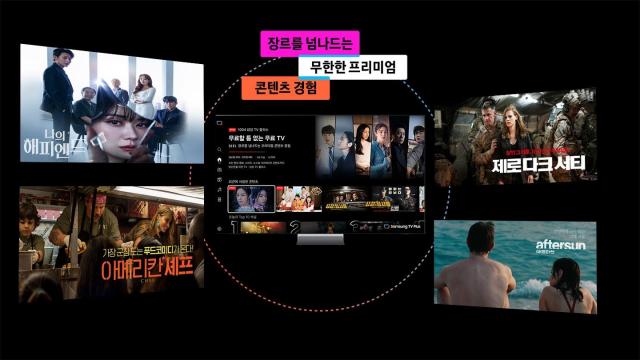
Global TV manufacturers Samsung Electronics and LG Electronics are pivoting to ad-supported free streaming services (FAST) as hardware sales face limitations amid a prolonged downturn in the global TV market. The K-TV sector, once a leader in electronics, is evolving into a platform-driven industry.
On May 14, industry sources reported that Samsung has made a bold move by replacing its TV business head, signaling an official commitment to expanding its FAST service, 'Samsung TV Plus.' The focus is not just on content delivery but on enhancing ad integration within the platform to create new revenue streams.
Additionally, Samsung plans to actively pursue a strategy of 'external sales' by integrating its proprietary Tizen smart TV operating system into TVs produced by other manufacturers, particularly in China, to broaden its platform ecosystem.
LG Electronics is also accelerating its shift from hardware to service-oriented operations. After a decade of service, LG has revamped its FAST service, 'LG Channels,' and is expanding its reach beyond North America to Europe and the Middle East. To cater to multilingual markets, LG has enhanced its offerings with a 'multi-audio' feature, allowing users to select their preferred language for content viewing.
FAST services allow users to access live channels and video-on-demand (VOD) content for free, provided they watch ads, without the need for subscription fees or additional hardware like set-top boxes. This model contrasts sharply with traditional IPTV and cable TV services that require monthly fees and installation.
As global OTT platforms, including Netflix, face 'streaming inflation' with rising subscription costs, FAST is emerging as a compelling alternative. Consumers are increasingly fatigued by subscription fees, making the ability to enjoy high-quality content for free—albeit with ads—an attractive proposition.
Moreover, FAST's appeal is bolstered by its 'lean-back' viewing experience, allowing users to switch channels easily, reminiscent of traditional TV watching, without the need for extensive deliberation on what to watch.
According to a global FAST report by media tech firm Amagi, viewing hours for FAST channels in the Asia-Pacific region surged by 132% year-over-year as of January last year, followed by North America at 98% and Europe at 83%. Ad exposure also increased by 130%.
However, the domestic FAST market in South Korea has yet to experience significant growth. The existing IPTV infrastructure is well-established, offering hundreds of live channels at very low prices through bundled internet services. Additionally, the cost of paid broadcasting is significantly lower than in North America, reducing the incentive for consumers to switch.
With mobile OTT consumption centered around smartphones becoming the norm, there are concerns that the living room-focused FAST services may struggle to gain traction.
Kim Jeong-seop, a professor at Sungshin Women's University, noted, "The domestic industry still relies heavily on hardware differentiation strategies rather than investing in original FAST content. There should be institutional support to promote premium TV adoption, such as AI smart TVs, to bridge the FAST gap among viewers and reinvest a portion of revenues into FAST content."
* This article has been translated by AI.
Copyright ⓒ Aju Press All rights reserved.