
Journalist

Abraham Kwak
-
 National Agricultural Cooperative Federation Under Investigation for Alleged Misuse of Funds Allegations surrounding the National Agricultural Cooperative Federation (NACF) regarding the payment of legal fees for employees have led to a police investigation. The initiation of a search and seizure operation underscores the seriousness of the matter. This issue extends beyond mere personal misconduct, potentially affecting the trust in an organization that serves both public and private interests. The core of the allegations is that approximately 300 million won in public funds was used to cover legal fees related to personal criminal cases of employees. Investigators are focusing on whether there was any embezzlement involved. No formal charges have been established yet, and the determination of specific accountability will depend on the investigation's findings. Nonetheless, the implications of these allegations are significant. Unlike typical corporations, the NACF is a cooperative based on farmer membership and functions as a public entity in the financial sector. The mere emergence of controversy over the appropriateness of public fund usage can severely impact trust in such an organization. The key issue is whether organizational funds can be used for personal legal defenses. Typically, if legal disputes arise from official duties, some level of support may be considered. However, strict criteria and clear regulations are necessary to determine if personal cases fall within this scope. If the allegations are confirmed, it would blur the lines between public funds and private responsibility, inviting criticism. Another perspective on this situation is the effectiveness of internal control systems. It is essential to examine the procedures and judgments involved in the execution of public funds, as well as whether the internal approval structure functioned appropriately. Objective verification is also needed to determine if this is an isolated incident or indicative of a recurring structural issue. Investigators must closely analyze the flow of funds and decision-making processes based on the materials they have gathered. It is crucial to clarify the basis for public fund expenditures, approval procedures, and the application of relevant regulations. This process should exclude excessive assumptions or political interpretations, relying solely on law and evidence for conclusions. The NACF's response is also critical. It should not merely await the investigation's outcome but also engage in internal reviews and discussions for institutional improvements. There is a need to clarify the criteria for public fund usage and to transparently establish the scope and procedures for legal cost support. This is a minimum measure to prevent similar controversies in the future. Moreover, a broader review of public-oriented financial and cooperative organizations is necessary. Decisions related to public funds must be made under strict standards and transparent procedures. Particularly in organizations where responsibility is dispersed, internal control mechanisms need to be designed with greater sophistication. Caution is warranted against hasty conclusions or excessive generalizations regarding this matter. At the same time, issues related to public fund usage cannot be taken lightly. The facts must be established objectively, and accountability must be clearly defined. Ultimately, the core issue is trust. Financial institutions and cooperatives operate on the foundation of trust. Allegations alone can undermine this trust, and restoring it will require significantly more time. This situation should serve as an opportunity to enhance transparency and accountability. Investigations should be conducted rigorously, responsibilities should be clearly defined, and systems should be strengthened. This is the minimum lesson that should emerge from this incident. 2026-05-14 09:01:20
 -
 AI Security Battle Intensifies Among Major U.S. Tech Firms On May 13, major international news outlets focused on the AI security front, highlighting OpenAI's new platform, the fallout from Claude Mythos, and efforts to thwart weaponized AI attacks. OpenAI Launches Cybersecurity Platform 'Daybreak' OpenAI has officially entered the cybersecurity market with the launch of its enterprise platform, 'Daybreak.' This platform combines the GPT-5.5 model with OpenAI's proprietary security engine, 'Codex Security,' designed to support everything from software vulnerability detection to patch validation and automation. Unlike traditional security vendor solutions, OpenAI positions Daybreak as a 'control layer for application security infrastructure.' Industry experts view Daybreak as a direct competitor to Anthropic's 'Project Glasswing and Claude Mythos.' Market research firm Future Group assesses that OpenAI aims to establish a governance role above the app security agent layer. Ongoing Fallout from Claude Mythos; EU and U.S. Involvement The impact surrounding Anthropic's cybersecurity-focused model, Claude Mythos, continues to reverberate. While OpenAI has agreed to provide GPT-5.5 cyber access to the EU, Anthropic has yet to finalize its European rollout of Mythos. A month after its launch, the European Commission still has not secured access rights. In the U.S., the situation is urgent. White House Chief of Staff Suzy Wiles, Treasury Secretary Scott Bessen, and National Cyber Director Sean Kerckhove are directly involved in responding to Mythos, with the White House officially opposing Anthropic's plans to expand Mythos access. Consequently, major AI firms like Google and Microsoft are entering governance collaborations, including pre-launch model review agreements with the U.S. Department of Commerce's AI Standards Innovation Center (CAISI). Google Preemptively Blocks AI-Driven Zero-Day Attack Attempts Google's Threat Intelligence Group (GTIG) announced that it has preemptively blocked a 'large-scale exploit operation' where hackers attempted to find and exploit zero-day vulnerabilities using AI models. Google confirmed that its Gemini model was not used in these attacks. This incident marks the official recognition of cyber threats weaponized by AI, indicating that the competition in AI security has escalated beyond mere corporate rivalry to a serious threat response level.* This article has been translated by AI. 2026-05-14 08:58:58
 -
 SK Hynix Surpasses 2 Million Won in Pre-Market Trading as KOSPI Attempts to Break 8000 The KOSPI index is attempting to break the 8000 mark after rebounding in a single day, with Samsung Electronics and SK Hynix showing strong performance in early trading. According to NextTrade, as of 8:32 a.m. on May 14, Samsung Electronics was trading at 286,500 won, up 2,500 won (0.88%) from the previous trading day. At the same time, SK Hynix recorded a rise of 19,000 won (0.96%), reaching 1,995,000 won, even surpassing 2 million won in pre-market trading. This surge appears to be influenced by the strong performance of semiconductor stocks on the New York Stock Exchange, which closed higher on May 13, local time. The S&P 500 index finished up 43.29 points (0.58%) at 7,444.25, while the tech-heavy Nasdaq Composite rose by 314.14 points (1.20%) to close at 26,402.34. Samsung Electronics and SK Hynix have been experiencing record highs recently, driven by growing demand for high-bandwidth memory (HBM) in AI applications. Analysts believe that the ongoing expansion of AI investments will likely sustain a bullish trend in the semiconductor sector for the foreseeable future. Despite a breakdown in labor negotiations leading to an impending strike announced by the union, Samsung Electronics continues to see an upward trend. The previous day, the KOSPI managed to hold above the 7800 level despite foreign selling, and it is expected to attempt to break through 8000 today. * This article has been translated by AI. 2026-05-14 08:55:47
 -
 DB Securities Raises GS Target Price Amid Abu Dhabi Oil Field Expectations DB Securities announced on May 14 that it has raised the target price for GS to 95,000 won, reflecting improved performance expectations for the Abu Dhabi oil field due to increased drilling investments in the United Arab Emirates (UAE). The firm maintained its investment rating of 'buy.' Han Seung-jae, a researcher at DB Securities, stated in a report that GS's market capitalization is still only 43% of Caltex's projected net assets of 15.5 trillion won for this year. He noted, "While the inventory gains from the war are temporary, the lack of refining capacity is expected to persist in the long term, which indicates an increase in refining margins." Han also highlighted that GS's operating profit for the first quarter of this year reached 1.26 trillion won, a 57% increase compared to the same period last year, surpassing market expectations. He attributed this strong performance to Caltex's operating profit of 1.6 trillion won. He added that although refining margins have slowed down after a surge in March and April, they remain exceptionally strong. Considering the demand slowdown due to high oil prices and the operational disruptions in the Middle East (2-3 million barrels per day), the supply of refined products is expected to remain extremely tight. Looking ahead, he projected that Caltex's operating profit for the second quarter would be 1.1 trillion won, continuing the positive trend. He also noted that due to rising oil prices and the UAE's exit from OPEC, production and net profits from the Abu Dhabi oil field are expected to increase, necessitating a reflection of this value in the market.* This article has been translated by AI. 2026-05-14 08:54:48
 -
 Baek Ji-young Sheds Tears While Singing at Shin Ji's Wedding Baek Ji-young became emotional while performing a wedding song at the wedding of Shin Ji from the group Koyote. A video titled "The Day Lee Ji-sun, Not Shin Ji, Got Married" was posted on the YouTube channel 'Eotteohsinji' on May 13. Before singing, Baek Ji-young shared, "Since my debut, I have had a very special relationship with Ji-sun. Looking back at that time and seeing Ji-sun with her husband now feels like a big sister moment for me." She continued, "We have gone through many difficult times. I have been married for 13 years, and I still remember the lyrics of the song I heard at my wedding. I hope everyone can listen and sing along to celebrate the couple." However, as she began the first verse, Baek Ji-young was overcome with tears. After wiping her eyes, she said, "I will try again. In the past, Ji-sun and I wondered if we would ever get married. But I believe she will be a wise and loving wife and mother more than anyone else," before continuing her performance. Moon Won, who debuted in 2012 with "Live with Me," met Shin Ji as a guest on her radio show, "Single Bungle Show." The two reportedly developed a serious relationship after dating. Shin Ji debuted in 1998 with Koyote and has released numerous hits, including "Pure Love," "Heartbreak," "Blue," and "Disco King." 2026-05-14 08:50:34
 -
 Samsung Electronics Signs EU CoC for Energy-Efficient Appliances Samsung Electronics announced on May 14 that it has become the first domestic company to sign the European Union's Smart Appliances Energy Charter (CoC). The EU CoC is a voluntary agreement program led by the Joint Research Centre (JRC) of the European Commission. It aims to promote the development and distribution of energy-efficient smart appliances by manufacturers. While existing energy regulations have focused on reducing overall power consumption, the EU CoC encourages the use of appliances during efficient time slots based on power supply conditions. This approach aims to distribute electricity usage more evenly and respond flexibly to energy demand. Although the EU CoC is a voluntary agreement, global appliance and energy companies are actively creating an ecosystem to enhance their influence in the European market. By signing this agreement, Samsung Electronics has laid the groundwork for expanding energy cooperation with power companies across Europe. The company plans to partner with major European energy firms, including British Gas and Coolblue in the Netherlands, to provide benefits for reducing electricity costs while enhancing energy collaboration. Samsung's integrated washer-dryer and dishwasher meet the EU CoC standards and have been registered as 'Energy Smart Appliances' in the EU Energy Label Registration System (EPREL). These devices feature a 'customized scheduling' function that suggests usage during off-peak hours when the load on the power grid is lower. Some European countries are already implementing policies that offer subsidies or tax benefits for high-efficiency, energy-saving smart appliances registered with EPREL. Looking ahead, Samsung plans to expand its EPREL 'Energy Smart Appliances' lineup to include EHS heat pumps and air conditioners. Yang Hye-soon, Vice President of Samsung Electronics' DA Division, stated, "This signing demonstrates Samsung's competitive edge in high-efficiency technology and our efforts to expand the energy-saving ecosystem. Based on this, we will further enhance energy cooperation with various power companies in Europe."* This article has been translated by AI. 2026-05-14 08:44:01
 -
 Shinhan Securities Raises SK Innovation Target Price by 31% Amid Recovery Expectations Shinhan Investment Corp. announced on May 14 that it has raised its target price for SK Innovation from 130,000 won to 170,000 won, an increase of 30.8%, citing strong refinery market conditions and a recovery in the battery business. The firm maintained its "buy" rating on the stock. Lee Jin-myung, an analyst at Shinhan Investment, stated, "Despite concerns over global demand slowing, the current impact of supply disruptions is more significant, suggesting that tight supply and demand conditions will persist for the time being." He added that the battery business is expected to recover, driven by robust electric vehicle (EV) sales in Europe and growing order expectations in the North American energy storage system (ESS) sector. According to Shinhan Investment, SK Innovation's operating profit for the first quarter of this year reached 2.2 trillion won, a 190% increase from the previous quarter, aligning with market consensus of 2 trillion won. The refinery segment is estimated to have recorded an operating profit of 1.7 trillion won, benefiting from significant inventory valuation gains due to rising international oil prices and strong refining margins. The chemical segment also turned profitable, posting an operating profit of 332.6 billion won, aided by inventory valuation gains from soaring raw material prices. In the battery business, revenue increased by 23% from the previous quarter to 1.8 trillion won, driven by higher shipments from European factories. Despite a reduction in production tax credits (AMPC), the company managed to narrow its losses thanks to sales recovery in certain regions and efforts to improve profitability. Lee noted that while international oil prices and refining margins, which surged due to the blockade of the Strait of Hormuz, may face downward risks, supply disruptions are currently a more significant variable, suggesting that refining margins are likely to remain strong. He further stated, "The battery sector is securing a growth foundation for ESS through line transitions in the U.S. and is expected to see a seasonal pattern of stronger sales in the second half of the year, recovering market share in Europe. Despite various concerns surrounding the industry, the positive factors outweigh the negatives."* This article has been translated by AI. 2026-05-14 08:40:45
 -
 Hanwha Investment Upgrades Samyang Foods Target Price Amid Growth Expectations Hanwha Investment & Securities announced on May 14 that it has raised its target price for Samyang Foods from 1.9 million won to 2 million won, citing continued global demand for its spicy chicken brand and anticipated growth from expanded production capacity. The firm maintained its "buy" rating on the stock. Han Yu-jung, an analyst at Hanwha Investment & Securities, noted that the company’s consolidated operating profit for the first quarter rose 32.2% year-on-year to 177.1 billion won, exceeding market expectations. She stated that all of its subsidiaries in the U.S., China, and Europe recorded significant growth, contributing to the highest quarterly performance to date. She added that the U.S. subsidiary achieved record quarterly sales, while the Chinese operation demonstrated stronger-than-expected growth due to rapid inventory turnover. Europe also returned to a high-growth trajectory, benefiting from the establishment of its UK subsidiary and improved client management. Han emphasized that despite the challenges of maintaining high margins in the food and beverage sector, the company has sustained an operating profit margin exceeding 20%, indicating robust global demand for the spicy chicken brand. She further projected that with the expansion of operations at the Miryang Plant 2 and ongoing improvements in production efficiency, the company is likely to continue breaking sales records each quarter. The new factory in China, scheduled for completion in January 2027, is progressing smoothly, and there remains a strong potential for further expansion to alleviate supply bottlenecks.* This article has been translated by AI. 2026-05-14 08:39:58
 -
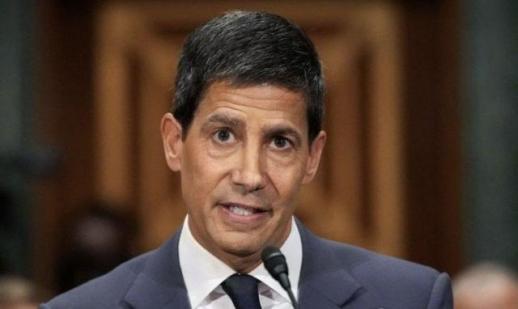 Senate Confirms Kevin Warsh as Fed Chair; First Test is Interest Rate Cut The U.S. Senate has confirmed Kevin Warsh as the new chair of the Federal Reserve. On May 13, local time, the Senate approved Warsh's nomination with a vote of 54 in favor and 45 against. All Republican senators supported the nomination, while only Senator Jon Tester from the Democratic Party voted in favor. Warsh is set to succeed Jerome Powell, whose term ends on May 15. The term for the Fed chair is four years. Warsh's first major challenge will be the Federal Open Market Committee (FOMC) meeting scheduled for June 16-17. Market observers are keen to see if he will signal a potential interest rate cut during his inaugural meeting. President Donald Trump has publicly criticized Powell and pressured for interest rate cuts, which has shaped expectations around Warsh's nomination. However, recent inflation data has weakened the case for an early rate cut. The Consumer Price Index (CPI) for April rose by 3.8% compared to the same month last year, while the Producer Price Index (PPI) increased by 6.0% year-over-year. Rising energy prices due to the conflict between the U.S. and Iran are also contributing to inflationary pressures. If rising oil prices simultaneously affect consumer and producer prices, it could complicate the Fed's policy decisions. Warsh has recently argued for the possibility of interest rate cuts based on improvements in productivity due to artificial intelligence, a reduction in long-term bond holdings, and alternative price indices. However, this rationale will need to undergo internal scrutiny and persuasion within the Fed. Market participants are closely watching how Warsh will navigate the demands for rate cuts from the White House against the backdrop of inflationary pressures. The first FOMC meeting will likely provide insights into the new chair's policy direction and the Fed's independence.* This article has been translated by AI. 2026-05-14 08:36:15
 -
 Hyundai Launches 'The New Grandeur' as a Milestone in SDV Transition Hyundai Motor Company has positioned its flagship sedan, 'The New Grandeur,' as a pivotal step in its transition to Software-Defined Vehicles (SDV). This model features the company's first self-developed next-generation infotainment platform. With the addition of innovative technologies such as a next-generation hybrid system and electric air vents, Hyundai aims to lead the premium sedan market. On May 13, Hyundai unveiled the internal combustion and hybrid versions of 'The New Grandeur' during a media day at the Grand Walkerhill Seoul in Gwangjin-gu, Seoul. Since its launch in 1986, the Grandeur has been a flagship model for Hyundai, often referred to as the 'people's sedan.' The model presented is a facelift of the seventh generation, which debuted in November 2022. A key feature of 'The New Grandeur' is the next-generation infotainment platform, 'Pleos Connect.' This is the first time Pleos Connect has been integrated into an actual vehicle, following its announcement by the Hyundai Motor Group last month. The group plans to implement Pleos Connect in approximately 20 million vehicles by 2030. Yoon Hyo-jun, head of Hyundai's domestic business division, stated, "The automotive market is expanding beyond hardware to software, and electrification and digital transformation are redefining the overall customer experience. 'The New Grandeur' marks an important starting point for Hyundai's SDV transition." He emphasized that the Grandeur will provide a new experience that seamlessly connects with customers, going beyond a mere mode of transportation. Specifically, 'The New Grandeur' enhances infotainment services through Pleos Connect. The 17-inch central display allows users to control navigation, media, and vehicle settings from a single screen, enabling simultaneous access to multiple information sources while driving. Notably, the vehicle offers a customized driving experience powered by the generative AI agent 'Gleo AI.' Park Young-woo, head of Hyundai's infotainment development division, explained, "While traditional voice recognition handled fixed commands, Gleo AI understands user intent and considers driving conditions and vehicle status to perform necessary tasks." For instance, if an owner asks, 'Is there parking available where I'm going?' Gleo AI will respond based on the current route and situation, providing navigation assistance. If the owner comments, 'The seat temperature is hot,' Gleo AI can identify the seat position and differentiate between the driver and passengers to automatically adjust the heated seats. Additionally, 'The New Grandeur' incorporates numerous innovative technologies. It is the first Hyundai vehicle to feature electric air vents, which work in conjunction with Pleos Connect to offer four different airflow control modes. The 'Smart Vision Roof' is also introduced for the first time, allowing users to adjust the roof's transparency in six stages. The hybrid (HEV) model is equipped with a next-generation hybrid system, making it the first sedan to do so. The system combines a drive motor responsible for propulsion and regenerative braking with a starter motor that assists with starting, generating power, and providing driving support, improving overall output and fuel efficiency. However, 'The New Grandeur' is not yet a fully realized SDV. As the vehicle control domain is still in the process of being integrated and advanced through software, Hyundai is expected to accelerate its SDV transition starting with 'The New Grandeur.' * This article has been translated by AI. 2026-05-14 08:34:14