
Journalist

Aju Press
-
![[Asia Insight] Kazakhstans grand strategy for the AI age: Talent, smart cities and the reinvention of Eurasia](https://image.ajunews.com//content/image/2026/05/12/20260512180916298520_518_323.jpg) [[Asia Insight]] Kazakhstan's grand strategy for the AI age: Talent, smart cities and the reinvention of Eurasia SEOUL, May 12 (AJP) - Across the immense steppe of Central Asia, Kazakhstan is attempting something far larger than economic reform. It is attempting a civilizational repositioning. For decades, Kazakhstan was known primarily as a resource giant — a country blessed with vast reserves of oil, natural gas, uranium and rare minerals. It remains the wealthiest of the five Central Asian "Stan" nations and, in many respects, the geopolitical anchor of the region stretching from Uzbekistan and Kyrgyzstan to Tajikistan and Turkmenistan. With a per capita income exceeding US$12,000, a strategic location between Russia and China, and enormous territorial scale, Kazakhstan possesses advantages few Eurasian states can match. Yet the leadership in Astana increasingly understands a defining truth of the 21st century: natural resources alone no longer guarantee national power. The hierarchy of nations is being rewritten by artificial intelligence, advanced infrastructure, digital ecosystems and human capital. Oil and gas still matter. But talent, data and technological capacity now matter just as much. That realization lies at the heart of President Kassym-Jomart Tokayev's emerging national strategy. His government is not merely modernizing an economy. It is trying to transform Kazakhstan from a post-Soviet commodity exporter into a technologically sophisticated Eurasian hub for the AI era. The clearest symbol of that ambition is a project taking shape near Almaty — the country's former capital and still its commercial and cultural center. Near the city, Kazakhstan is preparing plans for Alatau, a next-generation smart city envisioned as a technological gateway for the digital age. It is an extraordinarily ambitious idea: a new urban platform where artificial intelligence, advanced infrastructure, global talent and international investment converge at the crossroads of Eurasia. Why Kazakhstan is opening its doors to global talent Kazakhstan's recent decision to overhaul its immigration laws is therefore not a technical administrative adjustment. It is a strategic declaration about the country's future. The Tokayev administration has openly acknowledged that Kazakhstan faces growing shortages of highly skilled professionals in information technology, engineering, healthcare, education and advanced industrial sectors. The old economic model — exporting raw materials while importing high-value expertise — is increasingly unsustainable in a world defined by artificial intelligence and technological competition. The government's answer is clear: attract global talent before the talent race becomes irreversible. The proposed immigration reforms are among the most ambitious since Kazakhstan gained independence following the collapse of the Soviet Union in 1991. The measures include streamlined visa procedures, expanded residency opportunities for skilled professionals, enhanced tax incentives and broader "golden visa" pathways designed to attract engineers, researchers, entrepreneurs and specialists from abroad. At one level, the logic is economic. Kazakhstan needs expertise to modernize its industries and accelerate technological development. At another level, however, the strategy reflects a deeper understanding of how power itself is changing. In the industrial age, nations competed for coal, steel and oil. In the AI era, nations compete for minds. The United States built Silicon Valley not simply through capital, but through its ability to absorb global talent. Singapore became a financial and technological center by constructing a highly internationalized ecosystem. The Gulf states are now investing aggressively in AI research, digital infrastructure and global recruitment. Kazakhstan has concluded that Central Asia cannot remain outside this transformation. The country's leadership appears determined to position Kazakhstan as a Eurasian platform state — a bridge linking Europe, Russia, China, the Middle East and South Asia. Geography has always shaped Kazakhstan’s destiny. For centuries, the Silk Road passed through these lands, connecting civilizations across Eurasia. Tokayev's vision is to revive that historical role for the digital century. The caravans of the old Silk Road carried silk, horses and spices. The caravans of the AI age carry data, algorithms, semiconductor supply chains and human expertise. Kazakhstan wants to stand at the center of that new flow. Yet attracting global talent requires more than incentives. Highly skilled workers increasingly seek not only economic opportunity, but also institutional trust, educational quality, cultural openness and a degree of intellectual freedom. That may become Kazakhstan's greatest long-term challenge. The country has pursued economic modernization while maintaining significant political centralization. Critics continue to point to restrictions on media freedom and limited space for opposition politics. In the long run, technological ambition and institutional openness may become increasingly difficult to separate. Still, the direction of travel is unmistakable. Kazakhstan is preparing for a future in which human capital matters as much as hydrocarbons. Alatau and the dream of a central Asian AI civilization The proposed development of Alatau reveals the scale of Kazakhstan's ambitions. Located near Almaty — the country's financial center and home to a large ethnic Korean, or Koryoin, population — Alatau is envisioned as far more than a conventional industrial zone. The project aims to create an integrated ecosystem for artificial intelligence, advanced manufacturing, digital infrastructure, education and global business. In many ways, the concept reflects a broader global trend in which nations attempt to compress decades of development into concentrated zones of innovation. Saudi Arabia has NEOM. China had Shenzhen. South Korea built Songdo International Business District as a model of digitally integrated urban planning. Kazakhstan now seeks its own version of that leap. The symbolism is powerful. Central Asia has historically been perceived as peripheral — rich in resources but distant from the centers of technological innovation. Alatau represents an effort to reverse that narrative and position Kazakhstan as a participant in shaping the technological architecture of the future. The country's resource wealth gives it an unusual foundation for such a project. Kazakhstan possesses not only oil and natural gas, but also enormous uranium reserves and strategic minerals increasingly vital to AI hardware, batteries and advanced manufacturing systems. In the emerging geopolitical order, control over rare minerals may become as strategically important as oil was in the 20th century. Tokayev's government appears to understand that the future global economy will be built upon the convergence of three forces: energy, technology and talent. Kazakhstan already possesses energy. It now seeks technology and talent. That explains the urgency behind the country's reforms. Korea and Kazakhstan: Building a Eurasian partnership For South Korea, Kazakhstan is becoming an increasingly important strategic partner in Eurasia. The relationship is rooted not only in economics, but also in history and culture. Hundreds of thousands of ethnic Koreans remain in Central Asia following the Soviet-era deportations of Koreans from the Russian Far East. Many settled in and around Almaty, helping create enduring human ties between the two countries. Those ties are now acquiring new economic significance. Kazakhstan needs advanced urban planning, digital infrastructure, AI-related systems, transportation technology and industrial expertise. Korea possesses many of those capabilities. Over the past generation, Korea transformed itself from a war-ravaged country into one of the world's leading technology economies, building globally competitive industries in semiconductors, telecommunications, shipbuilding, batteries and smart infrastructure. That experience carries enormous appeal for emerging economies seeking rapid modernization. The proposed Alatau project could therefore become a natural platform for deeper Korea-Kazakhstan cooperation. Korean firms have already participated in infrastructure, construction, healthcare and energy projects across Kazakhstan. The next stage may involve collaboration in AI infrastructure, smart-city design, digital governance and advanced education systems. Energy cooperation is equally important. Korea remains heavily dependent on imported energy and strategic minerals. Kazakhstan's reserves of uranium, gas and rare earth resources align closely with Korea's long-term industrial and energy security interests. There is also a broader geopolitical logic to the relationship. Korea faces demographic decline and labor shortages. Kazakhstan possesses land, resources and a younger demographic profile. One country brings advanced technology and industrial management. The other offers strategic geography and resource depth. The two economies are, in many respects, complementary. More importantly, both countries understand that the future Eurasian order will not be shaped by military power alone. It will also be shaped by infrastructure, technology corridors, supply chains, education networks and the movement of talent across borders. The ancient I Ching teaches: "When change reaches its limit, transformation begins. Through transformation comes continuity." Kazakhstan today stands at precisely such a moment. The old Silk Road once connected civilizations through caravans and trade routes across the steppe. The new Silk Road may be built from fiber-optic cables, AI infrastructure, digital logistics and human knowledge. And Kazakhstan, standing between Europe and Asia, hopes not merely to witness that transformation, but to help lead it. 2026-05-12 18:09:49
[[Asia Insight]] Kazakhstan's grand strategy for the AI age: Talent, smart cities and the reinvention of Eurasia SEOUL, May 12 (AJP) - Across the immense steppe of Central Asia, Kazakhstan is attempting something far larger than economic reform. It is attempting a civilizational repositioning. For decades, Kazakhstan was known primarily as a resource giant — a country blessed with vast reserves of oil, natural gas, uranium and rare minerals. It remains the wealthiest of the five Central Asian "Stan" nations and, in many respects, the geopolitical anchor of the region stretching from Uzbekistan and Kyrgyzstan to Tajikistan and Turkmenistan. With a per capita income exceeding US$12,000, a strategic location between Russia and China, and enormous territorial scale, Kazakhstan possesses advantages few Eurasian states can match. Yet the leadership in Astana increasingly understands a defining truth of the 21st century: natural resources alone no longer guarantee national power. The hierarchy of nations is being rewritten by artificial intelligence, advanced infrastructure, digital ecosystems and human capital. Oil and gas still matter. But talent, data and technological capacity now matter just as much. That realization lies at the heart of President Kassym-Jomart Tokayev's emerging national strategy. His government is not merely modernizing an economy. It is trying to transform Kazakhstan from a post-Soviet commodity exporter into a technologically sophisticated Eurasian hub for the AI era. The clearest symbol of that ambition is a project taking shape near Almaty — the country's former capital and still its commercial and cultural center. Near the city, Kazakhstan is preparing plans for Alatau, a next-generation smart city envisioned as a technological gateway for the digital age. It is an extraordinarily ambitious idea: a new urban platform where artificial intelligence, advanced infrastructure, global talent and international investment converge at the crossroads of Eurasia. Why Kazakhstan is opening its doors to global talent Kazakhstan's recent decision to overhaul its immigration laws is therefore not a technical administrative adjustment. It is a strategic declaration about the country's future. The Tokayev administration has openly acknowledged that Kazakhstan faces growing shortages of highly skilled professionals in information technology, engineering, healthcare, education and advanced industrial sectors. The old economic model — exporting raw materials while importing high-value expertise — is increasingly unsustainable in a world defined by artificial intelligence and technological competition. The government's answer is clear: attract global talent before the talent race becomes irreversible. The proposed immigration reforms are among the most ambitious since Kazakhstan gained independence following the collapse of the Soviet Union in 1991. The measures include streamlined visa procedures, expanded residency opportunities for skilled professionals, enhanced tax incentives and broader "golden visa" pathways designed to attract engineers, researchers, entrepreneurs and specialists from abroad. At one level, the logic is economic. Kazakhstan needs expertise to modernize its industries and accelerate technological development. At another level, however, the strategy reflects a deeper understanding of how power itself is changing. In the industrial age, nations competed for coal, steel and oil. In the AI era, nations compete for minds. The United States built Silicon Valley not simply through capital, but through its ability to absorb global talent. Singapore became a financial and technological center by constructing a highly internationalized ecosystem. The Gulf states are now investing aggressively in AI research, digital infrastructure and global recruitment. Kazakhstan has concluded that Central Asia cannot remain outside this transformation. The country's leadership appears determined to position Kazakhstan as a Eurasian platform state — a bridge linking Europe, Russia, China, the Middle East and South Asia. Geography has always shaped Kazakhstan’s destiny. For centuries, the Silk Road passed through these lands, connecting civilizations across Eurasia. Tokayev's vision is to revive that historical role for the digital century. The caravans of the old Silk Road carried silk, horses and spices. The caravans of the AI age carry data, algorithms, semiconductor supply chains and human expertise. Kazakhstan wants to stand at the center of that new flow. Yet attracting global talent requires more than incentives. Highly skilled workers increasingly seek not only economic opportunity, but also institutional trust, educational quality, cultural openness and a degree of intellectual freedom. That may become Kazakhstan's greatest long-term challenge. The country has pursued economic modernization while maintaining significant political centralization. Critics continue to point to restrictions on media freedom and limited space for opposition politics. In the long run, technological ambition and institutional openness may become increasingly difficult to separate. Still, the direction of travel is unmistakable. Kazakhstan is preparing for a future in which human capital matters as much as hydrocarbons. Alatau and the dream of a central Asian AI civilization The proposed development of Alatau reveals the scale of Kazakhstan's ambitions. Located near Almaty — the country's financial center and home to a large ethnic Korean, or Koryoin, population — Alatau is envisioned as far more than a conventional industrial zone. The project aims to create an integrated ecosystem for artificial intelligence, advanced manufacturing, digital infrastructure, education and global business. In many ways, the concept reflects a broader global trend in which nations attempt to compress decades of development into concentrated zones of innovation. Saudi Arabia has NEOM. China had Shenzhen. South Korea built Songdo International Business District as a model of digitally integrated urban planning. Kazakhstan now seeks its own version of that leap. The symbolism is powerful. Central Asia has historically been perceived as peripheral — rich in resources but distant from the centers of technological innovation. Alatau represents an effort to reverse that narrative and position Kazakhstan as a participant in shaping the technological architecture of the future. The country's resource wealth gives it an unusual foundation for such a project. Kazakhstan possesses not only oil and natural gas, but also enormous uranium reserves and strategic minerals increasingly vital to AI hardware, batteries and advanced manufacturing systems. In the emerging geopolitical order, control over rare minerals may become as strategically important as oil was in the 20th century. Tokayev's government appears to understand that the future global economy will be built upon the convergence of three forces: energy, technology and talent. Kazakhstan already possesses energy. It now seeks technology and talent. That explains the urgency behind the country's reforms. Korea and Kazakhstan: Building a Eurasian partnership For South Korea, Kazakhstan is becoming an increasingly important strategic partner in Eurasia. The relationship is rooted not only in economics, but also in history and culture. Hundreds of thousands of ethnic Koreans remain in Central Asia following the Soviet-era deportations of Koreans from the Russian Far East. Many settled in and around Almaty, helping create enduring human ties between the two countries. Those ties are now acquiring new economic significance. Kazakhstan needs advanced urban planning, digital infrastructure, AI-related systems, transportation technology and industrial expertise. Korea possesses many of those capabilities. Over the past generation, Korea transformed itself from a war-ravaged country into one of the world's leading technology economies, building globally competitive industries in semiconductors, telecommunications, shipbuilding, batteries and smart infrastructure. That experience carries enormous appeal for emerging economies seeking rapid modernization. The proposed Alatau project could therefore become a natural platform for deeper Korea-Kazakhstan cooperation. Korean firms have already participated in infrastructure, construction, healthcare and energy projects across Kazakhstan. The next stage may involve collaboration in AI infrastructure, smart-city design, digital governance and advanced education systems. Energy cooperation is equally important. Korea remains heavily dependent on imported energy and strategic minerals. Kazakhstan's reserves of uranium, gas and rare earth resources align closely with Korea's long-term industrial and energy security interests. There is also a broader geopolitical logic to the relationship. Korea faces demographic decline and labor shortages. Kazakhstan possesses land, resources and a younger demographic profile. One country brings advanced technology and industrial management. The other offers strategic geography and resource depth. The two economies are, in many respects, complementary. More importantly, both countries understand that the future Eurasian order will not be shaped by military power alone. It will also be shaped by infrastructure, technology corridors, supply chains, education networks and the movement of talent across borders. The ancient I Ching teaches: "When change reaches its limit, transformation begins. Through transformation comes continuity." Kazakhstan today stands at precisely such a moment. The old Silk Road once connected civilizations through caravans and trade routes across the steppe. The new Silk Road may be built from fiber-optic cables, AI infrastructure, digital logistics and human knowledge. And Kazakhstan, standing between Europe and Asia, hopes not merely to witness that transformation, but to help lead it. 2026-05-12 18:09:49 -
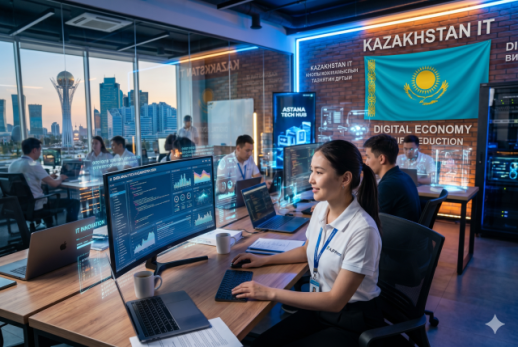 ASIA INSIGHT: Kazakhstan's grand strategy for AI age and reinvention of Eurasia Across the immense steppe of Central Asia, Kazakhstan is attempting something far larger than economic reform. It is attempting a civilizational repositioning. For decades, Kazakhstan was known primarily as a resource giant — a country blessed with vast reserves of oil, natural gas, uranium and rare minerals. It remains the wealthiest of the five Central Asian “Stan” nations and, in many respects, the geopolitical anchor of the region stretching from Uzbekistan and Kyrgyzstan to Tajikistan and Turkmenistan. With a per capita income exceeding $12,000, a strategic location between Russia and China, and enormous territorial scale, Kazakhstan possesses advantages few Eurasian states can match. Yet the leadership in Astana increasingly understands a defining truth of the 21st century: natural resources alone no longer guarantee national power. The hierarchy of nations is being rewritten by artificial intelligence, advanced infrastructure, digital ecosystems and human capital. Oil and gas still matter. But talent, data and technological capacity now matter just as much. That realization lies at the heart of President Kassym-Jomart Tokayev’s emerging national strategy. His government is not merely modernizing an economy. It is trying to transform Kazakhstan from a post-Soviet commodity exporter into a technologically sophisticated Eurasian hub for the AI era. The clearest symbol of that ambition is a project taking shape near Almaty — the country’s former capital and still its commercial and cultural center. Near the city, Kazakhstan is preparing plans for Alatau, a next-generation smart city envisioned as a technological gateway for the digital age. It is an extraordinarily ambitious idea: a new urban platform where artificial intelligence, advanced infrastructure, global talent and international investment converge at the crossroads of Eurasia. Why Kazakhstan Is Opening Its Doors to Global Talent Kazakhstan’s recent decision to overhaul its immigration laws is therefore not a technical administrative adjustment. It is a strategic declaration about the country’s future. The Tokayev administration has openly acknowledged that Kazakhstan faces growing shortages of highly skilled professionals in information technology, engineering, healthcare, education and advanced industrial sectors. The old economic model — exporting raw materials while importing high-value expertise — is increasingly unsustainable in a world defined by artificial intelligence and technological competition. The government’s answer is clear: attract global talent before the talent race becomes irreversible. The proposed immigration reforms are among the most ambitious since Kazakhstan gained independence following the collapse of the Soviet Union in 1991. The measures include streamlined visa procedures, expanded residency opportunities for skilled professionals, enhanced tax incentives and broader “golden visa” pathways designed to attract engineers, researchers, entrepreneurs and specialists from abroad. At one level, the logic is economic. Kazakhstan needs expertise to modernize its industries and accelerate technological development. At another level, however, the strategy reflects a deeper understanding of how power itself is changing. In the industrial age, nations competed for coal, steel and oil. In the AI era, nations compete for minds. The United States built Silicon Valley not simply through capital, but through its ability to absorb global talent. Singapore became a financial and technological center by constructing a highly internationalized ecosystem. The Gulf states are now investing aggressively in AI research, digital infrastructure and global recruitment. Kazakhstan has concluded that Central Asia cannot remain outside this transformation. The country’s leadership appears determined to position Kazakhstan as a Eurasian platform state — a bridge linking Europe, Russia, China, the Middle East and South Asia. Geography has always shaped Kazakhstan’s destiny. For centuries, the Silk Road passed through these lands, connecting civilizations across Eurasia. Tokayev’s vision is to revive that historical role for the digital century. The caravans of the old Silk Road carried silk, horses and spices. The caravans of the AI age carry data, algorithms, semiconductor supply chains and human expertise. Kazakhstan wants to stand at the center of that new flow. Yet attracting global talent requires more than incentives. Highly skilled workers increasingly seek not only economic opportunity, but also institutional trust, educational quality, cultural openness and a degree of intellectual freedom. That may become Kazakhstan’s greatest long-term challenge. The country has pursued economic modernization while maintaining significant political centralization. Critics continue to point to restrictions on media freedom and limited space for opposition politics. In the long run, technological ambition and institutional openness may become increasingly difficult to separate. Still, the direction of travel is unmistakable. Kazakhstan is preparing for a future in which human capital matters as much as hydrocarbons. Alatau and the Dream of a Central Asian AI Civilization The proposed development of Alatau reveals the scale of Kazakhstan’s ambitions. Located near Almaty — the country’s financial center and home to a large ethnic Korean, or Koryoin, population — Alatau is envisioned as far more than a conventional industrial zone. The project aims to create an integrated ecosystem for artificial intelligence, advanced manufacturing, digital infrastructure, education and global business. In many ways, the concept reflects a broader global trend in which nations attempt to compress decades of development into concentrated zones of innovation. Saudi Arabia has NEOM. China had Shenzhen. South Korea built Songdo International Business District as a model of digitally integrated urban planning. Kazakhstan now seeks its own version of that leap. The symbolism is powerful. Central Asia has historically been perceived as peripheral — rich in resources but distant from the centers of technological innovation. Alatau represents an effort to reverse that narrative and position Kazakhstan as a participant in shaping the technological architecture of the future. The country’s resource wealth gives it an unusual foundation for such a project. Kazakhstan possesses not only oil and natural gas, but also enormous uranium reserves and strategic minerals increasingly vital to AI hardware, batteries and advanced manufacturing systems. In the emerging geopolitical order, control over rare minerals may become as strategically important as oil was in the 20th century. Tokayev’s government appears to understand that the future global economy will be built upon the convergence of three forces: energy, technology and talent. Kazakhstan already possesses energy. It now seeks technology and talent. That explains the urgency behind the country’s reforms. Korea and Kazakhstan: Building a Eurasian Partnership For South Korea, Kazakhstan is becoming an increasingly important strategic partner in Eurasia. The relationship is rooted not only in economics, but also in history and culture. Hundreds of thousands of ethnic Koreans remain in Central Asia following the Soviet-era deportations of Koreans from the Russian Far East. Many settled in and around Almaty, helping create enduring human ties between the two countries. Those ties are now acquiring new economic significance. Kazakhstan needs advanced urban planning, digital infrastructure, AI-related systems, transportation technology and industrial expertise. Korea possesses many of those capabilities. Over the past generation, Korea transformed itself from a war-ravaged country into one of the world’s leading technology economies, building globally competitive industries in semiconductors, telecommunications, shipbuilding, batteries and smart infrastructure. That experience carries enormous appeal for emerging economies seeking rapid modernization. The proposed Alatau project could therefore become a natural platform for deeper Korea-Kazakhstan cooperation. Korean firms have already participated in infrastructure, construction, healthcare and energy projects across Kazakhstan. The next stage may involve collaboration in AI infrastructure, smart-city design, digital governance and advanced education systems. Energy cooperation is equally important. Korea remains heavily dependent on imported energy and strategic minerals. Kazakhstan’s reserves of uranium, gas and rare earth resources align closely with Korea’s long-term industrial and energy security interests. There is also a broader geopolitical logic to the relationship. Korea faces demographic decline and labor shortages. Kazakhstan possesses land, resources and a younger demographic profile. One country brings advanced technology and industrial management. The other offers strategic geography and resource depth. The two economies are, in many respects, complementary. More importantly, both countries understand that the future Eurasian order will not be shaped by military power alone. It will also be shaped by infrastructure, technology corridors, supply chains, education networks and the movement of talent across borders. The ancient I Ching teaches: “When change reaches its limit, transformation begins. Through transformation comes continuity.” Kazakhstan today stands at precisely such a moment. The old Silk Road once connected civilizations through caravans and trade routes across the steppe. The new Silk Road may be built from fiber-optic cables, AI infrastructure, digital logistics and human knowledge. And Kazakhstan, standing between Europe and Asia, hopes not merely to witness that transformation, but to help lead it. 2026-05-12 18:08:56
 -
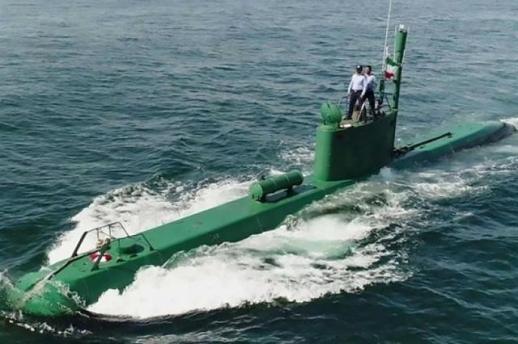 Iran's Hormuz submarines trace lineage to class linked to sinking of ROKS Cheonan SEOUL, May 12 (AJP) — Iran’s reported deployment of additional Ghadir-class midget submarines in the Strait of Hormuz as tensions with the United States intensify is reviving painful memories in South Korea of the country’s deadliest postwar naval disaster. The 2010 sinking of the ROKS Cheonan, which killed 46 South Korean sailors near Baengnyeong Island in the Yellow Sea, was attributed by a multinational investigation to a North Korean Yono-class midget submarine — the same submarine lineage that Iran later acquired and adapted into its domestically produced Ghadir-class fleet. According to a Bloomberg report published Monday citing the International Institute for Strategic Studies, Iran currently operates “at least 16” Ghadir-class submarines. The report did not specify which edition of the institute’s annual Military Balance assessment the figure was drawn from. Other open-source defense assessments estimate substantially larger numbers. The Nuclear Threat Initiative estimates Iran operates around 23 Ghadir-class submarines, while the Washington Institute for Near East Policy places the number near 20. Defense database Global Firepower estimates roughly 26 units. The 2020 edition of Military Balance listed 14. Iran does not officially disclose the size of its submarine fleet. The issue carries direct strategic significance for South Korea. The Strait of Hormuz, where the Ghadir-class is heavily concentrated operationally, carried roughly 20 million barrels per day of crude oil and petroleum products in 2025, according to the International Energy Agency — equivalent to about one-fifth of global oil consumption. South Korea remains among the largest destinations for crude exports transiting the chokepoint, according to the latest transit data from the U.S. Energy Information Administration. While Bloomberg attributed claims that Iran copied North Korean submarine designs to an anonymous source, the underlying connection has long been documented in public intelligence and defense assessments. In its March 2017 unclassified report Iranian Naval Forces: A Tale of Two Navies, the U.S. Office of Naval Intelligence stated that Iran purchased at least one Yono-class submarine from North Korea before developing its own domestic variant. The Nuclear Threat Initiative similarly describes the Ghadir-class as “based on the North Korean Yono-class submarine,” while noting that the precise extent of North Korean involvement in design and production remains unclear. The same Yono designation appeared in the findings of the multinational Joint Civilian-Military Investigation Group that examined the March 26, 2010 sinking of the Cheonan. The investigation, conducted with experts from the United States, the United Kingdom, Australia, Canada and Sweden, concluded that a 130-ton North Korean Yono-class submarine fired a CHT-02D torpedo whose underwater explosion split the 1,200-ton corvette in two. The findings were formally submitted to the United Nations Security Council in June 2010 and remain the internationally recognized record of the incident. Technical characteristics of the Ghadir-class remain broadly consistent across reporting by IISS, ONI, NTI and Jane’s Fighting Ships. Each submarine displaces roughly 117 tons surfaced and 125 tons submerged, measures approximately 29 meters in length and operates with a crew of seven. The submarines are equipped with two 533-millimeter torpedo tubes capable of firing heavyweight torpedoes, launching anti-ship cruise missiles and laying naval mines. The boats are operated by the Islamic Republic of Iran Navy from Bandar Abbas and are specifically designed for the shallow waters of the Persian Gulf, where sea depths rarely exceed 100 meters. Tracy A. Vincent previously assessed that the submarines provide Iran with “additional surveillance capability” while creating “a new layer of defense.” Meanwhile, Daniel Dolan described the submarines as “well-designed for the purpose of guerrilla warfare, ambush and anti-access/area denial.” For South Korea, the connection between the Yono-class submarine implicated in the Cheonan sinking and Iran’s expanding Ghadir-class fleet underscores broader concerns over North Korean weapons proliferation and asymmetric naval warfare. More than a decade after the Cheonan disaster shocked South Korea, the same submarine lineage now sits at the center of one of the world’s most volatile maritime flashpoints. 2026-05-12 18:07:53
 -
 AI-related policy uncertainty sends KOSPI on rollercoaster ride SEOUL, May 12 (AJP) - South Korea's benchmark KOSPI suffered the sharpest decline among Asian markets on Tuesday, reversing sharply after briefly approaching the 8,000 threshold as foreign investors unloaded semiconductor shares amid growing uncertainty over the country's artificial intelligence (AI)-related policies. The index closed down 2.3 percent at 7,643.15 points after swinging between a high of 7,999.67 and a low of 7,421.71. Investor sentiment deteriorated rapidly after presidential policy chief Kim Yong-beom raised the idea of a so-called "national AI dividend," suggesting that excess tax revenue generated from an AI-driven semiconductor boom could eventually be redistributed through public programs. While Kim later clarified that he was not proposing a new windfall tax on corporations, the remarks heightened concerns over potential government intervention in corporate profits at a time when AI-linked semiconductor shares had already rallied sharply. Foreign investors dumped 5.61 trillion won ($3.77 billion) worth of KOSPI shares, as institutional investors sold 1.21 trillion won. Retail investors absorbed the selling pressure, purchasing 6.68 trillion won worth of stocks. Major chipmakers led the decline. Samsung Electronics fell 2.3 percent to 279,000 won, while SK hynix dropped 2.4 percent to 1,835,000 won as investors locked in profits following months of AI-driven gains. Battery and industrial names also came under pressure, with Samsung SDI plunging 8 percent, EcoPro BM falling 7.4 percent and Hanwha Ocean losing 6.5 percent. The sharp reversal came despite continued strength in global semiconductor sentiment after the Philadelphia Semiconductor Index rose 2.6 percent overnight. However, rising oil prices and growing geopolitical tensions surrounding Iran further weakened risk appetite across Seoul's equity market. WTI crude futures climbed 2.7 percent to $100.7 per barrel, while Brent crude rose 2.2 percent to $106.5 after U.S. President Donald Trump dismissed Iran's latest peace proposal and signaled that additional military options remained under review. The Volatility Index, jumped 8.9 percent to 18.7. The Korean won weakened sharply alongside the equity selloff and rising oil prices, falling 1 percent to 1,489.4 per dollar from the previous session as investors moved toward safe-haven assets. Within other parts of Asia, Japan led regional gains despite broader volatility. The Nikkei 225 rose 0.5 percent to close at 62,742.57, while the broader TOPIX also gained 0.8 percent as investors shrugged off hawkish signals from the Bank of Japan. SoftBank Group climbed 4.3 percent and Sony Group advanced 3.3 percent, although Fast Retailing fell 3.8 percent. Chinese markets were comparatively stable. China's Shanghai Composite rose 0.3 percent to 4,214.5, while Hong Kong's Hang Seng Index slipped 0.1 percent to 26,369.7. The tech-heavy KOSDAQ also closed lower, falling 2.3 percent to 1,179.30 after moving between an intraday high of 1,225.29 and a low of 1,142.49. Unlike the KOSPI, foreign investors were heavy buyers on the KOSDAQ, purchasing 509.5 billion won worth of shares. Institutions sold 260.0 billion won, as retail investors offloaded 220.1 billion won. Biotech shares showed relative resilience despite the broader weakness, with Alteogen rising 5.2 percent as investors rotated into defensive growth sectors. Robotics-related stocks also outperformed, with Cosmo Robotics surging 30 percent. Game developer Pearl Abyss slipped 1.1 percent despite reporting record quarterly earnings driven by strong global demand for "Crimson Desert," underscoring how broader market volatility overshadowed upbeat corporate results. 2026-05-12 17:51:03
 -
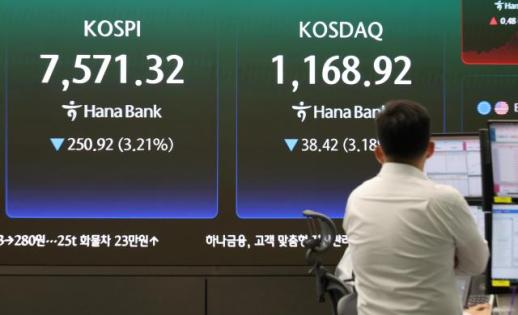 A rollercoaster day for KOSPI before testing new 8,000 peak SEOUL, May 12 (AJP) -South Korea’s benchmark KOSPI swung violently on May 12 after briefly nearing the symbolic 8,000-point threshold before tumbling into its first decline in six sessions, underscoring the heightened volatility gripping one of the world’s hottest equity rallies. The KOSPI opened at a record 7,953.41, up 1.68 percent from the previous session, and climbed as high as 7,999.67 in early trading — just shy of the historic 8,000 level — before abruptly reversing course. Selling pressure intensified through the session, dragging the index to an intraday low of 7,421.71 before it closed at 7,643.15, down 2.29 percent on the day. The reversal came less than a week after the KOSPI first broke above the 7,000-point mark on May 6, extending a blistering rally fueled by semiconductor and AI-related stocks. 2026-05-12 17:41:06
 -
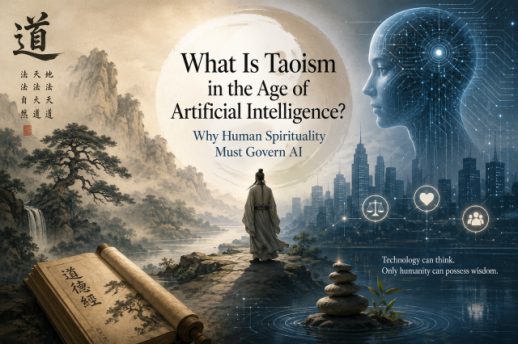 Asian Wisdom Series: Taoism in the Age of Artificial Intelligence Humanity stands today at the threshold of a profound civilizational transformation. Beyond the Industrial Revolution and the Information Age, the world has now entered the era of artificial intelligence. AI is no longer merely a machine for calculation. It understands language, composes music, generates images, assists in medicine, analyzes financial markets and increasingly participates in military strategy. Domains once believed to belong exclusively to human intellect and reason are now being steadily absorbed by intelligent systems. Much of the world’s financial trading is already executed by algorithms. AI drafts news articles, supports medical diagnoses and reviews legal documents. Human beings are gradually losing their monopoly over cognition itself. This is not simply a technological development. It is a question about the meaning of human existence. Yet amid the excitement surrounding AI, humanity risks forgetting a fundamental truth: artificial intelligence may imitate human logic and calculation, but it cannot fully command the realm of human spirituality. Human beings are not merely thinking machines. We grieve, love, sacrifice and gaze toward heaven with longing and wonder. We ask why we exist. We wrestle with the meaning of life and death. That domain belongs not to intelligence alone, but to spirit. The world today is consumed by the race for AI supremacy. The United States seeks to preserve its dominance through large-scale AI platforms. China is mobilizing national strategy to accelerate its rise. Europe emphasizes ethics and regulation. Yet the most important question remains strangely neglected: Who will govern artificial intelligence? If the darker impulses of humanity — greed, hatred, domination and obsession — merge with superintelligent systems, the consequences could become far more dangerous than the Industrial Revolution itself. Technology amplifies not only wisdom, but also human weakness. Buddhism long ago warned of the destructive forces within the human mind: greed, anger and ignorance. The Diamond Sutra teaches, “Let the mind arise without attachment.” True wisdom emerges only when the spirit is free from compulsive desire. The Tao Te Ching similarly teaches that one who knows sufficiency cannot be humiliated by endless craving. In the end, the central problem of the AI era is not technology itself. It is the condition of the human soul. Modern people fear AI while simultaneously surrendering to it. We rely on AI to search, to think, to recommend, even to console. Convenience expands, but the capacity for contemplation quietly diminishes. Humanity risks becoming intellectually efficient yet spiritually hollow. That is why the future cannot rest merely on the concept of “Human-Centered AI.” Important though it is, it remains incomplete. Human beings themselves are capable of violence, arrogance and destruction. The catastrophes of the 20th century — world wars, genocide, colonial exploitation and nuclear terror — were all products of human intelligence unrestrained by deeper moral consciousness. The age ahead therefore requires something greater: “Spirituality-Centered AI.” This does not mean imposing a single religion upon society. Rather, it means recovering the ethical and spiritual foundations that make civilization humane: conscience, compassion, restraint, responsibility and reverence for life. It is precisely here that Taoism regains extraordinary relevance. Taoism is often reduced to clichés about mysticism or passive harmony with nature. In truth, it is one of humanity’s great civilizational philosophies — a profound inquiry into the relationship between humanity, nature and cosmic order. The Tao Te Ching and the writings of Zhuangzi taught that human civilization survives only when it moves in balance with the deeper rhythms of existence. Excessive ambition and artificial force ultimately destroy themselves. The Tao Te Ching declares: “Man follows the earth. The earth follows heaven. Heaven follows the Tao. The Tao follows nature.” This is not merely poetic admiration for nature. It is a warning that civilization collapses when it loses harmony with the greater order of existence. The same principle applies to artificial intelligence. If humanity no longer governs technology but instead becomes governed by technological appetite — by speed, surveillance, addiction and endless optimization — then civilization itself may lose equilibrium. The signs are already visible. The digital age has produced unprecedented connectivity, yet also unprecedented loneliness. Human attention is fragmented. Communities weaken. Interior life becomes thinner. AI saves time while quietly emptying the human interior of silence and reflection. For this reason, the AI era urgently requires a renewed ethical discipline. First, human beings must preserve moments of distance from technology. Every civilization of wisdom — Confucianism, Buddhism, Christianity and Taoism alike — understood the importance of stillness. The Tao Te Ching teaches that clarity and tranquility are the foundations of order. In an age of constant stimulation, silence itself becomes an act of spiritual resistance. Second, AI must not become merely a tool for competition and domination. It should serve the preservation of human dignity and the strengthening of community — in education, medicine, elder care, environmental stewardship and the protection of the vulnerable. Third, humanity must recover the ability to ask fundamental questions. AI may provide answers, but only human beings can ask why life matters. Spirituality begins not with information, but with inquiry. Fourth, societies must rebuild communal ethics. The AI age may intensify radical individualism, yet the great spiritual traditions of Asia consistently remind humanity that human beings exist in relationship. Confucianism speaks of benevolence. Buddhism teaches compassion. Christianity teaches love. Korea’s Donghak tradition proclaimed, “The human being is heaven.” Fifth, humanity must rediscover harmony with nature. Taoism understood that human beings are not masters standing outside creation but participants within it. Even in the age of AI, civilization still depends upon water, air, soil and sunlight. Technology cannot replace the ecological foundations of life. This is where the idea of “AI Taoism” emerges. AI Taoism does not mean simply applying AI to Taoist studies. It means recovering the wisdom of the Tao in order to guide technological civilization itself. At its core, Taoism is a philosophy of balance and flow. It rejects coercive excess. It teaches that fullness comes through emptiness, strength through restraint and wisdom through humility. The AI era may become an age of astonishing speed, but human consciousness must deepen as technology accelerates. The I Ching, or Book of Changes, teaches that while the world constantly changes, enduring patterns still govern transformation. AI is one of the great transformations of human history. Yet without a spiritual axis, humanity risks losing its center amid rapid change. Korea’s ancient Cheonbugyeong declares: “Within the human being, heaven and earth become one.” Human beings are not merely producers of data. They carry within themselves the order of heaven and the spirit of the cosmos. Ultimately, the defining question of the AI age is this: Will machines govern humanity? Or will human spirituality govern technology? The Taoism of the AI era offers an ancient Eastern answer to that modern question. Human beings must live in harmony with nature, with one another and with the deeper order of existence. Technology must remain a tool that serves that order rather than destroys it. Technology can make humanity more powerful. Only spirituality can make humanity truly human. 2026-05-12 17:37:44
 -
 Another round of cash vouchers for lower-income households to begin next week SEOUL, May 12 (AJP) - Another round of cash handouts to help ease the burden on households hit hardest by soaring fuel prices is set to be available to those in the bottom 70 percent of the income bracket starting next week. Those eligible can sign up for cash vouchers from May 18 to July 3 through mobile apps or by visiting banks or local community centers, and will receive between 100,000 won (US$70) and 250,000 won, with larger households and those in certain rural and provincial areas entitled to higher support. During its first round, which was completed last month, some 2.94 million people signed up and received a combined total of 1.67 trillion won. Single-parent families and other vulnerable groups who missed the initial sign-up period will also be able to apply this time. The vouchers will be valid through the end of August and should be spent locally to help support small businesses. 2026-05-12 17:34:24
 -
 Cockpit feud poses stumbling block in final-leg race toward Dec. 17 Korean Air-Asiana merger SEOUL, May 12 (AJP) - Korean Air and Asiana Airlines are entering the final-leg race toward their Dec. 17 integration deadline, but a growing feud over cockpit hierarchy poses as a major stumbling block to a smooth merger. The Korean Air Pilots’ Union held a closed-door meeting in Seoul on Tuesday, bringing together about 200 members to discuss how pilot seniority should be managed after the merger, according to union officials. “This meeting was not convened to call for a strike,” a KAL pilot told AJP during a brief break in the meeting. “But the seniority issue is not only part of the buildup toward a possible strike, but also one of the most fundamental reasons behind it.” Although the two airlines have cleared major regulatory hurdles for their business combination, several structural issues remain unresolved. One of the most sensitive is the seniority system, which affects pilots’ order of promotion, pay structure and career progression. According to the Korean Air pilots’ union, it held 12 rounds of renewed talks with management over about five months from last October, but the negotiations eventually broke down. The union argues that Korean Air’s existing seniority system should be maintained after the integration. Management, however, is understood to support establishing a new standard for the combined airline. The main point of contention is the criteria for promotion from first officer to captain. Korean Air first officers must meet requirements under the company’s Flight Operations Administration Manual, or FOAM, before becoming eligible for captain upgrade screening. These include five years after appointment as a first officer, 2,500 to 3,000 flight hours after joining the company and at least 350 landings. Korean Air also requires at least 1,000 flight hours at the hiring stage for first officers, while its probationary and training periods are known to be relatively longer. By contrast, Asiana Airlines is said to require around 300 flight hours for first officer recruitment and to have a shorter probationary period. The Korean Air pilots’ union argues that because the two carriers have operated under different recruitment, training and promotion standards, simply merging seniority based on entry dates or military discharge dates could push back the promotion order of existing Korean Air first officers. Asiana pilots, however, have disputed the union’s claims, saying the concerns are overstated. They argue that among some 800 Asiana first officers, only three to four have yet to meet requirements such as the required number of landings, and that those pilots are already undergoing the necessary procedures before promotion. Asiana pilots say the seniority issue should not be treated merely as a post-merger personnel placement matter, but as a question of how to fairly recognize the career histories and flight experience of pilots from both airlines. The Korean Air pilots’ union passed a strike vote at its regular general meeting last month, with 57.6 percent of all members voting in favor of industrial action. Since then, the union has been discussing possible response scenarios, including a strike. However, a full-scale strike remains difficult under the current essential services agreement, as the aviation industry is classified as an essential public service. Even during a strike, airlines are required to maintain a certain level of operations. The key issue is how the number of essential workers is calculated. Pilots do not work on a fixed daily schedule, but rotate between flights, rest periods, standby duty, training and other assignments. Under the current method, if the required workforce is calculated based on the airline’s entire monthly flight schedule, the figure may include not only pilots actively operating flights but also those on legally required rest, standby duty or post-long-haul rest. The union argues that this significantly reduces the number of pilots who can take part in industrial action, weakening the practical impact of a strike. If the essential workforce is instead calculated based on actual daily flight operations, the number of pilots required to maintain minimum operations would be lower, allowing more pilots to join a strike and increasing the union’s leverage. With Korean Air and Asiana Airlines seeking to complete their integration as early as the end of this year, tensions between the unions and management are expected to intensify. The Korean Air pilots’ union is expected to seek the right to take industrial action through a labor relations commission mediation process. Before that, however, it appears to be pushing for revisions to the essential services agreement as part of efforts to make any potential strike more effective. 2026-05-12 17:12:39
 -
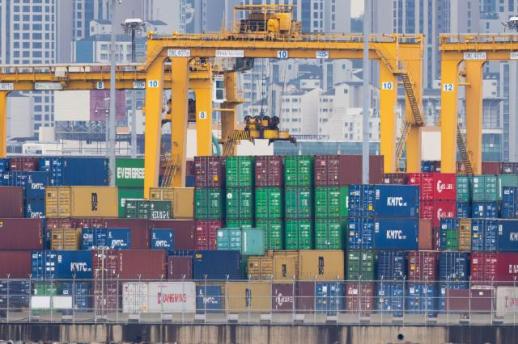 South Korea outpaces peers in Q1 growth; structural risks persist SEOUL, May 12 (AJP) — The South Korean economy was the best performer among major economies in the first quarter of this year, benefiting from a base effect from a contraction in the fourth quarter of last year and chip boom. South Korea's real gross domestic product (GDP) increased by 1.7 percent in the first quarter from the previous quarter - the highest growth rate among the 22 countries that have released first-quarter flash estimates as of Monday. This outperforms countries that have historically recorded higher growth, such as Indonesia (1.37 percent) and China (1.3 percent) - the only countries that saw growth exceeding 1 percent in the first quarter other than South Korea so far. Most other major advanced economies remained in the 0 percent range. The United States grew 0.5 percent while Japan expanded 0.1 percent. Major European economies including Portugal, the Netherlands and Italy also recorded zero or marginal growth of around 0.1 percent. The primary driver of the growth was a surge in semiconductor exports. Rapidly increasing production and exports of memory chips, fueled by expanding AI investment and demand for High Bandwidth Memory (HBM), led to a 5.1 percent increase in total exports compared to the previous quarter. The semiconductor boom also translated into facility investment and production normalization. As investments in semiconductor equipment and electronic devices increased to meet the expansion of AI servers and data centers, facility investment grew in the high 4 percent range compared to the previous quarter. The rapid growth in the first quarter, however, may be a "base effect" from the previous quarter's contraction. South Korea’s growth rate in the fourth quarter of last year was minus 0.2 percent, ranking as the second lowest among G20 member nations after Mexico (-0.8 percent). When growth in the previous quarter is negative, the following quarter's growth rate can appear significantly high simply through the normalization of production, exports, and investment. South Korea saw a 2.1 percent rebound in the third quarter of 2020, followed by a -3.0 percent contraction in the second quarter of that year due to the COVID-19 pandemic. The risk that growth could slow again depending on the semiconductor cycle also remains a concern. According to the central bank, semiconductors accounted for more than half of the manufacturing sector's contribution to growth, at approximately 55 percent. Without the semiconductor manufacturing sector, the first-quarter growth rate of 1.7 percent could have been cut by more than half. Above all, forecasts are emerging that the prolonged blockade of the Strait of Hormuz due to the conflict between the U.S. and Iran could significantly slow South Korea's economic growth. French investment bank Natixis recently slashed its real GDP growth forecast for South Korea from 1.8 percent to 1.0 percent, while British research firm Capital Economics lowered its outlook from 2.0 percent to 1.6 percent. 2026-05-12 17:04:51
 -
 Crimson Desert hit propels Pearl Abyss Q1 profit 26-fold SEOUL, May 12 (AJP) - South Korean game developer Pearl Abyss reported that its first-quarter operating profit surged nearly 26-fold from a year earlier, propelled by the runaway success of action-adventure title Crimson Desert, which has reshaped the studio's financial trajectory since its March 20 launch. According to regulatory filings released Tuesday, operating profit on a consolidated basis came in at 212.1 billion won ($142.4 million), a whopping 2,597.4 percent jump from the same period last year. Revenue climbed 419.6 percent to 328.5 billion won, while net profit ballooned more than 315-fold to 158 billion won. The figures were restated on a continuing-operations basis after Pearl Abyss divested its entire stake in Iceland-based affiliate Fenris Creation, formerly known as CCP Games. Overseas markets accounted for 94 percent of quarterly sales, with North America and Europe alone making up 81 percent, Asia 13 percent and the domestic market just 6 percent. By franchise, Crimson Desert generated 266.5 billion won and the long-running Black Desert series added 61.6 billion won, with console and PC each delivering half of Crimson Desert's revenue. Skipping its customary earnings conference call, Pearl Abyss issued forward guidance for the first time, projecting second-quarter revenue of 271.3 billion to 324.7 billion won and operating profit of 129.6 billion to 176.7 billion won. For the full year, the company expects revenue of 879 billion to 975.4 billion won and operating profit of 487.6 billion to 572.6 billion won. "Crimson Desert is expected to soften from the previous quarter given the front-loaded nature of package game sales, but steady demand is anticipated through continued patches and updates," the company Pearl Abyss said, citing planned tweaks to difficulty, controls, boss rematches and pet content. The studio is now channeling Crimson Desert's core development team into "DokeV," its next title — a brightly styled collection-based open-world adventure dubbed "K-Pokemon" by Korean media and allegedly targeting 2028 release — after Crimson Desert sold 2 million copies on its first day and crossed 5 million by April 15. Shares of Pearl Abyss ended at 52,800 won per stock on KOSDAQ, 1.12 percent lower than the previous session, as the results came out after market closure. 2026-05-12 17:01:45