
Journalist

Aju Press
-
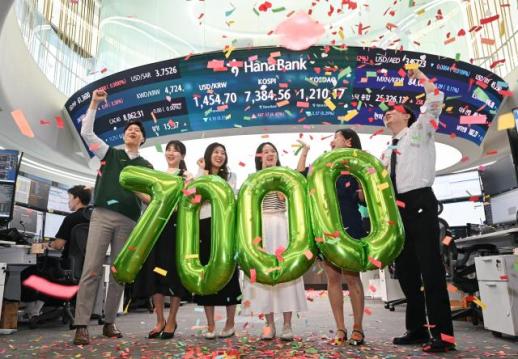 KOSPI Surpasses 7000 Mark, Sparking Surge in Investment Literature Sales As the stock market heats up, the first place to feel the surge is not the trading floors of brokerages, but rather bookstores.Following the KOSPI's unprecedented rise above the 7000 mark, sales of stock-related books in South Korea have surged by 305% compared to last year, according to recent research. While these numbers may suggest a simple investment frenzy, they reveal deeper trends in the direction of South Korean society.Past stock booms were often linked to a 'get-rich-quick' mentality, characterized by chasing rapidly rising stocks and seeking short-term profits. However, the current market trend appears to be different. The books flying off the shelves now include not only trading techniques but also topics such as pension investment, asset allocation, economic structures, and long-term investment strategies.This shift indicates a changing perception of investment. Stocks are no longer seen merely as speculative assets for a select few; they have become a survival strategy. In a reality where it is increasingly difficult to bridge the wealth gap with just a salary, people are beginning to study finance. They have come to realize that relying solely on savings accounts is insufficient for future planning.Interestingly, the current movement contrasts sharply with the 'blind investment' mentality that has characterized past market upswings. People are not just reading books to make money; they seek to understand why markets move, how industries evolve, and the connections between interest rates, artificial intelligence, semiconductors, and geopolitics. Investment itself has become an entry point for economic education.This trend is also linked to broader changes in South Korean society. As the real estate-centered asset structure wavers and the influence of global capital markets grows, financial literacy is becoming a fundamental skill rather than an optional one. Once, the perception was that 'stocks are risky,' but now the sentiment is shifting to 'not knowing is riskier.'Of course, caution against overheating is necessary. As the market rises, optimism can quickly escalate. Phrases like 'the KOSPI 7000 era' can foster excessive confidence while raising expectations. Markets do not always rise, and as enthusiasm grows, maintaining a level-headed approach becomes increasingly important.However, this phenomenon should not be dismissed as merely a sign of a bubble. What is crucial is that people are choosing to study before investing. Heading to bookstores signifies at least an effort to understand the market. This is a departure from the past, where impulsive buying was the norm.Ultimately, the current scene in bookstores reflects both the anxieties of South Korean society and the direction of change. People no longer take a stable future for granted; instead, they recognize that in order to survive, they must educate themselves and manage their assets. 2026-05-10 11:29:52
 -
 Rural Basic Income Pilot Program Sees High Demand with 8.8 to 1 Competition Ratio Interest in the rural basic income pilot program is heating up, with 44 counties applying for five additional slots, resulting in a competition ratio exceeding 8 to 1. The government plans to finalize the selection of additional regions next month.On May 10, the Ministry of Agriculture, Food and Rural Affairs announced that 44 counties had applied for the expanded pilot program aimed at providing basic income in rural areas.The rural basic income pilot program aims to combat the crisis of rural depopulation by providing monthly payments of 150,000 won in local love gift certificates to stimulate local consumption.To mitigate the impact of high inflation due to geopolitical risks in the Middle East and to strengthen support for vulnerable rural areas, the ministry secured additional budget funding last month. As a result, a call for applications was made to select five more counties from 59 designated areas experiencing population decline. The response was robust, with 44 counties expressing interest, leading to a competition ratio of 8.8 to 1.Specifically, the applicants include one county from Gyeonggi, eight from Gangwon, four from Chungbuk, four from Chungnam, five from Jeonbuk, eleven from Jeonnam, five from Gyeongbuk, and six from Gyeongnam, totaling 44 counties.The ministry will form an evaluation committee composed of private experts in rural policy, basic income, balanced development, and local finance, and plans to announce the selection of the five additional counties next month.Kang Dong-yoon, director of the Rural Income and Energy Policy Division at the Ministry of Agriculture, Food and Rural Affairs, stated, "We will actively support the rural basic income pilot program to ensure it takes root in the selected areas and leads to tangible results."* This article has been translated by AI. 2026-05-10 11:28:57
 -
 Qatar Mediates U.S.-Iran Negotiations as Iran Approves LNG Passage to Pakistan Amid final negotiations for a ceasefire between the United States and Iran, Qatar is accelerating its role as a mediator. Iran has reportedly approved the passage of a Qatari liquefied natural gas (LNG) vessel through the Strait of Hormuz, signaling a move to build trust with the mediating country. On May 9, Axios reported that U.S. Secretary of State Marco Rubio and White House Special Envoy Steve Witkoff met with Qatari Prime Minister Mohammed bin Abdulrahman Al Thani in Miami. The meeting was convened to discuss ways to draft a memorandum of understanding (MOU) aimed at ending the war in Iran. Prime Minister Al Thani was initially scheduled to return to Doha after a meeting with U.S. Vice President JD Vance in Washington but altered his plans to head to Miami instead. While in Miami, he also spoke with the Saudi foreign minister to discuss mediation strategies. The U.S. and Iran are currently negotiating a one-page document to officially end the war and establish a framework for future discussions on sensitive issues, including Iran's nuclear program. Reports indicate that U.S. officials were awaiting Iran's latest response by the afternoon of May 10. Since the outbreak of the war, Pakistan has served as the official mediator between the U.S. and Iran, but Qatar has also been involved in behind-the-scenes negotiations. U.S. officials have stated that the White House views Qatar as an effective mediator in talks with Iran. A source revealed that Qatar, Pakistan, Egypt, Turkey, and Saudi Arabia are collaborating to reach an agreement, urging both sides to de-escalate tensions and focus on a resolution. Iran Approves Passage of Qatari LNG Vessel Through Strait of Hormuz In related developments, a Qatari LNG vessel has received approval from Iran to navigate toward the Strait of Hormuz. According to Reuters, citing shipping data from the London Stock Exchange Group (LSEG), the LNG carrier "Al Karaitiyat" departed from Qatar's Ras Laffan port and is en route to Pakistan's Qasim port. Sources indicate that the shipment was sold under a government contract between Pakistan and Qatar, and Iran granted this passage as part of building trust with Pakistan, which has played a mediating role in ceasefire negotiations with the U.S. If successful, this voyage will mark the first instance of a Qatari LNG vessel passing through the Strait of Hormuz since the war began in late February. Facing a severe gas shortage, Pakistan has been requesting Iran to allow LNG vessels to transit, even on a limited basis. The "Al Karaitiyat," registered in the Marshall Islands, is a large vessel capable of carrying approximately 212,000 cubic meters of LNG and is managed by a Qatari shipping company. Previously, on April 6, Iran's Islamic Revolutionary Guard Corps (IRGC) halted two Qatari LNG carriers heading toward the Strait of Hormuz without explanation. Qatar is the world's second-largest LNG exporter, primarily supplying gas to Asian markets. However, it has been reported that 17% of Qatar's total LNG export capacity was impacted by Iranian attacks early in the war. It is expected to take 3 to 5 years to restore production facilities with an annual capacity of 12.8 million tons.* This article has been translated by AI. 2026-05-10 11:27:25
 -
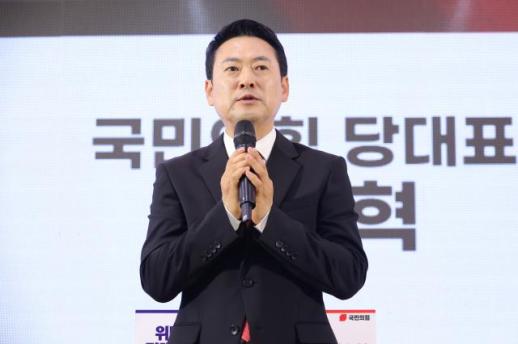 Jang Dong-hyuk: Capital Gains Tax Hike Will Drive Up Seoul Housing Prices Jang Dong-hyuk, leader of the People Power Party, criticized the reintroduction of the capital gains tax for multiple homeowners on May 10, stating, "Except for Gangnam, housing prices in Seoul have risen again. Is this Lee Jae-myung's version of a 'surgical strike'?" In a post on his Facebook account, Jang remarked, "Gangnam, which he despises, has dropped, so is Lee Jae-myung smiling?" He warned that with the capital gains tax on real estate starting today, prices will continue to rise, noting, "Everyone is pulling their properties off the market." He added, "The rental market has already reached its limit. Jeonse (long-term lease) options are drying up, and monthly rents have increased by tens of thousands of won compared to last year." He predicted that once the elections are over, property taxes will increase, and the long-term holding tax exemption will be abolished, stating, "A true hell awaits us." Jang also criticized Lee Jae-myung's insistence on 'normalizing the real estate market,' saying, "The mindset that believes this is normal is abnormal." He questioned whether the apartment owned by President Lee in Bundang would ever be sold, asking, "Is it just going to be advertised without actually selling?" Choi Bo-yoon, the party's chief spokesperson, also commented, stating, "The feared housing supply lockdown is becoming a reality," and noted that the temporary increase in urgent sales before the tax deadline was not a result of policy effectiveness but rather an attempt to avoid a tax burden. Choi emphasized, "The consequences of the tax-centric policies of the Lee Jae-myung administration are clear. Citizens who own homes are burdened by punitive taxes, while those without homes are pushed out by skyrocketing rents. Sellers face tax barriers, and young people and newlyweds looking to buy homes are frustrated by loan regulations." She further criticized the government for considering reducing long-term holding tax exemptions and stripping benefits from rental property owners, stating, "The government is shaking the market with taxes, and when the market doesn't respond as they wish, they intend to suppress it with even harsher taxes." Choi concluded by asserting that what is needed now is the repeal of punitive taxes that block exit routes and decisive action to eliminate regulations on reconstruction and redevelopment to allow quality housing to be supplied where the market demands. She urged the Lee Jae-myung administration to recognize the failures of past governments that tried to control the market through taxation.* This article has been translated by AI. 2026-05-10 11:25:47
 -
 KB Kookmin Bank to Automatically Apply Interest Over 5% to Principal Repayment KB Kookmin Bank is launching a financial support program aimed at alleviating the interest burden for individual business owners. The initiative will automatically apply a portion of the interest exceeding 5% on business loans toward principal repayment, thereby reducing both interest and principal repayment obligations. On May 10, KB Kookmin Bank announced that it will implement a program that utilizes the interest amount exceeding 5% on individual business loans to reduce debt burdens. This program is set to begin later this month as part of KB Financial Group's "KB Kookmin Happiness Hope Project." When individual business owners extend their existing loans and the interest rate exceeds 5%, the excess interest amount (up to 4 percentage points) will be automatically applied to the loan principal repayment. As a result, the loan balance will decrease, which is expected to lessen the future interest burden for individual business owners, helping to alleviate their financial costs. Additionally, there will be no prepayment fees for using the excess interest payment toward principal repayment. The program is targeted at individual business owners with low credit ratings who hold won-denominated loans with interest rates exceeding 5%. Certain sectors, such as real estate, and customers with overdue loans will be excluded from this initiative. A representative from KB Kookmin Bank stated, "We expect that more than 10,000 individual business owners will benefit from this program, and we will continue to fulfill our social responsibility through various inclusive finance practices for vulnerable groups." 2026-05-10 11:24:33
 -
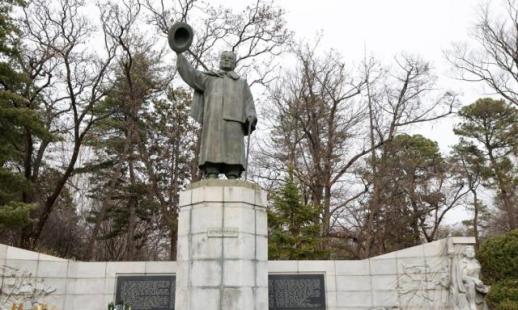 Remembering Goha Song Jin-woo: A Legacy of Journalism and Integrity On May 8, 2026, at 3 p.m., a gathering took place at the Memorial Hall of the National Cemetery in Dongjak-dong, Seoul, where attendees paid their respects to a prominent journalist. The event commemorated the 136th birthday and the 81st anniversary of the passing of Goha (古下) Song Jin-woo.Hosted by the Goha Song Jin-woo Memorial Foundation and supported by the Ministry of Patriots and Veterans Affairs and the Dong-A Ilbo, the ceremony was more than just a memorial; it was a moment to reflect on the origins and future of Korean journalism.The atmosphere in the Memorial Hall was solemn. The ceremony began with a national tribute, followed by the reading of a biography, memorial speeches, a commemorative lecture, a tribute performance, floral tributes, incense offerings, and a moment of silence. Over 300 participants, including descendants of independence activists, veterans, academics, journalists, and citizens, gathered to honor Goha's life.Hyun Byeong-cheol, president of the Goha Free Democratic Research Institute, stated, "The values of freedom and responsibility, peace and coexistence, unity and democracy that Goha left behind are crucial principles that must be upheld even today." This statement served as a stern warning to contemporary Korean society and a profound reflection on the divided times we live in.Yoo Hong-rim, president of Seoul National University, also paid tribute to Goha's life, noting, "In the harsh reality of the Japanese colonial period, he prioritized the freedom and dignity of the nation over his own safety." This sentence encapsulates the essence of Goha's life.While Goha was a journalist, he was not merely a newspaper publisher. He was also an educator, an independence activist, and a politician. However, the most significant title he held was that of a 'public servant' (公人). He placed the fate of his nation and community above his own well-being in the face of the responsibilities demanded by the times.The name 'Goha' means 'standing beneath the old.' It signifies humility before history and tradition, emphasizing a commitment to learning from the past. This is not merely a virtue of modesty; it embodies the spirit of a modern intellectual who sought to balance tradition and modernity, nation and world, freedom and responsibility.The final resonances of the memorial were deepened by a eulogy from Professor Song Sang-hyun, an honorary professor at Seoul National University and Goha's grandson. He reflected on Goha's life not just as a family memory but as a legacy of commitment to independence and the establishment of a free democratic state. He emphasized the importance of passing on the values of freedom, democracy, and national dignity that Goha cherished to future generations. This was a time to reaffirm the spirit of independence and the essence of journalism.The heavy footsteps of attendees leaving the Memorial Hall reflected this sentiment. That day, we were not merely commemorating one journalist; we were questioning the essence of journalism itself.Who was Goha Song Jin-woo? He was born in 1890 in Damyang, Jeollanam-do. His family lineage is from Sinpyeong, and his pen name is Goha. From a young age, he studied Confucian classics and learned about the sorrows of a nation in despair under the guidance of independence activist Ki Sam-yeon. After encountering modern studies, he traveled to Japan and graduated from Meiji University with a degree in law.During his time in Japan, he formed a deep bond with Inchon (仁村) Kim Seong-su. Their relationship transcended mere academic camaraderie; it was a friendship akin to the legendary bond between Guan Zhong and Bao Shuya from ancient China. Like them, Goha and Inchon understood each other's intentions and acknowledged their roles as they walked the path of national education and journalism together.While Inchon laid the foundation for national education and journalism through capital and organization, Goha supported this path with intellect, logic, and writing. Though they had different roles, their goal was unified: to preserve the national spirit of colonial Korea.After returning to Korea, Goha became the vice principal and later the principal of Jungang School. At that time, Jungang School was not merely an educational institution; it was a cradle of national consciousness and a space where the spirit of the March 1st Movement flourished.Goha discussed strategies for independence with figures such as Kim Seong-su, Hyeon Sang-yun, Choi Rin, and Choi Nam-seon. Following the March 1st Movement in 1919, he was arrested and imprisoned in Seodaemun Prison. Although he was acquitted in court, he endured nearly a year and a half of imprisonment.However, prison could not break his convictions. In 1921, Goha became the third president of the Dong-A Ilbo. He later served as president, advisor, and chief editor, intertwining his fate with that of the newspaper. For him, the newspaper was not merely a business; it was the voice, ears, and breath of the nation.Thus, he endeavored to uphold the newspaper's role as a public instrument even amid Japanese oppression. The Dong-A Ilbo launched the Movement for the Promotion of Local Products, advocated for the establishment of a national university, and took the lead in the BnaRod Movement to eradicate illiteracy. Goha believed that journalism should not just convey events but also cultivate the survival capacity of the nation.The newspaper had to be the eye of the times, the voice of the weak, and the conscience of the nation. In 1936, when marathon runner Sohn Ki-jung won a gold medal at the Berlin Olympics, the Dong-A Ilbo published a photo of him with the Japanese flag removed from his chest. This incident, known as the 'removal of the Japanese flag incident,' was not merely an editorial act; it was a journalistic resistance to preserve the dignity of a nation in despair. As a result of this incident, the Dong-A Ilbo faced a suspension and Goha was forced to resign under pressure from the colonial government. However, he did not succumb; he merely stepped down.The Japanese authorities pressured him to cooperate with them, urging him to participate in Shinto rituals and recruit students for military service. Yet, Goha ultimately refused. He protested, stating, "The Dong-A Ilbo is my voice, my ears, my breath, my hands and feet. How can someone whose entire being has been severed act?" He believed that demanding cooperation while silencing the voice of journalism was akin to selling the nation's conscience, which he could not accept.After liberation, Goha faced another historical challenge. While liberation brought joy, it also ushered in chaos. The ideological divide was severe, and the shadows of U.S. and Soviet military administrations loomed over the Korean Peninsula. Goha organized the Preparatory Committee for the National Assembly and served as the chief secretary of the Korean Democratic Party, seeking a path toward a free democratic state. However, the joy of liberation was short-lived.On the morning of December 30, 1945, he was shot at his home in Wonsa-dong, Seoul, ending his life at the age of 55. Goha's death was a personal tragedy, but it also marked a tragedy in modern Korean history. Yet, his life is not merely remembered as a tragedy.He exemplified what journalism should be. He did not bow before power, did not retreat before his nation, and did not remain silent in the face of the times. His journalism was not a commercial skill but a public conscience.Today, Korean journalism must once again ask itself in the shadow of Goha. For whom do we write? Do we write for clicks or for truth? For factions or for the community? In the age of artificial intelligence (AI), journalism has gained unprecedented speed and efficiency. AI can quickly generate articles, and algorithms can finely analyze reader preferences.However, no matter how advanced technology becomes, the essence of journalism remains unchanged: to verify facts, monitor power, protect the vulnerable, and illuminate the direction of the community. AI may be able to write articles, but it cannot replace the conscience of journalism. Algorithms can analyze interests but cannot judge justice.Thus, the spirit of Goha is even more urgent in the age of AI. It is about balancing freedom and responsibility, nation and world, fact and conscience, journalism and public service. Honoring the name of Goha Song Jin-woo is not merely about reminiscing about the past; it is about reaffirming the position that today's journalism must occupy.The spirit of friendship that preserved national education and journalism alongside Inchon Kim Seong-su, and the essence of journalism that upheld its public duty even amid Japanese oppression, are more crucial than ever in our society today.Goha has departed, but the questions he left behind remain unresolved. Whose side should journalism be on? The answer is clear: journalism should not side with power, capital, or factions. Journalism must stand on the side of truth. This is the path that Goha Song Jin-woo has left behind, and it is the path that today's Korean journalism must walk again. 2026-05-10 10:51:43
 -
 Korean Government to Distribute 2.25 Million Movie Discount Coupons The Ministry of Culture, Sports and Tourism and the Korean Film Council are set to distribute movie discount coupons worth 6,000 won to help reduce the cost of movie tickets and support the recovery of the film industry. According to the ministry, the coupons will be available starting at 10 a.m. on May 13. A total of 2.25 million coupons will be distributed, which represents half of the 4.5 million movie discount coupons secured through the 2026 supplementary budget aimed at stabilizing livelihoods and revitalizing the film industry. The remaining 2.25 million coupons will be distributed in July during the summer peak season. The coupons can be used at major multiplex theaters such as CGV, Lotte Cinema, Megabox, and CineQ through their websites and mobile apps. Each online member of these theaters will automatically receive two coupons in their coupon wallet. Moviegoers can select the discount coupon when booking or paying for tickets. However, once the allocated quantity of coupons for each theater is exhausted, the discount will no longer be applicable. Even if a coupon is in a member's wallet, it will automatically disappear if the theater's allocation runs out before it is used. In addition to multiplexes, independent and art-house theaters, as well as smaller cinemas and silver cinemas, will also offer the discount coupons. The ministry stated that while these theaters are encouraged to provide coupons through their websites, those unable to do so due to system limitations will distribute them on a first-come, first-served basis at the venue. Participating theaters can be checked on the Korean Film Council's website. Using the discount coupon will reduce the ticket price by 6,000 won per ticket. However, if the final payment amount after applying the discount falls below 1,000 won, a minimum charge of 1,000 won will apply. The discount can be combined with existing theater discounts. According to the ministry, the 6,000 won discount coupons can be used alongside discounts for 'Culture Day', disability benefits, senior citizen discounts, youth discounts, and early bird discounts. Specifically, for CGV, Lotte Cinema, and Megabox, movie ticket prices are set at 10,000 won on the second and last Wednesdays of each month as part of 'Culture Day' discounts. By applying the 6,000 won discount coupon, moviegoers can watch a film for just 4,000 won. Additionally, discounts from affiliated credit cards can also be applied if the minimum payment conditions set by the card companies are met. However, telecom company member discounts cannot be combined with this coupon. Individuals eligible for disability and senior citizen discounts can also receive discounts on-site, even though online booking is the principle for this initiative. The ministry plans to operate a dedicated support desk to guide moviegoers unfamiliar with using websites or apps on how to book tickets. A ministry policy official stated, "As we welcome the warm spring, we hope this movie discount initiative adds joy to daily life and provides an opportunity for audiences to engage more closely with Korean films. We will continue to support policies that reflect the voices from the field to ensure that the recent trend of audience recovery continues and the Korean film industry can make a strong comeback."* This article has been translated by AI. 2026-05-10 10:49:45
 -
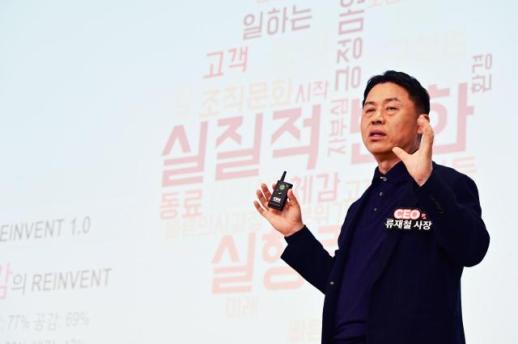 LG Electronics President Ryu Jae-cheol: Daily 1% Progress Creates 40-Fold Advantage Ryu Jae-cheol, President of LG Electronics, emphasized the need to rebuild fundamental competitiveness in quality, cost, and delivery to win against rapidly advancing competitors. On May 10, LG Electronics reported that Ryu made these remarks during his first town hall meeting with all employees at LG Science Park in Magok, Seoul. He urged, "Let’s focus on revealing problems and executing to create a top-tier LG Electronics that grows together with its employees." During the meeting, Ryu redefined LG Electronics' unique working methods and organizational culture innovation campaign as 'Reinvent 2.0' and outlined the direction for change. Having joined the company in 1989 as a researcher at Geumseong's home appliance research institute, Ryu shared his philosophy developed over 37 years, stating, "A daily 1% improvement may seem small, but after a year, it can create a gap of about 40 times. Conversely, a daily 1% decline can lead to a regression of about 1,480 times in a year." He continued, "What we must always remember and practice is to accumulate 1% of change every day. The competitiveness we will build in the future starts with today's 1% improved actions. Let’s achieve small changes and innovations every day." Since 2022, LG Electronics has been promoting the Reinvent campaign, encouraging employees to create enjoyable changes. The company aims to enhance the execution of core values such as growth and communication through the newly established 'Reinvent 2.0' this year, accelerating changes in working methods. Ryu stated, "We need to think about ways to succeed rather than reasons for failure, and we need a new approach that can lead to significant innovations rather than small fixes. I will lead efforts to create an atmosphere where revealing problems is encouraged, starting from the management level." He also discussed the company's performance in the first quarter and the business environment for the remaining quarters, emphasizing the importance of recognizing the realities the company faces from the perspective of revealing problems. "Change is what we do best, and focusing on revealing problems and executing will accelerate the start of Reinvent 2.0," Ryu encouraged employees, adding, "Let’s believe in LG Electronics' innovative DNA and strength, and gather everyone's small changes to transform the future of LG Electronics."* This article has been translated by AI. 2026-05-10 10:48:16
 -
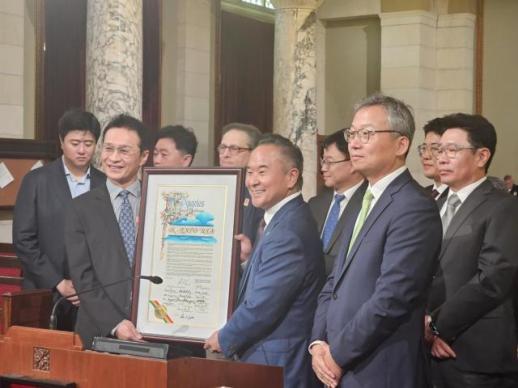 K-Expo in Los Angeles: A Platform for Korean Cultural and Industrial Exports The '2026 K-Expo USA' taking place in Los Angeles is more than just a cultural event. It serves as a comprehensive export platform that showcases Korean content and products, including K-pop, dramas, films, food, beauty, tourism, and the Korean language, to international markets. The Korea Creative Content Agency announced that the K-Expo will be held from May 23 to 27 in LA, marking the first time the event is hosted in the United States.The significance of this event lies in its location and timing. Los Angeles is not only the heart of the Korean community in the U.S. but also a key hub for the global content industry. It is one of the cities where American consumer culture meets Asian content most rapidly. The Korea Creative Content Agency's decision to hold a separate opening ceremony at LA City Hall further underscores the event's importance.A key aspect to note is the structure of the K-Expo. While past Hallyu events focused primarily on performances and events, this year's expo has evolved to connect various sectors such as food, cosmetics, fashion, tourism, and consumer goods through content. The event is designed to support the international expansion of agricultural, fishery, and consumer goods companies centered around K-content. Various government ministries, including the Ministry of Culture, Sports and Tourism, the Ministry of Trade, Industry and Energy, the Ministry of SMEs and Startups, the Ministry of Agriculture, Food and Rural Affairs, the Ministry of Oceans and Fisheries, and the Ministry of Health and Welfare, are all participating.This shift indicates that Hallyu is no longer just a cultural phenomenon. K-content now plays a crucial role in industrial exports. A single drama can boost cosmetic sales, K-pop performances can enhance tourism spending, and growing interest in Korean cuisine can lead to increased exports of agricultural products. The 'K' brand itself has become a powerful consumer driver in the global market.This is precisely what the government and industry are focusing on. While exporting content itself is important, the 'joint export effect'—where related industries also enter international markets based on content—is even more significant. The content industry is effectively serving as a marketing platform for manufacturing and consumer goods industries.However, the challenge remains that South Korea has not fully leveraged this trend at a national strategy level. Compared to the rapid global spread of Hallyu, the strategies for industrial linkage remain fragmented. Events are often divided by ministry, and support systems frequently overlap. While international markets already perceive the K-brand as a unified entity, within South Korea, policies for content, food, beauty, and tourism operate separately.What is needed now is a more sophisticated national strategy for 'Hallyu industrialization.' The K-Expo should not merely end as a display event; it must establish itself as a practical business platform that connects overseas buyers and investors. It should create a structure that leads to contracts, investments, and distribution network establishment, rather than just one-time performances or experiential events. This is essential for the economic sustainability of Hallyu.The U.S. market holds significant symbolic value as it is the world's largest consumer market and sets the standards for the global cultural industry. If K-content and K-products can establish themselves as a cohesive industrial ecosystem in the U.S., the ripple effects are likely to extend to European, Latin American, and Middle Eastern markets.The true competitiveness of Hallyu now lies not just in the content itself but in its ability to simultaneously elevate industry, exports, tourism, and brand value through a 'composite economic effect.' South Korea has already become a cultural powerhouse that attracts global attention. The remaining challenge is how effectively this can be connected to industrial competitiveness.The K-Expo serves as a testing ground for this potential. The key is not the scale of the event but the outcomes that follow. When it leads to contracts, investments, and market entry, Hallyu can finally transcend being merely a cultural phenomenon and become a comprehensive national growth strategy.* This article has been translated by AI. 2026-05-10 10:46:23
 -
 South Korean Defense Minister to Discuss Key Issues with U.S. Counterpart South Korean Defense Minister An Gyu-baek is set to visit the United States amid ongoing disagreements regarding the transfer of wartime operational control (WOC) and other key issues.According to the Ministry of National Defense on May 10, An will meet with high-ranking officials, including U.S. Secretary of Defense Pete Hegseth, until May 14. This marks An's first visit to the U.S. since taking office in July 2022.An will hold talks with Hegseth in Washington, D.C., on May 11 (local time) and is also scheduled to meet with the acting Secretary of the Navy, the chair and ranking member of the Senate Armed Services Committee, and other U.S. government and congressional officials.This visit comes as sensitive issues between the two countries have accumulated, including the transfer of wartime operational control, cooperation on the construction of nuclear-powered submarines, freedom of navigation in the Strait of Hormuz, and limitations on U.S. satellite intelligence sharing regarding North Korea.The Yoon Suk-yeol administration is pushing for the transfer of wartime operational control as a national agenda, aiming for a target year of 2028 before the current U.S. administration's term ends.During the Korea-U.S. Security Consultative Meeting (SCM) held last year, the two defense ministers agreed to establish a roadmap for meeting the conditions for the transfer of operational control, with plans to complete the verification process for the second stage of conditions by the end of this year.However, recent comments by U.S. Forces Korea Commander Javier Brunson during a congressional hearing indicated a potential timeline of the first quarter of 2029, highlighting a difference in perspectives.Additionally, cooperation on the construction of nuclear-powered submarines, as agreed upon by the leaders of South Korea and the U.S. in a joint fact sheet last year, has been slow to progress amid negative repercussions from the Coupang issue.During his visit, An is also expected to meet with the acting Secretary of the Navy, where discussions on the nuclear submarine issue are anticipated.Coinciding with An's visit, a meeting of the Integrated Defense Consultative Body (KIDD), comprising deputy defense officials from both countries, will take place in Washington, D.C., on May 12-13.Last month, South Korea's chief representative for North Korean diplomacy, Jeong Yeon-du, and security strategy secretary Cho Hyun-woo visited Washington, D.C.A Ministry of National Defense official stated that An's visit aims to facilitate direct communication among high-level officials regarding the implementation of agreements from the Korea-U.S. summit and the SCM, emphasizing that wartime operational control and nuclear-powered submarines will be key topics of discussion. 2026-05-10 10:44:18