

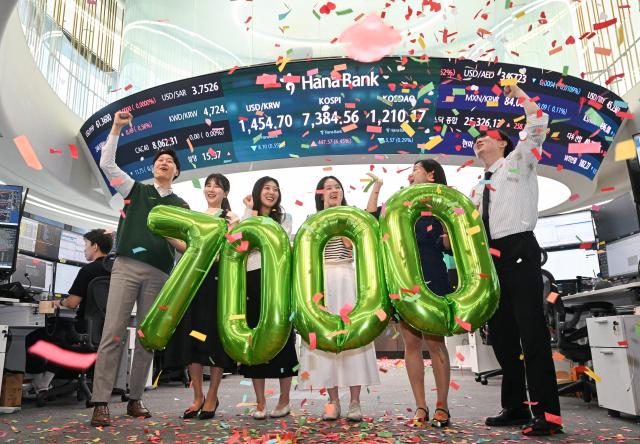
As the stock market heats up, the first place to feel the surge is not the trading floors of brokerages, but rather bookstores.
Following the KOSPI's unprecedented rise above the 7000 mark, sales of stock-related books in South Korea have surged by 305% compared to last year, according to recent research. While these numbers may suggest a simple investment frenzy, they reveal deeper trends in the direction of South Korean society.
Past stock booms were often linked to a 'get-rich-quick' mentality, characterized by chasing rapidly rising stocks and seeking short-term profits. However, the current market trend appears to be different. The books flying off the shelves now include not only trading techniques but also topics such as pension investment, asset allocation, economic structures, and long-term investment strategies.
This shift indicates a changing perception of investment. Stocks are no longer seen merely as speculative assets for a select few; they have become a survival strategy. In a reality where it is increasingly difficult to bridge the wealth gap with just a salary, people are beginning to study finance. They have come to realize that relying solely on savings accounts is insufficient for future planning.
Interestingly, the current movement contrasts sharply with the 'blind investment' mentality that has characterized past market upswings. People are not just reading books to make money; they seek to understand why markets move, how industries evolve, and the connections between interest rates, artificial intelligence, semiconductors, and geopolitics. Investment itself has become an entry point for economic education.
This trend is also linked to broader changes in South Korean society. As the real estate-centered asset structure wavers and the influence of global capital markets grows, financial literacy is becoming a fundamental skill rather than an optional one. Once, the perception was that 'stocks are risky,' but now the sentiment is shifting to 'not knowing is riskier.'
Of course, caution against overheating is necessary. As the market rises, optimism can quickly escalate. Phrases like 'the KOSPI 7000 era' can foster excessive confidence while raising expectations. Markets do not always rise, and as enthusiasm grows, maintaining a level-headed approach becomes increasingly important.
However, this phenomenon should not be dismissed as merely a sign of a bubble. What is crucial is that people are choosing to study before investing. Heading to bookstores signifies at least an effort to understand the market. This is a departure from the past, where impulsive buying was the norm.
Ultimately, the current scene in bookstores reflects both the anxieties of South Korean society and the direction of change. People no longer take a stable future for granted; instead, they recognize that in order to survive, they must educate themselves and manage their assets.
* This article has been translated by AI.
Copyright ⓒ Aju Press All rights reserved.