
Journalist

Andre Lim
-
 U.S. and South Korea Hold 28th Integrated Defense Consultative Meeting The South Korean Ministry of National Defense and the U.S. Department of Defense announced on May 14 that they held the 28th Integrated Defense Consultative Meeting (KIDD) in Washington, D.C., on May 12 and 13. The meeting was attended by Hong Chul, Director of Defense Policy, and John Nod, Deputy Assistant Secretary of Defense for Indo-Pacific Security Affairs, along with James Finch, Acting Deputy Assistant Secretary for East Asia, who served as the chief representatives from both sides. Key officials from the defense and diplomatic sectors of both countries were also present. During the meeting, the two sides evaluated the overall status of defense cooperation within the U.S.-South Korea alliance and exchanged views on policy directions to strengthen the alliance's combined defense posture. The Ministry stated, "Both sides agreed to actively promote cooperation for the implementation of the Joint Fact Sheet on defense matters and the Joint Communiqué from the 57th U.S.-South Korea Security Consultative Meeting (SCM) held last November." Additionally, the KIDD was assessed as providing a crucial foundation for advancing practical cooperation to further solidify the alliance, with plans to deepen collaboration to achieve common security goals in the Korean Peninsula and the Indo-Pacific region. A key agenda item for this meeting was the transfer of operational control. South Korean Defense Minister An Gyu-baek and U.S. Secretary of Defense Pete Hegseth held a bilateral meeting at the U.S. Department of Defense on May 11, prior to the KIDD. In a press briefing with reporters at the South Korean Embassy in Washington, D.C., the day after the meeting, Minister An stated, "The transfer of operational control based on conditions remains unchanged, with the goal of setting a target year for the transfer to be confirmed by the presidents after the two ministers agree on it during the SCM in November." He also noted, "There are some differing views from the U.S. side." The conditions agreed upon for the transfer of operational control include: 1) military capabilities necessary to lead combined defense; 2) the alliance's comprehensive ability to respond to North Korea's nuclear and missile threats; and 3) a security environment on the Korean Peninsula and in the region that is conducive to a stable transfer. The government is considering setting a target year for the transfer after completing verification related to Full Operational Capability (FOC) in the second phase, with plans to seek approval from the U.S.-South Korea defense ministers during the SCM in October.* This article has been translated by AI. 2026-05-14 07:00:50
 -
 Netanyahu Secretly Visits UAE, Marks Historic Breakthrough in Relations Benjamin Netanyahu, the Prime Minister of Israel, made a secret visit to the United Arab Emirates (UAE) on May 14, during a time of conflict with Iran, according to the Israeli Prime Minister's Office. The office stated that Netanyahu met with Sheikh Mohammed bin Zayed Al Nahyan, the President of the UAE, during his covert trip, which occurred amid the ongoing "Lion's Roar" military operation. This visit is seen as a significant breakthrough in the relationship between Israel and the UAE. A source familiar with the discussions told Reuters that Netanyahu and Sheikh Mohammed met on March 26 in Al Ain, an oasis city near the Oman border, and their talks lasted several hours. The source also revealed that David Barnea, the head of Mossad, visited the UAE at least twice during the conflict to coordinate military operations. The UAE recognized Israel as a state and established diplomatic relations in 2020 through the so-called Abraham Accords, alongside Bahrain. Since then, the two countries have expanded their cooperation across various sectors, particularly in security. Following the outbreak of war, Israel deployed Iron Dome missile defense systems and personnel to the UAE, which has been under heavy fire from Iran. This marks the first time Israel's Iron Dome has been stationed abroad.* This article has been translated by AI. 2026-05-14 06:25:05
 -
 Corporate Loans Surge by 21 Trillion Won This Year, Testing Bank Stability As of April this year, the outstanding balance of corporate loans at South Korea's five major banks has increased by over 21 trillion won, nearing last year's total annual increase. This surge is attributed to the government's tightening of household loan regulations and a push for productive finance, prompting banks to significantly increase their corporate loan portfolios. However, the simultaneous rise in both loan balances and delinquency rates amid fierce competition in corporate finance has raised concerns about the urgent need for a balance between growth and risk management.According to the financial sector, as of the end of April, the outstanding balance of corporate loans at KB Kookmin, Shinhan, Hana, Woori, and NH Nonghyup banks reached 866.646 trillion won, an increase of 21.3392 trillion won compared to the end of last year. Following a rise of 5.4449 trillion won in March, this marks the second consecutive month of increases exceeding 5 trillion won, bringing the total increase within just four months close to last year's annual figure of 24.1029 trillion won. As of May 11, the corporate loan balance continued to rise, reaching 867.1478 trillion won.In contrast, the outstanding balance of household loans at these five banks decreased by 3.821 billion won to 767.296 trillion won as of the end of last month, reflecting a contraction. This decline is interpreted as a result of reduced loan demand following the government's management policies and rising interest rates after the Middle East conflict.The competition among banks to attract corporate loans has intensified, leading to a reversal where corporate loan interest rates are now lower than those for household loans. Typically, corporate loans carry higher interest rates due to the greater risk of default. However, since the government emphasized 'productive finance' at the end of last year, the trend has shifted, with corporate loan rates falling below household loan rates.According to the Bank of Korea, the average interest rate for corporate loans at domestic deposit banks was 4.14% in March, down from 4.2% in February. In contrast, the interest rate for household loans rose to 4.51%, an increase of 0.06 percentage points from the previous month.Industry analysts predict that the reversal of household and corporate loan rates is likely to persist for the time being, as banks solidify their focus on expanding corporate loans in line with the government's clear policy direction.However, there are concerns that aggressive expansion of corporate loans may increase the burden of stability management for banks. The simultaneous rise in loan volumes and delinquency rates suggests that the expansion could lead to an increase in non-performing assets for banks.In fact, the average delinquency rate for corporate loans at the five major banks rose to 0.46% at the end of the first quarter, a 2.5-fold increase from 0.19% at the end of 2021. The delinquency rate for the Industrial Bank of Korea, which has a significant proportion of corporate clients, jumped from 0.28% to 0.98% during this period. Notably, the delinquency rate for small businesses is rising even faster, averaging 0.57% at the five major banks and 1.42% at regional banks. This trend is attributed to weakened debt repayment capabilities among companies amid sluggish domestic demand and geopolitical risks stemming from the Middle East.A financial sector official stated, "Banks with a high proportion of small business loans may face increased difficulties in loan management if the economic situation worsens. Given that corporate loans generally have higher delinquency rates and larger volumes compared to household loans, managing loan quality will become a new challenge for the banking sector."* This article has been translated by AI. 2026-05-14 06:21:31
 -
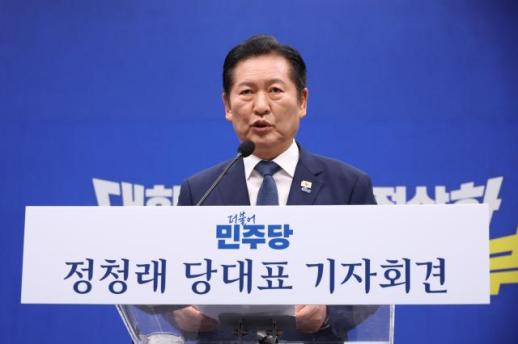 Election Outlook: Seoul's Vote Key Amid Strong Ruling Party Support With just 20 days until the local elections on June 3, political experts are identifying Seoul, Busan, and Daegu as key battlegrounds. The outcome of the Seoul mayoral race, in particular, is expected to significantly influence the political landscape going forward. On May 14, Ajou Economics surveyed six experts regarding their predictions for the gubernatorial elections, all of whom forecasted an advantage for the ruling Democratic Party. Predictions varied, with some experts suggesting the party would win in 9 out of 16 districts, while others anticipated victories in as many as 15 districts. Initially, the Democratic Party was expected to achieve a decisive victory, leveraging the early support ratings for the administration of Lee Jae-myung and the judgment against the Yoon Suk-yeol government. However, recent analyses indicate that even experts are uncertain about the election results, which have entered a fog of unpredictability. Major Battlegrounds: Seoul, Busan, and Daegu… Experts Predict Ruling Party Majority Experts unanimously agree that Seoul is the most critical battleground in this election. The city holds symbolic significance as the capital, and both the Seoul mayor and Gyeonggi Province governor are seen as stepping stones to higher office. Additionally, Seoul was won by the People Power Party four years ago, intensifying the competition between the two parties. The Democratic Party has nominated Jeong Won-oh, the mayor of Seongdong District, while the People Power Party has put forward incumbent Mayor Oh Se-hoon. Eom Kyung-young, director of the Era Spirit Research Institute, stated, "For the People Power Party, even if they do not achieve a majority in the gubernatorial races, winning in Seoul would be considered a success." Jo Sung-joo, head of the Political Development Institute, added, "The Democratic Party must reclaim Seoul to truly claim victory in the local elections," noting that the People Power Party would be evaluated positively if they can retain Busan, Daegu, and Gyeongnam. The mayoral race in Daegu features Democratic Party candidate Kim Boo-kyum, a former prime minister, against the People Power Party's Choo Kyung-ho, a former economic minister. The Busan mayoral race includes former lawmaker Jeon Jae-soo from the Democratic Party and incumbent Mayor Park Hyung-jun from the People Power Party, both considered major contests. Political analyst Park Sang-byeong remarked, "I see Seoul, Busan, and Daegu as battlegrounds. The election outcome could hinge on a margin of 3 to 5 percent in vote share," adding that significant mistakes in the lead-up to the election could alter the results. Jo Sung-joo also identified Seoul, Busan, and Daegu as key battlegrounds. Experts generally predict that the Democratic Party will win more than half of the 16 gubernatorial races. However, estimates for the number of Democratic Party winners range from 9 to 15. Park Sang-byeong forecasts a decisive victory for the Democratic Party in 15 districts, while Lee Jong-hoon predicts a worst-case scenario for the People Power Party, estimating a 15 to 1 outcome. Shin Yul, a professor at Myongji University, anticipates the Democratic Party will win in 12 to 13 districts, while Choi Jin, head of the Presidential Leadership Research Institute, expects 13 victories for the party. Conversely, Eom Kyung-young believes the People Power Party will successfully defend its positions in five districts in the Yeongnam region, predicting a 9 to 7 outcome in favor of the Democratic Party. Jo Sung-joo expressed caution regarding predictions for the number of winners. Upcoming Variables: Special Prosecutor and Real Estate Issues… "No Major Impact on Overall Trend" Experts predict that the special prosecutor law proposed by the Democratic Party and real estate issues could become significant variables in the upcoming election. The Democratic Party claims that the prosecution under the Yoon Suk-yeol administration engaged in fabricated investigations and prosecutions, prompting them to propose a special prosecutor law to uncover the truth. The People Power Party, however, argues that the special prosecutor aims to dismiss charges against President Lee Jae-myung and erase crimes. Lee Jong-hoon noted, "The People Power Party candidates are rallying around the special prosecutor issue rather than Jang Dong-hyuk's leadership to consolidate votes," adding that issues such as the recent end of the capital gains tax exemption and how real estate prices will respond could also influence voter sentiment, along with potential last-minute candidate unifications. Shin Yul also pointed out that the special prosecutor could provoke anger among moderate voters, and issues like the long-term holding tax exemption and property taxes could have an impact. He also mentioned that the government's response to recent attacks in the Strait of Hormuz could resonate with voters. Conversely, some experts believe that the issues raised as variables before the local elections are unlikely to significantly alter the overall trend. Choi Jin stated, "While constitutional amendments and special prosecutors are important topics in politics, the election will ultimately be determined by the judgment against Lee Jae-myung and the judgment against Yoon Suk-yeol's supporters," predicting that the 'Yoon Suk-yeol judgment' will have a more substantial effect. Park Sang-byeong added, "While issues like candidate selection controversies or inappropriate remarks are certainly relevant, they are not variables that will significantly impact the election outcome. Mistakes made just before the election could directly affect votes, but as the election approaches, the dynamics can change frequently, so the impact on voter sentiment is likely to be minimal."* This article has been translated by AI. 2026-05-14 06:19:36
 -
 Are We Just Sharpening Old Knives in the Obesity Treatment Market? "Which obesity treatment product will you choose?" As I reported on the obesity treatment market, I compared weight loss rates, side effects, and prices of various products multiple times. I also summarized differences in accessibility and formulation convenience. However, when asked to choose one, I hesitated to respond. The first products that came to mind were Novo Nordisk's Wegovy and Eli Lilly's Mounjaro. Rather than being just options among many, these two products have become benchmarks. They have proven their effectiveness through large-scale clinical data and have accumulated prescription experience through insurance coverage and expanded distribution networks. This structure creates a cycle where data builds trust, and trust leads to increased prescriptions. The market landscape is changing rapidly. The fact that Mounjaro has overtaken the cancer drug Keytruda to become the top-selling drug globally in just three years is symbolic. It shows that obesity treatments are not merely emerging markets but are moving to the center of the pharmaceutical industry. The impact is spreading to surrounding industries. The health food and beauty sectors report a shift in sentiment. They say it has become difficult to persuade consumers with messages like "helps with dieting" as they did before. Some aesthetic clinics that previously focused on dieting now state, "The medication handles weight loss, while we focus on body shape correction and management." Obesity treatments are changing the very division of roles in the market. As the market standards solidify, domestic pharmaceutical and biotech companies are also entering the fray. Hanmi Pharmaceutical's epeglanatide is set to launch in the second half of this year, marking the first domestic obesity treatment. HK inno.N's ecnoglutide, introduced from China's Saiwind Biosciences, aims to complete clinical trials within the year, while JW Pharmaceutical plans to advance the bopanglutide, introduced from China, into Phase 3 clinical trials in the second half of the year. Additionally, there are products in the early stages of clinical trials or awaiting Investigational New Drug (IND) approval. The reasons for this influx are clear. The market size and growth rate are overwhelming. Even knowing it is a red ocean, it is hard to withdraw. Domestic companies have their own solutions. They aim to reduce side effects or diversify formulations into long-acting, oral, or patch forms. They are also introducing mechanisms to mitigate muscle loss side effects. However, the structural limitations of being latecomers are evident. Wegovy and Mounjaro have already secured long-term clinical data involving thousands of participants and have built up regulatory approvals and prescription experience globally. Recently, the emergence of oral treatments has further complicated the competitive landscape. Novo Nordisk's Wegovy Pen began sales at over 70,000 pharmacies across the U.S. this year. In its third week on the market, Eli Lilly's oral obesity treatment, Powndayo, recorded approximately 5,600 prescriptions. Additionally, price competition and the potential for low-cost generics following the expiration of the semaglutide patent are adding to the challenges. The barriers to entry in the market are becoming increasingly high. The difficulties faced by latecomers are felt more directly in the field. One industry insider remarked, "Given that market standards have already solidified, it may be more realistic for domestic products to seek opportunities first in emerging markets like Southeast Asia." This comment indirectly reflects the burden of competing head-on. There is a growing sentiment that for domestic new drugs to succeed, they must compete on price with big pharmaceutical companies. However, considering the clinical data, prescription experience, and distribution networks accumulated by first movers, it is becoming clear that a simple pricing strategy will not shake the market. The question remains: what competitive edge can latecomers present in a market where standards are firmly established? While attempts at differentiation continue, the key issue is whether these efforts can translate into global competitiveness rather than being confined to the domestic market. We must also reflect on whether we are merely sharpening old knives in an already formed battlefield. It remains to be seen whether the hard-earned new drugs can establish themselves as the preferred treatment chosen by patients, rather than remaining within a limited market.* This article has been translated by AI. 2026-05-14 06:13:10
 -
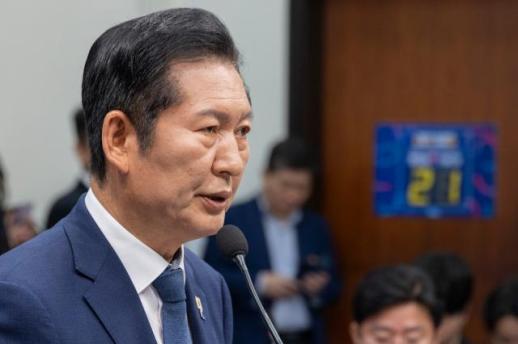 Experts Predict Comfortable Victory for Ruling Party in Upcoming By-Elections The upcoming by-elections, held alongside the June 3 local elections and featuring 14 races, are generating significant interest. Both major parties have declared their commitment to a full-scale effort in these elections, leading experts to express mixed opinions on the Democratic Party's goal of retaining 13 districts and the potential for unification in key battlegrounds. As the elections approach, the outcome remains uncertain. In an interview with Aju Economy on May 14, six political experts largely predicted a comfortable victory for the Democratic Party in districts outside of key battlegrounds like Busan North and Pyeongtaek, which Democratic Party leader Jeong Cheong-rae has identified as critical. Political commentator Lee Jong-hoon noted the influence of President Lee Jae-myung's popularity and the lack of progress on unification among conservative candidates in Busan North, stating, "Unless there are unexpected developments, the Democratic Party will retain all 13 districts." Cho Sung-joo, head of the Political Development Institute, echoed this sentiment, suggesting that outside of the battlegrounds, the Democratic Party is likely to win comfortably. Choi Jin, director of the Presidential Leadership Research Institute, acknowledged the People Power Party's potential to secure victories in Daegu Dalseong and the conservative strongholds of Chungnam Gongju, Buyeo, and Cheongyang, but predicted that the Democratic Party would dominate in all other areas. However, some experts cautioned against premature conclusions, anticipating a possible resurgence for the People Power Party. Eom Kyung-young, director of the Era Spirit Research Institute, remarked, "It will be difficult for the Democratic Party to secure all 13 districts. The People Power Party has a strong chance of winning in Ulsan Nam-gu as well," adding that the Pyeongtaek race could see the People Power Party's Yoo Ui-dong gaining traction, and that the true outcome in Hanam Gap would only be clear once the votes are counted. In the most competitive districts, including Pyeongtaek and Busan North, experts offered differing views on the likelihood of unification efforts between the progressive and conservative camps. Choi Jin predicted that both districts would see unification, suggesting that negotiations between the Democratic Party and the Justice Party are likely in Pyeongtaek, where both parties may engage in some form of deal regarding candidacies. He noted, "Discussions will likely center around Justice Party candidate Cho and independent candidate Han Dong-hoon, both of whom are polling well and are unlikely to withdraw from the race." Conversely, some experts speculated that unification could occur among conservative candidates in Pyeongtaek, traditionally a conservative stronghold. Shin Yul, a professor of political science at Myongji University, stated, "While unification in Busan North seems challenging, there is a possibility of unification among conservative candidates Yoo and Hwang Kyo-ahn in Pyeongtaek." On the other hand, there are pessimistic views suggesting that unification efforts may ultimately fail in both Pyeongtaek and Busan North. Political commentator Park Sang-byeong indicated that both districts, often cited as likely candidates for unification, may see candidates Cho and Democratic Party's Ha Jung-woo winning instead. He noted, "Cho is aligned with the broader democratic camp, while Kim Yong-nam of the Democratic Party is not a traditional party member. Therefore, voting for Cho may not be a burden for Democratic supporters." Some experts also pointed out that the high approval ratings for candidates Cho and Han could complicate unification efforts. Lee Jong-hoon remarked, "Given Cho's strong support in Pyeongtaek, he is likely to actively promote unification messages. As the deadline for unification approaches, we may see movements toward consolidation within the conservative camp. Ultimately, support ratings will determine the outcome." Eom Kyung-young added, "For unification to occur, one side must hold a clear advantage, but currently, both People Power Party candidate Park Min-sik and Han are showing competitive support levels. In Pyeongtaek, either Kim or Cho needs to gain a decisive edge, which complicates unification efforts. If this trend continues, it may favor Han and Yoo." Additionally, experts emphasized that while the so-called 'shy conservatives' may rally, they are unlikely to significantly alter the overall dynamics favoring the Democratic Party. Park Sang-byeong noted, "Shy conservatives will naturally come together and may perform better on election day than current polling suggests, but their numbers are not sufficient to overcome the Democratic Party's lead." Lee Jong-hoon also mentioned, "Not only shy conservatives but also 'shy Lee Jae-myung' supporters exist, raising doubts about whether the consolidation of shy conservatives will lead to victories for People Power Party candidates."* This article has been translated by AI. 2026-05-14 06:12:00
 -
 Upcoming Local Elections in South Korea: Key Races Tighten The nationwide local elections scheduled for June 3 are just 20 days away. This election, marking the one-year anniversary of the Yoon Suk Yeol administration, is taking on a significant role as a midterm evaluation. Recent polling indicates a tightening race in Seoul and the Yeongnam region, challenging the narrative of a decisive victory for the ruling party. The convergence of conservative voter mobilization and pressing issues such as real estate has hindered the ruling party's momentum. According to political sources on May 14, the gap in support between the Democratic Party candidate Jung Won-o and the People Power Party candidate Oh Se-hoon in the Seoul mayoral race has significantly narrowed this month. A survey conducted by Gallup Korea, commissioned by News1, from May 9 to 10 among 802 Seoul voters found Jung at 46% and Oh at 38%, reflecting an 8 percentage point difference. This gap has decreased from double digits just a month ago. A previous survey commissioned by Segye Ilbo and conducted by Gallup Korea from April 10 to 11 showed a 15 percentage point lead for Jung in a hypothetical head-to-head matchup (telephone interview, 95% confidence level, margin of error ±3.5%). In Daegu, often considered the heart of conservatism, as well as in Busan, Ulsan, and Gyeongnam (PK), the two party candidates are in a close contest within the margin of error. A telephone interview survey conducted by Meta Voice and Research App, commissioned by JTBC, from May 5 to 6 among 804 Daegu voters showed Democratic Party candidate Kim Boo-kyum at 40% and People Power Party candidate Choo Kyung-ho at 41%. Initially, the ruling party had a significant lead, but backlash from conservative voters against the so-called 'manipulated prosecution special investigation' has shifted the race to a tight contest. The political landscape in Jeollabuk-do, a traditional Democratic stronghold, is also unpredictable. A survey conducted by JoWon C&I, commissioned by News1's Jeonbuk reporting office from May 9 to 10 among 1,000 Jeollabuk-do voters found independent candidate Kim Kwan-young at 43.2% and Democratic Party candidate Lee Won-taek at 39.7%. Experts express cautious optimism for the ruling party, noting that while the situation appears favorable, it is not guaranteed. Political analyst Lee Jong-hoon stated, "Although President Yoon's approval ratings are high, making it a challenging election for the opposition, issues like real estate and candidate unification could be significant variables." Shin Yul, a professor of political science at Myongji University, added, "If a candidate from the People Power Party wins in any of the symbolic regions like Seoul or Busan, it will be difficult for the ruling party to claim victory." The News1 and Gallup surveys were conducted via telephone interviews with an 11.0% response rate and a margin of error of ±3.5% at a 95% confidence level. The JTBC, Meta Voice, and Research App survey had an 11.3% response rate and a margin of error of ±3.5% at a 95% confidence level. The News1 Jeonbuk and JoWon C&I survey was conducted using an automated response method with a 14.8% response rate and a margin of error of ±3.1% at a 95% confidence level. For detailed information on each survey, please refer to the Central Election Survey Deliberation Commission's website.* This article has been translated by AI. 2026-05-14 06:07:42
 -
 The Paradox of Pensions in an Aging Society South Korea will enter a super-aged society in December 2024, when the population aged 65 and older exceeds 10 million, accounting for more than 20% of the total population. This shift has occurred 2 to 3 years earlier than previously projected for 2027. The proportion of elderly individuals is expected to reach 30% by 2036 and exceed 40% by 2050. With an average life expectancy projected to be 88.6 years by 2050, many retirees may face nearly 30 years of life after retirement.The challenge lies in the fact that this increase in longevity coincides with a shortened preparation period for retirement. While extended education has delayed the age of entry into the workforce, the retirement age remains around 60, resulting in a reduced preparation time for retirement and a significantly longer post-retirement period.This situation heightens the risk of depleting income or facing poverty in old age. Considering that the average healthy life expectancy is about 72.5 years, many elderly individuals will need to cover living and medical expenses for an extended period, even after their health declines. These changes underscore the growing importance of pensions, which provide stable cash flow.However, paradoxically, recent trends in the financial market have moved away from expanding traditional pension products. The amount invested in pension savings funds has rapidly increased, surpassing that of pension savings insurance, which offers lifetime annuity features, around 2025.Retirement pensions are also expected to grow to 500 trillion won by 2025, but participants are increasingly favoring performance-based products like exchange-traded funds (ETFs) and target-date funds (TDFs) over principal-protected options. This shift reflects a reorientation in pension asset management from a focus on guarantees to one centered on asset management, driven by policies to invigorate capital markets, changing investment perceptions, and improved performance-based returns.While this change is not inherently negative, it is crucial to secure a certain level of investment returns in a super-aged society where assets must be managed over the long term. Given the low-interest-rate environment and rising prices, relying solely on conservative management may not suffice to maintain real retirement income. Expanding performance-based assets based on long-term diversified investments can enhance the growth and sustainability of pension assets.The issue, however, is that the pension market is shifting toward a focus on performance competition without adequately integrating longevity risk management and lifetime income guarantees. While capital markets offer opportunities for high returns, they also come with significant volatility. Market shocks occurring just before or after retirement can directly impact the assets of the elderly. Since pensions are designed to address longevity risk, an excessive focus on investment performance could undermine the stability of retirement income.These changes are also linked to shifts in consumer asset management approaches. Historically, the pension market prioritized stability, but recent consumers have determined that stability alone is insufficient. Experiencing rising prices and market volatility has increased interest in real returns, while concerns about the structure of long-term capital lock-up have grown. Younger generations, in particular, tend to prioritize investment choices and liquidity over guarantees.However, the current pension market is not adequately responding to these changes. Many products still focus on accumulation, while the necessary withdrawal and management functions post-retirement are relatively lacking. Among retirement pension recipients aged 55 and older, only about 13% receive their pensions in annuity form, with most opting for lump-sum payments. This reflects both the practical limitations of insufficient accumulated funds for annuitization and a shift in perception favoring liquidity and asset control over stable cash flow.Ultimately, the super-aged society presents a structural dilemma for the pension market. The need for pensions is increasing, yet consumers are no longer satisfied with traditional pension products. Recently, the pension market, which should supply long-term funds in response to super-aging, appears to be influenced more by capital market trends than driving them.To address the challenges of a super-aged society, the future pension market must transition from an accumulation-focused structure to a comprehensive retirement asset management system centered on decumulation. While expanding investment choices and improving returns are important, it is equally essential to maintain the fundamental functions of pensions, such as providing lifetime cash flow and ensuring retirement income stability. A key challenge will be how to harmonize a professional management system based on long-term diversified investments with stable annuitization functions.The super-aged society offers significant opportunities for the pension market. However, it also highlights that traditional methods are no longer sufficient to attract consumer choices. The pension industry is now at a turning point where it must demonstrate not just "why pensions are necessary" but also "what pension systems are suitable for a super-aged society."* This article has been translated by AI. 2026-05-14 06:07:09
 -
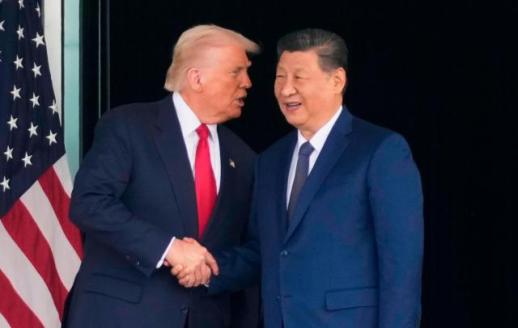 Trump Visits China for First Time in Nine Years, Meeting Xi Jinping President Donald Trump arrived in Beijing on the night of May 13, beginning a three-day state visit that has drawn attention to the agenda the two leaders will discuss. According to the Associated Press on May 12, Trump will meet with Chinese President Xi Jinping amid global tensions surrounding war, trade, and artificial intelligence, with the Iran conflict and inflation in the U.S. highlighted as key issues. As he departed for China, Trump expressed confidence about the upcoming talks. Speaking to reporters at Andrews Air Force Base in Maryland before boarding Air Force One, he stated, "We are two superpowers; militarily, we are the strongest on Earth, and China is considered second." The AP noted that Trump's visit comes at a "delicate moment" domestically, as rising prices due to the Iran conflict have led to a decline in his approval ratings. Analysts suggest that Trump hopes China will increase its purchases of American agricultural products and aircraft. To facilitate this, the U.S. administration is looking to initiate the establishment of a Board of Trade to address trade issues between the two countries. The New York Times speculated that Xi may request Trump to delay or reduce arms sales to Taiwan during their meeting. The U.S. government approved $11 billion in arms sales to Taiwan last year, prompting China to conduct military exercises around Taiwan in response. Additionally, a separate arms export review worth $14 billion is pending, awaiting Trump's final approval. Xin Chang, a Taiwan expert at Fudan University in China, commented, "China will seek to at least delay U.S. arms sales to Taiwan and potentially reduce the quality or quantity of those sales." Another point of interest is the last-minute inclusion of Jensen Huang, CEO of NVIDIA, who was initially not on the guest list. According to the New York Times, Trump personally called Huang on the morning of his departure to invite him. Huang then flew to Alaska to board Air Force One. The report indicated that Huang has been lobbying both the U.S. and Chinese governments for a year to allow the export of his company's AI-specific chips to China. Alongside Huang, over ten business leaders, including Elon Musk of Tesla and Tim Cook of Apple, are accompanying Trump on this trip. Some speculate that Trump may ask Xi to play a mediating role regarding the Iran conflict. However, Trump told reporters on May 12, "There is a lot to discuss with China, but frankly, Iran is not one of them, as we are managing Iran well." The Wall Street Journal remarked that this summit marks the first visit by a U.S. president to China since Trump last traveled there nearly nine years ago, noting that sensitive issues such as trade, Iran, and Taiwan will be addressed. The newspaper also reported that both sides are looking for tangible victories.* This article has been translated by AI. 2026-05-14 05:58:05
 -
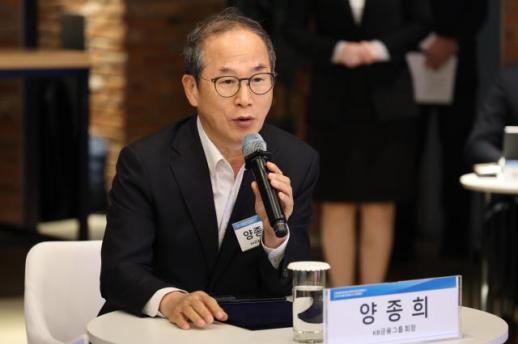 Yoon Jong-hee of KB Financial Group: Balancing Stability and Transformation in Finance Yoon Jong-hee, chairman of KB Financial Group, has emerged as a strategic leader during a crisis. Upon taking office, he characterized the South Korean economy as being in a period of "internal and external turmoil." In the face of a complex crisis marked by a reshaping global order, persistent low growth, and a transition in interest rates, the role of finance is expanding beyond mere intermediation to become a pillar of systemic stability. Yoon's choice is clear: "stable finance." However, interpreting this solely as conservative management only captures part of his leadership. He is simultaneously pursuing a multi-layered strategy that includes efficient management, strengthening non-banking sectors, AI transformation, productive finance, and cooperative finance. The challenge lies in the inherent tension among these five pillars. Stability reduces risk but slows progress, while innovation creates opportunities but increases uncertainty. Yoon is currently navigating this complex balance, and the success of his leadership hinges on how adeptly he can create solutions between "protective finance" and "transformational finance."Understanding the Crisis as a Strategic Starting PointThe essence of Yoon's leadership lies in his approach to reading crises. He defines the current economic situation not merely as a slowdown but as structural uncertainty. Externally, there is a simultaneous crisis of weakened global trade and geopolitical risks, while internally, consumer slowdown and low growth are occurring together.This diagnosis shapes the direction of financial strategy. Most financial institutions view crises as "variables to be defended against." However, Yoon interprets them as signals to change the management paradigm. He has identified "uncertainty" and "polarization" as key themes for the financial industry this year, emphasizing the importance of risk management.His proposed responses are threefold: stable asset management, shareholder return implementation, and maintaining soundness. On the surface, these appear to be traditional financial strategies. However, these three pillars are not merely defensive; they form the foundation for maintaining "profit stamina." In a crisis, survival takes precedence over growth, and sustainability over speed.Herein lies the problem. A crisis response-centered strategy tends to make organizations conservative, which in turn delays innovation. Ultimately, Yoon's leadership faces the dual challenge of managing the crisis while also overcoming it. This is not just a management issue but a fundamental test of leadership.Strengthening Non-Banking Sectors as a Core of KB's TransformationIn a declining interest rate environment, a bank-centric revenue structure is inevitably shaken. The narrowing net interest margin represents a structural weakness in the profitability of financial holding companies. Yoon has accurately recognized this and has placed a strong emphasis on a non-banking-centric strategy.Enhancing the securities, insurance, asset management, and investment banking sectors is not merely about diversifying revenue. It is a strategy to transform the financial group's very structure. In fact, KB Financial is compensating for declining bank revenues through increased performance from its non-banking subsidiaries.Notably, Yoon's personnel strategy has been significant. Since his appointment, he has made substantial changes to the CEOs of major subsidiaries, emphasizing transformation. Moving away from traditional bank-centered personnel practices to prominently feature non-banking professionals is not just a personnel change but a shift in the power structure.The competitiveness of financial holdings no longer derives solely from banks. It emerges from a complex structure that combines capital markets, asset management, insurance, and global finance. Yoon has taken the first step toward creating this structure.However, challenges remain. Strengthening non-banking sectors cannot be completed in the short term. Organizational culture, risk management, and revenue structures all need to change. The stronger the bank-centric DNA within the organization, the more difficult this transition will be. Yoon's leadership will depend on how well he can overcome this "invisible resistance." AI Strategy: System Innovation Beyond TechnologyThe most aggressive area of Yoon's strategy is AI. He has set a concrete goal of introducing over 300 AI agents.This number is symbolic, reflecting a commitment to change organizational operations beyond mere digital investment. AI is not just a cost-cutting tool; it is a decision-making system that impacts all areas of finance, including customer analysis, risk assessment, internal controls, and product development.To achieve this, KB Financial is modernizing its data and building an AI platform. This is the right direction, as the core of AI competitiveness lies not in algorithms but in data.However, a crucial question remains: Does AI change the organization, or does the organization absorb AI? Most financial institutions tend to follow the latter path, merely layering AI on existing processes to improve efficiency.True innovation is different. AI must change judgments and redistribute decision-making authority. Yoon's AI strategy is still in its early stages, and its success will be determined in the next two to three years.Redefining Finance's Role through Productive FinanceYoon defines productive finance as the fundamental role of finance. This represents not just a policy response but a shift in financial philosophy.He argues that traditional finance has relied too heavily on financial metrics to determine capital allocation. Moving forward, capital must be allocated based on an understanding of industries and businesses.This approach aligns closely with the essence of entrepreneurship. Finance is no longer an industry that lends money to safe places; it is one that invests capital where there is potential.Support for strategic industries such as AI and semiconductors exemplifies this. However, productive finance inherently carries risks. While finance is an industry that avoids risk, productive finance involves risk-taking activities.How to resolve this contradiction remains unanswered. Yoon has not yet provided a complete answer, but the direction is clear. He repeatedly emphasizes "transformation."For this transformation to succeed, the criteria for evaluating organizations must change. Long-term value, safety, and growth must all be assessed, rather than focusing solely on short-term performance. This is a core condition for productive finance.Trust and Cooperation as Finance's Ultimate CompetitivenessThe final pillar of Yoon's leadership is trust. He defines the competitiveness of finance as "trust."Thus, he is simultaneously promoting cooperative finance and strengthening internal controls. Support for small businesses, expanding social contributions, and enhancing ESG management are not merely image strategies; they are part of redefining the very reason for finance's existence.In particular, strengthening internal controls represents a significant change. Measures such as introducing accountability structures, expanding internal control organizations, and incorporating evaluation metrics are steps to reinforce the institutional foundation.In finance, trust is not a result but a prerequisite. When trust erodes, all strategies become meaningless.Yoon understands this reality well. However, trust cannot be established through declarations alone. It must be built within organizations free of accidents, transparent decision-making, and consistent accountability structures.Ultimately, his leadership boils down to one question: "Can trust be maintained amidst change?"SWOT AnalysisStrength: Yoon possesses a clear crisis awareness and strategic thinking. He is simultaneously advancing non-banking enhancement, AI transformation, productive finance, and cooperative finance, leading structural changes at KB Financial. Notably, securing market trust through shareholder return policies and value-up strategies is a strong competitive advantage.Weakness: The multi-layered strategy risks diluting execution power. Pursuing conflicting goals of stability and innovation may also create internal directional instability. The AI strategy remains in its early stages.Opportunity: Expanding AI finance, productive finance, and entering global markets present long-term growth opportunities for KB Financial. In particular, data-driven financial transformation will be a key factor in determining competitiveness.Threat: Declining profitability due to falling interest rates, global uncertainties, the entry of big tech into finance, and internal control risks pose significant threats. The greatest risk lies in organizational confusion stemming from conflicts between strategies.* This article has been translated by AI. 2026-05-14 05:34:07