
Journalist

Andre Lim
-
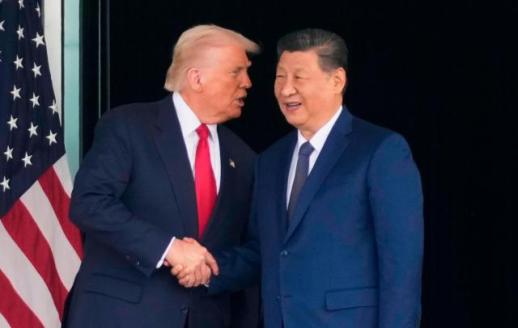 Trump Visits China for First Time in Nine Years, Meeting Xi Jinping President Donald Trump arrived in Beijing on the night of May 13, beginning a three-day state visit that has drawn attention to the agenda the two leaders will discuss. According to the Associated Press on May 12, Trump will meet with Chinese President Xi Jinping amid global tensions surrounding war, trade, and artificial intelligence, with the Iran conflict and inflation in the U.S. highlighted as key issues. As he departed for China, Trump expressed confidence about the upcoming talks. Speaking to reporters at Andrews Air Force Base in Maryland before boarding Air Force One, he stated, "We are two superpowers; militarily, we are the strongest on Earth, and China is considered second." The AP noted that Trump's visit comes at a "delicate moment" domestically, as rising prices due to the Iran conflict have led to a decline in his approval ratings. Analysts suggest that Trump hopes China will increase its purchases of American agricultural products and aircraft. To facilitate this, the U.S. administration is looking to initiate the establishment of a Board of Trade to address trade issues between the two countries. The New York Times speculated that Xi may request Trump to delay or reduce arms sales to Taiwan during their meeting. The U.S. government approved $11 billion in arms sales to Taiwan last year, prompting China to conduct military exercises around Taiwan in response. Additionally, a separate arms export review worth $14 billion is pending, awaiting Trump's final approval. Xin Chang, a Taiwan expert at Fudan University in China, commented, "China will seek to at least delay U.S. arms sales to Taiwan and potentially reduce the quality or quantity of those sales." Another point of interest is the last-minute inclusion of Jensen Huang, CEO of NVIDIA, who was initially not on the guest list. According to the New York Times, Trump personally called Huang on the morning of his departure to invite him. Huang then flew to Alaska to board Air Force One. The report indicated that Huang has been lobbying both the U.S. and Chinese governments for a year to allow the export of his company's AI-specific chips to China. Alongside Huang, over ten business leaders, including Elon Musk of Tesla and Tim Cook of Apple, are accompanying Trump on this trip. Some speculate that Trump may ask Xi to play a mediating role regarding the Iran conflict. However, Trump told reporters on May 12, "There is a lot to discuss with China, but frankly, Iran is not one of them, as we are managing Iran well." The Wall Street Journal remarked that this summit marks the first visit by a U.S. president to China since Trump last traveled there nearly nine years ago, noting that sensitive issues such as trade, Iran, and Taiwan will be addressed. The newspaper also reported that both sides are looking for tangible victories.* This article has been translated by AI. 2026-05-14 05:58:05
 -
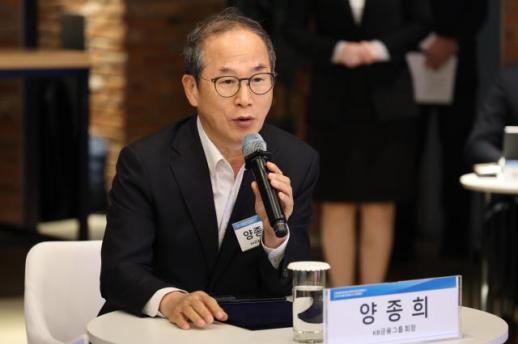 Yoon Jong-hee of KB Financial Group: Balancing Stability and Transformation in Finance Yoon Jong-hee, chairman of KB Financial Group, has emerged as a strategic leader during a crisis. Upon taking office, he characterized the South Korean economy as being in a period of "internal and external turmoil." In the face of a complex crisis marked by a reshaping global order, persistent low growth, and a transition in interest rates, the role of finance is expanding beyond mere intermediation to become a pillar of systemic stability. Yoon's choice is clear: "stable finance." However, interpreting this solely as conservative management only captures part of his leadership. He is simultaneously pursuing a multi-layered strategy that includes efficient management, strengthening non-banking sectors, AI transformation, productive finance, and cooperative finance. The challenge lies in the inherent tension among these five pillars. Stability reduces risk but slows progress, while innovation creates opportunities but increases uncertainty. Yoon is currently navigating this complex balance, and the success of his leadership hinges on how adeptly he can create solutions between "protective finance" and "transformational finance."Understanding the Crisis as a Strategic Starting PointThe essence of Yoon's leadership lies in his approach to reading crises. He defines the current economic situation not merely as a slowdown but as structural uncertainty. Externally, there is a simultaneous crisis of weakened global trade and geopolitical risks, while internally, consumer slowdown and low growth are occurring together.This diagnosis shapes the direction of financial strategy. Most financial institutions view crises as "variables to be defended against." However, Yoon interprets them as signals to change the management paradigm. He has identified "uncertainty" and "polarization" as key themes for the financial industry this year, emphasizing the importance of risk management.His proposed responses are threefold: stable asset management, shareholder return implementation, and maintaining soundness. On the surface, these appear to be traditional financial strategies. However, these three pillars are not merely defensive; they form the foundation for maintaining "profit stamina." In a crisis, survival takes precedence over growth, and sustainability over speed.Herein lies the problem. A crisis response-centered strategy tends to make organizations conservative, which in turn delays innovation. Ultimately, Yoon's leadership faces the dual challenge of managing the crisis while also overcoming it. This is not just a management issue but a fundamental test of leadership.Strengthening Non-Banking Sectors as a Core of KB's TransformationIn a declining interest rate environment, a bank-centric revenue structure is inevitably shaken. The narrowing net interest margin represents a structural weakness in the profitability of financial holding companies. Yoon has accurately recognized this and has placed a strong emphasis on a non-banking-centric strategy.Enhancing the securities, insurance, asset management, and investment banking sectors is not merely about diversifying revenue. It is a strategy to transform the financial group's very structure. In fact, KB Financial is compensating for declining bank revenues through increased performance from its non-banking subsidiaries.Notably, Yoon's personnel strategy has been significant. Since his appointment, he has made substantial changes to the CEOs of major subsidiaries, emphasizing transformation. Moving away from traditional bank-centered personnel practices to prominently feature non-banking professionals is not just a personnel change but a shift in the power structure.The competitiveness of financial holdings no longer derives solely from banks. It emerges from a complex structure that combines capital markets, asset management, insurance, and global finance. Yoon has taken the first step toward creating this structure.However, challenges remain. Strengthening non-banking sectors cannot be completed in the short term. Organizational culture, risk management, and revenue structures all need to change. The stronger the bank-centric DNA within the organization, the more difficult this transition will be. Yoon's leadership will depend on how well he can overcome this "invisible resistance." AI Strategy: System Innovation Beyond TechnologyThe most aggressive area of Yoon's strategy is AI. He has set a concrete goal of introducing over 300 AI agents.This number is symbolic, reflecting a commitment to change organizational operations beyond mere digital investment. AI is not just a cost-cutting tool; it is a decision-making system that impacts all areas of finance, including customer analysis, risk assessment, internal controls, and product development.To achieve this, KB Financial is modernizing its data and building an AI platform. This is the right direction, as the core of AI competitiveness lies not in algorithms but in data.However, a crucial question remains: Does AI change the organization, or does the organization absorb AI? Most financial institutions tend to follow the latter path, merely layering AI on existing processes to improve efficiency.True innovation is different. AI must change judgments and redistribute decision-making authority. Yoon's AI strategy is still in its early stages, and its success will be determined in the next two to three years.Redefining Finance's Role through Productive FinanceYoon defines productive finance as the fundamental role of finance. This represents not just a policy response but a shift in financial philosophy.He argues that traditional finance has relied too heavily on financial metrics to determine capital allocation. Moving forward, capital must be allocated based on an understanding of industries and businesses.This approach aligns closely with the essence of entrepreneurship. Finance is no longer an industry that lends money to safe places; it is one that invests capital where there is potential.Support for strategic industries such as AI and semiconductors exemplifies this. However, productive finance inherently carries risks. While finance is an industry that avoids risk, productive finance involves risk-taking activities.How to resolve this contradiction remains unanswered. Yoon has not yet provided a complete answer, but the direction is clear. He repeatedly emphasizes "transformation."For this transformation to succeed, the criteria for evaluating organizations must change. Long-term value, safety, and growth must all be assessed, rather than focusing solely on short-term performance. This is a core condition for productive finance.Trust and Cooperation as Finance's Ultimate CompetitivenessThe final pillar of Yoon's leadership is trust. He defines the competitiveness of finance as "trust."Thus, he is simultaneously promoting cooperative finance and strengthening internal controls. Support for small businesses, expanding social contributions, and enhancing ESG management are not merely image strategies; they are part of redefining the very reason for finance's existence.In particular, strengthening internal controls represents a significant change. Measures such as introducing accountability structures, expanding internal control organizations, and incorporating evaluation metrics are steps to reinforce the institutional foundation.In finance, trust is not a result but a prerequisite. When trust erodes, all strategies become meaningless.Yoon understands this reality well. However, trust cannot be established through declarations alone. It must be built within organizations free of accidents, transparent decision-making, and consistent accountability structures.Ultimately, his leadership boils down to one question: "Can trust be maintained amidst change?"SWOT AnalysisStrength: Yoon possesses a clear crisis awareness and strategic thinking. He is simultaneously advancing non-banking enhancement, AI transformation, productive finance, and cooperative finance, leading structural changes at KB Financial. Notably, securing market trust through shareholder return policies and value-up strategies is a strong competitive advantage.Weakness: The multi-layered strategy risks diluting execution power. Pursuing conflicting goals of stability and innovation may also create internal directional instability. The AI strategy remains in its early stages.Opportunity: Expanding AI finance, productive finance, and entering global markets present long-term growth opportunities for KB Financial. In particular, data-driven financial transformation will be a key factor in determining competitiveness.Threat: Declining profitability due to falling interest rates, global uncertainties, the entry of big tech into finance, and internal control risks pose significant threats. The greatest risk lies in organizational confusion stemming from conflicts between strategies.* This article has been translated by AI. 2026-05-14 05:34:07
 -
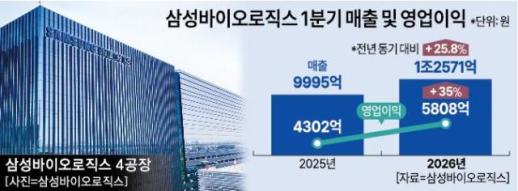 Samsung Biologics and Celltrion Lead K-Bio Growth Amidst Market Challenges The Korean pharmaceutical and biotech sectors have reported strong performance for the first quarter of this year. Companies with a high export ratio have achieved record results, driven by global sales expansion and increased production capacity. Traditional pharmaceutical firms have also managed to grow and maintain profitability despite the challenges posed by price reduction policies.According to industry reports, Samsung Biologics and Celltrion led the sector's performance in the first quarter, benefiting from increased overseas sales.Samsung Biologics recorded consolidated sales of 1.2571 trillion won and an operating profit of 580.8 billion won for the first quarter. This represents a 25.8% increase in sales and a 35% rise in operating profit compared to the same period last year, marking the highest quarterly performance in the company's history. Full operation of its factories and strong demand for contract manufacturing of biopharmaceuticals from major clients have contributed to this success, allowing the company to set new records for five consecutive years.Celltrion also achieved its highest quarterly performance to date, with consolidated sales of 1.145 trillion won and an operating profit of 321.9 billion won. Sales increased by 36% and operating profit surged by 116% year-on-year. The company noted that excluding temporary impacts from scheduled maintenance at its U.S. production facility, its actual operating profit margin reached the 30% range. The expansion of sales for new biosimilar products in Europe and the U.S. has improved both revenue and profitability. Market analysts predict that Celltrion may exceed its initial annual targets of 5.3 trillion won in sales and 1.8 trillion won in operating profit based on its growth strategy.The growth trend driven by export competitiveness was also evident at SK Biopharm, which reported first-quarter sales of 227.9 billion won and an operating profit of 89.8 billion won. Operating profit increased by approximately 250% compared to the previous year, achieving a record high. The sales growth of its epilepsy drug Cenobamate in the U.S. was a key driver, along with milestone payments from approvals in other countries. Notably, despite increased research and marketing expenses, the company's profitability has significantly improved, demonstrating the strength of export-oriented pharmaceutical firms.Traditional pharmaceutical companies also performed well despite facing threats from price reductions. Chong Kun Dang reported standalone sales of 447.7 billion won and an operating profit of 17.6 billion won for the first quarter, marking increases of 12.2% and 36.9%, respectively, compared to the same period last year. Sales of both new and existing key products grew steadily, leading to improved profitability. JW Pharmaceutical also reported standalone sales of 198.5 billion won and an operating profit of 31.7 billion won, reflecting increases of 8.1% and 40.4%. The growth of both prescription and over-the-counter medications helped maintain an operating profit margin of 16%.GC Green Cross also saw improvements in its overseas business, with consolidated sales of 435.5 billion won and an operating profit of 11.7 billion won, representing increases of 13.5% and 46.3%, respectively, year-on-year. Sales of its blood product 'Aliglo' in the U.S. continued to grow, bolstered by its plasma fractionation business. Vaccine products and prescription medications also contributed to overall revenue growth.While expectations for Yuhan Corporation fell slightly short, both sales and operating profit increased. Yuhan reported consolidated sales of 526.8 billion won and an operating profit of 8.8 billion won for the first quarter, up 7.2% and 37.3% from the previous year. The balanced growth of its pharmaceutical, overseas, and healthcare sectors is expected to continue, with further growth anticipated in the second quarter due to milestone payments related to its drug Lecarza.An industry representative stated, "The first quarter of this year can be viewed as a period of 'high growth for export-oriented biotech' and 'confirmation of the fundamental strength of traditional pharmaceutical companies.'" They added, "In the second half of the year, key factors for the biotech sector will include the expansion of production capacity at Samsung Biologics, the continued sales of new biosimilars by Celltrion, and the overseas expansion speed of SK Biopharm's Cenobamate. For traditional pharmaceutical companies, the impact of price reductions will become more pronounced, and the recognition of profits related to Lecarza at Yuhan, the performance of Hanmi Pharmaceutical's obesity and metabolic disease pipeline, and the continued growth of Chong Kun Dang and JW Pharmaceutical's key prescription drugs will determine the direction of their performance."* This article has been translated by AI. 2026-05-14 05:06:14
 -
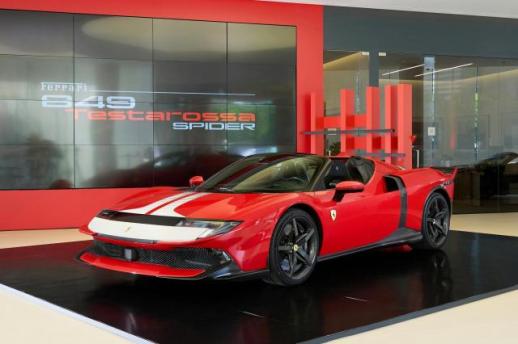 Ferrari 849 Testarossa Spider Launches in South Korea Ferrari's top-of-the-line open-top model, the 849 Testarossa Spider, has made its debut in South Korea. This high-performance supercar features a plug-in hybrid system. Ferrari Korea hosted a private viewing event for the 849 Testarossa Spider on May 13 in Banpo, Seocho-gu, Seoul. The newly unveiled model replaces the existing SF90 Spider and is designed as a super sports berlinetta spider. It showcases sharp geometric lines and details inspired by Ferrari's sports prototypes from the 1970s. The design emphasizes pure performance, targeting drivers who prioritize driving experience. When the roof is opened, it creates a more striking silhouette. The car features Ferrari's signature retractable hardtop (RHT), providing a unique sense of openness. Choi Seung-ok, manager of Ferrari Korea, stated, "The hardtop can be opened or closed in about 14 seconds at speeds below 45 km/h. This vehicle allows drivers to experience the allure of both a coupe and a spider." The powertrain includes a plug-in hybrid (PHEV) system, which combines the advantages of electric and hybrid vehicles. It features a V8 twin-turbo engine that produces up to 830 horsepower, paired with three electric motors, resulting in a combined output of 1,050 horsepower—an increase of 50 horsepower compared to the previous model. The car also boasts an aerodynamic design, generating a total downforce of 415 kg at a speed of 250 km/h, which is 25 kg more than the previous model. It features a "wind catcher" system that reduces interior turbulence by directing airflow from the upper sides to the rear shelf intake and lower exhaust outlets. Choosing the high-performance "Assetto Fiorano" package allows for a weight reduction of about 30 kg through the use of carbon fiber and titanium materials. Thibaut Dussara, CEO of Ferrari Korea, remarked, "The 849 Testarossa Spider is not just a simple GT model; it is designed for those who are passionate about Ferrari. I recommend it to drivers seeking the best performance and a unique driving experience."* This article has been translated by AI. 2026-05-14 05:04:00
 -
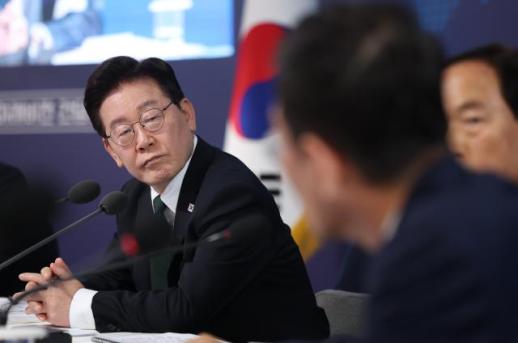 President Lee to Meet Nobel Laureate Peter Howitt on May 15 President Lee Jae-myung will meet with Peter Howitt, the Nobel Prize-winning economist from Brown University, on May 15. Chief Presidential Secretary Kang Yoo-jung announced in a written briefing on May 13 that President Lee will host Professor Howitt at the Blue House on the morning of May 15.Kang described Howitt as a leading scholar who has theoretically established that innovation is the key driver of economic growth. She noted that President Lee intends to hear Professor Howitt's insights on strategies for South Korea's economic leap and innovative growth.The meeting will also include Deputy Prime Minister and Minister of Economy and Finance Koo Yun-cheol, along with Kim Yong-beom, head of the Policy Office, Ha Jun-kyung, chief of economic growth, and Moon Jin-young, chief of social affairs from the Blue House.Professor Howitt was also Lee's doctoral advisor when he pursued his Ph.D. at Brown University in 2003. 2026-05-14 00:27:44
 -
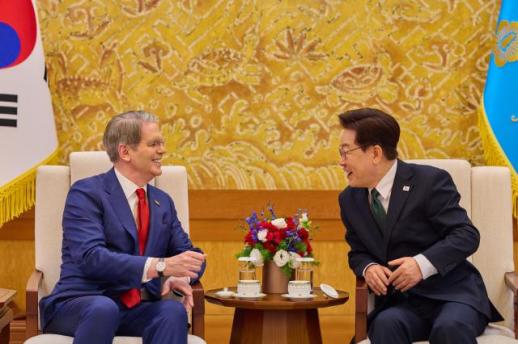 South Korea's President Lee Mentions US Currency Swap in Meeting with Treasury Secretary President Lee Jae-myung mentioned the possibility of a "Korea-U.S. currency swap" during a meeting with U.S. Treasury Secretary Scott Bensent on May 13.During a briefing later that day, Chief Blue House Spokesperson Kang Yu-jung stated, "President Lee met with Secretary Bensent at the Blue House and noted that despite recent uncertainties, the economies of both countries are showing stability." She added, "He emphasized the need for close communication between the two nations to strengthen economic cooperation and maintain positive momentum."Kang further noted, "The President highlighted the necessity for cooperation in the foreign exchange market," to which Secretary Bensent responded by agreeing with President Lee's views on the importance of Korea-U.S. collaboration moving forward.A currency swap is a foreign exchange transaction in which two parties exchange different currencies at an agreed-upon exchange rate for a specified period.South Korea has entered into currency swaps with the United States twice in the past, during the global financial crisis in 2008 and at the onset of the COVID-19 pandemic in 2020, to stabilize its foreign exchange market amid international financial turmoil.Last year, the South Korean government also proposed a won-dollar currency swap to the U.S. during tariff negotiations.However, a Blue House official stated that they could not confirm the specifics of President Lee's proposal regarding the Korea-U.S. currency swap. 2026-05-14 00:06:48
 -
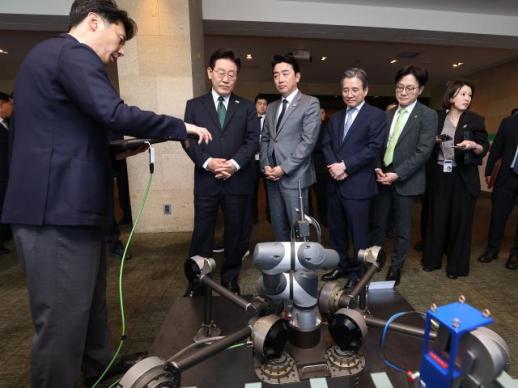 President Lee Surprises Ulsan Market Visit, Pledges Support for Local Economy President Lee Jae-myung visited the Namok Masung Market in Ulsan's Dong-gu on May 13, engaging with local residents. After presiding over a 'K-Shipbuilding Future Vision' meeting at the Hyundai Hotel, President Lee went to the market to hear from citizens, according to Deputy Spokesperson Ahn Gyu-ryeong in a written briefing. The news of his visit drew a large crowd, with residents welcoming him with cheers and applause. President Lee shook hands with citizens and posed for photos, responding warmly to their enthusiasm. He made a point to connect with children by bending down to greet them and exchanged high-fives with teenagers, prompting laughter and applause from the crowd. During his visit, President Lee purchased various items, including shiitake mushrooms, melons, steamed cod, and spicy soybean paste salad, using cash and Onnuri gift certificates. He also sampled and bought local snacks such as mugwort rice cakes, fried chicken skin, sweet rice drink, and red bean bread. While conversing with shop owners, he promised to work harder to revitalize local economies. As President Lee departed the market, residents continued to send him off with warm wishes, saying, "Stay healthy" and "Keep up the good work," while he waved back until he got into his vehicle.* This article has been translated by AI. 2026-05-13 23:30:52
 -
 Trump Arrives in Beijing for Three-Day State Visit Trump begins three-day state visit to Beijing U.S. President Donald Trump arrived in Beijing on May 13, starting a three-day state visit. According to Yonhap News, China's state-run Xinhua News reported that Trump's Air Force One landed at Beijing Capital International Airport at 7:49 PM local time. This marks the first visit by a U.S. president to China in nine years, since Trump's first term in November 2017. Trump's visit comes amid ongoing tensions between the U.S. and China over trade tariffs, the Taiwan issue, and Middle Eastern affairs, drawing significant international attention. On May 14, the second day of his visit, Trump is scheduled to hold a summit with Chinese President Xi Jinping at the Great Hall of the People in Beijing. The two leaders last met in October during the Asia-Pacific Economic Cooperation (APEC) summit in Busan. The discussions are expected to focus on trade and tariff issues, as well as the situations in Taiwan and Iran. 525 billion won invested to secure key shipbuilding technologies As global competition in the shipbuilding industry intensifies, the South Korean government is investing 525 billion won to secure the future of its shipbuilding sector. The initiative aims to develop the world's first 24-hour autonomous AI shipyard project by 2030 and accelerate outcomes based on the MASGA project. On May 13, Minister of Trade, Industry and Energy Kim Jeong-kwan announced the "K-Shipbuilding Future Vision" during a meeting in Ulsan chaired by President Lee Jae-myung. The government will activate the "Shipbuilding and Shipping Win-Win Council" to ensure domestic orders for four essential vessel types: car carriers, energy carriers, bulk carriers, and offshore wind support vessels. This decision comes amid rising concerns over the increasing reliance on foreign vessels for critical security cargo transport. The public sector will prioritize domestic orders for resource and energy-related vessels. Over the next five years, up to 525 billion won will be invested in seven types of vessels crucial for the future of the shipbuilding industry, including liquefied natural gas (LNG) carriers, ammonia carriers, hydrogen carriers, liquefied carbon dioxide carriers, electric propulsion vessels, offshore wind support vessels, and polar icebreakers. The focus will be on securing specialized cargo tank technologies and developing a unique Korean model. The government is also accelerating global projects, aiming to establish a "Shipbuilding Alliance" with countries like India, Vietnam, the Philippines, and Saudi Arabia, which have shown interest in shipbuilding cooperation with South Korea. In these countries, the focus will be on enhancing cooperation in building general-purpose vessels, where South Korea lacks price competitiveness, while exporting key equipment and designs. The MASGA project, which served as a breakthrough in U.S.-Korea tariff negotiations, is now moving toward concrete outcomes. Following a memorandum of understanding signed on May 9 between the Ministry of Trade and the U.S. Department of Commerce, the "Korea-U.S. Shipbuilding Partnership Center" will facilitate close communication. Additionally, efforts will be made to explore ways to ensure that the rebuilding of the U.S. shipbuilding industry translates into domestic work and exports for South Korea. No evidence to confirm drone in Namoo incident, missile possibility remains Wi Seong-lak, head of the National Security Office, stated on May 13 that there is currently no evidence to confirm that the object involved in the incident with the Namoo vessel in the Strait of Hormuz was a drone. Speaking at a meeting with editors in Seoul, Wi explained that further investigation is needed based on the results obtained so far. He added, "If it is not a drone, it could be a missile, and various possibilities remain open." Wi also noted, "Even if it is a drone, it does not necessarily mean that there is a country that would face difficulties due to this incident." In response to President Trump's statement that a South Korean cargo ship was attacked by Iran while acting independently, Wi remarked, "I am not sure what basis President Trump had for saying it was Iran. Discussions are ongoing among the working-level teams in South Korea and the U.S., but we have not received a clear answer regarding the basis for Trump's assertion." KOSPI surge raises concerns for inverse ETFs facing delisting As the KOSPI index soared from around 4,200 at the end of last year to over 8,000 this year, many individual investors who bet on inverse and leveraged ETFs linked to the KOSPI have seen their investments plummet to near worthless levels. Some products are approaching delisting criteria. As of May 13, the Korea Exchange reported that the prices of KOSPI 200 leveraged inverse ETFs, including KODEX 200 Futures Inverse 2X, TIGER 200 Futures Inverse 2X, RISE 200 Futures Inverse 2X, and KIWOOM 200 Futures Inverse 2X, have all fallen to around 100 won. Only PLUS 200 Futures Inverse 2X remains above 200 won. Following the KOSPI's historic breach of the 7,000 mark on May 6, the index surged to nearly 7,999 on May 12, continuing its strong upward trend, which has rapidly increased losses for leveraged inverse ETFs. Over the past month, the returns for these ETFs have been approximately -48%, and around -64% over the last three months. With some analysts projecting further KOSPI gains, concerns surrounding leveraged inverse ETFs are intensifying. Hyundai Motor Securities raised its year-end KOSPI forecast on May 11 to 9,750, suggesting a potential rise to 12,000. Industry experts warn that if the KOSPI continues to rise for an extended period, the prices of leveraged inverse ETFs could effectively approach zero. Due to the nature of inverse leveraged ETFs, negative compounding effects accumulate during periods of index increases. Even if the index returns to its original level, the ETF returns will not recover.* This article has been translated by AI. 2026-05-13 22:08:24
 -
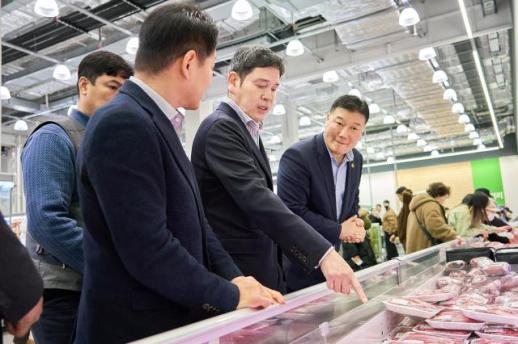 Shinsegae's E-Mart Reports Highest First-Quarter Operating Profit in 14 Years Shinsegae Group Chairman Jeong Yong-jin's declaration of a "year of renewed growth" at the start of the year has been validated by impressive first-quarter results. E-Mart reported an operating profit of 178.3 billion won, marking its highest first-quarter performance in 14 years. Traders also achieved record quarterly sales, and the impact of the Starfield Market renovation is evident in the numbers. E-Mart announced on May 13 that its consolidated operating profit rose 11.9% year-on-year to 178.3 billion won. Although net sales decreased by 1.3% to 7.1234 trillion won, profitability showed significant improvement. This consolidated operating profit is the highest for the first quarter since 2012. The standalone operating profit also increased by 9.7% to 146.3 billion won, the highest for the first quarter in eight years since 2018. Standalone total sales rose by 1.9% to 4.7152 trillion won. In his New Year’s address, Chairman Jeong stated, "The innovative decisions made by Shinsegae Group over the past two to three years have been meticulous preparations for renewed growth, and in 2026, we will soar high." He emphasized the need to restore the "top nature" befitting a leading company and to establish a new market paradigm shift. In the first quarter alone, Jeong visited key locations, including Starfield Market in Jukjeon and Traders in Guwol, four times to assess operational effectiveness. The paradigm shift Jeong announced in his New Year’s address has been demonstrated in the first quarter, serving as a catalyst for E-Mart's transformation. The primary driver behind this performance improvement is the "customer-oriented space innovation." Stores that have been renovated into experience-focused Starfield Markets have achieved remarkable results. For instance, the first-quarter sales at the renovated Ilsan store increased by 75.1% compared to the same period last year, and the number of visitors surged by 104.3%. The Dongtan and Gyeongsan stores also recorded double-digit sales growth of 12.1% and 18.5%, respectively. Notably, the proportion of customers staying for over three hours increased by an average of 87.1% across the three renovated stores. The company explained that the focus on experiential content and the design of stay-oriented spaces have extended customer dwell time and shifted consumption patterns toward experience-driven shopping, enhancing offline competitiveness. Price innovations that pass on cost improvements to customers also contributed to the success. E-Mart's flagship discount event, the "Whale It Festa," saw sales and customer numbers grow by 3.5% and 6.0%, respectively, compared to the previous year. The growth of the warehouse-style discount store Traders also bolstered overall performance. Traders reported total sales of 1.0601 trillion won in the first quarter, a 9.7% increase year-on-year, setting a new quarterly record. Operating profit rose by 12.4% to 47.8 billion won. Sales of the private brand "T-Standard" increased by 40% year-on-year, while the dining corner "T-Cafe" grew by 24%. The company plans to continue product innovation by replacing over 50% of its operating products this year. Key subsidiaries also contributed to the growth. Chosun Hotel & Resort achieved a 116.7% increase in operating profit to 3.9 billion won, driven by improved average spending per guest. SCK Company, which operates Starbucks, maintained stable growth with a 7.3% increase in net sales to 817.9 billion won compared to the previous year. Gmarket rebounded in gross merchandise volume (GMV) growth after four years since launching its joint venture with AliExpress, despite continuing operating losses. The company explained that this planned investment prioritizes market share and customer base expansion. In March, GMV and average spending per customer increased by 12% and 10%, respectively, with similar trends continuing into April. E-Mart stated, "The innovative paradigm shift emphasized by Chairman Jeong in his New Year’s address is already showing visible results in the first quarter, and we will accelerate future new business initiatives, including the construction of an artificial intelligence (AI) data center, based on the growth of our existing operations."* This article has been translated by AI. 2026-05-13 22:04:56
 -
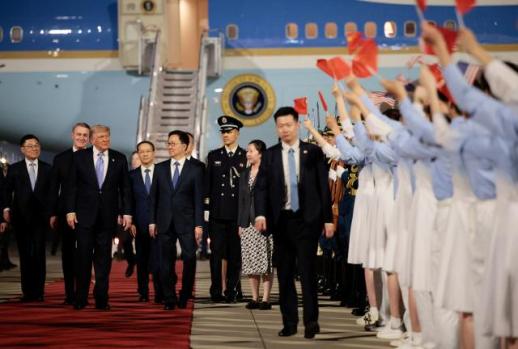 ASIA INSIGHT: President Trump lands at Beijing Capital Airport for U.S.-China Summit The illusion and reality of great-power diplomacy seen through China’s rally and Taiwan’s live-fire drills on May 13 SEOUL, May 13 (AJP) - On the night of May 13, Donald Trump stepped off Air Force One onto the tarmac of Beijing Capital International Airport. American and Chinese flags stood side by side in the reception hall, but beneath the choreography of state ceremony lingered the unmistakable tension of a relationship that has become the central geopolitical fault line of the 21st century. Officially, this was a state visit. In reality, it was something far larger: a negotiation over the architecture of global power itself — semiconductors and artificial intelligence, supply chains and currencies, Taiwan and the Middle East, military deterrence and economic survival. What made the moment especially striking was the sharply contrasting mood displayed on the same day by China and Taiwan. In China, investors celebrated. Shanghai’s stock market surged to its highest level in eleven years. In Taiwan, by contrast, the military conducted live-fire exercises on Kinmen Island, only a few kilometers from the Chinese mainland, using American-made Javelin anti-tank missiles for the first time in combat simulation. One spoke the language of capital. The other spoke the language of gunpowder. One reflected the optimism of markets. The other reflected the enduring reality of war preparation. China, on May 13, projected confidence. The Shanghai Composite Index climbed to its highest closing level since 2015, while Shenzhen’s ChiNext Index reached a historic high. Technology and artificial intelligence shares led the rally. The reported inclusion of Jensen Huang, chief executive of Nvidia, in the American delegation carried symbolic significance well beyond business. Markets interpreted the signal as evidence that Washington and Beijing may still seek some form of managed coexistence in the strategic industries of the future. Even amid fierce rivalry, the world’s two largest economies remain deeply interdependent. America retains technological superiority in advanced semiconductors and AI systems; China remains indispensable in manufacturing scale, industrial logistics, and critical supply chains. Taiwan, however, delivered a very different message. Taiwanese forces staged extensive coastal defense drills on Kinmen Island, rehearsing the repulsion of a simulated amphibious invasion by the People’s Liberation Army. American-made Javelin missiles were fired live for the first time from the island. Taipei was not merely conducting a military exercise. It was signaling simultaneously to Beijing and Washington that Taiwan does not intend to become a passive bargaining chip in any great-power negotiation. Kinmen is no ordinary island. During the Cold War, it stood on the front line of artillery duels between Communist China and the Republic of China. On clear nights, the lights of Xiamen shimmer just across the water. That American-made weapons discharged live rounds there, precisely as President Trump arrived in Beijing, carried unmistakable symbolism. China seeks to pull the United States closer through economics. Taiwan seeks to anchor the United States through security. That contrast reveals the essential truth behind this summit. The United States and China are locked in simultaneous competition and interdependence. They are rivals that cannot fully decouple, adversaries that cannot entirely disengage. The global economy of the AI age is too interconnected for a clean separation between American innovation and Chinese industrial capacity. The summit itself revolves around five principal issues. The first is artificial intelligence and semiconductors. Washington continues to tighten restrictions on advanced chip exports and AI-related technologies to China, seeking to slow Beijing’s progress in high-end computing and military applications. Yet American corporations cannot easily abandon the Chinese market. Companies such as Nvidia, Qualcomm, and Apple remain deeply tied to Chinese demand and manufacturing networks. China, for its part, has accelerated efforts toward semiconductor self-sufficiency. Yet it still depends heavily on foreign lithography systems, software ecosystems, and advanced manufacturing tools. Behind the scenes, both governments may therefore seek limited arrangements aimed at stabilizing supply chains while preserving strategic leverage. The second issue is trade and currency policy. The United States accuses China of industrial overcapacity and unfair export practices. China, meanwhile, argues that prolonged American monetary tightening and the dominance of the dollar have destabilized the global economy. The recent surge in Chinese equities reflects growing investor belief that a controlled easing of trade tensions may be possible, if only because both economies now face slowing growth and rising domestic pressures. The third — and most dangerous — issue is Taiwan. Beijing considers Taiwan an inseparable part of China and refuses to renounce the use of force. The United States continues to maintain its policy of strategic ambiguity while strengthening Taiwan’s defensive capabilities. Yet President Trump’s transactional style of diplomacy introduces additional uncertainty. Security, trade, tariffs, and technology may all become elements within a broader negotiation framework. For that reason, concerns persist in Taipei that Taiwan itself could become part of a larger geopolitical bargain. The fourth issue is the Middle East. Despite the intense focus on Taiwan, the immediate destabilizing force in the global economy today may be the risk of war involving Iran. China depends heavily on Middle Eastern energy imports, while the United States urgently needs stable oil prices to contain inflationary pressures at home. For both Washington and Beijing, maintaining stability in the Strait of Hormuz is therefore a strategic necessity, regardless of broader rivalry. The fifth issue concerns Russia and Ukraine. China continues to balance its strategic partnership with Russia against the economic risks associated with Western sanctions. The United States remains wary of Chinese support for Moscow, yet Washington also understands that a fully consolidated China-Russia axis would fundamentally alter the global balance of power. Quiet strategic understandings, therefore, may emerge even where public confrontation dominates headlines. What follows this summit could reshape the political landscape of Northeast Asia in several different ways. The optimistic scenario is one of limited détente. Should both sides agree to extend their informal trade truce and stabilize technology relations, Asian markets may rally further. Semiconductor industries in South Korea, Taiwan, and Japan would benefit from reduced uncertainty, while energy markets could regain a measure of stability. The middle scenario — perhaps the most likely — is one of carefully managed rivalry. Public gestures of cooperation may coexist with continued strategic competition in semiconductors, batteries, AI infrastructure, and rare-earth supply chains. Tensions in the Taiwan Strait would persist, but remain below the threshold of direct confrontation. The pessimistic scenario is one of renewed escalation. If the summit fails, or if Taiwan becomes a point of irreconcilable conflict, Beijing could intensify military pressure while Washington expands arms support for Taipei. Global markets would almost certainly react violently, with heightened volatility across semiconductors, shipping, energy, and currency markets. For South Korea, this summit cannot be viewed merely as another chapter in U.S.-China tensions. The Korean economy is structurally tied to both the American security system and the Chinese market. Semiconductors, batteries, automobiles, shipbuilding, and artificial intelligence all sit directly within the gravitational pull of this rivalry. At the same time, instability in the Middle East continues to deepen uncertainty. Should tensions involving Iran intensify further and threaten the Strait of Hormuz, the global economy could face a dual shock: geopolitical fragmentation in East Asia combined with energy disruption in the Persian Gulf. In the end, both Washington and Beijing understand a difficult truth. Neither side can fully destroy the other without damaging itself. An ancient line from The Art of War captures the logic of the present moment: “The supreme art of war is to subdue the enemy without fighting.” That is the phase into which the United States and China have now entered. The guns have not fired directly between them, yet they are already engaged in a struggle of immense consequence. They smile for cameras and shake hands beneath chandeliers, while quietly calculating each other’s vulnerabilities. And so, as President Trump descended the staircase onto the Beijing runway on the evening of May 13, the scene carried far more than the rituals of diplomacy. It carried the heavy shadow of a world entering a new age of strategic uncertainty. 2026-05-13 21:55:16