
Journalist

Andrew Urquhart
-
 SoftBank Group Reports Record Annual Profit of 5 Trillion Yen SoftBank Group (SBG), led by Chairman Masayoshi Son, reported a record net profit of 5.02 trillion yen (approximately $47.2 billion) for the previous year, marking the largest profit ever recorded by a Japanese company. According to a financial statement released by SBG on May 13, the net profit represents a 4.3-fold increase compared to the previous year. The surge in profit was driven by the rising valuation of OpenAI, in which SBG has invested through its Vision Fund. SBG's investment gains from OpenAI amounted to 6.73 trillion yen (about $63.6 billion). As of the end of March, SBG had invested a total of $34.6 billion (approximately 51.5 trillion won) in OpenAI. The investment gains from the Vision Fund reached 6.99 trillion yen (around $66 billion), a 16-fold increase from the same period last year. Additionally, SBG generated $2.3 billion (approximately 3.4 trillion won) in investment returns from its subsidiary PayPay, which went public on the Nasdaq in March. SBG's total revenue for the past year was 7.80 trillion yen (about $73.6 billion), reflecting a 7.7% increase. However, due to significant investments in OpenAI, SBG reported an investment cash flow deficit exceeding 4 trillion yen (around $38 billion) in the fourth quarter of last year. Looking ahead, SBG is reportedly planning to secure substantial loans for additional investments in OpenAI and to acquire the robotics business of Swiss multinational ABB in the 2026 fiscal year.* This article has been translated by AI. 2026-05-13 19:57:50
 -
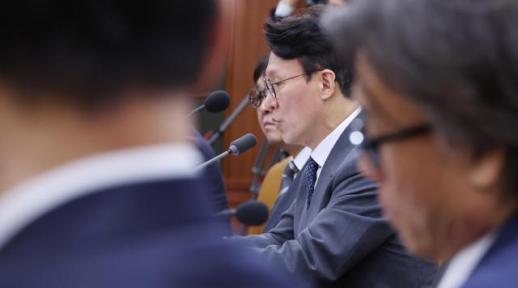 Prime Minister Kim Min-seok to Host Dinner with Democratic Party Leadership Prime Minister Kim Min-seok will host a dinner with the leadership of the Democratic Party on May 19. According to Yonhap News on May 13, Kim will meet with Democratic Party floor leader Han Byeong-do and other party leaders at the Prime Minister's residence in Seoul. The dinner was arranged at the request of the party's leadership, and 18 members, including Han and the chief deputy floor leader, are expected to attend.Previously, Kim held dinners with lawmakers from both parties on May 11 and 12. Another meal is scheduled for May 14.These series of dinner meetings are seen as an effort by Kim to urge lawmakers to expedite legislative cooperation. During the eighth high-level government-party meeting on April 22, Kim noted, "There are still significant key bills that have not yet passed through the National Assembly, which need to be addressed within the first half of the year," and requested active cooperation from the assembly.Some analysts suggest that Kim, who is rumored to be considering a bid for the party leadership, is expanding his interactions with lawmakers ahead of the party's convention in August. It is speculated that he may step down from his role as Prime Minister after the June 3 local elections to formally pursue the party leadership position.* This article has been translated by AI. 2026-05-13 19:47:25
 -
 IEA Warns of Global Oil Supply Shortage by Year-End Amid Middle East Conflict As U.S.-Iran ceasefire negotiations remain stalled and tensions escalate, the International Energy Agency (IEA) has projected that global oil supply will fall short of total demand this year due to the ongoing conflict. According to a report released by the IEA on May 13, global oil demand is expected to reach 100.4 million barrels per day in 2026. This figure is 1.3 million barrels per day lower than the levels recorded before the outbreak of war following U.S. and Israeli airstrikes on Iran in late February.The IEA forecasts that if tanker traffic through the Strait of Hormuz resumes gradually starting in June, global oil supply will be around 100.2 million barrels per day, indicating a shortfall of 1.8 million barrels per day compared to demand. In January and February, prior to the conflict, oil supply was approximately 107 million barrels per day.The agency also reported that global oil supply in April was recorded at 95.1 million barrels per day, resulting in a cumulative decrease of 12.8 million barrels per day since February. This decline is attributed to a reduction of 14.4 million barrels per day in oil production from countries affected by the blockade of the Strait of Hormuz.According to preliminary data from the IEA, global observed crude oil inventories fell by 129 million barrels in March and an additional 117 million barrels last month. Disruptions in maritime trade through the Strait of Hormuz led to a decrease of 170 million barrels in land-based inventories, while maritime inventories increased by 53 million barrels.As IEA member countries release strategic reserves in response to the energy crisis, land-based inventories in OECD countries have plummeted by 146 million barrels, while non-OECD countries saw a relatively smaller decrease of 24 million barrels.Furthermore, the IEA noted that cumulative supply losses from Gulf oil-producing countries due to restrictions in the Strait of Hormuz have already surpassed 1 billion barrels, with current production halts exceeding 14 million barrels per day. However, the agency assessed that the market was already in a state of oversupply before the crisis began, and both producers and consumers are responding to market signals, which has significantly narrowed the current supply-demand gap.The IEA stated, "If an agreement is reached to end the war and oil transport through the Strait of Hormuz gradually resumes in the third quarter, demand could begin to rise again by the end of the year," but cautioned that the pace of supply recovery is expected to be slow, predicting that the oil market will remain in a state of supply shortage through the final quarter of this year.* This article has been translated by AI. 2026-05-13 19:46:40
 -
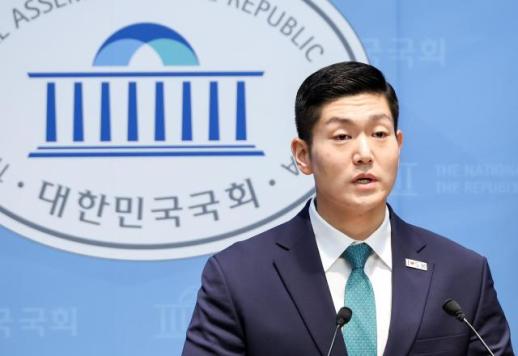 Democratic Party to File Complaint Against Kim Jae-seop Over Allegations Against Candidate Jeong Won-o The Democratic Party plans to file a complaint against Kim Jae-seop, a lawmaker from the People Power Party, for allegedly spreading false information regarding Jeong Won-o, the party's candidate for Seoul mayor. According to Yonhap News on May 13, Jeong's camp announced that they would report Kim for violating the Public Official Election Act by disseminating false information intended to undermine Jeong's candidacy. In their statement, Jeong's team argued that Kim's claims were based on a transcript from a Yangcheon District Council meeting in October 1995, stating, "The transcript merely records the words of the meeting attendees and cannot be considered objective evidence." They labeled Kim's assertions as blatant falsehoods. They further contended, "Kim's claims merely repeat unfounded statements made by an independent council member nine days after the incident occurred." Regarding Kim's assertion that the council member who raised the issue was independent, Jeong's camp responded, "This is an attempt to cover up the truth. While independent council members were not subject to party nominations at the time, it is a fact that the council member was affiliated with the Democratic Liberal Party, the predecessor of the People Power Party." They added, "Kim continues to engage in negative campaigning based on false information. While Jeong Won-o's campaign will compete on policy grounds to earn the rightful evaluation of Seoul citizens, we will take strong action against clear falsehoods." Meanwhile, Kim Jae-seop held a press conference earlier that day, alleging that Jeong's explanation for a past altercation related to differing views on the May 18 Democratic Uprising was a lie. He presented the council meeting transcript, claiming it detailed an incident where Jeong assaulted two citizens and a police officer while trying to coerce a cafe owner into allowing an overnight stay with a female employee. He urged Jeong to come forward and clarify the situation honestly. Jeong was convicted in 1995 for assaulting two citizens and two police officers while drinking at a cafe in Yangcheon District, where he was serving as a secretary to the Yangcheon District Mayor at the time.* This article has been translated by AI. 2026-05-13 19:45:00
 -
 Samsung Electronics Revamps TV Division Under Lee Won-jin's Leadership Samsung Electronics' Video Display (VD) Division is undergoing a significant transformation, shifting its focus from traditional TV operations to software and platform services. This move comes just a week after Lee Won-jin took the helm of the TV business. The company aims to build a sustainable revenue model beyond its status as the world's leading TV manufacturer for 20 consecutive years.According to industry sources, shortly after his appointment on May 4, Lee established a new task force dedicated to maximizing advertising revenue from its proprietary TV platform, Samsung TV Plus, and took on the role of team leader. The initiative aims to create a revenue-generating structure that continues after device sales.Since its launch in 2015, Samsung TV Plus has provided immediate TV viewing services without the need for separate subscriptions or additional equipment. Earlier this year, the service surpassed 100 million global monthly active users for the first time in its 11-year history. Currently, it offers 4,300 channels and over 76,000 on-demand videos across 30 countries.The existing TV Plus Group, which previously managed the FAST business, will now focus on expanding its licensing business for its operating system, Tizen, to external TV manufacturers in countries like China. Samsung has supplied Tizen to companies such as Tempo in Australia, Artmacha in Turkey, and HKC in China since 2021, with plans to increase supply tenfold this year. The strategy includes broadening its target from individual TV manufacturers to original design manufacturers (ODMs) to rapidly capture the TV OS ecosystem.Both the newly established task force and the TV Plus Group will report directly to Lee, reflecting his commitment to shift the decision-making structure from hardware development to prioritizing software and platform services as the new core of the division.In his inaugural speech, Lee called for bold innovation to overcome challenges in the TV business. He noted, "The competition has expanded to include big tech companies with overwhelming software capabilities and platform firms that capture customer time through content. We must redefine the essence of our business and prepare for a new 20 years of Samsung TV without fear of challenges."Reactions among employees to the organizational restructuring have been mixed. While there is optimism that Lee, an expert in marketing platform services, will find new breakthroughs in a stagnant TV market, there is also tension regarding potential personnel changes driven by a focus on performance. One Samsung employee shared anonymously in a workplace community, "Getting approval from the service business team is now more important than from the development team. The atmosphere has definitely shifted to prioritize platform revenue metrics over unnecessary reporting formats."* This article has been translated by AI. 2026-05-13 19:40:47
 -
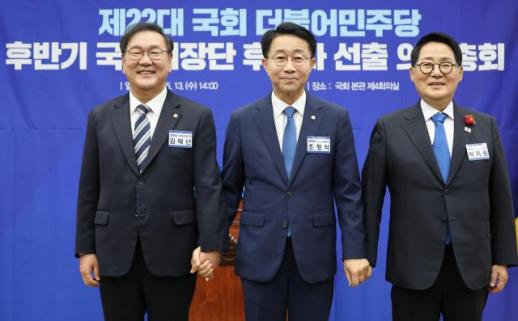 Democratic Party Elects Cho Jung-sik as Candidate for National Assembly Speaker Cho Jung-sik, a six-term member of the Democratic Party, was elected as the candidate for National Assembly Speaker on May 13. This marks his third attempt at the position, leveraging support from the party's pro-Lee Jae-myung faction. With the Democratic Party holding a majority in the National Assembly, this election is considered a de facto final round.After being elected during a party meeting, Cho stated, "We will complete the reorganization by June and pass all legislative tasks by December." He secured a majority in the first round of voting, defeating fellow five-term lawmakers Park Ji-won and Kim Tae-nyeon. For the first time, the Democratic Party introduced a voting system that combined in-person votes from lawmakers (80%) with online votes from party members (20%), although the specific vote percentages were not disclosed.Before the election, Cho remarked, "I am a three-time candidate. This is my third and final attempt," urging members to support him as he has prepared extensively. He emphasized that the first half of the National Assembly was a historic moment that established the Lee Jae-myung government, and now he aims to create a productive National Assembly to support it. His key pledges include creating a people-centered National Assembly, completing constitutional reforms, enhancing the role and status of the National Assembly, and strengthening parliamentary diplomacy.Political analysts suggest that Cho's election was influenced by support from President Lee Jae-myung. After Cho resigned from his position as Special Advisor for Political Affairs on May 3 to run for Speaker, President Lee expressed gratitude on Facebook, saying, "Thank you for your hard work and for always being there." On May 11, he shared a post from a netizen who ranked Cho first in the preference voting system that would influence the Speaker selection.In response to speculation about President Lee's support for Cho, a Blue House official clarified, "This was merely an explanation of the preference voting system and not related to any specific candidate." The preference voting system allows voters who did not have their first choice make it to the runoff to have their second choice counted in the final decision.Additionally, the Democratic Party nominated Nam In-soon, a four-term lawmaker, as the candidate for National Assembly Vice Speaker. Nam faced off against fellow four-term lawmaker Min Hong-cheol. After her election, Nam stated, "I will work with Speaker candidate Cho to complete legislation on livelihood issues and constitutional reforms."Meanwhile, the People Power Party also selected Park Deok-heum, a four-term lawmaker, as its candidate for Vice Speaker earlier that morning. This completes the candidate lineup for the National Assembly leadership for the second half of the term. The Democratic Party plans to hold a plenary session on May 20 to vote on the election of the Speaker and Vice Speaker.* This article has been translated by AI. 2026-05-13 19:38:42
 -
 Guidelines for Teacher Gifts on May 15: Carnations Allowed, Gift Certificates Prohibited As Teacher's Day approaches on May 15, many parents and students are confused about whether it is permissible to give teachers carnations or small gifts. Gifts that are seen as a "gesture of appreciation" could potentially violate the Anti-Corruption Law (Kim Young-ran Act) due to the evaluative relationship between teachers and students. In summary, it is generally prohibited to give gifts or money to teachers who are currently evaluating or guiding students. Even small gifts valued at less than 50,000 won are unlikely to be considered exceptions. The Anti-Corruption and Civil Rights Commission states that gifts exchanged between teachers who are continuously responsible for evaluating and guiding students do not qualify for exceptions under the Anti-Corruption Law, even if they are valued at less than 50,000 won. Providing drinks, such as coffee, during meetings with homeroom teachers is also not permitted. Cautions also apply to carnations. Individual students are not allowed to give carnations to their homeroom teachers. However, if student representatives publicly present carnations or flowers to their homeroom or subject teachers on Teacher's Day, this may be permissible under social norms. Handwritten letters or thank-you cards from students are acceptable. The commission suggests that students can present handwritten letters or thank-you cards to their homeroom teachers on Teacher's Day without violating the Anti-Corruption Law. Some gifts may be allowed for former homeroom teachers or subject teachers who are no longer teaching the child. Gifts valued at less than 50,000 won may be given if there is no direct interest due to the end of grading and guidance responsibilities, and if the gift is considered social or ceremonial. Agricultural and fishery products or their processed goods may be allowed up to 150,000 won. For gift certificates, whether they qualify as "gifts" under Article 8, Section 3, Clause 2 of the Anti-Corruption Law depends on the nature of the exchangeable items. Monetary gift certificates (such as department store gift certificates) are considered securities and are not allowed, even if within the value limit. However, gift certificates for goods and services (such as movie or sports tickets) are considered gifts and may be allowed if they are within the value limit and serve social or ceremonial purposes. The criteria change for graduates giving gifts to their former teachers. After graduation, gifts are permissible up to 1 million won per occasion and 3 million won per fiscal year, provided there is no direct job-related connection. Different institutions have varying standards. Kindergarten teachers fall under the Early Childhood Education Act and are subject to the Anti-Corruption Law. In contrast, daycare teachers are generally not subject to this law. However, some daycare center directors operating public facilities may be considered public officials and thus subject to the law. English kindergarten and after-school instructors are also treated differently based on their legal status. English kindergartens often fall under the category of private academies and may be excluded from the Anti-Corruption Law, while after-school instructors may be employees of companies contracted with schools and could also be excluded. Nonetheless, educational authorities advise against accepting gifts regardless of legal applicability. Parents involved in parent-teacher associations or school operation committees should also be cautious. It is not permissible for members of these groups to give gifts to principals, vice principals, or teachers on Teacher's Day. Parents serving on school operation committees or as members of school violence response teams may be considered public officials and thus subject to the Anti-Corruption Law.* This article has been translated by AI. 2026-05-13 19:35:12
 -
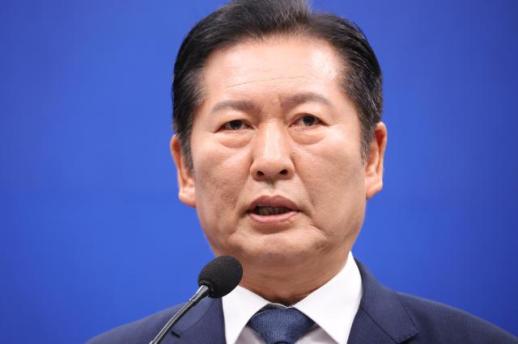 Jung Cheong-rae Calls for Public Judgment on People Power Party Ahead of Local Elections Jung Cheong-rae, the leader of the Democratic Party, emphasized on May 13 that the People Power Party, which he accused of endorsing insurrection, should face a severe public judgment in the upcoming June 3 local elections before any constitutional review of the party's legitimacy. During a press conference at the National Assembly, Jung stated, "This local election is crucial because we must decisively judge the insurrection forces and eliminate even the slightest trace of insurrection." He added, "Through this, we aim to fully normalize the state and establish an effective local government that will robustly support the success of the Lee Jae-myung administration. This is the spirit of the times and our historical mission in 2026." Jung also criticized the People Power Party for rejecting a proposed constitutional amendment. He remarked, "If the People Power Party had any sense of responsibility, they would not have so shamelessly discarded a constitutional amendment that clearly outlined the procedures for declaring and lifting martial law." Regarding the launch of the People Power Party's campaign committee for the cancellation of charges, led by Chairman Jang Dong-hyuk, Jung dismissed it, saying, "The moment they form a committee for fabricated charges, the public will think, 'It seems there were many fabricated charges under the Yoon Suk-yeol prosecution dictatorship.'" Jung highlighted the economic achievements of the Lee Jae-myung administration, stating, "Although it has been less than a year since the Lee Jae-myung administration took office, its effectiveness is the strongest in history. The KOSPI index, which barely surpassed 2,500, is now approaching 8,000." He noted that last year's export volume reached a record high, surpassing $700 billion, making South Korea the sixth-largest exporter in the world. He also pointed out that the GDP growth rate for the first quarter of this year was 1.7%, ranking first among the top 22 countries. He added that the recovery of democracy and stability on the Korean Peninsula have further revitalized the tourism sector, with the country on the brink of welcoming 20 million foreign tourists. "This local election will be a historical turning point for South Korea. The Democratic Party must win for the success of the Lee Jae-myung administration," he urged. During the press conference, Jung outlined the party's nomination and policy achievements, including holding 37 meetings of the highest decision-making body, implementing a four-no and four-strong nomination policy, ensuring member sovereignty in primaries, and fulfilling practical pledges. He promised five major visions and 15 policy tasks, along with 200 central party pledges. The five major visions include: local-led growth and balanced national development, economic leap through the growth of new AI industries, supporting citizens' success through opportunity guarantees, creating a stable and fair society, and restoring national normalization and citizen sovereignty. Among the 200 pledges, key initiatives include designating mega-special zones, introducing climate insurance, establishing a self-reliance fund for children, promoting solar income villages, and expanding support housing. Jung described these as "living, closely connected pledges that resonate with the people's lives." Regarding the election campaign, he announced plans for new initiatives, including the Blue Step campaign, bicycle and pedestrian campaign teams, and policy-focused promotions through blue notebooks, stating, "I will dedicate everything to winning this local election and ensuring the success of the Lee Jae-myung administration."* This article has been translated by AI. 2026-05-13 19:33:31
 -
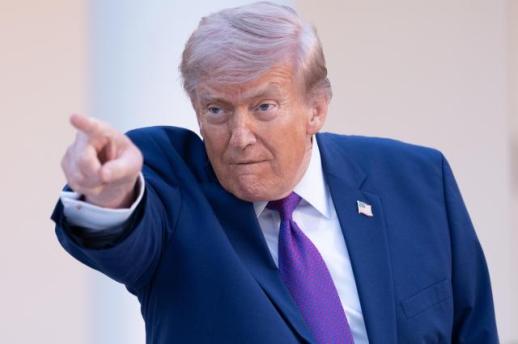 First U.S.-China Summit After Middle East War Raises Hopes for Trade Expansion President Donald Trump and Chinese President Xi Jinping are set to hold their first summit in about six months since their meeting in Busan last October, amid growing expectations that South Korean companies will gain some benefits from expanded trade between the two nations. According to industry sources on May 13, Trump indicated that a key agenda item for the U.S.-China summit on May 14 will be expanding trade between the two countries. He stated on Truth Social, "I will ask President Xi Jinping to open up China." Trump's delegation for the trip to China includes prominent business leaders such as Elon Musk, CEO of Tesla and SpaceX; Jensen Huang, CEO of NVIDIA; Tim Cook, CEO of Apple; Kelly Ortberg, CEO of Boeing; and Larry Fink, CEO of BlackRock, all of whom have significant business interests in China or have invested heavily in Chinese companies. Given his social media comments and the composition of his delegation, it is likely that Trump will directly or indirectly request Xi to open the tightly restricted Chinese market to U.S. companies following the imposition of mutual tariffs. Experts believe that to partially lift the "bamboo curtain," the U.S. may have to offer concessions, such as easing export restrictions on China. A notable example is the semiconductor sector, where predictions suggest that the U.S. will relax some of its restrictions on exporting semiconductor equipment to China. The U.S. has consistently blocked the export of advanced semiconductor equipment to China since the Trump administration, continuing under President Biden, in an effort to curb China's semiconductor ambitions. However, the tightening of these export regulations has significantly impacted South Korean companies like Samsung Electronics and SK Hynix, which operate semiconductor fabs in China. There is a strong possibility that China will demand the easing of restrictions on semiconductor equipment imports needed by companies like CXMT (Changxin Memory Technologies) and YMTC (Yangtze Memory Technologies) in exchange for allowing the import of U.S.-made GPUs. This could accelerate the modernization of Samsung and SK Hynix's fabs in China, presenting potential benefits for these companies. If negotiations between the two sides are successful, it is likely that the export volumes of rare earths and battery materials, such as anode and cathode materials, desired by companies like Boeing and Tesla, will increase. Following the export restrictions on semiconductor equipment, China designated rare earths—key materials for advanced industries like semiconductors, automotive, and defense—as subject to an "export licensing system." Easing restrictions on rare earth exports would facilitate the procurement of critical minerals needed for domestic semiconductor equipment and defense manufacturing, enhancing the competitiveness of related industries in line with ongoing supply chain diversification efforts. While the supply chain for battery anode materials has diversified, reducing dependence on Chinese sources, the reliance on Chinese materials for cathodes remains significant. The U.S. International Trade Commission (ITC) recently determined that the quality of Chinese cathode materials is superior to that of U.S. alternatives, suggesting that the high tariffs of around 160% on Chinese cathodes may not be necessary. If regulations on Chinese cathode materials are relaxed, domestic companies like LG Energy Solution, which manufacture batteries in the U.S., are expected to accelerate their procurement of raw materials, boosting their electric vehicle (EV) and energy storage system (ESS) businesses. Kim Tae-hwang, a professor of international trade at Myongji University, stated, "Amid increasing global uncertainty due to the Iran war, we hope that the U.S. and China can alleviate economic and trade volatility and uncertainty through this summit. However, similar to the meeting in October last year, it is unlikely that we will see significant improvements in bilateral relations; rather, we should view this as a turning point for reducing uncertainty."* This article has been translated by AI. 2026-05-13 19:30:00
 -
 Delisting of Penny Stocks to Begin in July as Financial Authorities Tighten Rules Starting in July, the delisting of penny stocks will be implemented more rigorously. Financial authorities are significantly tightening the criteria for market capitalization, penny stocks, and disclosure violations, leading to an expected surge in companies facing delisting pressure in the second half of the year. Market analysts suggest that this marks the beginning of a phase to eliminate so-called "zombie companies." On May 13, the Financial Services Commission announced at its ninth regular meeting that it has approved amendments to the Korea Exchange listing regulations to implement the "swift and strict delisting reform plan for struggling companies" announced in February. The new rules will strengthen four key delisting criteria—market capitalization, penny stocks, complete capital erosion, and disclosure violations—across both KOSPI and KOSDAQ markets. One of the most notable changes is the enhancement of market capitalization requirements. Previously, the threshold for maintaining a KOSPI listing was set to rise to 30 billion won in 2027 and 50 billion won in 2028. However, this has been accelerated, with the new thresholds set at 30 billion won starting in July and 50 billion won beginning in January 2024. KOSDAQ will see similar increases to 20 billion won and 30 billion won during the same period. The method for determining delisting will also be strengthened. Previously, companies designated as management issues could avoid delisting by meeting the criteria of "10 consecutive trading days or 30 cumulative trading days" within a 90-day period. Under the new rules, companies must maintain a standard of "more than 45 consecutive trading days" to avoid delisting, aimed at preventing temporary stock price boosts from allowing companies to evade delisting. The most significant market impact is expected from the new "penny stock delisting" rule. Financial authorities have introduced a new criterion for stocks priced below 1,000 won. If a stock remains below 1,000 won for 30 consecutive trading days, it will be designated as a management issue, and if it fails to recover the price within 45 consecutive trading days over the next 90 trading days, delisting procedures will commence. Concerns have been raised that some companies previously avoided delisting by artificially inflating their stock prices through large-scale stock consolidations or reductions. To prevent such circumventions, new regulations have been introduced. Companies that have conducted stock consolidations or reductions within the past year will be prohibited from further consolidations or reductions after being designated as management issues, and excessive consolidations exceeding a 10-to-1 ratio will also be restricted. Tension in the market is also rising regarding companies that have received adverse audit opinions. According to the Korea Exchange, a total of 54 companies, including 12 on KOSPI and 42 on KOSDAQ, received adverse audit opinions (including limited opinions) this year. While this is a slight decrease from 57 last year, the number remains high. The issue is that cases of companies resolving audit opinion problems and returning to normal status are rare. Among the 57 companies that received adverse opinions last year, only eight have regained a "proper" opinion this year. The remaining companies either received adverse opinions again or entered delisting procedures. Particularly, there has been an increase in forced delisting cases in the KOSPI market this year. In the last three years, there were no delisting decisions in the first quarter, but this year, five companies, including Daedong Electronics, Kukbo, Well Biotech, IHQ, and KH Philux, have already been delisted from the market. Companies that have received adverse audit opinions for two consecutive years are also considered high-risk. Geumyang has recently faced delisting due to receiving adverse opinions for two consecutive years, while KC Green Holdings, Bumyang Construction, and Samboo Construction have also received consecutive adverse opinions. Additionally, the inclusion of complete capital erosion based on semiannual standards as a delisting review criterion is expected to increase the burden on companies with weak financial structures. Previously, complete capital erosion was only a formal delisting criterion at the end of the business year, but now semiannual capital erosion will also be subject to substantive review. The criteria for disclosure violations will also be strengthened. The cumulative penalty points for disclosure violations over the past year will be lowered from the previous 15 points to 10 points, and any significant or intentional disclosure violation will trigger a delisting review even if it occurs just once. Through this reform, financial authorities aim to change the domestic stock market structure, which has been characterized by "easy listings and difficult delistings." The Financial Services Commission stated, "This is intended to support the smooth listing of innovative companies while swiftly and strictly delisting struggling companies, transitioning to a 'many births, many deaths' market structure."* This article has been translated by AI. 2026-05-13 19:26:51