


Latest by
-
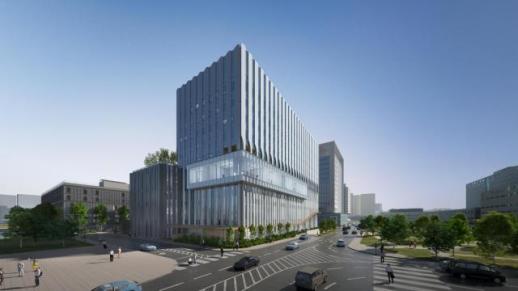 New Hope for Patients with Incurable Cancer as Asan Medical Center Breaks Ground on Largest Heavy Ion Therapy Center in Korea Asan Medical Center has officially begun construction on the largest heavy ion therapy center in South Korea. Scheduled to be operational by 2031, the center aims to provide personalized precision medicine for patients with incurable cancers and offer new treatment opportunities.On June 11, Asan Medical Center held a groundbreaking ceremony for the heavy ion therapy center, marking the first step in introducing state-of-the-art cancer treatment equipment.The new center will span a total area of 39,502 square meters (approximately 11,949 pyeong) and will consist of a 12-story building (three underground and nine above ground). It will be the largest heavy ion therapy center in the country, featuring two rotating treatment machines and one fixed treatment machine, all equipped with the latest technology.Heavy ion therapy is a radiation treatment method that accelerates ions, such as carbon, to nearly the speed of light and precisely targets cancer cells with heavy ion beams. This method is reported to be 2 to 3 times more powerful than conventional radiation therapy while minimizing damage to normal tissues by focusing on cancer cells.Notably, Asan Medical Center's heavy ion therapy equipment will utilize a multi-ion beam system that incorporates not only carbon ions but also helium, neon, and oxygen. This advancement is expected to minimize damage to healthy tissues and effectively eliminate resistant tumors, making it applicable for pediatric tumors as well.The therapy is anticipated to provide new hope for patients with difficult-to-treat cancers, including pancreatic cancer, lung cancer resistant to existing treatments, sarcomas, kidney cancer, and recurrent cancers.An official from Asan Medical Center stated, "The heavy ion beam has a wider irradiation range and a higher dose rate compared to existing treatment machines, allowing for treatment over a larger area in a shorter time, significantly reducing the burden on patients."Additionally, Asan Medical Center plans to implement an imaging guidance system using CT equipment to accurately reflect changes in tumor size and position during treatment, enabling personalized treatment for patients.Jung Mong-joon, Chairman of the Asan Foundation, remarked, "Many patients continue to suffer from incurable diseases. The introduction of heavy ion therapy equipment, which offers new treatment opportunities for patients with difficult cancers, is a way to carry on the legacy of my late father, Chung Ju-yung, the founder."Park Seung-il, President of Asan Medical Center, expressed, "We expect this to not only enhance treatment outcomes for cancer patients but also significantly strengthen the global competitiveness of Asan Medical Center." 2026-06-11 09:36:00
 -
 Kakao Bank Expands Inclusive Finance with 1.2 Trillion Won in Alternative Credit Loans Kakao Bank is expanding inclusive finance through an alternative credit assessment model (CSS) that utilizes non-financial data. On June 11, Kakao Bank announced it has provided an additional 1.2 trillion won in loans for individuals with mid to low credit ratings using this alternative credit assessment model. In the second half of 2022, Kakao Bank became the first in the industry to establish its unique credit scoring model, the 'Kakao Bank Score,' by utilizing pseudonymized combined data from the Kakao community, Lotte Members, Kyobo Bookstore, and the Financial Settlement Institute. This model has been applied in credit loan evaluations, enhancing the ability to assess individuals with mid to low credit ratings and 'thin files' (those with insufficient financial history). In the area of loans for small business owners, Kakao Bank is operating a specialized credit assessment model that uses business location information. This model is aimed at improving the accuracy of credit assessments for borrowers in sectors like food service and online selling, where traditional evaluation methods have struggled. According to Kakao Bank, since the introduction of the alternative credit assessment model in 2023, about 12% of mid to low credit loans processed were previously rejected under the old model but were approved through the new assessment based on alternative information. Thanks to the performance of this model, the total amount of mid to low credit loans issued by Kakao Bank has exceeded 16 trillion won since its launch in July 2017. Kakao Bank is also working to expand the use of its alternative credit assessment model externally. After signing a business agreement with NICE Information Service in June of last year, it began providing alternative credit assessment scores to some savings banks and capital companies this year. Kakao Bank anticipates that more than ten financial institutions will adopt this model for loan evaluations within the year. The goal is to broaden credit assessment opportunities for underserved financial groups through the expansion of the alternative credit assessment model. A Kakao Bank representative stated, "The expansion of the alternative credit assessment model will be key to establishing a fairer and more sophisticated credit evaluation system for consumers who have been marginalized by traditional credit assessment systems. We will continue our efforts toward innovation in credit assessment models and spread this throughout the financial sector to ensure more customers benefit from a new form of inclusive finance."* This article has been translated by AI. 2026-06-11 09:36:00
 -
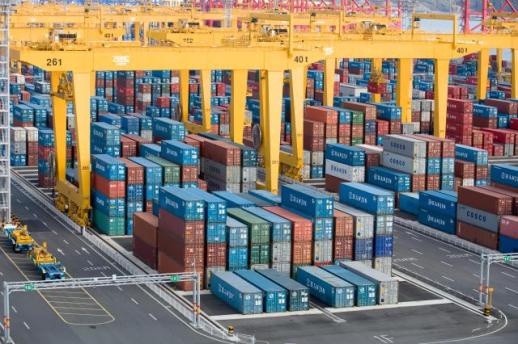 Semiconductor Exports Drive Record $28.6 Billion in June South Korea's exports have surged more than 80% compared to last year, reaching a record high of $28.6 billion in the first ten days of June, driven by a significant increase in semiconductor exports. The Korea Customs Service reported on June 11 that the preliminary export figure for June 1-10 was $28.635 billion, marking an 85.9% increase from the same period last year. This figure surpasses the previous record of $25.2 billion set in April. The average daily export amount during this period was $4.09 billion, a 46.1% increase, with the number of working days rising by 1.5 days to seven compared to last year. Semiconductors were the primary driver of this growth, with exports reaching $11.068 billion, a staggering 205.8% increase. This is the highest figure recorded for the June 1-10 period. Analysts attribute the surge to a rebound in memory prices and increased demand for AI semiconductors, particularly high-bandwidth memory (HBM). Semiconductors accounted for 38.7% of total exports, up 15.1 percentage points from a year ago. In addition to semiconductors, exports of petroleum products rose by 68.7%, ships by 52.0%, steel products by 39.1%, and passenger cars by 25.4%, all contributing to the record export figures. Exports of computer peripherals also soared by 259.4%, driven by increased demand and rising prices for solid-state drives (SSDs) used in AI servers. Exports to major markets saw significant increases, with China up 101.4%, the United States up 54.4%, Vietnam up 102.9%, Taiwan up 134.0%, and the European Union up 46.0%. The top three countries—China, the United States, and Vietnam—accounted for 47.3% of total exports. During the same period, imports rose by 35.6% to $23.352 billion. Notable increases were seen in imports of semiconductors (71.3%), semiconductor manufacturing equipment (52.2%), and machinery (21.2%). Energy imports, including crude oil, gas, and coal, surged by 39.9% compared to last year. Crude oil imports alone increased by 42.9% to $3.032 billion, influenced by rising international oil prices amid instability in the Middle East and a strong won-dollar exchange rate. Imports from China (57.4%), the United States (34.6%), the European Union (20.9%), Japan (31.3%), and Taiwan (43.6%) all saw increases. With exports exceeding imports, the trade balance recorded a surplus of $5.282 billion.* This article has been translated by AI. 2026-06-11 09:36:00
 -
 OpenAI CEO Sam Altman to Speak on AI Innovation at Samsung Electronics Sam Altman, CEO of OpenAI, is visiting South Korea to discuss the application of artificial intelligence (AI) with employees of Samsung Electronics. This comes as Samsung plans to expand the use of external generative AI services across its operations, with the DX division leading the charge in AI-driven workplace innovation. According to the Chosun Ilbo on June 11, Samsung Electronics announced that Altman will participate in a "DX Insight Talk" at its Suwon facility on the morning of June 15. This event is timed with Samsung's formal introduction of external generative AI services, such as ChatGPT, Gemini, and Claude, into its business processes. Samsung has previously taken a cautious stance on using external generative AI due to security concerns. However, with the recent official launch of its AX initiative, aimed at transforming workplace operations through AI, the company is broadening its scope for utilizing external AI services. The Chosun Ilbo reported that starting June 12, Samsung's DX division will allow employees to use three types of enterprise AI, including ChatGPT, Gemini Enterprise, and Claude, enabling them to leverage multiple AI models based on their work needs. Samsung's own "Gauss AI" will also be used alongside these external services. The company plans to utilize Gauss for its specialized functions tailored to internal tasks, adopting a dual-track approach with both external generative AI and its in-house solution. Industry observers note a growing trend among companies to adopt a multi-model strategy, utilizing various AI models like ChatGPT, Claude, and Gemini according to specific business needs, rather than relying on a single AI model. Through the introduction of external generative AI, Samsung aims to enhance productivity and decision-making speed. No Tae-moon, head of Samsung's DX division, has indicated that the adoption of external generative AI will mark a turning point in how work is conducted and the pace of execution. The DS division, responsible for semiconductors, plans to gradually expand its use of external AI. According to the Chosun Ilbo, the DS division is currently using Anthropic's Claude and will begin using ChatGPT on June 12, with plans to introduce Google's Gemini later this year.* This article has been translated by AI. 2026-06-11 09:36:00
 -
 Woori Bank Develops Digital Wallet for Foreign Tourists Woori Bank announced on June 11 that it has signed a memorandum of understanding (MOU) with fintech startup CrossHub to improve payment convenience for foreign visitors and develop joint services.The agreement aims to reduce the inconveniences foreign tourists face when using domestic financial and payment services. The two companies plan to jointly develop a 'digital wallet exclusively for foreigners,' targeting a launch in the second half of the year. This service will allow foreign customers to register their passport information and payment methods just once, enabling easy payments across major domestic platforms for transportation, delivery, and shopping without additional authentication. Additionally, they plan to introduce a prepaid card specifically for foreigners that can be loaded with their home currency for use in South Korea.They will also conduct tests of a domestic payment environment utilizing foreign currency-based stablecoins. This initiative aims to verify the feasibility of building a payment infrastructure that enhances convenience for foreign customers. CrossHub is a participant in Woori Financial Group's startup collaboration program, 'DinoLab,' and has been recognized as a 'Global ICT Future Unicorn' by the Ministry of Science and ICT after winning the CES 2026 Innovation Award.Woori Bank intends to expand practical collaboration with companies nurtured through DinoLab and continuously explore new financial service models in partnership with innovative startups.Lee Chang-hwan, head of Woori Bank's Digital Innovation Division, stated, "This collaboration aims to enhance financial accessibility and payment convenience for foreign visitors. We will continue to expand partnerships with innovative startups and strengthen our digital financial competitiveness through the validation of future financial technologies."Meanwhile, Woori Bank is expanding its specialized services for foreigners, including new financial and communication services and prepaid cards.* This article has been translated by AI. 2026-06-11 09:30:00
 -
 BNK Busan Bank Launches Mobile-Based Retirement Pension Enrollment Service BNK Busan Bank has introduced a mobile-based retirement pension enrollment service, becoming the first in the financial sector to do so. This service allows corporate clients to complete the enrollment process entirely via smartphone without visiting a branch. The bank announced on June 11 that it has officially launched this service. It enables corporate clients to carry out the entire process—from application to agreement on terms and registration of investment products—on their mobile devices. During the enrollment process, bank staff can monitor clients' progress in real-time, providing remote consultation and support. This hybrid approach combines simple online registration with personalized assistance. To enhance the security and internal control of corporate financial transactions, Busan Bank has implemented a delegation process that allows only designated representatives of the company to proceed with the enrollment. With this new service, Busan Bank aims to improve convenience for corporate clients while also reducing the paperwork burden on branch offices, thereby increasing operational efficiency. The bank believes it can effectively respond to the government's initiatives to promote retirement pension systems and the growing demand for non-face-to-face financial services. Choi Jae-young, head of the WM/Pension Group at Busan Bank, stated, "With the launch of the mobile-based retirement pension enrollment service, we have enhanced accessibility and convenience for our corporate clients. We will continue to expand differentiated digital pension services to drive customer-centric financial innovation."* This article has been translated by AI. 2026-06-11 09:30:00
 -
 Anthropic Calls for Mandatory AI Safety Testing and Job Market Preparedness Anthropic, the developer of the AI model Claude, has called for robust regulations and labor market measures in response to advancements in artificial intelligence (AI). On June 10, the company stated that unless Congress establishes strict federal laws addressing "catastrophic AI risks," state-level AI regulations should not be blocked. Previously, President Donald Trump urged Congress to replace state-level AI regulations with federal standards. In response, Anthropic argued that independent safety testing should be mandated for the most powerful AI models to set federal benchmarks. Anthropic also emphasized the need to prepare for potential disruptions in the labor market due to AI proliferation. The company urged Congress and state governments to modernize unemployment benefit systems in anticipation of large-scale layoffs caused by AI. Dario Amodei, CEO of Anthropic, reiterated the need for more binding regulations in a blog post titled "Policy on Exponential AI Development." He noted that the rapid pace of AI advancement could lead to capabilities akin to a "nation of geniuses in data centers" within one to two years, indicating that existing discussions around "transparency" are insufficient. "It is time to implement stricter and binding regulations on AI beyond transparency," Amodei stated, advocating for a regulatory framework similar to that of the Federal Aviation Administration (FAA), which oversees aircraft safety. He also warned of the potential for widespread unemployment due to AI, asserting that long-term job displacement is not only undesirable but also dangerous. He suggested that income support measures, such as universal basic income and employment incentives, may be necessary. Amodei called for reliable accountability regulations for fully autonomous weapon systems, advocating for a ban on their use within the United States. In a Bloomberg interview on the program "The Circuit with Emily Chang," he stressed the need for human involvement in the military applications of AI. Amodei clarified that while using Claude in military operations is not inherently problematic, technology companies should not have the authority to permit or prohibit specific military actions. "Military policy should ultimately be left to military decision-makers," he said. He explained that AI models' ability to identify security vulnerabilities is rapidly improving, which contributed to the decision to delay the release of some top models. "While the ability of models to find vulnerabilities has steadily improved, this time the leap has been particularly significant," he noted, mentioning that some companies requested delays due to the models' strong performance. When asked if he sees parallels between his leadership in AI development and J. Robert Oppenheimer's role in developing the atomic bomb, Amodei responded, "Oppenheimer is viewed as a failure, a case that should not exist. To achieve a good outcome, there must be checks and balances everywhere."* This article has been translated by AI. 2026-06-11 09:30:00
 -
 Iran Responds to U.S. Airstrikes with Drone Attack on Bahrain's Navy Base Iran has launched attacks on U.S. military positions in the Gulf region, including the U.S. Navy's Fifth Fleet stationed in Bahrain, in response to two consecutive days of American airstrikes, according to reports from foreign media outlets. The Iranian Revolutionary Guard Corps (IRGC) announced on June 10 that it had targeted the U.S. Navy's Fifth Fleet in Bahrain with drones. The IRGC also claimed to have designated other U.S. military bases in the region, including the Azraq Air Base in Jordan, as targets for long-range missile strikes. The Associated Press reported that Iran fired missiles and drones at countries where U.S. forces are stationed, including Bahrain, Kuwait, and Jordan. Air defense systems in Kuwait and Bahrain responded to incoming projectiles, while Jordan reportedly intercepted several missiles aimed at the Azraq Air Base. These attacks followed U.S. airstrikes on Iranian military facilities for the second consecutive day. The U.S. military had previously targeted air defense and radar facilities along Iran's southern coast after claiming that Iran shot down a U.S. helicopter near the Strait of Hormuz. President Donald Trump stated that Iran was responsible for the helicopter's downing, and Iran characterized the U.S. airstrikes as acts of aggression, warning of retaliation. The U.S. Navy's Fifth Fleet, headquartered in Bahrain, oversees maritime operations in the Middle East, including the Strait of Hormuz. By targeting the Fifth Fleet and U.S. military bases in Jordan and Kuwait, Iran has expanded the scope of its conflict with the U.S. from its own territory and the Strait of Hormuz to U.S. military installations in the Gulf region. The extent of the damage from these attacks has not been immediately confirmed. Some reports indicate that most of the projectiles were intercepted, and there have been no reports of casualties or significant damage. Official damage assessments from U.S. and Bahraini authorities remain limited.* This article has been translated by AI. 2026-06-11 09:30:00
 -
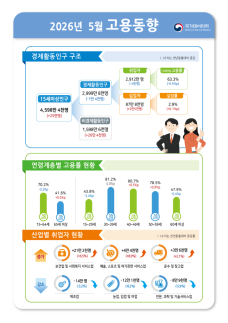 Employment Declines for First Time in 17 Months Amid Middle East Conflict As the impact of the Middle East conflict intensifies, the number of employed individuals has decreased for the first time in 17 months. Despite ongoing growth in exports, particularly in semiconductors, the job market remains sluggish. According to the "May 2026 Employment Trends" report released by the National Data Agency on June 11, the number of employed individuals fell by 40,000 from the same month last year, totaling 29.12 million. This marks the first decline since December 2024, when the number dropped by 52,000 following the declaration of a state of emergency. The increase in employment this year peaked at 108,000 in January, but fell to the 70,000 range by April after maintaining around 200,000 in February and March. Notably, significant declines were observed in manufacturing (-140,000), agriculture, forestry, and fishing (-121,000), and professional, scientific, and technical services (-89,000). The drop in manufacturing employment is the largest since February 2019, when it decreased by 151,000. Bin Hyun-jun, head of the Social Statistics Bureau at the National Data Agency, stated, "As the Middle East conflict prolongs, supply and demand disruptions have occurred in certain sectors, and high oil prices have impacted various industries, leading to an overall decline in employment. Notably, the automotive and industrial plastics sectors have seen significant job losses within manufacturing." While semiconductors have driven export growth, they have not contributed significantly to employment increases. The agency noted that semiconductors account for a relatively small share of total employment. Bin explained, "In regional employment surveys, semiconductors represent about 4% of total employment. According to Bank of Korea data, semiconductors are classified as having a relatively low employment multiplier compared to other manufacturing sectors, indicating their limited impact on job creation relative to industrial production increases." The retail sector's struggles are attributed to long-term trends such as online shopping, automation, and unmanned services. Last month, the employment rate for individuals aged 15 to 29, as per OECD standards, was 70.2%, a decrease of 0.3 percentage points from the previous year. The overall employment rate for those aged 15 and older saw its largest drop in over five years since February 2021. The youth employment crisis persists, with 255,000 fewer employed individuals aged 15 to 29 compared to last year, the largest decline since January 2021, when it fell by 314,000. The employment rate for this age group also dropped by 2.4 percentage points from May of last year, settling at 43.8%. Bin noted, "The recent shift from public recruitment to on-demand hiring, along with a growing preference for experienced hires, appears to have contributed to the decline in youth employment. Particularly, sectors where young people typically find jobs, such as information technology and hospitality, have experienced reductions, leading to a drop in the employment rate." Last month, the total number of unemployed individuals reached 878,000, an increase of 25,000 from the previous year, with the unemployment rate rising by 0.1 percentage points to 2.9%. The economically inactive population increased by 264,000, with those on leave rising by 47,000. The government's support measures for high oil prices and the youth New Deal initiatives have yet to show significant effects. A Ministry of Finance and Economy official stated, "To improve youth employment, we will expedite the implementation of key tasks under the 'Youth New Deal' and establish a basic plan for employment stability amid industrial transitions as soon as possible." 2026-06-11 09:27:00
 -
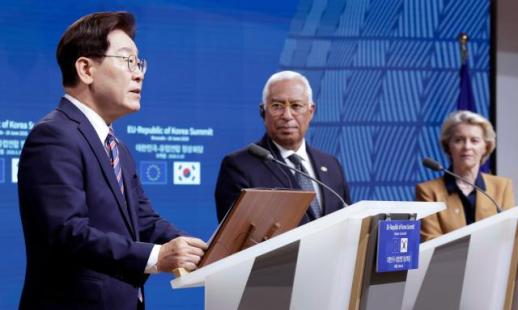 International Media Highlights Lee Jae-myung Administration's Pragmatic Diplomacy and K-Culture International media portray the Lee Jae-myung administration as characterized by pragmatic diplomacy, artificial intelligence (AI) and semiconductors, and K-culture. Over the past year, South Korea has been redefined as a key player in shaping diplomatic order and global supply chains, as well as a leader in the global cultural industry, moving beyond its previous image shaped by nuclear threats and geopolitical risks. The Ministry of Culture, Sports and Tourism announced on June 11 that an analysis of 64,827 articles related to South Korea published by 67 major foreign media outlets across 19 countries from June 4, 2025, to May 4, 2026, indicates a positive shift in the country's national image. Using various AI analysis techniques, the ministry comprehensively assessed the tone of foreign media coverage and changes in national image. The most covered area by foreign media was politics and diplomacy, which accounted for 54.3% of the total articles. This was followed by business and industry at 43.1%, economics at 40.4%, culture at 27.8%, and technology and information technology (IT) at 23.9%. A notable aspect of the diplomatic coverage was the focus on the Lee administration's pragmatic approach. The Washington Post noted that "Seoul is attempting a delicate balancing act in its diplomacy," while the Financial Times described it as a "diplomacy of restraint and pragmatism," and The Economist reported on a "more balanced diplomatic policy." Contrary to concerns raised during the election about pro-China and pro-North Korea tendencies, the administration has maintained the South Korea-U.S. alliance and trilateral cooperation with the U.S. and Japan while pragmatically managing economic relations with China. The Global Times in China analyzed that the Lee administration emphasizes rational and practical diplomacy in its China policy. During the Asia-Pacific Economic Cooperation (APEC) summit in Gyeongju at the end of October 2025, media coverage surged by over 50% compared to the average, highlighting South Korea as a focal point in the U.S.-China strategic competition and supply chain restructuring. Reuters commented that "South Korea's diplomatic role in the region is growing increasingly significant." In the economic sector, the booming stock market centered on AI and semiconductors was identified as a strong positive factor. Reuters reported that "Asian tech giants like Samsung and SK Hynix are forming a new axis in the AI bull market." Bloomberg and CNBC noted that investor confidence has quickly recovered following political uncertainties, with the Korean stock market showing some of the best performance among major global markets, driven by growth in the AI and semiconductor industries. A particularly noteworthy point was the overwhelming influence of 'K-culture.' For 10 out of the 12 months, the most positively covered topics in foreign media included BTS, K-pop, Blackpink, and other aspects of the Korean Wave. Foreign Policy described 'K-Pop Demon Hunters' as having "opened a new chapter in the Korean Wave," while Al Jazeera highlighted BTS's spectacular return, stating that it demonstrates the success of South Korea's strategy to cultivate its cultural industry as a national competitive advantage. The strongest identity that foreign media associate with South Korea is that of a 'global cultural powerhouse.' The Guardian noted that "Korea's influence is changing the direction of global life beyond music," while CNN produced a four-part documentary series titled 'K-Everything,' spotlighting K-pop, K-food, K-movies, and K-beauty industries. In the political realm, positive evaluations of democratic resilience were prominent. The Associated Press stated that "Korea's resilient democracy has passed yet another significant test," while the BBC remarked that "Korean democracy has reassembled." However, foreign media also highlighted negative aspects affecting South Korea's national image, including investigations related to the previous president's military coup, political polarization, the Cambodia fraud case, and the Coupang incident. They pointed out environmental, social, and governance (ESG) issues, along with labor and industrial safety concerns, as structural weaknesses in South Korea. This analysis, utilizing AI, may contain a certain level of classification errors. Given the physical impossibility of human analysts reviewing over 64,000 articles, the results should be interpreted at the level of averages and aggregated statistics rather than individual article accuracy.* This article has been translated by AI. 2026-06-11 09:27:00