


Latest by
-
 Naver Cloud Unveils Defense AX Strategies at National Defense Seminar Naver Cloud announced on June 11 that it held a seminar focused on the application and strategies for defense AI, which can be executed on the battlefield, as part of the Sovereign AI-based Defense AX Development Strategy Seminar. The seminar took place on June 10 at the Daejeon Convention Center (DCC) during the 'InLEX Korea Defense Industry Development Exhibition,' attended by officials from the defense, military, and ICT sectors. During the seminar, Naver Cloud presented its core defense AI sovereignty strategy, featuring an omnimodal AI model that integrates text, voice, video, and maps into a single operational context, along with a Forward Deployed Engineer (FDE) system that places engineers in the field. This vision aims to go beyond simple development to achieve operational readiness in real-world scenarios. Yoo Kyung-beom, Executive Director of Naver Cloud, discussed the topic 'Completing Defense AX with Sovereign AI: Naver Cloud's Next-Generation Full-Stack Battlefield Operations Strategy.' He highlighted how the full-stack capabilities of Sovereign AI, encompassing data centers, cloud infrastructure, AI models, and services, can be applied to the defense sector. "The 'HyperCLOVA X Omnimodal' model can understand various battlefield data as a unified situation and can convert it into intelligible intelligence for commanders through a world model that predicts changes in the battlefield environment," he emphasized. He also pointed out the advantage of providing a dedicated AI Data Center (AIDC) for defense. This includes a central data center that integrates and enhances learning from the data of the Army, Navy, Air Force, and Joint Chiefs of Staff, along with edge data centers that can respond even in communication-disrupted situations, such as forward command posts and naval vessels. Naver Cloud proposed a unified defense AI infrastructure that connects seamlessly from central to battlefield edge. The company has experience operating hyperscale data centers and has established cloud infrastructure in a containerized modular format within customer-specific closed network environments. Additionally, the FDE organizational structure, which deploys engineers to the field, was presented as a differentiating factor for Naver Cloud. This approach allows for rapid prototyping and validation, providing close support in actual operational environments to enhance capabilities. Naver Cloud aims to build an AI empowerment ecosystem applicable to real-world operations, leveraging Sovereign AI and defense-specific vertical AI. Jung Nak-soo, Executive Director of Naver Cloud, presented on the essential conditions for building dedicated defense AI: a constructed cloud and ontology-based knowledge system. He proposed connecting siloed data from the Army, Navy, Air Force, and Marine Corps through an ontology-based approach to transform simple data into a knowledge system that understands meaning and context, thereby implementing a military decision-making support system based on clear inference pathways. He also referenced international defense AX and ontology application examples, including the U.S. Joint All-Domain Command and Control (JADC2), Israel's AI-based target selection systems, Lavender and Gospel, and recent U.S.-Iran conflict cases, to illustrate that the transition to defense AI is a key competitive advantage for future command and control systems. Jung emphasized that to implement the latest AI capabilities while completely preventing the external leakage of military secrets and operational data, a constructed cloud that guarantees perfect data control is essential. He proposed that the combination of Naver Cloud's constructed cloud and HyperCLOVA X could serve as the foundation for a defense AI integrated architecture. Meanwhile, Naver Cloud established a dedicated organization for Defense AX on June 1, led by CEO Kim Yoo-won. The company's entry into the defense AI market is driven by the growing demand for Sovereign AI and public AX. Given the sensitive nature of security and regulations in the defense AI sector, this presents an opportunity for domestic companies, as applying foreign cloud or AI technologies may be challenging.* This article has been translated by AI. 2026-06-11 09:27:00
 -
 Spiritual Asia (9): Why Buddhist scriptures matter in the AI age This is the ninth installment of AJP’s Spiritual Asia series exploring the religious traditions, philosophical ideas and moral foundations that have shaped Asia’s civilizations. This chapter turns to Buddhism’s most influential scriptures — the Heart Sutra, Diamond Sutra, Lotus Sutra and Korea’s Tripitaka Koreana — and examines why their teachings may be more relevant than ever in the age of artificial intelligence. Looking back at the history of civilization, every great civilization left behind great texts. India produced the Vedas. China gave the world the Analects and the Tao Te Ching. Korea preserved its own ancient spiritual traditions through texts such as the Cheonbugyeong and Samil Singo. Across East Asia, however, one body of literature illuminated the spiritual landscape for centuries: the Buddhist scriptures. Buddhism is more than a religion. It is one of humanity’s most profound inquiries into suffering and happiness, life and death, desire and freedom, ignorance and enlightenment. That is why Buddhist scriptures remain a living source of wisdom even today, when artificial intelligence has begun to imitate aspects of human intelligence itself. Humanity is living in perhaps the most materially abundant age in history. A smartphone provides access to the world's information. Artificial intelligence can draft documents in seconds. Scientific advances continue at a pace that would have seemed unimaginable only a generation ago. Yet paradoxically, the human mind appears increasingly restless. Depression and anxiety are rising. Loneliness has become one of the defining ailments of modern life. Many people possess more material comforts than any previous generation, yet feel a persistent sense of emptiness. Information has multiplied, but wisdom has not necessarily kept pace. Connectivity has expanded, but relationships often feel shallower. At precisely this point, Buddhist scriptures confront us with enduring questions. What is the purpose of human life? Where does true freedom reside? Does happiness come from external circumstances or from the condition of the mind itself? Among Buddhist texts, the most widely known is undoubtedly the Heart Sutra. Remarkably brief at only a few hundred Chinese characters, it nevertheless contains the essence of Mahayana Buddhist thought. Its most famous teaching is encapsulated in a single phrase: "Form is emptiness, emptiness is form." At first glance, the statement appears abstract and philosophical. In reality, it is deeply practical. Human beings instinctively treat visible things as permanent realities. We believe our possessions belong to us. We imagine power will endure. We assume youth will last longer than it does. Yet the Heart Sutra reminds us that nothing is permanent. Flowers bloom and wither. Seasons change. People age and depart. Everything exists in a state of continual transformation. The more tightly we cling, the greater our suffering becomes. Freedom begins when attachment loosens. The concluding mantra of the Heart Sutra is equally famous: "Gate gate paragate parasamgate bodhi svaha." Often recited without reflection, it carries a powerful meaning: "Gone, gone, gone beyond, gone altogether beyond, awakening, hail." It is not merely a sacred formula. It is a declaration of the human spirit's journey—from ignorance to wisdom, from desire to freedom, from suffering to liberation. In many ways, it may be one of the most relevant messages for our own era. We are crossing extraordinary technological frontiers, yet many of us have not crossed the inner frontier of the mind. The Diamond Sutra offers another dimension of wisdom. Its name derives from the diamond-like insight capable of cutting through illusion. At its heart lies the famous instruction: "Abide nowhere and let the mind arise." Most people live anchored either in the past or the future. Some remain attached to former triumphs. Others remain imprisoned by old failures. Many are consumed by anxieties about what lies ahead. The present moment slips away. The Diamond Sutra offers a radical alternative. Do not cling. Let the mind move freely, like flowing water. Observe thoughts as passing clouds rather than permanent realities. Do not grasp them. Let them pass. In doing so, freedom emerges. Another celebrated passage in the Diamond Sutra deepens this lesson: "All conditioned phenomena are like a dream, an illusion, a bubble, a shadow, like dew or a flash of lightning; thus should they be contemplated." The verse teaches humility. Success provides no reason for arrogance. Failure offers no reason for despair. Wealth does not last forever, nor does hardship. Change is woven into the fabric of existence itself. The Diamond Sutra teaches how to remain free amid that change. If the Heart Sutra teaches non-attachment and the Diamond Sutra teaches non-abiding, the Lotus Sutra proclaims perhaps Buddhism's most uplifting vision: the inherent dignity of every human being. The Lotus Sutra teaches that all people possess Buddha-nature. A king can become a Buddha. A farmer can become a Buddha. A child can become a Buddha. An elderly person can become a Buddha. Its message is fundamentally one of human dignity. No person is beyond redemption. No life is without value. Every individual possesses the capacity for awakening. This teaching feels particularly significant in the age of artificial intelligence, when human worth is increasingly measured through productivity, efficiency and measurable output. The Lotus Sutra offers a different perspective. Human value does not arise from utility. It arises from being. Every life possesses inherent worth. Every person carries the possibility of enlightenment. The wisdom of these scriptures was preserved and transmitted through one of humanity’s most remarkable cultural achievements: the Tripitaka Koreana. Housed at Haeinsa Temple in South Korea, the Tripitaka Koreana is far more than a collection of religious texts. It represents the intellectual and spiritual achievement of an entire civilization. During the Mongol invasions of the thirteenth century, the Goryeo Kingdom undertook an extraordinary project. Between 1236 and 1251, artisans and monks carved Buddhist scriptures onto more than 81,000 wooden printing blocks. Together they contain over 52 million characters, making them one of the largest and most comprehensive repositories of premodern knowledge ever created. In modern terms, it was a medieval knowledge archive on a civilizational scale. What continues to astonish scholars is its accuracy. Rather than merely copying existing editions, Goryeo scholars compared multiple versions from China and neighboring states to establish the most reliable texts. The result was not simply a religious undertaking but one of the greatest scholarly editorial projects in world history. The craftsmanship was equally extraordinary. Wood was carefully selected, soaked in seawater, boiled in saltwater and dried over many years to prevent warping. The storage halls of Haeinsa were designed with natural ventilation systems capable of regulating humidity and temperature with remarkable effectiveness. Eight centuries later, the woodblocks remain largely intact. It is no surprise that UNESCO has recognized both the Tripitaka Koreana and its repositories as treasures of world heritage. Whenever I stand before the Tripitaka Koreana, I am struck by an unavoidable comparison. Today humanity is constructing vast AI data centers. We build enormous server farms. We accumulate unprecedented quantities of data. We train algorithms on oceans of information. The people of Goryeo also built a great repository of knowledge eight centuries ago. Yet there is a crucial difference. Modern data centers are repositories of information. The Tripitaka Koreana is a repository of wisdom. Information can make people knowledgeable. Wisdom can make them free. Artificial intelligence can process information. It cannot attain enlightenment. It can perform calculations. It cannot practice compassion. It can analyze patterns. It cannot experience liberation. For that reason, spirituality may become more important, not less, as technology advances. The Heart Sutra teaches us to let go of attachment. The Diamond Sutra teaches us not to cling. The Lotus Sutra teaches us the dignity inherent in every human being. The Tripitaka Koreana preserves these teachings across eight centuries and carries them into the present. Ultimately, the Buddhist scriptures convey a simple yet profound truth. Human beings were not born merely to possess things. They were born to awaken. In the age of artificial intelligence, the final frontier remains the human mind. And among the oldest mirrors through which we may examine that mind are the Buddhist scriptures. The Heart Sutra, the Diamond Sutra, the Lotus Sutra and the Tripitaka Koreana are not relics of a distant past. They may, in fact, be messages from the future. *The author is a senior columnist of AJP. 2026-06-11 09:26:49
 -
 KOSPI Plummets Over 4% Amid Increased Foreign Selling The KOSPI and KOSDAQ are experiencing significant declines in early trading. The KOSPI has dropped over 4% as foreign selling intensifies, while the KOSDAQ shows a decline of more than 3%. According to the Korea Exchange, as of 9:10 a.m., the KOSPI was trading at 7,403.38, down 327.44 points (4.24%) from the previous trading day. The index opened at 7,509.62, down 221.20 points (2.86%), and continued to fall. Individuals are net buying stocks worth 230.9 billion won, and institutions are purchasing 68.3 billion won worth, while foreigners are net selling 306.1 billion won. Most of the top market capitalization stocks are in the red. Samsung Electronics fell 4.46%, SK Hynix dropped 3.37%, SK Square decreased by 8.11%, Samsung Electro-Mechanics declined 5.76%, Hyundai Motor fell 6.15%, LG Energy Solution dropped 4.28%, Samsung Life Insurance decreased by 5.71%, HD Hyundai Heavy Industries fell 4.21%, Samsung C&T dropped 5.03%, and Kia fell 4.88%. At the same time, the KOSDAQ was trading at 922.74, down 28.89 points (3.04%) from the previous trading day. The index opened at 937.17, down 14.46 points (1.52%), and also saw its losses widen. Individuals are net buying stocks worth 26.5 billion won, while foreigners and institutions are net selling 25 billion won and 2.3 billion won, respectively. Most of the top KOSDAQ stocks are also declining. Alteogen fell 3.97%, EcoPro BM dropped 5.17%, EcoPro decreased by 5.29%, Rainbow Robotics fell 6.52%, Juseong Engineering dropped 7.84%, Rino Technology decreased by 0.32%, HLB fell 2.99%, and Samchundang Pharmaceutical dropped 5.80%. In contrast, Kolon TissueGene rose by 0.70%, and Wonik IPS increased by 1.20%.* This article has been translated by AI. 2026-06-11 09:24:00
 -
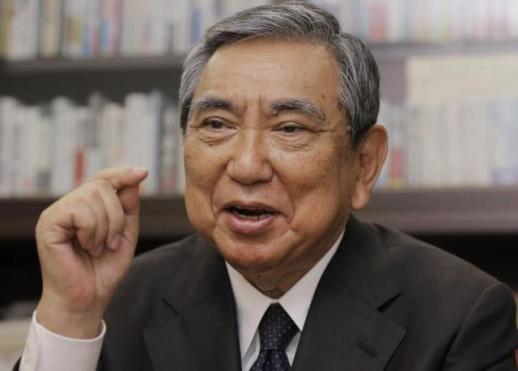 Former Japanese House of Representatives Speaker Yohei Kono Dies at 89 Yohei Kono, the former Speaker of Japan's House of Representatives who issued a heartfelt apology regarding the Japanese military's comfort women issue, has passed away at the age of 89. The Yomiuri Shimbun reported on June 10, citing sources, that Kono died on June 8. He was the second son of former Agriculture Minister Ichiro Kono. Kono graduated from Waseda University and was first elected to the House of Representatives in 1967, serving 14 consecutive terms. In 1976, he left the Liberal Democratic Party (LDP) to criticize the party's corruption amid the Lockheed scandal and later formed the New Liberal Club. He returned to the LDP in 1986 after the New Liberal Club was dissolved, and he held various positions, including Minister of Science and Technology in the Nakasone Cabinet in 1985. Kono gained widespread recognition for the Kono Statement issued during his tenure as Chief Cabinet Secretary in the Miyazawa Cabinet in 1993. On August 4 of that year, he expressed, "I would like to express my sincere apologies and remorse" regarding the comfort women issue. Kono became the LDP president just before the party lost power in July 1993. He served as Deputy Prime Minister and Foreign Minister in the Murayama Cabinet, which included the LDP, Social Democratic Party, and New Party Sakigake. However, he did not become Prime Minister after he withdrew from the LDP presidential election in 1995, marking him as the first LDP president not to ascend to the premiership. In November 2003, Kono was appointed Speaker of the House of Representatives, serving for a total of 2,029 days. He announced in September 2008 that he would not run in the next House of Representatives election. After retiring from politics, he focused on strengthening Japan-China relations.* This article has been translated by AI. 2026-06-11 09:24:00
 -
 NH Investment & Securities Raises Target Price for Samsung C&T Amid Growth Prospects NH Investment & Securities announced on June 11 that it has raised its target price for Samsung C&T from 425,000 won to 550,000 won, citing expectations for increased high-tech construction orders and growth in nuclear power and small modular reactor (SMR) projects, along with an anticipated expansion in shareholder returns. The firm also noted a higher likelihood of dividend increases and maintained its investment recommendation at "buy." Lee Seung-young, a researcher at NH Investment & Securities, stated, "The construction sector is expected to see increased high-tech orders, such as those for the Pyeongtaek P5 project, due to expanded investments from clients. We anticipate that high-tech sales will begin to ramp up in the second half of this year, leading to improved profitability." He added, "We are pursuing the expansion of large-scale nuclear power and SMR projects, participating in various initiatives including Vietnam's second nuclear power plant, Romania's Units 3 and 4, Saudi Arabia's nuclear project, Romania's SMR, and Sweden's SMR." The researcher explained, "Our performance is steadily growing based on a diversified portfolio that includes construction, bio, and trading sectors. Currently, the stock price is trading at a 55.7% discount to its net asset value (NAV)." He also mentioned, "According to the shareholder return policy for 2026 to 2028, we plan to return 60% to 70% of the dividend income from affiliates to shareholders. The special dividend from Samsung Electronics and the increased dividends from Samsung Life Insurance could lead to a rise in Samsung C&T's dividend income." Furthermore, he noted, "We have adjusted the target NAV discount from 45% to 40% to reflect the rising value of investment assets such as Samsung Electronics and Samsung Life Insurance, leading to the upward revision of the target price. We also expect additional shareholder returns based on expanded dividend income in the future."* This article has been translated by AI. 2026-06-11 09:21:00
 -
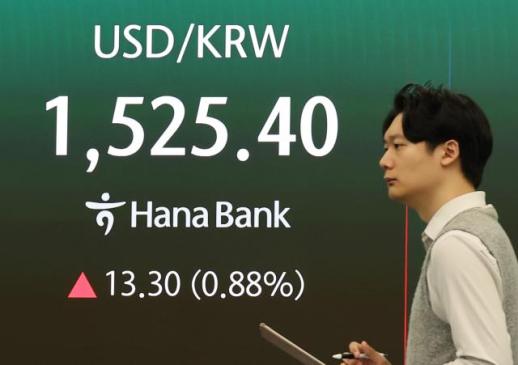 Middle East Tensions and Foreign Investor Sell-Off Drive Won-Dollar Exchange Rate Fluctuations As risk-averse sentiment spreads due to escalating tensions in the Middle East, the won-dollar exchange rate opened higher. On June 11, the exchange rate for the Korean won against the U.S. dollar was trading at 1,523.4 won as of 9:15 a.m. in the Seoul foreign exchange market. The rate opened at 1,525.5 won, up 1.3 won from the previous trading day. The rise in the exchange rate was influenced by renewed tensions in the Middle East. Following the U.S. Central Command's announcement of additional airstrike plans against Iran, Iran responded by declaring it would fully close the Strait of Hormuz. The Central Military Headquarters of the Iranian Armed Forces stated, "We will close the Strait of Hormuz and prohibit the passage of all vessels, including oil tankers and cargo ships." As risk aversion spreads in global financial markets, U.S. stock markets closed lower. On June 10, the Dow Jones Industrial Average fell 1.87% to close at 49,918.78, while the S&P 500 dropped 1.62% to 7,266.99, and the Nasdaq Composite fell 1.98% to 25,169.50. The weakness in tech stocks on the New York market is expected to impact the domestic stock market, with increased demand for dollars due to foreign capital outflows likely to put upward pressure on the exchange rate. Min Kyung-won, an economist at Woori Bank, noted, "As foreign capital exits the domestic stock market, offshore custody purchases will likely stimulate an increase in the exchange rate. Additionally, the repatriation demand arising from the process of reducing domestic stock holdings ahead of the semi-annual rebalancing will also contribute to the rise in the exchange rate."* This article has been translated by AI. 2026-06-11 09:21:00
 -
 KB Securities Raises SK Telecom's Target Price Amid AI Infrastructure Growth KB Securities announced on June 11 that it has raised its target price for SK Telecom from 130,000 won to 150,000 won, citing significant growth in the company's AI infrastructure business. The firm maintained its "buy" rating on the stock. Analyst Kim Jun-seob from KB Securities noted that SK Telecom has secured both data center and GPU as a Service (GPUaaS) segments, which are critical to its infrastructure business. Since launching its GPUaaS operations in 2024, SK Telecom has been collaborating with NVIDIA to establish a gigawatt-scale AI factory. Kim stated, "Considering the 1GW AI factory model proposed by Naver, there is potential for revenue to expand to 20 trillion won and operating profit to reach 4 trillion won in the future. The company can quickly stabilize its business by securing initial customers based on internal demand from group affiliates." The AI data center business, set to begin operations in 2027, is also viewed as a long-term growth driver. Kim pointed out that SK Telecom is progressing the fastest among data center operators, having secured confirmed tenants. He added, "Due to the nature of the data center business, stable revenue generation based on long-term contracts is possible, and many contracts include price increase clauses, enhancing revenue visibility." SK Telecom plans to sequentially open AI data centers, starting with a 40-megawatt facility in Ulsan in the second half of 2027, followed by a 63MW facility in Ulsan and a 100MW facility in Guro by 2029. Kim projected that if these data centers apply higher pricing compared to standard data centers, operating profit could increase by approximately 800 billion won by 2031.* This article has been translated by AI. 2026-06-11 09:21:00
 -
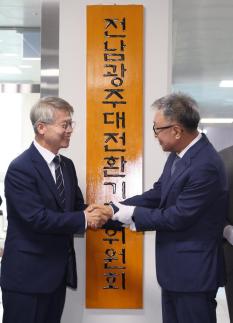 Gwangju and Jeonnam: A Vision for AI and Energy Integration “(ABC Broadcasting's question: Mayor, Gwangju has AI, and Jeonnam has energy. Can the combination of AI and energy make it the center of South Korea's industrial map?) South Korea's industrialization has centered around the Gyeongbu axis, with Seoul and the metropolitan area leading in finance and information technology, while Ulsan, Pohang, and Changwon became manufacturing hubs. In contrast, Gwangju and Jeonnam have often remained on the periphery of national development strategies. Although Gwangju has been a symbol of democracy, it has not been a key player in industrialization. However, the AI era is creating new opportunities. As data becomes the new oil and electricity gains importance comparable to semiconductors, the value of Gwangju and Jeonnam's assets is changing. Gwangju is already the only city in South Korea with a national AI data center, while Jeonnam is the country's largest renewable energy production base. Min Hyung-bae, the newly elected mayor of Gwangju and Jeonnam, has proposed a vision to combine these two assets, aiming to transform the region into South Korea's AI semiconductor capital and an energy megacity. He has particularly promised to attract a global semiconductor factory worth 10 trillion won within his first year in office, signaling a bold move for the transformation of Gwangju and Jeonnam.The question now is whether Gwangju and Jeonnam can rise from the periphery to become the center of South Korea's AI industry. AI is in Gwangju, and energy is in Jeonnam Gwangju has already become a symbolic city for South Korea's AI industry. A national AI data center has been established, and an AI cluster is being developed. While many local governments across the country talk about becoming AI cities, Gwangju is the only place with actual national-level AI infrastructure. Over the past few years, Gwangju has been working to build an AI industry ecosystem, becoming a testing ground for the country's AI policies.However, AI alone is not enough. AI consumes vast amounts of electricity. Generative AI, data centers, and the AI semiconductor industry all rely heavily on power. Thus, the world is currently engaged in a competition for electricity rather than just AI. The United States is expanding its nuclear power plants, while Middle Eastern countries are investing astronomical sums in solar power.Jeonnam holds new value at this juncture. Jeonnam possesses the largest offshore wind potential in the country and ranks among the best in solar power generation. With the addition of the hydrogen industry, it could become South Korea's largest energy production base. In the past, energy was merely a supplementary means for industry, but in the AI era, energy itself is becoming a competitive advantage. This is why Mayor Min emphasizes the combination of AI and energy. He aims to connect Gwangju's AI data center with Jeonnam's renewable energy base to create a new industrial map. AI is in Gwangju, and energy is in Jeonnam. The remaining task is to link the two. Is a 10 trillion won semiconductor factory feasible? Among Mayor Min's promises, the most eye-catching is the plan to attract a global semiconductor factory worth 10 trillion won. Many people question the feasibility of this pledge. Attracting a semiconductor factory requires massive investment and national support. Even Samsung Electronics and SK Hynix take years to decide on factory locations. Nevertheless, Mayor Min's focus on semiconductors is clear. The core of the AI era is ultimately AI semiconductors.ChatGPT cannot exist without AI semiconductors. Autonomous vehicles, robotics, and defense AI all require AI semiconductors. Recently, the government announced plans to invest 50 trillion won in the AI and semiconductor sectors over the next five years for the same reason. Mayor Min is not merely aiming to attract a single factory. He envisions creating an AI semiconductor ecosystem by linking Gwangju's AI data center and advanced packaging industry with Jeonnam's RE100 industrial complex. The establishment of a national advanced packaging demonstration center in Gwangju's High-Tech National Industrial Complex is part of this strategy. He proposes an 'AI semiconductor triangle' that connects Gwangju as a packaging hub and Jeonnam as a production base. The key point is that attracting a factory is not the end goal. When the semiconductor industry arrives, research and development will follow, and with R&D comes talent. As talent accumulates, businesses will grow. Ultimately, semiconductors are not just an industry; they are a platform that can transform the future of a city. The true significance of the integration of Gwangju and Jeonnam lies in economic integration.Many people perceive the integration of Gwangju and Jeonnam as merely an administrative reorganization. However, Mayor Min's vision of integration carries much greater significance.Gwangju excels in AI. Naju is strong in energy. Yeosu is a leader in petrochemicals. Gwangyang is robust in steel and logistics. Mokpo is the center of the marine industry. Until now, these industries have operated separately. However, in the AI era, connectivity becomes a competitive advantage. AI connects with manufacturing, energy, and logistics. Ultimately, a city's competitiveness is determined not by a single industry but by how well it can connect industries. The special city of Gwangju and Jeonnam that Mayor Min envisions is not just a simple administrative integration. It is a super-regional economic zone where AI and energy, steel and logistics, marine industries and semiconductors converge. In this sense, the special city of Gwangju and Jeonnam is closer to a South Korean version of Texas than Silicon Valley, with energy resources, advanced industries, ample land, and growth potential. The challenge is speed.The AI revolution does not wait. There is a high likelihood that the AI industrial map will be completed within the next five years. If this opportunity is missed, Gwangju and Jeonnam could lose another chance. The success of Mayor Min's administration will ultimately be determined here. Has Gwangju become a city where AI companies flock, rather than just a city that talks about AI? Has the region transformed from merely producing energy to connecting energy with industry? These are the questions Mayor Min will need to answer over the next four years. :Who is Min Hyung-bae:Min Hyung-bae has served as the mayor of Gwangju's Gwangsan District and as a member of the National Assembly. With extensive experience in local administration and legislative activities, he has focused on regional balanced development and citizen participation in politics. He has consistently advocated for Gwangju-style jobs and the promotion of local industries, recently presenting AI and advanced manufacturing as new growth engines for Gwangju and Jeonnam. In this election, he emphasized economic integration over mere administrative consolidation. He argued that Gwangju and Jeonnam should be unified as a single living and industrial zone, promising to transform the industrial structure of Gwangju and Jeonnam through AI semiconductors and renewable energy industries. He also highlighted the importance of close cooperation with the Lee Jae-myung government, pledging to deliver visible results within 100 days of the launch of the integrated special city. For Mayor Min, the next four years are not just about running a local government. It is a historical experiment to prove whether Gwangju and Jeonnam can emerge as a new axis of South Korea's AI industry.* This article has been translated by AI. 2026-06-11 09:18:00
 -
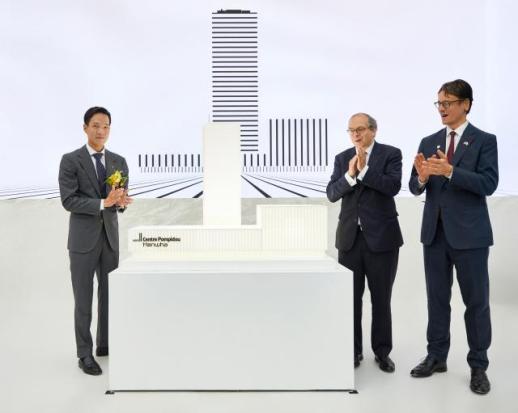 Hanwha Life's Kim Dong-won Designs AI and Digital Finance Ecosystem Kim Dong-won, president of Hanwha Life, has expanded the company's presence through digital innovation, global network development, and new business exploration. He has led Hanwha Life's digital transformation and overseas expansion as the Chief Digital Officer (CDO) and Chief Global Officer (CGO). Recently, his strategic vision has become clearer with Hanwha Investment & Securities' increased stake in Dunamu, investments in blockchain and digital assets, and the strengthening of its global fintech network. Industry observers regard Kim not merely as an insurance executive but as an architect of a new financial ecosystem where AI and digital finance converge. His upcoming challenge is to substantiate the vision of becoming an AI-based financial platform company that transcends the boundaries of insurance and finance. Redefining Finance in the Age of AI The insurance industry has long been a people-centric sector, where agents build trust through personal interactions and claims payments. However, the emergence of AI is fundamentally changing how finance operates. Kim Dong-won is an executive who recognized this shift early on. He believes that an insurance company's competitiveness will no longer stem solely from product sales or the size of its sales force. Instead, the ability to gather data, leverage AI, and build platforms will determine future success. This perspective has driven Hanwha Life to expand its digital transformation initiatives and invest in big data, fintech, and blockchain over the past few years. As CDO, Kim has led organizational restructuring and established a framework focused on digital and new business. His focus is not merely on digitization but on fundamentally transforming the operational framework of finance to be data-driven. In the AI era, financial companies will evolve from merely selling insurance to analyzing customer data and predicting future risks. AI will determine claims payments and manage assets, while AI agents will handle customer inquiries. Kim emphasizes that digital finance is a process of preparing for this future. Recently, Hanwha Financial affiliates have actively invested in blockchain, Web3, and digital assets. Hanwha Investment & Securities has increased its stake in Dunamu to 9.84%, describing the move as a strategic investment aimed at enhancing digital finance competitiveness and securing business synergies. This is more than a financial investment; it is a bet on future financial infrastructure. Just as banking evolved with the internet, finance will soon integrate blockchain and AI. Kim aims to position Hanwha Life at the forefront of this transformation. Seeking the Future Through a Global Network Another notable aspect of Kim Dong-won's leadership is his global perspective. He is more frequently mentioned in the context of the Davos Forum and the global startup ecosystem than within Hanwha Life itself. For nearly a decade, he has participated in the Davos Forum and global networking activities, building relationships with global leaders in fintech, blockchain, and digital finance. Recently, at the Davos Forum, he established a partnership with Liberty City Ventures (LCV), a U.S. Web3 and fintech investment firm, to expand global fintech investments. This approach sets him apart from traditional financial executives, who often focus on increasing domestic market share. Kim has targeted international markets from the outset, with expansions in Vietnam and Indonesia reflecting this strategy. His investments in Indonesia's Nobu Bank and the acquisition of Lippo Insurance are not merely about entering foreign markets; they are part of a strategy to build a financial platform that combines insurance, banking, and digital finance. He views overseas markets not just as regions for selling insurance but as experimental grounds for digital finance. Competition in the AI era is not about national boundaries but about platform competition. The success of financial companies will depend on who can gather more data and build better AI. This is why Kim is so focused on building a global network. AI technology and data transcend borders, and thus finance must do the same. He has chosen a strategy to break through the limitations of the Korean insurance industry by aiming for a global financial platform. Betting on Blockchain and Digital Assets One of the most significant recent changes in finance is the institutional acceptance of digital assets. Following the approval of Bitcoin spot ETFs, global financial markets have begun to view virtual assets as investment assets rather than speculative products. Kim Dong-won has been relatively quick to recognize this shift within the domestic financial sector. Hanwha Financial affiliates have consistently shown interest in not only Dunamu investments but also in STOs, RWAs, Web3 ecosystems, and blockchain platforms. He has long emphasized the importance of creating a blockchain ecosystem. Kim envisions a future where stocks, real estate, and bonds are tokenized, and even insurance could transition into digital assets. In this process, AI will serve as the brain of finance, while blockchain will become the trust infrastructure. We are moving toward an era where AI makes decisions and blockchain records them. Amid these changes, Hanwha Financial aims to transform from a traditional insurance company into a digital finance platform. However, risks remain. The digital asset market still faces significant regulatory uncertainties, and the blockchain industry is still in its early stages. Yet, entrepreneurship is fundamentally about finding opportunities amid uncertainty. Kim Dong-won places greater value on the potential of future finance than on the stability of traditional insurance. Is He a Future Financial Entrepreneur or Just the Son of an Insurance Executive? Perceptions of Kim Dong-won vary. Some focus first on his background as a third-generation owner, while others recognize him as a leader in digital finance and global business. The key will be his future achievements. Until now, it has been a time for investment and preparation. The time for harvesting is approaching. The Indonesian venture must yield results. Investments in digital finance must also translate into tangible profits. Strategies involving AI and blockchain need to be proven through concrete business models. Historically, the financial industry has prioritized stability above all else. However, in the AI era, growth cannot rely solely on stability. Embracing new technologies and pioneering new markets is essential. In this regard, Kim Dong-won is closer to an entrepreneur than a traditional financial executive. He is not just running an insurance company; he is attempting to design the future of finance. What he ultimately aims to create may not be an insurance company but a new financial platform that integrates AI, data, blockchain, and a global network. If his vision becomes a reality, Kim Dong-won will be remembered not just as the president of Hanwha Life but as a symbol of generational change in the Korean financial industry.* This article has been translated by AI. 2026-06-11 09:18:00
 -
 Trump Sparks Controversy with 'I Love Inflation' Comment Amid Rising Prices Donald Trump, the President of the United States, faced backlash on June 10 after stating he "loves inflation" in response to rising consumer prices, which have reached their highest level in over three years. According to reports from AP and the New York Post, during a press briefing at the White House, Trump was asked about concerns regarding the increase in the Consumer Price Index (CPI) for May. He responded, "The numbers are great. Do you know what I really love? I love inflation." The U.S. Bureau of Labor Statistics reported that the CPI rose by 4.2% in May compared to the same month last year, marking the highest increase since April 2023. Month-over-month, the index increased by 0.5%, with energy prices accounting for over 60% of the total monthly rise. Trump later clarified that his comments were related to the surge in energy prices due to the war in Iran. He stated, "Once the war is over, prices will come down," and claimed that the U.S. is supporting large-scale oil shipments through the Strait of Hormuz. He also mentioned that U.S. forces had removed 22 ships and supplied over 100 million barrels of oil to the global market through covert operations. However, AP noted that there is no official data to support Trump's claims. His remarks came on the same day that high inflation was attributed to the economic burdens of the war in Iran, fueling the controversy. As the backlash grew, Trump explained in a phone call with the New York Post that his comments were taken out of context. He said he was referring to the inflation figures that would improve once the war concludes, asserting, "The numbers will come down significantly, and that’s what I meant." This controversy follows recent criticism Trump received for his comments regarding the financial burdens on Americans. On May 12, when asked if the potential for an agreement with Iran was affected by Americans' financial situations, he replied, "Not at all," adding, "I don’t think about the financial situation of Americans." His statement, which prioritized preventing Iran from obtaining nuclear weapons, drew criticism for being insensitive to the financial struggles of the public.* This article has been translated by AI. 2026-06-11 09:18:00