
Journalist

Andrew Urquhart
-
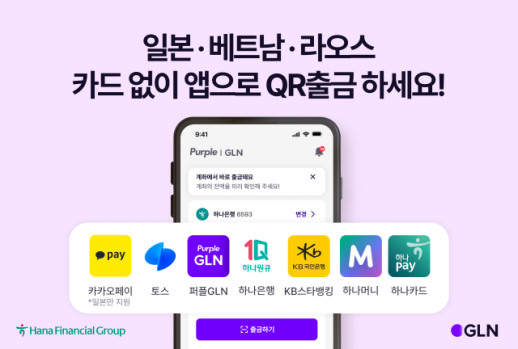 Hana Bank's GLN Expands Overseas QR Withdrawal Partnerships, Enabling Cash Withdrawals via KakaoPay in Japan Hana Bank's subsidiary, GLN International, is expanding its overseas QR withdrawal service in Japan, Vietnam, and Laos. This enhancement allows users of major domestic financial and platform apps to withdraw local currency without the need for currency exchange. The expansion focuses on the Japanese market, increasing the number of partner app channels from three to seven. Notably, KakaoPay, which enjoys high usage rates in Japan's mobile payment sector, has been added to the list of domestic partner apps. As a result, travelers to Japan can now access QR withdrawal services through not only Hana OneQ, Hana Money, and Toss apps but also Hana Pay, KakaoPay, Purple GLN, and KB Star Banking apps. Withdrawals can be made at Seven-Eleven convenience store ATMs and Seven Bank ATMs located in airports throughout Japan. QR payments are also accepted at various merchants, including convenience stores, clothing shops, and health and beauty stores. In Vietnam and Laos, users can access QR withdrawal services through six apps: Hana OneQ, Hana Money, Hana Pay, Toss, Purple GLN, and KB Star Banking. In Vietnam, local currency can be withdrawn at BIDV Bank ATMs, while in Laos, withdrawals can be made at BCEL Bank ATMs. Lee Seok, CEO of GLN, stated, "With the expansion of the QR withdrawal service in Japan, Vietnam, and Laos, more customers can enjoy cash withdrawal services abroad using familiar domestic apps without inconvenience. We will continue to lead the way in providing a simple withdrawal experience for travelers without the need for currency exchange or physical cards."* This article has been translated by AI. 2026-05-13 17:11:01
 -
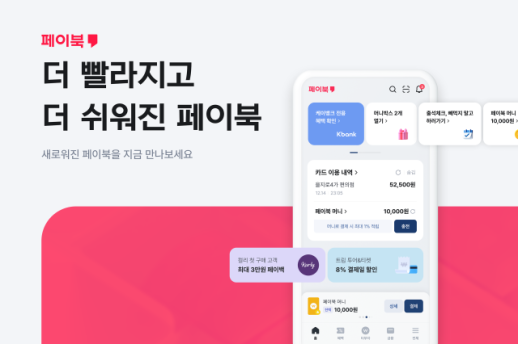 BC Card's Paybook Grows to 15 Million Users as a Lifestyle Finance Platform BC Card's lifestyle finance platform, Paybook, is expanding its customer reach by focusing on convenient payment options and lifestyle-oriented app technology services. As of this month, BC Card reports that Paybook has accumulated approximately 15 million members. The monthly active user count for the first quarter of this year has also increased by over 16% compared to the same period last year. The user demographic is diverse, spanning not only those in their 20s and 30s but also individuals aged 40 and above, indicating its growth as an all-age platform. Paybook allows users to manage card products issued by over 40 BC Card partner companies within a single app. Users can make QR code payments at various offline and online merchants, including convenience stores, cafes, and supermarkets, without needing a physical card, simply by linking their bank accounts. The platform has also enhanced its convenience features. Users can register mobile vouchers within the app and connect their frequently used brand memberships for easy point accumulation by simply presenting a barcode. Recently, Paybook has expanded its app technology features aimed at helping users save on living expenses. The 'MyTag' service allows customers to select desired brand or industry benefits and receive discounts when paying with BC Card. The 'Shopping Rewards' feature provides additional points when shopping at major online retailers like Coupang and Ali. Additionally, the 'AI Hot Deal' service recommends special offers and discounts based on customer spending patterns. Paybook also offers a spare change investment service that collects change from card payments to invest in domestic and international stocks, along with an AI-based robo-advisor investment service.* This article has been translated by AI. 2026-05-13 17:10:14
 -
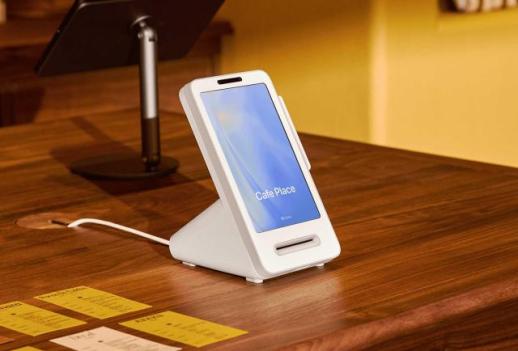 The Evolving Landscape of Payment Methods: Competition Intensifies in Offline Transactions The competition in the mobile payment market is shifting from securing app users to establishing dominance in offline payment infrastructure. As the mobile app market reaches saturation, the battle for control over payment terminals and networks is intensifying.According to a report released in January by global market research firm Mordor Intelligence, near-field communication (NFC) payment methods accounted for 54.2% of South Korea's mobile payment market last year.As a result, the penetration rate of NFC terminals in South Korea is expected to have increased significantly this year. The country's card payment infrastructure has primarily been built around magnetic secure transmission (MST) and integrated circuit (IC) terminals. Even after the introduction of Apple Pay, NFC-based payments remained at around 10% as of the end of last year.Recently, major tech companies Naver Pay and Toss have ramped up their competition to distribute their own NFC terminals. Toss is leading the charge, expanding its reach through its subsidiary Toss Place, which has been distributing the smart terminal Toss Front since 2023. As of April, the number of Toss Front installations surpassed 330,000. Initially focused on popular areas in Seoul, such as Seongsu and Hongdae, the infrastructure is now expanding to traditional markets and regions outside the metropolitan area.Naver Pay, a latecomer in the offline market, is accelerating its efforts. Its smart terminal, Npay Connect, launched in November, supports card payments, mobile payments, QR codes, and facial recognition payment service Face Sign. The company is employing a two-track strategy targeting both small businesses and franchises. A Naver Pay representative stated, "While we cannot disclose specific distribution figures, we believe we have exceeded our internal targets within five months of launch," adding that they are also working to introduce terminals at Paris Baguette in the second half of the year, which will increase availability in offline stores.Kakao Pay is focusing on expanding its QR-based payment network rather than distributing its own terminals. The company has opted to collaborate with existing point-of-sale (POS) and value-added network (VAN) providers instead of building its own hardware. A Kakao Pay representative emphasized, "The key is not to own the terminals but to enable Kakao Pay transactions anywhere," noting that they are expanding offline touchpoints through QR orders, kiosk payments, and international QR payments.Industry experts believe that control over offline payment data will be a crucial factor in determining the future success of the mobile payment market. As mobile payments expand beyond online transactions into the offline consumer landscape, companies that secure payment infrastructure can achieve both user lock-in effects and data competitiveness.Jeong Yu-shin, a professor at Sogang University's Business School, stated, "Fintech platforms have traditionally grown around non-face-to-face services, but they are now transitioning to strengthen offline touchpoints to enhance customer loyalty. Online services allow users to switch easily to better platforms, so there is a trend to combine offline infrastructure to solidify customer bases."The competition in offline payments is expected to intensify further if Apple Pay expands its partnerships with card issuers. Seo Ji-yong, a professor at Sangmyung University’s Business School, remarked, "Once Apple Pay is introduced, fintech companies will seek partnerships to expand in the offline market, leading to intensified competition for market share in face-to-face payment channels."* This article has been translated by AI. 2026-05-13 17:09:46
 -
 KB Pay Expands Beyond Payments to Integrate Financial and Daily Services KB Kookmin Card's payment platform, KB Pay, is evolving from a payment app into a comprehensive platform that connects financial and daily services offered by KB Financial Group. Building on its payment capabilities, KB Kookmin Card is enhancing its asset management services. Through MyData, users can link accounts, cards, insurance, loans, and investment information scattered across various financial institutions, allowing them to manage their assets and spending. The service also provides personalized asset and spending analysis reports, free remittances, free currency exchanges, and credit score management. The platform features services linked to KB Financial Group affiliates. The automotive service, KB Autofit, supports vehicle price inquiries, used car transactions, and automotive product shopping. Users can also access car selling and home delivery services through KB Capital's KB Chachacha. KB Real Estate offers features such as property registration, sales information, housing recommendations based on conditions, and price inquiries. KB Pay is also expanding its non-financial services. The number of customers using KB Pay's shopping and travel services surpassed 10 million just two and a half years after its official launch. The shopping tab offers special deals, local community collaboration sections, gift options, and rewards from partner shopping malls, while the travel tab provides access to flights, accommodations, car rentals, and domestic and international travel packages. Thanks to this service expansion, the number of KB Pay subscribers exceeded 16 million in January of this year. Monthly active users increased from 7.36 million in 2023 to 9.33 million in 2025.* This article has been translated by AI. 2026-05-13 17:09:00
 -
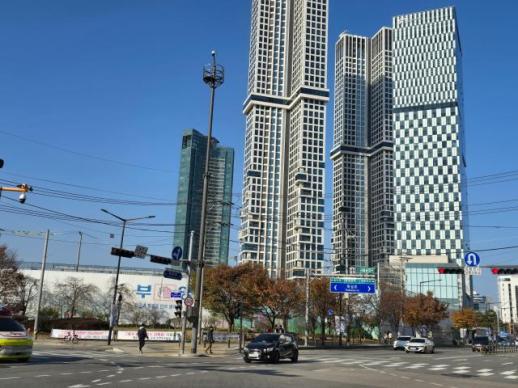 Buhyung Group Revives Long-Stalled Development in Seongsu-dong Buhyung Group is set to advance the development of the long-stalled Buhyung Hotel site in Seongsu-dong, Seongdong-gu, Seoul, which has been inactive for 17 years. The company plans to create a high-end mixed-use complex that combines residential, hotel, and cultural facilities, expanding its business scope beyond just housing.According to the construction industry on May 13, Buhyung Group has recently begun design modifications for the 10,900-square-meter site in the Ttukseom district of Seongsu-dong. The site, which was acquired from the city of Seoul for 370 billion won in 2009, is now estimated to be worth between 5 trillion and 6 trillion won due to rising land prices.Earlier this year, following Chairman Lee Joong-geun's commitment to resume the project, groundwork and other preliminary construction activities were restarted. However, the project is currently on hold for design changes aimed at optimizing certain structural elements and internal facilities to align with recent market trends.The plan includes two mixed-use buildings with eight underground floors and 49 above-ground floors. The large-scale project will feature a five-star hotel with 604 rooms, 332 residential units, and a multipurpose performance venue with approximately 900 seats. Industry experts believe that Buhyung's design modifications will further enhance the luxury aspect of the residential sector, considering the market prices of nearby high-end complexes like Acro Seoul Forest.A Buhyung representative stated, "The design changes are being made within the framework of the original plan, and we aim to commence full-scale construction and project execution by the end of the year."From a financial perspective, the Seongsu-dong development is a pressing issue. To alleviate the financial burden on some subsidiaries, such as Donggwang Housing, which have seen their debt ratios rise due to land acquisitions in Hannam-dong, early sales and cash flow generation from the Seongsu-dong site are essential.Buhyung is also preparing to develop other key sites, including the Yongsan Asia Apartment site, but its current focus appears to be on Seongsu-dong.Changes in the external environment are also a factor in the project's revival. In response to the government's tightening regulations on non-business real estate, Buhyung is actively pursuing tangible project execution. This clarifies that the company is not merely holding onto idle land but is committed to its core business objectives through direct construction and supply of designated project sites.However, Buhyung faces challenges due to unfavorable construction conditions. Concerns are being raised internally about the timing for actual construction, given the rising costs of raw materials and labor. In a high-inflation environment, creating a large-scale high-end mixed-use complex could pose significant profitability challenges.A Buhyung Group official remarked, "Preparations for project resumption are underway across the company, and recent hiring efforts support this initiative. We will finalize specific project details once the design modification process is completed."* This article has been translated by AI. 2026-05-13 17:03:27
 -
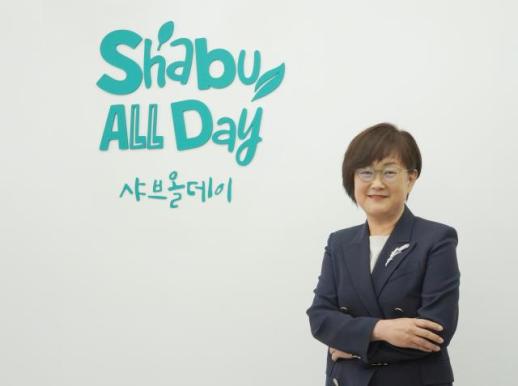 Jollibee Appoints Former Samsung Executive Myung-Joo Song as CEO of Shabu All Day A former Samsung Electronics executive has been appointed as the new CEO of Shabu All Day, a shabu-shabu brand. This marks the first executive appointment since the global restaurant company Jollibee Foods Group acquired All Day Fresh. All Day Fresh announced on May 13 that it has appointed Myung-Joo Song, a former vice president at Samsung Electronics, as its new CEO. Song joined Samsung Electronics as part of its first female graduate recruitment program and worked there for over 30 years, overseeing the brand strategies and global operations for premium appliance brands such as 'Bespoke' and 'Grande.' He has held various positions, including head of the Sales Innovation Group and Global PM Group, and has expertise in brand and marketing. The decision to appoint someone with no prior experience in the restaurant industry reflects Jollibee Foods' strategic calculations. The company aims to develop Shabu All Day into a leading global brand representing K-food, prioritizing the new CEO's brand planning skills and global business experience. Earlier, Jollibee Foods acquired 100% of All Day Fresh's shares for approximately 130 billion won through its Korean subsidiary, Jollibee-K, and a consortium with private equity firm Elevation Equity Partners Korea. With the completion of this acquisition, All Day Fresh has fully separated from its former parent company, Myung-Ryun-Dang, and is now officially a subsidiary of Jollibee Foods Group. Song stated, "I will integrate the food and beverage operational know-how accumulated by the parent company into Shabu All Day to provide greater value to consumers while creating a sustainable growth model that benefits franchise owners. I plan to strengthen management focused on the field, keeping in mind that customer trust is the essence of this business." Shabu All Day has grown by offering unlimited shabu-shabu made with premium beef and fresh vegetables at affordable prices. Since opening its first location in July 2023, it has expanded to 172 stores nationwide in just three years.* This article has been translated by AI. 2026-05-13 17:00:14
 -
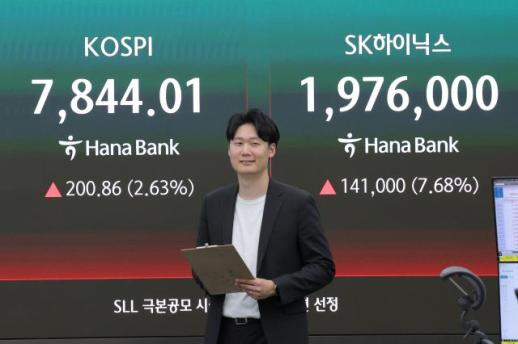 KOSPI Rebounds Dramatically, Closing at Record High of 7,844 The KOSPI index rebounded dramatically, closing at a record high after initially dropping below 7,400. The index finished above 7,800, buoyed by buying from individual and institutional investors. On May 13, the Korea Exchange reported that the KOSPI closed at 7,844.01, up 200.86 points (2.63%) from the previous trading day. The index opened at 7,513.65, down 129.50 points (1.69%), and fell to the 7,400 level shortly after the market opened but quickly reversed its losses. Lee Kyung-min, a researcher at Daishin Securities, noted, "Domestic risks have eased, and expectations ahead of the upcoming U.S.-China summit have led to a successful turnaround. Samsung Electronics, SK Hynix, and SK Square all started lower but turned positive and expanded their gains." Seo Sang-young, a researcher at Mirae Asset Securities, commented, "The market appears to be more sensitive to short-term supply and news flow than macroeconomic variables. Therefore, for the time being, changes in supply and demand focused on specific sectors and large-cap stocks are likely to determine the direction of the index, and we expect continued volatility during trading hours." In the securities market, individuals and institutions made net purchases of 1.8869 trillion won and 1.6873 trillion won, respectively, driving the index's rebound. In contrast, foreign investors sold a net 3.7583 trillion won. Major stocks generally showed strength. Samsung Electronics, which initially fell over 5%, managed to rebound and closed at 284,000 won, up 1.79% from the previous day. SK Hynix also started weak but turned positive, closing at 1,976,000 won, up 7.68%. During the day, it reached as high as 1,990,000 won, setting a new record. Other notable gainers included SK Square (5.68%), Hyundai Motor (9.91%), HD Hyundai Heavy Industries (3.68%), Samsung Electro-Mechanics (7.41%), and Kia (6.65%). Conversely, LG Energy Solution (-2.93%), Doosan Enerbility (-4.46%), and Samsung C&T (-1.49%) saw declines. The KOSDAQ index closed at 1,176.93, down 2.36 points (0.20%) from the previous day. After a weak start, the index attempted to rebound but ultimately closed lower due to continued foreign selling. In the KOSDAQ market, foreign and institutional investors sold a net 601.9 billion won and 2.9 billion won, respectively. Meanwhile, individual investors made net purchases of 604.8 billion won, indicating a willingness to buy on dips. The performance of large-cap stocks was mixed. EcoPro BM (-4.09%), EcoPro (-3.36%), Kolon TissueGene (-11.53%), and Samchundang Pharm (-3.86%) declined, while Alteogen (3.51%), Rainbow Robotics (2.69%), Rino Technology (3.60%), JUSUNG Engineering (7.69%), and Wonik IPS (4.96%) finished higher.* This article has been translated by AI. 2026-05-13 16:56:21
 -
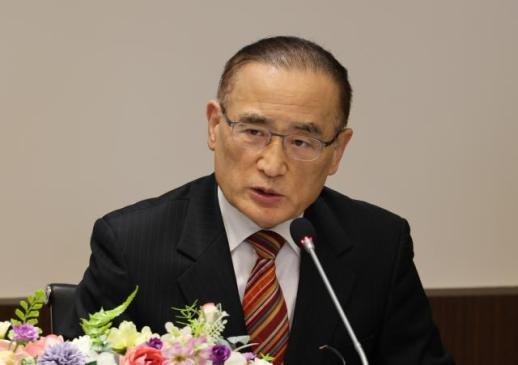 National Security Chief: No Evidence to Confirm Drone Attack on Namwoo Wiesungrak, head of the National Security Office, stated on May 13 that there is no evidence to confirm that the aircraft involved in the incident with the Namwoo in the Strait of Hormuz was a drone. Speaking at a meeting with the Korean Newspaper and Broadcasting Editors Association in Seoul, Wiesungrak emphasized the need for further investigation, saying, "We do not have grounds to conclude that this is a drone. We need to consider the results of the investigation so far and conduct additional inquiries to make a determination." He added, "If it is not a drone, it could be a missile, and various possibilities remain open." Wiesungrak also noted, "Even if it is a drone, it does not necessarily mean that it poses a problem for certain countries." Regarding comments made by U.S. President Donald Trump, who stated that a South Korean cargo ship was attacked by Iran while acting independently, Wiesungrak said, "I am not sure what basis President Trump had for saying it was Iran. Discussions are ongoing between the U.S. and South Korea, but I have not received a clear answer regarding Trump's basis from the U.S. side." He mentioned that military roles are being considered as part of efforts to ensure free and safe navigation in the Strait of Hormuz. "While I cannot provide specific details, there could be military roles at various levels, and we are currently reviewing how far we can go starting from lower levels," he added.* This article has been translated by AI. 2026-05-13 16:54:45
 -
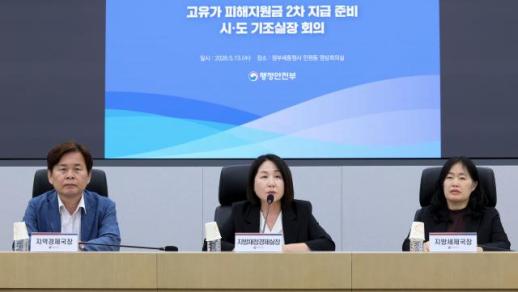 Ministry of Interior and Safety Prepares for Second Round of High Oil Price Relief Payments The Ministry of Interior and Safety held a meeting on May 13 with planning and coordination heads from 17 cities and provinces to review preparations for the second round of high oil price relief payments, set to begin on May 18. During the meeting, officials addressed inconveniences experienced by residents during the first round of payments and requested local governments to ensure a smoother process for the upcoming distribution. Since the second round aims to cover 70% of the population, officials emphasized the need to secure sufficient quantities of prepaid cards and other offline payment methods in anticipation of a significant increase in applicants compared to the first round. They also urged local governments to utilize community broadcasting and social media channels to effectively inform residents about eligibility, application procedures, and payment amounts. The ministry is committed to addressing welfare gaps. It highlighted that individuals who missed the opportunity to apply in the first round can still do so during the second round and stressed the importance of outreach efforts to ensure vulnerable populations receive the support they need. Additionally, the ministry provided guidance to local governments on executing contracts in response to rising international commodity prices. They called for thorough inspections and oversight to prevent substandard construction in various projects, including forest restoration efforts. Finally, officials emphasized the importance of preparing adequately for the stable operation of local tax delinquency management teams. Local governments that effectively manage these teams will be supported through incentives such as special grants. Song Kyung-joo stated, "Thanks to the meticulous preparations by local governments, the first round of high oil price relief payments was conducted without significant confusion. We will ensure that the second round, starting on May 18, proceeds smoothly through close cooperation between central and local governments." The second round of high oil price relief payments will be distributed to the bottom 70% of income earners based on the total health insurance premiums assessed for households in March of this year. Single-person households with workplace insurance will receive 130,000 won, two-person households will receive 140,000 won, while single-person households with regional insurance will receive 80,000 won, and two-person households will receive 120,000 won.* This article has been translated by AI. 2026-05-13 16:51:24
 -
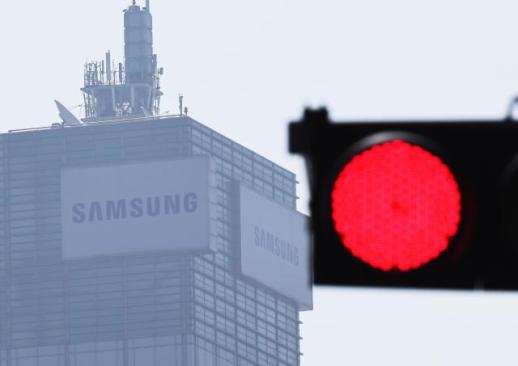 Samsung strike threat sparks debate over South Korea's emergency labor powers SEOUL, May 13 (AJP) - Chips are responsible for fueling the South Korean economy against the Middle East headwinds and historic stock rally, which explains why policy chiefs from the president to cabinet ministers are going all-out to prevent full-fledged walkouts by chipmakers and even flag the option of a rarely used emergency power to disallow a strike. The debate intensified after mediation talks between Samsung Electronics and its labor unions collapsed Wednesday dawn, pushing the National Samsung Electronics Union (NSEU) toward an 18-day strike scheduled to begin May 21. The presidential office sought to cool speculation over immediate intervention, saying there was still time before the planned strike date and that the government would continue supporting dialogue between labor and management. Under South Korean labor law, the labor minister can invoke emergency arbitration when a strike is deemed to threaten public welfare or cause “serious harm” to the broader economy. If the measure is invoked, unions must immediately suspend all strike activity for 30 days while the National Labor Relations Commission oversees mediation and possible compulsory arbitration. The measure has rarely been invoked and is generally reserved for disputes authorities believe could seriously disrupt the economy or public life. Concerns are growing over Samsung’s labor dispute because of the semiconductor industry’s outsized role in the South Korean economy. Chips account for roughly 35 percent of the country’s exports, while Samsung Electronics alone represents about 25.7 percent of the benchmark KOSPI’s total market capitalization. The union estimated that a prolonged strike running from May 21 to June 7 could trigger economic losses exceeding 40 trillion won, while also risking supply chain disruptions and customer defections during a global semiconductor boom. According to the Korea Development Institute, a 10 percent decline in semiconductor exports could reduce South Korea’s gross domestic product by approximately 0.78 percent, underscoring the economy’s heavy dependence on the chip industry. The standoff has also spilled into court. A hearing over Samsung Electronics’ request for an injunction against what it described as illegal strike actions concluded Wednesday at Suwon District Court, with the court expected to decide before the planned walkout whether to grant the injunction. Union officials argued during the hearing that the planned strike would remain within legal boundaries and would not involve violence or occupation of production facilities. “We emphasized to the court that there would be no illegal labor action, intimidation, violence or occupation of production facilities,” NSEU leader Choi Seung-ho told reporters after the hearing. The union also rejected Samsung’s warning that work stoppages could damage wafers in semiconductor production lines, saying there are multiple technical measures available to prevent contamination and losses during a strike. Union lawyers additionally accused Samsung management of unfair compensation practices. Attorney Hong Ji-na, representing the union, claimed workers accepted zero bonuses in 2024 after management cited weak semiconductor market conditions, only to later discover executives had shared roughly 388 billion won in bonuses among themselves. She also warned that Samsung’s competitiveness could weaken if high turnover and declining recruitment continue in the semiconductor division, where retaining skilled engineers is increasingly critical. Still, some economists oppose direct government intervention despite the scale of the potential fallout. “This is not an issue tied to the survival of the country,” said Kim Jin-young, an economics professor at Korea University. “Government intervention would only increase uncertainty for both labor and management and distort their decision-making process.” Kim argued wage disputes should ultimately be resolved through negotiations between companies and workers rather than state intervention, warning that repeated government involvement could weaken incentives for compromise and innovation over the long term. The risks are heightened by the nature of semiconductor manufacturing itself. Chip fabrication plants operate continuously in ultra-clean environments with tightly controlled temperature and humidity conditions, unlike traditional industries such as automobiles or home appliances that rely on segmented production lines. Industry experts say restarting halted semiconductor production can cause disproportionately larger losses than in conventional manufacturing. The structure of the industry has also fueled debate over whether traditional labor union models fit semiconductor manufacturing. Major global chipmakers such as Intel and TSMC do not house powerful unions, while Samsung itself remained effectively union-free until 2020. 2026-05-13 16:46:53