
Journalist

Avidan Kent
-
 South Korea Elevates National Tourism Strategy Council to Presidential Level South Korea will move its top tourism policy body, the National Tourism Strategy Council, from the prime minister’s office to the president’s office, a step aimed at developing tourism as a national strategic industry. The Ministry of Culture, Sports and Tourism said April 21 that the Cabinet approved revisions to the Tourism Promotion Act reflecting the change. With the amendment, the council will be formally run under a president-led system, strengthening its standing. Its mandate will also expand beyond drafting tourism promotion plans to include evaluating implementation results and feeding those findings back into policy. The ministry said the goal is to review tourism performance across ministries and reinforce interagency coordination and policy effectiveness. In February, at the 11th National Tourism Strategy Council meeting, the president attended in person and stressed tourism as a key driver of the national economy and regional development. As the first follow-up step to the overhaul, the ministry and the Korea Tourism Organization will hold a public contest for tourism policy proposals from April 22 through May 12. The contest will collect ideas in eight areas centered on measures announced at the 11th council meeting under the theme, “A major shift in inbound tourism, a major leap in regional tourism.” Participants can submit proposals through the event page on the Korea Tourism Organization’s “VisitKorea” website. After reviews by experts and private-sector committee members, 20 proposals will be selected. One top prize winner will receive 1 million won, two excellence award winners will receive 500,000 won each, and 17 encouragement award winners will receive 100,000 won each. Results will be announced May 26, and selected proposals are to be reflected in tourism policy. Kang Jeong-won, director general for tourism policy, said the upgrade to a presidential body has strengthened the system’s execution and coordination functions. He urged broad public interest and participation in the contest so the government can identify policies needed in the field.* This article has been translated by AI. 2026-04-21 11:48:28
 -
 Samsung Bioepis Unveils Preclinical Data on First New Cancer Drug Candidate at AACR 2026 Samsung Bioepis said it has disclosed preclinical data for SBE303, a next-generation antibody-drug conjugate (ADC) cancer drug candidate, for the first time at the American Association for Cancer Research’s AACR 2026 annual meeting, as it moves beyond biosimilars to accelerate development of its own new medicines. The company said the data were presented at the meeting in San Diego, held April 17-22 (local time). SBE303 is a next-generation ADC designed to target nectin-4, a protein overexpressed in tumor cells. Samsung Bioepis said it is its first new-drug pipeline developed through joint research and licensing agreements under an open-innovation strategy with domestic and overseas partners Intocell (South Korea) and Frontline (China). According to preclinical results presented in an on-site poster session on April 20 (local time), SBE303 showed improved tumor-cell binding specificity and more efficient intracellular drug delivery compared with existing nectin-4-targeted therapies, the company said. In safety assessments, Samsung Bioepis said SBE303 produced improved results in tests for skin toxicity, a common adverse reaction associated with nectin-4-targeted therapies. It also said no interstitial lung disease (ILD), a serious side effect that can cause irreversible damage, was observed. The company said the highest non-severely toxic dose (HNSTD) was 40 mg/kg, adding that the finding supports the potential for clinical use by securing a wide therapeutic safety margin. Samsung Bioepis said it has begun global Phase 1 clinical trials of SBE303 in the United States and South Korea. It said it plans to evaluate drug safety and early efficacy in 149 patients with advanced refractory solid tumors from March this year through July 2030. 2026-04-21 11:42:20
 -
 Beijing Auto Show Opens April 24, Runs Through May 3 The Beijing International Automotive Exhibition, known as the Beijing Auto Show and billed as the world’s largest auto exhibition, will be held in Beijing from April 24 to May 3. This year marks its 19th edition. The show will use two venues — the China International Exhibition Center and the Capital International Convention Center — with a total exhibition area of about 380,000 square meters. Organizers expect more than 1,000 companies to take part, including automakers and auto-parts suppliers. April 24-25 are press days for media, followed by industry-only access on April 26-27. The show will be open to the public from April 28 through May 3. The Beijing Auto Show alternates annually with the Shanghai Auto Show. Organizers said 892,000 people visited the event in 2024. 2026-04-21 11:40:06
 -
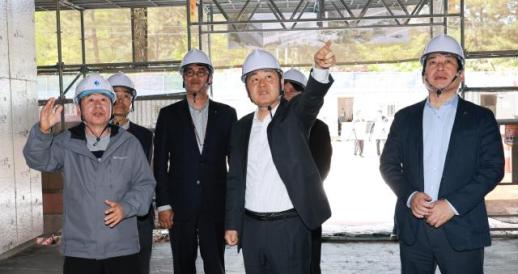 Jeonbuk Gov. Kim Kwan-young inspects Jeongeup biotech sites, children's 'Miracle Playground' Kim Kwan-young, governor of Jeonbuk Special Self-Governing Province, visited Jeongeup on the 21st to inspect advanced bio industry sites and a children’s play facility known as the “Miracle Playground,” the province said. The trip was aimed at reviewing on-the-ground preparations for workforce training and technology commercialization support in advanced bio, a sector where Jeonbuk says it has a competitive edge, and at checking local living conditions for children. Kim first toured the Pharmaceutical Industry Future Workforce Training Center at the Jeongeup Advanced Science Industrial Complex. He received a briefing on construction and future operations and then checked the site. The project, running through 2026, is designed to build a demand-tailored training base for key pharmaceutical manufacturing specialists. Education and hands-on training facilities equipped with GMP-grade process equipment are being built. The center aims to train about 1,200 people a year, including students, job seekers and workers. “The core of competitiveness in the pharmaceutical and bio industries ultimately comes down to people,” Kim said, calling for thorough preparations for operations and stronger training programs to produce job-ready talent. Kim then visited the Jeonbuk Advanced Bio Research Division of the Korea Institute of Toxicology to hear an update on the “Jeonbuk Advanced Bio Boost-Up Platform Construction Project.” He also held a meeting with heads of government-funded research institutes, including the Korea Institute of Toxicology, the Jeonbuk branch of the Korea Research Institute of Bioscience and Biotechnology, and the Advanced Radiation Technology Institute of the Korea Atomic Energy Research Institute. The boost-up platform project, set for 2025-2027, focuses on technology commercialization using foundational technologies, integrated nonclinical testing support, stage-by-stage support for advanced bio companies, and assistance with investment attraction and global expansion. Multiple government-funded institutes are participating, the province said. Kim later inspected the Miracle Playground built in the Naejangsan cultural tourism area, reviewing operations and safety management. The playground was designed to reflect children’s needs by age and includes seven themed areas: an infant zone, a spiderweb zone, a maple tree zone, a sand zone, an ecological pond zone, an alleyway zone and a forest play zone. The facility is intended to let children enjoy creative play and hands-on activities in a nature-friendly setting, the province said. “It is very meaningful that a space where children can safely run and build creativity has taken root in the community,” Kim said, pledging continued provincial attention to child-friendly environments and related policies. Namwon and Gimje selected for social solidarity economy innovation model program Jeonbuk Special Self-Governing Province said on the 21st that Namwon and Gimje were selected in a Ministry of the Interior and Safety competition for the “2026 Social Solidarity Economy Innovation Model Discovery and Expansion Project,” securing a total budget of 20 billion won, including 10 billion won in national funding. The ministry is launching the program this year with 8.5 billion won to encourage social solidarity economy organizations to work with local companies and groups to address community problems and build a sustainable economic ecosystem, the province said. Namwon was chosen in the “local circular economy” category for its “Wolmae Stay” project, while Gimje was selected in the “regional revitalization leading” category for its “Jjaemmaero Dadaitseon” project, the province said. Namwon’s Wolmae Stay will use idle space to build a Namwon-style complex hub for longer stays and self-reliance. The city plans to run programs for retirees from the Seoul metropolitan area to attract a “living population,” while involving vulnerable groups, including young people preparing for independent living, as facility staff to support both housing and self-reliance. Gimje’s Jjaemmaero Dadaitseon aims to link an old downtown commercial district with surrounding rural areas through a shared-growth, circular model. Centered on an area where traditional markets and historical and cultural sites coexist, the city plans to operate a night market, cultural and arts programs, and pop-up events in vacant stores to build a self-sustaining local ecosystem where young sellers and local merchants can grow together. Support may continue for up to three years, depending on annual evaluations, the province said. It expects the program to help counter population decline risks and boost the local economy.* This article has been translated by AI. 2026-04-21 11:39:14
 -
 KOSPI hits fresh record as chip rally lifts market ahead of looming US-Iran talks SEOUL, April 21 (AJP) - Asian markets mostly opened higher on Tuesday amid growing expectations ahead of looming talks between the United States and Iran to end the prolonged conflict in the Middle East. In Seoul, the benchmark KOSPI hit an all-time high of 6,355.39 during morning trading, breaking the previous intraday record set on Feb. 27, while the junior KOSDAQ edged down 0.03 percent to 1,174.52. Shareholder returns are gaining momentum. Total cash dividends by KOSPI-listed firms reached a record high of 35.1 trillion won ($24 billion) in 2025, up 15.5 percent from 2024, with payout ratios rising to a five-year high of 39.83 percent. Firms participating in the government's value-up program — an initiative aimed at enhancing corporate value and shareholder returns — accounted for 87.7 percent of total dividends, while companies that pay higher dividends made up nearly two-thirds of the total. Large-cap stocks mostly traded higher. Among semiconductor-related shares, Samsung Electronics rose 1.98 percent to 218,750 won, and SK hynix jumped 4.80 percent to 1,222,000 won, as brokerages raised target prices on expectations of stronger second-quarter earnings. Hyundai Motor climbed 1.90 percent to 537,000 won and Kia added 1.08 percent to 159,100 won. Battery and energy stocks posted strong gains, with LG Energy Solution surging 8.86 percent to 467,000 won, Samsung SDI advancing 9.12 percent to 742,000 won and Doosan Enerbility rising 2.61 percent to 113,900 won. However, Samsung Biologics fell 1.00 percent to 1,589,000 won and Hanwha Aerospace slipped 0.49 percent to 1,418,000 won. Financial shares were mixed, with KB Financial edging down 0.37 percent to 160,300 won, while Samsung Life Insurance rose 0.49 percent to 254,750 won and Samsung C&T added 1.17 percent to 303,500 won. Among the KOSDAQ stocks, EcoPro rose 3.98 percent to 161,800 won and EcoPro BM gained 3.81 percent to 218,000 won. Samchundang Pharm also edged up 0.52 percent to 480,000 won, and HLB added 1.27 percent to 64,000 won. On the downside, Alteogen slipped 0.27 percent to 370,500 won and Rainbow Robotics fell 1.15 percent to 601,000 won. L&F edged down 0.26 percent to 116,300 won, and ABELBIO declined 1.25 percent to 158,200 won. Cosmo Advanced Materials dropped 5.47 percent to 102,000 won, and Ligachem Biosciences lost 2.15 percent to 195,700 won. Elsewhere in Asia, Japan's Nikkei 225 rose 1.06 percent to 59,445.90, extending recent gains. The boost also came from expectations that the Bank of Japan may delay further rate hikes. The central bank is likely to pause additional tightening at its upcoming meeting in Tokyo next week. Hong Kong's Hang Seng Index also edged up 0.17 percent to 26,406.89, while China's Shanghai Composite Index the only major index to slip, edging down 0.25 percent to 4,071.95 in early trading. 2026-04-21 11:38:55
 -
 South Korea to Allow Single-Stock Leveraged ETFs, With Listings Expected in May South Korea will introduce high-risk exchange-traded funds that concentrate on a single stock, expanding investor choice by easing product-structure limits that were tighter than in overseas markets. Regulators said investor-protection measures will be strengthened at the same time. The Financial Services Commission said April 21 that the Cabinet approved an amendment to the Enforcement Decree of the Financial Investment Services and Capital Markets Act allowing single-stock leveraged ETFs. The amendment will be promulgated and take effect April 28, and after related rules are updated, single-stock leveraged ETFs are expected to be listed in the domestic market as early as May 22. The change allows the launch of single-stock-based ETFs and exchange-traded notes, which had not been permitted. Under previous diversification requirements, the weight of any one stock was capped at 30%, but the limit will be expanded to 100%, enabling products that effectively invest in a single name. The cap on risk-assessed exposure tied to price moves will also be allowed up to 200% of total assets, making it possible to design leveraged and inverse products of up to about plus or minus two times. Single-stock ETFs based on major domestic shares with sufficient market capitalization, trading volume and derivatives-market stability — including Samsung Electronics and SK hynix — are expected to be introduced first. The revision also lays groundwork for a wider range of strategy products, including covered-call ETFs. Separately, through revisions to Korea Exchange rules, if an underlying stock is suspended from trading or delisted, the related ETF or ETN will also be suspended or delisted. The FSC said the overhaul is intended to narrow regulatory gaps with overseas-listed ETFs, curb capital outflows and strengthen the competitiveness of South Korea’s ETF market. Single-stock ETFs are already traded in markets including the United States and Hong Kong, and South Korean investors have been investing in such products abroad. Citing the higher risks, financial authorities said investor safeguards will be significantly reinforced. For single-stock leveraged and inverse products, investors will be required to complete an additional hour of advanced training on top of the existing one-hour pre-education requirement. The program will include a pre-assessment and tools such as quizzes and checklists to test understanding of leverage effects, negative compounding effects and tracking-difference risks. Authorities will also apply a 10 million won minimum deposit requirement to both domestically and overseas-listed products, and require product names to clearly state the structure, using terms such as “single-stock” and “leveraged/inverse” rather than simply “ETF.” An FSC official said, “Single-stock leveraged ETF products, unlike general products, have unique price structures and risk factors,” and urged investors to pay close attention to leverage and negative compounding effects and to invest responsibly within their ability to absorb losses. 2026-04-21 11:36:08
 -
 Budget Office, Finance Ministry Review Conditions for 2027 Budget, Keep Expansionary Fiscal Stance The government plans to maintain an expansionary fiscal stance as external economic uncertainty grows, including the war in the Middle East, to cushion spillover effects on the real economy. Officials also agreed that sustained, proactive fiscal policy will be important to address structural challenges such as an industrial shift driven by artificial intelligence and demographic change. The Ministry of Planning and Budget and the Ministry of Finance and Economy on 21 held a meeting at the Government Complex Sejong to review overall conditions for drafting the 2027 budget. The session brought together bureau and division directors in charge of budget, taxation, the national treasury and macroeconomic policy to assess domestic and global economic trends and fiscal conditions and to explore directions for fiscal management in 2027 amid widening uncertainty, including the Middle East conflict. Participants focused on how external shocks could affect trade, inflation, corporate management and household finances. They shared the view that energy shocks such as high oil prices could weigh on the economy into next year, underscoring the need for a continued fiscal role. They also agreed on the importance of sustainable, proactive fiscal policy in responding to structural issues including AI-driven industrial change, demographic shifts, regional decline, polarization and carbon neutrality. They also reviewed revenue conditions for next year, focusing on trends in major tax bases such as corporate performance, asset markets and private consumption. With uncertainty rising, they agreed that more precise revenue forecasting is essential and said they would actively use the revenue forecasting committee established this year to maintain close communication. To strengthen accountability and effectiveness in fiscal management, officials discussed tightening links between budget drafting and the settlement of accounts. Under the current schedule, the settlement process for the previous year is completed after September, when the government finishes drafting its budget proposal, making it difficult to reflect findings such as weak performance or poor execution in the next budget. They agreed to continue in-depth discussions on ways to strengthen feedback between settlement and budgeting, including shortening the settlement timeline so identified institutional fixes and execution problems can be systematically incorporated during budget preparation. Participants reaffirmed the need for close coordination between the two ministries across budget, tax, treasury and macroeconomic policy. Park Chang-hwan, the budget chief review officer at the planning and budget ministry, said, "When economic uncertainty is high, revenue and spending, countercyclical responses and support for structural reform must work together, so a standing cooperation system is more important than anything else." Going forward, the two ministries plan to frequently share their assessments of the economic outlook and revenue conditions and to maintain close coordination in major policy processes, including drafting the 2027 budget proposal and preparing the medium-term fiscal management plan. 2026-04-21 11:34:28
 -
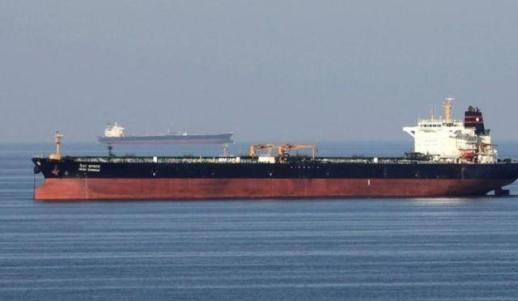 South Korea Says Kuwait Force Majeure to Have Limited Impact; Russian Oil Imports Unlikely The government said Kuwait’s declaration of force majeure on crude oil and petroleum product exports is unlikely to have a major impact on South Korea, and it sees little chance of bringing in additional Russian crude or petrochemical products despite a temporary easing of U.S. sanctions. Yang Gi-uk, director general for industrial resources and security at the Ministry of Trade, Industry and Energy, said at a Middle East war response task force briefing on the 21st that some domestic refiners under contract had been notified of Kuwait’s move. “With the Strait of Hormuz blocked since the Middle East war, force majeure will not affect us,” Yang said. Kuwait Petroleum Corp., the state-run oil company, sent letters to counterparties on the 16th notifying them it was invoking a force majeure clause. The company said the blockade of the Strait of Hormuz has prevented tankers from entering and leaving the Persian Gulf, making it difficult to meet scheduled deliveries on time. Yang said the declaration appeared tied to contract procedures as April loading dates were ending, rather than damage to refining facilities. He added that if the strait remains blocked, Kuwait could declare force majeure again for subsequent volumes. Officials also played down the likelihood of additional imports of Russian crude and petrochemical products following U.S. sanctions relief. The United States on the 17th (local time) extended a further one-month easing of sanctions related to exports of Russian crude and petroleum products. While any related transactions must be completed within a month, refiners and others have secured 70 million barrels of alternative supplies through the end of May. Yang said some risk had been reduced by the U.S. move, but “EU risk remains.” He said interest is low because domestic vessels often rely on EU insurers, creating additional exposure. On additional naphtha imports, Yang said companies are reviewing volumes based on experience from last month’s sanctions easing, but are also seeking alternative supplies. “We do not see companies rushing in as if their survival depends on it,” he said. Regarding the fourth round of the oil products price cap set to take effect at midnight on the 24th, Yang said it was an emergency measure chosen amid unstable global oil prices. He said the government is preparing to make decisions by weighing household economic conditions, the fiscal burden, demand reduction and consumption patterns by fuel type. The ministry said Japan’s gasoline prices are 23.8% lower than South Korea’s and diesel prices are 28.3% lower. In the United States, gasoline prices are 20.8% lower, but diesel prices are 8.7% higher. Yang said Japan is believed to be deploying subsidies on a massive scale, while the United States has seen larger price increases than South Korea. He said South Korea should assess whether other countries are suppressing prices through caps by reviewing overseas cases. Asked about speculation that gasoline prices could rise more sharply to manage demand, Yang said gasoline and diesel consumption are moving differently and it is difficult to discuss price increases or cuts now. He said a decision would be made after considering various views. On a Malta-flagged tanker that recently exited the Strait of Hormuz and is heading to South Korea, Yang said it was not among the seven tankers in the Persian Gulf previously announced by the ministry. He said it had been excluded because the government judged the likelihood of receiving the cargo to be low, calling it “a highly exceptional situation.” 2026-04-21 11:33:19
 -
 South Korea posts record exports in April as semiconductor shipments soar SEOUL, April 21 (AJP) - South Korea's exports jumped sharply in the first 20 days of this month, driven largely by strong global demand for semiconductors, according to figures released by the Korea Customs Service on Tuesday. Outbound shipments surged to US$50.4 billion between April 1 and 20, up 49.4 percent from a year earlier, the highest level ever recorded for the period and surpassing the previous record of $36.4 billion in 2022. Imports also increased 17.7 percent during the same period to $39.9 billion, resulting in a trade surplus of $10.4 billion. The surge was largely attributed to exports of semiconductor chips, with shipments soaring 182.5 percent to $18.3 billion. Exports of computers and related equipment rose even more sharply, jumping nearly 400 percent to $2.2 billion. Exports of petroleum-related goods also increased 48.4 percent to $3.2 billion. However, not all industries performed well, as exports of automobiles fell 14.1 percent to $3.1 billion and auto parts dropped 8.8 percent to $1.1 billion. Overseas shipments increased overall, with Viet Nam up 79.2 percent, followed by Taiwan (77.1 percent), China (70.9 percent), the U.S. (51.7 percent), and the European Union (10.5 percent). Imports of crude oil rose 13.1 percent to $4.8 billion, marking a third consecutive monthly increase after $4.3 billion in January, $4.4 billion in February, and $4.6 billion in March, reflecting rising global oil prices due to the prolonged conflict in the Middle East. 2026-04-21 11:21:16
 -
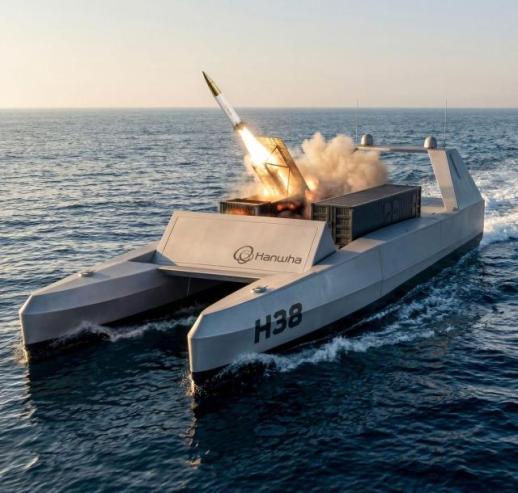 Hanwha partners US firm to build unmanned surface vessels for Pentagon SEOUL, April 21 (AJP) - Hanwha Group has partnered with U.S.-based Magnet Defense to jointly develop and produce unmanned surface vessels (USVs) for the U.S. military, the company said. Hanwha Defense USA announced on Monday that it signed a strategic partnership with Magnet Defense at the 2026 Sea-Air-Space exposition held in National Harbor, Maryland. The agreement covers multiple projects, including the joint construction of a 38-meter medium unmanned surface vessel (MUSV) known as the H38. Under the partnership, the H38 will be developed based on Magnet Defense’s flagship M48 model, incorporating Hanwha’s advanced technologies. The M48, the basis for the joint development, has one of the longest operational ranges among USVs in service at 17,000 nautical miles. The vessel has undergone extensive real-world validation, completing a total of 32,000 nautical miles of operations, including a round-trip voyage from Miami to American Samoa in 2024, a transit through the Panama Canal and navigation in extreme weather conditions rated at Sea State 9. Mark Bell, CEO of Magnet Defense, said the combination of Hanwha’s advanced missile systems and Magnet Defense’s USV design and manufacturing capabilities would generate strong synergies. Michael Coulter, CEO of Hanwha Defense USA, said, “Hanwha is committed to deploying highly capable and lethal unmanned surface vessels to support U.S. forces and allies in times of conflict,” adding, “We will integrate Hanwha’s manufacturing capabilities and advanced robotics technologies with Magnet Defense’s proven autonomous navigation systems.” The partnership comes as the U.S. Navy has signaled its intent to acquire unmanned surface vessels to meet evolving operational requirements. The two sides also agreed to cooperate on AI-based robotic shipyards and artificial intelligence software development. 2026-04-21 11:17:25