
Journalist

Boyoung Seo
-
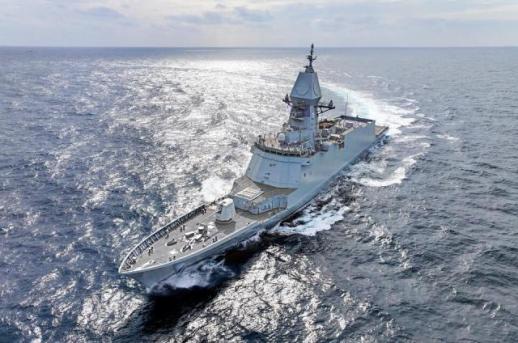 HD Hyundai Heavy skips first KDDX bid, expected to join second round SEOUL, May 15 (AJP) - HD Hyundai Heavy Industries did not participate in the first round of bidding for ships for South Korea’s next-generation destroyer project, but is expected to join the second round. According to the Defense Acquisition Program Administration and industry officials on Friday, HD Hyundai Heavy did not complete preliminary registration for the designated competitive bidding process for the Korean Destroyer Next Generation, or KDDX, by Thursday’s deadline. However, the company said it is preparing to take part in the bidding process, signaling that it is likely to participate in the second round. With HD Hyundai Heavy absent from the first round, Hanwha Ocean was the sole bidder, meaning the bid effectively failed to meet the required conditions. DAPA is expected to issue a second bidding notice later this month to move the long-delayed project forward. “We are currently preparing to participate in the bidding,” an HD Hyundai Heavy official said. “But we need more time to comprehensively review the relevant conditions.” The KDDX project, worth 7.04 trillion won ($5 billion), aims to build six 6,000-ton-class destroyers, often referred to as “mini-Aegis” ships. Naval shipbuilding projects typically move from concept and basic planning to detailed engineering, construction and follow-on vessels. The KDDX contract is expected to be awarded through a competitive bidding process between HD Hyundai Heavy and Hanwha Ocean. DAPA had planned to select the final contractor within the first half of this year after issuing the bidding notice in March and completing proposal evaluations and negotiations. The agency aims to deliver the lead ship to the Navy by 2032. But with the bidding process for the detailed design and lead ship construction delayed, the final selection of the contractor is also expected to be pushed back. “As the project has already been delayed for a long time, we will promptly issue a rebid notice and proceed with the project without further setbacks,” a DAPA official said. 2026-05-15 16:26:32
 -
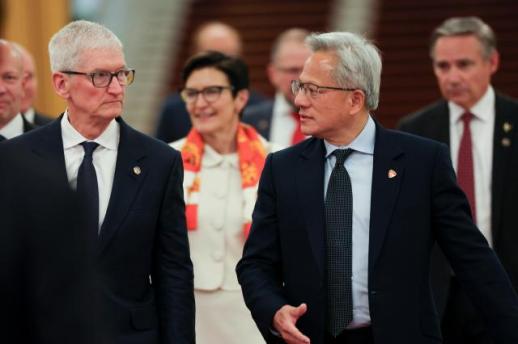 ASIA INSIGHT: Why did US' big tech titans march into Beijing together? The strategic meaning behind Trump bringing Jensen Huang and Silicon Valley’s AI generals to China The summit held in May 2026 at Beijing’s Great Hall of the People was not merely another diplomatic ceremony between the leaders of the United States and China. It was a vivid demonstration that the architecture of global power in the 21st century is no longer defined solely by armies, alliances, or nuclear arsenals. Increasingly, it is being shaped by artificial intelligence, semiconductors, data networks, energy systems, supply chains, and technological ecosystems. What drew particular attention during this summit was the extraordinary composition of President Donald Trump’s delegation. Alongside senior officials stood some of the most influential corporate leaders in modern capitalism: Jensen Huang of Nvidia, Elon Musk of Tesla, Tim Cook of Apple, and executives from BlackRock, Goldman Sachs, Qualcomm, Meta, Micron, Boeing, Visa, Mastercard, and other pillars of American finance, manufacturing, and digital technology. This was not a conventional business delegation. It resembled something far more consequential: a strategic deployment of America’s technological command structure. During the Cold War, summit diplomacy revolved around missiles, military alliances, and ideological blocs. In the emerging AI era, however, the central battlefield has shifted toward semiconductors, computational power, platforms, cloud infrastructure, rare earths, advanced manufacturing, and control over the digital arteries of the global economy. Today, geopolitical influence is increasingly measured not by the number of aircraft carriers a nation possesses, but by who commands the world’s AI infrastructure and semiconductor ecosystems. Trump’s decision to bring Silicon Valley’s most powerful figures to Beijing was therefore deeply intentional. It carried both a warning and an invitation. The United States currently dominates many of the foundational layers of artificial intelligence. American firms continue to lead in advanced AI models, chip design, cloud architecture, software ecosystems, and large-scale computational infrastructure. NVIDIA’s graphics processing units, in particular, have become the indispensable engines of the AI revolution — so essential that some analysts now describe GPUs as the “oil” of the AI age. In this context, the presence of Jensen Huang carried extraordinary symbolism. Born in Taiwan and now leading one of the world’s most strategically important corporations, Huang stands at the center of the global AI transformation. NVIDIA represents not only America’s technological superiority but also the immense interdependence linking the United States, Taiwan, and China within the semiconductor ecosystem. Yet Nvidia, like many American technology giants, also understands a fundamental reality: long-term growth cannot be sustained without access to China’s vast industrial and consumer markets. China remains the world’s largest manufacturing base and one of the largest future markets for AI deployment. Trump appears keenly aware of this strategic contradiction. Washington seeks to preserve technological supremacy while simultaneously recognizing that complete economic decoupling from China remains extraordinarily difficult. The result is a policy that combines containment and negotiation, pressure and engagement. Perhaps the most striking image from Beijing was the partial participation of corporate executives inside the summit process itself. Such scenes remain highly unusual in modern diplomacy. Traditionally, summit rooms are occupied by presidents, foreign ministers, military advisers, and intelligence officials. Yet in Beijing, business leaders appeared almost as extensions of national strategy. This reflects a broader transformation in the nature of American power. The United States no longer operates solely through state institutions. Its global influence increasingly emerges from the fusion of government, universities, venture capital, defense systems, and private technology corporations. Silicon Valley, Wall Street, elite research institutions, and the Pentagon together form a vast strategic ecosystem. In effect, America’s AI dominance has evolved into a “state-corporate technological alliance.” China, however, is hardly standing still. Although Beijing still trails Washington in several core semiconductor technologies, it possesses formidable advantages in manufacturing scale, industrial application, infrastructure deployment, and centralized national mobilization. Companies such as Huawei, SMIC, Alibaba, Tencent, and Baidu continue advancing despite mounting American sanctions and export controls. China’s greatest strength may ultimately lie in speed and concentration. Where the United States relies upon decentralized market innovation, China deploys a state-coordinated model capable of aligning central ministries, provincial governments, state-owned enterprises, and private firms toward a common strategic objective. The same industrial mobilization that transformed China into a dominant force in electric vehicles, solar energy, and high-speed rail is now being directed toward artificial intelligence. Data represents another decisive factor. In the AI era, power increasingly rests upon three foundations: semiconductors, electricity, and data. China’s enormous population and highly digitized mobile economy generate immense volumes of data at a scale few nations can rival. Combined with manufacturing capacity and a massive domestic market, this creates a formidable competitive platform. The United States, by contrast, maintains its advantage through foundational innovation. Companies such as OpenAI, Google DeepMind, Nvidia, Microsoft, and Apple continue to shape the frontier of AI research and computational architecture itself. Thus, the emerging AI rivalry is not merely technological. America retains superiority in foundational innovation and advanced design. China commands extraordinary scale, execution, and industrial integration. Each side therefore fears the strengths of the other. Washington worries that China could eventually combine manufacturing dominance with AI deployment at such scale that technological self-sufficiency becomes irreversible. Beijing fears that the United States may use semiconductors, cloud systems, and AI infrastructure as strategic choke points capable of constraining China’s long-term rise. Viewed through this lens, the Beijing summit was never simply about tariffs or trade balances. It was, at its core, a negotiation over the future architecture of global technological power. Where, then, does South Korea stand? South Korea occupies one of the world’s most delicate strategic positions. Through Samsung Electronics and SK hynix, the country remains a global leader in memory semiconductors. At the same time, Korea is attempting to develop its own AI ecosystems through firms such as Naver, Kakao, LG AI Research, and Samsung Research. Yet Korea also faces structural limitations. The United States dominates platforms and foundational AI technologies. China commands scale and manufacturing ecosystems. Korea’s semiconductor strength is immense, but its AI platform ecosystem remains comparatively smaller. Still, significant opportunities remain. First, AI semiconductors. The future of artificial intelligence ultimately depends upon computational power, and AI cannot function without advanced memory technologies. In high-bandwidth memory (HBM), Korean companies remain among the strongest in the world. Second, industrial AI. South Korea possesses globally competitive industries in automobiles, shipbuilding, batteries, robotics, and advanced manufacturing. The convergence of AI with industrial systems may offer Korea a pathway into the world’s top tier of applied AI powers. Third, cultural soft power. In the AI era, culture itself becomes strategic data. The worldwide influence of K-pop, Korean cinema, Korean dramas, and digital content may eventually become an important asset within future AI training ecosystems and platform competition. Ultimately, the world is entering an era in which military power alone no longer defines supremacy. Artificial intelligence, semiconductors, supply chains, digital infrastructure, energy systems, financial networks, and cultural influence are converging into a single geopolitical framework. This is why America’s technology giants traveled to Beijing alongside President Trump. They were not merely executives. They were, in many ways, the technological generals of 21st-century American power. And the scenes unfolding inside the Great Hall of the People revealed something profound: the world has already entered the age of the AI Cold War. 2026-05-15 16:23:47
 -
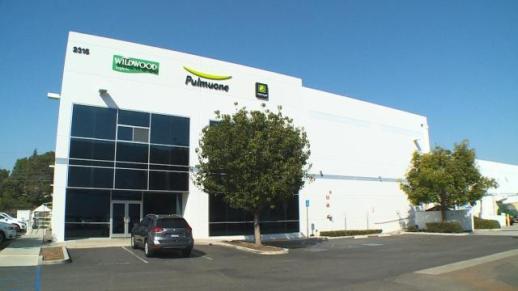 Pulmuone logs record Q1 on overseas turnaround SEOUL, May 15 (AJP) - South Korean food maker Pulmuone reported its strongest-ever first-quarter results, lifted by steady gains at home and a long-awaited turnaround at its overseas units, particularly in the United States. According to regulatory filings released Friday, revenue climbed 7.2 percent from a year earlier to 850.4 billion won ($566.6 million) in the January to March period, while operating profit surged 68.9 percent to 19 billion won. The company said that its earnings jump was driven by tighter cost controls at home and a sharp improvement in profitability abroad, where the firm's U.S. arm booked its third consecutive quarterly profit since swinging into the black in the second half of last year. Pulmuone's Japan unit cut its losses by more than 40 percent on the year. The food service and distribution division, which supplies industrial cafeterias, military bases, airport lounges and highway rest stops, posted a 10.6 percent rise in sales to 254 billion won. Operating profit in the unit climbed 28.3 percent to 6.1 billion won, with concession and rest-area operations alone growing 17.7 percent on stronger travel demand. Overseas food manufacturing and distribution sales rose 13.8 percent to 189.8 billion won, with the segment swinging to roughly break-even from a 5.3 billion won loss a year earlier. "For overseas operations, we plan to keep up growth through expanded supply to global retail and warehouse club channels and a stronger K-Food portfolio, while sustaining profits on the back of North American cold-chain capabilities," said Kim Jong-heon, head of Pulmuone's management planning office. Shares of Pulmuone ended at 11,020 won per stock, 1.87 percent lower than the day before. 2026-05-15 16:14:32
 -
 S. Korea celebrates birthday of Hangeul inventor King Sejong the Great SEOUL, May 15 (AJP) - South Korea has celebrated the 629th birthday of King Sejong the Great, the creator of the Korean alphabet Hangeul, with cultural programs and hands-on experiences at Gyeongbokgung Palace in central Seoul on May 15. The Ministry of Culture, Sports and Tourism said commemorative events took place at Heungnyemun Square inside Gyeongbokgung Palace, offering visitors a chance to experience the Korean language and traditional culture through interactive programs. Visitors participated in activities including ink-rubbing prints of the Hunminjeongeum preface, making the traditional Korean sundial “Angbuilgu,” multimedia Hangeul experiences, and crafting the traditional Korean bamboo flute “danso.” King Sejong, one of Korea’s most respected historical figures, created Hangeul in the 15th century to improve literacy among ordinary people. Hangeul is widely recognized for its scientific and easy-to-learn writing system and remains a key symbol of Korean cultural identity. Traditional performances including the royal military music “Daechwita” and court music piece “Yeominrak” will also be held later in the day. 2026-05-15 16:09:22
 -
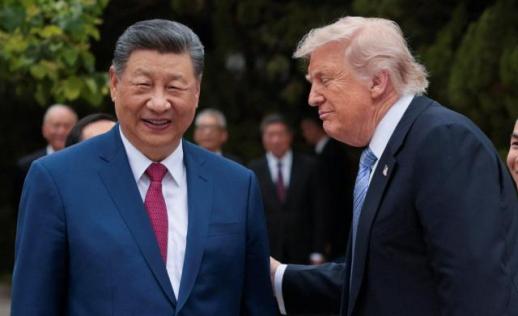 ASIA INSIGHT: Will US-China summit help ease tensions in Iran? When will the joint statement on Iran’s nuclear freeze and freedom of navigation in the Strait of Hormuz truly take effect? The real significance of the May 2026 summit in Beijing between the leaders of the United States and China extended far beyond the management of bilateral relations. Behind the carefully staged diplomacy lay a much larger calculation: the urgent need to stabilize the Middle East, preserve the global flow of energy, and prevent financial markets from sliding into another era of geopolitical panic. Among the many issues discussed during the summit, none drew greater attention within diplomatic circles than Iran’s nuclear ambitions and the future stability of the Strait of Hormuz. The official language released after the meeting was measured and restrained. Yet beneath the diplomatic phrasing stood a clear and unmistakable message: both Washington and Beijing now understand that the world can no longer afford an uncontrolled explosion in the Persian Gulf. At present, the global economy rests uneasily atop three major geopolitical fault lines. The first is the prolonged war in Ukraine. The second is the escalating struggle between the United States and China over artificial intelligence, semiconductors, and technological supremacy. The third — and perhaps the most immediately dangerous for the global energy system — is the confrontation surrounding Iran’s nuclear program and the security of the Strait of Hormuz. The Strait of Hormuz is not merely a narrow waterway between nations. It is one of the great strategic arteries of modern civilization. Roughly one-third of the world’s seaborne oil trade passes through that corridor. Crude oil and liquefied natural gas from Saudi Arabia, the United Arab Emirates, Kuwait, Qatar, Iraq, and Iran move through the strait toward Asia and Europe. Any military confrontation, blockade, or disruption there would almost certainly send global oil prices, shipping rates, and insurance premiums soaring within days. For years, the United States and Iran have engaged in a prolonged and dangerous struggle over Tehran’s nuclear activities. Washington has consistently maintained that it cannot permit Iran to approach the threshold of nuclear-weapons capability. Tehran, meanwhile, insists that its nuclear development program is a sovereign right intended for peaceful purposes. The dispute has centered largely on uranium-enrichment levels and the operational scope of Iran’s nuclear facilities. Western governments suspect that Iran has, at various moments, moved dangerously close to weapons-grade capability. Iran, for its part, argues that American sanctions and pressure campaigns have only deepened regional instability. Complicating matters further is the position of Israel. Israel regards a nuclear-armed Iran not simply as a strategic challenge, but as an existential threat. Within Israeli political and security circles, arguments in favor of preemptive military action have repeatedly surfaced over the years. Indeed, much of the region’s military tension has revolved around the intersection of Iran’s nuclear infrastructure and Israeli security concerns. Yet the diplomatic atmosphere emerging after the Beijing summit appears subtly different from previous periods of confrontation. Both the United States and China now recognize that a full-scale Middle Eastern conflict would impose enormous costs at a moment when neither side can easily absorb them. Washington already faces mounting fiscal burdens, domestic political pressures linked to the presidential election cycle, and the continuing demands of support for Ukraine. China, meanwhile, confronts slowing growth, weakening exports, real-estate instability, and an urgent need for reliable energy supplies. As a result, both powers appear increasingly focused not on achieving a perfect resolution to the Iranian nuclear question, but on preventing a catastrophic escalation. In practical terms, that means the emergence of a more limited and realistic framework: partial nuclear restraint, expanded international monitoring, and guarantees for stable navigation through the Strait of Hormuz. Within this evolving landscape, China’s role has become especially important. Relations between China and Iran have grown steadily closer over the past decade. China has become one of Iran’s largest oil customers and, in many respects, one of the principal economic lifelines sustaining the Iranian state. The two countries have signed long-term economic cooperation agreements spanning energy, infrastructure, railways, ports, telecommunications, and industrial development. Under Beijing’s Belt and Road strategy, Iran occupies a critical geopolitical position linking Central Asia, the Middle East, and Europe. Historically, Persia itself stood at the crossroads of major trade routes connecting East and West. That strategic geography has once again become central to twenty-first-century geopolitics. For China, Iran is not simply another oil-producing nation. It is a strategic buffer against excessive dependence on American-dominated maritime systems and a crucial pillar of long-term energy security. Even under international sanctions, China has continued importing Iranian oil through various channels. Discounted Iranian crude has quietly helped support Chinese industrial stability during periods of global energy volatility. Iran, meanwhile, depends heavily upon China. With access to much of the Western financial system restricted by sanctions, Tehran increasingly relies on Chinese trade, investment, infrastructure projects, and consumer goods. Chinese economic engagement has become an essential stabilizing force within Iran’s economy. Yet Beijing cannot afford to align itself unconditionally with Tehran. China’s own economy remains deeply interconnected with American and European markets. A prolonged Middle Eastern crisis — especially one that disrupts shipping lanes or drives energy prices sharply higher — would inflict serious damage on China itself. This is precisely where the deeper significance of the Beijing summit emerges. The United States wants China to exercise a moderating influence over Iran. China, in turn, wants Washington to avoid pushing the region toward uncontrolled escalation. In other words, even amid intensifying strategic rivalry, Washington and Beijing now share a limited but meaningful common interest in preventing the Persian Gulf from descending into chaos. The central question, therefore, is not whether a joint understanding exists in principle, but when such an understanding might acquire practical force. Diplomatic observers increasingly expect a gradual, phased approach. The first stage would likely involve informal understandings aimed at preventing military confrontation and guaranteeing safe passage through the Strait of Hormuz. From there, negotiations could move toward stronger International Atomic Energy Agency inspections, limitations on uranium enrichment, and selective easing of sanctions in exchange for verifiable restraint. Yet formidable obstacles remain. Hard-line factions within Israel, divisions inside Iran’s Revolutionary Guard structure, domestic American politics, and the broader network of proxy conflicts across the Middle East all retain the capacity to destabilize negotiations at any moment. Even a relatively limited military incident could trigger a dramatic surge in global energy prices. And yet, despite those dangers, the world appears increasingly inclined toward risk management rather than total victory. That reflects a cold realism shared by all major actors. The United States, China, Iran, and even Israel understand the immense cost of a large-scale regional war. A major conflict in the Gulf would almost certainly unleash another wave of inflation, supply-chain disruption, shipping instability, and financial turbulence across the world economy. For South Korea, the stakes are especially high. South Korea remains heavily dependent on imported energy. Any serious disruption in Middle Eastern oil or liquefied natural-gas supplies would immediately place pressure on manufacturing, logistics, electricity costs, inflation, and industrial competitiveness. Conversely, stability in the Strait of Hormuz could provide critical relief for the Korean economy by easing pressure on oil prices, exchange rates, and trade balances. Ultimately, the Beijing summit was not merely another diplomatic event between two great powers. It represented a recognition that even amid fierce competition over artificial intelligence, semiconductors, and technological supremacy, the global energy system cannot be allowed to collapse into disorder. At first glance, oil tankers crossing the deserts and waters of the Middle East may appear unrelated to the polished diplomatic language spoken inside Beijing’s state halls. In reality, they are deeply connected. For all the transformations of the twenty-first century, civilization still moves on energy — and the pulse of that energy still flows through the Strait of Hormuz. 2026-05-15 15:46:23
 -
 From K-Pop to K-Ink: Korea prepares to bring tattooing into the open SEOUL, May 15 (AJP) - Since a 1992 Supreme Court ruling effectively restricted tattoo procedures to medical professionals, South Korea’s tattoo industry has operated in a legal gray zone. Under the newly passed Tattooist Act, the country is now building its first national licensing and safety framework for non-medical tattoo practitioners. The law, overseen by the Ministry of Health and Welfare, passed the National Assembly on Sept. 25, 2025 and is scheduled to take effect two years after promulgation, with enforcement expected around September or October 2027. Despite the legal restrictions, tattoo culture and cosmetic tattoo procedures have expanded rapidly in South Korea alongside the rise of K-beauty and Korean cultural exports. Industry estimates suggest that around 350,000 people were engaged in tattoo-related work in Korea as of 2021, while the Korea Tattoo Association estimates the domestic tattoo market at roughly 1 trillion won, ($667 million). An anonymous tattoo artist said one of the biggest changes under the new system would be the ability to work more openly without fear of legal uncertainty. “For many tattoo artists, being able to work in our own studios without constantly worrying about legal risks is probably the biggest change,” the artist said. Under the new law, non-medical tattoo practitioners who pass a national licensing examination and obtain government certification will be permitted to legally perform tattoo procedures. The framework also introduces hygiene and safety requirements including sterilization standards, single-use needles, infectious waste disposal rules, mandatory safety education and liability insurance requirements for tattoo businesses. Tattoo studios will be required to register with local governments, while tattoo artists must maintain records related to procedures, pigments and side effects. Tattooing minors without parental consent and performing tattoo procedures outside registered workplaces will also be prohibited. The Ministry of Health and Welfare and tattoo-related organizations participated in a consultation meeting attended by more than 40 industry groups on Tuesday, officials discussed licensing examinations, hygiene standards, temporary business registration measures and safety management rules for tattoo facilities. “The purpose of the Tattooist Act is to allow non-medical tattoo practices while ensuring public health and hygiene management,” Vice Health Minister Kim Han-sook said during the meeting, according to the ministry. As the government prepares subordinate regulations for the new framework, industry groups are also moving to establish formal educational standards for tattoo practitioners. On Friday, the Korea Tattoo Association held a publication event in Seoul for three standardized tattoo textbooks covering advanced tattoo techniques, cosmetic tattoo procedures, hygiene management and safety practices. The association said it had officially submitted the books a day earlier to the health ministry, the Korea Health Personnel Licensing Examination Institute and the Ministry of Food and Drug Safety as reference materials for future licensing, regulatory and safety policies. The association described the publication effort as part of a broader push to move the industry away from informal apprenticeship-style training practices that had long dominated the sector amid the absence of official standards. “For a long time, the industry remained outside institutional systems,” Chairman of Korea Tattoo Association, Song Kang-seop said in a statement. “Submitting standards created by the industry itself to government authorities is, in a sense, the first step toward standing before the government with confidence.” 2026-05-15 15:34:37
 -
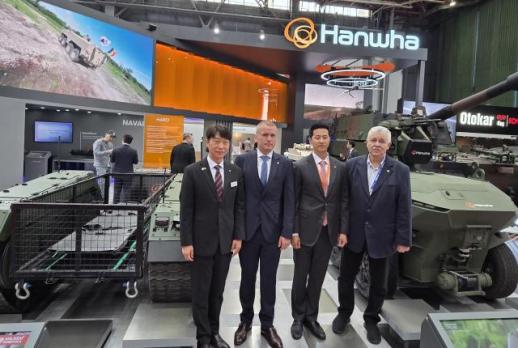 Hanwha signs teaming agreement with Milrem Robotics for Romanian UGV program SEOUL, May 15 (AJP) - Hanwha Aerospace has signed a teaming agreement with Estonia’s Milrem Robotics to jointly pursue Romania’s unmanned ground vehicle program, as the South Korean defense firm seeks to expand its presence in the European market. The agreement was signed during the Black Sea Defense & Aerospace, or BSDA 2026, exhibition in Bucharest by Hanwha Aerospace, its Romanian subsidiary Hanwha Aerospace Romania and Milrem Robotics, Hanwha Aerospace said Friday. Under the agreement, Hanwha Aerospace Romania is expected to serve as the prime contractor and lead local production, offering wheeled UGV platforms based on Hanwha’s Arion-SMET and the upgraded GRUNT variant. Milrem Robotics will provide its THeMIS tracked UGV platform and related technologies as part of Hanwha’s integrated proposal. Hanwha said the partnership is aimed at delivering a flexible and scalable unmanned solution tailored to Romania’s operational needs, while strengthening local industrial capabilities and broader European cooperation. “We are pleased to mark this collaboration at BSDA 2026, which represents an important step in bringing advanced unmanned capabilities into Romania through localized production and industrial cooperation,” said Lino Lim, CEO of Hanwha Aerospace Romania. Kuldar Väärsi, CEO of Milrem Robotics, said the company sees strong potential to expand manufacturing capabilities to Romania in cooperation with Hanwha. Ahead of the exhibition, Hanwha Aerospace and Milrem Robotics also conducted a live manned-unmanned teaming demonstration near Bucharest on May 12. 2026-05-15 15:25:27
 -
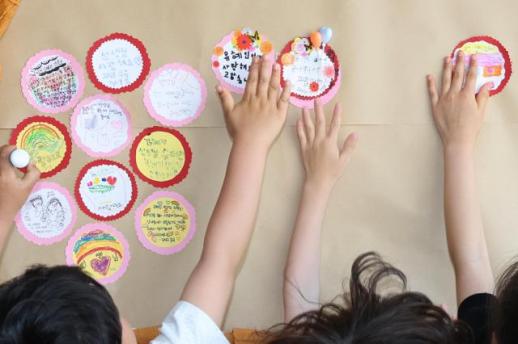 Teachers Face Restrictions on Celebrating Teacher's Day in South Korea "The grace of a teacher is like the sky, the more I look up, the higher it seems. The true teacher who teaches us to be righteous is like a parent in our hearts. Oh, thank you for the love of a teacher, oh, I will repay the grace of a teacher." This song, traditionally sung on Teacher's Day, has become increasingly rare to hear. Small classroom celebrations have also come under scrutiny. The Gyeongsangbuk-do Office of Education announced through an internal bulletin that under the Anti-Corruption Act, teachers, students, and parents are considered "direct stakeholders." They advised against giving or sharing cakes with teachers on Teacher's Day. "While making Teacher's Day cards, the children were asking, 'Can we give a gift to the teacher, or not?' I overheard some students saying, 'Even giving a carnation or a drink could get the teacher in trouble,'" said Yoon Mi-sook, a sixth-grade teacher at S Elementary School in Busan, expressing her disappointment. "The children likely had no ill intentions, but I felt a sense of shame in a classroom where it has become normal to discuss that 'even a drink could get the teacher in trouble' before Teacher's Day," she reflected. She questioned, "Is this situation really normal?" On a day meant to honor teachers, they now find themselves weighing the legal risks of accepting a piece of cake or a single carnation from students. This situation is particularly ironic in South Korea, where the term "teacher" has historically symbolized respect and moral authority. In Confucian culture, teachers are seen not just as knowledge bearers but as figures who impart character and order, and the tradition of singing "The Grace of a Teacher" and writing thank-you letters continues in schools today. Teacher's Day originated in 1958 when members of the Youth Red Cross visited sick teachers. The date was established as May 15, the birthday of King Sejong, in 1965, becoming a national holiday. However, with declining teacher authority, malicious complaints, and various legal burdens, many teachers now express that "the day has become just a name." Pride in the teaching profession has long been in decline. According to a survey released by the Teacher Labor Union Federation on May 14, more than half of teachers have considered resigning in the past year. Only about 5% of teachers feel respected by society, and only about 30% report feeling fulfilled in their teaching careers. Feelings of helplessness regarding violations of teacher rights and a breakdown of trust are also evident. A survey conducted by the Korean Federation of Teachers' Associations (KFTA) ahead of the 45th Teacher's Day, involving 8,900 teachers from various educational levels, revealed that 49.2% of respondents felt their professional pride had decreased in the past one to two years. The most significant moment of helplessness for teachers was identified as "when they are not trusted by students and parents and when their rights are violated" (67.9%). The atmosphere in local schools mirrors these sentiments. A recent survey by the Busan Teacher Labor Union, which included 7,180 teachers nationwide (383 from Busan), found that 69.2% of Busan teachers would not choose the teaching profession if they could start over. Additionally, 80.9% expressed concern about being reported for child abuse even during legitimate educational activities, and 85.1% felt that the emotional abuse clause in child abuse laws stifles educational activities. Teachers report that the school environment is increasingly becoming a "defensive classroom culture." There are also concerns that the rise of AI and smartphones is altering teachers' authority. Yoon noted, "What used to be part of student guidance is now approached with manuals and the possibility of complaints in mind. Many teachers record counseling sessions to prepare for any potential complaints or reports." She added, "I try to maintain a certain distance from students, using formal language during class and teaching them not to approach too casually," reflecting a fear that familiarity could lead to misunderstandings or disputes. A teacher named Baek from an elementary school in Gangnam remarked, "Teachers are no longer seen as the ones who know all the answers. The authority of teachers is changing in the digital environment." In recent years, South Korea has seen repeated incidents of teacher deaths and controversies over violations of teacher rights. Following the death of a teacher at Seoi Elementary School in 2023, thousands of teachers gathered in Yeouido, Seoul, demanding protection for teacher rights, yet many teachers feel that "nothing has practically changed." Violence against teachers is no longer considered rare. Last month, a student attacked a teacher with a weapon in Gyeryong, South Chungcheong Province. A survey conducted by the Teacher Labor Union Federation among 7,307 teachers revealed that 67% had experienced physical threats from students, and 32% had been physically assaulted. Experts analyze that while South Korean society still speaks of a Confucian culture of "respect for teachers," the necessary trust and discretion for teachers are not adequately supported in practice. They continue to demand guidance and emotional support for students while the authority and protection needed to uphold these responsibilities have weakened. The status of the teaching profession, once a symbol of stability and social respect, is also in decline. The decrease in the school-age population, combined with the burden of complaints and legal risks, has led to a decline in the attractiveness of teaching as a career. According to the admissions industry, the cutoff scores for major teacher training colleges for the 2025 academic year have dropped compared to the previous year. The cutoff scores for five teacher training colleges, including Seoul National University of Education, Chuncheon National University of Education, Korea National University of Education, Gwangju National University of Education, and Cheongju National University of Education, fell from 3.22 to 3.61. The gender imbalance in elementary education continues. According to the Seoul Metropolitan Office of Education, among the 210 final successful candidates for the 2026 public elementary school teacher appointment exam, only 30 were male, accounting for 14.3%. Among the total of 295 successful candidates for kindergarten, elementary, and special education schools, only 32 were male (10.9%). Among the 48 successful kindergarten teachers, only one was male, and all seven successful special education kindergarten teachers were female. In this context of gender imbalance, male teachers report feeling overwhelmed by their workloads. A male teacher in his 30s from Daejeon, named Yeon, said, "With so few male teachers, physically demanding tasks or difficult situations often fall to the few male teachers. It's not easy to express that I'm struggling in this atmosphere." Teachers emphasize that what is needed in the educational field is not just laws and systems, but trust and a sense of community. "What teachers desire is not the authority of the past, where we wouldn't dare step on the shadow of a teacher." Yoon stated, "Just as my child is precious, so is every other child. We need a basic consideration and sense of community that prevents harm to others as we protect our own children." She added, "Consideration and compromise are not losses; they are opportunities to expand a child's capacity for empathy. Education cannot be completed solely through laws and systems. When respect and consideration fill the gaps, both teachers and students, as well as parents, can feel more at ease." As another Teacher's Day approaches, what teachers hope for is not grand respect or songs of gratitude, but a classroom where they can teach without fear.* This article has been translated by AI. 2026-05-15 15:21:00
 -
 Korea Financial Group Shares Decline Despite Strong Earnings as KOSPI Drops Shares of Korea Financial Group, which had shown strength earlier in the day, are now declining as the KOSPI index turns sharply downward. As of 2:51 PM on May 15, Korea Financial Group's stock was trading at 257,000 won, down 0.39% from the previous session. At one point, the stock had risen by more than 8%. The stock initially gained traction in the morning as the KOSPI index surpassed the 8,000 mark, buoyed by expectations of improved performance amid a favorable market. However, the KOSPI has since dropped to around 7,400. On May 14, Korea Financial Group reported that its consolidated operating profit for the first quarter of this year reached 1.1063 trillion won, marking a 108.9% increase compared to the same period last year. Revenue rose to 11.9966 trillion won, up 123.7%, while net profit climbed 99.6% to 916.7 billion won. Analysts have raised their target prices for Korea Financial Group. SK Securities increased its target from 399,000 won to 410,000 won, while Daol Investment & Securities and NH Investment & Securities adjusted theirs from 350,000 won and 340,000 won to 400,000 won, respectively. Meritz Securities raised its target from 335,000 won to 365,000 won, and Shinhan Investment Corp. increased its target from 320,000 won to 350,000 won. Samsung Securities also raised its target from 270,000 won to 320,000 won. Jang Young-im, a researcher at SK Securities, stated, "The bullish market is expected to continue into the second quarter, sustaining the growth in brokerage and asset management commission revenues. Korea Financial Group is poised to benefit across all sectors due to the strong stock market, demonstrating robust profit capacity." Yoon Yoo-dong, a researcher at NH Investment & Securities, noted, "While the overall strong performance in the securities industry has made it more challenging to differentiate stock prices, Korea Financial Group's diversified structure with multiple financial affiliates highlights its potential for continued earnings and stock price growth during prosperous periods."* This article has been translated by AI. 2026-05-15 15:18:21
 -
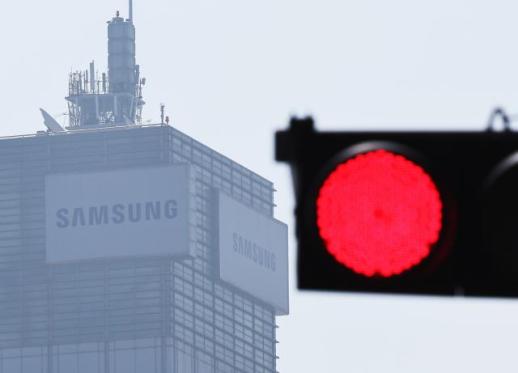 Blue House Hopes for Resolution as Samsung Workers Threaten Strike The Blue House expressed concern on May 15 regarding the Samsung Electronics labor union's announcement of a potential general strike, stating, "Given Samsung's significant role in the national economy, we hope that a strike can be avoided and that negotiations between labor and management conclude successfully." Lee Gyu-yeon, the Blue House's chief of public relations, addressed questions during a briefing at the Chunchugwan regarding whether the government is considering invoking emergency mediation rights if the union proceeds with the strike. He responded, "We are not at a stage where such a decision can be made yet." Lee emphasized, "We are not merely observing; Samsung's impact on the national economy is substantial. Approximately one in ten citizens holds Samsung Electronics stock, either directly or indirectly, and there are around 1,700 partner companies associated with it." He added, "We are watching the situation with considerable concern and apprehension." However, he clarified that this concern does not automatically lead to the invocation of emergency mediation rights. He noted that Minister of Trade, Industry and Energy Kim Jeong-kwan had mentioned the necessity of such action, stating, "I believe he was expressing what needed to be said in his capacity as the Minister of Trade, Industry and Energy." Minister Kim had previously indicated via X (formerly Twitter) that if the Samsung Electronics union proceeds with the general strike on May 21, invoking emergency mediation rights would be unavoidable. If the Minister of Employment and Labor invokes these rights, the union would be required to suspend all strike activities for 30 days. Lee also addressed questions about whether Minister Kim's comments were made without coordination with the Blue House, stating, "That is not the case. Each ministry is fulfilling its respective roles, including the Ministry of Economy and Finance, the Ministry of Trade, Industry and Energy, and the Ministry of Employment and Labor." * This article has been translated by AI. 2026-05-15 15:15:46