

Journalist

CGTN
-
 South Korea to delay tax audits for foreign firms increasing investment SEOUL, November 28 (AJP) - South Korea’s National Tax Service (NTS) will postpone regular tax audits for up to two years for foreign companies that substantially increase their investments in the country. NTS Commissioner Lim Gwang-hyun announced the measure on Friday during a meeting hosted by the American Chamber of Commerce in Korea (AmCham) in Seoul. Companies that raise their domestic investment by a defined percentage compared with the previous year will be eligible to apply for the audit deferment. Under the revised criteria, small foreign businesses that increase investment by at least 10 percent and medium-sized firms that boost investment by 20 percent will qualify for the program. Previously, the audit delay was available only to small enterprises. The tax authority also said it plans to ease the burden of double taxation on foreign firms by accelerating the Advance Pricing Agreement process, which provides tax certainty for companies engaged in cross-border transactions. To improve accessibility for international taxpayers, the agency is expanding its AI-based foreign language consultation services launched in September. James Kim, chairman of AmCham Korea, welcomed the steps and stressed that fair and predictable treatment of foreign companies is essential for South Korea to compete with regional investment hubs such as Singapore and Hong Kong. * This article, published by Aju Business Daily, was translated by AI and edited by AJP. 2025-11-28 15:14:41
 -
 Ex-police chief tapped as envoy to Cambodia to combat crimes against South Koreans SEOUL, November 28 (AJP) - A former police chief has been named ambassador to Cambodia to address the rising crimes against South Koreans there, the Ministry of Foreign Affairs said on Friday. A graduate of the Korean National Police University, Kim Chang-ryong has held key positions at the Seoul Metropolitan Police Agency and has also served as a consul in São Paulo, Brazil, and in Washington, D.C., U.S. The appointment appears to be aimed at further bolstering cooperation between the law enforcement agencies of both countries, following the establishment of a joint investigative team in Phnom Penh to combat rising online scams, phishing schemes and other crimes targeting South Koreans. The ministry also tapped Jung Yeon-du, former ambassador to Turkey, as vice minister responsible for nuclear negotiations with North Korea, while filling several other key positions including a new spokesperson and senior diplomatic officials. 2025-11-28 14:50:30
 -
 PHOTOS: Salvation Army starts year-end charity campaign SEOUL, November 28 (AJP) - The iconic sound of charity bells has returned to the streets of South Korea, but this year, the tradition comes with a modern upgrade. The Salvation Army Korea signaled the start of its fundraising season on Nov. 28 at Gwanghwamun Square. The launch event featured a ceremonial bell-ringing attended by Seoul Mayor Oh Se-hoon and Salvation Army Commander Kim Byung-yoon. Now in its 97th year, the year-end Red Kettle campaign will operate at approximately 300 locations across the country. Adapting to a cashless society, the organization has introduced an NFC-based "One-Tag Smart Donation" system this year, allowing passersby to make donations instantly via smartphone. 2025-11-28 14:29:11
 -
 Korean lawmakers advance bill to close loopholes on synthetic nicotine SEOUL, November 28 (AJP) - South Korea is moving closer to regulating synthetic nicotine as tobacco after a key parliamentary committee approved an amendment to the related act, paving the way for a full legislative vote on Dec. 12. The amendment would broaden the legal definition of tobacco to include products containing nicotine derived from non-tobacco sources. Synthetic nicotine e-cigarettes are currently treated as industrial products, allowing them to bypass tobacco-related regulations such as online sales bans and restrictions on vending machine distribution. Health officials and lawmakers have warned that the loophole has contributed to rising youth smoking rates. To curb stockpiling ahead of the new rules, the bill shortens the implementation period from six months to four and mandates clearer labeling of manufacturing and import dates. Authorities also plan to inspect existing inventories for harmful substances before they can be sold, while coordinating with local governments to prevent excessive pre-enactment buying. The amendment grants a two-year grace period for e-cigarette retailers to comply with regulations governing tobacco outlets. Online sales of synthetic nicotine products would end four months after the law takes effect. South Korea began discussing synthetic nicotine regulation in 2016, but progress stalled amid industry pushback. The latest proposal, initially delayed for further review, passed the legislative committee on Nov. 26. The e-cigarette industry cautiously welcomed the development. Kim Do-hwan, vice president of the Korea Electronic Cigarette Association, said: “Though delayed, we welcome the decision. However, the two-year grace period for vending machine sales is disappointing.” Still, some industry voices argue that taxing synthetic nicotine at the same rate as traditional tobacco is excessive. Natural nicotine e-liquids are currently taxed at 1,799 won per milliliter; applying the same rate to synthetic nicotine would add roughly 54,000 won in taxes to a 30-milliliter bottle. “The cost and production structure of synthetic nicotine differ from traditional tobacco, so applying the same tax rate burdens small businesses,” an industry source said. “Reasonable adjustments in the detailed regulations are necessary.” * This article, published by Aju Business Daily, was translated by AI and edited by AJP. 2025-11-28 14:13:00
 -
 Lee offers condolences to victims of Hong Kong's deadliest fire SEOUL, November 28 (AJP) - President Lee Jae Myung on Friday expressed his condolences to the victims of a fire at a high-rise apartment complex in Hong Kong and wished the injured a swift recovery. In a message posted on Facebook, Lee said, "I extend my deepest condolences and sympathy to those affected by the tragic incident involving our neighbors." The fire "resulted in numerous casualties, leaving South Korea and the world in deep sorrow," he added, offering sincere condolences to the families of the victims and expressing hope for a quick recovery and restoration efforts. Lee's condolences came days after nearly 100 people were killed in a fire at a large housing complex in Tai Po, northern Hong Kong earlier in the week. Seven of the complex's eight buildings were affected, with flames still spreading to adjacent blocks. About 900 residents have been evacuated to temporary shelters at nearby schools, and more than 1,250 firefighters have been mobilized to extinguish the deadly blaze and carry out search and rescue operations. As of early Friday morning, 94 people were dead, 76 injured, and many others still missing. Firefighters continue to rescue survivors and recover bodies. Authorities suspect that flammable materials used during major renovations of the decades-old complex, which began a year ago, caused the fire's rapid spread. 2025-11-28 14:11:10
 -
 UPDATE: Korea's factory output and investment slump Oct on stalled chip activity SEOUL, November 28 (AJP) - South Korea’s factory output in October shrank at the steepest rate in five years, while facility investment tumbled by double digits — all tied to stalled chip activity — further underscoring the country’s heavy reliance on the semiconductor sector for economic performance, data showed Friday. According to the Ministry of Data and Statistics, mining and manufacturing output fell 4 percent on month, the steepest drop since the 7.5 percent decline in May 2020. Output was also down 8.1 percent on year, the sharpest contraction since April 2023, when global supply disruptions hampered production lines. The slump was led overwhelmingly by semiconductors. Chip output plunged 26.5 percent on year, marking the biggest contraction in 43 years amid tightening in supply of legacy chips as Korean foundries redirect capacity toward long-term AI and data-center clients and shift resources to higher-performance lines. Excluding semiconductors, overall manufacturing output would have risen 1.1 percent. The dismal figures reverberated through financial markets. As of 1:30 p.m., the KOSPI had retreated 1.5 percent, while the Korean won weakened 2.8 won against the U.S. dollar. The yield on three-year government bonds jumped 6.7 basis points to end the morning trade at 3.08 percent. The downturn extended beyond manufacturing. Service-sector output slipped 0.6 percent on month, contributing to a 2.5-percent industry-wide decline, the steepest since February 2020 at the onset of the pandemic. Facility investment posted an even sharper drop. Investment fell 14.7 percent on month, the largest decline in four years since the 16.7-percent plunge in October 2020. Spending on machinery — including semiconductor equipment — decreased 12.2 percent, while investment in transportation equipment such as automobiles and ships fell 18.4 percent. The ministry cited a high base effect and suspended capital expenditure amid delays in tariff negotiations between Seoul and Washington. Construction investment was also weak, tumbling 20.9 percent, the largest contraction on record. Signaling a protracted slowdown, industrial orders dropped 41.6 percent on year. The ministry attributed the fall to sharply higher procurement costs from the weakened currency and subdued housing demand following tighter real estate regulations. Retail sales offered the sole bright spot, rising 3.5 percent on month partly driven by the second round of government stimulus vouchers. Cyclical indicators pointed to continued weakness. The coincident index fell 0.4 percent, indicating an ongoing slowdown, while the leading index remained flat, suggesting that the economic outlook ahead remains uncertain. 2025-11-28 14:07:47
 -
 PHOTOS: History in miniature SEOUL, November 28 (AJP) - At the entrance, a large Lego poster reading “Daehan Independence Manse” comes into view. Next to it sits a tiny corner shop marked “Jeongdong Stationery,” its shelves packed with marble games, ice cream buckets, paper cards, and cotton candy. The miniature space feels like a small time capsule, carrying the warmth of the years it represents. Inside the special exhibition hall, visitors walk through a large Lego Independence Gate and enter another world. Marking the 79th anniversary of liberation, the hall brings together Lego-made scenes of historic moments and the figures who shaped them. Scenes such as Yun Bong-gil’s Hongkou bombing, the March 1 Independence Movement with Yu Gwan-sun, group photos of returning Provisional Government officials, Ahn Jung-geun’s shooting of Ito Hirobumi, and Admiral Yi Sun-sin during the Imjin War are recreated in colorful Lego blocks. Tiny figures gather in front of the Lego Independence Gate waving “manse,” and the white hanbok worn by Yu Gwan-sun is instantly recognizable even in miniature. Children stand in front of the Lego displays with bright eyes, listening to stories of history. Meeting independence activists through Lego instead of textbooks makes the figures feel far more familiar. One child lingers at the Ahn Jung-geun exhibit, pointing at the bricks one by one and asking questions. Rows of 1960s and 1970s school uniforms, textbooks, backpacks, and lunchboxes fill the permanent exhibition. The recreated classroom scene is especially striking — the anti-fire and anti-communism posters on the back wall, metal lunchboxes warming on a central stove, the national flag and class mottos, and a timetable posted next to a map of Korea. The details make the space feel like a doorway into another decade. A diorama of a school sports day fills one section — obstacle races, horseback fights, relays. The tiny figures look almost alive. Under a tree, a family shares lunch with kimbap and soda. Though only a few centimeters tall, the little scene carries the energy and joy of a whole era. A permanent exhibition tracing Korea’s education history from the Three Kingdoms period to today shows how learning has shaped national identity — from Goguryeo’s Taehak and Goryeo’s Gukjagam to Joseon’s Sungkyunkwan, through the colonial era and into the modern day. The visit lasts little more than an hour, but the impression lingers — a stationery shop, a schoolyard festival, scenes of independence carved from Lego, and a classroom restored with care. Together they turn the past into something close enough to touch. 2025-11-28 14:00:01
 -
 AI now essential in Korea's job market for both recruiters and applicants SEOUL, November 28 (AJP) - Artificial intelligence is rapidly becoming indispensable in South Korea’s job market, with four out of five companies now using AI tools in their hiring processes and a growing majority of job seekers relying on AI to boost their recruitment chances. The Ministry of Employment and Labor and the Korea Employment Information Service on Tuesday released the second part of their 2025 Corporate Hiring Trends Survey, conducted from Aug. 1 to Sept. 1. The survey covered HR managers at the top 500 companies by revenue and 3,093 young employees across 17 regions, focusing on AI usage in human resources. Among the 396 companies that responded, 86.7 percent use AI tools in HR either officially or unofficially. Of the 163 companies using AI formally, 52.8 percent apply it in hiring, followed by training (45.4 percent) and handling HR inquiries (45.4 percent). Among the 86 firms using AI specifically for hiring, 69.8 percent rely on AI-based aptitude or competency tests. Nearly half use AI to review application documents (46.5 percent) or during interviews (46.5 percent). Looking ahead, 74.5 percent of companies plan to adopt or further expand AI tools in hiring — with most focusing on AI-based tests (67.5 percent), document screening (63.4 percent), and managing the overall recruitment pipeline (55.6 percent). By contrast, 25.5 percent have no plans to introduce AI, mainly due to concerns over fairness and objectivity (36.6 percent) or a belief that final hiring decisions should remain human-led (19.8 percent). On the applicant side, 42.3 percent of young job seekers have used AI tools — mostly for writing résumés and cover letters (77.2 percent), interview preparation (36.4 percent), and company research (31.0 percent). Of them, 86.6 percent said AI tools were helpful. AI use is also spreading among young employees at work: 61.8 percent reported using AI for tasks like research and idea generation (63.6 percent), document creation (58.1 percent), and data analysis (35.4 percent). The government plans to introduce ethical guidelines and checklists for AI-based hiring by the end of the year and expand AI-related training for young people through programs such as the Tomorrow Learning Card. “As the AI ecosystem evolves rapidly, its use in hiring is diversifying,” said Lim Young-mi, Director of Employment Policy. “The government will support companies in adopting AI for fairer hiring and create more opportunities for young people to build AI-related skills.” * This article, published by Aju Business Daily, was translated by AI and edited by AJP. 2025-11-28 13:54:41
 -
 Hyundai Motor Group to set up battery research center in Anseong SEOUL, November 28 (AJP) - Hyundai Motor Group has unveiled plans to build a major battery research and development hub in Anseong, south of Seoul. The company held a groundbreaking ceremony on Friday for the “Future Mobility Battery Anseong Campus,” located in the city’s fifth industrial complex. Construction began in January, with Hyundai investing 1.2 trillion won in a facility spanning 197,000 square meters. Completion is targeted for late 2026. The Anseong campus will be Hyundai’s first large-scale R&D center dedicated entirely to battery technologies. The facility will house advanced testing equipment to evaluate battery performance, durability and safety under real-world operating conditions, reflecting the industry’s intensifying focus on battery innovation as competition in electric mobility deepens. Hyundai said the center will spearhead development of high-performance lithium-ion cells for next-generation electric vehicles, while expanding research into future mobility fields including robotics and advanced air mobility. The company expects the project to reinforce South Korea’s battery ecosystem and bolster national competitiveness in the global EV race. The initiative follows Hyundai’s August agreement with the country’s major battery makers — LG Energy Solution, Samsung SDI and SK On — to collaborate on technologies aimed at improving EV battery safety. The partnership is part of the broader “K-battery” alliance designed to enhance domestic cooperation in key mobility technologies. * This article, published by Aju Business Daily, was translated by AI and edited by AJP. 2025-11-28 13:38:35
 -
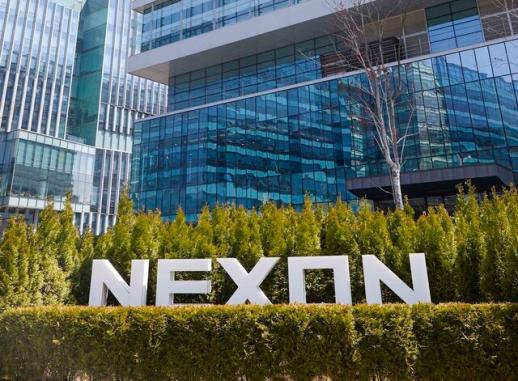 Nexon shares fly in Tokyo with cap nearing $20 bn on strong pipeline SEOUL, November 28 (AJP) - Tokyo-listed shares of South Korean game publisher Nexon have hit their highest level since 2021, sending its market valuation of around $20 billion as investors rally behind its live-service games and global expansion strategy of CEO Lee Jung-hun. Nexon shared closed Thursday at ¥3,768 on the Tokyo Stock Exchange, lifting its market cap above ¥3.1 trillion (around $19.8 billion) and extending an upward trend that began after its strong third-quarter earnings announcement on Nov. 11. The surge reflects growing market confidence in Lee’s roadmap, first outlined at the Tokyo Capital Market Briefing in September last year. The strategy aims to extend the lifecycle of existing hit franchises while aggressively developing new IP, setting a target of ¥750 billion in sales by 2027. Since its announcement, Nexon’s market value has increased by more than 30 percent, underscoring the degree to which investors view Nexon as a global IP powerhouse rather than a Korea-centric game publisher. Live-service games remain a major engine of growth. MapleStory revenue tripled year over year, driven by user-focused updates and closer community communication, while Dungeon & Fighter and the FC sports franchise continued to deliver steady performance. Nexon also widened its portfolio with cross-genre hits such as the indie-style adventure Dave the Diver and the subculture favorite Blue Archive, reinforcing its ability to sustain multiple audiences and platforms simultaneously. This year, Nexon’s “horizontal growth” has come into clearer focus as the company evolved into a multi-platform publisher spanning mobile, PC, and console. Mabinogi Mobile, released in March, captured the original game’s spirit and won the Grand Prize at the 2025 Korea Game Awards. First Berserker: Kazan, also launched in March, secured top honors for creativity and technical achievement. In the second half, Swedish subsidiary Embark Studios released Arc Raiders globally on Oct. 30, selling more than four million copies by mid-November. The idle RPG Maple Growing, launched on Nov. 6, delivered strong initial momentum, adding further diversity to Nexon’s gaming ecosystem. Looking ahead, Nexon is preparing a robust pipeline intended to carry its momentum into the next several years. Vindictus: Defying Fate, a leading demo at Steam Next Fest in June, has demonstrated the potential for extending the Mabinogi IP into new markets. New titles tied to the Dungeon & Fighter universe—including Project Overkill and Dungeon & Fighter: Arad—are scheduled for release through 2027. The company is also developing new IP such as the zombie-survival title Paradise: LAST PARADISE and Nexon Games’ narrative-driven Uchi the Wayfarer. “We plan to accelerate growth across both core franchises and new IPs under our expansion strategy,” CEO Lee said during the third-quarter earnings call, emphasizing that a diversified and globally scalable portfolio will reinforce Nexon’s long-term stability in the international market. Japanese securities analysts expect Nexon to post record fourth-quarter and annual results, forecasting continued momentum in both live-service revenue and new releases. With its expanded global pipeline and renewed franchise strength, Nexon is increasingly viewed as a regional IP leader reshaping the trajectory of Korea’s gaming sector. * This article, published by Economic Daily, was translated by AI and edited by AJP. 2025-11-28 13:14:09