

Journalist

CGTN
-
 Nexon opens 'Maple Island' permanent theme zone at Lotte World Adventure SEOUL, April 03 (AJP) - South Korean gaming giant Nexon has officially opened "Maple Island," a permanent story-themed attraction at Lotte World Adventure in Seoul's Jamsil district, bringing the beloved "MapleStory" franchise off the screen and into the real world. The roughly 2,000-square-metre zone, built within the outdoor section of the park, immerses visitors in the iconic landscapes of the MapleStory universe — including fan-favourite regions Henesys, Ludibrium and Arcana — and challenges them to solve hidden quests alongside the game's signature cast of monsters. The attraction features four rides, three of which are entirely new. Stone Express, a roller coaster, sends riders on a high-speed hunt for stone spirits, while Arcana Ride guides guests through a story of restoring life to an enchanted tree. Eos Tower propels visitors up and down at full speed toward the fan-favorite character Pink Bean, and the existing Gyro Spin attraction has been refitted with full Maple Island theming. Beyond the rides, visitors can shop for branded merchandise at Maple Store and stop at Maple Sweets for in-universe food and beverages such as "Red Potion" and "Blue Potion" drinks modelled on in-game items. The opening is part of a broader three-month seasonal collaboration, "MapleStory in Lotte World," launched on March 14 and running through June 14. The wider event spans the entire park and includes character interaction zones, Magic Castle projection mapping and themed parades. 2026-04-03 09:18:36
 -
 Songzio Designs Armor-Inspired Looks for BTS’ ‘ARIRANG’ Comeback Stage BTS returned as a full seven-member group for the first time in four years with an outdoor comeback stage expected to draw 160,000 people and streamed live worldwide on Netflix. When the group appeared at 8 p.m. on March 21 with Gwanghwamun as the backdrop for the live “ARIRANG” performance, the armor-like costumes drew nearly as much attention as the music. Behind the scene watched around the world was South Korean fashion brand Songzio, which blended tradition and modernity, toughness and lyricism in the stage looks. “Clothes are completed when someone wears them. When one person wears different outfits and an impressive look is created, that’s when I feel it’s complete,” said Song Jae-woo, Songzio’s creative director, who built each BTS member’s comeback identity. Song combined the strength of traditional armor with the flexibility of hanbok, using zippers, draping and asymmetrical structures so silhouettes could shift onstage. He also produced costumes for an 80-member performance team, in addition to the seven members. The stage personas were set as RM as a “hero,” Jin an “artist,” Suga an “architect,” J-Hope a “sorikkun” (traditional singer), Jimin a “poet,” V a “doryeong” (young nobleman) and Jung Kook a “pioneer.” Netflix said the performance drew 18.4 million viewers. Song said he aimed to express “a hero of a new era” by combining early Joseon-era warrior armor with the sensibilities of an artist and a traditional singer. “Rather than simply reproducing Korean sentiment, I focused on translating it into futuristic energy,” he said. Founded in 1993, Songzio has presented avant-garde menswear based in Seoul and Paris and has recently introduced women’s collections. The collaboration went beyond making stage outfits, expanding to participation from the planning stage of “ARIRANG.” The concert’s push to foreground Korean elements aligned with the brand’s design philosophy of reinterpreting tradition in contemporary ways. The collection’s keyword was “Lyrical Armor,” described as “singing armor” — pairing the toughness of traditional armor with a lyrical sensibility to add emotion and narrative to images of protection and resistance. By combining early Joseon-era armor with hanbok associated with artists and traditional singers carrying the mood of sijo and folk songs, the project sought to portray “heroes of a new era who overcome turbulent history and build a new future.” Songzio said the project was an attempt to realize the brand’s aesthetics on one of the most widely viewed stages. Song, the son of founder-designer Songzio, now leads the brand. He studied mathematics and art history, then moved to Paris after Paris Fashion Week and grew with the label there. “Living with fashion, it naturally becomes part of life. It keeps worldview, art and fashion from being separated in everyday life,” he said. He said his designs draw on Renaissance and Romantic painting, classical literature and film. “Fashion is similar to film. It’s a genre that combines many fields, and it contains images, an era and stories of characters. I work by imagining each person’s narrative,” he said. He said he is currently reading Ovid’s “Metamorphoses” and works by Aeschylus. Another source of inspiration, he said, is “han,” a Korean concept of deep, complex feeling. “I think ‘han’ isn’t simple sadness. It’s emotionally rich, but it also contains the power to move forward,” he said. He said the project focused not on reproducing that emotion but on converting it into forward-looking energy. His operating philosophy, he said, is not to be impatient. “Even in a changing world, it’s important to keep what’s yours. If you do, I believe a good opportunity will come someday,” he said. Asked about differences from the founder, he pointed to repetition. “It’s important to repeatedly imprint the brand identity, because the public doesn’t watch shows every six months,” he said. He said “authenticity” is his key standard. “Whether it’s minimalism or avant-garde, what matters more than form is persuasiveness. When it’s expressed authentically, I find it beautiful,” he said. “You should be able to answer naturally when asked why you did it. In the end, what’s inside matters most.” He said he tries to restrain emotional swings and described his aim as “avant-garde elegance,” seeking elegance within the experimental — an elegance he said connects to Eastern sensibilities. He said his frequent use of black reflects a choice to maintain restraint rather than display a specific emotion. He also emphasized hand sketching over digital work. “A very subtle difference changes the result. The ‘hand feel’ in the process of making clothes matters,” he said. His designs begin by hand, he said, but are completed on the person wearing them. That approach, he said, naturally strengthened character-driven design. He said he was especially attached to V’s “doryeong” concept. “I focused on making each character’s narrative clearer,” he said. “It fits the brand’s direction well, with an image that has both strength and lyricism.” For the stage, the team maximized visual impact through a black-and-white contrast, a choice meant to keep structural designs from appearing too heavy. Early concepts included detachable layering so changes could appear within a single look. Song said the bolder incorporation of Korean elements helped relieve “a thirst I’d had to some extent,” and aligned closely with the “ARIRANG” concept. Songzio said its aesthetics are completed in the tension between the avant-garde and elegance — structured yet flexible, tough yet lyrical. The brand said it is preparing new expansions including a Disney collaboration, activewear, an “Oriental futurism” collection and a New York flagship. The New York store is being planned as an art space, beyond retail, in collaboration with Korean artists. Songzio framed its work as more than making clothes: patience over haste, restraint over excess, and identity over trends. At Gwanghwamun, the brand said, the outfits were not simply stage costumes, but a narrative completed on people. 2026-04-03 09:18:21
 -
 KB Kookmin Bank to Contribute 17 Billion Won to Credit Guarantee Fund for 600 Billion Won in Loans KB Kookmin Bank said it signed two agreements with the Korea Credit Guarantee Fund to expand “productive finance” and support a return to growth, including a separate pact aimed at region-specific financing. Under the agreements, the bank will make a special contribution of 17 billion won to the fund and plans to support a total of 600 billion won in loans secured by guarantee certificates. The bank said it expects the split between a general program and a region-focused program to strengthen support for companies outside the capital area and promote more balanced regional development. The general program targets companies in new growth industries, promising startups, exporters and firms expanding overseas. The region-focused program targets the same categories as well as companies in key local industries, provided they are located outside the Seoul metropolitan area. Eligible firms also include those that received KB ESG consulting, tenants of KB’s Innovation Hub Center, and companies that hired workers through the KB Goodjob job fair. Companies covered by the general guarantee program can receive either a preferential 100% guarantee ratio for three years or support for guarantee fees from the bank totaling 1.0 percentage point over two years, at 0.5 percentage point per year. Companies under the region-focused guarantee program can receive either a preferential 100% guarantee ratio for three years or guarantee-fee support totaling 1.8 percentage points over three years, at 0.6 percentage point per year. A KB Kookmin Bank official said the agreements are intended to provide practical help to small and midsize companies expected to drive future growth while supporting balanced regional development. The official said the bank will continue expanding productive-finance support to promote sustainable growth in South Korea’s industrial ecosystem.* This article has been translated by AI. 2026-04-03 08:54:00
 -
 Hana Bank, Bank of Korea and BGF Retail sign MOU for Project Hangang Phase 2 deposit tokens Hana Bank said Thursday it signed a three-way memorandum of understanding with the Bank of Korea and BGF Retail at the central bank’s headquarters in Seoul on Wednesday to help advance “Project Hangang Phase 2,” a pilot program testing deposit tokens, and to promote digital finance innovation. The agreement expands a deposit-token pilot led by the Bank of Korea together with the Financial Services Commission and the Financial Supervisory Service. It is aimed at enabling real-world payments at CU convenience stores operated by BGF Retail using deposit tokens issued by Hana Bank. The core of Project Hangang Phase 2 is building payment infrastructure that also supports public finance innovation in line with the government’s “digital execution roadmap for national treasury subsidies,” the bank said. With interest in deposit-token trials growing across the financial sector, Hana Bank said it plans to offer payment convenience by leveraging BGF Retail’s nationwide CU network. Consumers will be able to use deposit tokens linked to Hana Bank’s flagship mobile app, Hana OneQ, at more than 19,000 CU stores nationwide via barcode or QR code payments. BGF Retail said it will optimize its existing point-of-sale system so store owners, including small business operators, can accept the payments without additional burden. The project also introduces person-to-person transfers and payment methods using biometric authentication. It includes a structure that automatically converts funds from a bank account when a token balance is insufficient, broadening functions and potential uses. Hana Bank CEO Lee Ho-sung said the partnership will help the bank lead the expansion of the deposit-token market and serve as a model for a “win-win” digital ecosystem that improves settlement efficiency for small merchants while offering consumers a new financial experience.* This article has been translated by AI. 2026-04-03 08:48:00
 -
 MMCA Cheongju to Offer Free Exhibition Admission to Troops in North Chungcheong Province The National Museum of Modern and Contemporary Art’s Cheongju Art Storage Center said Thursday it signed a memorandum of understanding with the ROK Army’s 37th Infantry Division on March 24 to run arts and culture programs and support museum visits for service members. The agreement is intended to broaden access to cultural experiences for troops carrying out mandatory service, as well as their families and civilian employees. The museum said the program will cover not only the division headquarters in Jeungpyeong but also subordinate units across North Chungcheong Province, including Danyang, Yeongdong and Cheongju, to help narrow regional gaps in cultural access and strengthen the role of a public museum. Under the MOU, the two sides will jointly operate arts education programs for service members and their families, provide free admission to exhibitions at MMCA Cheongju, and pursue exchanges and cooperative projects related to arts and culture. MMCA Cheongju said it plans to further detail support aimed at improving service members’ emotional well-being and quality of life. * This article has been translated by AI. 2026-04-03 08:27:22
 -
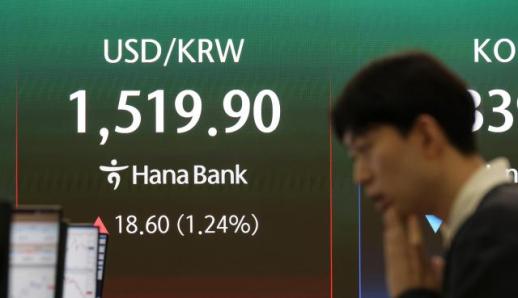 Korea's FX reserves slip $4 bn as won defense cost soars SEOUL, April 3 (AJP) — South Korea’s foreign exchange reserves fell by nearly $4 billion in March, underscoring the growing strain on the country’s external buffers as authorities continue to defend the won against crisis-era pressure. The Bank of Korea said Friday that reserves stood at $423.66 billion at end-March, down $3.97 billion from $427.62 billion a month earlier. That marked the steepest monthly decline since April 2024, when reserves fell by $5.99 billion as the won also plunged amid global market turmoil following the U.S. Federal Reserve’s decision to keep interest rates at a two-decade high. The drop came even after the government issued foreign exchange stabilization bonds in February, suggesting that the temporary boost from those proceeds was not enough to offset persistent intervention demand and valuation losses. The BOK said the March decline reflected a lower dollar value of non-dollar assets as well as market-stabilization operations, including foreign exchange swaps with the National Pension Service. The latest figures also highlighted how heavily authorities have leaned on liquid reserves. Securities, which accounted for 89.2 percent of total holdings, fell by $2.26 billion. Deposits — the most readily deployable portion of reserves — dropped by $1.44 billion, or 6.4 percent, to $21.05 billion from $22.49 billion a month earlier. Special Drawing Rights fell by $200 million to $15.57 billion, while the IMF reserve position stood at $4.55 billion. The reserve decline comes as the won remains under intense pressure. South Korean authorities sold a net $22.467 billion in the fourth quarter of 2025 for market stabilization, the largest quarterly intervention on record, according to the BOK’s latest disclosure. That compared with net dollar sales of $1.75 billion in the third quarter, $797 million in the second and $2.96 billion in the first. The broader market backdrop remains hostile. The won this week slid past 1,520 per dollar, levels not seen since 2009, as South Korean markets reeled from the prolonged Middle East war and heavy foreign selling. South Korea also slipped out of the global top 10 in reserve holdings. As of end-February, the country ranked 12th in the world, down from 10th a month earlier, according to the BOK. The central bank said some peers benefited from marking gold holdings to market as bullion prices rose. The latest data suggest Seoul is still willing to spend reserves to smooth volatility, but they also show the cost of that defense is mounting as dollar demand stays elevated and the external shock drags on. 2026-04-03 08:26:17
 -
 Toss Payments Says It Has Fully Deployed Post-Quantum Cryptography in Korea Toss Payments said on April 3 it has become the first company in South Korea’s finance and information technology sectors to fully adopt post-quantum cryptography, or PQC. PQC refers to next-generation encryption based on complex mathematical algorithms designed to withstand decryption attempts even by quantum computers. Quantum computers, which use principles of quantum mechanics, are expected in theory to solve problems that would take conventional supercomputers thousands of years in just seconds. The company said it has implemented PQC at points where payment data is created and transmitted. It completed deployment across its infrastructure, including its own data center and cloud environment on AWS. A key feature, it said, is full adoption on its payment page — the main interface between merchants and consumers. When users access the Toss Payments payment page through up-to-date browsers that support PQC, including Chrome, Edge, Safari and Firefox, PQC is automatically activated during communication with the server. Toss Payments said the rollout comes about 10 years ahead of a master plan presented by South Korea’s National Intelligence Service and the Ministry of Science and ICT calling for major national infrastructure to transition to PQC by 2035. It also said it is the only company in the finance and IT industries to apply PQC across all customer-facing web services and application programming interface, or API, services. Shin Yong-seok, the company’s chief information security officer, said advances in quantum computing pose both a major challenge and an opportunity for financial security. “Based on the heavy responsibility of being an industry leader, Toss Payments will build a ‘future-ready security’ standard so both merchants and consumers can pay with confidence,” he said.* This article has been translated by AI. 2026-04-03 08:12:00
 -
 Korean Films Line Up for April Releases After 15 Million-Ticket Hit 'The King and the Man Who Lives' The Korean box office has been buoyed by “The King and the Man Who Lives,” which drew 15 million moviegoers and helped bring audiences back to theaters. Attention is now shifting to April releases, with new Korean films rolling out across genres, from crime thrillers to horror and human drama. Leading the early April slate is “Endgame Investigation,” which opened April 2. It is director Park Cheol-hwan’s first feature film, after earning notice for the series “Grid” and “Dominant Species,” and is based on a real incident to heighten its sense of realism. The story follows Jae-hyeok, an “unlucky” veteran detective who was once a top performer in a metropolitan investigative unit but is repeatedly promoted and demoted as cases take unexpected turns, eventually being pushed out to a rural post — until what is framed as his last chance arrives. Actor Bae Seong-woo, known for roles in “Veteran,” “The King,” “The Great Battle” and “1947 Boston,” plays Jae-hyeok, portraying a detective whose work and life have become tangled. Jae-hyeok’s partner, Jung-ho, is played by Jung Ga-ram, who built a global fan base through “Love Alarm” and “The Interest of Love.” Jung-ho is depicted as a third-generation conglomerate heir and influencer who, after a bet with online users, finishes first on the police exam and shows up to his first day in a sports car. His by-the-book confidence clashes with Jae-hyeok’s instinct-driven approach, creating constant friction. That antagonistic partnership adds levity to what could be a heavy crime investigation film. Supporting actors including Esom, Jo Han-chul and Yoon Kyung-ho join the cast, with the plot built around “one case, two suspects” and a series of twists. The horror film “Salmokji” is set to open April 8. It begins with a modern urban legend: an unidentified figure captured on a map service’s road-view imagery. The film follows a production crew that heads to the Salmokji reservoir for reshoots and encounters a dark presence in the water, leading to a desperate struggle. It is director Lee Sang-min’s first solo feature, after short films “Hamjinabi” and “Dolrimchong” drew attention at domestic festivals. The film emphasizes unsettling audiovisual effects using the properties of water, from ominous ripples on the surface to sounds that should not be possible underwater. Kim Hye-yoon returns to the big screen after four years, playing Su-in as she fights to survive. Lee Jong-won, described as one of the most watched actors of 2026, takes on his first commercial film lead role as Gi-tae. The cast also includes Kim Jun-han, Kim Young-sung, Oh Dong-min, Yoon Jae-chan and Jang Da-a. The film uses experimental techniques including a 360-degree panoramic camera and motion detectors, designed to stand out in ScreenX and 4DX theaters with expanded visuals and heightened sound for an immersive experience. Closing out the month is “My Name Is,” scheduled for release April 15. The film is directed by veteran filmmaker Jung Ji-young and was invited to the Berlin International Film Festival’s Forum section, where it received international acclaim, before being presented to domestic audiences. The story follows 18-year-old Yeong-ok, who wants to erase what he sees as a tacky name, and his mother, Jeong-sun, who buried a secret from 78 years earlier in the painful history of Jeju in 1949. The film traces their journey as a sorrowful promise resurfaces beneath Jeju’s peaceful scenery. Actor Yeom Hye-ran plays the mother, Jeong-sun. More Korean films are also slated through April. They include “Nuruk,” the directing debut of actor Jang Dong-yoon, and “Jjanggu,” directed by and starring actor Jung Woo. Comedies are also in the pipeline, including “Mismatch,” starring Oh Dae-hwan and Oh Yoon-ah, and “Girl Referee,” featuring Chae Won-bin and Han Sun-hwa. With a mix of genres, established performers and new directing efforts, April’s lineup will test whether the momentum sparked by “The King and the Man Who Lives” can carry into another strong run for Korean cinema.* This article has been translated by AI. 2026-04-03 00:03:55
 -
 Six Policy Lenders to Back Hyundai Motor Group’s Saemangeum Growth Hub Project Six state-run policy finance institutions, including the Korea Development Bank, are set to support Hyundai Motor Group’s project to build an innovation-led growth hub in the Saemangeum area of North Jeolla Province. Financial industry officials said Thursday that a consultative body made up of the Korea Development Bank, Industrial Bank of Korea, Korea Credit Guarantee Fund, Export-Import Bank of Korea, Korea Trade Insurance Corp. and Korea Technology Finance Corp. is expected to sign a memorandum of understanding with Hyundai Motor Group on April 6. Hyundai Motor Group in February unveiled a large-scale plan to invest a total of 9 trillion won in Saemangeum to create a growth hub spanning artificial intelligence, robotics and energy. The plan includes an AI data center (5.8 trillion won), a robot manufacturing and parts cluster (400 billion won), a water electrolysis plant (1 trillion won), solar power generation (1.3 trillion won) and an AI hydrogen city (400 billion won). The policy finance group is expected to draw up support measures tailored to each institution’s role for the project.* This article has been translated by AI. 2026-04-02 21:03:00
 -
 Policy Split Deepens Divide Between Korea’s Pharma and Biotech Sectors Korea’s pharmaceutical and biotech industry is showing a sharper divide as government policy moves in opposite directions. While authorities are rolling out support measures to foster biotech, they have also decided to cut prices for generic drugs, leaving drugmakers bracing for tighter margins. Industry officials said April 2 that Samsung Biologics and Celltrion, the country’s two biggest biotech companies, are each targeting more than 5 trillion won in sales this year. Both companies have strengthened their positions in global contract development and manufacturing (CDMO) and biosimilars. Samsung Biologics posted 4.557 trillion won in revenue and 2.0692 trillion won in operating profit last year, setting a domestic industry record, and set a 2026 revenue target of 5.32 trillion won. Celltrion reported 4.1625 trillion won in revenue and 1.1685 trillion won in operating profit last year, and its 2026 sales outlook also tops 5 trillion won. At a recent shareholders meeting, Celltrion Chairman Seo Jung-jin, who returned as chair for the first time in 11 years, presented sales guidance of 5.3 trillion won and pledged step-by-step operating profit of 300 billion won in the first quarter, 400 billion won in the second, 500 billion won in the third and 600 billion won in the fourth. SK Biopharmaceuticals also posted its best-ever results, with revenue rising 29% from a year earlier to 706.7 billion won. Securities firms expect the company to reach 1 trillion won in annual sales in 2027. Government backing is also seen as a tailwind for biotech growth. Authorities have said they will pursue licensing reforms aimed at enabling the world’s fastest product launch timeline of 240 days. Earlier this year, the approval period for new biotech drugs and biosimilars was cut to 295 days from 406 days, with a plan to reduce it further to 240 days. A Ministry of Food and Drug Safety official said the agency is expanding its review staff by about 200 to speed biosimilar approvals and will provide active support. Late last year, the ministry enacted a special law to build a regulatory support framework for the CDMO industry. With a new registration system for export manufacturing of biopharmaceuticals — previously not covered under pharmaceutical regulations — the government plans to support measures including facility standards for export-focused plants, formalizing standards for good manufacturing practice certification and raw-material certification, and simplifying import customs procedures for active pharmaceutical ingredients. In pharmaceuticals, HK inno.N exceeded 1 trillion won in revenue last year, expanding the number of companies in the “1 trillion won club” to 10. But companies centered on generics are widely seen as entering a fight for survival as price cuts take effect. The government lowered the generic pricing formula to 45% of the original drug price, a move expected to reduce sales and constrain research and development spending. The impact is expected to be significant for both top-tier and smaller drugmakers. Changes are already being felt in the field. Analysts said companies that have relied on contract sales organizations (CSOs) are likely to face broad shifts in sales strategies. As firms move to cut fixed costs such as labor and marketing, more are expected to drop low-profit, low-priced generics and focus on higher-margin products. “Developing new drugs is difficult to deliver results in the short term, and it requires large-scale investment,” an industry official said. “Because options to recover costs are limited if it fails, companies have no choice but to start by adjusting expenses they can cut immediately.” As a result, more firms are moving toward conservative management, including scaling back facility investment and revising hiring plans, while also preparing to seek certification as innovative pharmaceutical companies. A task force for reforming the drug pricing system for industrial development criticized the price cuts, saying, “With the business environment worsening due to rising global instability, drug price cuts carried out now could make it difficult for domestic pharmaceutical companies to survive.” It urged the government to adopt flexible policies that “comprehensively consider public health, insurance finances and industrial competitiveness” so the industry ecosystem is not damaged. * This article has been translated by AI. 2026-04-02 18:15:00