

Journalist

CGTN
-
 New Book Warns Digital Tech and AI Are Eroding Cognitive Independence Digital technology is quietly encroaching on the human brain, a new book argues, citing neuroscience data. In an era dominated by artificial intelligence and algorithms, the authors say people are trading convenience for the loss of control over their own thinking. BookLab recently published “Lending My Brain — Neuroscience to Reclaim the Sovereignty of Thought in the AI Era.” The book examines how reliance on search changes memory formation, how short-form content reshapes attention systems, and how GPS use affects spatial cognition and the hippocampus. It also offers practical strategies aimed at restoring cognitive skills. The book is co-authored by three experts in medicine, management and technology: Lim Gyu-seong, a gastroenterology and hepatology specialist and medical doctor who heads GenosisAI Healthcare; Kang Si-cheol, a management Ph.D. and AI technology adviser to Seoul Medical Center who serves as vice chairman of GenosisAI Healthcare; and Lee Hui-won, chairman of GenosisAI Healthcare, who has led development of third-generation Human Digital Twin technology. The authors argue that while people in the 21st century have unprecedented access to information, their ability to internalize it is rapidly weakening. Citing research on the so-called “Google Effect,” they say outsourcing memory to digital tools brings measurable changes to synaptic plasticity and long-term potentiation mechanisms, and that cognitive decline can damage creativity, critical thinking and judgment. They also focus on the imprint of algorithmic curation and short-form content on cognition. The book describes the neuroscience basis of filter bubbles and confirmation bias, and uses the “popcorn brain” and “dopamine loop” theories to explain how consuming videos in 15-second bursts can fragment attention. As a remedy, the authors propose “cognitive friction,” a strategy of deliberately introducing inconvenience to restore deeper thinking. They outline an “eight-week cognitive sovereignty recovery program” that includes reading paper books, allowing the default mode network to activate through idle time, remembering routes without a map, and writing by hand. The book broadens into a philosophical question about balancing technology and humanity. The authors urge readers to choose between passively receiving information and living as thoughtful creators, framing the central challenge as a shift from knowledge to wisdom and from cognitive offloading to cognitive sovereignty.* This article has been translated by AI. 2026-03-24 17:04:19
 -
 Deposit-Backed Loans Rise at South Korea’s Top Banks as Stock Leverage Persists 'Borrowing to invest' remains strong. Even as uncertainty persists after the Middle East situation, borrowing is rising not only through unsecured credit loans but also through loans backed by deposits. With tough government rules slowing growth in mortgage lending, leveraged stock investing is emerging as a new variable in managing household debt, analysts say. According to the financial sector on the 24th, the outstanding balance of deposit-backed loans at the five major banks — KB Kookmin, Shinhan, Hana, Woori and NH NongHyup — totaled 6.3069 trillion won as of the 20th. That is nearly 10% higher than 5.8446 trillion won in March last year and the highest level on record. The balance has continued to rise this year, reaching 6.2290 trillion won in January and 6.2690 trillion won in February. Deposit-backed loans allow borrowers to take out about 90% to 95% of the value of their deposits, depending on the bank. Interest rates are typically set at the deposit rate plus about 1 to 1.5 percentage points. The rapid increase is being attributed to the combination of strict lending curbs that have continued since last year and a strong stock market. Some borrowers are using deposit-backed loans — which are excluded from debt service ratio rules that reduce personal loan limits — to fill funding gaps, or to use them like a credit line for stock investing, analysts say. A commercial bank official said market volatility has increased since the Middle East situation, but many investors appear to see it as a buying opportunity. The official said demand seems to be rising because rates are relatively low and borrowers can respond by canceling the deposit if they cannot repay. Buying by retail investors has continued to expand despite heightened uncertainty. On the 23rd, foreign investors net sold 3.6984 trillion won on the Korea Exchange’s main board, pulling the index lower, and institutions sold 3.8172 trillion won. Individuals, however, net bought 7.0030 trillion won, the largest net purchase on record. Margin debt, a key gauge of leveraged investing, also remains near peak levels. Data from the Korea Financial Investment Association show the balance hit 33.7 trillion won on the 5th, then slipped to the 31 trillion to 32 trillion won range, but has held in the 33 trillion won range again since the 16th. Financial officials say stock-market leverage could become a new factor in household debt management as overall household lending begins to expand again, centered on deposit-backed and unsecured loans. As of the 20th, household loan balances at the five major banks totaled 766.2606 trillion won, up 395.1 billion won from the end of last month (765.8655 trillion won). Over the same period, mortgage loans fell 40.0 billion won to 610.6811 trillion won, suggesting other lending — including deposit-backed loans — drove the increase. Another financial sector official said demand to pull together funds is growing as investors seek to take advantage of increased volatility. But the official warned that loans taken for short-term investing can shift in size and repayment timing depending on market conditions, and said deposit-backed lending should be watched closely.* This article has been translated by AI. 2026-03-24 17:03:00
 -
 Baeksang Arts Awards set for May 8, adds musical category SEOUL, March 24 (AJP) - Baeksang Arts Awards, South Korea's premier honors for television, film, and theater, will expand its awarding categories by adding a musical category starting this year's event in May, the organizers of the annual event said Tuesday. The Baeksang ceremony's decision to adopt the musical category into its selection of awards divisions reflects the increasing popularity of stage performances in South Korea. According to the Korea Arts Management Service, Korea’s musical sector has grown steadily from 9,408 performances in 2023 to 10,983 in 2025, up 14 percent over two years. The move marks a structural shift beyond the traditional television, film and theater divisions, reflecting the rising commercial and cultural significance of musicals within South Korea’s entertainment industry. The 62nd edition of the awards event, scheduled for May 8 this year, will coincide with the 60th anniversary of Korean musicals, adding further significance to the introduction of the new category. This year’s ceremony will be held under the theme "The Stage," reflecting an expanded concept that encompasses television, film, theater and musical performances rather than a single physical stage. 2026-03-24 16:46:09
 -
 South Koreans told to join energy-saving campaign SEOUL, March 24 (AJP)-Leaving cars behind once a week and tightening garbage supply are emerging as everyday inconveniences for South Koreans, as prolonged Gulf tensions begin to disrupt factories. The government on Tuesday rolled out nationwide energy-saving measures, urging both public and private sectors to cut consumption as supply uncertainties deepen. A voluntary five-day vehicle rotation system was introduced for private cars, alongside 12 practical guidelines — from using public transport to maintaining indoor temperatures and switching to high-efficiency appliances. In the public sector, authorities will strengthen inspections of the mandatory vehicle rotation system already in place. Institutions that fail to comply may face warnings and other administrative measures. The government also called on the private sector to participate voluntarily. The move comes as energy supply uncertainties have increased due to instability in the Middle East. The same factors have also disrupted naphtha imports, prompting domestic petrochemical companies to cut production and worsening raw material supply conditions. At a plastic film manufacturing plant in Ansan, Gyeonggi Province, some production lines have been halted due to unstable polyethylene supply. Several companies have also reduced their workforce as operational pressures mount. The impact is beginning to reach everyday life. Companies supplying government-designated garbage bags have warned of delays in production and deliveries due to raw material shortages, while signs of supply disruptions are emerging in retail markets. The government said it will continue to closely monitor the energy supply situation and stressed the need for public participation in conservation efforts. 2026-03-24 16:44:25
 -
 KAIST researchers solve solar cell dilemma by achieving 25% efficiency and long-term stability SEOUL, March 24 (AJP) - Researchers at the Korea Advanced Institute of Science and Technology (KAIST) have addressed a long-standing trade-off in solar technology where increasing energy efficiency often leads to a shorter lifespan. The team succeeded in developing a high-efficiency perovskite solar cell that maintains performance over time by precisely controlling the internal structure of a protective surface layer. KAIST announced Tuesday that a joint research team led by Distinguished Professor Seo Jang-won from the Department of Chemical and Biomolecular Engineering and the Korea Research Institute of Chemical Technology (KRICT) developed a design for a two-dimensional (2D) protective film. This technology simultaneously enhances both the power conversion efficiency and the operational reliability of the cells. Perovskite solar cells are considered the next generation of high-efficiency photovoltaics due to their low production costs. However, their tendency to degrade when exposed to heat, humidity, or prolonged sunlight has remained a significant barrier to commercial use. To combat this, researchers typically apply a 2D layer on top of the primary 3D perovskite structure to reduce surface defects, but these layers often lack the structural integrity needed for long-term durability. The research team introduced a more robust 2D structure known as the Dion-Jabocson (DJ) phase. In this configuration, organic molecules act like strong adhesive, binding the perovskite layers tightly together. By carefully adjusting heat treatment temperatures and timing, the researchers were able to control the "n-value," or the number of stacked layers within the film, to create a more organized and stable internal arrangement. This precise control allowed for smoother charge movement, which boosted the cell's efficiency. The team confirmed through experiments that the structural rearrangement at the interface during heat treatment is what allows the 2D film to be customized for maximum performance. This process also ensures that the manufacturing results are highly reproducible. The resulting solar cells achieved a power conversion efficiency of 25.56 percent. Furthermore, the devices maintained high performance levels even under extreme testing conditions of 85 degrees Celsius and 85 percent relative humidity. The researchers also confirmed that the technology is effective when applied to large-area modules, signaling strong potential for mass production. "This study demonstrates that the conventional dilemma of choosing between efficiency and longevity can be solved through the structural design of a surface protective film," said Distinguished Professor Seo Jang-won. He added that because the technology remains stable despite minor changes in processing conditions, it will be highly beneficial for large-scale commercial manufacturing. The study, co-authored by KAIST doctoral student Lee Jae-hee and KRICT researcher Moon Chan-su, was published in the journal Joule on February 24, 2026. 2026-03-24 16:21:56
 -
 NH NongHyup Financial Adopts Five-Day Vehicle Rotation to Save Energy NH NongHyup Financial Group said on the 24th it has immediately introduced a groupwide five-day vehicle rotation system as the government raised its resource security alert due to the prolonged war in the Middle East. With uncertainty growing over energy supplies as Middle East conditions deteriorate, the government raised the resource security alert for crude oil to the “caution” level as of 3 p.m. on the 18th. Starting at midnight on the 25th, the public sector will begin a five-day passenger-car rotation system that restricts driving by day of the week based on the last digit of a vehicle’s license plate number. NongHyup Financial said it will apply the policy from the 24th to all affiliates, including the financial holding company, in line with the government’s energy-saving measures for public institutions. The rule covers both corporate vehicles and employees’ commuting vehicles. Exemptions apply to electric and hydrogen vehicles and to cases where travel is difficult, including people with disabilities, pregnant women and vehicles carrying infants. The group said it is also stepping up energy-saving and carbon-reduction efforts by turning off lights in office areas, shutting down unused electronic devices and encouraging stair use. Chairman Lee Chan-woo said the group has maintained an emergency response system for financial markets since the outbreak of the Middle East war. “All employees will join in saving energy and take the lead in overcoming this national crisis,” he said.* This article has been translated by AI. 2026-03-24 15:39:00
 -
 High schoolers sit for nationwide test to gauge their academic levels SEOUL, March 24 (AJP) - Over a million high school students nationwide took a test to assess their levels of academic achievement. According to the Seoul Metropolitan Office of Education, some 1.22 million students from 1,948 high schools across 17 metropolitan and provincial cities sat for the test on Tuesday. The nationwide test is conducted several times a year in a format similar to the annual university entrance exam later in the year, often considered a life-deciding test in a country where admission to a prestigious university is a key factor to success. First introduced in 2002 to reduce reliance on private crammers, the test is intended to help students prepare for university admission. 2026-03-24 15:38:59
 -
 Korean Cultural Center in Hong Kong previews works from Art Basel Hong Kong 2026 galleries The Korean Cultural Center in Hong Kong said it will present a group exhibition of Korean contemporary art, “From Korea to Hong Kong: Expanding Horizons,” from March 24 through May 30. The show, tied to “Art Basel Hong Kong 2026,” was organized in cooperation with 11 leading South Korean galleries participating in the fair. It brings together works by 11 artists spanning generations and genres. Participating artists are Lee Manna (Sun Gallery), Michael Joo (Kukje Gallery), Kim Jae-yong (Hakgojae Gallery), Won Seongwon (Arario Gallery), Kang Kanghoon (Johyun Gallery), Shin Kyungchul (Rian Gallery), Choi Sujin (G Gallery), Lee Jaeseok (Gallery Baton), Lee Yujin (Wooson Gallery), Kim Mooyoung (N/A) and Lee Jonghwan (Cylinder). The center said the exhibition is notable for bringing together, in one venue, works selected directly by each gallery. It said the space was arranged to highlight each artist’s distinct approach while allowing visitors to experience the show as a cohesive whole, reworking messages and aesthetic directions presented at Art Basel within the center’s galleries. Visitors will be able to see how different visual languages align, and how styles intersect from emerging artists to midcareer artists active internationally, the center said. Director Choi Jaewon said this year’s edition aims to present “expanded horizons” by broadening the participating galleries, linking the timing to the fair, and widening the range of generations and genres. He said he hopes it will be remembered as a signature program that offers a chance to encounter Korean contemporary art around the same time each year. * This article has been translated by AI. 2026-03-24 15:27:37
 -
 Hana Financial to Move Headquarters to Incheon’s Cheongna in September; Hanwha Life Extends Outside Director Terms Hana Financial Group said it will relocate its group headquarters to Cheongna, Incheon, in September and secured funding for tax-free dividends, a move expected to strengthen shareholder returns. Hanwha Life Insurance, meanwhile, extended the term of outside directors from two years to three to bolster board expertise. Hana Financial on Monday approved at its annual shareholders meeting a proposal to reduce its capital reserve by 7.4 trillion won to enable tax-free dividends. The decision allows the company to transfer 7.4 trillion won from the capital reserve to retained earnings and use it as dividend funding. If dividends are paid from this source, individual shareholders can receive payouts without paying dividend income tax. Hana Financial said it plans to begin tax-free dividends starting with its dividend for this year’s fourth-quarter results. Shareholders also approved an amendment to the articles of incorporation to move the group headquarters to the Cheongna International City area of Incheon. The plan advances the long-discussed “Hana Financial Town” concept, envisioned after Kim Seung-yu, a former chairman of Hana Financial, visited Banco Santander’s Santander City near Madrid in 2007. The Cheongna Hana Financial Town is planned to cover 128,474 square meters and is expected to serve as a future financial hub. Hana Financial said it plans to begin the headquarters relocation on Sept. 30. The board lineup was partly reshaped. Shareholders considered proposals to appoint Vice Chairmen Lee Seung-yeol and Kang Seong-muk as inside directors. Choi Hyun-ja, a consumer rights specialist and professor in Seoul National University’s Department of Consumer Science, joined as a new outside director. Hana Financial also approved a charter change to reorganize its board-level Consumer Risk Management Committee into a Consumer Protection Committee, underscoring a groupwide push for consumer-focused management. The meeting also established a basis to introduce electronic shareholders meetings in line with the Commercial Act revision set to take effect in January next year. Park Dong-moon, chairman of Hana Financial’s board, said in a letter to shareholders, “We will closely check the faithful implementation of the corporate value enhancement plan and strengthen overall governance, including internal controls and consumer protection.” He added, “Even in a rapidly changing financial environment, we will pursue long-term shareholder value through responsible decision-making and sustainable management.” Hanwha Life Insurance expanded the term of outside directors from two years to three years. Shareholders also approved the reappointment of outside directors Park Soon-cheol and Jung Soon-seop and the new appointment of Yoo Chang-min, head of the investment division, as an inside director. Hanwha Life CEO Kwon Hyuk-woong said, “We aim to secure the industry’s top AI competitiveness by fully applying artificial intelligence technology across our business.” He added, “Based on the results and foundation we have built, we will continue stable growth and responsible management and do our best to meet expectations.” 2026-03-24 15:20:38
 -
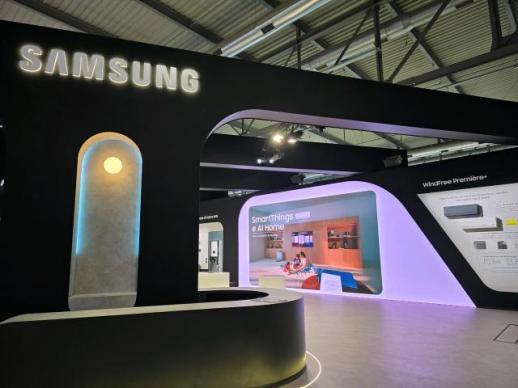 Samsung Electronics showcases joint HVAC solutions with newly acquired FläktGroup at MCE 2026 SEOUL, March 24 (AJP) - Samsung Electronics unveiled its latest heating, ventilation, and air conditioning (HVAC) solutions jointly with FläktGroup at the MCE 2026 exhibition in Milan, Italy, on Tuesday. The event marks the first joint showcase since Samsung's acquisition of the climate control firm in November. Samsung is displaying a centralized HVAC system that connects FläktGroup's five indoor units with its own outdoor units, such as the DVM S2+, managed through a Building Management Solution (BMS) platform. The companies are targeting high-value industrial sectors, including data centers and clean rooms. Commercial products on display include FläktGroup's 'CAIRplus' Air Handling Unit (AHU) and the compact 'Geko' Fan Coil Unit (FCU). For the residential market, Samsung introduced the 2026 'AI Wind-Free Combo Pro' wall-mounted air conditioner and the 'EHS All-in-One' system. Targeting European regulations and demand for energy efficiency, the EHS and DVM S2+ lineups utilize R32 refrigerant, which features a 68 percent lower Global Warming Potential compared to conventional R410A. The systems also incorporate AI-driven energy-saving modes and waste heat recycling technologies. The biennial MCE exhibition, which features around 1,900 participating companies this year, runs from March 24 to 27. 2026-03-24 15:19:54