
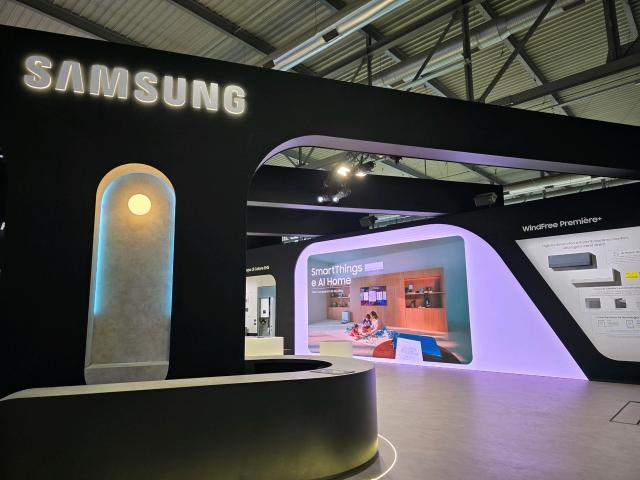
SEOUL, March 24 (AJP) - Samsung Electronics unveiled its latest heating, ventilation, and air conditioning (HVAC) solutions jointly with FläktGroup at the MCE 2026 exhibition in Milan, Italy, on Tuesday.
The event marks the first joint showcase since Samsung's acquisition of the climate control firm in November.
Samsung is displaying a centralized HVAC system that connects FläktGroup's five indoor units with its own outdoor units, such as the DVM S2+, managed through a Building Management Solution (BMS) platform. The companies are targeting high-value industrial sectors, including data centers and clean rooms.
Commercial products on display include FläktGroup's 'CAIRplus' Air Handling Unit (AHU) and the compact 'Geko' Fan Coil Unit (FCU).
For the residential market, Samsung introduced the 2026 'AI Wind-Free Combo Pro' wall-mounted air conditioner and the 'EHS All-in-One' system.
Targeting European regulations and demand for energy efficiency, the EHS and DVM S2+ lineups utilize R32 refrigerant, which features a 68 percent lower Global Warming Potential compared to conventional R410A. The systems also incorporate AI-driven energy-saving modes and waste heat recycling technologies.
The biennial MCE exhibition, which features around 1,900 participating companies this year, runs from March 24 to 27.

Candice Kim is a dedicated business and technology reporter specializing in the intersection of high-tech innovation and fast-paced consumer trends. Her core beats span the semiconductor, IT, cosmetics, and retail sectors, where she provides in-depth coverage of industry titans including Samsung Electronics, SK hynix, and LG Electronics, alongside leading consumer brands like Olive Young and Musinsa. Whether analyzing complex silicon supply chains or tracking the latest shifts in beauty and fashion retail, Candice is committed to delivering sharp, accurate reporting that keeps readers informed on the forces shaping today's most dynamic markets.
Copyright ⓒ Aju Press All rights reserved.
Related News
-
 Beyond HBM: The next AI memory race is already underway
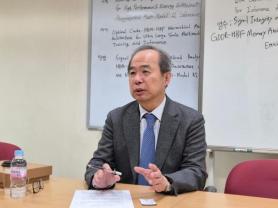
Professor Joung-ho Kim talks in an interview with AJP at the KAIST Tera Lab/ AJP Candice Kim DAEJEON, March 24 (AJP) - High bandwidth memory (HBM) is what enabled the current artificial intelligence boom, giving chips the speed needed to train large-scale models. But as AI shifts from training to real-world deployment, the industry is running into a different constraint — not speed, but scale. That shift is beginning to redefine the competitive landscape. The next phase of the AI chip race may hinge not on HBM itself, but on what comes after it: high bandwidth flash (HBF). Joung-ho Kim, a professor at the Korea Advanced Institute of Science and Technology (KAIST) and dubbed as the “father of HBM,” argues that this shift is not incremental but structural. In an interview with AJP, he argued the future of AI competitiveness will hinge on how quickly companies adapt their memory architecture to this new reality. “The memory architecture must be fundamentally restructured,” Kim said. “HBM defined the last decade, but HBF will likely determine the next.” The urgency stems from the rapid expansion of AI workloads, particularly in inference — the stage where trained models generate responses in real time. Unlike training, inference relies heavily on key-value (KV) caches, which store intermediate data and grow rapidly as models process longer context windows. What was once a manageable memory demand is now pushing into the terabyte range per system, exposing the limits of existing HBM-based designs. HBM, built on stacked DRAM, has served as an ultra-fast layer closely attached to GPUs, effectively acting as the system’s “working memory.” But its strengths — speed and bandwidth — are increasingly offset by limitations in scalability and cost. As models expand, simply adding more HBM becomes inefficient and prohibitively expensive. A proposed next-generation AI memory architecture integrates a GPU with High Bandwidth Memory (HBM) and massive-capacity High Bandwidth Flash (HBF) to overcome data bottlenecks./ KAIST Tera Lab HBF addresses this bottleneck by introducing NAND flash into the memory hierarchy. While slower than DRAM, NAND offers significantly greater capacity at a fraction of the cost, enabling a new layered approach in which high-speed HBM handles immediate computation while HBF stores the massive datasets required for sustained inference. This shift marks a subtle but critical change in how AI performance is defined. “Once decoding begins, throughput becomes memory-bound,” Kim noted. “At that stage, capacity matters as much as bandwidth.” Graphics by AJP Song Ji-yoon The implications are already shaping corporate strategies. SK hynix, which secured an early lead in HBM through aggressive investment in the 2010s, is once again moving ahead of the curve. In February, the company launched a high bandwidth flash standardization consortium with U.S.-based SanDisk, aiming to establish global specifications under the Open Compute Project. The move signals an attempt not just to develop technology, but to shape the broader ecosystem before the market fully materializes. The timeline remains long, with engineering samples expected around 2027 and commercialization closer to 2030. Yet the strategic positioning is taking place now, as companies seek to avoid repeating past missteps. Samsung Electronics, which was slower to commit to HBM in its early stages, is approaching the transition with greater caution. While focusing its immediate resources on next-generation HBM products such as HBM4E and HBM5, it is also investing in NAND-based architectures aligned with the HBF concept. The goal is clear: to ensure it does not lose its footing in another architectural shift. At its core, the emerging competition is less about a single product than about control over the entire memory system. The question is no longer who can produce faster chips, but who can design the most efficient hierarchy of compute and storage for an AI-driven world. The parallels with the past are difficult to ignore. SK hynix’s early bet on HBM reshaped the competitive landscape, while hesitation from rivals proved costly. Kim suggests that the same dynamic could play out again. “If companies fail to invest in HBF now, they could face the same risks we saw before,” he said. HBF may still be years away from commercial deployment, but the direction of the industry is already becoming clear. If HBM enabled the rise of large-scale AI training, HBF is positioning itself as the foundation for scalable, real-time AI services. In that sense, the next phase of the AI race may not be decided by raw processing power alone, but by something less visible — the architecture of memory itself.
-
 Samsung Electronics and union reopen talks, strike risk lingers
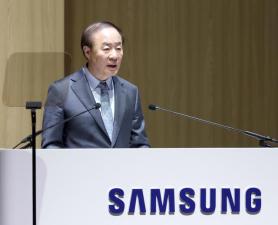
Jun Young-hyun, Vice Chairman and Head of Samsung Electronics' Device Solutions (DS) Division/ Courtesy of Samsung Electronics SEOUL, March 23 (AJP)-Management at Samsung Electronics and its labor union held an unexpected executive-level meeting Monday, signaling a possible thaw in tensions after the union abruptly canceled a planned rally outside Chairman Lee Jae-yong’s residence. Vice Chairman Jun Young-hyun, who leads the critical Device Solutions (DS) division, met a four-member delegation from a joint protest committee that includes representatives of the National Samsung Electronics Union (NSEU). During the 90-minute meeting, Jun acknowledged employee grievances and proposed resuming formal negotiations, according to a union statement. “I am aware of the employees’ complaints, and we have arranged this meeting with the labor union to resolve them,” Jun said, adding the company is prepared to discuss key demands at the bargaining table. The union reiterated its preconditions for talks: scrapping the 50 percent cap on the Overall Performance Incentive (OPI) and overhauling the bonus system to improve transparency. It has strongly opposed the current use of Economic Value Added (EVA) as a benchmark, calling instead for metrics tied to operating profit. Jun signaled openness to reviewing the demands but cautioned that bonus allocation across semiconductor business units requires careful consideration. He also proposed a follow-up meeting in the near term. The dialogue came just hours after the union called off a press conference and rally planned outside Lee’s home in Seoul, citing “internal reasons,” in a move widely seen as lowering immediate tensions. Still, the risk of industrial action remains. The union recently secured legal strike rights after 73.5 percent of its roughly 90,000 members backed a walkout. It has threatened an 18-day general strike from May 21 to June 7 if negotiations fail. A mass rally involving about 9,300 members is scheduled for April 23 in Pyeongtaek, home to Samsung’s flagship chip plants. A strike would mark only the second in the company’s history, following a walkout in July 2024. Industry observers warn that any prolonged disruption could weigh on semiconductor output at a pivotal moment, as Samsung races to capture surging global demand for AI memory chips.
-
 Samsung union chief: 'No. 1 means nothing without first-class treatment'
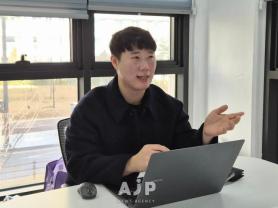
Choi Seung-ho, chairman of the Samsung Electronics Union Joint Action Committee speaks in an interview with AJP/ AJP Candice Kim PYEONGTAEK, March 20 (AJP) - Riding a two-year windfall from the global AI boom, Samsung Electronics is ramping up investment and shareholder returns at an unprecedented scale — but one stakeholder feels left out of the bounty: its employees. The company is pouring more than 110 trillion won ($74.6 billion) into semiconductors and has pledged to return 50 percent of its free cash flow to shareholders. Yet workers say the rewards of the AI-driven surge are not being shared on the ground. “We aren’t asking for the impossible,” said Choi Seung-ho, chairman of the Samsung Electronics Union Joint Action Committee, in an interview with AJP near the company’s Pyeongtaek fabs. “We are asking the company to act like the world-class leader it claims to be.” “Profit-hoarding days must end.” The rhetoric marks a shift from wage negotiations to a broader challenge of Samsung’s corporate identity, as the union escalates pressure following a 93.1 percent vote in favor of industrial action. Plans are now underway for a mass rally in April and a potential general strike in May. At the core of the dispute is compensation — and a widening gap with rival SK hynix that the union warns is fueling a “talent exodus.” While Samsung employees are widely perceived as elite earners, Choi pointed to a different reality for mid-level staff. A manager earning a base salary of around 76 million won ($57,000) often struggles to reach 100 million won in total compensation after taxes and relatively modest bonuses — a level increasingly out of step with the industry’s AI-driven gains. The contrast with SK hynix is stark. In 2025, its employees received average performance bonuses of 120 million to 130 million won under a transparent profit-sharing model. Comparable roles at Samsung, the union says, received roughly 37 million won — less than a third. “That gap creates a profound sense of deprivation,” Choi said. The union is demanding the removal of Samsung’s “Economic Value Added” (EVA) bonus cap, which limits payouts to 50 percent of salary and is based on a complex internal formula widely criticized by employees as a “black box.” By contrast, SK hynix shares 10 percent of operating profit directly with employees and removed its bonus cap last year. Graphics by AJP Song Ji-yoon Tensions have been further aggravated by what the union calls a “divide-and-conquer” approach. Management recently proposed conditional bonuses tied to 100 trillion won in operating profit — but only for the Memory division, excluding Foundry and System LSI workers. “We were hired on the promise of equal treatment across the semiconductor pillar,” Choi said. “Excluding certain divisions now is nothing short of employment fraud.” The internal conflict comes as Samsung accelerates investment to maintain its lead in AI chips and high-bandwidth memory. Under its latest value-up plan, the company will boost facility and R&D spending to 110 trillion won this year, including a 37.7 trillion won R&D budget. At the same time, it reaffirmed its shareholder return policy, maintaining a payout ratio of 50 percent of free cash flow and planning to distribute 9.8 trillion won in dividends this year. For the union, the contrast is stark. “The company says it cannot afford to improve compensation, yet it commits over 100 trillion won to capital and generous shareholder returns,” Choi said. “There is no equivalent concept of ‘employee return.’” The stakes are rising quickly. Samsung’s Pyeongtaek production lines are estimated to generate up to 10 billion won per hour, meaning an extended strike could inflict losses exceeding 5 trillion won. “We are preparing,” Choi said, noting plans for large-scale mobilization ahead of April’s rally. He dismissed criticism that the dispute reflects excessive demands from high-paid engineers, framing it instead as a structural issue behind the so-called “Korea discount.” “If Samsung wants to maintain leadership in the HBM race, it must choose coexistence over disruption,” he said. “Without fair rewards, we cannot stop the outflow of talent.” Choi added that feedback from engineers who have already moved to SK hynix has been telling. “They report extremely high satisfaction,” he said. “When a company provides what employees feel they deserve, the result is obvious.” His final warning was blunt. “If this continues, the union may end up helping people leave,” Choi said. “We will support each other in finding opportunities elsewhere.