
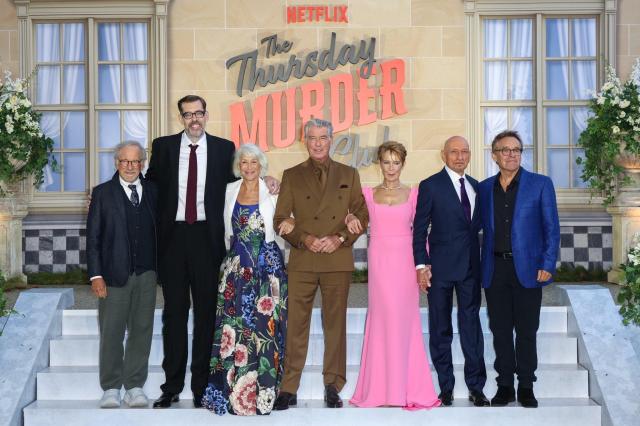
SEOUL, November 20 (AJP) - A man has gone to prison in Richard Osman’s next murder mystery. Anyone tempted to turn the page to find out why will have to wait. So will Richard Osman.
The British television presenter and bestselling novelist has built an international following around four retirement-village friends who spend their Thursdays investigating murders. Their creator, however, does not always know much more than they do when a case begins.
In a video interview with AJP, Osman offered an early glimpse of the mystery at the heart of his sixth Thursday Murder Club novel scheduled to be published in September 2027.
The case reaches back half a century. “I’ve got something that happened in the 1970s,” he said.
“I’ve got a whole bunch of people who were involved, but there’s a mystery at the heart of it, and at the moment I don’t know the answer to that mystery.”
One question he keeps asking himself is why the man went to prison.
“I am absolutely in the dark,” he said.
His readers have been known to tell him they worked out who the killer was in the first 10 pages.
“I always say, ‘Well, I didn’t.’”
Four friends with useful pasts
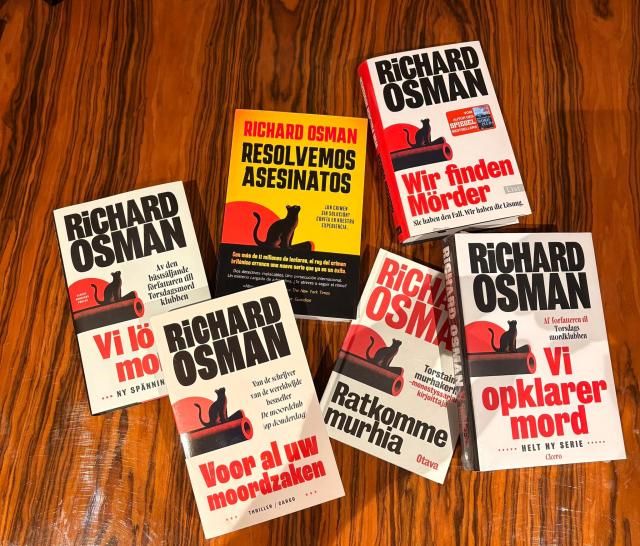
Osman was already a familiar face on British television before publishing “The Thursday Murder Club” in 2020. For 13 years, he appeared alongside Alexander Armstrong on the regular edition of the BBC quiz show “Pointless,” supplying facts and dry humor from behind a desk. Fiction gave him a different kind of audience.
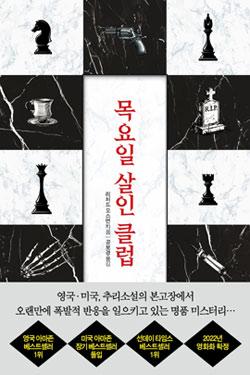
By 2025, worldwide sales of his books had exceeded 17 million copies, according to his literary agency, Mushens Entertainment. That year, Netflix released a film adaptation starring Helen Mirren, Pierce Brosnan, Ben Kingsley and Celia Imrie as his four amateur detectives.
For readers arriving at the books for the first time, the premise is deceptively quiet.
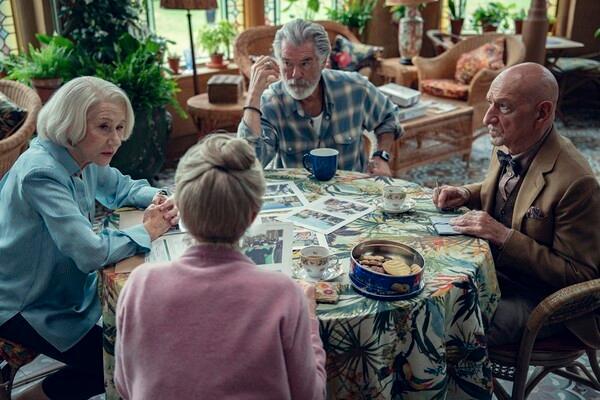
At Coopers Chase, an English retirement village, a Thursday booking for the Jigsaw Room promises a discussion of Japanese opera. It is a useful cover. Behind the door, four friends in their 70s spend two hours poring over police files on unsolved murders. Then a local developer turns up dead, and their pastime becomes an investigation with fresh consequences.
Each brings a lifetime of useful experience.
Elizabeth Best, a former spy, has the nerve and contacts to get things done. Joyce Meadowcroft, a retired nurse, brings medical knowledge, an observant eye and a diary that gives the novels much of their warmth. Ron Ritchie, a former trade union leader, is difficult to intimidate. Psychiatrist Ibrahim Arif supplies a methodical mind and an understanding of human behavior.
Across five novels, their friendships and private lives have become as important as the crimes. In the fifth, “The Impossible Fortune,” published in 2025, Elizabeth is grieving, Joyce is occupied with wedding preparations, Ron faces family troubles and Ibrahim continues providing therapy to a criminal. A wedding guest’s appeal to Elizabeth draws them into another mystery involving a threatened life and a supposedly unbreakable code.
The next book’s connection to the 1970s opens a tantalizing possibility: a narrative time machine carrying readers toward the years when these pensioners were young adults, accumulating the experiences they now put to use.
Whether their younger selves will enter the story remains unknown. Osman has disclosed an event from that decade, not a novel set entirely there or a confirmed connection to the four.
Even the identity of a future killer can remain unsettled well into his writing.
“To me they’re just a group of people,” he said.
What interests him first is what makes each person peculiar. He has changed his mind about the culprit halfway through a book, two-thirds of the way through and, occasionally, very near the end.
The bargain with readers is that they should be able to return to the finished novel and find the clues.
“I reserve the right to change my mind right up to the last page of the book,” he said.
Invoking Patricia Highsmith's Tom Ripley, AJP asked what one of Osman's own characters would have to do to lose the reader's sympathy.
Suppose, Osman suggested, Highsmith had him push a cat off a table.
In his own fiction, a villain’s life expectancy depends partly on how much of that character’s company he can stand.
“If I have a character who is genuinely awful, like an abuser or anything like that, I tend to kill them quite quickly because I don’t want to hang out with them for very long,” he said. “And if I don’t want to hang out with them, I figure readers don’t want to either.”
‘Joyce’s assistant’
Osman’s grandfather was a police officer with a piece of advice about breaking up a pub fight: be the second one through the door. The first gets hit.
Working in television, Osman found plenty to like about going second. He enjoyed coming up with ideas and selling them while someone else carried the main responsibility.
Writing a novel, he discovered that he rather liked having a universe to himself. Then Joyce had something to say.
“I feel like I’m Joyce’s assistant a lot of the time,” he said.
To explain how she helped him find his way into fiction, he described an ordinary morning. Someone on a suburban street has finished breakfast and is leaving for work. What business did he have telling readers about a morning they knew as well as he did?
Writing a diary entry in Joyce’s voice got him past that feeling. She could tell readers what she had noticed.
“You have to bring characters into the world and let them describe what their world is,” he said.
Sometimes he wakes with a thought that might interest Ron. Give the same thought to Joyce or Ibrahim, and it can go somewhere else entirely. When all four friends are making plans, he sometimes feels his contribution is simply to record them accurately.
“I would recommend writing a gang of four pensioners as probably the best therapy you could ever have,” he said.
What he wants from a Korean novel
Osman understood why English readers might enjoy the company of his four detectives. Their appeal in South Korea or Brazil was initially harder for him to explain.
His theory begins with what he wants from other people’s books.
“If I read a South Korean novel, I want it to be completely South Korean,” he said. “I want to read the truth about South Korea. I want to read about South Korean characters, and I just want to read something that is real and from a particular culture.”
He suspects international readers approach his English retirement village with much the same appetite.
“I think that the reason it’s successful abroad is because it’s really true to itself,” he said.
As a boy in England in the 1970s, he watched American detective shows. America seemed like “this shining palace,” somewhere he could scarcely imagine visiting.
He sees a resemblance between Britain’s cultural reach when he was young and South Korea’s influence in his children’s lifetimes. Britain, he said, had long “punched above its weight” in music and film.
“South Korea has done the exact same thing,” he said. Few countries, in his view, have “absolutely excelled” in “every single field” of culture.
“My generation, we looked towards America,” he said. “And now my kids, they look all around the world, and I think that can only lead to good things.”
The movement of culture across borders is familiar territory on “The Rest Is Entertainment,” the podcast he co-hosts with former Guardian columnist Marina Hyde.
Together, they examine how television, film, publishing and celebrity work behind the scenes.
In 2024, they discussed “Made in Korea,” a BBC series following five young British men through the K-pop training system. By the second quarter of 2026, their podcast ranked 10th in the UK by reach among weekly podcast listeners aged 15 and older, according to Edison Research at SSRS.
Guests in June included Steven Spielberg, discussing his unsuccessful bid to direct a James Bond film, and Tom Hanks, talking about “Toy Story” and a performance he regrets.
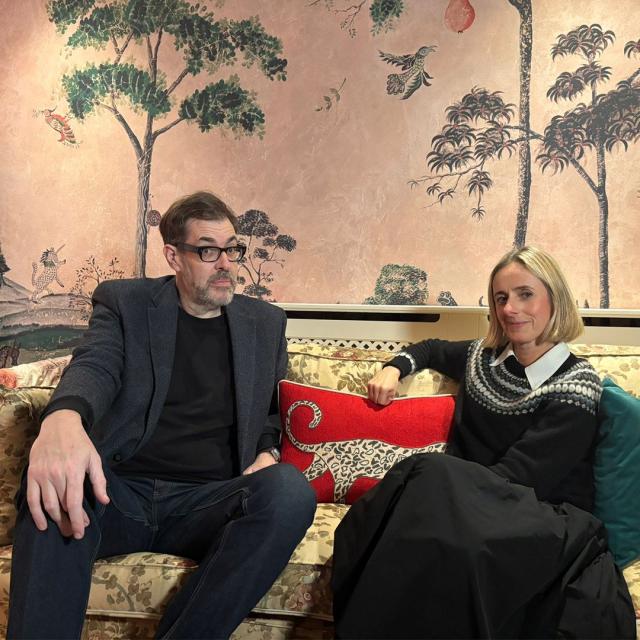
Some of Osman’s experience on the other side of interviews has found its way into his fiction.
“We Chase Shadows,” published in September, is the second novel in his separate “We Solve Murders” series. Its celebrity novelist, Rosie D’Antonio, remembers when promoting a book meant a newspaper interview and a seat on a television talk show. Now someone wants her to eat hot wings on camera.
Osman enjoys discussing his books, but recognizes the itinerary. He calls it “an airport baggage carousel of interviews.”
A tourist in his own class
Success has brought Osman into rooms he would never have entered as a boy.
His mother, Brenda, raised him and his brother on little money. He went on to study politics and sociology at Cambridge and build a career in television before becoming a novelist.
The unfamiliar rooms provide material for his plots and characters. But when he sits down to write, he said, his first instincts still belong to the household in which he grew up.
“I feel like I’m a tourist in the class that I’ve ended up in, for sure,” he said. “Not in a bad way, because it’s a nice place to go on holiday.”
It was during visits to his mother’s retirement community that he found the idea for the Thursday Murder Club.
He wanted his detectives to possess talents readers could believe in, along with tempers their friends occasionally had to endure. Making them uniformly wise or sweet would have done a disservice to the people who inspired them.
“They’re all flawed. They all get stuff wrong all the time. They argue with each other all the time,” he said. “I don’t want anyone in their 80s to be reading this and feeling guilty that they’re not solving crimes.”
Their investigations offer readers the prospect of a solution. Their personal lives cannot always offer the same reassurance.
Elizabeth’s husband, Stephen, has dementia, a condition Osman knew through his own grandfather. For a reader caring for a spouse with the illness, that part of the story may feel more immediate than the murder.
Osman wants people to close his books feeling a little better about others. But he believes readers have good reason to distrust a novelist who offers only the pleasant parts of growing old.
“I’m allowed lovely characters and I’m allowed jokes if I tell the truth and if I try and reflect the world as it is,” he said.
His mother reads constantly and seldom volunteers a compliment.
Occasionally, though, she reaches a passage about dementia, grief or loneliness and asks a question that makes him prouder than praise would.
“How do you know those things?” she asks.
“She won’t ever tell me something’s good unless she absolutely has to,” Osman said. “If she says it’s good, then I know it really is good.”
Lee Jung-woo
I studied philosophy in college, and sociology and journalism in graduate school. I cover North Korea, South Korean politics, foreign affairs and films. I enjoy Nordic cinema, Indian cuisine and Japanese detective novels. I have a cat and like bright, acidic coffee.
Copyright ⓒ Aju Press All rights reserved.
Related News
-
 New Novel Explores Time Travel and Romance in 'Someday Again, Kichijoji'
Someday Again, Kichijoji by Lee Sang-hoon, Sejong Maru. This novel combines time travel and romance to explore themes of loss and recovery. It tells the story of 31-year-old Young-bin, who loses his sense of direction in life after a breakup, quitting his job, and the death of his mother. Following an old business card found among his mother's belongings, he travels to a small bookstore in Tokyo, Japan, where he unexpectedly returns to three years in the past. There, he meets Seung-mi, who is traveling with the scars of a broken engagement, and they share their pain while facing a choice between remaining in the past or returning to the present. The narrative focuses on the psychological transformation of the characters as they learn to accept the past rather than change it. Lee Sang-hoon, a journalist, was selected as a finalist in the long-form category of the 3rd Naver Game Literature Awards. The book has 228 pages and is priced at 16,800 won.* This article has been translated by AI.
-
Feminist Novel Rejected in Korea to Premiere on Netflix in December
A feminist novel that faced repeated rejections for adaptation in South Korea will be released as a Netflix film in Japan this December. On October 8, Netflix announced that the film My Crazy Feminist Girlfriend will be exclusively released worldwide on December 3. Nagano Mei stars in the lead role, while Daisei Kido, known for the Netflix series First Love Hatsukoi, will play the male lead, Haruki Kimura. The film is directed and written by Keiichi Kobayashi. The original work is a novel of the same name by author Min Ji-hyung, published in May 2019. It tells the story of a couple who reunite after seven years apart, exploring the differing perspectives on gender and society between a woman who has become a feminist and a man who sees himself as a kind and gentle person. In 2021, it was serialized as a webtoon on Kakao and has been translated and published in six countries, including Japan, Taiwan, China, Indonesia, Vietnam, and Russia. Min attempted to adapt the work for film in South Korea but faced repeated rejections due to concerns that it could offend some audiences. In 2021, during the webtoon serialization, she received severe personal attacks, leading to a police investigation that identified the perpetrator. The novel is narrated from the first-person perspective of a male character. Min explained that the term 'crazy' is not a judgment from the author but a device to reflect the male character's perception of his girlfriend's changes. The novel was translated into Japanese in 2022 and sold over 10,000 copies. The Economist described it as one of the Korean feminist novels that have influenced Japanese women, alongside Kim Ji-young, Born 1982, while the Asahi Shimbun praised it as a new benchmark for feminism. This film marks Nagano Mei's return to the screen. Weekly Bunshun reported last April that Nagano was involved in an extramarital affair with actor Keita Tanaka, which both parties denied. Following the report, Nagano voluntarily withdrew from her role in the NHK historical drama Toyotomi Brothers! in May, and nine advertising companies subsequently removed her images and videos. In December of last year, Netflix announced Nagano as the lead for the film. A page for the upcoming release is also available on Korean Netflix under the original title My Crazy Feminist Girlfriend.* This article has been translated by AI.
-
Feminist Novel Rejected in Korea to Premiere on Netflix in December
A feminist novel that faced repeated rejections for adaptation in South Korea will be released as a Netflix film in Japan this December. On October 8, Netflix announced that the film will be exclusively released worldwide on December 3. The lead role will be played by Nagano Mei, with Kido Daisei, known for the Netflix series , cast as the male lead, Kimura Haruki. The film is directed and written by Kobayashi Keiichi. The original work is a novel of the same name by author Min Ji-hyung, published in May 2019. The story revolves around a couple who reunite after seven years apart, exploring the differing perspectives on gender and society between a woman who has become a feminist and a man who considers himself a kind-hearted individual. In 2021, it was serialized as a Kakao Webtoon and has been translated and published in six countries, including Japan, Taiwan, China, Indonesia, Vietnam, and Russia. Min attempted to adapt the work for film in South Korea but faced repeated rejections due to concerns that it could offend some audiences. In 2021, during the webtoon serialization, Min was subjected to severe personal attacks, leading to a police investigation that identified the perpetrator. The novel is narrated from the first-person perspective of a male character. Min explained that the term 'crazy' is not a judgment from the author but a device to reflect the male character's perception of his girlfriend's changes. The novel was translated into Japanese in 2022 and sold over 10,000 copies. The Economist described it as one of the Korean feminist novels that has influenced Japanese women, alongside , while the Asahi Shimbun praised it as a new benchmark for feminism. This film marks Nagano Mei's return to the screen. Weekly Bunshun reported in April of last year that Nagano was involved in an extramarital affair with married actor Tanaka Kei, which both parties denied. Following the report, Nagano voluntarily withdrew from her role in the NHK historical drama in May, and nine companies removed her advertisements and images. Netflix announced Nagano as the lead in December of last year, and a page for the film titled has been set up on Netflix Korea.* This article has been translated by AI.