

Journalist

CGTN
-
 Middle East War Raises Risks for South Korea’s $1B Pharma-Biotech Export Market As the Middle East is shaken by war between the United States and Iran, South Korea’s pharmaceutical and biotech industry is bracing for fallout in what it calls a 1 trillion won export market. The region has been a strategic growth hub for high-margin products such as biosimilars and botulinum toxin, and companies with heavier exposure are watching for a threefold hit: shipment disruptions, delayed payments and rising costs. According to foreign media reports and industry officials on the 23rd, the war — sparked by U.S. and Israeli airstrikes — is showing signs of dragging on, putting Korean drugmakers and biotech firms on heightened alert. Companies have expanded exports to the Middle East across pharmaceuticals, medical devices and aesthetic and cosmetic medical products. The Korea Health Industry Development Institute said South Korea’s biohealth exports to the Middle East totaled $1.03 billion (about 1.55 trillion won) last year, the highest on record. Growth has been led by so-called K-beauty and medical products, including biosimilars, botulinum toxin and hyaluronic acid fillers. Daewoong Pharmaceutical entered the Middle East and North Africa, or MENA, starting with the United Arab Emirates in 2020 with its botulinum toxin product Nabota, and later expanded to Saudi Arabia and Qatar. Hugel has increased supplies of Botulax using the UAE and Kuwait as hubs. Medytox’s Neuramis filler and Hanmi Pharmaceutical’s Rolontis have also continued exports under supply contracts with local partners. With the U.S.-Iran conflict taking on the shape of a prolonged fight, conditions on the ground are shifting quickly. Disruptions are expected in parts of the region’s sea and air logistics networks, and tensions are spreading to nearby countries, prompting Korean companies to activate contingency plans. Some medical and pharmaceutical firms with bases in Dubai and elsewhere have moved to remote work and reduced business travel for safety, creating unavoidable gaps in local sales and marketing. An industry official said companies can still manage the situation through measures such as adjusting shipping schedules or handling delays, but warned that a prolonged conflict would likely cause damage. The official added that, given the common practice among Middle East buyers of taking time to settle payments after shipment, the burden of managing financial risk could grow. Concerns also extend to global supply chains. South Korea’s pharmaceutical and biotech sector relies heavily on imported active pharmaceutical ingredients, and a Middle East-driven shock, combined with production disruptions elsewhere, could trigger broader supply instability. Jeong Yun-taek, head of the Korea Pharmaceutical Industry Strategy Research Institute, said South Korea has already experienced the risks of overseas dependence during the COVID-19 pandemic, citing shortages of Tylenol. He said expanding regional risks could disrupt international medicine supply chains. The Ministry of Food and Drug Safety said the domestic self-sufficiency rate for active pharmaceutical ingredients stood at 25.6% as of 2023. Rising crude oil prices are another concern. If prices climb for basic chemicals such as naphtha, which is essential to synthesizing drug ingredients, manufacturers’ costs can rise directly. A won-dollar exchange rate stuck in the 1,500-won range may help exporters, but it also increases the burden of importing raw materials, raising concerns about negative effects. The government and industry said they are monitoring developments closely and preparing steps to minimize damage. The Korea Health Industry Development Institute and related ministries are tracking export trends to the Middle East and changes in shipping routes and flights, and are reviewing possible support measures if needed. A pharmaceutical company official said the industry is watching for logistics disruptions and weakening local demand after achieving record-high drug export results last year. * This article has been translated by AI. 2026-03-23 18:09:00
 -
 LG Chem-Licensed Gout Drug Enters Phase 3 Trial in China; Other Korea Pharma Updates LG Chem-licensed gout drug enters Phase 3 trial in China LG Chem said March 23 that Innovent Biologics, which holds the China license for its gout drug candidate Tigulixostat, has begun dosing the first patient in a Phase 3 clinical trial in China. Innovent, known for developing new cancer and immunology drugs, has recently added related programs including a gout-flare treatment as it moves into the gout market. The Phase 3 study will enroll 600 gout patients and compare Tigulixostat with febuxostat, an existing uric acid-lowering drug. The trial will assess the rate of achieving target serum uric acid levels at week 24 and long-term safety over one year of use. In a Phase 2 trial Innovent conducted independently in China, all dose groups showed a stronger uric acid-lowering effect than febuxostat and favorable safety, LG Chem said. CHA Biotech, Novartis Korea to cooperate on 'K-Bio CIC Open Innovation Center' CHA Biotech and Novartis Korea said March 23 they signed a strategic memorandum of understanding to build an open-innovation cooperation framework based on CGB, the Cell Gene Bioplatform. The companies said they will set up a system to identify promising biotech startups, support commercialization and help them expand globally. CHA Biotech said it is accelerating efforts to build a global biotech ecosystem around CGB, which is being constructed in Pangyo Second Techno Valley. The cluster is designed to link research and development, clinical work, manufacturing and business development, centered on cell and gene therapies. The 'K-Bio CIC Open Innovation Center' will adopt a model from the Cambridge Innovation Center. The partners said the hub will provide shared lab infrastructure, global network connections, clinical access, links to GMP manufacturing and global business development support. Osstem Pharma launches pharmacy-only oral care brand 'Okchi' Osstem Pharma said March 23 it is entering the pharmacy distribution market with Okchi, a functional oral care brand. The first product is a whitening toothpaste designed for ongoing whitening through brushing. The company cited rising demand for professional-grade whitening products and said it will focus on pharmacy-only distribution. The toothpaste contains 3.0% hydrogen peroxide, the maximum allowed under standard manufacturing criteria for over-the-counter tooth whitening products, the company said. It said dental school clinical testing confirmed efficacy: in a test using the same main ingredient, the tooth brightness improvement rate was 85.13% after four weeks, and the improvement effect was confirmed in 100% of cases after 12 weeks. Osstem Pharma said it will expand the lineup in April with two additional products focused on protecting sensitive teeth and preventing cavities, mainly through pharmacy channels. Bukwang Pharm to co-promote Servier's Arthyl and Vastinan, strengthening cardiovascular portfolio Bukwang Pharmaceutical said March 23 it held a co-promotion agreement ceremony with Servier Korea on March 17 for seven Arthyl and Vastinan products. The products include five hypertension treatments — Arthyl tablets 4 mg and 8 mg, Arthyl Arginine tablets 5 mg and 10 mg, and Arthyl Plus Arginine tablets — and two angina treatments, Vastinan tablets and Vastinan MR sustained-release tablets. The companies said they will begin full-scale joint marketing April 1, dividing sales and marketing roles by hospital size. Servier Korea will cover accounts with 300 beds or more, the companies will jointly cover 100 to 299 beds, and Bukwang will handle institutions with fewer than 100 beds. SK Bioscience signs contract manufacturing deal with IDT for MSD Ebola vaccine SK Bioscience said March 23 it signed a contract development and manufacturing agreement with IDT for finished-dose development and production tied to a second-generation Zaire Ebola vaccine project being pursued with Merck & Co. and the International Vaccine Institute. The company said the deal followed a January announcement by CEPI, the Coalition for Epidemic Preparedness Innovations, of about $30 million in development funding for the project. The second-generation vaccine effort aims to address the complexity of the current manufacturing process and the burden of ultra-cold distribution. SK Bioscience said the focus is to improve manufacturing yield and thermal stability to strengthen supply stability and access. Under the agreement, SK Bioscience will produce the drug substance, while IDT will handle finished-dose development and manufacturing using its CDMO expertise and facilities.* This article has been translated by AI. 2026-03-23 18:00:00
 -
 KOSPI suffers one of biggest routs as Trump ultimatum rattles Asian markets SEOUL, March 23 (AJP) - The Seoul bourse suffered one of its steepest selloffs Monday as a sharp risk-off wave swept across Asia after U.S. President Donald Trump issued a 48-hour ultimatum to Iran, prompting heavy foreign outflows and broad-based selling. The rout came as escalating tensions in the Middle East stoked fears of disruptions to global energy supply routes, particularly the Strait of Hormuz, a chokepoint for about 20 percent of the world’s seaborne oil. The U.S. dollar rose past 1,510 won to close at 1,514.6 won, its highest level since the global financial crisis. Oil prices also jumped on supply fears, with Brent crude rising 1.6 percent to $113.9 a barrel and West Texas Intermediate climbing 3.4 percent to $101.5. The selloff spread across the region. Japan’s Nikkei 225 fell 3.48 percent to 51,515.49 after briefly slipping below the 51,000 mark during the session. Hong Kong’s Hang Seng Index dropped 3.34 percent to 24,433.3, while China’s Shanghai Composite lost 3.63 percent to 3,813.28. South Korea’s benchmark KOSPI plunged 6.5 percent to close at 5,405.75 after falling as low as 5,397.94 intraday, marking one of its sharpest one-day declines this year. Foreign investors drove the selloff, dumping more than 3.67 trillion won ($2.4 billion) worth of shares, while institutions sold a net 3.82 trillion won. Retail investors stepped in aggressively, purchasing nearly 7 trillion won worth of stocks and absorbing much of the selling pressure. Market volatility spiked early, triggering a sell-side sidecar at 9:18 a.m. — the sixth such activation this year — after KOSPI200 futures tumbled more than 5 percent for over one minute. The tech-heavy KOSDAQ also fell sharply, losing 5.6 percent to 1,096.9. On the secondary board, foreign investors sold a net 259.4 billion won and institutions offloaded 200.4 billion won, while retail investors bought 465.6 billion won, partially cushioning the drop. Losses were broad-based, with major index heavyweights falling in tandem. Samsung Electronics dropped 6.6 percent to 186,300 won, while SK hynix slid 7.4 percent to 933,000 won as semiconductor stocks came under pressure amid global risk aversion. Automakers also retreated, with Hyundai Motor down 6.2 percent to 485,000 won and Kia off 4 percent to 161,700 won. Energy and industrial shares also weakened. LG Energy Solution fell 5.2 percent to 356,000 won, Doosan Enerbility plunged 8.1 percent to 100,700 won, and Hanwha Aerospace slipped 3.2 percent to 1,278,000 won. In the bio and platform sectors, Samsung Biologics lost 4.9 percent to 1,523,000 won and Naver declined 5.6 percent to 209,000 won. Among the few gainers, SK Ocean Plant rose 7.2 percent to 27,400 won, while Pearl Abyss edged up 0.6 percent to 41,750 won. The selloff also hit entertainment shares despite BTS’s high-profile comeback, underscoring how broader market stress overshadowed stock-specific momentum. Hybe plunged 15.6 percent to 290,500 won, while JYP Entertainment fell 6.8 percent to 61,700 won. 2026-03-23 17:58:15
 -
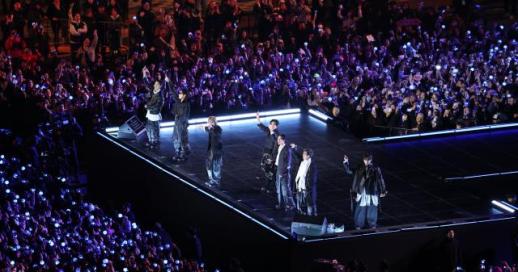 BTS is officially back, but Hybe stock plunges nearly 16% SEOUL, March 23 (AJP) - BTS may have returned in full force, but investors were in no mood to celebrate. Despite the group’s highly publicized comeback spectacle in Seoul’s Gwanghwamun on Saturday, distributed globally through Netflix, and the release of its first studio album in six years, Hybe shares tumbled sharply on Monday, the first trading session after the official return. Hybe closed down 15.55 percent at 290,500 won, a much steeper fall than the benchmark KOSPI’s 6.5 percent decline. The stock has now shed about 21 percent from last Wednesday, before the album’s Friday release. The sell-off came even as early sales of BTS’s fifth studio album, ARIRANG, appeared robust. The album sold about 3.98 million copies on its first day and topped 4 million within three days, setting a new K-pop sales record. That performance surpassed BTS’s previous benchmarks, including MAP OF THE SOUL: 7, which posted 3.37 million first-week sales, and MAP OF THE SOUL : PERSONA, which had held a Guinness-recognized mark with 3.39 million copies sold. Kim Doo-un, an analyst at Hana Securities, said the drop appeared to reflect a mix of profit-taking and broader market weakness rather than any single company-specific disappointment. “Overall market conditions were not favorable, and downside pressure was widespread across sectors,” Kim said. “It is difficult to attribute the fall solely to BTS’s comeback.” Asian markets were broadly under pressure Monday as rising geopolitical tensions dampened risk appetite, dragging down equities across the region. Some analysts also said much of the optimism surrounding BTS’s return had already been priced in. “Expectations had been high going into the comeback, and some elements may not have fully met those expectations,” Kim said. He added that while Hybe’s long-term growth story remains intact, the stock is still highly sensitive to whether short-term expectations are met. BTS is set to begin a new world tour in Goyang on April 9, followed by additional shows on April 11 and 12, before heading to Tokyo as part of a multi-city global run. In a statement released after the concert, Hybe thanked authorities and local residents for their cooperation, highlighting the cultural significance of holding the performance in Seoul’s historic Gwanghwamun district. 2026-03-23 17:58:07
 -
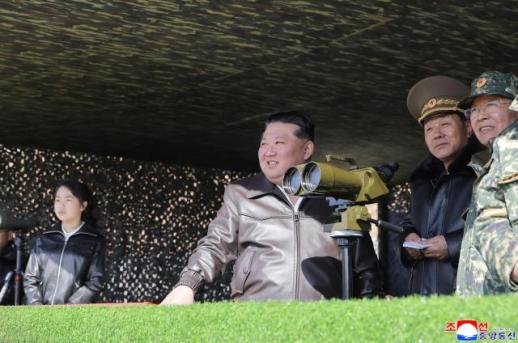 About 1 in 4 NK defectors show chromosomal anomalies; no proven radiation link SEOUL, March 23 (AJP) - Roughly one in four North Korean defectors who lived near the country’s main nuclear test site has shown signs of chromosomal abnormalities potentially consistent with radiation exposure, the Unification Ministry said Monday, while stressing that no causal link has been established. The findings are based on 2024 tests conducted by the National Radiation Emergency Medical Center under the Korea Institute of Radiological and Medical Sciences. The study examined 35 defectors from eight cities and counties surrounding the Punggye-ri nuclear test site, where North Korea carried out all six of its nuclear tests. Of those tested, 12 individuals — about 34 percent — showed chromosomal changes in a “stable chromosome aberration test,” a biological dosimetry method used to estimate cumulative lifetime radiation exposure. All 12 recorded levels above the minimum detection threshold of 0.25 gray. By contrast, an “unstable chromosome aberration test,” which detects more recent exposure within the past three to six months, found no values above the detection limit in any subject, suggesting that any potential exposure occurred earlier. Officials cautioned that the results do not establish a direct connection to nuclear testing. Chromosomal abnormalities may arise from other sources, including medical radiation such as CT scans or exposure to harmful chemicals, including smoking. North Korea conducted nuclear tests at Punggye-ri between 2006 and 2017, releasing radioactive isotopes such as iodine-131, cesium-137, strontium-90 and plutonium-239, which can enter the body through contaminated air, water or food and potentially cause genetic damage. Despite the findings, none of the 12 individuals identified with possible abnormalities has been diagnosed with cancers typically associated with radiation exposure, according to the ministry. The latest results build on earlier screenings. In 2023, 15 out of 59 defectors showed similar signs, bringing the three-year total to 44 out of 174 individuals — about 25 percent of those tested who had lived near Punggye-ri since North Korea’s first nuclear test in October 2006. The ministry said establishing a definitive link would require environmental sampling of soil and water near the test site — currently impossible without cooperation from Pyongyang. Comparative analysis with the general South Korean population could also help clarify any correlation. About 800 defectors in South Korea are believed to have originated from the eight regions surrounding the test site. The Unification Ministry said it will continue testing, aiming to examine 50 additional individuals this year, though the program has slowed, with only 94 people tested over the past two years and no new results publicly released since 2024. 2026-03-23 17:53:03
 -
 Vietnam emerges as new frontier for Korean movies SEOUL, March 23 (AJP) - With The King’s Warden the latest South Korean movie set for release in Vietnam, the Southeast Asian country is emerging as a strategic growth market for Korean cinema. The film, which drew over 14 million viewers at home, is set in Yeongwol county in Korea’s Gangwon province, and depicts the relationship between a young dethroned king and a village chief. It is set to open on April 10 across more than 200 screens, including CGV, Lotte Cinema, and major local chains, according to CJ HK Entertainment, the Vietnamese unit of CJ ENM, Vietnam’s film market has been expanding rapidly in recent years, since returning in 2022 to pre-pandemic levels, according to the Korea Creative Content Agency. Korean companies, particularly CJ ENM’s Vietnamese unit, have played a major role in this growth. Since entering the market in 2014, CJ HK has participated in the production, investment and distribution of more than 20 movies. It led the production of Mai (2024) and Nha Ba Nu (2023), which ranked first and second in Vietnam’s all-time box office, and in 2025 placed The Ancestral Home among the country’s top 10 hits, ranking seventh overall. Industry observers say the relationship is evolving beyond content exports to co-production, with Korean firms shifting from external suppliers to local partners. Released in Vietnam on Aug. 1 last year, Leaving Mom was a co-invested project between Korean and Vietnamese production companies. Directed and written by a Korean filmmaker, the film was shot in both countries with a joint cast and crew. It surpassed its break-even point within three days with 840,000 admissions and went on to top the box office for 15 consecutive days, exceeding 2 million viewers. According to distributor Showbox, Exhuma drew more than 2.23 million viewers in Vietnam within 17 days of its release in March 2024, surpassing previous records. It also posted the highest opening-day and opening-weekend revenues for a Korean film in the market. Vietnam has emerged as a key partner for Korean film collaboration, offering a more open production environment compared with China and Japan. CJ CGV and Lotte Entertainment together hold about 54 percent of the multiplex market, providing strong distribution infrastructure for Korean content. At the same time, Vietnam’s domestic film industry share of box office revenue rose from 29 percent in 2019 to about 70 percent in 2025. Total box office revenue reached a record 5.59 trillion dong ($312 million) in 2025, up 24 percent from 2024 and more than 35 percent from 2019, with annual ticket sales exceeding 70 million. This contrasts with South Korea’s film market, which remains in a prolonged slowdown. Theater admissions fell 32.5% year-on-year to about 42.5 million in the first half of 2025, while revenue dropped 33.2%. Film production has also declined significantly, and the expansion of streaming platforms continues to weigh on both theatrical and secondary markets. 2026-03-23 17:52:55
 -
 Lee Young-ae, Yoo Ji-tae to Reunite in New Drama 25 Years After 'One Fine Spring Day' Actors Lee Young-ae and Yoo Ji-tae will reunite in a drama series for the first time in 25 years since the film ‘One Fine Spring Day.’ Production company IWill Media said on the 23rd that it has cast Lee and Yoo as the leads of its new drama ‘Jaei’s Youngin.’ The two previously starred in ‘One Fine Spring Day,’ released in 2001, a film long regarded as one of South Korea’s signature romance movies. ‘Jaei’s Youngin’ is a mystery melodrama about two people left alone in the world. After they fall in love, a tangled past and hidden truths come to light. Lee will play Joo Youngin, an art teacher and painter who has lost her son. Yoo will play Shin Jaei, the head of an architecture firm who lives with dissociative amnesia. The series will be directed by Oh Gi-hwan, who previously worked with Lee on the film ‘Gift.’ The script is by Cho Eun-jung, whose credits include ‘Hotel King’ and ‘Feast of the Gods.’ Expectations are building over whether Lee, who chose her next project about five months after the well-reviewed drama ‘Eunsu’s Good Day,’ and Yoo, who recently became a “10 million actor” with the film ‘The Man Who Lives With the King,’ will deliver strong on-screen chemistry again. 2026-03-23 17:48:17
 -
 Korea joins Puppy Day with adoption push SEOUL, March 23 (AJP) - From social media feeds filled with wagging tails to corporate campaigns backing animal welfare, South Korea joined the global celebration of National Puppy Day on Sunday, highlighting a growing culture of pet companionship — and responsibility. Established in 2006 by U.S. pet lifestyle expert Colleen Paige, the day has evolved into an international campaign promoting the protection of abandoned dogs and encouraging adoption. Pet owners around the world took part online using the hashtag #NationalPuppyDay. In Korea, companies joined the movement with a mix of donations and awareness campaigns. Pet food maker Royal Canin said it donated 10 tons of tailored food for abandoned animals to shelters nationwide. Fashion brand Hazzys launched an “Adopt, Don’t Shop” campaign to promote adoption over purchasing pets. Convenience store chain CU added a lighter touch, introducing a “custom beer” service that prints customers’ pet photos on cans — blending pet culture with everyday consumption. The surge in participation reflects a broader shift. South Korea is now home to an estimated 15 million pet owners, as animals increasingly take on the role of family members. With that growth, however, comes rising concern over abandonment and ethical ownership. National Puppy Day is gaining traction not just as a celebration, but as a reminder — that behind every viral puppy photo is a longer-term commitment, and for many animals, a second chance still depends on it. 2026-03-23 17:43:01
 -
 KPGA Says Busan Assault Suspect Was Expelled in 2015, Not a Current Member KPGA said on the 23rd that the man accused in a recent sexual assault and beating case involving a golf lesson student in Busan is not affiliated with the association. The association said it has confirmed the suspect is a 60-year-old man identified only by the surname Kim, who was expelled in January 2015 and is not a current KPGA member. JTBC's "Case Chief" reported in February that a man working as an instructor at a golf practice range in Busan repeatedly sexually assaulted a female student and, after she resisted, assaulted her indiscriminately at a restaurant. The program also aired CCTV footage showing the attack. The Busan District Court sentenced the assailant to 10 months in prison, suspended for two years. After the broadcast, speculation spread online while the suspect's identity remained unclear. Based on a phrase used in the report, a man identified only by the surname Shin, who had competed on the KPGA Tour, was wrongly named as the assailant. JTBC later said comments identifying Shin as the attacker were "clearly false." Shin also strongly denied any connection. Even so, KPGA members in the Busan and South Gyeongsang region said they suffered tangible fallout, including students avoiding lessons. As the damage from unverified claims grew, Shin Hee-taek, chair of the KPGA disciplinary committee, and regional members moved to determine the suspect's identity. The KPGA office said it made repeated calls with the victim and local members, conducted a full review of eight members in the Busan and South Gyeongsang region born in 1966, and sought legal advice. It ultimately identified Kim as the suspect and said he had been expelled for long-term nonpayment of dues. "Members in the Busan and South Gyeongsang region and association staff communicated closely to identify the perpetrator," Shin said. "Kim is currently in no way connected to the association." KPGA said it is checking indications that Kim continued giving golf lessons after his expulsion and is also reviewing whether he impersonated KPGA membership. Depending on the findings, the association said it is considering legal action over defamation and obstruction of business and will cooperate if investigative authorities request assistance. Kim Jin-hyeong, a KPGA Tour director, said the core of the case was not misconduct by an active professional but a personal crime by someone who had been expelled. He said the association shares the victim's pain and the distress felt by Shin and other members in the Busan area. He said KPGA maintains a zero-tolerance stance on sex crimes and will consider strong legal steps if needed, while working to build systems to prevent recurrence so the public can trust KPGA members. The association said it also views impersonating KPGA membership, including by expelled individuals, as a serious matter that undermines order and will respond actively after confirming facts if similar cases arise.* This article has been translated by AI. 2026-03-23 17:36:00
 -
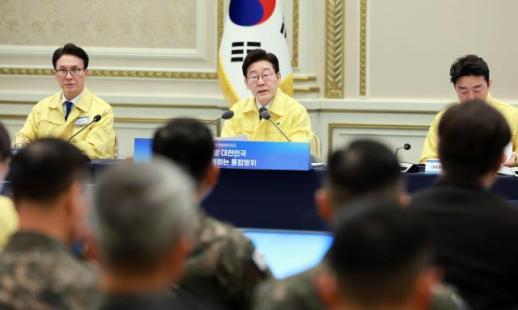 President Lee vows self-reliant defense amid Middle East tensions SEOUL, March 23 (AJP) - President Lee Jae Myung said Monday that self-reliant defense is the core of South Korea’s integrated defense strategy, citing increasingly complex and fluid global security conditions. “Self-reliant defense is the most important core of integrated defense,” Lee said while presiding over the 59th Central Integrated Defense Council at the Cheong Wa Dae in Seoul. The council, held annually, brings together senior officials across various national defense sectors to assess the country’s integrated defense posture and discuss ways to strengthen it. This marked the first such meeting since Lee took office. Lee stressed that ensuring public safety, maintaining everyday stability and safeguarding national continuity are the fundamental responsibilities of the government. “The most critical aspect of national security is ultimately our integrated defense capability, and at its core lies national defense,” he said. He emphasized that defense must remain a sovereign responsibility. “It is something we must never entrust to others, a core responsibility we must ultimately bear ourselves,” Lee said. “We must be able to protect ourselves under any circumstances without relying on external assistance.” Lee highlighted South Korea’s defense capabilities, noting that the country’s annual defense spending is about 1.4 times North Korea’s gross domestic product and that it ranks fifth globally in military strength. “With an economy among the top 10 globally and a defense industry envied worldwide, we have sufficient capacity to defend ourselves without external support,” he said. He called on officials to strengthen preparedness and maintain confidence, urging them to build systems capable of ensuring national defense under any conditions. Lee also underscored the importance of coordination among civilian, military, police and emergency response sectors. Regarding global tensions, including the conflict involving the United States, Israel and Iran, Lee described the international situation as “highly complex and fluid.” He warned that threats now extend beyond conventional military risks to include cyberattacks, terrorism, climate-related crises and disasters. “In such an environment, all elements of defense must respond in a unified and coordinated manner in times of emergency,” he said. 2026-03-23 17:24:32