

Journalist

CGTN
-
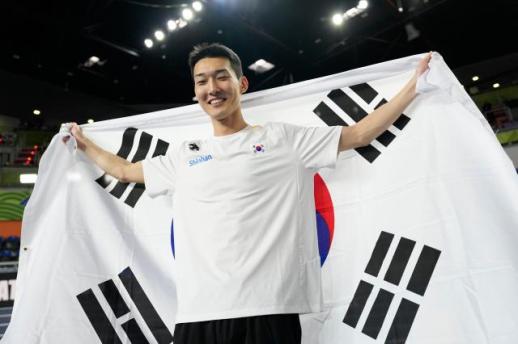 Woo Sang-hyeok Takes Bronze in Men’s High Jump at World Indoor Championships Woo Sang-hyeok won a medal for the fourth straight time at the World Athletics Indoor Championships, taking a share of bronze in the men’s high jump. Woo cleared 2.26 meters to finish tied for third in the final held March 21 (Korea time) at the Kujawsko-Pomorska Arena in Torun, Poland. The defending champion fell short of a repeat title but extended his medal streak at the event. Woo opened by clearing 2.17 meters on his first attempt, then made 2.22 and 2.26 on his first tries as well. He could not get over 2.30. On his first attempt, his right thigh brushed the bar. He failed again on the second attempt when his lower body caught the bar, and missed on his third try to end with 2.26. Oleh Doroshchuk of Ukraine won gold after clearing 2.30 on his first attempt. Erick Portillo of Mexico took silver by clearing 2.30 on his third attempt. Paris Olympic champion Hamish Kerr of New Zealand and silver medalist Shelby McEwen of the United States did not compete.* This article has been translated by AI. 2026-03-22 10:36:00
 -
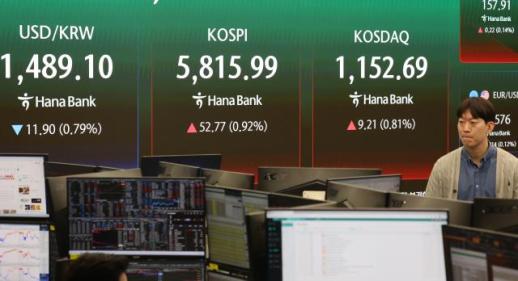 Retail inflows sustain KOSPI with bubble warning triggered SEOUL, March 22 (AJP) - South Korea’s stock market remains one of the world’s top performers over the past year, backed by heavy retail influx despite rapid foreign pullback due to the economy's heavy exposure to the crippled Strait of Hormuz, causing warnings of bubbly risks. The benchmark KOSPI hovers around 5,800 despite escalating oil prices and tensions in the Gulf after rising more than 150 percent in less than a year amid heavy swings since the war. It held tough versus other major markets in the war wake, with the S&P 500 down nearly 4 percent from end-February levels, while Europe’s Stoxx 600 and Germany’s DAX have fallen around 8 percent to 10 percent. Japan’s Nikkei 225 has also retreated more than 9 percent. By comparison, the KOSPI remains up more than 37 percent from end-2025 levels. Bank of America (BofA) found the market’s behavior as a “textbook bubble,” pointing to extreme reversals — including a double-digit plunge followed by a near double-digit rebound — that resemble patterns seen during past crises such as 1997 and 2008. Its proprietary Bubble Risk Indicator, which combines returns, volatility, momentum and fragility, places Korea at near-extreme levels of bubble risk, underscoring the intensity of recent price action. Valuation metrics add to the caution. The Buffett Indicator has risen above 200 percent, a level widely viewed as significantly overvalued, while the VKOSPI volatility index remains elevated after briefly hitting record highs earlier this month. The primary force is retail capital returning at scale. According to Korea Exchange and Koscom data, individual investors have purchased more than 21.8 trillion won ($16 billion) worth of KOSPI shares so far this month, already approaching the record monthly inflows seen during the 2021 pandemic-era rally. Since January, cumulative net buying by retail investors has reached 34.7 trillion won, and rises to as much as 50 trillion won when exchange-traded funds are included. During the same period, foreign investors sold nearly 50 trillion won worth of Korean equities. The inflows reflect a broader “money move” across asset classes. Funds are rotating out of bank deposits, overseas equities and cryptocurrencies, as domestic investors reposition toward Korean equities amid a combination of strong returns and shifting global conditions. Deposits have declined despite rising interest rates, while trading volumes in the crypto market have dropped sharply, signaling waning momentum in alternative assets. The return of retail investors is not limited to small accounts. High-net-worth individuals are also rotating back into domestic large-cap stocks, while margin borrowing has surged — particularly among younger investors seeking to catch up with the rally. Data from major brokerages show that margin investors posted average losses of around 19 percent during recent declines, more than double the losses of unleveraged investors. The gap is even wider among younger and smaller investors, where concentrated positions have magnified losses. Still, many analysts argue the market’s fundamentals remain intact. On a forward basis, the KOSPI trades at around 9.5 times earnings, below its 10-year average, suggesting that valuations remain relatively attractive after recent corrections. The rally continues to be anchored by the semiconductor supercycle, with strong earnings momentum in Samsung Electronics and SK hynix supporting broader index gains. At the same time, external uncertainties — including geopolitical tensions in the Middle East and rising energy prices — continue to inject volatility, with markets reacting sharply to headlines and policy signals. The result is a market increasingly defined by a tension between liquidity and risk. 2026-03-22 10:30:05
 -
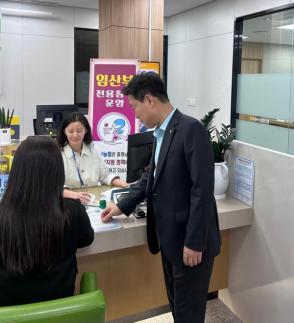 NH NongHyup Bank Conducts On-Site Internal Controls Checks to Prevent Mis-Selling NH NongHyup Bank said March 22 it conducted on-site internal controls inspections to prevent consumer harm from mis-selling and to promote sound sales practices. Park Jang-soon, the bank’s executive vice president for financial consumer protection, visited the South Chungcheong business office on March 20 to assess whether consumer-protection internal controls were being carried out and how they were operating. The inspection focused on compliance with the Financial Consumer Protection Act and on the bank’s management system designed to prevent the incomplete sale of financial products. Park also checked whether the office had protection measures and response procedures for vulnerable customers, including older adults, people with disabilities and pregnant women. “This inspection served as an opportunity to further strengthen internal controls at branches,” Park said. “We will continue to step up financial consumer protection to remain a financial institution that always earns customers’ trust.”* This article has been translated by AI. 2026-03-22 10:18:00
 -
 Woori Bank Caps New Personal Credit Loan Rates at 7% Annually Woori Bank said March 22 it will expand its interest-rate cap to cover new personal credit loans, limiting rates to no more than 7% a year starting March 23. The bank also announced a new product, the “Woori WON Dream Living Expense Loan,” aimed at easing financial burdens for mid- and low-credit borrowers. Woori said the measures are part of Woori Financial Group’s “Future Shared Growth Project” to broaden inclusive finance, as economic slowing and rising living costs have increased pressure on vulnerable households. Until now, Woori has applied the 7% cap to customers extending or renewing personal credit loans. The change expands the cap to new loans. Under the program, consumers who have maintained accounts with Woori for at least one year — including deposits and savings, credit cards and subscription savings — will have the rate on a new personal credit loan capped at 7% a year for up to one year, for up to one time. Woori expects more than 10,000 loans to receive the capped-rate benefit. The Woori WON Dream Living Expense Loan targets wage earners, nonwage workers and homemakers with annual income of 25 million won or less. The bank said it will use alternative credit scoring based on a range of data — including financial, telecom and small-payment information — to expand eligibility to credit bureau grade 8 and improve access to financing. The product is designed to allow applications from customers with limited documented income. Borrowers can take out up to 10 million won. Rates start in the high 4% range annually, with the maximum capped at 7% a year. Woori said it adopted an installment repayment structure of up to 10 years, including a three-year grace period, to reduce repayment burdens. Preferential rates will be offered to groups covered by inclusive finance programs, including young people, older adults, people with disabilities and recipients of basic living assistance. “This expansion of the interest-rate cap and the launch of the living-expense loan are inclusive finance policies to improve access to financial services for vulnerable groups and ease interest burdens,” said Lee Jeong-ho, deputy head of Woori Bank’s retail loan product team. “Through Woori Financial Group’s ‘Future Shared Growth Project,’ we will expand support so finance can serve as a social safety net,” he said. * This article has been translated by AI. 2026-03-22 10:15:52
 -
 Lotte Energy Materials, Doosan Electronics sign MOU on copper foil for high-performance PCBs Lotte Energy Materials and Doosan Electronics’ Electronic BG division have signed a memorandum of understanding to cooperate on evaluating, developing and supplying copper foil needed to produce high-performance printed circuit boards for artificial intelligence data centers and network equipment. According to industry sources on the 22nd, the two companies agreed to work together on next-generation materials aimed at reducing signal loss and improving reliability, as demand grows for faster, higher-layer PCBs to handle large volumes of data in advanced industries such as AI semiconductors and 5G communications. The companies signed the MOU in February under the title “MOU on development evaluation and supply cooperation for copper foil used in high-performance PCBs.” They said they would cooperate on developing and applying ultra-very-low-profile (HVLP) copper foil for high-speed transmission environments such as AI accelerators, servers and switches. They also agreed to optimize low-loss copper-clad laminate (CCL) and copper foil, and to build a stable supply system based on quality and delivery schedules for mass-production use. Through the partnership, Doosan Electronics and Lotte Energy Materials said they aim to strengthen global competitiveness by quickly providing material solutions that meet customer requirements for performance, reliability, manufacturability and supply stability. They also said the collaboration between domestic materials makers would help reduce import dependence for certain items and support supply-chain stability and localization of materials technology. Kim Yeon-seop, CEO of Lotte Energy Materials, said HVLP copper foil and low-loss CCL are key materials in the AI networking era. “Through cooperation with Doosan Electronics, which leads the global network market, we will advance a stable supply system and further strengthen global competitiveness,” he said.* This article has been translated by AI. 2026-03-22 10:15:23
 -
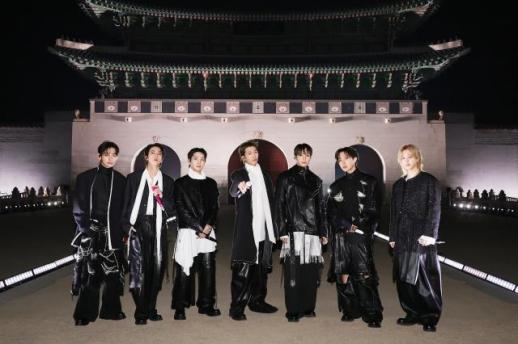 BTS' comeback album and show 'ARIRANG' make a splash on Spotfiy and Netflix SEOUL, March 22 (AJP) -BTS’ first studio album in six years, “Arirang,” has opened with a blockbuster showing on Spotify, underlining the group’s enduring global pull and setting the pace for music releases in 2026. The album recorded 110 million streams worldwide on its first day, according to figures cited in the report, making it the biggest Spotify debut of the year so far and the largest opening day ever for a K-pop release on the platform. It also ranked as the 12th biggest first-day album debut in Spotify history, placing BTS in rare company among the platform’s top global performers. The opening figure comfortably surpassed the previous 2026 leader, Harry Styles’ “Kiss All the Time. Disco, Occasionally,” which reportedly drew 63 million first-day streams. Other major releases this year, including albums by J. Cole, A$AP Rock, Bruno Mars and Blackpink, trailed well behind BTS’ opening tally. The strong start suggests “Arirang” is well positioned to become the year’s biggest music release so far once broader weekly industry data, including sales and airplay, are compiled. While full Billboard and Luminate figures are still pending, Spotify’s early results point to a commercial performance that few 2026 releases are likely to match. The album’s dominance was also visible across Spotify’s track rankings. On the Global Top 50, songs from “Arirang” occupied all 14 of the top positions in uninterrupted order. In the United States, BTS held the top two spots with “Swim” and “Body to Body,” while all 14 album tracks landed within the chart’s top 26. Spotify had signaled the scale of anticipation even before release, saying “Arirang” became one of the most pre-saved Countdown Page albums in the platform’s history, with more than 5 million presaves. The service has since expanded promotional partnerships tied to the album, including fan events and interactive experiences. For BTS, the explosive debut marks more than a successful comeback. It confirms that after years of solo activities and military service, the seven-member group remains one of the few acts in the world capable of turning a new album into an immediate global event. “안녕 Seoul, we’re back,” leader RM declared, stepping onto the stage at Gwanghwamun Square on Saturday night, a day after the album release, as the group returned before a global audience streaming live on Netflix. The choice of venue — a 600-year-old civic and historical landmark — turned the comeback into something larger than a concert: a statement of identity. After nearly four years apart due to military service, the seven members stood together again, anchoring their return in the symbolic heart of Korea. They opened with “Body to Body,” the first track of Arirang, a declaration set to a pulsating beat — “Born in Korea, playing for the world.” The performance seamlessly wove in traditional “Arirang” motifs, delivered by musicians in hanbok, linking the group’s global rise to Korean cultural roots. From there, the show moved between reinvention and legacy. “Hooligan” showcased sharp, theatrical choreography with masked dancers, while “2.0” leaned into a stripped-down, confident hip-hop groove. Even with RM seated at times due to an ankle injury, the group’s stage command remained intact — a reminder that absence had not dulled their edge. Mid-set, BTS emphasized the album’s direction. “We wanted to show the most honest side of the seven of us,” SUGA said, describing Arirang as a “more mature and evolved” BTS. Jungkook acknowledged the pressure of returning, but added, “Being here in front of you all, it feels great.” That evolution played out sonically. Tracks like “SWIM” introduced fluid, expressive choreography, while “Like Animals” and “Normal” shifted into a more introspective, soft-rock tone, addressing the emotional toll of global fame. BTS did not abandon their past. Hits such as “Butter,” “MIC Drop,” and “Dynamite” brought a surge of collective memory, bridging eras and reaffirming their global reach. The night closed with “Mikrokosmos,” a tribute to fans — a fitting finale for a comeback defined as much by reunion as reinvention. Netflix has yet to reveal the global viewership of the livestream. 2026-03-22 09:51:08
 -
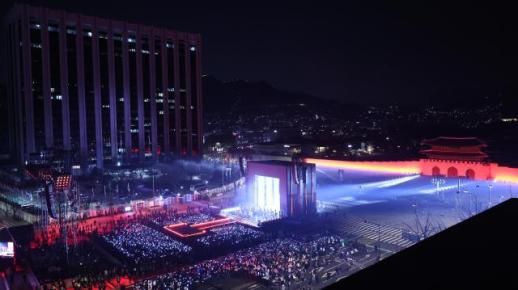 OPINION: A century show, carried with care SEOUL, March 22 (AJP) -It was billed as a comeback. It became something larger: a test of scale, identity and control — and, ultimately, a quiet assertion of how far K-pop, and Korea, have come. BTS returned to Gwanghwamun Plaza not just as artists resuming a career, but as men who had completed a national duty and reassembled a global phenomenon. Thirteen years into their journey, the performance was less about proving relevance than about defining legacy. The numbers alone strained belief. Roughly 40,000 filled the tightly managed square, while tens of thousands more watched from surrounding streets and screens. Beyond Seoul, audiences in 190 countries tuned in via Netflix, turning a historic civic space into a synchronized global venue. Yet scale was not the defining feature. Control was. Nearly 15,000 personnel — an extraordinary deployment — managed the crowd with strict routing, metal detectors and enforced movement through narrow corridors. The experience, at times, felt excessive, even rigid. Fans waited, shuffled, and surrendered spontaneity to structure. And still, not a single major incident. In an era where mass gatherings often carry an undertone of risk, the absence of chaos became its own statement. Order was not incidental; it was engineered — and, notably, accepted. Fans from across continents complied with patience, even humor, some carrying trash bags and leaving the site as clean as they had found it. That discipline, as much as the music, defined the night. On stage, the narrative was deliberately balanced. New tracks from the fifth album ARIRANG — including “Body to Body” and “SWIM” — were interwoven with global hits like “Dynamite” and “Butter.” The message was continuity, not reinvention. RM, seated with an injured ankle, declared simply: “We’re back.” Jimin, voice wavering, offered the album’s thesis in a single line: “Keep swimming.” It was less spectacle than reassurance — a reaffirmation of presence after absence, of identity after uncertainty. The setting amplified that message. Framed by Gyeongbokgung Palace, and watched over by statues of King Sejong the Great and Admiral Yi Sun-sin, the performance fused heritage with hyper-modern production. This was not accidental staging. It was narrative architecture: a global act returning to a national axis. Even the broadcast carried symbolic weight. The live stream held steady under immense global traffic, marking a technical milestone for Netflix’s expansion into large-scale live music. The platform proved it could handle not just content, but simultaneity — a crucial distinction in the evolving competition for live audiences. There were imperfections. Safety protocols thinned out visible crowd density on screen, muting some of the visceral energy that defines concerts. Subtitles lagged, and the user interface occasionally fell short of the production’s visual ambition. But these were, in essence, second-order problems — the kind that emerge only after first-order challenges have been solved. And that is the point. What unfolded at Gwanghwamun was not merely a concert. It was a demonstration: that a dense urban core can host a massive live event without disorder; that a global fandom can self-regulate; that a cultural product can integrate tradition, technology and scale without losing coherence. K-pop has long excelled at spectacle. What it showed here was something subtler — governance. The century-defining aspect of the show was not its size, nor even its global reach. It was the way it was carried out: with restraint, coordination and a collective awareness that the moment was bigger than any individual. In the end, the loudest message was delivered quietly. Not just that BTS is back. But that the system around them has matured. 2026-03-22 09:25:15
 -
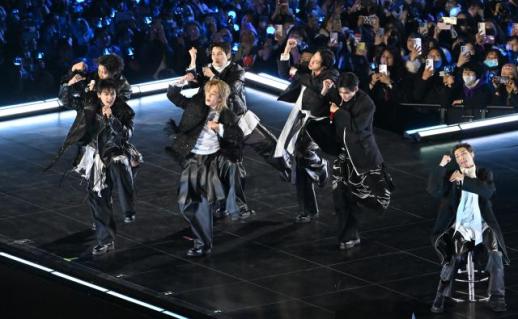 BTS Returns as Full Group at Seoul’s Gwanghwamun Square in ‘Arirang’ Comeback Live Seoul’s central Gwanghwamun Square filled with cheers as BTS returned as a full seven-member group after 3 years and 9 months. The “BTS Comeback Live: ARIRANG,” held at 8 p.m. on the 21st, was streamed live to more than 190 countries, underscoring the group’s continued global reach. The show opened with sweeping drone footage over Bugaksan and Gyeongbokgung Palace. As 50 dancers lined up on the stage platform, the seven members appeared in black outfits that reinterpreted traditional armor in a modern style. Leader RM, seated due to an ankle injury and focusing on vocals, greeted the crowd: “It’s been four years. Hello, we are BTS.” He added, “We’ll pour everything into today. It’s been a long journey, but we finally made it here.” BTS launched into new-album tracks “Body to Body,” “Hooligan” and “2.0,” quickly taking control of the square. “Body to Body” blended the melody of the folk song “Arirang” with a collaboration with the National Gugak Center, highlighting a distinctly Korean identity. After the stage, Jin thanked fans for returning. “I vividly remember telling you to wait for us at our last Busan concert a few years ago,” he said. “I had a lot of worries about getting to this point. I’m grateful and happy to face you again.” Jimin told fans, “ARMY, we finally met. I’m overwhelmed and grateful to be able to speak like this. I’m so happy the seven of us can be together again. I missed you. I didn’t expect you to fill Gwanghwamun Square like this — thank you.” Suga called it an honor to perform “at the most historic place in Korea,” saying the album title “Arirang” reflected a desire to capture the group’s identity and that the decision led them to stage the comeback at Gwanghwamun. V added, “It feels new to be able to come back in such a special place. Thank you to ARMY who came all the way here, and to those watching around the world through Netflix. We waited a long time, too. Wherever you are, I hope our feelings reach you.” The group followed with global hits “Butter” and “MIC Drop.” J-Hope and Jung Kook told the crowd it still felt unreal to be onstage together as seven again, thanking fans for waiting and promising they had prepared “a lot of special things” and would give everything they had. Jung Kook said, “I don’t think I’ll ever forget tonight. I think I had pressure and fear about the comeback, but standing in front of you today, it just feels good. Just good.” RM said the album was worked on for two months in Los Angeles, with postproduction completed in Korea. He said the members held many conversations about who they are now and how they could come together, and that they took on new challenges, before performing new songs “Aliens” and “FYA.” In remarks about their hiatus, J-Hope said the album contains “countless worries,” including concerns about whether the group might be forgotten or whether fans would still remember them. Suga said he spent a long time thinking about what needed to change during the pause, adding that he still felt uncertain and anxious but considered those feelings part of who they are. RM said he repeatedly asked himself what choices to make at a turning point and what kind of creator he wanted to remain, concluding that the answer was not outside but within. He said the goal of the album was to listen more closely to their own voices and reflect themselves more fully. Jimin said, “As you know well, we’re not special people. Like you, we’re afraid every time, and I was afraid preparing for this stage, too. But I believe if we ‘keep swimming,’ we’ll find an answer someday.” V said what they can do is keep making music, keep performing and show fans their best, adding he hoped their songs could offer some comfort. The group then performed the title track “SWIM,” along with “Like Animals” and “Normal.” The production emphasized a blend of tradition and modern staging. Director Hamish Hamilton said he focused on building a balanced stage model that respected the historic setting of Gyeongbokgung. Netflix said it viewed the show as the biggest moment among its live events planned for the year and a landmark partnership, highlighting major investment to ensure technical stability. J-Hope said, “I’m really, really happy to be back. Every moment is thanks to you. BTS 2.0 is just beginning.” V told fans it was time for the last song, saying he had imagined the moment for years and wanted to keep going. Suga again thanked the Seoul Metropolitan Government and related officials, as well as police working on site. Jimin bowed and said, “Thank you, and I’m sorry.” Jung Kook told fans the seven members always share the same 마음, adding they would always do their best as long as fans stayed with them. BTS closed with “Dynamite” and the encore “Mikrokosmos.” BTS, which set a new personal record with 3.98 million copies sold on the album’s first day of release, used the roughly hourlong show to reaffirm its presence. By the Seoul city government’s count, 40,000 people gathered near Gwanghwamun, with the crowd far larger when including the area around Sungnyemun, and the event proceeded safely in an orderly manner. The group is set to continue its global schedule with a world tour starting April 9 at Goyang Stadium.* This article has been translated by AI. 2026-03-21 22:54:00
 -
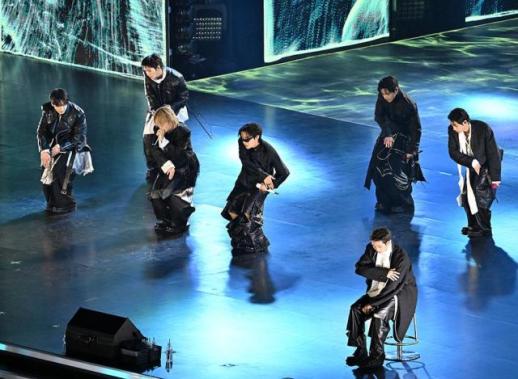 BTS Returns as Full Group After 3 Years, 5 Months; Fans Sing Along to 'Arirang' in Seoul BTS returned as a full seven-member group for the first time in about 3 years and 5 months, since its October 2022 “Yet to Come in Busan” concert. As the clock struck 8 p.m. on Saturday and the seven members appeared on a frame-shaped stage set up at Gwanghwamun Square, about 40,000 fans roared and chanted “BTS.” The show opened with “Body to Body,” a track from the group’s new full-length album, “Arirang.” When five traditional vocalists and a Korean traditional music ensemble performed the folk song “Arirang” live, ARMY members answered with a mass singalong. Attendance was estimated at 104,000 by organizers, while Seoul’s real-time city data put the figure at 42,000. That fell well short of the roughly 260,000 initially expected, but fans from around the world raised light sticks and turned the square purple, the group’s signature color. Many fans also watched from outside fences surrounding the 22,000 official seats, following the concert on large screens. Others streamed the live broadcast on smartphones to share in the comeback. Midway through the concert, the members shared how it felt to perform again and introduced the album’s title track, “Swim.” V said, “What we can do is not stop — to release music step by step and keep performing,” adding, “If we show ARMY a good side like this, I think we’ll move forward.” He said he hoped the song would offer listeners “even a little comfort and strength.” The members also spoke about the hiatus, saying they worried, “Would we be forgotten? Would you remember us?” RM said he had thought hard about what kind of artists they wanted to be “at this turning point,” and described the album’s goal as listening to their own voices and openly capturing “worries, anxiety and wandering.” Jimin said he feels fear every time, including for this show, but added he firmly believes that if they “Keep Swimming,” they will find answers someday. The Gwanghwamun comeback concert ended with “Dynamite” and “Mikrokosmos.” Fans lingered afterward, taking photos with the stage behind them before leaving. 2026-03-21 22:06:19
 -
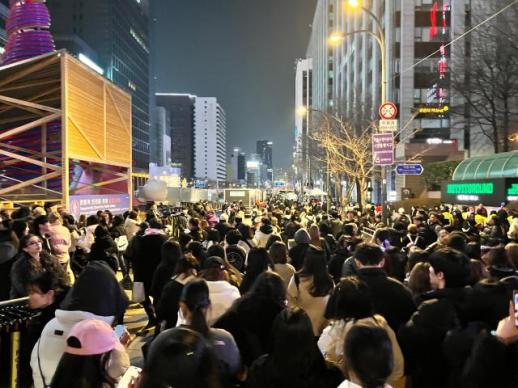 BTS Live: Orderly fan exit caps Gwanghwamun concert SEOUL, March 21 (AJP) - Nearly 50,000 people departed orderly and safely from Gwanghwamun Square late Saturday night as the BTS comeback concert came to a close. According to Seoul's real-time crowd management system, the assembly filled the central plaza to capacity before the performance began. To manage the turnout, city officials and local police released the crowd in stages, opening audience sections one by one to prevent congestion at nearby transit hubs. This phased dispersal followed a performance that marked the first time the group had appeared together in South Korea since 2022. For the international fans, the coordinated exit was as surprsing as the surreal outdoor concert itself. Eeti, a fan from London who moved her travel plans forward to witness the show, described the safety protocols as the most impressive she had seen. "It was so great amd amazing," she said. She found the entire event "very well organized. very convenient, very surprised how smooth everything was" and was impressed how she felt "no danger. Pretty safe," despite the volume of people in the square. Other attendees noted the specific atmosphere during the set. Liana, a fan from Russia who has followed the group for a decade, traveled to Seoul specifically for the Saturday performance. While she described the choreography for the new songs as 'so good,' she was struck by the relative silence of the crowd. 'Why is no one dancing?' she recalled thinking. Liana observed that most people around her remained still and focused on filming the stage, which created a quiet environment. She said she had been waiting four years for the return and was interested in seeing the dance routines live since they were not featured in recent music videos. The demographic in the square included families like Chloe Besner and her daughter from Montreal. Besner, who is in her 50s, attended the show to support her daughter’s interest in the group. "Really enjoyed it. It was great that the boys were really fantastic," she said. Although she suggested the sound could have been "more balanced and stronger," she found the overall experience positive. Besner noted that the group's music is a regular part of her domestic life in Canada. ' "Everything was very smooth and great, came to see the show for my daughter," she said, adding, "I think we are going to still dance in the kitchen with BTS music." Extra subway and bus services remained in operation past midnight to accommodate the dispersal. And ARMY fans cleaned up and made sure they left no trace. 2026-03-21 21:54:08