

Journalist

CGTN
-
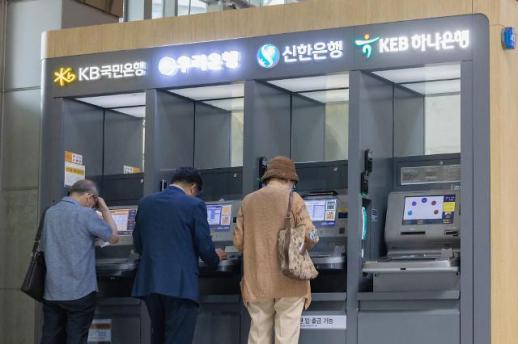 Shinhan Leads Overseas Profit as KB Improves; Woori, Hana Slide Shinhan Bank and KB Kookmin Bank posted solid results across most overseas units, while Hana Bank and Woori Bank saw weaker performance as losses widened at key subsidiaries, the financial industry said. Results diverged sharply by market — including China, Europe and Southeast Asia — shaping winners and losers among the major lenders. According to the financial sector on the 19th, Shinhan’s 10 overseas subsidiaries posted a combined net profit of 586.9 billion won last year, the highest among the four major banks. That was up 2.59% from a year earlier. Canada Shinhan Bank swung to a loss, but most other units improved. Two core overseas operations — Japan’s SBJ Bank and Shinhan Vietnam Bank — delivered results in the 100 billion won and 200 billion won ranges, respectively, on locally tailored strategies. Shinhan Bank China’s net profit jumped fourfold from a year earlier on higher gains tied to securities. Shinhan Bank America and Shinhan Bank Indonesia expanded lending to strong local companies, with net profit rising 278.65% and 34.7%, respectively. KB Kookmin sharply reduced losses at its overseas units. The bank operates five overseas subsidiaries, including Cambodia’s Prasac and Indonesia’s Bukopin. Its overseas result improved from a 2024 net loss of 202.9 billion won to 81.7 billion won last year, turning profitable. The improvement was driven largely by Bukopin, which narrowed its net loss to 102.8 billion won after posting a 360.6 billion won net loss a year earlier. Growth of 28% in low-cost deposits and 10% in settlement-related loans helped lift performance. The Myanmar unit returned to profit on expanded local business, and KB Prasac Bank earned 152 billion won as it increased low-rate deposits. Hana Bank’s global business declined. Net profit at its overseas subsidiaries fell 33% from a year earlier to 86.8 billion won last year. Hana Bank China swung to a 39.2 billion won net loss as it set aside provisions amid a prolonged downturn in China’s real estate market. Net profit at Germany’s KEB Hana Bank also plunged 66% amid factors including falling eurozone interest rates. Hana Bancorp, a U.S. bank holding company targeting Korean-American networks, posted a 253% surge. Woori Bank’s overseas slump deepened after it had ranked second globally in overseas net profit. Net profit at its 11 overseas subsidiaries fell 79% from a year earlier to 44.9 billion won last year. A major drag was Indonesia’s Woori Sodara Bank, which swung from more than 56 billion won in net profit to a 74.1 billion won loss. Woori Bank China also posted a 52.7 billion won net loss. This year, the banks plan to focus on strengthening fundamentals at overseas units as the global operating environment grows more uncertain due to the U.S.-Iran war and rising oil prices. KB Kookmin and Shinhan said they aim to expand with high-quality assets and reinforce core earnings for sustained growth. Hana said it will boost business synergies among four branches, including two opened in India in December, and seek to improve results at its German unit by attracting financing demand tied to South Korea’s defense industry exports. 2026-03-19 15:27:00
 -
 Uzbekistan and Tajikistan trade potential estimated at forty percent growth SEOUL, March 19 (AJP) - The Center for Economic Research and Reforms has determined Thursday that mutual trade between Uzbekistan and Tajikistan possesses the potential to increase by 30 to 40 percent. This assessment was presented today in Tashkent during an international conference regarding new prospects for a regional alliance. The center, an analytical body under the Administration of the President of Uzbekistan, indicates that bilateral engagement remains only partially realized despite recent growth. Asadov Khurshed, the deputy director of the organization, stated that the relationship between the two nations has reached a qualitatively new level. From 2017 to 2025, trade volume between the neighboring states expanded 3.8 times, rising from 238 million dollars to 912 million dollars. During this period, exports from Tashkent grew 3.7 times while imports from Tajikistan increased more than fourfold. The country now ranks ninth among the leading importers of Uzbek products. This growth is supported by a foundational institutional framework established through the 2024 Treaty on Allied Relations (Source: Ministry of Foreign Affairs of Uzbekistan). The potential for a 30 to 40 percent increase is linked to the substitution of Tajik imports from third countries with goods manufactured by Uzbek producers. Geographical proximity and shared transport infrastructure provide an advantage for the delivery of automobiles, household appliances, textiles, and chemicals. The deputy director emphasized that the most promising model for cooperation involves the establishment of joint processing facilities in border regions. These centers would prioritize the handling of agricultural raw materials and the development of new agrologistics networks. The ongoing development of transport infrastructure and transit opportunities is expected to serve as a primary driver for further economic integration. This shift toward a deeper investment model is a factor in strengthening connectivity across the region. The current level of allied relations provides the necessary foundation for transitioning toward shared regional infrastructure projects. The international scientific and practical conference brought together experts from government institutions and the academic community to discuss these prospects. 2026-03-19 15:26:52
 -
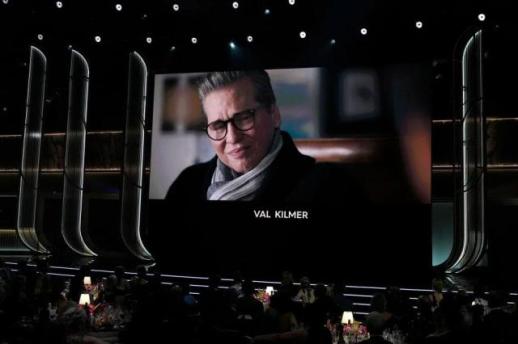 Val Kilmer to Appear in New Film Using AI a Year After His Death Actor Val Kilmer is set to return to the screen in a new film, recreated through artificial intelligence technology. On March 18 (local time), The Associated Press reported that Kilmer will appear via AI in the independent film “As Deep as the Grave,” due for release this year. The report said it comes a year after his death. According to AP, the film’s producers said Kilmer had signed on before he died, but health problems prevented him from taking part. After his death, his family approved a digital replica of the actor, the producers said, and the family is being compensated for its use. In a statement, Kilmer’s daughter said her father had long viewed new technology as a tool that could expand the possibilities of storytelling, and she expressed hope that the film would respect that potential through his role. Kilmer had previously used AI assistance during his lifetime. Before dying of pneumonia, he was diagnosed with throat cancer and underwent a tracheotomy that left him without his voice. In his final film, “Top Gun: Maverick,” AI was used to recreate his voice. Still, the use of AI in Hollywood has become one of the industry’s most contentious issues. One of the main drivers of the 2023 U.S. actors union strike was concern over AI, after studios proposed digitally scanning background and minor performers and reusing those images across productions. That dispute eased after post-strike negotiations between the actors union and producers led to contract language requiring performers’ consent and appropriate compensation. The agreement, however, did not bar digital scanning itself. The prospect of seeing a globally popular star in new work even after death is now a reality. But Kilmer’s AI-assisted return is also a reminder that audiences, like the industry, are being pressed to decide how far they are willing to accept AI-generated stand-ins for human performers.* This article has been translated by AI. 2026-03-19 15:24:38
 -
 KAIST researchers identify new mechanism for forming magnetic skyrmions SEOUL, March 19 (AJP) - Researchers at the Korea Advanced Institute of Science and Technology (KAIST) have discovered a new physical principle that allows for the formation of skyrmions, tiny magnetic vortices, without the specialized conditions previously thought necessary. This finding opens new pathways for developing next-generation, ultra-low-power information storage devices that could address the rising energy demands of artificial intelligence. KAIST said Thursday that a research team led by Professor Kim Se-kwon from the Department of Physics has theoretically demonstrated that swirling magnetic structures can form naturally through the interaction between magnetism and atomic lattices. This interaction, known as magnetoelastic coupling, suggests that skyrmions can be implemented in a much wider range of magnetic materials than once believed. Skyrmions are microscopic swirls of magnetic spin that are highly stable and significantly smaller than the magnetic domains used in current hard drives. Because of these properties, they are considered a primary candidate for spintronic devices, which could offer information storage densities hundreds of times higher than existing technology while consuming minimal power. Until now, scientists believed that forming skyrmions required specific, complex environments, such as structural asymmetry in the crystal or strong spin-orbit coupling. However, the KAIST team proved that the universal phenomenon of magnetoelastic coupling—where the magnetic state and the arrangement of atoms influence each other—is sufficient to create these structures. The team's research shows that when this coupling becomes strong enough, the naturally aligned state of a magnet becomes unstable and transitions into a new ordered pattern. This process results in a "chiral spin texture" where skyrmions and antiskyrmions are arranged in a repeating array, accompanied by simultaneous lattice distortion. "This study demonstrates that magnetic structures like skyrmions can form even without specific, specialized interactions," Professor Kim Se-kwon explained. "It is particularly significant as it suggests the possibility of implementing these structures in two-dimensional magnetic materials, which are currently a major focus of global research." The study, featuring Dr. Go Kyoung-chun as the lead author, was published in the prestigious physics journal Physical Review Letters on February 11, 2026. (Reference Information) Journal/Source: Physical Review Letters Title: Magnetoelastic Coupling-Driven Chiral Spin Textures: A Skyrmion-Antiskyrmion-like Array Link/DOI: https://doi.org/10.1103/5csz-pw7x 2026-03-19 15:03:10
 -
 Kim Yong-hwan Warns Current Turmoil Resembles 2008 Crisis as Uncertainty Grows Kim Yong-hwan, who has spent more than four decades on the front lines of South Korea’s financial sector, warned that today’s conditions resemble the 2008 global financial crisis. Kim, who served as senior deputy governor of the Financial Supervisory Service in 2008, was involved in the country’s response at the time. In a telephone interview with Aju Economy on the 19th, Kim said the collapse of subprime mortgages in 2008 has “only changed form,” now appearing as troubled private lending tied to U.S. big tech companies in 2026. “Anxiety is rising that it is similar to that time,” he said, adding that uncertainty at home and abroad is unusually high. Private lending refers to companies borrowing through funds raised by nonbank financial firms, a form of private debt. As concerns grow about potential weakness centered on U.S. big tech, it has emerged as a new flashpoint in global finance. With the global private-lending market swelling to the trillions of won, rising delinquency at some firms and fears of tighter liquidity are, critics say, rapidly building “hidden risks.” Kim said that when global shocks hit, South Korea’s markets tend to swing more sharply than those of major economies. With tensions rising in the Middle East, domestic stocks have been seesawing by roughly 10%. He attributed the volatility to a narrow investment base rather than weak fundamentals. “It’s not that Korea’s fundamentals are weak, but the capital market is not broad-based, so the financial market is more exposed to volatility,” he said, arguing that a deeper direct-financing market would make Korea less sensitive to external shocks. He also voiced concern about Korea’s growth structure. “Only a very small number of conglomerates such as Samsung, SK and Hyundai are doing well, while small and mid-sized firms continue to struggle,” Kim said. He added that per capita gross national income has failed for 12 years to break through the $30,000 threshold, and said Korea should consider whether it can grow like Taiwan, which entered the $40,000 era last year. Unlike South Korea, where a handful of large companies account for most exports and investment, Taiwan is often assessed as having a more dispersed industrial base built around small and mid-sized firms. Kim said Korea needs a structure in which large companies and smaller firms grow together for stable development, underscoring the need for balanced growth. Drawing on experience with multiple financial crises and industrial shifts, Kim advised younger officials that the most important thing in policymaking is to avoid haste and keep the big picture in view. “Especially in an era like this, when people expect AI to solve everything, policymakers need judgment and balance that come from experience,” he said. Kim entered public service in 1979 through the 23rd class of the state civil service exam and held posts including director of the Welfare and Living Affairs Division at the Ministry of Finance and Economy, director general of Supervisory Policy Bureau II at the Financial Supervisory Commission, standing commissioner at the Financial Services Commission, and senior deputy governor at the Financial Supervisory Service. He later served as president of the Export-Import Bank of Korea and chairman of NH NongHyup Financial Group, and now works as an adviser at Shin &u0026 Kim. Earlier this month, he published a memoir, “Flow Like Water, Stand by Principles.” 2026-03-19 15:03:00
 -
 CRAVITY’s Hyeongjun Stars in ‘Kill the Romeo’ Interactive Short-Form Drama Trailer CRAVITY member Hyeongjun will star in Kitts’ first interactive short-form drama, “Kill the Romeo,” set to be released on the platform on the 27th. The series from global K-pop short-form platform Kitts is an interactive, multi-ending romantic comedy told in first person. It follows “me,” a top-tier assassin whose alter ego is a devoted fan, after a new target is assigned: the viewer’s favorite idol, “Hyeongjun.” The story begins when the A-list killer receives an order to eliminate him. Hyeongjun plays an idol character who shares his name, marking his first acting project. The newly released main trailer opens with tense music and the line, “All my targets are called Romeo. Codename ‘Juliet.’ I’m a killer.” It then shows the viewer-character at Hyeongjun’s fan-sign event, before the mood shifts as he is named the target and placed in danger. Under the premise of “my favorite idol becoming my target,” the trailer presents multiple choices. Near the end, Hyeongjun asks, “Noona, what do you want me to do?” teasing the directions the story may take. Kitts has been expanding its library with monthly releases, following titles including “Wind Up,” starring NCT’s Jeno and Jaemin, and “Jumpboy LIVE,” starring VERIVERY’s Kangmin. “Kill the Romeo” is expected to differentiate itself from typical romantic comedies through its first-person format and branching story points. “Kill the Romeo,” starring Hyeongjun, will be released on Kitts on the 27th.* This article has been translated by AI. 2026-03-19 14:57:39
 -
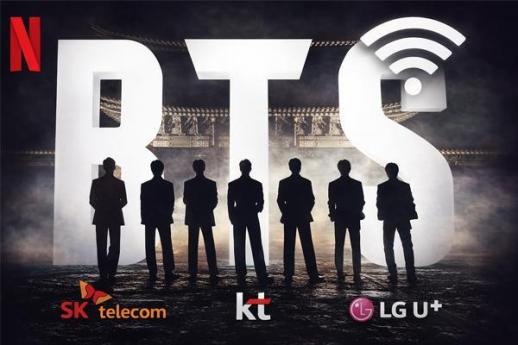 BTS Live D-2: K-tech takes center stage for a show of the century SEOUL, March 19 (AJP) - South Korea is home not only to BTS but also to some of the world's most advanced technology — and it does not need the Olympics to prove it. Saturday's comeback spectacle is set to showcase both K-pop and K-tech prowess on a truly global stage. The K-pop supergroup will return after nearly four years in groundbreaking fashion — an open-air concert at Gwanghwamun, Seoul's historic government and palace district — staged free of charge for nearly 300,000 spectators and streamed live to audiences in 190 countries via Netflix. Netflix, which secured exclusive global broadcasting rights, is deploying its full content delivery arsenal for its first-ever live event from Korea. The streamer will use Emmy Award-winning video encoding that automatically adjusts quality to each viewer's network and device, along with a load-balancing system featuring triple-redundancy encoder failover. A dedicated live-operation mode will reprioritize infrastructure resources to keep the stream uninterrupted — all powered by Open Connect, Netflix's proprietary CDN built with more than 1,000 ISP partners worldwide since 2012. In plain terms, the live feed will run on a highly resilient, high-capacity system designed to deliver seamless streaming regardless of demand. "BTS live broadcasts have always functioned as global gatherings, with fans setting alarms, taking long lunch breaks or staying up late so they can experience the moment together," Netflix said on its Tudum platform. AI-powered network defense In wireless technology, South Korea is second to none. All three telecom carriers have mounted a full-scale network defense. SK Telecom will deploy its proprietary AI-driven system "A.One" for the first time at a live event, dividing the venue into three zones based on crowd density. The carrier has also installed temporary base stations and dedicated roaming infrastructure for foreign visitors. "This large-scale K-pop concert is a global event drawing worldwide attention, and we expect an ultra-high-density traffic environment. We will demonstrate Korea's world-class AI-powered network capabilities and deliver stable telecommunications services," an SK Telecom spokesperson said. KT is applying its AI-based traffic management solution "W-SDN" to automatically control base station overloads, while deploying six mobile base stations, 79 wireless units and 14 Wi-Fi access points across the venue. "KT has the country's largest international network and internet backbone, and has significantly expanded capacity for the BTS concert. Drawing on experience from major events such as the Olympics and the WBC, we will ensure stable and seamless connectivity," a KT spokesperson said. LG Uplus is leveraging autonomous network technology to predict traffic surges and has installed temporary relay equipment at more than 10 locations near the square. Smart security and crowd control An extraordinary crowd also requires highly digitized security and crowd management. Organizers have introduced a mobile ticketing system that links each ticket to a device's unique identifier, preventing unauthorized transfers and scalping. At entry points, 31 metal-detection gates will screen attendees, while a real-time crowd management system will monitor density levels and relay data instantly to safety personnel. Police have deployed counter-drone vehicles and explosive-detection dog units around the venue. Mapping the mega crowd Internet and messaging platforms are also stepping in to guide the unprecedented influx of visitors into Gwanghwamun — an area roughly the size of three soccer fields. Naver Map has reconfigured the concert zone into an indoor-style navigation system, highlighting restrooms, entry gates, screens and information centers. Kakao Map has launched a pilot service through March 22, providing ultra-precise bus location data across about 420 Seoul routes to help commuters navigate detours caused by the event. "We are working closely with the Seoul Metropolitan Government to provide accurate traffic information so citizens can travel safely and conveniently," said Lee Chang-min, head of Kakao's map business development team. A city turned into a stage Technology will extend beyond the venue into the city itself. The Seoul Metropolitan Government and BigHit Music are transforming the capital into a citywide media canvas under the "BTS The City Arirang Seoul" project, running from Friday through April 19. Media facades will illuminate Sungnyemun Gate and Namsan Seoul Tower on the album's release day, followed by a drone light show over Ttukseom Hangang Park. Dongdaemun Design Plaza will host synchronized music-and-light shows every 30 minutes through April 12. Built on a legacy of tech-driven performance Saturday's showcase builds on BTS's long history of pushing technological boundaries — from volumetric hologram displays at the 2020 MAMA to multi-view XR livestreaming during "Map of the Soul ON:E," and a 108-camera volumetric capture system that rendered the group as AR holograms alongside Coldplay on The Voice in 2021. The upcoming 82-date Arirang World Tour, launching April 9 at Goyang Stadium, will feature a 360-degree "in-the-round" stage across 34 cities in 23 countries. As RM told GQ: "The most important thing is just that we are here back together again. We're going to see the fans all over the world." And this time, they are doing it at a truly global technological standard. 2026-03-19 14:54:49
 -
 AMAZE CEO Lee Seung-jun: In the AI era, VR concerts must deliver irreplaceable experiences Artists can feel close enough to touch, and inside the theater, cheers and singalongs break out naturally. VR concert films are changing not only how audiences experience performances, but also what it looks like to go to the movies. Lee Seung-jun, CEO of AMAZE, which has released VR concert films featuring ENHYPEN, TOMORROW X TOGETHER, ATEEZ and TWS, said demand is rising as the format spreads. With TWS’ first VR concert, “TWS VR CONCERT : RUSH ROAD,” selling out day after day, Lee said word-of-mouth is lifting expectations. “Honestly, the response has been better than we expected, so I think it could set our best results yet,” he said. “As people talk about VR content, audience demand is going up. Albums cost money, concert tickets cost much more, and getting tickets is hard, so a VR concert film can be a good way to see an artist. I love concerts too, but it’s not easy to see a top artist right in front of you. This is much more of an up-close experience, so I think it’s a medium that fits music well.” AMAZE did not start out focused only on concerts. Lee said that while thinking about what might come after mobile, the company bet on “space” and VR headsets, tried multiple formats, and found concerts delivered the biggest impact. “It’s been 10 years since I started the company,” he said. “AMAZE is made up of early Kakao members, engineers who worked together back then. I used to work at a consulting firm, but seeing mobile as a new innovation and media paradigm led me to start a business. Then I thought about what would come next, and when the paradigm shifts, I wanted to go global. What we bet on was ‘space’ and ‘VR headsets.’ At first we didn’t do only music — we tried films and other things — but the biggest impact was concerts. So we decided to expand that and build content step by step, centered on entertainment.” That approach also shaped interactive features such as letting fans pick a favorite member and use a virtual light stick. Lee said the experience becomes denser when fans can respond and participate, not just watch. “Because these are K-pop artists, we thought it would be good if fans could choose their favorite member and keep watching that person,” he said. “So we added things like ‘pick your favorite’ and a ‘light stick.’ The elements can differ by artist. Recognizing hands and actions like waving a light stick can ultimately make the experience bigger.” Lee also drew a clear line between watching VR at home and watching it in a theater. When people who like the same artist gather and react together, he said, the content shifts from a private viewing to a shared event. “Of course you can watch at home,” he said. “But the feelings you get watching an artist you love with other people are definitely different. That’s why I think in the AI era, the value of 2D content or 2D images could gradually fall. What we make is, in a way, like Disneyland — we’re building an attraction for an artist. We’ll keep thinking about how to help audiences experience it with more immersion and a stronger sense of being there. And we plan to make it available online too for people with headsets at home. Even now, like selling concert DVDs, we sell a version you can watch by inserting a phone.” He said the format could expand beyond K-pop, and that U.S. and Chinese artists have shown significant interest. For now, he said, the company is weighing how to broaden genres without limiting itself to one market. “First, we’re thinking about expanding genres,” he said. “We’re not only thinking about K-pop artists. We’ve been getting a lot of contact from U.S. artists and Chinese artists, so we’re thinking about how to expand this. At the moment, male idol groups seem relatively easier in some ways. But we’re not limiting ourselves to that, and I think there’s a lot we can do with other artists too.” Lee said AMAZE’s edge is technology, built on two pillars: computer graphics based on Unreal Engine and AI. But he argued that, rather than competing with general-purpose image-generation AI, the key is accumulating VR-specific data and postproduction techniques. “Basically, we have two technical pillars,” he said. “One is CG-based technology like Unreal Engine used in games, and the other is AI. But AI should be viewed differently. AI that makes 2D video or images is closer to the domain of big companies like Google or OpenAI, and it’s not easy for an independent company to own that space — it’s expensive and competition is intense. But VR content is a different format. In this area, unique data for specific categories keeps accumulating, and learning based on that is how the technology advances. We have technology optimized for VR content. Using it, postproduction, image-quality improvement and interactive implementation can keep getting better. In VR, it’s important to raise image quality and immersion together. As that technology builds, audiences feel more like they’re on site, and we can add more spatial design and interactive elements. It matters that a single title does well, but we think it’s important to keep building that technology.” Asked why he believes the format will matter more in the future, Lee pointed to what he called an “irreplaceable experience.” “I think content keeps evolving,” he said. “The grammar we’ve built so far is centered on music concerts, but I don’t think this kind of new spatial experience will stay only with music. To get people to pay and come, it has to be a different experience from existing 2D content. We’re in an era of content overload, so it will only get harder to make people spend extra money on 2D content they can watch on a phone or TV. In the end, if it’s not more immersive and valuable, people won’t spend easily. Even in the AI era, I think what matters is an irreplaceable experience. We film real artists and create a real experience with sweat, time and a story inside it. AI can make fake performances, but I don’t think people will spend money on them in the same way.” Some viewers may still see the 33,000 won price and the VR format as barriers. Lee said he expects the market to move away from one-size-fits-all hits and toward sharper individual tastes. “I’m not sure how much longer traditional mass content will be possible,” he said. “There could be another case like ‘Wangsnam,’ but I don’t think it will repeat often. In the end, I think people spend money on experiences they truly love. Even if they spend 10,000 to 20,000 won on some content, they can spend much more on what they really like. I think we’re heading into an era of ‘micro interests’ — an era where people spend more deeply on what they truly like. Rather than focusing only on making each individual title a hit, we’re closer to building an environment and paradigm where more of those experiences can be made.” Lee said motion sickness — a frequent concern in VR — should be addressed differently depending on an artist and fan base. “Because each artist’s fan base differs in age and gender, the level of camera movement they can accept also differs,” he said. “Motion sickness happens because you’re still but the world moves. Taking that into account, if we later build dedicated theaters, we’ll make the chairs move in sync with the camera movement. We’re considering ways to make it less dizzying while delivering a more dynamic experience.” Ultimately, Lee said he is aiming for dedicated venues that go beyond putting on a headset. He said he wants to design the full experience so that, from the moment people enter, it feels like stepping into an artist’s world. “If we go in the direction I’m thinking, there would be motion chairs, and if we add elements like haptics matched to the music, the physical sensation could be much bigger,” he said. “It won’t end with just watching in a theater. We’ll likely design the space so people can enjoy things from the moment they arrive, and feel like they’re entering the artist’s musical world. This isn’t a far-future story — it’s at the stage of being discussed now.”* This article has been translated by AI. 2026-03-19 14:54:33
 -
 Retailers to slash grocery prices to ease burden on households SEOUL, March 19 (AJP) - Major retailers will cut prices by more than 10 percent next month to ease the burden on households. After a meeting in Seoul on Thursday, the Ministry of Agriculture, Food and Rural Affairs said retail prices for roughly two dozen items including confectionery, bakery products, and ice cream will be reduced by 100 to 400 won (US$0.07 to $0.27) or up to 13.4 percent starting from next month. Cooking oil and instant noodle makers will also lower prices on their major products. According to the ministry, the retailers voluntarily decided to lower prices amid a looming global inflation that is already biting people's livelihoods, as the Middle East conflict that began with U.S.-led airstrikes on Iran shows no signs of ending soon. The ministry said it has also been closely monitoring prices of other key items such as eggs, pork, garlic, toilet paper, and laundry detergent to curb sharp price hikes and crack down on unfair practices trying to take advantage of supply shortages. It also vowed to inspect and punish anyone found illegally colluding to hike prices. 2026-03-19 14:48:56
 -
 Naphtha Supply Shock Puts South Korea’s Plastics Industry at Risk, Calls Grow for Price-Linking System The National Assembly held a meeting with petrochemical and plastics industry representatives as disruptions in naphtha supplies deepened after the Strait of Hormuz was effectively blocked amid the war between the United States and Iran. The session focused on steps to ease pressure on small plastics manufacturers as synthetic resin prices rise with surging global oil prices. Attendees included LG Chem, Hanwha Solutions, Lotte Chemical and Yeochun NCC, along with the Korea Plastics Industry Cooperative Federation, the Korea Federation of SMEs, and officials from the Ministry of Trade, Industry and Energy, the Ministry of SMEs and Startups, the Ministry of Economy and Finance, the Fair Trade Commission and the Financial Services Commission, according to political officials on March 19. Petrochemical companies said spikes in feedstock prices such as naphtha and unstable supply were causing production disruptions and delivery delays, worsening profitability and adding to management strain. Plastics manufacturers countered that large petrochemical suppliers have raised synthetic resin prices citing higher feedstock costs, leaving factories squeezed between rising material costs and sales prices that do not reflect those increases. Industry officials said raw materials account for about 80% of plastics makers’ costs. Chae Jeong-mook, head of the Korea Plastics Industry Association, said raw materials make up about 83% of costs, leaving the sector directly exposed to oil price increases. He said prices have risen by about 200,000 won per ton since the war began and that there are signs of supply being cut off, adding, “The industry feels like it’s bleeding day by day.” Chae called for stable supply and measures to prevent sharp short-term price spikes. He also urged adoption of a delivery price-linking system so increases in raw material costs can be reflected immediately in contract prices. Petrochemical firms, while citing difficulties as naphtha cracking capacity (NCC) is being reduced, said they would do their best to stabilize the domestic supply chain. Jeong Jong-eun, an executive director at LG Chem, pointed to what he described as a lack of government-level stockpiling and support for naphtha. “For crude oil or LNG, the state expands storage tanks through the national power network, but naphtha is not in that situation,” he said, adding the company was making every effort to secure supplies. He said the industry understands the concerns raised and plans to respond while working to stabilize domestic supply. Kim Dong-wook, an executive director at Hanwha Solutions, said the company was trying to maintain production within its limits. He said inventories were already low because the market had been weak even before the situation escalated, making the impact appear quickly. Kim Young-beon, an executive director at Lotte Chemical, said Lotte has substantial ethylene facilities and is heavily affected by overseas market conditions, adding it is proceeding as “model No. 1” in petrochemical restructuring. On synthetic resin pricing, he said the company was taking preemptive steps to stabilize the domestic market, including minimizing export volumes in March and April and expanding the domestic supply share from 45% to 90%. Bae Yong-jae, a managing director at Yeochun NCC, said securing naphtha has become difficult due to the Strait of Hormuz blockade. He said the company had relied on that route for about 70% of its total volume and that prices have nearly doubled. He said the firm is maintaining minimum operating rates because naphtha is hard to obtain and called for broader discussions that include supply shortages, price pass-through and industry losses. After the meeting shifted to a closed session, participants were reported to have discussed limiting the volume of petroleum products refiners export overseas. Democratic Party lawmaker Kim Nam-geun said naphtha is sourced through domestic production (47%) and imports (53%), and that with the government also reviewing export controls, participants discussed ways to secure supplies quickly. Democratic Party lawmaker Min Byung-deok raised concerns about price increases occurring before higher crude prices were reflected in actual import costs. He said he asked the Fair Trade Commission and the Ministry of SMEs and Startups to monitor whether there was collusion or abuse of market power in the price-setting process and to submit their findings. On financial support, Kim Nam-geun said about 20.3 trillion won in financing is being prepared in response to the Middle East situation, and the plastics and petrochemical industries are expected to be included. On alternative naphtha sources, he said imports are being considered from India, Algeria and the United States, adding that Russia-related matters were mentioned only as a request and drawing a line on importing Russian supplies. 2026-03-19 14:45:23