

Journalist

Chang SeongWon
-
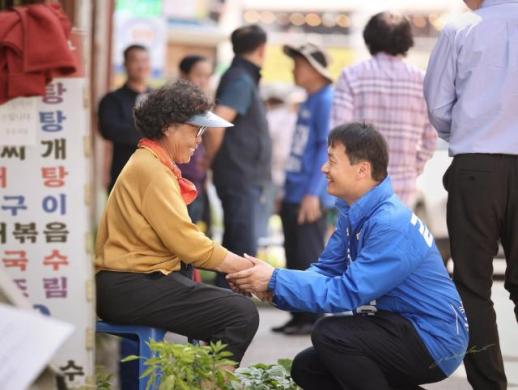 Kim Young-bin Aims to Revitalize Gongju, Buyeo, and Cheongyang for Youth Kim Young-bin, the Democratic Party candidate for the Gongju, Buyeo, and Cheongyang parliamentary by-election, has proposed expanding healthcare and welfare services and creating jobs for young people as key solutions to address the region's declining population and aging issues. He emphasized the importance of developing a sustainable tourism industry leveraging the Baekje cultural heritage, stating, "We will create a region where anyone can visit and want to stay." A native of Gongju, Kim graduated from Gyodong Elementary School, Gongju Middle School, and Gongju National University of Education. He has served as a prosecutor and a policy advisor to the Minister of Justice, gaining experience in policy and legal affairs at the central government level. He also worked as Chief Legal Officer at Dunamu, highlighting his dual experience in policy and the real economy as a strength. In a phone interview with Aju Economy on May 29, Kim stated, "Gongju, Buyeo, and Cheongyang are experiencing rapid population decline and aging, but the healthcare and welfare infrastructure remains insufficient. We must improve the reality where elderly individuals struggle to receive timely medical services when they are ill." He proposed expanding the functions of the Cheongyang County Health Center as one of his key pledges. Kim said, "We will construct new emergency and inpatient rooms and promptly establish a geriatric ward and dialysis unit, enhancing accessibility to healthcare and addressing gaps in the welfare and medical systems." He added, "As important as elderly welfare is the education and care of children. Creating a city where parents can raise their children and build families with peace of mind is a core task in responding to the population extinction crisis." Kim also stressed the need to address youth employment issues, stating, "The painful reality of young people leaving the region due to a lack of good jobs is a serious problem. Young people are leaving because there are no jobs, while companies cannot find workers, creating a vicious cycle." He outlined plans to foster tourism and cultural industries utilizing the Baekje cultural heritage. He aims to develop the Baekje cultural area into a national tourism and industry project in connection with the 'Baekje Historic Areas Special Act,' which passed the National Assembly in May, and the National Institute of Historical and Cultural Area Promotion, which is pursuing the establishment in Buyeo. Kim stated, "We can establish a national project system that goes beyond simple research and surveys to include restoration, tourism, and industrialization. We will create jobs and attract population influx through revitalizing the nighttime economy and expanding sustainable tourism." He also mentioned plans for tailored support at the National Assembly level to help young entrepreneurs sustain their businesses. Comparing himself to the People Power Party's Yoon Yong-geun, Kim highlighted his strengths in policy planning and the advantages of being a ruling party candidate. He said, "I have directly designed policies and coordinated laws while working at the Seoul Central District Prosecutor's Office and the Minister of Justice's policy advisory office. My experience in both public and private sectors makes me a versatile candidate." He emphasized the importance of close cooperation with the central government for regional development, stating, "I am a strong candidate from the ruling party who can secure budgets and address current issues in line with the Lee Jae-myung administration." Kim recalled a memorable moment during his campaign when he held a policy discussion with local youth. He said, "I was deeply impressed by the 30 or so college students and young people who presented their policy proposals with a clear sense of the issues. I realized again that resolving youth employment and housing and education issues is essential to responding to the population extinction crisis." He added, "I gain great strength when residents welcome me with 'You’ve come well.' I will continue to listen to the voices of residents directly in markets, alleys, and parks, and realize policies based on their input." Finally, Kim stated, "Gongju, Buyeo, and Cheongyang are not places for transient politicians. The person who has thought about the region from the beginning will ultimately be able to take responsibility for it until the end." He emphasized, "As someone who graduated from elementary, middle, and high school in Gongju, I will work with the Chungnam governor, mayors, and the Democratic Party to ensure tangible regional development." He concluded by stating, "I will be a worker who can create real change rather than just political slogans," appealing for support.* This article has been translated by AI. 2026-05-30 16:48:00
 -
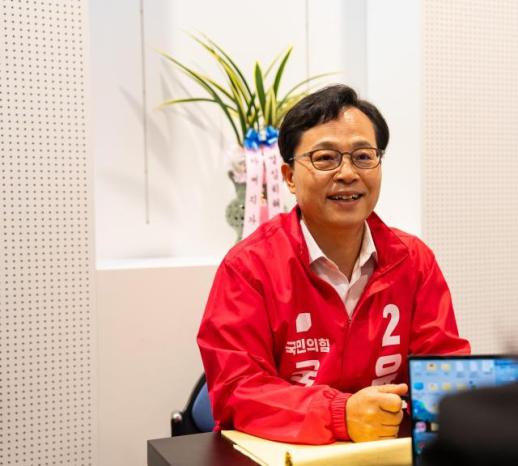 Yoon Yong-geun Proposes Cultural Tourism Belt to Revitalize Gongju, Buyeo, and Cheongyang Yoon Yong-geun, the People Power Party candidate for the Gongju, Buyeo, and Cheongyang by-election, has pledged to revitalize the declining region by focusing on sustainable tourism and expanding job opportunities for young people. Hailing from Buyeo, Yoon graduated from Buyeo Jangam Elementary School, Jangam Middle School, and Buyeo High School before earning a law degree from Chungnam National University. He passed the bar exam (48th session) and currently serves as the managing attorney at Elplus Law Firm. Recently, he gained experience in national politics as the head of the People Power Party's Seongnam Jungwon District and as the party's media spokesperson. In an interview with Aju Economy, Yoon stated, "Gongju, Buyeo, and Cheongyang are rich in historical, natural, and cultural assets, but we have failed to connect these to the local economy. We need policies that genuinely change residents' lives, not just increase the number of tourists." He proposed the 'Baekje Cultural Heritage Integrated Tourism Belt' as a key initiative. This plan aims to connect Gongju's historical and cultural resources, Buyeo's Baekje heritage, and Cheongyang's nature and wellness tourism to create a sustainable tourism city. Yoon emphasized, "Currently, tourists only stop briefly. We will create tourism routes that encourage stays of at least two nights and three days, transforming the tourism industry into one that combines accommodation, spending, and experiences." He also highlighted the need to utilize the underused Gongju KTX station. "I will turn Gongju KTX station into the 'starting point for a time travel through Baekje culture,' making the station itself a theme park where visitors can experience Baekje's history and culture from the moment they arrive," he said. Additionally, Yoon plans to connect traditional markets, alley businesses, and local agricultural product sales directly to tourism routes, ensuring that tourism spending translates into income for residents. He also aims to foster youth entrepreneurship and experiential content industries to link tourism with local job creation. Yoon stressed that he is a candidate with both central political experience and the ability to execute plans. "Having served as the head of the Seongnam Jungwon District and as the media spokesperson for the People Power Party, I have gained experience in navigating the central government and the National Assembly. Ultimately, the power to drive local development lies in securing actual budgets and policies," he said. Regarding his differences with Democratic Party candidate Kim Young-bin, Yoon asserted, "I am not a candidate representing anyone else. I was fairly selected as the People Power Party candidate through a democratic primary process." He actively refuted claims that he is using this election as a political stepping stone. "I am not someone who has temporarily stepped down for the election. I was born and raised in Buyeo, and my parents are buried here," he said. Yoon expressed his commitment to the region, stating, "Gongju, Buyeo, and Cheongyang are my hometown and ultimately my final resting place. I will become a politician who takes responsibility for the region even after the election." During his campaign, he noted that the most common concerns he hears from residents are about declining vitality and youth outmigration. "Twenty years ago, people and the economy were vibrant, but now I hear that young people are leaving for big cities, diminishing the overall liveliness of the area," he said. One resident's plea to not use the region as a means for personal political gain stood out to him. Yoon remarked, "I felt strongly that residents are looking for sincerity and accountability from politicians, rather than just words." Yoon concluded, "I am approaching this election with a sense of urgency to revive my declining hometown. I will improve job quality, transportation, culture, tourism, and living conditions to make this a region where young people return, not leave." Finally, he stated, "This election is not just about electing a single politician; it is a crucial choice that will determine the future of Gongju, Buyeo, and Cheongyang. I will prioritize residents' lives over political slogans and ask you to judge based on who will genuinely take responsibility for the region's future. I will repay you with results."* This article has been translated by AI. 2026-05-30 16:48:00
 -
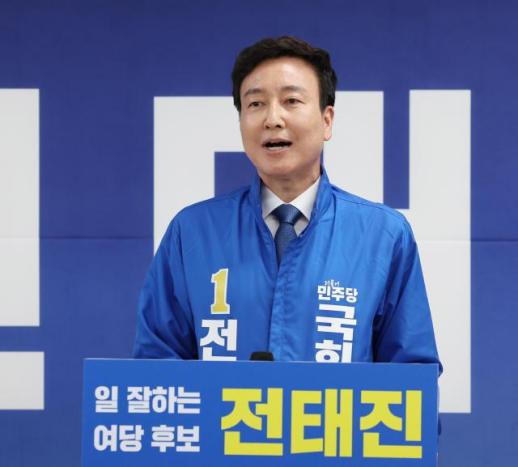 Jeon Tae-jin Promises to Create Ulsan AI Valley to Retain Young Workforce Jeon Tae-jin, the Democratic Party candidate for Ulsan's Nam-gu Gap district, has identified industrial transformation and youth employment as key issues. He stated, "I will innovate Ulsan's manufacturing competitiveness with AI and digital technology to create a city where young people can dream of the future," emphasizing, "I will engage in politics that brings budgets and results, not conflict." Jeon is the first candidate recruited by the Democratic Party ahead of the upcoming by-election. With 20 years of experience as a lawyer, he has served as an advisor to central government ministries and public institutions, earning a reputation as a practical expert in industry, administration, and law. In an interview with Aju Economy, Jeon remarked, "The aging of Ulsan's industries and the outflow of young people are urgent challenges that affect the region's future," adding, "It is essential to combine AI and digital technology with existing shipbuilding, automotive, and petrochemical industries for a smart industrial transition." He proposed the establishment of an 'Ulsan AI Valley' as a key pledge. Jeon plans to create a research and startup hub linked to UNIST and Ulsan University on the site of the Okdong military base, stating, "We will build an AI demonstration base that can be immediately applied in industrial fields to elevate Ulsan's manufacturing competitiveness." He further emphasized, "I will ensure that young people can find good jobs and new opportunities in Ulsan," vowing to transform the industrial capital of Ulsan into a future-oriented industrial structure. Jeon also presented promises to improve transportation infrastructure. He stated, "We will dramatically enhance the transportation network, including the underground expressway on Munsu Road, to improve commuting conditions and living environments," explaining, "I will create a city where young people want to stay, enjoying both job opportunities and quality of life." He highlighted his strengths in collaborating with the ruling party and his practical experience. Jeon said, "What Ulsan Nam-gu Gap needs now is not politics that fights against the Lee Jae-myung government, but politics that cooperates to secure budgets and deliver results." Addressing concerns about his lack of political experience, he countered, "Being a political newcomer is actually a strength." Jeon explained, "I can focus solely on resolving Ulsan's issues without getting caught up in existing political rhetoric or divisive conflicts," asserting, "While I will gain political experience, I am confident in my urgency and ability to drive Ulsan's development more than anyone else." He noted that the most common request from residents during his campaign is for economic recovery. Jeon said, "Citizens often express, 'We are tired of politics that just fights,' and 'Please revive Ulsan's economy.'" He emphasized, "Ultimately, what citizens want is not political slogans but politics that addresses their livelihoods." One particular comment from a small business owner resonated with him. Jeon recalled, "I heard, 'Political news comes out every day, but our store's situation isn't improving. Please revive the economy instead of fighting.'" He stated, "That one remark encapsulated the reality and urgency of the citizens." He stressed, "We now need politics that creates results for the economy, people's livelihoods, and Ulsan's future, rather than politics that fights." Finally, Jeon presented tailored pledges for different generations to garner support. He said, "For young people, I will create future jobs through the Ulsan AI Valley, and for parents raising children, I will directly bring in childcare and education infrastructure through central budgets." He added, "For middle-aged individuals enduring the industrial transition, I will advocate for job retraining and support for industrial transition, and for the elderly, I will demonstrate that only candidates from the ruling party can bring in central welfare budgets." Jeon concluded, "What Ulsan needs now is not politics that fights, but politics that brings in budgets and support," asserting, "I will create 'Ulsan Again,' not 'Yoon Again.' I will prove it through results, not words." * This article has been translated by AI. 2026-05-30 16:48:00
 -
 People Power Party Files Election Law Complaint Against President Lee The People Power Party filed a complaint against President Lee Jae-myung on May 30 for alleged violations of election laws. Jang Dong-hyuk, the party's campaign committee chairman, and Jeong Hee-yong, head of the campaign headquarters, visited the Seoul Police Agency in Jongno, where they submitted the complaint regarding President Lee's alleged violations of election laws and the failure of election officials to fulfill their legal obligations. Jang criticized, "The president openly appealed for support for a specific party and candidate in front of television cameras using a marked ballot, which he should not have shown to election officials. These two actions are clear violations of election law without any room for interpretation." He further criticized the National Election Commission, stating, "It has become an unreliable institution. The commission claims that the president was outside the voting booth, not outside the polling place, so it does not violate election law, but that misses the essence of the issue. It appears there is no will to ensure neutrality and fair elections. The central election commission, which overlooks the core problem, will face public judgment." Jang also expressed, "I believe that bringing out a marked ballot itself indicates intent. He is the president and a former lawyer, not someone who has only participated in elections once or twice. To claim there was no intent is an irresponsible response lacking logic and context." Earlier in the day, during a campaign rally in Chuncheon supporting candidate Kim Jin-tae for governor of Gangwon Province, Jang continued his criticism of President Lee. He stated, "The president campaigned openly in front of television cameras. If I had done such a thing, I would have been arrested immediately yesterday." He added, "And yet, the Blue House claims there is no wrongdoing. What kind of nonsense is that?" On the previous day, President Lee was seen at the Samcheong-dong Community Center in Jongno, where he questioned an election official about his ballot, asking, "Is it okay if it’s marked like this? Will it be invalid if only half is marked?" After being told he should not show his ballot, he responded, "Come here, it doesn’t matter." Following an explanation that his ballot would not be invalid, he returned to the voting booth to complete his vote. The National Election Commission later characterized the incident as a simple misunderstanding.* This article has been translated by AI. 2026-05-30 16:45:00
 -
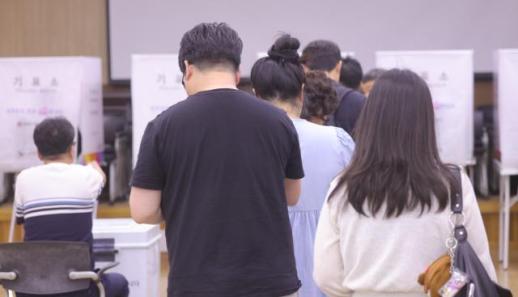 Early Voting Rate Reaches 20.94% in Local Elections, Highest Ever As of 4 p.m. on May 30, the early voting rate for the 9th nationwide local elections reached 20.94%, surpassing the previous record for local elections. According to the National Election Commission, 9,347,567 out of 44,649,908 eligible voters had participated in early voting by that time. This figure exceeds the final early voting rate of 20.62% from the 2022 local elections by 0.32 percentage points. Compared to the same time during the 8th local elections, which had an early voting rate of 18.39%, this year's rate is 2.55 percentage points higher. If the current trend continues, the final early voting rate for this local election is expected to reach around 23%. The highest early voting rate recorded in a nationwide election since the introduction of the early voting system was during the 20th presidential election, which had a final early voting rate of 36.93%. Regionally, Jeollanam-do reported the highest early voting rate at 35.89%, followed by Jeollabuk-do at 31.96%, Gwangju at 24.82%, and Gangwon at 24.62%. In contrast, Daegu had the lowest rate at 16.53%, followed by Gyeonggi at 18.49%, Busan at 18.98%, and Incheon at 19.15%. Seoul's early voting rate was recorded at 20.87%. Early voting began at 6 a.m. on May 29 and will continue until 6 p.m. today at 3,571 polling stations nationwide. Voters wishing to participate must bring identification such as a resident registration card, driver's license, or passport to their nearest early voting station. Polling station locations can be confirmed on the National Election Commission's website or by calling the representative number 1390.* This article has been translated by AI. 2026-05-30 16:30:00
 -
 Seoul conveys concerns to Washington over Brunson's 'dagger' remarks SEOUL, May 30 (AJP) -South Korea has conveyed its position to Washington over U.S. Forces Korea Commander Gen. Xavier Brunson's controversial description of the Korean Peninsula as "the dagger in the heart of Asia," presidential officials said Saturday, after the remarks drew a diplomatic protest from China and reignited debate over the evolving role of the U.S.-South Korea alliance. National Security Adviser Wi Sung-lac, the defense ministry and the foreign ministry delivered Seoul's position through diplomatic and security channels, according to Cheong Wa Dae. While officials declined to disclose the contents of the message, security observers said Seoul likely expressed regret over remarks that risked unnecessarily complicating relations with Beijing at a time when the Lee Jae Myung administration is seeking to stabilize ties with both Washington and China. The controversy stems from comments Brunson made during a recent podcast hosted by the U.S. Army War College, where he described South Korea as "the dagger in the heart of Asia" while discussing the region's strategic geography. The remarks quickly drew criticism from China's Embassy in Seoul, which accused the U.S. general of "crossing the line" and exposing a confrontational posture toward China. Beijing argued that the comments reflected a Cold War mentality and warned against turning regional security cooperation into geopolitical confrontation. The episode has highlighted growing sensitivities surrounding the future mission of U.S. Forces Korea as Washington increasingly emphasizes strategic competition with China alongside its longstanding objective of deterring North Korea. While Seoul and Washington officially maintain that the alliance's primary mission remains defending the Korean Peninsula, U.S. military planners have increasingly described South Korea as a critical hub within a broader Indo-Pacific security architecture. Analysts say Brunson's remarks touched a diplomatic nerve because they appeared to frame South Korea not only as a frontline state against North Korean threats but also as a strategic position in the wider U.S.-China rivalry. Asked about the controversy during the Shangri-La Dialogue security forum in Singapore on Saturday, Brunson said his comments were intended to describe the region's operating environment rather than signal a change in military policy. "What I said was trying to describe the operating environment because what's incredibly important is being able to describe the environment where we're working in," he said. Brunson said the remarks were made in the context of viewing regional geography from a different strategic perspective based on an "east-up" map orientation. "By changing our perspective, we take into account how others might see us in the region," he added. Also speaking at the Singapore forum, U.S. Defense Secretary Pete Hegseth praised South Korea's efforts to assume greater responsibility for its own defense and welcomed Seoul's desire to regain wartime operational control of its military. "I think we have to find the balance of where our military plans and the responsibilities that U.S. uniformed members have had for decades now are honored, as we phase over to wartime OPCON transfer for the Republic of Korea," Hegseth said. The comments came as Seoul seeks to complete the transfer of wartime operational control, or OPCON, before President Lee's five-year term ends in 2030. Hegseth described South Korea's push to reclaim wartime command authority as a "breath of fresh air" and said Washington supported allies taking greater responsibility for their own defense. "It is an instinct we want to continue to incentivize," he said. The defense secretary also reaffirmed U.S. support for South Korea's efforts to strengthen its military capabilities, including plans to develop conventionally armed nuclear-powered submarines. "We applaud the pragmatism and leadership demonstrated by Seoul," he said. "The region will be far more stable and more secure when other allies and partners follow that path." 2026-05-30 16:27:20
 -
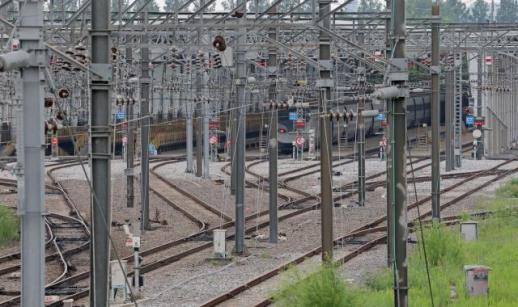 Korail to Resume Full Train Operations Starting May 31 Train services that were disrupted due to the collapse of the Sosomun overpass in Seoul will be fully restored starting May 31.The Korea Railroad Corporation (Korail) announced on May 30 that it has completed recovery efforts by mobilizing all available resources and will resume normal train operations on May 31.According to Korail, railway authorities conducted restoration work on railway facilities, including the demolition of the Sosomun overpass, installation of new overhead lines, cable laying, and signal equipment installation. They also carried out safety checks, including inspections of track damage, track inspections, and test runs of trains and work vehicles throughout the night.Korail explained that it has decided to gradually deploy trains that have completed inspections and maintenance, making it possible to resume normal operations for all trains starting May 31.Earlier, Korail resumed operations on the Gyeongui Line on the morning of May 30, just four days after the collapse. The KTX trains on the Gangneung Line and the Central Line between Seoul and Cheongnyangni also returned to normal service on the same day.Kim Tae-seung, President of Korail, stated, "Due to this incident, trains that could not enter the Hangshin Station (KTX) and Suseo Station (regular trains) were temporarily maintained. Starting May 30, we have been gradually replacing these trains according to the operational plan to prepare for normalization. We will repay the trust of the public, who have patiently waited despite unavoidable reductions in train services, by providing safer and more convenient rail services."* This article has been translated by AI. 2026-05-30 15:54:00
 -
 Korea and Japan among hardest hit from Hormuz disruption SEOUL, May 30 (AJP) - South Korea and Japan have emerged as the biggest casualties of the disruption to Middle Eastern energy supplies following the U.S.-Iran conflict, with crude imports plunging as exports from the Gulf nearly halved amid months of turmoil around the Strait of Hormuz. Middle Eastern crude shipments between March and May are projected to fall 48 percent from a year earlier, according to shipping data compiled by Kpler and reported by Japan's Nikkei newspaper on Friday. The disruption follows the de facto closure of the Strait of Hormuz, a critical maritime chokepoint through which roughly a fifth of global oil supplies normally pass. Among major exporters, crude shipments from Kuwait and Iraq are expected to decline by more than 90 percent during the three-month period, while exports from the United Arab Emirates are projected to fall 33 percent and those from Saudi Arabia 29 percent. Iran, which controls the northern side of the strait, initially maintained export volumes in March and April at levels similar to a year earlier. However, shipments are expected to plunge 87 percent in May after Washington intensified maritime interdiction efforts against Iranian oil exports. The collapse in Gulf supplies has hit Northeast Asia particularly hard because of its heavy reliance on Middle Eastern energy. Japan's crude imports are projected to fall 47 percent between March and May from a year earlier, the steepest decline among the world's 10 largest crude-importing nations. South Korea is expected to post the second-largest drop, with imports falling 31 percent. Before the outbreak of the conflict, Japan sourced about 90 percent of its crude imports from the Middle East, while South Korea relied on the region for roughly 70 percent of its oil needs. China has been relatively insulated. With Middle Eastern crude accounting for about 40 percent of its imports, China's crude purchases are expected to decline by a comparatively modest 18 percent during the same period. Japanese refiners have moved aggressively to replace lost Gulf supplies with U.S. crude. American oil accounted for just 2 percent of Japan's imports in February but had risen to more than 20 percent by early May. South Korea has also accelerated efforts to diversify supply sources. According to recent data released by the Korea International Trade Association, South Korea imported 4.49 million tons of crude oil from the Middle East in April, down 37.3 percent from a year earlier. Total crude imports fell 22.8 percent to 8.46 million tons. As a result, the Middle East's share of South Korea's crude imports dropped to 53.1 percent in April from 65.2 percent a year earlier. Imports from Saudi Arabia, traditionally South Korea's largest supplier, fell 37.6 percent to 2.14 million tons. In contrast, crude imports from the United States rose 13.4 percent to 2.14 million tons, putting U.S. supplies on par with Saudi volumes for the first time in recent years. Since the war, Seoul has dispatched special envoys to the Middle East and Central Asia in April to secure alternative supply routes and reduce dependence on Hormuz-linked shipments. Crude imports from Australia surged 89 percent from a year earlier in April to 440,000 tons, while imports from Canada more than doubled to 240,000 tons. Shipments from Africa rose sharply to 400,000 tons from just 60,000 tons a year earlier. The supply shock has extended beyond crude oil. Global naphtha exports are expected to decline 23 percent between March and May as Middle Eastern shipments contract sharply. Exports from the UAE are projected to plunge 87 percent, while Saudi shipments are expected to fall 27 percent. The supply disruptions come as uncertainty continues to surround the future of the Strait of Hormuz despite ongoing negotiations between Washington and Tehran. U.S. President Donald Trump on Friday emerged from a two-hour Situation Room meeting without approving a proposed framework that could extend the current ceasefire and eventually reopen the strategic waterway. Trump had earlier suggested he was prepared to make a "final determination" on a possible agreement with Iran, but administration officials said no decision was reached. The proposed arrangement would reportedly include reopening the Strait of Hormuz, restrictions on Iran's nuclear activities and a phased easing of U.S. maritime pressure on Iranian shipping. Tehran, however, has publicly rejected several of Washington's conditions and insists current negotiations are focused on maintaining the ceasefire rather than its nuclear program. Meanwhile, small numbers of oil tankers and LNG carriers have continued transiting the strait using a combination of covert navigation and U.S. military assistance. Some vessels have sailed "dark," switching off automatic identification systems and navigation lights to reduce the risk of Iranian interception, according to the Wall Street Journal. Vessels moving through the area remain in close communication with American naval forces, which use drones, radar and surveillance assets to guide ships through relatively safe corridors cleared earlier by U.S. mine-countermeasure operations. Iran's Revolutionary Guard Corps has continued asserting control over the waterway and has reportedly attempted to lay sea mines and launch drone attacks against commercial shipping. U.S. Central Command says American forces have responded by destroying mine-laying vessels and striking missile and drone sites while maintaining that the broader ceasefire remains intact. A South Korean-operated commercial vessel was among ships damaged during Iranian missile and drone attacks near the Gulf shipping lanes. 2026-05-30 15:32:47
 -
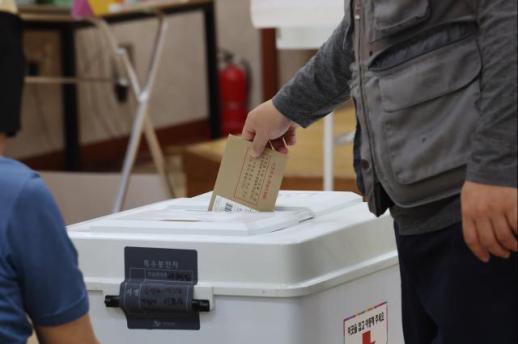 Early Voting Reaches 19.77% on Second Day of Local Elections As of 3 p.m. on May 30, the second day of early voting for the 9th nationwide local elections, the national voter turnout stood at 19.77%. According to the National Election Commission, from 6 a.m. on May 29, when early voting began, a total of 8,829,461 out of 44,649,908 eligible voters had cast their ballots. This figure represents an increase of 2.39 percentage points compared to the same time during the 2022 8th local elections, which recorded a turnout of 17.38%. Additionally, it is just 0.85 percentage points shy of the highest early voting turnout in local election history, which was 20.62% during the last 8th local elections. Given that the turnout is increasing by approximately 1 percentage point per hour, it is anticipated that the record for early voting turnout in local elections could be surpassed around 4 p.m. today. Regionally, South Jeolla Province recorded the highest turnout at 34.34%, followed by North Jeolla Province at 30.49%, Gwangju and Gangwon at 23.44%, and Sejong at 22.68%. In contrast, the lowest turnout was in Daegu, which recorded 15.61%. This was followed by Gyeonggi Province at 17.39%, Busan at 17.91%, and Incheon at 18.01%, while Seoul recorded a turnout of 19.62%. Early voting is taking place at 3,571 polling stations nationwide and will continue until 6 p.m. today. Voters wishing to participate must bring an identification card, such as a resident registration card, driver's license, or passport, to their nearest early voting site. Polling station locations can be verified on the National Election Commission's website or by calling the main hotline at 1390.* This article has been translated by AI. 2026-05-30 15:30:00
 -
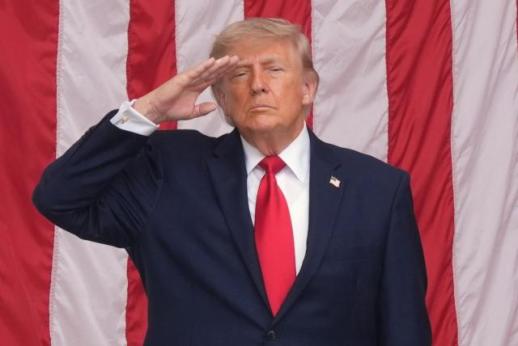 Trump's Health Checkup Results 'Good'; Doctor Recommends Weight Loss President Donald Trump recently received a generally positive assessment during his routine health checkup, but his medical team advised him to focus on weight loss and dietary management. According to reports from CNN and other outlets on May 29, Trump's physician, Sean Conley, stated in a health report released by the White House that "President Trump’s overall physical functions, including heart, lung, and neurological health, are in very good condition," adding that he is "fully fit to perform his duties as Commander-in-Chief and Head of State." Medical professionals evaluated Trump's heart health to be approximately 14 years younger than his actual age. Symptoms of leg swelling due to chronic venous insufficiency, noted in last year's checkup, have reportedly improved. Neurological tests indicated that his mental state, cranial nerve function, sensory responses, reflexes, gait, and balance were all normal. Notably, in the Montreal Cognitive Assessment (MCA), which screens for mild cognitive impairment and early dementia, he scored a perfect 30 out of 30. However, the need for weight management was highlighted. This checkup revealed that Trump weighs about 108 kg (238 pounds), which is an increase of approximately 6 kg since his last health examination in April of the previous year. Consequently, his physician recommended ongoing weight loss and dietary adjustments. Additionally, the medical team advised him to take low-dose aspirin. Trump has previously stated in interviews that he takes 325 mg of aspirin daily, which is higher than the typical recommended dose of 81 mg.* This article has been translated by AI. 2026-05-30 15:18:00