

Journalist

Chang SeongWon
-
 K Bank Shrinks Board to Seven Members; CEO Choi Woo-hyung Reappointed K Bank has streamlined its board structure to speed decision-making and sharpen oversight. Shareholders also approved another term for CEO Choi Woo-hyung, citing performance that included a successful IPO. K Bank said it held its 10th annual general meeting of shareholders on Monday and approved a package of agenda items, including Choi’s reappointment; the reappointment of two outside directors; the appointment of three outside directors who will serve on the audit committee; deletion of a clause excluding cumulative voting; and the creation of a Consumer Protection Committee. Shareholders approved a broad reshaping of the board. The board will be reduced to seven members from 11. Under the new structure, it will consist of one inside director, five outside directors and one other non-executive director, down from one inside director, eight outside directors and two other non-executive directors. Lee Hyun-ae, who previously led NH Futures, was appointed as a new audit committee member. Digital specialists also joined, including Jung Jin-ho, who previously served as a deputy head of KB Kookmin Bank’s Digital Transformation (DT) division, and Kim Nam-jun, who previously served as a vice president at Shinhan Card. Existing directors Lee Kyung-sik, a Seoul National University professor, and Choi Jong-oh, a professional committee member with a background at the Financial Supervisory Service, were reappointed. K Bank also approved the establishment and operation of its Consumer Protection Committee. It said it is the first internet-only bank in South Korea to set up a consumer protection committee as an independent subcommittee within the board. The bank said it created the committee to elevate consumer protection from complaint handling or compliance checks to a core management issue directly overseen by the board. The committee’s main review items include basic policies for building and operating internal controls for financial consumer protection; major changes to consumer protection systems; enactment and revision of consumer protection standards and internal control standards; and overall key policies and management frameworks related to consumer protection. Shareholders also approved Choi’s reappointment. The bank said he was credited with stable management after posting net profit of 128.1 billion won in 2024 and 112.6 billion won in 2025.* This article has been translated by AI. 2026-03-31 14:27:00
 -
 Hanmi Pharmaceutical Names Hwang Sang-yeon CEO, First Outsider in 53 Years Hanmi Pharmaceutical is moving to overhaul its management structure by appointing an outside chief executive for the first time in its 53-year history. At its 16th annual shareholders meeting on March 31 at its headquarters in Songpa-gu, Seoul, the company appointed Hwang Sang-yeon, head of the private equity division at HB Investment, as an inside director. Hwang was then named CEO after a board meeting held immediately following the shareholders meeting. Hwang earned bachelor’s and master’s degrees in chemistry from Seoul National University and previously served as head of the research center at Mirae Asset Securities and as CEO of Chong Kun Dang Holdings. With the appointment, CEO Park Jae-hyun, who had been selected with the backing of the owner family’s mother and daughter during a management dispute, will step down after three years in the post. Speaking to reporters after the board meeting, Hwang said he would address concerns by carrying on the late founder Lim Seong-gi’s management philosophy of “respect for people and value creation.” He also pledged to work with employees to lead the company “to the next level” as South Korea’s top drugmaker. Hanmi Pharmaceutical has long relied on internal promotions dating back to Lim’s tenure, but the decision to bring in an outsider is being viewed as a signal of a more aggressive push for organizational change. Shareholders also approved all agenda items as proposed, including the appointment of inside director Kim Na-young and outside directors Han Tae-joon and Kim Tae-yoon. At a separate shareholders meeting held the same day at Hanmi Science, shareholders approved the appointment of Kim Nam-gyu, CEO of La Défense Partners, as a new non-executive director. La Défense is part of a so-called “four-party alliance” with Shin Dong-kook, Song Young-sook, Lim Ju-hyun and La Défense. Kim, a former lawyer, is described as a strategy and legal expert with experience at Samsung Electronics’ legal office and KCGI. La Défense, which holds a 9.81% stake, is expected to exercise more direct influence over management through the board seat. The developments appear to have drawn a line under controversy over interference in Hanmi Pharmaceutical’s management. Last month, Park raised concerns that major shareholder Shin Dong-kook, chairman of Hanyang Precision, was improperly intervening in management. The dispute resurfaced after Song, chair of Hanmi Pharmaceutical Group, voiced support for a professional management system. With Park’s reappointment failing and Hwang being named CEO at this shareholders meeting, the conflict has, for now, eased. Some observers, however, say the leadership change at Hanmi Pharmaceutical and the reshaping of Hanmi Science’s board could open a new phase in competition for control. * This article has been translated by AI. 2026-03-31 14:24:00
 -
 Lee weighs bold economic measures as Middle East conflict deepens SEOUL, March 31 (AJP) - President Lee Jae Myung on Tuesday hinted at drastic measures to stabilize the economy amid the prolonged conflict in the Middle East. During a Cabinet meeting at Cheong Wa Dae in central Seoul, Lee said the government may take bold action including an emergency fiscal order if necessary, as the conflict that began with U.S.-led airstrikes on Iran late last month has escalated with no end in sight, setting off "warning signals" for the global economy. Under the Constitution, such an order allows a president to take urgent steps without parliamentary approval in cases deemed necessary to address a severe economic crisis. Lee pointed to warnings from international financial agencies including the Organization for Economic Cooperation and Development (OECD), which has lowered growth forecasts for major economies and warned that oil prices could jump to US$135 a barrel in the second quarter. Given South Korea's heavy reliance on overseas markets and energy supplies from the Middle East, Lee called for close monitoring and detailed contingency plans for possible emergencies, instructing key officials to keep monitoring developments and respond "boldly and preemptively" to any supply disruptions. Like naphtha-related measures already in place since last week, Lee urged strict management of other key raw materials such as urea and urea solution, maintaining stockpiles at levels comparable to those kept during wartime. He also added that similar measures should be applied to everyday necessities including medical supplies. 2026-03-31 14:21:58
 -
 EDITORIAL: A breach of trust at the heart of the platform economy Woowa Brothers, operator of South Korea’s leading food delivery app Baemin, has issued a public apology after customer data was misused by criminals who infiltrated an outsourced customer service contractor under false pretenses. Coming on the heels of a recent data-related controversy at Coupang, the episode has further shaken confidence in platform operators entrusted with vast amounts of personal information. More than a lapse in security, it exposes a structural vulnerability at the core of the platform economy. What makes this case troubling is not the sophistication of the attack, but its simplicity. According to investigators, the suspects posed as legitimate hires, gained routine access to customer records, and used that information to carry out crimes. This was not a failure of firewalls or encryption, but of oversight. It highlights the limits of technological defenses when human processes — particularly in outsourced operations — are left exposed. Platform companies often frame themselves as technology firms. In reality, they are custodians of vast pools of personal data. A single food delivery order can reveal a home address, a phone number, and patterns of daily life. When such data is misused, the consequences go beyond privacy violations and can pose real threats to personal safety. To be clear, this incident alone does not prove a systemic breakdown across the entire industry. What is known so far points to failures in contractor management and access control. But that distinction offers little comfort. The responsibility ultimately lies with the platform. Outsourcing operations does not outsource accountability. Woowa Brothers has taken initial steps — reporting the case to the Personal Information Protection Commission, cooperating with police, notifying affected users, and moving to terminate the contractor. These are necessary responses. They are not sufficient. Preventing a recurrence requires a deeper overhaul of how trust is managed within platform systems. Access to sensitive data must be strictly limited to what is essential. Activity logs should be continuously monitored, and anomalous behavior flagged in real time. In high-risk workflows, a zero-trust approach — where every access request is verified regardless of origin — should be standard practice, not an aspirational goal. The broader industry should treat this as a warning. As platforms grow, their internal structures become more complex — and, if neglected, more vulnerable. Trust is their most valuable asset. It takes years to build and only moments to lose. Policymakers, too, must reassess whether existing rules adequately reflect the realities of outsourced digital operations. Clearer standards are needed for third-party access to personal data, as well as for accountability when breaches occur. Regulation should remain measured, but baseline safeguards are not optional. At its core, the issue is straightforward: are platforms prepared to bear the full responsibility that comes with the data they collect? Convenience is not a license — it is a contract with users. For Woowa Brothers, this should not be treated as a crisis to contain, but as a turning point. Without trust, there is no platform. 2026-03-31 14:15:13
 -
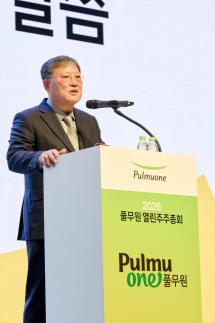 Pulmuone vows AI-driven growth push at annual shareholder meeting SEOUL, March 31 (AJP) - South Korean food company Pulmuone held its annual general meeting, pledging to accelerate its artificial intelligence transformation strategy and expand into new business segments as it eyes a deeper footprint in global markets. The meeting, held at the Korea Science and Technology Convention Center in Seoul's Gangnam district on Tuesday, drew shareholders and company executives under the theme "ONE" — a reference to the firm's corporate philosophy, its track record, and its strategic roadmap. General CEO Lee Woo-bong reported that Pulmuone posted consolidated revenue of 3.38 trillion won (about $2.2 billion) and operating profit of 93.2 billion won in fiscal 2025, calling the results a reaffirmation of the company's competitive resilience amid global economic headwinds. "We will leap forward to the next level as the global no.1 wholesome food and sustainable lifestyle company leading the K-food industry by creating sustainable growth momentum toward a new future through an organizational culture based on AX innovation and an entrepreneurial mindset," Lee said. Shareholders approved six agenda items, including the fiscal 2025 financial statements, amendments to the company's articles of incorporation, and the appointment of new directors. Under the charter revision, the mandatory ratio of independent outside directors was raised from one-quarter to one-third of the total board. Chun Young-hoon, CEO of Pulmuone Foods, was appointed as an inside director alongside two newly elected outside directors. On the growth front, the company said it is scaling up nascent businesses — including living care, pet products, food technology, and corporate food service — while pressing ahead with a company-wide AI transformation drive centered on a new future business division established earlier this year. Pulmuone said it plans to pursue both top-line growth and margin improvement across its domestic and overseas operations in 2026, with a particular focus on turning around its U.S., China, and Japan units and expanding into Europe and Canada. 2026-03-31 13:59:16
 -
 UN Human Rights Council adopts resolution condemning North Korea SEOUL, March 31 (AJP) - The United Nations Human Rights Council (UNHRC) has adopted a resolution condemning human rights violations in North Korea, calling for the country to be held accountable. According to the Ministry of Foreign Affairs here on Tuesday, the resolution was passed unanimously by consensus at the council's 61st session in Geneva last Sunday, with South Korea among the 50 co-sponsoring countries. Such resolutions have been adopted annually since 2003, with this year's marking the 24th consecutive year of international condemnation. Shifting slightly from broad condemnation, the council assessed North Korea's commitments made during its 2024 Universal Periodic Review (UPR), a process that examines the human rights record of every UN member state every five to six years. North Korea underwent its fourth such review in the fall of 2024. It then stressed the importance of engagement including inter-Korean talks to improve human rights conditions in North Korea. The ministry said, "We will continue working with the international community to help bring tangible improvements to the human rights of North Koreans." South Korea participated as a co-sponsor from 2008 to 2018 but abstained from 2019 under the Moon Jae-in government as part of rapprochement efforts with North Korea. It returned as a co-sponsor in 2023 under the subsequent conservative government. 2026-03-31 13:40:43
 -
 Singer Lee Eun-ha Says Debt Grew From 2 Billion Won to 10 Billion Won, Details Steroid Side Effects and Breast Cancer Singer Lee Eun-ha has spoken publicly about her turbulent life, including mounting debt and serious health problems. On the March 29 broadcast of MBN’s current-affairs and documentary program “While You Were Sick,” Lee, known as a “disco queen” of the 1970s and 1980s, said her father’s construction business collapsed and left the family with heavy debt around 1990. She said the debt reached 2 billion won, and that she turned to private lenders while trying to repay it. She said the 2 billion won later grew to 10 billion won. Lee said she worked nonstop to make a living and recalled receiving steroid injections to keep up with her schedule. “If I had known a little earlier, my body wouldn’t have been ruined like this,” she said. She said side effects from steroids led to a 30-kilogram weight gain in a year, worsening her knees and resulting in artificial joint surgery. She also said she was later diagnosed with breast cancer while exercising to manage her weight. Lee said she has now been declared cured. “To return as the disco queen who shined brightest on stage, I’ll keep working hard on my health, and I’m spending a lot of time listening to what my body is telling me,” she said. “While You Were Sick” is billed as a healing talk program featuring people who have overcome hardships. It airs every Sunday at 8:30 a.m. * This article has been translated by AI. 2026-03-31 13:33:19
 -
 Netflix’s ‘Bloodhounds’ Season 2 Expands Fight to Global Illegal Boxing League Netflix’s K-boxing action series “Bloodhounds” returns with heavier punches and a broader story line, as the Geon-woo and Woo-jin duo takes on a global illegal boxing league. A production presentation for “Bloodhounds” Season 2, directed by Kim Joo-hwan, was held Tuesday morning at the Ambassador Seoul Pullman Hotel in central Seoul. Kim and cast members Woo Do-hwan, Lee Sang-yi and Jung Ji-hoon attended and discussed the new season. Season 2 follows Geon-woo (Woo) and Woo-jin (Lee) after they took down a brutal illegal loan-sharking ring. This time, they face a larger opponent: an international underground boxing league ruled by money and violence, expanding the world introduced in Season 1, which premiered in 2023 and found global success for its bare-knuckle action. Kim said he focused on intensifying what viewers liked in the first season. “I thought about how to show the boxing action and bromance that were loved in Season 1 in a stronger way,” he said. “I put the emphasis on making what people already know taste even better.” Woo and Lee, reuniting after three years, said they worked to show their characters’ growth. Woo said he changed his physique to reflect Geon-woo’s drive to become a world champion. “To show that Geon-woo lived for three years with the goal of becoming a world champion, I gained 5 kilograms more than Season 1, for a total of about 15 kilograms,” he said. “If Season 1 showed him as someone just starting out in society, this time I tried to show him as a bit more of an adult,” Woo added. Lee said Woo-jin becomes Geon-woo’s coach and stays with him through every moment, describing the character with the keyword “responsibility.” “You’ll see how his sense of responsibility deepens as he tries to protect his people,” he said. The two described their chemistry this season as “bromelo,” blending bromance and melodrama. Woo said they are “friends who have experienced losing someone precious,” adding that they are “a community of fate and a relationship like a support system.” Kim said, “When we filmed a scene where they cried together, I cried too. It’s the best bromance I’ve made.” A major addition in Season 2 is Jung, who plays Baek-jeong, the ruthless architect of the illegal boxing league. The role marks Jung’s first time playing a villain since his debut. “Playing a villain itself was a burden, but I had a thirst to try an evil role,” Jung said. “It felt good to be ‘trained’ by director Kim again after a long time. From an evil look to bulking up enough to box, I followed the director’s direction thoroughly.” “I only thought about how to make the two main characters miserable,” he said. “You’ll end up hating me.” The cast said the season’s draw is its rough-edged, straightforward action. Woo said that after Season 1 he wondered if there was more to show, “but there’s still a lot we can do with just our two fists.” Lee said that while AI is a trend, “for our project, we made it in an analog way, sweating for real.” Jung also pointed to the dynamic among five members of the villain group. “The ‘bromance within the organization,’ where the bad guys envy and compete with each other, will also be interesting,” he said. “Bloodhounds” Season 2 will be released April 3 on Netflix in more than 190 countries.* This article has been translated by AI. 2026-03-31 13:18:22
 -
 KOSPI slides as Korean won hits 17-year low amid deepening Middle East conflict SEOUL, March 31 (AJP) - With Asian markets mostly opening mixed on Tuesday, South Korean stocks took the brunt of losses as the won weakened to around 1,520 for the first time since the 2008 global financial crisis. The escalating conflict in the Middle East, along with fading hopes for ceasefire talks, further weighed on market sentiment. The possible deployment of U.S. ground forces further heightened fears of the conflict turning into a massive regional war. With Asian markets mostly opening mixed on Tuesday, South Korean stocks took the brunt of losses as the won weakened to around 1,520 for the first time since the 2008 global financial crisis. The Korean won weakened sharply, trading at 1,522.60 per dollar in morning trade, marking its lowest level since March 2009. Prolonged geopolitical tensions, elevated oil prices, and strong dollar demand are expected to keep pressure on the exchange rate. Such geopolitical risks also took a heavy toll on South Korean equities. The benchmark KOSPI fell 1.14 percent to 5,215.47 points shortly after the day's trading began, while the junior KOSDAQ declined 1.47 percent to 1,090.03. These losses came after the combined market capitalization of the KOSPI and KOSDAQ shrank by about 840 trillion won in March alone, as energy price shocks and supply uncertainties rattled investor confidence. Samsung Electronics and SK hynix together accounted for roughly 372 trillion won of the decline, while cyclical stocks such as Hyundai Motor and HD Hyundai Heavy Industries also posted sharp losses. Shares of Samsung Electronics fell 3.49 percent to 170,150 won, while SK hynix dropped 5.96 percent to 821,000 won in early trade, as broader market weakness and geopolitical risks weighed on sentiment. Broader losses were seen across sectors. In autos, Hyundai Motor fell 3.73 percent to 452,000 won and Kia dropped 3.70 percent to 145,900 won, Hyundai Mobis declined 4.15 percent to 381,500 won. Energy and industrial shares also weakened, with LG Energy Solution down 3.17 percent to 397,000 won, SK Square falling 6.67 percent to 476,000 won, and Hanwha Aerospace losing 4.66 percent to 1,247,000 won. HD Hyundai Electric slipped 3.44 percent to 842,000 won. Financials were lower, as KB Financial Group fell 2.33 percent to 142,500 won and Shinhan Financial Group declined 2.65 percent to 88,100 won, while Samsung Life Insurance dropped 3.42 percent to 212,000 won. Among tech and platform stocks, Naver fell 2.42 percent to 202,000 won, Samsung Electro-Mechanics dropped 3.73 percent to 413,000 won, and Samsung SDI edged down 0.48 percent to 410,500 won. Hanwha Ocean was the only gainer, rising 4.40 percent to 123,400 won. Meanwhile, Wall Street closed mixed overnight. The Dow Jones Industrial Average edged up 0.11 percent to 45,216.14, while the S&P 500 fell 0.39 percent to 6,343.72 and the Nasdaq Composite dropped 0.73 percent to 20,794.64. Semiconductor stocks led losses, with Micron plunging 9.8 percent amid concerns over Google's "TurboQuant" technology, which could improve computing efficiency, though its impact on memory demand remains uncertain Oil prices rose after U.S. President Donald Trump warned he would "obliterate" Iran's energy infrastructure if a ceasefire is not reached soon, while inflation data also weighed on Japan's stock market. The Nikkei 225 fell 1.61 percent to 52,738.55 in morning trade, with chip-related shares leading losses as Advantest dropped 4.40 percent and Tokyo Electron declined 5.25 percent. Tokyo's core CPI rose 1.7 percent in March from a year earlier, below market estimate of 1.8 percent. Hong Kong's Hang Seng Index rose 0.48 percent to 24,868.36, China's Shanghai Composite edged up 0.02 percent to 3,924.07, while Taiwan's TAIEX fell 0.62 percent to 32,317.38. 2026-03-31 11:28:26
 -
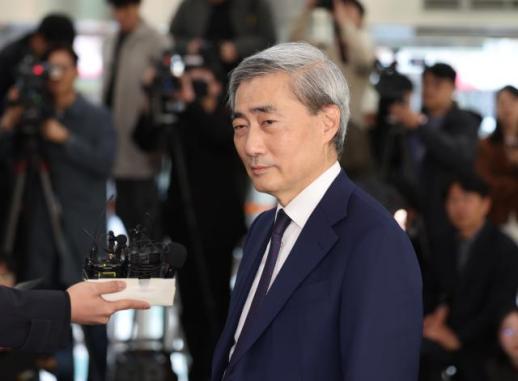 Korean won at crisis lows, but no crisis, says BOK chief nominee SEOUL, March 31 (AJP) -The South Korean won weakening past the 1,520-per-dollar mark — its lowest level since the global financial crisis in March 2009 — should not be overstated as a sign of crisis, as the country's financial system is far more resilient than in the past, Bank of Korea governor nominee Shin Hyun-song said Tuesday. “What matters more than the level itself is whether the financial system can accommodate it,” Shin told reporters as he arrived at his temporary office ahead of his confirmation hearing. “From that perspective, it should not be a concern.” Shin, a veteran economist from the Bank for International Settlements (BIS), stressed that exchange rate levels alone should not be interpreted as a trigger for financial instability. “The level itself should not be given too much meaning,” he said. “The exchange rate is one indicator of how much risk the financial system can absorb, and in that sense, there is no major concern.” He added that dollar liquidity remains ample, pushing back against fears that the sharp depreciation of the won could lead to capital flight or funding stress. “There is no need to directly link the exchange rate to financial instability,” Shin said. On external risks, Shin pointed to the ongoing Middle East conflict as the most immediate concern for the Korean economy. “In the short term, it is clearly the situation in the Middle East,” he said. “Rising oil prices will put upward pressure on inflation while posing downside risks to growth.” Still, he cautioned that the uncertainty surrounding the scale and duration of the conflict makes it difficult to draw firm conclusions at this stage. Shin also noted that South Korea’s external financial structure has improved significantly compared to past crises, particularly in terms of capital flows and dollar funding. He highlighted structural changes in the market, where foreign investors increasingly access Korea’s bond market through foreign exchange swaps — lending dollars while borrowing won — which in turn helps ensure stable dollar funding. “That structure actually supports dollar liquidity,” he said. On monetary policy stance, he also dismissed labels such as “hawk” or “dove” as overly simplistic. “I don’t think it is desirable to view policy through a binary lens,” he said. “What matters is reading the economic flow, understanding the interaction between the financial and real sectors, and responding flexibly depending on the situation.” Shin's remarks however failed to improve market confidence. The dollar was trading at 1,525 against the dollar as of 11:30 a.m. and the main KOSPI and secondary KOSDAQ both fell more than 2 percent. The bond yields rose, finding Shin less hawkish than expected. The three-year government bond yield fell 1.3 basis points to 3.529 percent, while the 10-year yield dropped 2.7 basis points to 3.864 percent. 2026-03-31 10:38:16