

Journalist

Chang SeongWon
-
 KPGA Says Busan Assault Suspect Was Expelled in 2015, Not a Current Member KPGA said on the 23rd that the man accused in a recent sexual assault and beating case involving a golf lesson student in Busan is not affiliated with the association. The association said it has confirmed the suspect is a 60-year-old man identified only by the surname Kim, who was expelled in January 2015 and is not a current KPGA member. JTBC's "Case Chief" reported in February that a man working as an instructor at a golf practice range in Busan repeatedly sexually assaulted a female student and, after she resisted, assaulted her indiscriminately at a restaurant. The program also aired CCTV footage showing the attack. The Busan District Court sentenced the assailant to 10 months in prison, suspended for two years. After the broadcast, speculation spread online while the suspect's identity remained unclear. Based on a phrase used in the report, a man identified only by the surname Shin, who had competed on the KPGA Tour, was wrongly named as the assailant. JTBC later said comments identifying Shin as the attacker were "clearly false." Shin also strongly denied any connection. Even so, KPGA members in the Busan and South Gyeongsang region said they suffered tangible fallout, including students avoiding lessons. As the damage from unverified claims grew, Shin Hee-taek, chair of the KPGA disciplinary committee, and regional members moved to determine the suspect's identity. The KPGA office said it made repeated calls with the victim and local members, conducted a full review of eight members in the Busan and South Gyeongsang region born in 1966, and sought legal advice. It ultimately identified Kim as the suspect and said he had been expelled for long-term nonpayment of dues. "Members in the Busan and South Gyeongsang region and association staff communicated closely to identify the perpetrator," Shin said. "Kim is currently in no way connected to the association." KPGA said it is checking indications that Kim continued giving golf lessons after his expulsion and is also reviewing whether he impersonated KPGA membership. Depending on the findings, the association said it is considering legal action over defamation and obstruction of business and will cooperate if investigative authorities request assistance. Kim Jin-hyeong, a KPGA Tour director, said the core of the case was not misconduct by an active professional but a personal crime by someone who had been expelled. He said the association shares the victim's pain and the distress felt by Shin and other members in the Busan area. He said KPGA maintains a zero-tolerance stance on sex crimes and will consider strong legal steps if needed, while working to build systems to prevent recurrence so the public can trust KPGA members. The association said it also views impersonating KPGA membership, including by expelled individuals, as a serious matter that undermines order and will respond actively after confirming facts if similar cases arise.* This article has been translated by AI. 2026-03-23 17:36:00
 -
 President Lee vows self-reliant defense amid Middle East tensions SEOUL, March 23 (AJP) - President Lee Jae Myung said Monday that self-reliant defense is the core of South Korea’s integrated defense strategy, citing increasingly complex and fluid global security conditions. “Self-reliant defense is the most important core of integrated defense,” Lee said while presiding over the 59th Central Integrated Defense Council at the Cheong Wa Dae in Seoul. The council, held annually, brings together senior officials across various national defense sectors to assess the country’s integrated defense posture and discuss ways to strengthen it. This marked the first such meeting since Lee took office. Lee stressed that ensuring public safety, maintaining everyday stability and safeguarding national continuity are the fundamental responsibilities of the government. “The most critical aspect of national security is ultimately our integrated defense capability, and at its core lies national defense,” he said. He emphasized that defense must remain a sovereign responsibility. “It is something we must never entrust to others, a core responsibility we must ultimately bear ourselves,” Lee said. “We must be able to protect ourselves under any circumstances without relying on external assistance.” Lee highlighted South Korea’s defense capabilities, noting that the country’s annual defense spending is about 1.4 times North Korea’s gross domestic product and that it ranks fifth globally in military strength. “With an economy among the top 10 globally and a defense industry envied worldwide, we have sufficient capacity to defend ourselves without external support,” he said. He called on officials to strengthen preparedness and maintain confidence, urging them to build systems capable of ensuring national defense under any conditions. Lee also underscored the importance of coordination among civilian, military, police and emergency response sectors. Regarding global tensions, including the conflict involving the United States, Israel and Iran, Lee described the international situation as “highly complex and fluid.” He warned that threats now extend beyond conventional military risks to include cyberattacks, terrorism, climate-related crises and disasters. “In such an environment, all elements of defense must respond in a unified and coordinated manner in times of emergency,” he said. 2026-03-23 17:24:32
 -
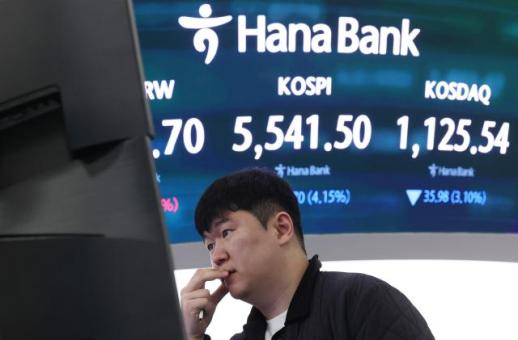 Frenzied retail stock buying triggers Seoul warning on forced liquidation SEOUL, March 23 (AJP) - Leveraged stock buying by retail investors remained feverish on Monday despite 6-percent rout on escalating Gulf war fears, prompting the financial regulator to warn on forced liquidations. The Financial Supervisory Service issued a set of guidelines on Monday aimed at preventing disputes in margin trading, saying recent sharp swings in the domestic stock market had heightened the risk of forced sell-offs for investors using credit financing. “When the domestic stock market has recently shown sharp volatility, the risk of forced liquidation for investors using credit financing has increased, and related disputes and complaints are being steadily filed,” the regulator said. The FSS noted that investors are often swept up in fear of missing out during rallies. As share prices rise, it becomes harder to enter the market with cash alone, pushing some investors to rely on margin loans. When prices then fall sharply, mandatory liquidations are triggered if the collateral ratio drops below 140 percent. Outstanding margin balances surged 21.5 percent in just over two months, rising from 27.4 trillion won ($18.13 billion) at the start of the year to 33.3 trillion won as of March 20. Saying many disputes stem from investor misunderstanding or oversight, the FSS issued several reminders. For complaints that investors did not receive advance notice before forced liquidation, the regulator advised checking whether the brokerage’s phone number had been blocked. Under the Capital Markets Act, brokerages are required to notify clients before carrying out a margin call sale. In cases where investors argued that more shares were sold than necessary to cover the collateral shortfall, the FSS said they must take into account the so-called haircut, or discount rate. Forced liquidations are typically executed at prices discounted by up to 30 percent from the previous day’s close, and the 140 percent collateral ratio should be calculated on that basis. The watchdog also cautioned against relying on intraday price movements when calculating collateral ratios. Even if the ratio appears stable during trading hours, a forced liquidation can still occur if the requirement is not met at the closing price. It also stressed that investors should not treat forced liquidation itself as the reason they failed to make a profit. If a liquidation involves multiple stocks and an investor wants to protect a particular holding, the investor must request a change in liquidation priority in advance through the brokerage. For example, if the default order is A-B-C, the investor may ask that B and C be sold first to preserve stock A. The FSS added that disputes involving overseas stocks are also common, as many investors underestimate how exchange-rate swings and the higher volatility of individual foreign stocks can quickly erode collateral ratios. It also noted that interest-charging methods on margin loans differ by brokerage, and that prolonged delinquency on unsettled receivables may make future credit trading more difficult While the KOSPI ended Monday 6.5 percent lower, retailers bought a net 7 trillion won, matching the selling by foreign and local institutions. 2026-03-23 17:09:52
 -
 BTS’ ‘Arirang’ album sparks debate as most key tracks use English lyrics The name “Arirang” carries unusual weight in Korea — a shorthand for shared sorrow, emotion and centuries of collective memory. So when BTS announced its fifth full-length album would be titled “Arirang,” many listeners expected something overtly traditional. But reactions split after the release, especially because most major tracks — including the title song “SWIM” — are largely in English. For some, an album called “Arirang” with English lyrics felt jarring. The debate raises a broader question: Is what feels strange the English lyrics — or the expectation that the moment “Arirang” is invoked, tradition must appear in a familiar, visible form? The question is not only about taste. Asking “Why English?” touches on where K-pop is headed and what people mean by “Korean.” The discussion also reflects a habit of treating identity as something that must be confirmed through obvious symbols — traditional clothing, a Korean-instrument sample, or Korean-language lyrics — before audiences feel assured something is “Korean.” Culture rarely works that neatly. BTS’ choice on this album is a hip-hop sound closer to the group’s roots. Hip-hop began with local and personal stories, but it has also become a global musical grammar. Within that grammar, English is the most widely shared language. English lyrics, in that sense, can be a delivery method rather than a surrender of identity. That shifts the focus: Before asking why English, it may matter more what the group is carrying in that English. In the article’s view, the title “Arirang” points less to a literal reenactment of tradition than to subtler layers: a structure that repeatedly builds emotion, a chorus that evokes shared feeling, and what the members described in interviews as a “sense that naturally seeps in as Koreans.” Korean identity, the argument goes, does not require a signpost. The piece also warns that the more artists try to display tradition too directly, the more it can become staging rather than inheritance — decoration that grows louder as emotion grows thinner, turning culture into a fixed image. “Arirang” itself, it notes, was never a single fixed song. Lyrics and singing styles varied by region, and the emotions attached to it changed over time. For some it was a song of parting; for others, a song of endurance; for others still, a song of resistance and comfort. Constant variation, the article argues, is part of why it endured. From that perspective, an “Arirang” sung in English is not an exception outside the tradition but another extension of it. A change in language does not automatically erase cultural identity, the piece says; the ongoing process of translation and movement across eras, media and audiences is closer to cultural vitality. Ultimately, the article says the controversy reflects more than discomfort with English lyrics. It suggests many people still define “Korean” too simply — as something that must be in Korean, must look traditional, and must carry instantly recognizable markers. By that standard, it argues, a souvenir shop might appear more “Korean” than a living culture. K-pop, the piece concludes, is produced for a global market and consumed simultaneously by listeners worldwide. In that environment, English is less a preference than a strategy. The key question is not what the strategy erases, but what it newly carries — and whether the urge to recognize “Korean-ness” too easily has become outdated. 2026-03-23 17:09:23
 -
 Kakao Pay Confirms CEO Shin Won-geun’s Reappointment, Pledges AI Shift and ‘Next Finance’ Push Kakao Pay said it confirmed the reappointment of CEO Shin Won-geun at its annual shareholders meeting held on the 23rd. The company said Shin’s new term will focus on expanding its existing businesses while accelerating a shift to artificial intelligence, improving user experience and building out a digital-asset ecosystem as part of its next-generation finance vision. Shin first took office as Kakao Pay’s CEO in March 2022 and had his term extended in March 2024 in recognition of his management performance, the company said. During his tenure, Kakao Pay said it completed its blueprint for a “daily-life finance platform,” grew both scale and fundamentals, and posted its first annual profit on a consolidated basis last year. Building on fintech know-how accumulated over the past four years, Kakao Pay said it will broaden existing business areas and overhaul UX to deliver full-scale “hyper-personalized” services. It also said it will move toward AI-based services and advance its “Next Finance” initiative to respond to a next-generation financial environment built around digital assets. In its core businesses, the company said it will continue to pursue vertical expansion, expand data-related businesses and strengthen platform competitiveness based on traffic. Kakao Pay said it also aims to make its future-finance vision a reality by securing capabilities to offer a completely new financial experience as technology reshapes the industry. It said it will pursue an internal shift to AI services, actively seek AI-centered synergy opportunities within the Kakao group, and prepare for next-generation digital-asset businesses centered on a “super wallet,” including stablecoins, blockchain and tokenized securities (STO). “Agentic AI is triggering the financial industry’s AX (AI transformation) through autonomous payments, embedded finance and hyper-personalization, while on-chain finance such as stablecoins is reshaping global settlement infrastructure,” Shin said. He added that the financial industry is at an inflection point that will determine future winners and losers, and said Kakao Pay will pursue its mission of “creating beneficial finance for users through technology” by combining an early AI shift and its “Next Finance” growth strategy with UX innovation that delivers new financial experiences.* This article has been translated by AI. 2026-03-23 17:03:00
 -
 Korean pet food firms push into Vietnam's booming market SEOUL, March 23 (AJP) — South Korean pet food companies are increasingly targeting Vietnam as a key growth market, capitalizing on the Southeast Asian country’s rapidly expanding pet economy and rising demand for premium pet care. Vietnam has quickly emerged as a strategic destination for Korean exporters. Korean-made pet food already accounts for an estimated 30-40 percent of purchases in some segments, underscoring strong brand recognition and consumer trust. South Korea’s animal feed exports to Vietnam have reached $27.2 million, highlighting the country’s growing importance as an overseas market for Korean firms seeking new revenue streams beyond a maturing domestic industry. The push into Vietnam comes as the country’s pet economy undergoes rapid expansion. Pet population in Vietnam estimated at 31.4 million in 2024 is expected to exceed 33 million this year, according to Euromonitor International. The market itself is projected to grow from around $500 million in 2023 to more than $700 million by 2027, representing an annual growth rate of about 11 percent. This growth is being driven not only by rising pet ownership but also by a shift toward higher-value spending. In cities such as Hanoi, demand for pet services is surging. Dog training centers charge roughly 3 million VND (about $170) per month and report dozens of monthly inquiries, with steady enrollment. Pet hotels and daycare centers are frequently fully booked during peak travel seasons, reflecting a broader willingness among owners to spend on convenience and quality care. Spending is also diversifying beyond basic pet food into services such as grooming, veterinary care and training, areas where Korean companies see opportunities to introduce higher-end products and specialized offerings. For Korean firms, Vietnam’s growth contrasts with more mature conditions at home. Data from the KB Financial Group Research Institute shows that 5.91 million households in Korea — 26.7 percent of the total — owned pets as of 2024, with the overall pet population estimated at 15.5 million. The domestic pet food market is likewise sizable, reaching around 2.2 trillion won ($1.7 billion) in 2025, but growth is gradually stabilizing. While consumer spending continues to rise — with KB Kookmin Card data showing a roughly 30 percent increase in pet-related spending between 2021 and 2024 — companies are increasingly looking abroad to sustain momentum. Major food companies have been expanding their pet food portfolios as part of this outward push. Pulmuone recorded a 35 percent year-on-year increase in pet food sales, with some products posting explosive growth. HY reported a 34.6 percent rise, while Dongwon F&B achieved double-digit growth and expanded exports to more than 10 countries, including Vietnam. Daesang PetLife also posted a 25 percent increase in revenue. 2026-03-23 16:54:33
 -
 New Book '2026 Financial Products and Taxes' Covers Latest Tax Changes A new guidebook has been released that compiles this year’s changes to financial products and tax revisions. Tax & Finance News said on the 23rd that it has published “2026 Financial Products and Taxes (Revised 11th Edition),” fully reflecting financial tax rules revised and implemented starting in 2026. The book organizes key updates, including the introduction of separate taxation for dividend income from high-dividend companies, taxation of profits from comprehensive investment accounts (IMA) as dividend income, and a cut in the withholding tax rate on pension income. Rather than listing tax provisions, it explains major tax categories tied to finance — including income tax, corporate tax, inheritance tax and gift tax — in an accessible way. It also details how a wide range of products are structured and taxed, from deposits, stocks and funds to REITs, fractional investment products and gold investments. It provides an in-depth look at three widely used tax-saving accounts: pension savings, individual retirement pensions (IRP) and individual savings accounts (ISA). Each chapter opens with a Q&A-style summary and includes comprehensive examples by topic. Appendices include a “financial products list” and a “tax-saving financial products summary” covering tax-exempt and separately taxed products closely tied to comprehensive taxation of financial income and health insurance premium burdens. The book was co-authored by three tax and finance specialists: Kim Yong-min, head of the Jin Finance and Tax Research Institute; Park Dong-gyu, a standing vice president of the Korea Association of Certified Tax Accountants and a former investigator at the Tax Tribunal; and Moon Seong-hoon, a professor of business administration at Hallym University who served on the Ministry of Economy and Finance’s Tax Development Deliberation Committee. A Tax & Finance News official said the book is designed so not only financial industry workers and tax professionals but also individual investors can build their understanding step by step, from the basics of taxation and finance. The official said it will serve as a practical guide for planning tax-saving strategies. * This article has been translated by AI. 2026-03-23 16:51:00
 -
 Xdinary Heroes to Return April 17 With New EP 'DEAD AND'; Track List Released JYP Entertainment’s boy band Xdinary Heroes (XH) is set to return with the new song “Voyager.” The group will release its new mini album, “DEAD AND,” at 1 p.m. April 17 and begin comeback promotions. Ahead of the release, JYP posted the album’s track list image at noon on the 23rd through its official social media channels. According to the track list, the album includes seven songs: the title track “Voyager,” the pre-release track “X room,” and “Helium Balloon,” “No Cool Kids Zone,” “Hurt So Good,” “Rise High Rise” and “KTM.” The six members — Gun-il, Jungsu, Gaon, O.de, Jun Han and Jooyeon — took part in the work on all tracks, as they have since debut, adding the band’s distinct musical identity. For “Voyager,” veteran K-pop producer Lee Woo-min, known as “collapsedone,” teamed up again with the band after working on songs including “PLUTO,” “Save me,” “Night before the end” and “Beautiful Life.” Songwriters Shim Eun-ji, VERSACHOI and Lee Hae-sol also contributed. Last year, Xdinary Heroes released two albums and held a world tour, while appearing on major stages including Lollapalooza Chicago, the 2025 Busan International Rock Festival and as the opening act for British rock band Muse’s concert in South Korea, strengthening its standing as a next-generation K-pop “super band.” After starting the year with an official fan meeting, the group recently completed its first local shows in Osaka and Yokohama, titled “Japan Special Live The New X Scene,” as it expands overseas activities. The pre-release track “X room” will be unveiled at 6 p.m. on the 25th. All tracks from the group’s eighth mini album, “DEAD AND,” will be available on music streaming platforms at 1 p.m. April 17.* This article has been translated by AI. 2026-03-23 16:36:17
 -
 BTS flies to New York sporting "Keep Swimming" SEOUL, March 23 (AJP) - BTS flew off to New York less than 12 hours after they successfully pulled off their comeback stage in open-air Gwanghwamun in downtown Seoul and livestreamed worldwide via Netflix, and their appearance at the Incheon International Airport created an instant buzz over their groupwear featuring "Keep Swimming", a clever marketing nod to their title song SWIM from their new album. RM, Jin, Jimin, J-Hope, Suga, V and Jungkook stepped out in matching blue hooded windbreakers, each stitched with the same phrase: “KEEP SWIMMING.” A subtle but unmistakable referemce to SWIM, the title track of their new album — and a reminder that the comeback was not a moment. Still recovering from an ankle injury that limited his performance the night before, the leader arrived on crutches, moving carefully through the terminal. BTS is set to appear on NBC's popular talk show 'The Tonight Show Starring Jimmy Fallon' on March 25-26, where they will discuss their comeback in nearly four years and perform two songs from the new album. On Tuesday , BTS will collaborate with Spotify to hold 'Spotify X BTS: SWIMSIDE' in New York to meet fans directly. They plan to perform new songs and introduce tracks from 'ARIRANG' in a live concert format. 2026-03-23 16:27:34
 -
 New Books: How AI Picks Winning Brands, Rethinking Anxiety, and Walking Japan’s Past AEO: The Secret of Brands AI Chooses=Kim Yongseok·Lee Seungmin, Cheoeum Books. "An era has arrived in which AI’s choice becomes the consumer’s choice." (p. 48) A branding specialist and an AI specialist argue that the AI era will intensify a winner-take-all market, with the brand selected in AI-generated answers rising to No. 1. They say marketing is rapidly shifting from SEO, or search engine optimization, to AEO, or answer engine optimization. Where ranking at the top of a search results page once mattered most, they write, consumers increasingly accept the hyper-personalized “right answer” presented by AI. Companies that stick to older playbooks risk turning their websites into deserted islands no one visits. The book’s focus is summed up in its subtitle, “A blueprint for answer-optimization marketing that makes AI recommend you.” Beyond forecasting change, the authors lay out practical steps in plain language. They stress becoming “the one brand AI chooses first,” and offer survival strategies designed to stand out to AI systems. The authors analyze the kinds of sources AI commonly draws on to produce answers, including YouTube, video captions and NamuWiki. They also note that major platforms such as Gemini, ChatGPT and Perplexity favor different types of content, and they outline ways to tailor visibility strategies to each platform. The book is packed with actionable guidance, including: “You have to be the perfect answer for people with needs in a specific context,” “It favors raw, unfiltered voices in communities and reviews,” and “If you don’t stand out sharply, you won’t even get the chance to pass AI filtering and reach customers.” Written for easy reading, it explains technical terms briefly but concretely. A fictional commerce agent called “KapGPT” is used to show, at a glance, how AI arrives at answers. Sections such as “Three rules of writing that captivates both humans and AI” aim to deliver the essentials without filler. “You must provide information in a structure that is easy for AI to learn. A vague adjective like ‘Our product is good’ is meaningless to AI. Instead, you should connect specific specs and the problem they solve in a clear relationship, like: ‘Our running shoes have a 0.8-centimeter difference between heel and forefoot height and ample toe space, helping runners with wide feet and forefoot pressure prevent plantar fasciitis.’ AI prefers this kind of problem-solution structure, and it is much easier to match to a user’s question.” (p. 95) Kairos of Anxiety=Ahn Sanghyuk, Saramui Munui. Ahn, a professor in the Department of Film, TV and Multimedia at Sungkyunkwan University, examines anxiety from an anthropological perspective after years of research on the subject. He argues that anxiety is not simply a negative emotion. Instead, he writes, it challenges the identity of the self and can push people beyond an outdated knowledge system toward becoming a new subject. He suggests that anxiety felt by people facing the waves of the AI era can be seen as a paradoxical mechanism of hope that helps reveal the self’s possibilities. Drawing on the works and theories of philosophers Søren Kierkegaard and Jacques Lacan, Ahn takes a layered look at modern inner life. He reinterprets anxiety not as something to eliminate, but as a time for creative decision-making to discover a new self — a “kairos.” Why Walk Japan=Lim Byeongsik, Dione. Lim, a former journalist, spent two years walking from Ibusuki in Japan’s far south to Wakkanai in the far north, visiting sites tied to historical disputes. Along the way, he writes, he encountered multiple faces of Japan at once: a Japan that distorts history, a Japan that stays silent about war crimes, a Japan that reflects on wrongdoing, and a Japan that moves to correct past errors. Avoiding a simple black-and-white frame of perpetrator and victim, he describes what he saw by walking each place and meeting a range of people. The book visits locations marked by heavy history, including Fukuoka, where the tragic deaths of Yun Dong-ju and Song Mong-gyu remain; the ruins of Hizen Nagoya Castle, described as a starting point for the invasion of Korea; and Ibusuki and Chiran, where traces remain of the fanaticism surrounding kamikaze suicide units. Through the life of Japanese lawyer Fuse Tatsuji, who defended Koreans, Lim raises questions about responsibility and reconciliation. 2026-03-23 16:06:44