

Journalist

Chang SeongWon
-
 Korean Biopharma CDMOs Race to Expand Capacity to Lock In Long-Term Clients The contract development and manufacturing organization (CDMO) market is heating up again as biopharma companies move to expand production capacity to secure long-term clients. Because biologic drug development takes years and customers typically commit volumes for extended periods once a partner is chosen, capacity has become a key battleground. According to the Korea Health Industry Development Institute, the global pharmaceutical CDMO market is projected to grow 9.7% annually, to $310.5 billion (465.4395 trillion won) in 2029 from $195.9 billion (293.65 trillion won) in 2024. The institute cited rising R&D costs and increasing complexity in new-drug development, which are pushing drugmakers to outsource more work. CDMO projects are widely seen as long-cycle businesses, often spanning about a decade from early research and development to commercialization. Many programs stay with the same partner from candidate discovery through nonclinical and clinical stages and into commercial production, making it possible to win long-term, repeat business once a contract is secured. Industry expectations are also being shaped by a reshuffling of global biopharmaceutical supply chains. With the U.S. Biosecure Act aimed at curbing reliance on Chinese CDMOs and global drugmakers expanding outsourcing, demand is increasingly turning to Korean companies. The industry says supply-chain diversification by U.S. and European big pharma is structurally expanding order opportunities for Korean CDMOs. Longer-term growth drivers remain clear. The Korea Bio Association estimates that about $400 billion (592 trillion won) worth of drug patents will expire over the next decade. With biologic patent expirations expected to accelerate around 2030, the industry expects continued moves to secure manufacturing facilities and partners in advance. Korean CDMOs are already accelerating expansion. Samsung Biologics is pushing ahead with plans to build a sixth plant at its second Bio Campus in Songdo, Incheon, pending final board approval. After completing its fifth plant, the company secured 785,000 liters of capacity; with the sixth plant, total capacity is projected to reach about 965,000 liters by 2027. The company is also expected to pursue global orders through its Rockville, Maryland, plant with 60,000 liters of capacity. Celltrion has moved aggressively to expand global capacity after acquiring a manufacturing facility in Branchburg, New Jersey, last year. It plans to raise that site’s capacity to 132,000 liters through phased expansion, with the industry expecting synergies with its existing biosimilar lineup. Celltrion also has 250,000 liters of capacity across its Songdo plants 1, 2 and 3, and its cumulative CMO order backlog for the first quarter has already topped 1 trillion won. Lotte Biologics is also speeding construction of the first plant at its Songdo Bio Campus. The facility, designed to produce antibody drugs, is targeted for completion within the year, with commercial production slated to begin in the first half of next year. Once operations ramp up, the company says total capacity, including its Syracuse, New York, plant, is expected to reach about 160,000 liters. A company official said the CDMO business is structured so that once a customer is secured, orders tend to continue over the long term. The current expansion race, the official said, is a “race against time” to lock in growth for the next decade, adding that the key test for Korean CDMOs will be whether they can draw momentum from the U.S. Biosecure Act and the broader supply-chain realignment.* This article has been translated by AI. 2026-03-18 17:54:00
 -
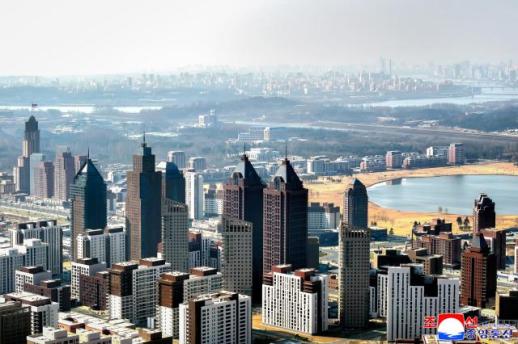 NK launches development plan to turn Pyongyang into a "world-class" city SEOUL, March 18 (AJP) - North Korea has launched a new phase of its ambitious housing construction and urban redevelopment plan to transform its capital of Pyongyang into a “world-class city,” state media reported. Top officials, including the newly-appointed ruling Workers' Party of Korea construction chief Kim Jong-gwan, held a launch ceremony and exhibition of equipment Tuesday to mark the start of the fifth phase of the Hwasong district development in the capital. The event showcased machinery, repair tools, and spare parts prepared by construction units, the state-run Korean Central News Agency reported. The Hwasong district has been a centerpiece of the state’s housing drive. From 2022 to 2025, some 40,000 new housing units were reportedly built in four development phases. Supreme Leader Kim Jong-un last month attended a groundbreaking ceremony for the fifth phase, signaling a shift in focus from meeting basic housing demand to reshaping the capital’s overall urban landscape. At the 9th party congress in February, Kim called for sustained efforts to transform Pyongyang into a city with the “dignity and character of a world-class metropolis.” Hwasong should become a model administrative district with fully integrated political, economic, and cultural functions over the next two years, he said. Residents have begun moving into 10,000 newly completed apartments, according to state media. The party told the congress it aims to build “hundreds of thousands” of housing units over the next five years, a substantial increase from the 50,000-unit target announced at the previous congress in 2021. That earlier goal was allegedly surpassed, with state media reporting that about 60,000 homes were completed in Pyongyang. The latest plans also include rural construction, with the party saying more than 110,000 farm households have already been provided with new housing. The emphasis on construction has also been reflected in personnel changes. Kim Jong-gwan, a former vice premier responsible for construction, was elevated to his current post as the top party construction official during the congress. In addition, a new sector-specific consultation body for construction was established. 2026-03-18 17:51:18
 -
 Chip rally drives KOSPI higher as Samsung, SK hynix top 40% of market cap SEOUL, March 18 (AJP) - South Korean stocks roared higher on Wednesday, powered by chip heavyweights, as easing oil prices and renewed momentum in AI-linked semiconductors lifted investor sentiment. The benchmark KOSPI jumped 5.04 percent to close at 5,925.03, reclaiming the 5,900 level after opening at 5,767.10 and extending gains throughout the session. A buy-side sidecar was triggered in afternoon trading as futures rose more than 5 percent, underscoring the strength of the rally. Foreign and institutional investors led the advance, purchasing a combined 3.9 trillion won ($2.9 billion) worth of shares. Foreigners bought 880 billion won, while institutions added 3.1 trillion won. Retail investors, by contrast, were net sellers of 3.87 trillion won. The divergence in flows pointed to a clear rotation into large-cap, AI-linked semiconductor stocks, with institutional and foreign capital moving aggressively into index heavyweights while retail investors took profits. Technology shares led gains, supported by both near-term and structural drivers. Samsung Electronics rose 7.5 percent to 208,500 won, while SK hynix surged 8.9 percent to 1,056,000 won. Optimism around Micron Technology’s upcoming earnings boosted sentiment across memory stocks, while continued momentum from Nvidia’s AI ecosystem reinforced demand for next-generation high-bandwidth memory (HBM). Improved shareholder return expectations also lent support, with Samsung signaling stronger competitiveness and a commitment to enhancing shareholder value at its recent annual general meeting. The rally pushed the combined market capitalization of Samsung Electronics and SK hynix to 1,986 trillion won ($1.4 trillion), accounting for 40.6 percent of the KOSPI — the first time their combined weight has exceeded the 40 percent threshold. Samsung alone made up roughly a quarter of the market, with SK hynix contributing about 15 percent, highlighting the concentration of gains in semiconductor heavyweights. Autos and industrials also advanced, with Hyundai Motor rising 4.4 percent to 545,000 won and Kia gaining 4.7 percent to 175,100 won, suggesting a modest broadening of the rally beyond chips. The tech-heavy KOSDAQ rose 2.4 percent to 1,164.4. Foreign investors bought 491.7 billion won, while institutions and retail investors sold 27.5 billion won and 392.7 billion won, respectively. Still, the contrasting flows underscored that buying interest remained concentrated in large-cap names rather than spreading evenly across smaller growth stocks. Elsewhere in Asia, Japan’s Nikkei 225 climbed 2.9 percent, Hong Kong’s Hang Seng rose 0.5 percent and China’s Shanghai Composite gained 0.3 percent. Oil prices eased, with Brent crude falling 1.5 percent to $101.85 per barrel and West Texas Intermediate declining 2.9 percent to $93.45. In currency trading, the Korean won hovered around 1,488 per dollar ahead of the Federal Reserve’s policy decision. 2026-03-18 17:49:53
 -
 Hyundai Motor Boosts R&D to 5.5 Trillion Won Despite Headwinds, Stays Focused on Future Tech Hyundai Motor Co. increased research and development spending last year despite external uncertainty, including U.S. tariff measures, as it sought to secure future competitiveness. The company is expected to continue investing this year in key technologies such as electrification and software-defined vehicles, or SDVs, to strengthen its response to global markets. According to its annual business report filed March 18 with South Korea’s Financial Supervisory Service, Hyundai spent 5.5354 trillion won on R&D last year, accounting for 3.0% of revenue. The spending came even as uncertainty weighed on the industry, including an electric-vehicle demand slowdown and higher U.S. export tariffs. Hyundai’s R&D outlays have risen for several years. The total increased by nearly 1 trillion won from the previous year’s 4.5894 trillion won, and the share of revenue rose 0.4 percentage points to 3.0% from 2.6%. Hyundai reported weaker results last year. Operating profit fell 19.5% from a year earlier to 11.4679 trillion won. Still, the company said expanded local production and adjustments to sales strategy helped it rank second in annual operating profit in the global auto market, surpassing Germany’s Volkswagen Group for the first time. To reduce cost burdens such as tariffs, Hyundai raised utilization at overseas plants, aiming to boost price competitiveness by producing more locally rather than exporting from South Korea. By region, plant utilization was highest in South Korea at 102.1% and lowest in Vietnam at 37.6%. Other figures were Brazil 102.0%, the United States 65.3% to 100.6%, Turkey 98.5%, India 94.2%, the Czech Republic 83.7% and Indonesia 47.3%. South Korea remained Hyundai’s largest production base, with 1.808 million vehicles produced last year. It was followed by India with 820,000, the United States with 460,000, the Czech Republic with 330,000, Brazil with 210,000, Turkey with 200,000, Indonesia with 150,000 and Vietnam with 113,000. Despite the localization strategy, vehicle prices edged up, influenced by higher parts costs. The average overseas selling price for passenger cars last year was 75.91 million won, up 6.91 million won from 69.00 million won a year earlier. In South Korea, the average was 56.17 million won, up 2.20 million won from 53.97 million won. Average selling prices for recreational vehicles were 80.44 million won overseas and 55.81 million won in South Korea. Overseas RV prices rose 16.57 million won from a year earlier, while domestic RV prices increased by about 2.38 million won. Separately, Hyundai Motor Group Executive Chair Euisun Chung received a record-high annual pay package last year. His total compensation from three group companies — Hyundai Motor, Kia and Hyundai Mobis — totaled 17.461 billion won. His annual compensation from the three companies was 5.98 billion won in 2020, 8.776 billion won in 2021, 10.626 billion won in 2022, 12.201 billion won in 2023 and 11.518 billion won in 2024. * This article has been translated by AI. 2026-03-18 17:48:45
 -
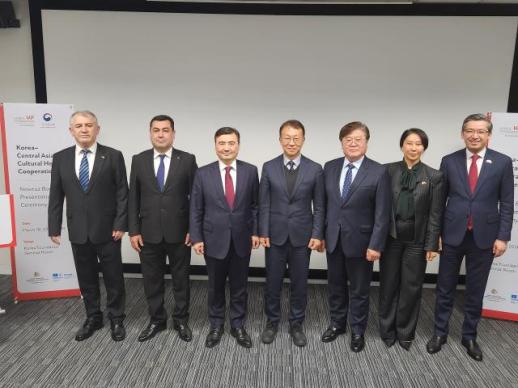 S. Korea-Central Asia cultural heritage cooperation marked by Nowruz book presentation in Seoul SEOUL, March 18 (AJP) - Diplomatic representatives and cultural officials gathered Wednesday at the Korea Foundation Seminar Room to inaugurate the Nowruz Book. The ceremony celebrated the shared heritage of Eurasia and brought together the Kazakhstan, Kyrgyzstan, Tajikistan, Turkmenistan, and Uzbekistan embassies. The International Information and Networking Centre for Intangible Cultural Heritage in the Asia-Pacific Region and the Central Asia-Korea Cooperation Forum Secretariat supported the initiative. This effort aims to strengthen ties between South Korea and the five regional partners. This gathering serves as a critical precursor to the high-level South Korea-Central Asia Summit scheduled for September under the administration of Lee Jae Myung. Nowruz represents a millennia-old tradition of renewal and community observed throughout the Silk Road. The newly presented publication explores the meaning of the festival as a symbol of friendship and shared identity between the peninsula and Central Asia. International Information and Networking Centre for Intangible Cultural Heritage in the Asia-Pacific Region Strategic Development Office Director Kim Deok-soon noted that the holiday reflects a 6,000-year history of the "New Day" that transcends modern borders. The holiday remains a vital cultural bridge, particularly for diaspora communities residing throughout the region. Korea Heritage Service Vice Administrator Choi Bo-geun highlighted historical ties by referencing the Afrosiyab murals in Samarkand. He noted that the depiction of Goguryeo envoys in these ancient works provides definitive evidence of early civilizational dialogue. The vice administrator emphasized that these historic connections form the basis for modern diplomatic and cultural partnerships. The official characterized the research as a bridge between the ancient past and the upcoming strategic summit in September. This historical anchor supports current efforts to deepen regional collaboration across multiple sectors. Central Asia-Korea Cooperation Forum Secretariat Executive Director Rhee Jong Kook described the institution as a unique framework for regional engagement. He stated that "the Secretariat is the first of its kind established to foster multidimensional cooperation in six priority areas". The executive director explained that cultural initiatives like the Nowruz Book presentation provide the essential people-to-people foundation for diplomatic progress. Seoul will further this mission during the Central Asia Spring Festival at Seoul Plaza in May. Kazakhstan Ambassador Nurgali Arystanov linked the celebration to the "Just Kazakhstan" and "New Kazakhstan" initiatives. He noted that these reforms focus on political modernization and social justice, gaining overwhelming support in the recent March 15 constitutional referendum. The ambassador stated that "Celebrating Nowruz in Seoul is a testament to our blossoming partnership and shared vision for a prosperous Eurasia". He emphasized that cultural diplomacy remains a core pillar of the strategy employed by his nation. Kyrgyzstan Ambassador Aida Ismailova defined the event as a period of "resurgence" for nature and the birth of new life. Tajikistan Ambassador Kirom Salohiddin Amriddinzoda highlighted the humanitarian aspects of the tradition, including the custom of visiting orphans and the elderly. These remarks emphasized the alignment between regional values and the strategic partnership with Seoul. The ambassadors collectively positioned the publication as a spiritual bridge connecting the two regions. Turkmenistan Ambassador Begench Durdyyev framed the event within the "Year of Independent Permanently Neutral Turkmenistan" while noting the significance of Akhal-Teke horse culture. Uzbekistan Ambassador Alisher Abdusalomov quoted the thinker Alisher Navoi, stating, "The one who sows seeds opens the path to sustenance". The ambassador characterized the book as a significant milestone leading toward deeper regional integration ahead of the planned diplomatic engagements. Kim Deok-soon added that Central Asia and Eurasia account for more than 50 percent of all UNESCO joint intangible heritage inscriptions. The Nowruz Book will be distributed to academic and cultural institutions to facilitate further research into shared Eurasian history. 2026-03-18 17:41:52
 -
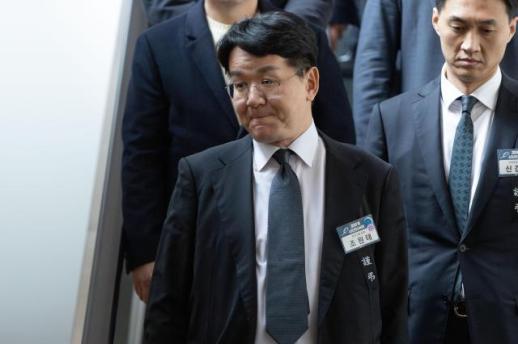 Hanjin Group Chairman Cho Won-tae Earned 14.58 Billion Won in Pay Last Year Cho Won-tae, chairman of Hanjin Group, received 14,578,180,000 won in pay last year from the holding company and major affiliates. According to filings on the Financial Supervisory Service’s electronic disclosure system, Cho was paid a total of 14,578,180,000 won last year from Hanjin KAL (6,176,000,000 won), Korean Air (5,705,000,000 won), Jin Air (1,710,000,000 won) and Asiana Airlines (987,180,000 won). The total was about 43% higher than his 2024 pay. His compensation rose 49% at Hanjin KAL, and increased 12% at Korean Air and 79% at Jin Air over the same period. He began receiving compensation from Asiana Airlines in January, after it was incorporated as a Korean Air subsidiary. Korean Air said it calculated and paid compensation under its director compensation standards, following procedures including prior review by its compensation committee and approval by the board. It said pay levels reflected the scale of the business and the responsibilities and roles after the launch of an integrated Korean Air. Separately, Korean Air said average annual pay per employee last year was 123 million won, up 9% from a year earlier. Average pay at Hanjin KAL also rose 11% to 146 million won over the same period. 2026-03-18 17:36:08
 -
 Samsung Electronics adds AMD on HMB4 client list after Nvidia SEOUL, March 18 (AJP) - Samsung Electronics added AMD after Nvidia on its burgeoning client list for next-generation high bandwidth memory dubbed HBM4, gaining traction in the crucial in HBM race move to inference AI stage. A memorandum of understanding (MOU) with U.S. chip designer AMD to expand strategic partnership in next-generation AI memory and computing technologies was signed at Samsung’s Pyeongtaek campus. Under the terms of the agreement, Samsung will supply its advanced HBM4 solutions for AMD’s next-generation "Instinct MI455X" GPUs. The collaboration also extends to providing next-generation DDR5 memory for AMD’s EPYC server processors and its "Helios" data center platform. This move is seen as a strategic effort by both companies to diversify the AI semiconductor supply chain, which is currently seeing intense competition for high-capacity memory. "Powering the next generation of AI infrastructure requires deep collaboration across the industry," said Lisa Su, Chair and CEO of AMD. "We are thrilled to expand our work with Samsung, bringing together their leadership in advanced memory with our Instinct GPUs, EPYC CPUs and rack-scale platforms. Integration across the full computing stack, from silicon to system to rack, is essential to accelerating AI innovation that translates into real-world impact at scale.” Samsung Vice Chairman Jun Young-hyun emphasized the company’s "turnkey" capabilities, which integrate memory, foundry, and advanced packaging services under one roof. The two companies also discussed potential cooperation in semiconductor foundry services, leveraging Samsung’s advanced process technology to manufacture future AMD products. This deal marks a significant expansion of a 20-year partnership that began with graphics memory in 2007. On Tuesday, Samsung showed off its sixth-generation HBM4 being mass produced at Pyeongtaek at Nvidia's GTC 2026 as it a provider of a comprehensive memory and storage solution the U.S. top GPU maker's next-generation Vera Rubin platform. 2026-03-18 17:32:05
 -
 BTS Live D-3: Seoul turning purple with fans in BTS color pouring in SEOUL, March 18 (AJP) -Seoul is turning purple as fans adorned in the color pour into the capital with three days to go before the Gwanghwamun performance. Central districts including Gwanghwamun Square and Myeongdong are seeing a steady influx of visitors, many gathering near the concert venue or exploring nearby streets in anticipation of the event. In Myeongdong, a BTS merchandise shop was packed with fans purchasing albums and official goods, offering an early glimpse of the commercial momentum surrounding the comeback. “March is usually a slow season, but we’re seeing a clear increase in foreign visitors ahead of the concert,” a staff member at the shop said, adding that new albums will be prominently displayed in line with the band’s March 20 release. Around Gwanghwamun, fans were spotted taking photos, scouting the venue and soaking in the atmosphere ahead of what is expected to be one of the largest K-pop events in recent years. The BTS performance will take place at Gwanghwamun Square at 8 p.m. on March 20 and will be livestreamed globally via Netflix. 2026-03-18 17:26:02
 -
 Seoul raises crude alert to Level 2 as Hormuz blockade bites SEOUL, March 18 (AJP) — As the Middle East conflict continues to disrupt global energy supplies, the South Korean government Wednesday raised its crude oil security alert one notch to Level 2 ("Caution"), opening the way to direct intervention, including the possible release of strategic oil reserves. The Ministry of Trade, Industry and Energy (MOTIE) announced the upgrade from Level 1 ("Interest") to Level 2 effective as of 3 p.m. local time (6am UTC) Wednesday. This marks the Level 2 alert since the enactment of the National Resource Special Act early last year. The move follows the Level 1 alert for oil and gas issued on March 5, a few days after the conflict erupted. South Korea’s resource security framework operates on a four-tier scale: Interest, Caution, Crisis, and Alert. Under the "Caution" stage, authorities can formally review and prepare for the release of national strategic stockpiles. Spiking prices and shipping paralysis MOTIE attributed the decision to heightened instability among major oil producers following the attack on Iran, the subsequent blockade of the Strait of Hormuz, and a nearly 40 percent surge in international oil prices. Crude prices, which hovered between $60 and $70 per barrel until late February, skyrocketed following the outbreak on February 28. As of 4 p.m. Wednesday, West Texas Intermediate (WTI) stood at $92 per barrel, while Brent crude reached $101. Most critically, Dubai crude—the benchmark for South Korean imports—surged to $129.9 on Monday, nearly doubling its pre-conflict levels due to its heavy reliance on the now-blocked Hormuz route. Seoul is coordinating with the International Energy Agency (IEA) to establish a plan for releasing its allocated portion of 22.46 million barrels of strategic oil reserves. However, the ministry noted the timing and scale of the release will be subject to change based on private sector inventory levels and market trends. Mandatory conservation and demand reduction The government is also moving to enforce "mandatory energy conservation measures." These include strict indoor temperature limits for public institutions—set at a maximum of 28°C (82.4°F) in summer and 18°C (64.4°F) in winter. Additional "mandatory demand reduction measures," such as a five-day rotation system for vehicles (prohibiting driving one day every five days), are also under active consideration. President Lee Jae-myung Tuesday instructed his Cabinet to "swiftly establish diversified demand reduction measures, including the five-day or ten-day vehicle rotation systems, to encourage nationwide energy conservation." Longer-term strategies involve securing oil supplies that are not delivered through the Strait of Hormuz. Currently, approximately 70 percent of the country’s oil imports—sourced from Saudi Arabia, the UAE, Kuwait, Iraq, and Qatar—must pass through the narrow waterway. MOTIE is exploring options to exercise preemptive purchase rights for international joint stockpiles as a potential contingency. Gas alert remains at Level 1 Meanwhile, the alert for Liquefied Natural Gas (LNG) remains at Level 1 ("Interest"). Officials assessed that current LNG inventories remain sufficient, exceeding the legal requirement of nine days of supply. Most South Korean LNG firms currently hold between 10 to 14 days of reserves. While the loss of imports from Qatar, South Korea’s second-largest LNG supplier, remains a concern, MOTIE emphasized that supplies from Australia—the nation's largest provider at over 30 percent—and other diverse sources can help mitigate the shortfall. 2026-03-18 17:07:45
 -
 South Korea launches committee tasked with implementing US investment pledges SEOUL, March 18 (AJP) - A committee tasked with setting up a fund to implement massive investment pledges to the U.S. was launched with its first meeting in Seoul, the Ministry of Finance and Economy said on Wednesday. The committee, consisting of seven officials from government agencies and financial institutions, was formed as a follow-up step just a day after a special bill outlining bilateral agreements with the U.S. including investment pledges of US$350 billion under a broader trade deal reached last fall, was approved at a cabinet meeting the previous day. The committee, led by First Vice Finance Minister Lee Hyoung-il, will oversee overall preparations including establishing and managing the fund, as well as fundraising. Lee said the committee will thoroughly prepare all necessary procedures to launch the fund by June, when the bill takes effect three months after its promulgation. He added that the committee will ensure investment projects are carried out in ways that serve both countries' economic and security interests, emphasizing the need for professional staff with strategic expertise. 2026-03-18 17:07:42