

Journalist

Dorian Rhea Debussy
-
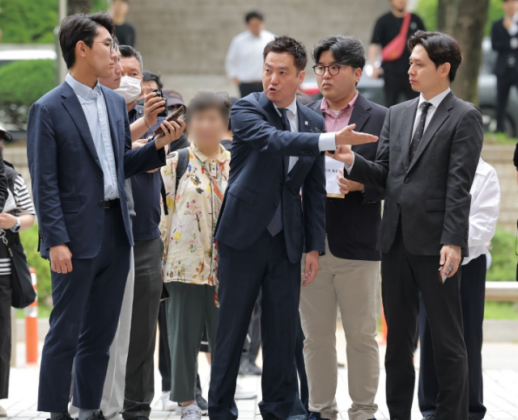 Kim Se-hee Fined for Illegal Possession of Replica Firearm and Defamation Kim Se-hee, the operator of the YouTube channel Garoseyro Institute, has been fined for illegal possession of a replica firearm and for making defamatory remarks against lawyer Kang Yong-seok. On June 3, the Seoul Central District Court's Criminal Appeal Division 5-2, presided over by judges Kim Yong-jung, Kim Ji-sun, and So Byeong-jin, imposed a fine of 5 million won on Kim for violations of the Firearms and Explosives Act and defamation. The appellate court consolidated two separate defamation cases and one violation of the Firearms and Explosives Act for its ruling. In the first trial, Kim was fined a total of 6 million won, with 2 million won for each incident. Kim was accused of purchasing two replica firearms at a survival goods store in Gangnam, Seoul, in October 2021 and modifying them with a color part to shoot an advertising video in February 2022. Color parts are plastic components that cover the muzzle and barrel in bright colors like orange or yellow to prevent confusion with real firearms. According to the Firearms and Explosives Act, possessing a replica firearm that closely resembles a real gun is prohibited, and tampering with color parts can also lead to penalties. In the first trial, Kim denied the charges, arguing that possessing the replica firearm for four hours on private property for an advertisement did not increase social risk. Other YouTubers who used replica firearms to create videos were not prosecuted, raising concerns about fairness. The first trial court ruled that the firearms possessed by Kim were recognized by the Firearms and Explosives Safety Technology Association as having a high potential for criminal misuse due to their resemblance to real guns, stating, "It cannot be said that this does not increase social risk." The court also dismissed Kim's claims that the lack of prosecution against other YouTubers violated his right to equality. The appellate court noted, "Whether the modification was illegal and whether it increased social risk are irrelevant to the fact that possessing a replica firearm during an advertisement shoot constitutes a legal violation. Given that Kim could have legally possessed a firearm with permission, his actions cannot be considered justifiable." Additionally, Kim faces charges of defaming Kang Yong-seok in December 2023 by stating on his YouTube channel, "He must be sent to prison without exception." The first trial found Kim guilty on two counts of defamation, and the appellate court upheld this decision. Meanwhile, Kim was arrested on May 26 for allegedly spreading false information regarding the cause of death of actress Kim Sae-ron, claiming it was due to financial pressure from actor Kim Soo-hyun. He subsequently applied for a detention review, but the court rejected his request, stating there was no basis for the claim.* This article has been translated by AI. 2026-06-03 10:42:00
 -
 Trump Denies Reports of Halt in US-Iran Negotiations Donald Trump, the President of the United States, dismissed reports on June 2 that negotiations regarding a peace agreement with Iran had ceased, calling them fake news and asserting that discussions between the two nations are ongoing. In a post on the social media platform Truth Social, Trump stated, "The reports claiming that Iran and the U.S. stopped talking a few days ago are false and incorrect." He added, "Our conversations have continued for four days, three days, two days, yesterday, and today. No one knows how these talks will conclude, but as I told the Iranians, it is time for you to reach an agreement in some form." Seemingly addressing Iran's hostile policies toward the U.S. and Israel, he remarked, "You (Iran) have been doing this for 47 years, and we can no longer allow it to continue." Earlier, the Iranian news agency Tasnim reported on June 1 that Iran's negotiating team had halted exchanges of messages regarding a peace agreement with the U.S. in protest of Israel's attacks in Lebanon. An Iranian official also told The Washington Post that negotiations with the U.S. had stopped due to escalating Israeli attacks in Lebanon. However, in a phone interview with ABC News the previous day, Trump indicated that he expected discussions about a memorandum of understanding (MOU) to take place within the next week.* This article has been translated by AI. 2026-06-03 10:36:00
 -
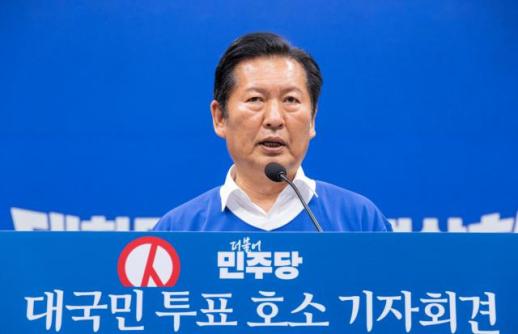 Jeong Cheong-rae Urges Voter Participation in Local Elections Jeong Cheong-rae, the leader of the Democratic Party, emphasized the importance of voting on June 3, stating that each vote represents a right secured through the blood and sweat of many citizens. He urged voters to actively participate and help democracy flourish. Jeong highlighted instances in previous local elections where candidates won by a tie in votes or by a single vote, reiterating his call for citizens to head to the polls. During a meeting of the Central Election Countermeasures Committee held at the National Assembly, Jeong remarked, "Today is the day when the people, the true owners of the country, decide the future of our regions and South Korea. Today's democracy is built on the efforts of citizens who fought for and protected their right to vote." He added, "The first general election in 1948 laid the foundation for our democratic republic. Citizens took to the streets to reclaim their votes stolen in the March 15 rigged election and fought against military dictatorship during the June Democratic Uprising to achieve direct elections. The vote we cast today is a right preserved through the sacrifices and dedication of countless citizens. Since elections are the flower of democracy, I hope everyone participates to make that flower bloom brightly." Jeong further emphasized that there have been cases in electoral history where identical vote counts or results decided by a single vote occurred, urging voters to exercise their precious right at the polls. "My vote can change the elected official, local policies, and the future of our community. This is not just a cliché politicians say during elections," he explained. "In the past six local elections, there have been seven instances where candidates were elected with the same number of votes, and 13 cases where results were determined by a single vote." He concluded, "The weight of your vote is never light. I earnestly ask you to come to the polls with a sense of urgency that your candidate may be one vote short. Please show through your vote who the true owners of South Korea are and choose the path our country should take."* This article has been translated by AI. 2026-06-03 10:27:00
 -
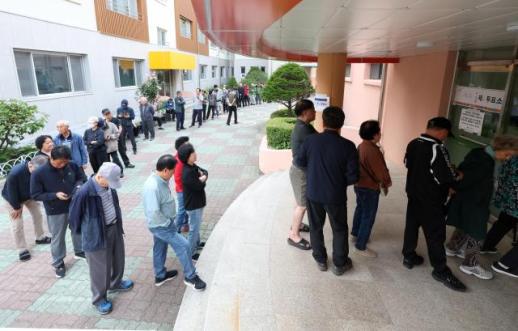 Voter Turnout at 11.0% by 10 AM, Up 2.3 Percentage Points from Last Local Election As the voting for the local elections continues, the national voter turnout was recorded at 11.0% as of 10 AM. This figure is higher than the turnout at the same time during the 2022 local elections. According to the National Election Commission, 4,908,603 voters had cast their ballots by 10 AM, resulting in a national average turnout of 11.0%. This marks a 2.3 percentage point increase compared to the 8.7% turnout at the same hour during the 2022 local elections. Notably, the turnout rose by 3.6 percentage points from the 7.4% recorded at 9 AM. Regionally, Gangwon Province reported the highest turnout at 13.3%. Seoul had a turnout of 10.2%, Gyeonggi Province recorded 10.6%, and Busan reported 11.0%. In contrast, Gwangju had the lowest turnout at 7.3%. Earlier, the National Election Commission announced that 3,319,530 voters participated by 9 AM, with a national average turnout of 7.4%. Voting is taking place at 14,288 polling stations nationwide from 6 AM to 6 PM. Voters must present identification such as a resident registration card, driver's license, or passport to cast their votes.* This article has been translated by AI. 2026-06-03 10:24:00
 -
 Iran Claims Attack on U.S. Bases in Bahrain and Kuwait; U.S. Denies Success Iran's Islamic Revolutionary Guard Corps (IRGC) has claimed responsibility for attacks on key U.S. military bases in Bahrain and Kuwait. In response, U.S. Central Command (CENTCOM), which oversees American operations in the Middle East, immediately refuted the claims, stating that the Iranian attacks were unsuccessful. On June 2, local time, the IRGC announced through state media that it had targeted the U.S. Navy's Fifth Fleet base in Bahrain and a U.S. Air Force base in Kuwait using missiles and drones. However, CENTCOM quickly countered on social media platform X (formerly Twitter), asserting, "Claims that Iran struck the U.S. Fifth Fleet headquarters in Bahrain and the nearby U.S. Air Force base are false," and emphasized, "All Iranian attacks against U.S. forces have failed." CENTCOM further stated, "U.S. forces remain vigilant and are prepared to defend against unjust Iranian aggression." The U.S. also reported that it intercepted three missiles launched by Iran in coordination with Bahrain. The Iranian missiles aimed at Kuwait reportedly either fell short of their target or disintegrated mid-air, according to CENTCOM. Additionally, CENTCOM announced the interception of three attack drones launched by Iran that were targeting civilian vessels legitimately navigating regional waters. In retaliation for the Iranian attacks, the U.S. conducted airstrikes on Qeshm Island in Iran. CENTCOM stated that these strikes targeted an "Iranian ground control facility" and confirmed that there were no American casualties. Qeshm Island is Iran's largest island, located in the Strait of Hormuz, a critical route for oil and gas transportation in the Gulf region.* This article has been translated by AI. 2026-06-03 10:21:00
 -
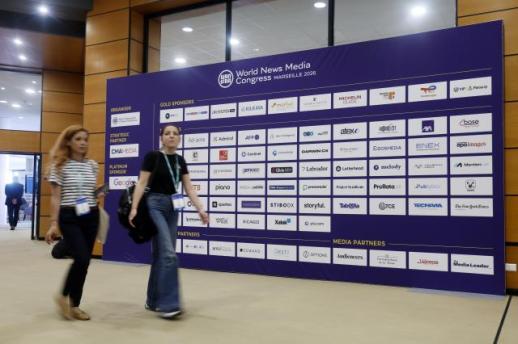 WNMC 26: From discovery to distribution, how publishers navigate in AI economy MARSEILLE, June 03 (AJP) - The debate on artificial intelligence in the journalism landscape on Tuesday, the second day of the World News Media Congress in Marseille, moved beyond fear and experimentation. For publishers across continents, the question is no longer whether AI will reshape journalism. It is how news organizations should engage with it — defensively, commercially, editorially or as a new audience in its own right. The sessions revealed a global industry testing sharply different strategies. The Hindu Group in India is using AI to solve a discovery problem. Bonnier News in Sweden is applying AI to personalization and conversational archives. Kleine Zeitung in Austria is rebuilding its publishing strategy around the idea that AI bots are becoming a new class of readers. TollBit is positioning itself between publishers and AI companies to track scraping, licensing and future agentic use. Together, they pointed to a new phase in the AI transition: from using AI inside newsrooms to designing journalism for an AI-mediated internet. For Pundi Srirami, chief product officer and business head of STEP at The Hindu Group, AI is not primarily a replacement for journalism. It is a way to help readers find journalism they might otherwise miss. "Our sites are full of stories our subscribers never saw," he said. The Hindu reaches about 35 million monthly users, with roughly 1 million users in its app. But converting reach into paying relationships remains difficult. Srirami said the challenge is not only willingness to pay, but discovery: how to expose readers to the right story, in the right format, at the right moment. The Hindu is using AI to repackage the same story into multiple forms. Readers can choose AI summaries, Q&A formats, short versions of around 200 words, or longer versions of around 300 words. Engagement with these AI-generated formats rose from 6% to 36%, according to Srirami. The company is also personalizing not just content, but the surfaces on which stories appear. AI-driven trending modules, push notifications and personalized app areas are now contributing meaningfully to app usage, with personalized surfaces accounting for about 15% of app page views and reaching around 30% in some areas. Audio is being used selectively. The Hindu has found value in audio explainers for dense daily editorials, particularly for readers preparing for state examinations. Those explainers have reached a 24% completion rate. Srirami said the AI-driven features are now contributing real business value, accounting for roughly half of app engagement growth over the past 12 months. At Sweden's Bonnier News, AI is being used to make personalization more precise and archives more accessible. Jan Helin, chief product officer at Bonnier News, said AI allows publishers to move beyond broad recommendation systems toward more accurate, direct reader interactions. One promising area is conversational access to archives, where readers can ask questions and receive answers drawn from the publisher's own journalism. The shift is from search to conversation. Instead of expecting users to know the right keyword, publishers can let them ask what they want to know. Helin said reader requests through conversational interfaces are producing strong results, with conversion rates reaching around 60%. The most aggressive vision came from Sebastian Krause, head of digital at Austria's Kleine Zeitung. Krause argued that publishers spent the past 15 years optimizing for Google, chasing clicks and attention. Now, a new kind of visitor is emerging: AI bots. These bots consume journalism but often do not click through. They scrape, summarize and retrieve. That changes the economics of publishing. Krause's conclusion was blunt: publishers should stop thinking only about human traffic and start treating AI as a new audience. "Don't bet against a great product," he said. "AI is a great product." For Kleine Zeitung, that means rethinking the newsroom and the product architecture. Krause described the possibility of one site for humans and another built for agents: machine-readable, accessible and designed for AI consumption, but on terms set by the publisher. The goal is not to give everything away. It is to protect content value, monetize AI usage and dictate the conditions of access. "They can summarize or pay," he said. Krause argued that retrieval-augmented generation, or RAG, may be a larger and more sustainable opportunity for publishers than training data. AI systems will need reliable, high-quality sources to answer current and specific questions. That could make publishers valuable not because they produce general news, but because they produce what only they can report. In the AI era, he said, distribution is no longer the main bottleneck. Originality and scarcity are. For publishers, the challenge is to build systems that make AI access measurable and monetizable rather than invisible and uncompensated. 2026-06-03 10:06:03
 -
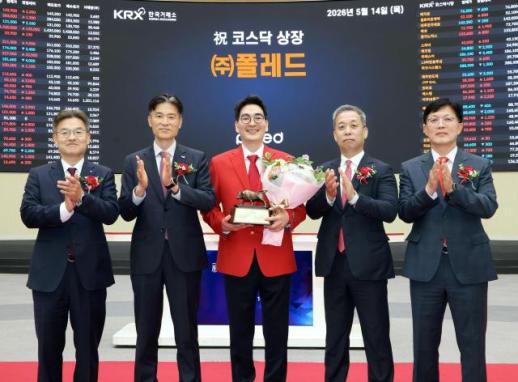 Yoon Byung-woon: Transforming Relationship Finance into Platform Finance at NH Investment & Securities Yoon Byung-woon, CEO of NH Investment & Securities, emphasizes a financial entrepreneurial spirit that prioritizes relationships over transactions and sustainable growth over short-term results. As a seasoned investment banking expert, he has led the growth of the company's IB division while focusing on improving the firm's structure by creating an integrated business portfolio that connects wealth management, investment banking, asset management, and wholesale operations. His leadership style leans towards balanced growth rather than aggressive expansion, aiming to turn customer relationships into assets, enhance organizational collaboration, and expand the role of finance from mere capital intermediation to a platform for corporate growth. Yoon's career trajectory mirrors the growth of NH Investment & Securities. He has served as the head of the coverage division, the representative of the IB1 business unit, and the overall head of investment banking before becoming CEO. Spending most of his time in the field, he has been involved in the financing and growth processes of numerous companies. One of Yoon's defining characteristics is his view of finance as a relationship rather than a product. While securing good deals is important in the securities industry, he believes that long-term trust with companies is paramount. This philosophy has been ingrained in him through years of experience in the field. In his inaugural message as CEO, he stated, "I will fulfill my role as both CEO and salesperson." This commitment reflects his focus on field-centered management that directly engages with customers and the market. Another value he emphasizes is collaboration. Yoon has declared his intention to transform NH Investment & Securities into a unified platform. Wealth management will gather customer assets, investment banking will identify investment opportunities, and the asset management division will manage returns. In the past, these functions operated independently, but now they must work together as a cohesive ecosystem. This philosophy marks a significant shift in financial entrepreneurship. While traditional securities firms focused on departmental competition, Yoon aims to create new value through inter-organizational connections. He believes that the future of finance lies not in the competitiveness of individual organizations but in their ability to collaborate. Ultimately, the foundation of Yoon's leadership is people. He views relationships with customers, internal collaboration, and connections with affiliates as the sources of competitive strength. This approach embodies a typical relationship-oriented financial leadership that prioritizes trust over numbers. Since taking office, Yoon has concentrated on restructuring the company's revenue model. He is acutely aware of the limitations of relying on specific business areas. While performance can surge in favorable market conditions, he believes that a structure that deteriorates rapidly during market fluctuations is unsustainable. His proposed solution is the 'WM 4, IB 3, Asset Management 2, Wholesale and Others 1' strategy. Rather than concentrating on specific businesses, he aims to build a balanced portfolio to mitigate economic volatility. Recent results indicate success. NH Investment & Securities has recorded its highest-ever performance, with a significant increase in clients with over 100 million won in assets and a rapidly expanding base of high-net-worth clients. The strengthening of wealth management has established a stable revenue foundation. The investment banking division is also experiencing growth. Yoon is redefining corporate finance not merely as a funding business but as a partner in corporate growth. He is expanding the scope to include IPOs, corporate bonds, acquisition financing, structured finance, and venture capital. Notably, there is a growing interest in productive finance. Yoon is increasing funding for future industries such as AI, semiconductors, and healthcare, and is actively investing in startups and innovative companies. This approach emphasizes the role of finance in contributing to industrial growth rather than merely seeking profits. Yoon's leadership redefines the role of financial companies. He asserts that finance is not just about lending money but about supporting corporate growth and industrial development as a platform. This perspective is likely to be a crucial factor in determining NH Investment & Securities' competitiveness in the future. The area where Yoon's financial entrepreneurial spirit is most evident is in the IMA (Integrated Investment Account) business. He views this not merely as a new product but as a future growth platform for NH Investment & Securities. The core of IMA is to pool customer funds and connect them with quality investment assets. Yoon prefers a structure where quality assets are secured first and then offered to customers, aligning with his management philosophy that values stability and trust over short-term profits. He also regards productive finance as a critical task. Within the productive finance strategy promoted by the NongHyup Financial Group, NH Investment & Securities plays a role in providing venture capital. This strengthens the economic foundation by supplying funds to innovative and growth-oriented companies. NH Investment & Securities' strength lies in its financial holding structure, which facilitates collaboration among banking, securities, and insurance. Yoon is leveraging this group synergy to enhance corporate finance competitiveness. However, challenges remain. As a publicly listed company, NH Investment & Securities must balance its independence with its identity as a subsidiary of NongHyup Financial. Recent controversies surrounding governance and agricultural support expenditures highlight this complex position. Nevertheless, Yoon emphasizes "Value-Up" as a key concept, advocating for management that enhances both customer and shareholder value. His goal is to create a structure where customer profits and company profits grow together. In summary, Yoon Byung-woon's financial entrepreneurial spirit can be encapsulated in relationships, collaboration, and platform building. He aims to evolve the securities firm from a transaction-focused organization into a platform that connects customers, companies, investments, and industries. This essence defines Yoon's leadership. SWOT Analysis: Strength: Extensive experience and corporate networks accumulated in the IB field. The balanced growth strategy connecting WM, IB, and asset management is a differentiating factor. Particularly, the collaborative organizational culture and productive finance capabilities are considered unique strengths of NH Investment & Securities. Weakness: Structural constraints exist due to the need to balance independence with group policies as a subsidiary of NongHyup Financial. Additionally, sensitivity to performance fluctuations due to capital market volatility is a concern. Opportunity: The expansion of the IMA business and productive finance policies, along with increased funding demand from emerging industries such as AI and semiconductors, present new growth opportunities for NH Investment & Securities. Threat: Intensifying competition among large IBs, changes in capital market regulations, and governance issues pose ongoing risks. There is also the potential for reduced corporate finance demand during economic downturns. 2026-06-03 10:06:00
 -
 Korea Electric Power Corporation Wins $1.6 Billion Contract for Jafurah Phase 2 Project Korea Electric Power Corporation (KEPCO) is accelerating its entry into the Middle Eastern energy market by securing the Phase 2 cogeneration project at Jafurah, Saudi Arabia.On June 3, KEPCO announced that it successfully signed a power and steam sales contract for the construction and operation of the Jafurah Phase 2 cogeneration plant with Saudi Arabia's state-owned oil company, Aramco, and completed a construction contract with Doosan Enerbility.The project involves constructing a cogeneration plant with a capacity of 331 megawatts and a steam production rate of approximately 465 tons per hour, which is expected to be completed by June 2029. KEPCO anticipates around 2.1 trillion won (approximately $1.6 billion) in revenue over the project's duration.The Jafurah Phase 2 project is an expansion of the Jafurah Phase 1 cogeneration project (317 MW) that KEPCO secured through an international competitive bidding process in 2022. KEPCO plans to complete the Phase 1 project by the end of this month and was awarded the Phase 2 project based on its recognized technical expertise and operational capabilities gained during the first phase.The Phase 2 project will be managed by a special purpose company (SPC) jointly established by KEPCO and Aramco, with construction led by Doosan Enerbility, financing provided by the Korea Export-Import Bank, and operations managed by KEPCO. This collaboration is expected to generate approximately 1.2 trillion won in export effects for domestic companies.This contract is significant as it represents a comprehensive export model involving not only the construction of the power plant but also participation from domestic companies in operations, financing, and equipment supply. With Saudi Arabia pursuing large-scale energy transition projects, there are expectations for additional business opportunities in power generation, power grids, and energy storage systems (ESS) in the future.Since starting with the Rabigh heavy oil power project in 2009, KEPCO has expanded its presence in the Saudi power market by securing contracts for the Jafurah Phase 1 cogeneration, the Sadawi solar power project, and the Rumah 1 and Nairiya 1 gas combined cycle projects.A KEPCO official stated, "With this contract, we plan to expand our entry into the Middle Eastern market across various sectors, including gas combined cycle power, renewable energy, power grids, and ESS, and actively pursue the follow-up cogeneration projects that Aramco is expected to announce in the second half of the year."* This article has been translated by AI. 2026-06-03 10:00:00
 -
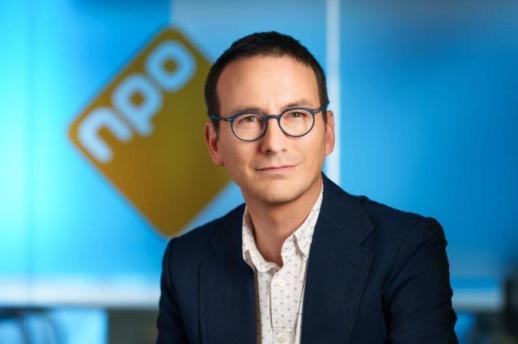 WNMC 26: No map in AI age. Newsrooms must chart their own course MARSEILLE, June 03 (AJP) - If there was one message that echoed through the halls on the second day of the World News Media Congress on Tuesday, it was that nobody knows exactly where artificial intelligence is taking journalism. "There is no map," WAN-IFRA AI in Media Lead Ezra Eeman told editors, publishers and newsroom leaders gathered in Marseille. For an industry accustomed to navigating disruption, the statement was both unsettling and liberating. The internet had a roadmap. Mobile had a roadmap. Social media eventually had a roadmap. But artificial intelligence is creating a fundamentally different environment—one in which technology increasingly mediates the relationship between publishers and audiences, while the rules of value creation, distribution and discovery are being rewritten in real time. "That is not how the new world works. The map does not fully explain what's happening now," Eeman said. The challenge facing publishers, he argued, is not simply adopting AI tools. It is learning how journalism survives and thrives when AI becomes the primary interface through which people access information. Charting a Course Without a Map Rather than offering a blueprint, Eeman outlined the choices publishers are already making as they attempt to navigate the uncertainty. Some are taking a defensive approach. According to data he shared, 56 percent of publishers have blocked AI bots from accessing their content. Others are pursuing engagement. Another 31 percent are actively negotiating or striking licensing agreements with AI companies. Neither approach is universally right, Eeman suggested. "It depends on your setup and size." The larger point is that publishers must make deliberate choices about how they participate in the emerging AI ecosystem. Because in a world where AI systems increasingly summarize, interpret and distribute information, ownership and control matter more than ever. "Without control, no market. No ability to capture value," Eeman warned. For decades, publishers competed for audience attention. Today they are also competing for their place within AI systems that may become the dominant gateway to information. From Ingredient to Destination Eeman argued that one of the greatest dangers facing publishers is becoming accessory. The challenge is not to fall into an ingredient, but survive as the destination. As AI systems generate answers, summaries and recommendations, journalism risks being reduced to an ingredient inside someone else's product. If publishers merely supply content to AI systems, they risk losing audience relationships, subscription opportunities and revenue streams. If they create distinctive experiences, services and products that users actively seek out, they remain relevant regardless of how information is distributed. The future, Eeman argued, will favor organizations that understand emerging AI behaviors and adapt accordingly. "Understand AI habits, avoid commodity, master scarcity, grow your own intelligence, serve the agents." The message reflected a growing consensus that abundance makes uniqueness more valuable. "Market favors exclusive, specific and authenticity." In a world flooded with AI-generated content, original reporting, trusted brands, expertise and human judgment become strategic advantages. Learning While Moving What made the discussion notable was that no speaker claimed to have solved the problem. Instead, leaders from some of the world's largest news organizations described their own efforts to navigate uncertainty. Fabrice Bakhouche, chief executive of SIPA Ouest-France Group, acknowledged that publishers are still trying to understand what AI will mean for their organizations. "The impact on roles, processes and management is only beginning to emerge," he said. "There is no clear picture on impact." His response has been to encourage experimentation while avoiding paralysis. "Bottom-up approaches are relevant," he said, cautioning against becoming "too conservative." Rather than waiting for certainty, organizations must learn through action. Building the Aircraft While Flying At British 24-hour broadcaster Sky News, the challenge is equally complex. Managing Director Jonathan Levy described an industry facing "constant, simultaneous and accelerating" disruption. Quoting former Washington Post executive editor Marty Baron, Levy called this period "head-spinning change in media consumption." Sky's answer has been to embrace innovation while maintaining its core journalistic mission. "We must deliver trusted journalism and simultaneously build the aircraft while in flight," Levy said. The organization is pursuing a premium, video-first future while continuing to cover breaking news around the clock. For Levy, successful navigation depends on leadership that acknowledges uncertainty rather than pretending certainty exists. "Honesty, leadership in transition, not pretending to have answers." The objective is not to eliminate uncertainty but to create enough confidence for organizations to move forward. Building the Scaffolding At Reuters, AI strategy leader Jane Barrett described a different approach to charting a course. Rather than focusing primarily on technology, Reuters has concentrated on building structures that allow experimentation without sacrificing trust. She outlined three layers of what she called "scaffolding." The first is editorial: governance committees, updated guidelines and clear rules governing AI use. The second is technological: approved tools, data security protections and content safeguards. The third is psychological: creating a culture where experimentation is encouraged and failure is accepted as part of learning. "Failure is learning," Barrett said. Her observation that "10 percent is about AI, 20 percent about technology, 70 percent about people and processes" captured a theme repeated throughout the day. The challenge is not simply deploying AI. It is helping organizations adapt to a new reality. Following Signals, Sharing Failures Perhaps the most revealing part of Eeman's presentation was his acknowledgment that the industry remains in the early stages of transformation. "No publisher has a map," he said. Instead, organizations are navigating through experimentation, observation and collaboration. The goal is not to discover a single correct route but to learn from one another's successes and mistakes. "Sharing signals, failures." 2026-06-03 09:58:25
 -
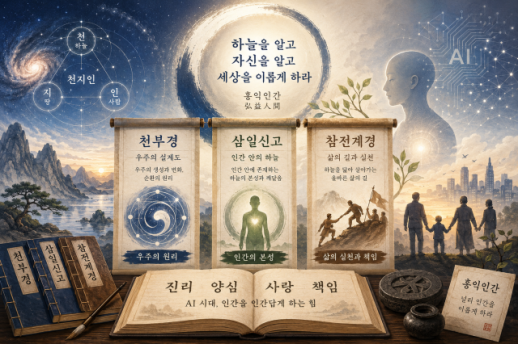 The Three Major Texts of Daejonggyo: Cheonbugyeong, Samilshingo, and Chamjeonggyeong Throughout the history of human civilization, great cultures have left behind their own scriptures. These texts are not merely religious documents; they serve as a spiritual map and blueprint for how a civilization understands the universe, perceives humanity, and defines how to live. While the Vedas of India sing of the principles of cosmic creation, the Upanishads explore the inner divinity of humans, and the Bhagavad Gita outlines ethical practices, the Korean people have also preserved a unique spiritual heritage over the centuries through the Cheonbugyeong, Samilshingo, and Chamjeonggyeong. Each of these texts serves a distinct purpose. The Cheonbugyeong explains the principles of the universe, the Samilshingo describes the relationship between humans and heaven, and the Chamjeonggyeong outlines how humans should live. Together, these three texts form a cohesive worldview that connects the cosmos, humanity, and life. Today, humanity stands at the forefront of a monumental civilizational shift brought about by the artificial intelligence revolution. AI is learning human language, robots are replacing human labor, and algorithms are encroaching on human judgment. However, as technology advances, humans are confronted with more fundamental questions. Who are we? What is the universe? How should we live? Remarkably, the three major texts of the Korean people have already explored these questions thousands of years ago. Cheonbugyeong: A Blueprint of the Universe The Cheonbugyeong consists of just 81 characters, yet it is interpreted as containing a condensed explanation of the principles of cosmic creation, change, and circulation. It begins with the phrase "Ilsi Musil Il (一始無始一)," meaning that the one is both a beginning and without a beginning. This signifies that all existence in the universe originates from one and ultimately returns to one, illustrating the idea that all things are interconnected within a single web of life. The subsequent phrase, "Ilseok Samgeuk Mujinbon (一析三極無盡本)," is interpreted to mean that the one unfolds into three, giving birth to all things. Here, the three refer to heaven, earth, and humanity, indicating that these elements are not separate entities but rather three axes that form a unified cosmic order. The Cheonbugyeong does not view the universe as divided into heaven, earth, and humanity; rather, it understands them as existing in a continuous cycle and harmony within a single life order. This is the essence of the Cheonjiin philosophy. One of the key phrases widely interpreted from the Cheonbugyeong is "Injung Cheonji Il (人中天地一)," meaning that humans are the axis of the universe, existing between heaven and earth. While Western anthropocentrism places humans above nature, the Cheonbugyeong views humans as beings that coexist with heaven and earth. Humans are not rulers over nature but rather fulfill the will of heaven and earth. Another significant teaching conveyed as "Bonsim Bon Taeyang (本心本太陽)" is also noteworthy. It suggests that the original human heart is bright like the sun, indicating that humans are inherently good and bright, with greed, anger, and ignorance merely obscuring that brightness. This idea later connects to the understanding of humanity in the Samilshingo. Additionally, the principle of "Yongbyeon Budong Bon (用變不動本)" is central to the Cheonbugyeong. It states that while all things are in constant change, the fundamental essence remains unchanged. Even as seasons change, dynasties rise and fall, and civilizations evolve, the fundamental principles of the universe do not change. This is why truth, conscience, love, and responsibility persist even in the age of AI. Interestingly, the Cheonbugyeong is composed of exactly 81 characters, just as Laozi's Tao Te Ching consists of 81 chapters. While a direct historical relationship between the two texts cannot be definitively established, it is noteworthy that the number 81 holds special significance in East Asian philosophical traditions, symbolizing completion and circulation. The number 9 is the highest single-digit number, and 81 is the square of 9, understood as a symbol of heavenly order and cosmic completion. In this sense, the Cheonbugyeong can be seen as a literal blueprint of the universe left by the Korean people. Samilshingo: The Heaven Within Humanity While the Cheonbugyeong explains the laws of the universe, the Samilshingo elucidates the divine nature that exists within humanity. Traditionally, the Samilshingo is said to consist of five parts: Cheonhun, Sinhun, Cheongungun, Segyehun, and Jinrihun. Cheonhun explains the essence of heaven, Sinhun describes the meaning of divinity, Cheongungun explores the inner world of humanity, Segyehun outlines the structure of the world in which humans live, and Jinrihun describes the path of practice and enlightenment. The most well-known teaching in Cheonhun is "Cheon-eun Muhyeongjil Hada (天是無形質하되無所不在하니라)," meaning that heaven is formless yet omnipresent. This understanding sees heaven not as a deity confined to a specific space but as a fundamental existence that permeates the entire universe. Humans are not separate from heaven; they live as part of it. In Sinhun, the spirit of "Seongtong Gongwan (性通功完)" is emphasized, which means to realize one's nature and complete one's practice. Knowing alone is insufficient; it must be followed by action. This connects to the East Asian philosophical principle of the unity of knowledge and action. Cheongungun describes humans as beings of mind, energy, and spirit. When the mind is right, the energy is right, and when the energy is right, the body is also right. Ultimately, all human problems begin in the mind. The Samilshingo teaches that before changing the universe, one must first set oneself right. In Segyehun, it warns that when humans are consumed by greed, anger, and ignorance, they lose their original bright nature. The true enemy that corrupts humanity is not external but the desires within. Jinrihun presents a path to overcome such desires and restore one's original bright nature. Ultimately, the Samilshingo teaches that divinity already exists within humanity and can be restored through practice and action. Chamjeonggyeong: How Humans Should Live While the Cheonbugyeong explains the universe and the Samilshingo describes humanity, the Chamjeonggyeong outlines how to live. Traditionally, it is said to consist of 366 verses, a number that corresponds to the days in a leap year. This suggests that our ancestors believed human life should also align with the cosmic order and harmony. The 81 characters of the Cheonbugyeong, the 366 characters of the Samilshingo, and the 366 verses of the Chamjeonggyeong can be understood as symbolic expressions aimed at connecting the cosmic order with human order. The Chamjeonggyeong presents a path for humans to emulate divinity. The first emphasis is on loyalty, but this loyalty is not blind obedience to power; it means being faithful to one's conscience and mission. It also stresses filial piety, which goes beyond simply honoring parents to encompass respect for all life. Trust is also crucial. The Chamjeonggyeong views trust between individuals as one of the most important forces sustaining society. The teachings on courage are also striking. The courage described in the Chamjeonggyeong is not recklessness but the strength to overcome fear for the sake of doing what is right. The spirit that enabled independence activists to sacrifice their lives for the nation can also be traced back to these values. The Chamjeonggyeong also emphasizes moderation and justice. Humans must restrain their desires and act for the justice of the community. While AI technology is rapidly advancing, it cannot create a just society on its own. Ultimately, human conscience and responsibility are necessary. The Chamjeonggyeong is a scripture that teaches the ethics of that responsibility. Revisiting the Spirit of Heaven in the Age of AI The Cheonbugyeong speaks of the laws of the universe, the Samilshingo discusses the heaven within humanity, and the Chamjeonggyeong outlines the path for humans to live in accordance with heaven. These three texts are not separate; if the Cheonbugyeong is the seed, the Samilshingo is the stem, and the Chamjeonggyeong is the fruit. It is about understanding the universe and humanity and then moving towards a life that benefits the world. The ultimate conclusion is Hongik ingan, a life that benefits all humanity. In an era where AI mimics human intelligence, humans must become more human. Technology can make life convenient, but it cannot make humans great. What makes humans great are truth, conscience, love, and responsibility. The Cheonbugyeong, Samilshingo, and Chamjeonggyeong pose the same questions to us today as they did thousands of years ago: What is the universe? Who are we? How should we live? Ultimately, the answers converge into one: to know heaven, to know oneself, and to benefit the world. This is why the three major texts of the Korean people remain relevant today, and as we delve deeper into the age of AI, their significance only grows. Truth, justice, and freedom will always outlast technology, as the power that makes humans truly human comes from a heart directed towards heaven and a sense of responsibility towards the world.* This article has been translated by AI. 2026-06-03 09:57:00