

Journalist

Dorian Rhea Debussy
-
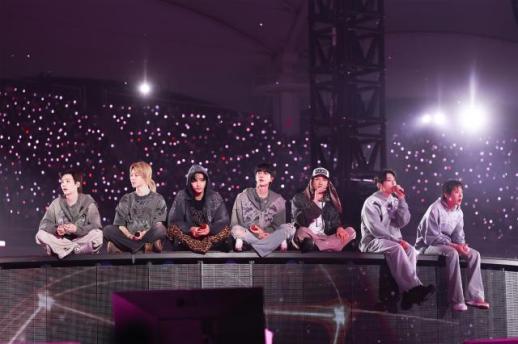 BTS Expands World Tour with Additional Concert in Australia Amid Billboard Success BTS continues to break records on the Billboard charts while expanding their world tour with an additional concert in Australia. Their North American tour, major award wins, and global chart success have contributed to the sustained popularity of their fifth studio album, 'Arirang.'On June 2, BTS announced through the global fan platform Weverse that they will add a performance in Melbourne on February 10, 2027, as part of their 'BTS World Tour: Arirang.' Initially scheduled for two shows at Marvel Stadium on February 12 and 13, the additional concert was added in response to local fan support. This brings the total number of performances in the tour to 86 across 34 cities.This will mark BTS's return to Australia nearly 10 years after their last visit in May 2017 for the '2017 BTS Live Trilogy: Episode III. The Wings Tour.' The upcoming tour will include stops in Melbourne and Sydney, with the Sydney concerts set for February 20-21, 2027, at Accor Stadium. This venue is known for hosting major artists like Adele and Oasis, and BTS will be the first Korean act to perform there.As the global tour expands, BTS's chart performance remains strong. According to the latest Billboard chart released on June 2, the title track 'SWIM' from 'Arirang' has maintained its position at number one on the 'Global (Excluding U.S.)' chart for four consecutive weeks. This marks the eighth time the song has reached the top, extending its record for the most number one hits on this chart in 2026.'SWIM' has tied with BTS's previous hit 'Dynamite' for the longest duration at number one. Billboard reports that BTS has a total of eight number one songs on this chart, double the number achieved by artists like Bad Bunny and Taylor Swift, who have four each. The album features 13 tracks that have remained on the chart for 10 weeks.The song has also seen success on other charts, climbing six spots to number four on the 'Global 200' and rising 11 spots to number 44 on the 'Hot 100.' It also ranks at 17 on 'Adult Contemporary,' 13 on 'Pop Airplay,' 18 on 'Adult Pop Airplay,' and 25 on 'Radio Songs.'The album 'Arirang' continues to perform well on the charts, securing the ninth position on the main album chart 'Billboard 200' for 10 consecutive weeks in the top 10. It also ranks fourth on 'Top Album Sales,' 18th on 'Top Streaming Albums,' and sixth on 'Vinyl Albums,' rebounding seven spots from the previous week. The track 'MIC Drop' has re-entered the 'World Digital Song Sales' chart, marking a total of 164 weeks on the chart.BTS recently concluded the first leg of their North American tour on May 28 at Allegiant Stadium in Las Vegas. This tour included 15 performances across five cities, all of which sold out, drawing approximately 840,000 fans.The North American tour received significant media attention. Consequence, a U.S. music publication, described the Las Vegas concert as a “triumphant return,” highlighting BTS's ability to connect with audiences in large venues. A standout moment was the performance of 'Body to Body,' during which the audience sang along to the Korean folk song 'Arirang.'The Hollywood Reporter referred to BTS as a “global powerhouse,” noting their energetic performances captivated local audiences. Forbes covered key moments from the concert alongside the city-wide campaign 'BTS The City Arirang - Las Vegas,' emphasizing BTS's influence extending beyond the concert venue.BTS's award recognition also continues. On May 25, they won the prestigious 'Artist of the Year' award at the American Music Awards, marking their second win in this category after their first in 2021.Looking ahead, BTS is set to perform at the '2026 iHeartRadio Music Festival' on September 18 at T-Mobile Arena in Las Vegas, joining a lineup that includes Cardi B and Snoop Dogg. The festival will be broadcast live across more than 150 iHeartMedia radio stations and on Disney+ and Hulu.Additionally, BTS will hold 'BTS World Tour: Arirang in Busan' at the Asiad Main Stadium in Busan on February 12-13, celebrating their 13th anniversary with domestic fans.* This article has been translated by AI. 2026-06-03 09:54:00
 -
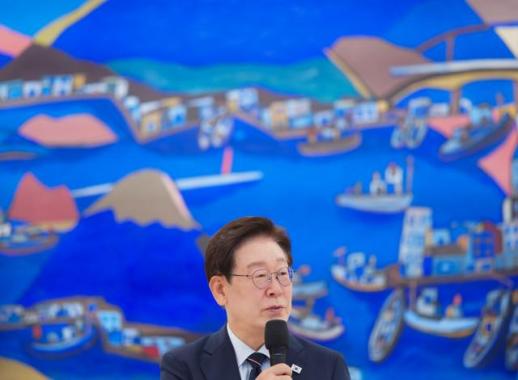 President Lee Encourages Voter Participation on Local Election Day President Lee Jae-myung encouraged voter participation on June 3, the day of the local elections, stating, "Did you vote to avoid being ruled by the worst of the worst, as Plato said?"In a post on X (formerly Twitter), President Lee reiterated a quote from philosopher Plato, which he had shared on May 31: "The cost of political apathy is being ruled by the worst of the worst."He added, "In a democratic republic, the silence and abandonment of voting by the sovereign gives opportunities to those who deceive the public, abuse power for personal gain, and ruin the lives of myself and my family."Additionally, President Lee shared a post from Justice Minister Jeong Seong-ho, who announced he would begin using X to communicate with the public, and encouraged followers to support him. President Lee introduced Minister Jeong, saying, "Please welcome Jeong Seong-ho to the world of X with a massive following."Minister Jeong is a classmate of President Lee from the 18th Judicial Research and Training Institute and is mentioned as a potential candidate for Prime Minister if Kim Min-seok resigns to run in the Democratic Party's convention in August.* This article has been translated by AI. 2026-06-03 09:54:00
 -
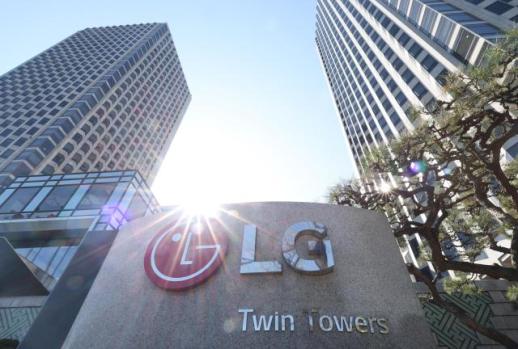 S&P Upgrades LG Electronics Credit Rating to 'BBB+' for First Time in 12 Years International credit rating agency Standard & Poor's (S&P) announced on June 2 that it has upgraded LG Electronics' credit rating from 'BBB (Positive)' to 'BBB+ (Stable).' This marks the first upgrade for LG Electronics since 2014, a span of nearly 12 years. S&P stated, "The upgrade reflects expectations of debt reduction and improved financial structure due to solid growth in core businesses." The stable outlook indicates confidence that strong cash flow generation and debt reduction will continue, supported by the company's competitive edge in its main sectors. S&P anticipates that LG Electronics' core businesses will achieve robust performance over the next two years, driven by enhanced competitiveness in premium products and expansion in subscription and B2B services. In the home appliances sector, S&P expects stable profitability based on a strong position in the less cyclical premium market. The differentiated subscription services and brand image are seen as accelerating growth in emerging markets. For the media entertainment solutions segment, S&P forecasts modest revenue growth over the next one to two years, supported by demand for premium products like large OLED TVs and expansion of the webOS platform. The automotive business is expected to continue its growth and profitability improvements, bolstered by a strong market position in key product lines such as telematics and infotainment. A significant backlog of orders is projected to ensure stable revenue growth and enhance profitability through economies of scale. This year, LG Electronics' automotive business backlog has surpassed 100 trillion won, demonstrating rapid growth. Recently, the company has strengthened global collaborations to secure a foothold in the future mobility market, including a partnership with Qualcomm to co-develop an AI-based 'AI Cabin Platform' and joining a 6G vehicle communication alliance. S&P also predicts continued improvement in financial health, projecting that LG Electronics' debt ratio relative to EBITDA will decrease from 1.6 times in 2025 to 1.2 times in 2026, and further to 1.0 times in 2027. Additionally, the performance and financial structure improvements of LG Display, in which LG Electronics holds a 36.7% stake, positively influenced this rating upgrade. LG Electronics has received favorable evaluations from domestic and international credit rating agencies this year. In January, Moody's upgraded LG's credit rating from 'Baa2 (Positive)' to 'Baa1 (Stable).' Last month, Korea Credit Rating Agency also raised its outlook for LG Electronics from 'AA (Stable)' to 'AA (Positive).'* This article has been translated by AI. 2026-06-03 09:51:00
 -
 U.S. Tariff Revisions Expected to Ease Export Burden for South Korean Machinery The U.S. government’s recent revisions to its tariff system for steel and aluminum derivatives are expected to alleviate the export burden for South Korean machinery manufacturers. With the reduction of tariffs on key industrial machinery such as forklifts, bulldozers, and tractors, approximately $2.3 billion worth of South Korean exports will benefit from these tariff cuts. The Ministry of Trade, Industry and Energy announced on June 3 that the U.S. government issued a proclamation on June 1 (local time) regarding the revisions to the Section 232 tariff measures on steel, aluminum, and copper derivatives. The U.S. government explained that the revisions aim to encourage foreign companies to use American-made steel and aluminum. The changes include lowering the threshold for reduced tariffs on U.S. steel usage from 95% to 85%. Additionally, tariffs on certain industrial machinery items exported from countries with tariff agreements, including South Korea, Japan, the United Kingdom, and the European Union, will be reduced. According to the revisions, the Section 232 tariff rate on certain mobile industrial machinery such as forklifts, bulldozers, and tractors will decrease from 25% to 15%. In contrast, products from countries without tariff agreements will maintain the existing 25% tariff. Tariffs on agricultural equipment and HVAC systems will also be reduced from 25% to 15%, regardless of tariff agreements. This measure will be effective from August 8 until December 31, 2027. Conversely, aluminum printing plates and metal racks will be newly included under Section 232 tariffs, incurring a 25% duty. The Ministry estimates that the total value of U.S. export items expected to benefit from tariff reductions will be around $2.3 billion. The easing of tariffs on forklifts, bulldozers, and tractors is anticipated to improve export conditions to the U.S. However, as the U.S. has been actively adjusting tariffs on specific items, the government plans to closely monitor the potential for additional U.S. tariff measures. A ministry official stated, "We will closely monitor trends in U.S. trade measures, including Section 301 investigations, Section 122 tariffs, and Section 232 item tariffs, to minimize the impact on our companies and maintain the balance of benefits under the existing South Korea-U.S. tariff agreement."* This article has been translated by AI. 2026-06-03 09:45:00
 -
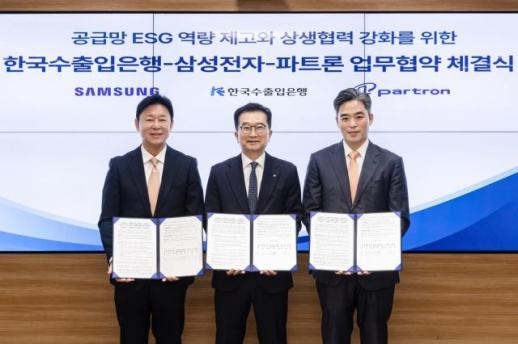 Korea Export-Import Bank Supports Samsung Partners in Renewable Energy Transition The Korea Export-Import Bank, in collaboration with Samsung Electronics, is supporting the transition to renewable energy for its overseas partners. This initiative is seen as a new cooperation model that establishes a foundation for carbon reduction among large corporations, their partners, and policy finance institutions. On June 3, the Export-Import Bank announced that it has signed a memorandum of understanding with Samsung Electronics and Partron, a key partner of Samsung, to enhance supply chain environmental, social, and governance (ESG) capabilities and strengthen mutual cooperation. The agreement includes provisions for the Export-Import Bank to support consulting costs related to joint purchasing of renewable energy power purchase agreements (PPAs) for small and medium-sized partners of Samsung Electronics operating in Vietnam. Eleven small and medium-sized partners will work together to pursue contracts for the joint purchase of renewable energy, with an energy consulting firm assisting throughout the purchasing process. Samsung Electronics will identify and recommend partners to participate in the consulting project and will support their ESG management activities. Partron, representing Samsung's partners with a production subsidiary in Vietnam, has committed to ensuring the active participation and compliance of its partners in this initiative. As global ESG regulations tighten, including the European Union's Carbon Border Adjustment Mechanism (CBAM) and Corporate Sustainability Reporting Directive (CSRD), the burden of securing renewable energy for small and medium-sized enterprises expanding overseas has increased. In response, Samsung Electronics is sharing its expertise in renewable energy procurement, and the partners in Vietnam have formed a consortium for joint purchasing. The Export-Import Bank is providing support for related consulting costs, establishing a collaborative model for carbon reduction involving large corporations, partners, and policy finance institutions. Ahn Jong-hyuk, Executive Director of the Export-Import Bank, stated, "The ability of small and medium-sized partners to transition to eco-friendly practices is now a core prerequisite for our companies' global competitiveness. We will actively support the ESG transition of small and medium-sized enterprises." 2026-06-03 09:36:00
 -
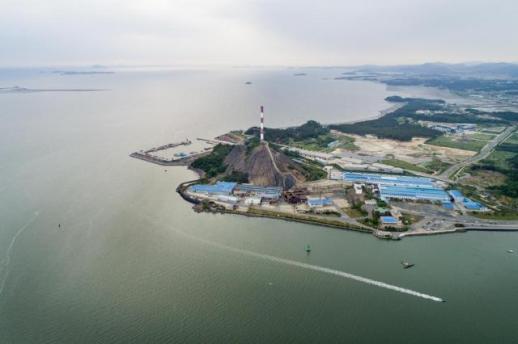 Korean Non-Ferrous Metal Industry Celebrates 90th Anniversary Amid AI Boom The Korean non-ferrous metal industry is set to celebrate its 90th anniversary on June 3. Since the first smelting of copper ore at the Janghang Smelter in Chungcheongnam-do in 1936, the industry has laid the groundwork for industrialization and is now gaining renewed attention due to the growth of artificial intelligence (AI) data centers, electric vehicles, and renewable energy. Once considered a traditional smokestack industry, smelting is re-emerging as a key strategic sector in the era of supply chain security. On June 2, the 19th Non-Ferrous Metals Day celebration took place at the LS MnM Onsan Smelter in Ulsan. Jo In-rae, team leader at LS MnM, received a presidential citation for his contributions to stabilizing the supply chain by improving facilities and optimizing processes, increasing the processing volume of copper concentrate and scrap by 170%. Eighteen individuals were also recognized with government awards for their contributions to the development of the non-ferrous metal industry. Since its inception at the Janghang Smelter on June 3, 1936, the domestic non-ferrous metal industry has supplied essential metals such as copper and zinc for key national industries, including electrical, electronics, automotive, and shipbuilding. It played a crucial role in industrialization until the 1980s, when environmental pollution issues led to its classification as a typical smokestack industry. The Janghang Smelter, which marked the beginning of the domestic non-ferrous metal industry, ceased operations in 1989 amid environmental controversies. However, the smelting industry itself did not come to a halt. The Onsan Smelter, completed in 1979, took over as the center of domestic non-ferrous metal production. Since then, LS MnM, Korea Zinc, and Youngpoong have expanded the domestic supply chain through significant investments in facilities. The status of the smelting industry, once viewed as a typical smokestack sector, is rising again due to the proliferation of AI data centers. The demand for transformers and circuit breakers is surging due to the need to upgrade the U.S. power grid and the expansion of AI data centers, leading to intense competition for copper. Industry experts have referred to copper as the “oil of the AI era.” Copper, known for its high conductivity, is widely used in servers, power supply units, cooling systems, transformers, distribution panels, cables, and communication infrastructure necessary for AI computations. According to S&P Global, global copper demand is expected to reach 28 million tons by 2025 and surge to 42 million tons by 2040, a 50% increase. There are also analyses suggesting a potential annual copper supply shortage of 10 million tons during this period. Copper prices are soaring, reaching approximately $14,490 per ton, a nearly 40% increase from the $10,360 recorded in May of last year. Compared to early this year, when prices were around $13,150 per ton, this represents about a 10% rise. The competition for copper extends beyond pricing to issues of supply chain security. As copper is essential for key national industries such as electric vehicles, semiconductors, defense, and power grids, major countries are seeking stable sources of supply. While the U.S. does not rely heavily on imports of high-purity copper from China, it views the concentration of global smelting and refining capabilities in China as a risk. According to the United Nations Conference on Trade and Development, China accounts for about 60% of global copper ore imports and over 45% of high-purity copper production. The U.S. has already begun treating copper imports as a national security issue. Last year, the White House directed an investigation into the impact of copper imports on U.S. national security, covering raw ore, copper concentrate, refined copper, copper alloys, scrap, and copper derivatives. As the demands of AI data centers, power grids, and defense intersect, copper is increasingly being classified as a strategic national asset rather than just a raw material. However, South Korea is a resource-poor country with almost no copper mines. Most of its copper concentrate is imported from countries like Chile, Peru, and Indonesia for smelting. Nevertheless, South Korea has maintained a presence in the global non-ferrous metal supply chain with world-class smelting technology. Additionally, as the shift away from Chinese supply chains for critical minerals strengthens, South Korean smelting and refining technology is gaining attention. Companies like LS MnM, focused on copper, and Korea Zinc and Youngpoong, centered on zinc, lead, and rare metals, are crucial pillars of the domestic non-ferrous metal supply chain. An LS MnM representative stated, "With the surge in copper demand driven by the expansion of AI data centers and the growth of the electric vehicle and battery markets, securing stable raw materials has become a core competitive advantage for South Korea's future growth industries. We aim to establish a long-term stable copper supply chain through diversified sourcing, investments in metal recycling, and strengthening global partnerships."* This article has been translated by AI. 2026-06-03 09:33:00
 -
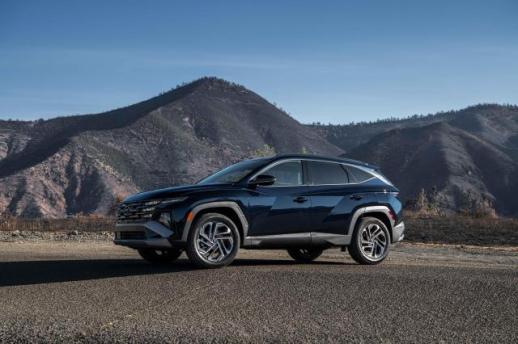 Hyundai and Kia Achieve Record Hybrid Sales in U.S. Market in May Hyundai Motor and Kia achieved their highest-ever monthly sales of hybrid electric vehicles (HEVs) in the U.S. market in May.Hyundai Motor America announced on June 2 that it sold a total of 87,468 vehicles in May, marking a 3% increase compared to the same month last year.Notably, HEV sales surged by 90% year-over-year, reaching a record high. Sales of specific models included a 10% increase for the Tucson, 30% for the Santa Fe, 29% for the Elantra, and a remarkable 250% increase for the Sonata, all contributing significantly to overall performance.Electric vehicle sales also rose by 10%, setting a new record for May. The Ioniq 5 saw an increase from 3,898 units to 5,002 units, a 28% rise, achieving its highest May sales ever. The Tucson and Palisade also reached their highest sales records for May.Randy Parker, CEO of Hyundai Motor North America, stated, "In May, we saw growth across nearly all models in our lineup, including sedans and SUVs, featuring hybrid and electric vehicles. The visibility gained from our sponsorship of the 2026 FIFA World Cup has positioned us favorably for sustained growth throughout the summer."Kia America also reported that its retail sales in May surpassed the previous record set in August 2025. Total sales reached 80,502 units, a 2% increase from 79,007 units in the same month last year. Cumulative sales for May also hit a record of 360,220 units, up 2% from the same period last year.The hybrid models experienced a dramatic growth of 179%. All models saw significant increases, with the Sportage up 171%, the Sorento up 101%, and the Carnival up 32%, achieving record sales for May. The Carnival also reached its highest monthly sales ever.Eric Watson, Vice President of Sales at Kia America, emphasized, "Despite ongoing shifts in consumer preferences, Kia continues to break retail sales and monthly cumulative sales records thanks to our diverse lineup that includes internal combustion, hybrid, and electrified models. We expect this upward trend to continue into the second half of the year, even amid recent economic challenges."Meanwhile, Hyundai and Kia are maintaining their sales growth in the U.S. market with a focus on HEV-centered eco-friendly vehicle strategies. The ongoing trend of high fuel prices has increased consumer preference for fuel-efficient HEVs.* This article has been translated by AI. 2026-06-03 09:33:00
 -
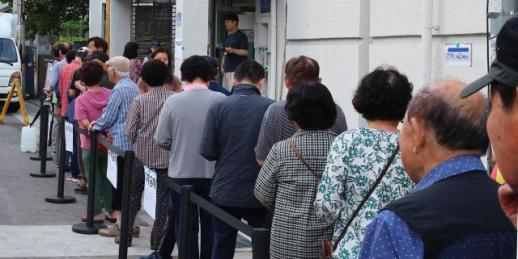 Voter Turnout at 7.4% Nationwide by 9 AM, Highest in Daegu at 9.2% As the 21st presidential election voting began, the nationwide voter turnout reached 7.4% by 9 AM on June 3. According to the National Election Commission, 3,319,530 out of the total eligible voters participated in the election as of 9 AM. This resulted in an average voter turnout of 7.4% nationwide. Regionally, Daegu and Gangwon Province recorded the highest turnout at 9.2%. Following them were Gyeongsangbuk-do at 8.9%, Gyeongsangnam-do at 8.5%, and Chungcheongnam-do at 8.4%. Daejeon and Chungcheongbuk-do both reported a turnout of 8.3%. In contrast, Gwangju recorded the lowest turnout at 4.8%. Sejong City had a turnout of 5.9%, Jeollabuk-do at 6.0%, Jeollanam-do at 6.3%, and Seoul at 6.9%, all below the national average. In Gyeonggi Province, 848,081 out of 9,374,125 registered voters cast their ballots, resulting in a turnout of 7.1%. In Seoul, 570,624 participated, yielding a turnout of 6.9%, while Incheon saw 191,297 voters, with a turnout of 7.2%. In the Yeongnam region, higher participation rates were noted, with Daegu at 9.2%, Gyeongbuk at 8.9%, Gyeongnam at 8.5%, Ulsan at 7.8%, and Busan at 7.3%. The Chungcheong region also showed strong turnout, with Chungnam at 8.4% and Daejeon and Chungbuk at 8.3%, both exceeding the national average. 2026-06-03 09:12:00
 -
 Local Election Voter Turnout Reaches 4.5% by 8 AM, Up 0.7 Percentage Points from 2022 The National Election Commission reported that voter turnout for the 9th nationwide local elections reached 4.5% as of 8 AM on June 3. Voting began at 6 AM at polling stations across the country, with 2,017,995 of the 44,649,908 registered voters having cast their ballots. This turnout is 0.7 percentage points higher than the 3.8% recorded at the same time during the 2022 local elections. The early voting turnout of 23.51%, conducted from May 29 to 30, will be included in the overall turnout figures starting at 1 PM. The region with the highest voter turnout so far is Gangwon at 5.7%, followed by Daegu at 5.6%, Daejeon and Chungnam at 5.1%, and Ulsan at 4.8%. Conversely, Gwangju recorded the lowest turnout at 3.4%, followed by Sejong at 3.5% and Jeonbuk at 3.6%. In the capital region, voter turnout was 4.1% in Seoul, 4.4% in Gyeonggi, and 4.2% in Incheon. Voting will continue today from 6 AM to 6 PM at designated polling stations. Voters must bring an identification card, such as a resident registration card, passport, or driver's license. Mobile identification will not be accepted via screenshots; voters must verify their identity using the app on-site.* This article has been translated by AI. 2026-06-03 08:27:00
 -
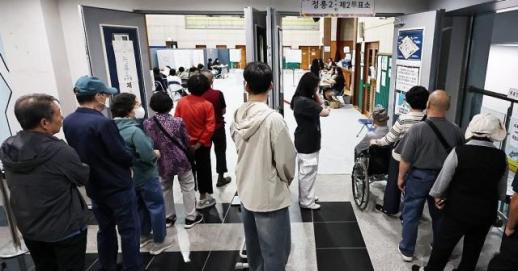 Voting Begins in Local Elections with 2.0% Turnout at 7 AM The National Election Commission reported that as of 7 AM, the voter turnout for the 9th nationwide local elections stands at 2.0%. According to Yonhap News, voting began at 6 AM at polling stations across the country, with 881,375 out of 44,649,908 registered voters having cast their ballots. This turnout is 0.3 percentage points higher than the 1.7% recorded at the same time during the 2022 local elections. The early voting turnout, conducted from May 29 to 30, was 23.51% and will be reflected in the overall turnout figures starting at 1 PM. The region with the highest turnout so far is North Gyeongsang Province at 2.6%, followed by Daegu, Gangwon, and South Gyeongsang Provinces at 2.5%, Daejeon at 2.4%, and South Chungcheong and Ulsan at 2.2%. The lowest turnout is in Gwangju, which recorded 1.3%, followed by Sejong at 1.4%, North Jeolla at 1.6%, and Seoul and South Jeolla at 1.7%. In the metropolitan area, Gyeonggi and Incheon both recorded a turnout of 1.9%. Voting will continue until 6 PM, and voters are required to bring identification and go to their designated polling stations based on their registered addresses. The National Election Commission's official turnout figures are based on data collected from 256 local election offices across the country.* This article has been translated by AI. 2026-06-03 08:03:00