
Journalist

Elizabeth Englezos
-
 Won Weakens to 1,480s per Dollar as U.S.-Iran Tensions Lift Safe-Haven Demand Renewed military tensions between the United States and Iran pushed the won-dollar exchange rate back into the 1,480-won range in early trading. As of 9:12 a.m. on April 24, the won was trading at 1,482.9 per U.S. dollar in Seoul. The rate opened at 1,483.0, up 2.0 won from the previous session. With talks on ending the war failing, rising tensions between the two countries were seen boosting demand for safe-haven assets. Overnight, all three major U.S. stock indexes fell in New York. The Dow Jones Industrial Average closed down 179.71 points, or 0.36%, at 49,310.32. The S&P 500 ended down 29.50 points, or 0.41%, at 7,108.40, and the Nasdaq composite fell 219.06 points, or 0.89%, to 24,438.50. International oil prices also extended sharp gains. Brent crude futures for June delivery settled at $105.07 a barrel, up 3.1% from the previous session. U.S. West Texas Intermediate for June delivery closed at $95.85 a barrel, up 3.11%. U.S. President Donald Trump ordered forces to fire on and sink any vessel laying mines in the Strait of Hormuz. He also reiterated that the United States would continue its blockade of the strait until Iran reaches agreements related to ending the war and denuclearization. Iran, however, said it would not take part in negotiations as long as the U.S. maritime blockade continues, and said it is ready to respond to further threats. Investor sentiment was also affected by reports of hostile aerial activity in Tehran and the activation of air defenses, the first such report since the ceasefire with the United States. At the same time, foreign investors were net sellers of 154.4 billion won worth of shares on the benchmark KOSPI. Min Kyeong-won, an economist at Woori Bank, said the exchange rate is expected to move around the low-to-mid 1,480s amid a stronger dollar driven by higher oil prices and risk-off sentiment. She added that continued foreign selling in local stocks is likely to spur dollar demand and keep downward pressure on the exchange rate limited.* This article has been translated by AI. 2026-04-24 09:30:19
 -
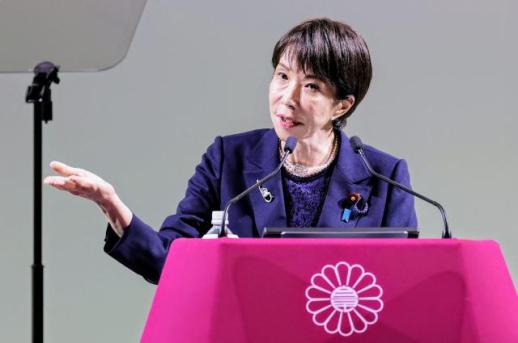 Leaders’ Sleep Deprivation: Badge of Honor or Risk to Decision-Making? A long-running myth in politics holds that leaders who sleep less and work more are more capable. Images of a leader reading briefs until dawn, making late-night calls and returning to the schedule after only a few hours of rest are often sold as proof of dedication and toughness. But running a country is not a test of personal grit. Because one person’s condition can affect the lives of millions, a leader’s lack of sleep can no longer be treated as a private habit. Japan Prime Minister Sanae Takaichi recently drew attention after saying she generally sleeps “two hours, at most four,” adding that she “would like to sleep a bit more.” She said her short sleep stems from policy reviews and a packed schedule, as well as family caregiving and housework. Some in Japanese politics have voiced concerns about worsening health, impaired judgment and weaker communication. U.S. President Donald Trump has also remained in the spotlight for predawn messages, sudden remarks and a punishing schedule. In a recent series of comments on Middle East developments, assessments said his frequently shifting messages caused significant confusion in markets and diplomatic circles. The core issue is not simply how many hours a leader sleeps. The concern is that sleep deprivation can degrade the quality of decisions. Medical and brain-science research has long warned that lack of sleep can be linked to reduced concentration, increased impulsiveness, failed emotional control and errors in judging risk. If that is dangerous for a corporate chief executive, it can be far more damaging for national leaders who make decisions on war and diplomacy, interest rates and disaster response. A leader’s day is unlike anyone else’s. Security crises, sudden market swings, major accidents and natural disasters can erupt at any hour, including in the middle of the night. If the person expected to make calm decisions is already exhausted, the country can pay unnecessary costs. A single remark can rattle markets, and one misjudgment can widen diplomatic conflict. Even so, politics still romanticizes “sleepless leadership.” All-night briefings, dawn meetings and overloaded schedules are packaged as evidence of responsibility. But that is closer to a leftover of outdated workplace culture. The ability to endure fatigue is not the same as the ability to govern. Staying awake longer does not make anyone wiser. More advanced leadership manages fatigue through systems. Staff members refine information, schedules are adjusted by priority, and leaders preserve their best condition for decisive moments. Governing is a marathon, not a contest in going without sleep. The idea that a leader must personally read every document and attend every meeting may look like diligence, but it often signals distrust of the organization and breeds inefficiency. South Korean politics is no exception. During presidential, parliamentary and local elections, candidates crisscross the country on little sleep, and after winning they cite early-morning arrivals and late-night reports as proof of sincerity. But the public wants a prepared leader, not an exhausted one — accurate judgment, not dark circles, and steady results, not photos of relentless travel. A leader’s health is private, but it is also a public asset. The condition of a president, prime minister or minister is tied to national risk. Adequate rest, transparent health management and reasonable division of work are not perks; they are responsibilities. Power without sleep should no longer be treated as a feel-good story. Sleep deprivation may be less a virtue than a warning sign. The more responsibility a leader carries, the more they must rest. The public needs not a weary hero, but an accountable decision-maker with a clear mind. 2026-04-24 09:21:48
 -
 Hyundai E&C Backs Local Safety Program for Elementary Schools in Jinhae, South Korea Hyundai Engineering & Construction said it is launching a site-linked community safety program to help protect children in disaster-prone areas. The company said Thursday that it held a ceremony April 22 at Angolpo Elementary School in Jinhae-gu, Changwon, South Gyeongsang Province, with the Construction Industry Social Contribution Foundation and Plan Korea to provide disaster safety education and deliver child-sized safety helmets. Attendees included Lee Hyeong-seok, head of Hyundai E&C’s Finance and Economics Division; Lee Jae-sik, secretary-general of the foundation; Lee Jae-myeong, a manager at Plan Korea; and officials from the Gyeongsangnam-do Changwon Office of Education. Hyundai E&C said it will distribute about 3,600 disaster-response safety helmets from this month through June to eight elementary schools in the Jinhae area, including Angolpo Elementary as well as Ungdong and Ungcheon elementary schools. It also plans structured disaster safety classes and hands-on evacuation drills for all students. The program includes practice sessions on wearing helmets and simulated evacuations to help students learn how to respond. Schools will also name student “disaster safety guardians,” or “Safe Captains,” to encourage participation. Hyundai E&C said it has focused its safety-related social contribution work on disaster-vulnerable areas over the past seven years and is expanding the effort this year to Jinhae-gu. It said it will support tailored safety programs linked to nearby elementary schools around local projects, including construction of the Busan Port Jinhae New Port container terminal (Phase 1-1), a southern breakwater and the Wasong district development project. A Hyundai E&C official said the company is continuing “effective safety activities” by combining equipment support with participatory education programs in disaster-vulnerable areas and plans to keep expanding disaster safety programs tied to communities near its worksites. * This article has been translated by AI. 2026-04-24 09:19:33
 -
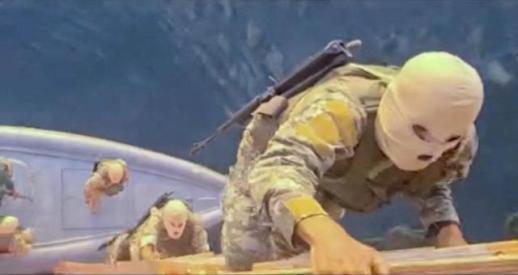 Even if Hormuz Reopens, the Global Order of Freedom of Navigation Is Fraying Even if the Strait of Hormuz reopens, the world will not return to the prewar status quo. What this crisis has exposed is not only the risk of a blockade, but a deeper strain on the international maritime order itself. The confrontation has already moved beyond the strait. The United States has expanded maritime interdiction beyond Hormuz into the Indian Ocean, seizing Iranian oil tankers and raising pressure. The issue is no longer control of a single chokepoint, but a widening contest for maritime control that reaches into the high seas. At the same time, Iran is using the strait as leverage and testing what it calls a “selective opening.” Under that approach, only some vessels are allowed to pass, while a de facto toll is imposed in the name of safety guarantees. Iran has officially said the fees were deposited into a central bank account, signaling a move toward institutionalizing the practice. That commercial logic is showing signs of spreading. When the possibility of tolls was raised for the Strait of Malacca, Singapore and Malaysia pushed back immediately, stressing that “the strait must be free for everyone.” The freedom of navigation long treated as a given is no longer assured. The fallout has also rippled to other routes. As demand surged for Panama Canal transits after the Hormuz disruption, the price of passage rights jumped as much as 10 times compared with before the war. Some shippers paid millions of dollars more to cut waiting times. The shift points to supply chains being reorganized away from pure efficiency and toward detours and redundancy. A more fundamental change is underway in energy and logistics planning. Countries are pursuing pipeline expansion to reduce reliance on the Middle East, developing alternative routes and diversifying energy import sources. With Hormuz — through which 20 million barrels a day once passed — losing some of its standing, volumes are being dispersed to other paths, but at higher cost and with greater inefficiency. In the name of “stability,” the cost structure of the global economy is rising. What is unfolding is not simply a geopolitical clash. The rules governing international sea lanes are shifting. Where straits were once treated as a public good with guaranteed passage, they are increasingly being redefined as sovereign spaces where states cite security and national interest to impose control and pricing. The longer-term costs could outweigh any short-term gains. Revenue or bargaining power from controlling a strait may be temporary, but the inflation, supply-chain distortions and trade contraction it triggers can spread worldwide. When private advantage is placed above the public interest, the costs tend to return to all. In such moments, the need is not a show of force but a restoration of principles. Coastal states and major trading nations should rebuild minimum shared rules that protect freedom of navigation, nondiscriminatory access and predictability. The Malacca Strait countries’ insistence that “no country can unilaterally decide passage rights” could be a starting point. For now, the world is not showing the steady leadership needed to design and uphold those principles. Governments speak of strategy, but not of order; short-term calculations are abundant, long-term responsibility scarce. Hormuz may reopen. But a “free sea” will not be restored on its own. If current trends continue, the world will face a costlier, more unstable and more fragmented system. * This article has been translated by AI. 2026-04-24 09:18:33
 -
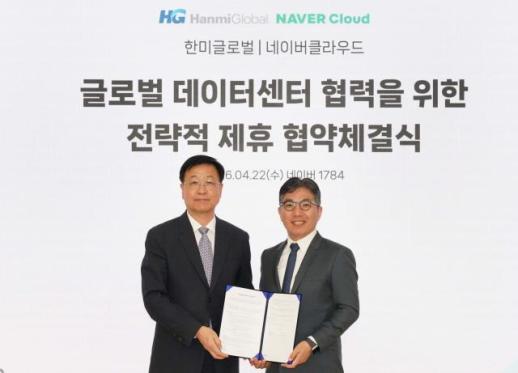 Naver Cloud, HanmiGlobal Partner to Pursue Saudi Data Center Projects 저 장 Naver Cloud and HanmiGlobal are teaming up to pursue data center opportunities in Saudi Arabia and other overseas markets. The companies said they signed a strategic memorandum of understanding on April 22 to jointly participate in large-scale data center projects. The agreement is aimed at meeting demand for digital infrastructure in the Middle East and other markets by combining cloud and AI technology with construction project management capabilities. Under the MOU, Naver Cloud will lead infrastructure technology strategy and service model design, drawing on its full-stack capabilities spanning data center construction and cloud and AI services. HanmiGlobal will handle project execution, including consulting on design and construction, schedule and cost management, and local licensing and permits in Saudi Arabia. Naver Cloud has expanded digital and AI cooperation in Saudi Arabia through “Naver Innovation,” a joint venture with the National Housing Co. (NHC), including work on digital twin development and a map-based super app. The company said the new partnership will extend that effort into infrastructure to strengthen its response to local digital transformation demand. HanmiGlobal has built experience in the region since entering the Middle East market in 2007, completing more than 50 projects, the company said. “Through establishing a local corporation and cooperating with key institutions, we have secured a foundation for execution,” Naver Cloud CEO Kim Yu-won said. “We will actively respond to demand for building digital infrastructure in the Middle East and emerging markets.” * This article has been translated by AI. 2026-04-24 09:13:53
 -
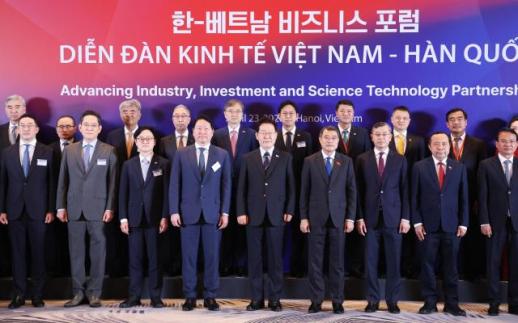 South Korea Urges Faster Supply Chain Overhaul for Rare Earths and Urea Solution Global supply chains are no longer just about efficiency; they are about survival. President Lee Jae-myung’s remarks in Vietnam calling for stronger cooperation on rare earths and urea solution supply chains were more than an economic message. They underscored South Korea’s industrial vulnerabilities and pointed to how the country must adapt to a new global order. The challenge now is not the direction but the design. The question has shifted from where to invest to how to build a resilient supply chain. South Korea already saw how damaging supply disruptions can be during the 2021 urea-solution shortage. Heavy reliance on a single country lowered costs in normal times, but in a crisis it became a shock that could paralyze entire industries. Since then, “diversifying supply chains” has become a central policy slogan. But it has too often remained a declaration. The task now is to build a working structure. Vietnam is clearly an important partner in that effort. But the strategy must avoid turning Vietnam from an alternative into a new single point of dependence. The goal is not dispersion for its own sake, but diversification that remains manageable. Excluding one country entirely or concentrating too heavily on another both carry risks. A layered approach is needed: use Vietnam as a key base for manufacturing and assembly, while diversifying rare-earth sourcing to Australia and Africa and spreading urea-solution feedstock supplies across the Middle East and Southeast Asia. The design should anchor on one hub while distributing risk across multiple pillars. Speed matters as well. Countries are racing to reshape supply chains, and delays can mean lost opportunities. Still, not everything can be solved quickly. Issues such as technology transfer require long-term trust and negotiation. That argues for a phased strategy: first, secure the physical base through relocation of production and expanded investment; second, raise capabilities through joint research and development and broader technology cooperation. Speed and sustainability are not opposites, but priorities that must be sequenced. Risk is the bigger test. Cooperation on energy infrastructure such as nuclear power plants and LNG facilities can be central to supply stability, but it also brings heavy capital demands and geopolitical exposure. Leaving that burden solely to private companies is unrealistic. If supply chains are treated as a national strategy, the state must share part of the risk. Tools such as policy financing, export credit guarantees and long-term purchase contracts can reduce corporate burdens and strengthen incentives. Companies pursue returns; governments secure stability. Clear roles are needed for the system to work. Governance will determine whether the overhaul moves beyond rhetoric. To make supply-chain restructuring enforceable and trackable, institutional mechanisms are needed, including a control tower to coordinate strategy and a national fund to secure strategic resources. Major projects should be pursued jointly by the public and private sectors, alongside a system to evaluate results and make corrections. The aim is to ensure investment plans lead to execution. The role of business must also evolve. Lee Jae-yong, Koo Kwang-mo and Chey Tae-won are already key players in global supply chains, and their investments increasingly intersect with national strategy. But companies cannot absorb all risks alone. Supply chains become more stable when government strategy and corporate execution align. South Korea now faces a choice between maintaining an efficiency-first model and shifting to a structure centered on stability and strategy. The argument is that even if costs rise, building a more secure supply chain offers greater long-term benefit and affects national sustainability. The Vietnam trip is only a starting point. What matters is follow-through. Supply chains are not rebuilt by declarations, but by design, investment and accountable execution. A strategy that balances concentration with diversification, matches speed with sustainability through phased steps, and shares risk between government and business is presented as essential — and urgent.* This article has been translated by AI. 2026-04-24 09:12:30
 -
 'Salmokji' Tops Box Office Again as Audience Passes 1.64 Million 영화 '살목지'가 164만 관객을 돌파하며 박스오피스 1위를 이어갔다. The horror film 'Salmokji' stayed No. 1 at the box office as its total audience topped 1.64 million, according to the Korean Film Council’s integrated ticketing network on Thursday. The film drew 48,411 viewers the previous day, keeping the top spot. Its cumulative audience reached 1,640,309 — more than double its break-even point of 800,000. In its third week of release, it has continued to add viewers steadily. 'Salmokji' follows a film crew that heads to a reservoir for a reshoot after an unidentified figure appears on a road-view image, only to encounter something in the dark, deep water. The film is directed by Lee Sang-min and stars Kim Hye-yoon, Lee Jong-won and Kim Jun-han. The No. 2 spot went to 'Jjanggku,' which attracted 20,675 viewers the same day. Among films released around the same time, it ranked first on the daily box office and showed momentum heading into the weekend. The film has been gaining word-of-mouth support, driven by positive reactions from viewers, with a story that mixes humor and relatable moments and performances described as grounded in everyday life. 'Jjanggku' centers on an “audition genius” who keeps pursuing a dream of becoming an actor despite repeated setbacks. Jung Woo helped write the script and co-directed with Oh Sung-ho. No. 3 was 'Ran 12.3,' which sold 17,231 tickets over the same period for a cumulative 55,309. The film is a cinematic documentary by director Lee Myung-se about people who took to the streets to defend democracy in response to President Yoon Suk Yeol’s Dec. 3, 2024, declaration of martial law.* This article has been translated by AI. 2026-04-24 09:11:38
 -
 Trump Says Allies Weren’t Needed in Iran War but Should Have Backed U.S., Pressures UK U.S. President Donald Trump criticized Britain and other allies over their support during the Iran war, saying their help was not militarily necessary but that they should have shown they were on Washington’s side. Citing a BBC interview, The Times and other British media reported on the 24th that Trump said of allied support during the war, “I didn’t need them at all. But they should have been there.” He added, “I didn’t need anybody. I wanted to see if they would get involved,” describing the request as “a test.” Trump also claimed the United States “completely destroyed” Iran’s military capability, repeating, “I didn’t need anybody.” The remarks were widely read as a message that the issue was political solidarity in a crisis, not battlefield necessity. The comments came ahead of a U.S. visit by Britain’s King Charles III. Asked by the BBC whether the visit by Charles and Queen Camilla could help repair U.S.-UK ties, Trump replied, “Absolutely,” and called the king “a fantastic and brave man.” Trump also kept up pressure on British Prime Minister Keir Starmer. The Times reported that Trump criticized Starmer’s response to the Iran war and cited expanded North Sea oil and gas development and tougher immigration policy as conditions for improving relations. Starmer pushed back, saying, “I’m the prime minister of the United Kingdom, and I make decisions based on the national interest of the United Kingdom.” He added, “That’s why we made the decision that we would not be dragged into the Iran war.” On the Strait of Hormuz, he said Britain had decided it would not be pulled in and that it was “in the best national interest” of the country. Trump, speaking to reporters at the White House the same day, denied any possibility of using nuclear weapons in the Iran war. “Why would you use nuclear weapons?” he said, adding, “No one should use nuclear weapons.” On the timing of a long-term peace agreement, he said, “Don’t rush,” adding that a deal could be reached now but that he wanted a permanent agreement.* This article has been translated by AI. 2026-04-24 09:10:49
 -
 South Korea to Host UN Climate Convention High-Level Ceremony in Yeosu The Ministry of Climate, Energy and Environment will hold a high-level commemorative ceremony Thursday morning at the Yeosu Expo site as part of the third UN Framework Convention on Climate Change Climate Week. The event is part of the five-day Climate Week program being held in Yeosu from April 21. Officials said it is expected to help turn climate action tasks agreed by the international community at UN climate talks into practical investments and projects. At the ceremony, Second Vice Minister Lee Ho-hyeon is set to present South Korea’s vision of positioning renewable energy at the core of its future energy system as a leading actor in climate action. He is expected to reaffirm a plan to expand renewable energy generation capacity to 100 gigawatts by 2030, about triple the current level. Lee will also outline plans to build an “energy highway” to ease bottlenecks in the power grid and accelerate progress toward carbon neutrality. He is expected to say South Korea hopes its experience and technology can offer practical inspiration for other countries’ climate efforts. High-level figures involved in climate policy are also scheduled to deliver recommendations and messages of solidarity. Simon Stiell, executive secretary of the UN climate convention, is expected to describe the energy transition as a sweeping change and opportunity comparable to an industrial revolution. He plans to stress that the shift is irreversible and that the Paris Agreement is producing tangible results. Noura Hamladji, deputy executive secretary of the UN climate convention, is expected to emphasize that climate action must move beyond declarations and produce concrete outcomes in local communities. Fatma Varank, a deputy minister from Turkiye, the chair country for the 31st Conference of the Parties, will share ways for the international community to cooperate on strengthening climate resilience. Jung Eun-hae, the ministry’s director general for international cooperation, said, “Responding to the climate crisis has now moved beyond simple declarations to a stage where how we put it into practice is key,” adding, “It will be a true forum for communication where government, business and civil society put their heads together to spread the economic benefits of climate action worldwide.”* This article has been translated by AI. 2026-04-24 09:04:08
 -
 LG Best Shop Busan Yeonje store reopens after renovation with May promotions LG Electronics’ offline retail chain, Best Shop, said its Busan Yeonje store will begin a grand reopening event starting on the 24th after completing renovations. The company said the campaign is designed to improve the in-store environment and target demand tied to May’s Family Month. The promotion will run in three phases: a pre-reservation period from the 24th through the 30th; the main event from May 1 to 17; and an encore period from May 18 to 31 with additional benefits. Store officials said the monthlong structure is intended to spread out customer visits and broaden purchase options. The renovation focused on strengthening hands-on, experience-based displays, the store said. The home-appliance retail sector has been moving beyond simple sales floors toward more interactive shopping, and premium appliances are widely seen as more likely to be purchased after in-person demonstrations. During the event, the store will offer tailored benefits aimed at wedding, moving and new-home customers. It said support will be available for wedding and move-in package purchases, and multi-item buyers can receive benefits worth up to 6.5 million won. Gifts by purchase amount and benefits tied to appliance subscription services are also included. Subscription services, which reduce upfront costs and include maintenance over a set period, have been gaining demand, the article said. Industry observers say subscription-style consumption is spreading, particularly for higher-priced appliances, reshaping buying patterns. The store will also run Family Month promotions reflecting demand for gifts for parents and family purchases, with benefits centered on essential appliances such as refrigerators, washing machines and air conditioners, it said. More broadly, South Korea’s appliance retail market is strengthening omnichannel strategies that combine online and offline shopping. As consumers increasingly research products online and then visit stores to try them before buying, manufacturer-run outlets are expanding in-store experience and consultation functions. “Through the renovation, we focused on improving the shopping environment and providing practical benefits tailored to Family Month demand,” the store said. Details are available by contacting the store.* This article has been translated by AI. 2026-04-24 09:03:20